
Sea vs. Air: The Core Decision for China–US Cargo
For most commercial shipments from China to the United States, the primary decision is whether to move cargo by ocean freight or air freight. Sea freight dominates the lane by volume because it offers the lowest cost per cubic meter and reliably handles heavy machinery, consumer goods, industrial components, and retail inventory. Air freight remains the choice for urgent, high-value, or time-sensitive goods where the higher chargeable weight and faster transit justify the premium.
The trade-off is straightforward: sea freight gives you predictable cost at a slower pace, while air freight gives you speed at a significantly higher operating cost. Your shipment’s deadline, cargo density, and inventory strategy determine which mode fits. This guide walks through the operational differences, timing expectations, customs checkpoints, and cost structure so you can request a quote that matches your actual shipment profile.
Which Cargo and Delivery Profile Fits Each Mode
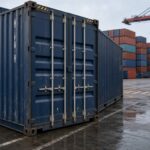
Sea freight works for full-container-load (FCL) and less-than-container-load (LCL) shipments alike. FCL suits high-volume orders that fill a 20-foot or 40-foot container; LCL consolidates smaller shipments with other cargo. Ocean freight also handles oversized, project, and heavy-lift cargo that air freight cannot accept. Weak fits for sea include perishables with short shelf life, urgent spare parts, and high-value electronics that need rapid replenishment.
Air freight fits shipments under 1,000 kg chargeable weight where speed outweighs cost, including samples, prototypes, medical supplies, automotive parts, and fashion goods with seasonal sell-through windows. Air cargo is less suitable for bulky, low-density items or very heavy industrial equipment where the volumetric weight calculation makes the freight cost uneconomical.
For either mode, the named trade term you agree with your supplier determines who files the export declaration, who bears the main freight cost, and who arranges destination clearance. Confirm the term before requesting a quote, because the freight scope—origin pickup, export clearance, main carriage, destination handling, customs entry, and final delivery—changes with each arrangement.
Field note: If your supplier quotes on an EXW (ex-works) basis, you must arrange pickup at their factory. For FOB China port, the supplier delivers to the named port of loading, and you control the main carriage. For DAP or DDP, the forwarder handles delivery to your US address but with different duty-and-tax responsibility. Clarify this before you compare freight quotes.
Route Handoffs and Gateways for China–US Freight
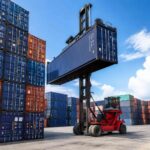
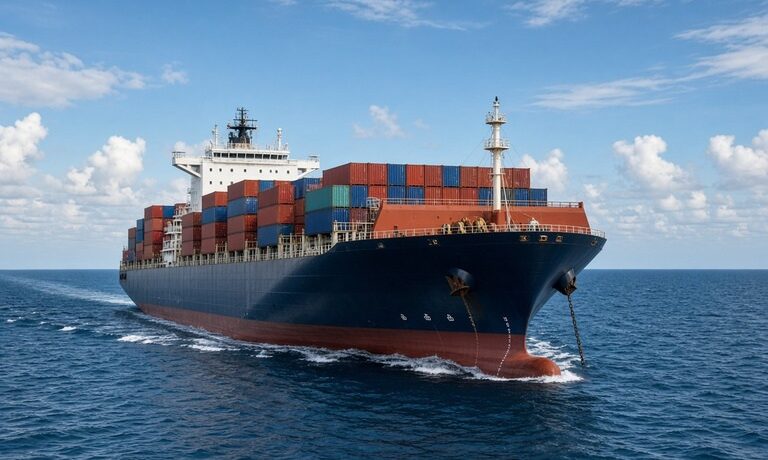
Sea freight from China to the United States moves primarily through the major container ports on the US West Coast, with Los Angeles/Long Beach and Oakland handling the largest share. Shipments bound for the US East Coast or Gulf Coast typically transit via the Panama Canal or, for some services, through the Suez Canal, adding approximately 10–14 sailing days compared to West Coast direct services. Inland rail or truck moves cargo from the discharge port to final destinations across the US interior.
For time-sensitive shipments, air freight operates through major Chinese gateways including Shanghai Pudong, Guangzhou, Shenzhen, and Hong Kong, with direct flights to US hubs such as Los Angeles, Chicago, New York, and Miami. Air cargo typically moves on scheduled passenger or freighter services with handoffs between the origin forwarder, the carrier, and the destination handler. Door-to-door air service includes pickup, export clearance, air waybill issuance, import clearance, and final delivery.
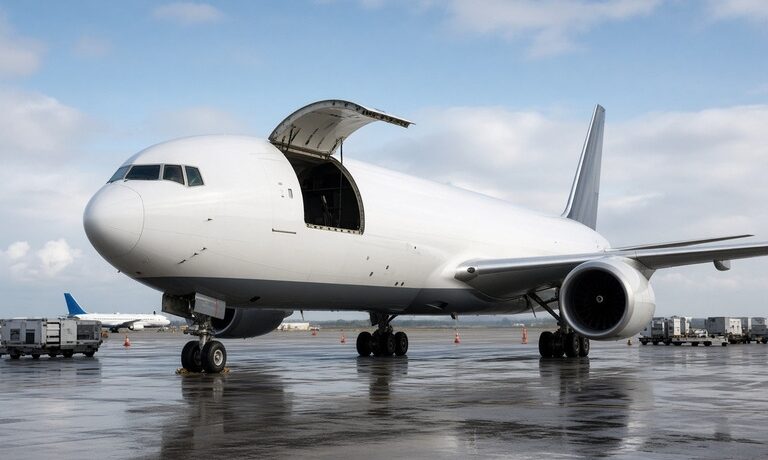
A third alternative, express shipping, handles small parcels and documents but becomes cost-prohibitive for palletized commercial freight. Express services offer door-to-door convenience with integrated tracking but lack the flexibility and capacity of dedicated air freight or sea freight consolidation.
Transit-Time Planning for China–America Shipments
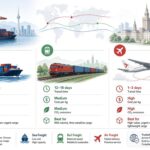
Transit times vary materially by mode, origin and destination port pair, and the service pattern you select. Use these approximate ranges for main carriage and total door-to-door cycle time when planning your supply chain. All figures are planning references, not commitments.
| Mode | Route Pair | Main Carriage | Total Door–to–Door |
|---|---|---|---|
| Sea FCL/LCL | Shanghai to Los Angeles | 14–18 days | 28–38 days |
| Sea FCL/LCL | Shanghai to New York/New Jersey | 28–32 days | 40–50 days |
| Air Freight | Shanghai to Los Angeles | 3–5 days | 5–8 days |
The total door-to-door cycle includes pickup from the origin supplier, export customs clearance, main carriage, destination customs clearance, and final delivery to your US address. For sea freight, an additional 3–5 days of transit time applies for inland rail or truck moves from the West Coast to interior US destinations. East Coast sea services typically include a 2–3 day Panama Canal transit adder that is already reflected in the main carriage figure.
Booking lead time—the advance notice required to secure space and prepare the shipment—runs approximately 5–10 days for sea freight and 2–5 days for air freight. Peak season capacity, vessel blank sailings, and port congestion can tighten these windows materially. Confirm the current booking lead time with your forwarder when you request a quote.
Cost and Quote Scope for China-to-America Freight
Freight charges for China–US shipments depend on cargo details, service scope, and current market conditions. When you request a quote, provide the commodity description, total weight, dimensions, number of packages, origin address, and destination address. For FCL, specify the container size (20-foot or 40-foot). For LCL and air freight, the chargeable weight is the greater of the actual gross weight and the volumetric weight (length × width × height in centimeters divided by a carrier-specific divisor).
Compare quotes on a like-for-like basis by checking which charges are included. A comprehensive sea-freight quote typically covers:
- Origin pickup and inland haulage (if requested)
- Export customs declaration fees
- Port handling and terminal charges at origin
- Ocean freight (main carriage)
- Marine insurance (if purchased separately)
- Destination terminal handling and customs entry fees
- Delivery to the final US address
An air-freight quote includes the air waybill charge, fuel surcharge, security fees, handling, and destination delivery when door-to-door service is arranged. Customs duties, taxes, and import bonds are not included in the freight quote unless you have explicitly requested a DDP arrangement that covers duty payment. Your named trade term determines which party bears each charge.
Additional accessorial charges may apply for residential delivery, lift-gate service, inside delivery, appointment scheduling, or hazardous materials handling. Declare any special handling requirements when you request the quote so the forwarder can confirm feasibility and any additional charges.
Note: Freight rates change with cargo details, route, carrier capacity, fuel costs, seasonal demand, service scope, and destination charges. Request a current quote for the specific shipment.
Process and Customs Checkpoints for US Imports from China
The operational sequence for a China–US shipment follows these six checkpoints. Each step requires specific documentation and coordination between shipper, forwarder, carrier, customs broker, and consignee.
Request Quote
Provide cargo description, weight, dimensions, number of packages, commodity HTS code (if known), origin address, destination address, desired service scope, and named trade term. The forwarder returns a provisional quote with the charges and transit estimate.
Cargo Pickup
Supplier prepares the cargo with commercial invoice, packing list, and any export licenses required by Chinese authorities. Forwarder or its agent collects the cargo from the supplier’s warehouse, verifies package count and condition, and moves it to the origin consolidation center or port.
Export Customs Clearance
Forwarder files the export declaration with Chinese customs through the China Single Window system. The supplier must provide accurate commodity descriptions, value, and supporting documents. Export clearance must be completed before the cargo is loaded onto the vessel or aircraft.
International Transportation
Carrier moves the cargo by sea or air to the US destination port or airport. The forwarder issues the house bill of lading (sea) or house air waybill (air), and the carrier issues its master document. Track the shipment using the provided reference numbers.
Destination Customs Clearance
US customs clearance requires the Importer of Record—the consignee or its appointed customs broker—to file the entry summary. Provide the commercial invoice, packing list, bill of lading or air waybill, and any applicable product certifications. For sea freight, the Importer Security Filing (ISF) must be filed at least 24 hours before vessel loading, and your forwarder or broker can confirm the current ISF requirements. The broker classifies the goods using the Harmonized Tariff Schedule and pays estimated duties and taxes through the US Customs and Border Protection system.
Final Delivery
After destination clearance, the forwarder arranges inland transport to your final US address. Confirm delivery appointment windows, verify package count and condition upon receipt, and retain the delivery receipt for your records.
Risks and Controls for China–US Shipping
Managing risk on the China–US lane requires attention to timing, documentation, and regulatory compliance. The most common disruptions arise from documentation errors, product classification mistakes, and capacity-driven delays.
Documentation errors account for a significant share of clearance delays. A commercial invoice that omits the correct commodity description, value, or country of origin triggers a Customs and Border Protection query that can hold the shipment for days or weeks. Control this by reviewing every commercial invoice, packing list, and transport document before the cargo leaves the supplier. Confirm that the HTS classification matches the product and that any required certifications—for example, FDA registration for food-contact items or EPA compliance for certain chemicals—are on file with your broker before the shipment departs.
Capacity and schedule risk affects both sea and air freight. Vessel blank sailings, port congestion, and weather delays are outside your control, but you can control your booking lead time and buffer planning. Build at least 5–7 days of schedule buffer into your inventory plan for sea freight and 2–3 days for air freight. For time-critical shipments, consider a premium air service with confirmed space, and confirm the cut-off times for booking and cargo delivery to the origin terminal.
Common mistake: Assuming the supplier&rsquos commercial invoice value matches the customs valuation basis. US customs valuation is based on the transaction value—the actual price paid or payable for the goods. If the supplier understates the value for export declaration purposes, you may face customs penalties and additional duties. Use the correct declared value on all documents.
Risk alert: For US ocean imports, the ISF filing must occur at least 24 hours before the cargo is loaded onto the vessel at the foreign port. Late filing, inaccurate data, or missing ISF triggers a penalty of USD 5,000 per violation. Your freight forwarder or customs broker files the ISF on your behalf; confirm who holds that responsibility before the cargo departs.
Cargo loss or damage during transit is rare but material. Marine or air cargo insurance is a recommended control, particularly for high-value shipments. The insurance policy covers physical loss or damage from external causes during the main carriage and inland legs. Request an insurance quote alongside your freight quote and confirm the coverage terms, exclusions, and claims procedure.
Disclosure: This page provides general route-planning information and may mention freight services available through this website. Transit times, freight costs, customs requirements, carrier schedules, and destination conditions can change. Confirm the current shipment plan before booking.
Recommendation and Quote-Preparation Checklist
For routine commercial shipments from China to the United States, sea freight is the default recommendation. It delivers the lowest cost per container or cubic meter and operates with a well-established port infrastructure on both sides. Choose sea freight when your cargo volume exceeds half a container or when the goods are not time-sensitive, and choose FCL when your shipment fills at least 15–18 cubic meters for a 20-foot container or 55–58 cubic meters for a 40-foot container. For smaller volumes, LCL consolidation offers a practical alternative with a higher per-cubic-meter cost but lower absolute spend.
Switch to air freight when your delivery deadline falls inside two weeks, when the cargo value per kilogram is high enough to absorb the freight premium, or when the inventory carrying cost of a sea-freight delay exceeds the air-freight delta. Air freight is also the practical choice for samples, spare parts, and just-in-time production materials where a sea transit would stall operations.
Illustrative example (not a customer case): A manufacturer of industrial components sources from a supplier in eastern China and ships to a Midwest US assembly plant. The default decision is sea freight using a 40-foot container from Shanghai to Los Angeles with rail transit to the interior. This arrangement balances cost and schedule for steady production inventory. The condition that flips the decision is an unplanned production-line stoppage requiring replacement parts within seven calendar days. In that case, the same cargo moves by air freight from Shanghai to Chicago with truck delivery to the plant, accepting the higher freight cost to avoid lost production revenue.
Before you request a quote, prepare these inputs:
- Commodity description and six-digit HTS code (if known)
- Total gross weight, dimensions, and number of packages
- Origin supplier address and contact details
- Final US delivery address and receiving schedule
- Desired service scope: port-to-port, door-to-port, or door-to-door
- Named trade term agreed with your supplier
- Any special handling, hazardous materials, or certification requirements
Key Takeaways
- Sea freight is the default for China–US commercial shipments; air freight is for urgent, high-value, or time-critical cargo.
- Transit from Shanghai to the US West Coast runs 14–18 days for main carriage and 28–38 days door-to-door; East Coast adds 10–14 sailing days.
- Customs clearance requires accurate documentation: commercial invoice, packing list, transport documents, and ISF for ocean imports.
- Compare freight quotes on the same service scope and named trade term; verify what charges are included and excluded.
- Build schedule buffers into your inventory plan and confirm booking lead times with your forwarder.
- Request cargo insurance for high-value shipments and confirm the claims procedure before the cargo departs.
FAQ
What is the most cost-effective way to ship from China to the US?
Sea freight offers the lowest cost per unit of volume or weight for most commercial shipments. FCL is the most economical for shipments that fill at least half a container; LCL consolidation works for smaller volumes. The final cost depends on the service scope and the named trade term you select.
How long does sea freight take from China to the US?
Sea freight from Shanghai to Los Angeles runs approximately 14–18 days for main carriage, with a total door-to-door cycle of about 28–38 days. East Coast destinations via the Panama Canal take approximately 28–32 days for main carriage and 40–50 days door-to-door. These are planning references, not guarantees.
How do I know if my shipment qualifies for air freight?
Air freight is suitable when the delivery deadline is inside two weeks, the cargo value per kilogram justifies the premium, or the shipment consists of samples, spare parts, or just-in-time inventory. Air freight handles up to several tons per shipment but becomes uneconomical for bulky, low-density goods.
What documents do I need for customs clearance in the US?
You need a commercial invoice, packing list, transport document (bill of lading or air waybill), and any product-specific certifications. For ocean imports, your broker must file the ISF at least 24 hours before vessel loading. The commercial invoice must state the correct value, commodity description, and country of origin.
What is the difference between FCL and LCL for China–US sea freight?
FCL uses a dedicated container for your cargo only, with a single bill of lading and no co-loading. LCL consolidates multiple shipments into one container, sharing space and cost. LCL has a lower absolute cost for small volumes but a higher per-unit cost and longer transit due to consolidation and deconsolidation.
Do I need cargo insurance for shipments from China to the US?
Cargo insurance is not legally required but is strongly recommended for high-value shipments. The carrier’s liability under standard terms is limited, typically below the commercial value of the goods. Marine or air cargo insurance covers physical loss or damage during transit and is available through your forwarder.
What should I include in a freight quote request to get accurate pricing?
Provide the commodity description, total gross weight, dimensions, number of packages, origin and destination addresses, desired service scope, and the named trade term you have agreed with your supplier. Include any special handling requirements, and confirm whether you need customs clearance assistance or cargo insurance.
Disclaimer: Transit times, cost explanations, customs information, and shipping suggestions on this page are general planning references, not a binding quotation, customs ruling, or delivery guarantee. Confirm the current route, service scope, charges, documents, and import requirements before booking.