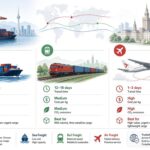

What Your Air Freight Quote Needs to Tell You
When you plan air freight from China, the first commercial question is not the rate but whether the quote you hold actually matches the cargo, the pickup point, the service level, and the destination delivery scope you need. Two quotes for the same route can look similar in price but differ radically in what they include, who handles each handoff, and what happens if the cargo is not ready on time. A quote-desk operator checks cargo readiness, pickup and delivery handoffs, service choices, included work, customer approvals, and likely cost exposure before recommending a path forward.
This guide walks through the operational decisions that turn a freight quote into a workable shipping decision. You will find the questions to ask, the gaps to close, and the confirmation points that protect your shipment from unnecessary cost and delay. The goal is a quote you can approve with confidence because you know what it covers and what it leaves for you or your consignee to manage.
Align the Shipment Scope Before You Compare
A freight quote is only as useful as the shipment scope it describes. Before you ask for a revision or compare multiple options, confirm these baseline fields with your forwarder. Each item changes the quote, and a mismatch in any one can make the price unusable.
| Scope Element | What the Forwarder Needs | Quote Impact |
|---|---|---|
| Cargo-ready date | Specific date and time window | Determines booking urgency, carrier availability, and potential storage charges |
| Pickup address and origin handling | Full address, floor, dock access, and handling requirements | Affects pickup fee, tail-lift or special equipment needs, and origin warehouse charges |
| Main route and service level | Origin airport, destination airport, and direct vs. connecting service | Drives the base freight, transit time, and carrier options |
| Cargo dimensions and weight | Piece count, dimensions, gross weight, and volume | Determines chargeable weight and whether the cargo fits standard pallet or container profiles |
| Destination delivery scope | Delivery address, appointment requirements, and consignee contact | Controls destination handling, final delivery charges, and accessorial risk |
| Included work and trade terms | What the forwarder arranges at origin and destination | Defines who books, clears, pays duties, and arranges final delivery |
Use this table as a checklist when you receive a quote. If any field is incomplete, request the forwarder to confirm it before you approve the booking. A quote with missing scope information is not a quote you can act on.
Chargeable Weight and the Cost Drivers That Matter
Air freight rates are almost always quoted per kilogram, but the actual chargeable weight is not simply the gross weight of your cargo. Carriers use the greater of the gross weight and the volumetric weight, which is calculated from the length, width, and height of each package. Volumetric weight is computed by multiplying the package dimensions and dividing by a divisor set by the carrier. The divisor can vary by route, carrier, and service type, so the same box can yield different chargeable weights on different quotes.
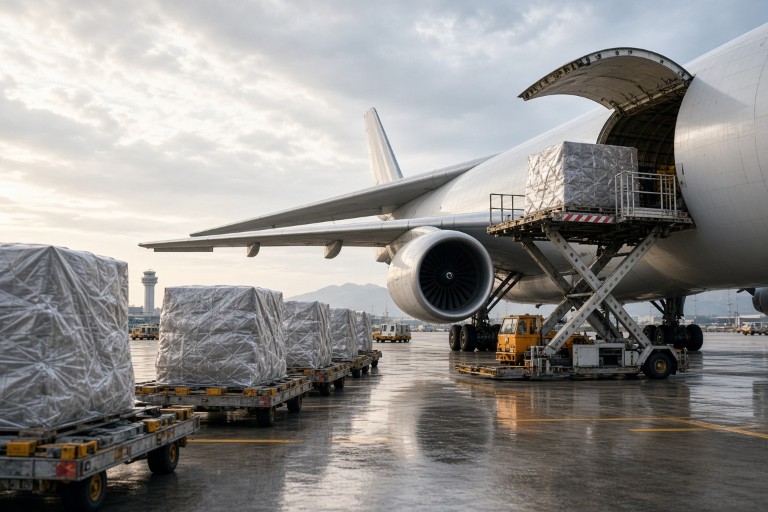
The operational cost drivers that affect your quote include the type of cargo, the packaging profile, the need for temperature control or hazardous materials handling, and the density of the shipment. A dense, compact shipment may charge based on gross weight, while a bulky, light shipment will almost always charge on volumetric weight. The pickup window, destination delivery appointment, and any weekend or holiday timing also influence the cost because they affect carrier capacity and routing options.
When you plan air freight from China, confirm with your forwarder the chargeable weight basis they used and the divisor they applied. Ask whether the quote includes the pickup, origin handling, documentation, and any security or screening fees. Each of these elements is a separate cost line that must be confirmed before you compare quotes across different forwarders.
Field note: A quote that shows only a per-kilo rate without a breakdown of the chargeable weight, pickup fee, or destination charges is incomplete. Request a full line-item breakdown and confirm the divisor used for volumetric weight before you proceed.
What the Quote Includes and Who Acts on Each Step
A complete air freight quote maps each line item to a specific operational handoff: origin pickup, origin handling and consolidation, main carriage by air, destination handling and customs clearance, and final delivery. The forwarder’s role varies by the trade terms and the service scope you agree on. In some arrangements, the forwarder arranges everything from pickup to final delivery, including customs brokerage and duty payment. In others, the buyer or consignee arranges destination clearance and delivery while the forwarder handles only the main carriage.
The key is to identify what is included in the quote and what remains for you or your consignee to arrange. Common included items are the air freight itself, origin handling, documentation, and some destination charges. Items that may be excluded are customs clearance fees, duties and taxes, storage beyond free time, delivery appointments outside normal hours, and accessorial services such as tail-lift or inside delivery.
To confirm the scope, ask the forwarder to provide a list of included services and a separate list of excluded or additional services. Then identify who confirms each remaining step: the forwarder confirms the pickup and main carriage, the customs broker confirms clearance feasibility, the consignee confirms the delivery appointment and access, and the buyer confirms the commercial terms and payment method. A quote that does not identify these responsible parties is incomplete.
Note: A freight quote is tied to the cargo, handoffs, route, service level, timing, and destination work stated in it. Carrier and handling conditions can change. Align the scope first, then request confirmation for the specific shipment.
Service Options and Their Operational Trade-Offs
When you plan air freight from China, you face a set of service choices that change cost, delivery control, and handoff risk. The main options are direct service versus consolidated service, standard versus expedited delivery, and door-to-door versus airport-to-airport or port-to-port scope.
Direct vs. consolidated: Direct service uses a single carrier flight with minimal transshipment, offering predictable transit and lower handling risk. Consolidated service combines multiple shipments on a shared flight, which can reduce freight cost but introduces a consolidation and deconsolidation step at origin and destination. The consolidated option works well for small shipments where cost is the priority, but it adds time and introduces an extra handoff point where damage or delay can occur.
Standard vs. expedited: Standard air freight typically moves on scheduled commercial or cargo flights with a transit time of three to seven days from origin airport to destination airport, depending on the route. Expedited service may use dedicated cargo aircraft or priority handling, shortening transit but increasing the freight cost significantly. Expedited service is appropriate for time-sensitive cargo where the cost of delay exceeds the freight premium.
Door-to-door vs. airport-to-airport: Door-to-door service includes pickup at origin, export handling, main carriage, import clearance, and delivery to the final address. This option minimizes the buyer’s coordination burden but shifts more cost and control to the forwarder. Airport-to-airport service leaves origin pickup and destination delivery to the buyer or consignee, reducing the forwarder’s scope and cost but increasing the buyer’s operational workload. The choice depends on your team’s capacity to manage the local handoffs and your access to reliable local providers.
For each option, ask the forwarder to quote the same shipment scope so you can compare the operational trade-off and the cost difference directly. Do not compare a door-to-door quote with an airport-to-airport quote and assume the price difference reflects only the extra services.
Where Air Freight Quotes Go Wrong and What Can Grow
The most common operational gaps in air freight quotes involve incomplete pickup addresses, incorrect chargeable weight, missing destination handling, delivery access failures, and appointment scheduling mismatches. A quote that looks competitive at first glance can become significantly more expensive when these gaps are closed.
Incomplete pickup address: If the pickup location is a factory or warehouse with limited dock space, floor-level loading, or weight restrictions, the forwarder may need to add a tail-lift, a flatbed, or additional labor. These accessorial charges are rarely included in a generic quote. Confirm the pickup address details and any site-specific requirements before the quote is finalized.
Chargeable-weight mismatch: A common error is quoting based on gross weight when the cargo will actually be charged on volumetric weight. The discrepancy can be substantial for light, bulky shipments. Always confirm the chargeable weight calculation and the divisor used.
Missing destination handling and delivery: The quote may exclude destination customs clearance, handling at the arrival airport, and final delivery to the consignee. If your trade term requires delivery to a named place, these costs must be included. Confirm the destination scope and ask for a breakdown of destination charges.
Delivery access and appointment failure: A delivery appointment that is missed or rescheduled at short notice can trigger storage charges, redelivery fees, and demurrage. Confirm the delivery address, appointment availability, and any access restrictions such as vehicle size, time windows, or security clearance.
Common mistake: Approving a quote without checking the pickup address for dock access or the destination address for delivery appointment requirements often leads to unexpected accessorial charges and delivery delays. Always confirm these operational details before you book.
Risk alert: A quote that does not include a clear pickup window, a cargo-ready confirmation, or a destination delivery appointment schedule is vulnerable to storage and rebooking charges. Confirm each timing element with the relevant party before you approve the booking.
What to Provide for an Accurate Quote
The quality of the quote you receive depends on the completeness of the information you provide. Group the inputs by who supplies or confirms them, and explain why each item changes the quote.
Supplied by the buyer or shipper:
- Cargo details: Piece count, dimensions, gross weight, and volume. The forwarder uses these to calculate chargeable weight and to confirm that the cargo fits standard handling equipment.
- Packing and packaging type: Palletized, crated, or loose. This affects handling, storage, and the risk of damage. Certain packaging types require special handling or additional documentation.
- Cargo-ready date and pickup window: The date and time when the cargo will be ready for pickup. A change in this date can affect carrier availability, booking fees, and storage charges at origin.
Confirmed by the forwarder:
- Route and service level: The forwarder selects the carrier, flight schedule, and service type based on the cargo readiness and destination requirements. The route and service level drive the base freight and transit time.
- Origin handling and documentation: The forwarder arranges pickup, export documentation, and security screening. The cost and scope of origin handling depend on the cargo type and origin location.
Provided by the consignee or destination party:
- Delivery address and appointment requirements: The consignee confirms the final delivery address, business hours, dock access, and any appointment scheduling process. This information prevents delivery failures and additional charges.
- Destination clearance and duties: The consignee confirms the import classification, duty rate, and any required permits. If the forwarder handles clearance, the consignee must provide a valid customs bond or clearance authorization.
When you provide complete information, the forwarder can return a quote that accurately reflects the operational scope. When any element is missing, the quote will include assumptions that you must confirm before approval.
Conditional Recommendation and Illustrative Example
For most shippers planning air freight from China, the practical default is a direct, standard service with door-to-airport or door-to-door scope, depending on the buyer’s local capabilities. Start by requesting a door-to-airport quote that includes pickup, origin handling, main carriage, and destination handling up to the arrival airport. Then separately request the door-to-door option that includes final delivery. Compare the two scopes and decide whether the premium for final delivery is justified by your consignee’s ability to arrange local transport.
If your cargo is dense and compact, the chargeable weight will likely be the gross weight, making the per-kilo rate the primary cost driver. If your cargo is light and bulky, confirm the volumetric divisor and consider whether consolidating the shipment with other cargo can reduce the chargeable weight exposure.
The key change factor is the cargo-ready date. If the date is firm and near-term, expedited service may be necessary to secure capacity. If the date is flexible, standard service offers a lower cost and more carrier choices. Always confirm the cargo-ready date with your supplier before you ask for a final quote.
Illustrative example (not a customer case): A buyer plans to move a shipment of commercial goods from a factory near Shanghai to a warehouse in Chicago. The cargo consists of 20 pallets with a total gross weight of 1,500 kg and total volume of 18 cubic meters. The buyer requests a door-to-door quote with standard service. The forwarder quotes a door-to-airport rate based on chargeable weight and a separate charge for destination handling and final delivery. The buyer confirms the pickup address has a loading dock and the delivery address has an appointment system. The quote is approved after the forwarder confirms the cargo-ready date and the delivery window.
Key Takeaways
- Align the shipment scope—cargo-ready date, pickup address, service level, and destination delivery scope—before you compare any quote.
- Confirm the chargeable weight basis and the divisor used for volumetric weight; a mismatch here can make a quote unusable.
- Identify what the quote includes and who acts on each handoff: origin pickup, main carriage, destination handling, clearance, and final delivery.
- Direct service and door-to-door scope reduce your coordination burden but cost more; consolidated and airport-to-airport scope reduce cost but increase your operational risk.
- Missing pickup details, delivery access restrictions, and appointment scheduling gaps are the main sources of unexpected cost growth.
- Provide complete cargo, timing, and delivery information to the forwarder so the quote accurately reflects the operational scope.
FAQ
What information do I need to get an accurate air freight quote from China?
You need the cargo piece count, dimensions, gross weight, volume, pickup address with access details, cargo-ready date, destination address with delivery appointment requirements, and the scope of services you want the forwarder to arrange. Complete information produces a quote you can act on.
How is chargeable weight calculated for air freight from China?
Carriers use the greater of the gross weight and the volumetric weight. Volumetric weight is calculated from the package dimensions and a carrier-specific divisor. The divisor varies by route, carrier, and service type, so confirm the divisor used in your quote.
What is the difference between door-to-door and airport-to-airport air freight?
Door-to-door includes pickup at origin, export handling, main carriage, import clearance, and delivery to the final address. Airport-to-airport covers only the main carriage between the origin and destination airports, leaving the pickup and delivery to the buyer or consignee.
What operational details often cause air freight quotes to increase?
Incomplete pickup addresses, incorrect chargeable weight calculations, missing destination handling and delivery charges, delivery appointment failures, and storage or rebooking fees are the most common causes of cost growth.
How do I compare air freight quotes from different forwarders?
Compare quotes only when they describe the same shipment scope, service level, and handoffs. Request a line-item breakdown so you can see what is included and excluded. A lower rate is not useful if it excludes essential services.
Who handles customs clearance when shipping air freight from China?
It depends on the trade terms and the service scope. In a door-to-door arrangement, the forwarder or a partner broker typically handles clearance. In an airport-to-airport or port-to-port arrangement, the consignee arranges clearance. Confirm this before you book.
What should I do if my cargo-ready date changes after I receive a quote?
Notify your forwarder immediately. A changed date may affect carrier availability, booking fees, and storage charges. The forwarder will revise the quote to reflect the new timing and capacity conditions.
Why do I need to confirm delivery appointment requirements before booking?
Delivery appointments determine when and how the cargo can be delivered. If the appointment is missed or the delivery address has access restrictions, you may incur storage charges, redelivery fees, and additional handling costs. Confirm the appointment process with the consignee before the quote is finalized.
Disclaimer: This page is general quote-planning guidance, not a binding quotation or delivery commitment. Actual charges and handoffs depend on the cargo, route, timing, provider confirmation, and destination conditions. Where duties, customs, tax, insurance, or contract questions apply, confirm them with the relevant party before booking.