
Which Air Freight Quote Can Actually Move This Cargo?
When you receive air cargo rates from multiple forwarders, the numbers rarely compare directly. The price that looks lower on paper may exclude the pickup, the destination handoff, or the cargo handling that your shipment actually requires. The quote with a higher line item may include work that the cheaper one treats as an accessorial. Before you approve any proposal, the practical question is not which rate is lowest, but which quote matches the cargo you are shipping, the service level you need, and the delivery point you specified.
Most air freight cost disagreements arise from mismatched scope, not from the base rate itself. A forwarder quoting on a chargeable-weight basis assumes the cargo dimensions you provided are final. If those dimensions change, the quote changes. A pickup window that misses the airline cut-off adds a rebooking fee. A delivery address with limited truck access adds a lift-gate charge or an appointment delay. The starting rate tells you very little until you align the cargo-ready date, the origin handoff, the main carriage service, and the destination delivery scope.
This guide walks through what a forwarding desk checks before it can give you a usable quote: cargo data, pickup and delivery handoffs, service-level choices, included work, customer approvals, and likely cost exposure. Use it to review your current air freight quote, identify what is missing, and request a revision that matches your actual shipment.
Scope Alignment: What a Forwarding Desk Checks First
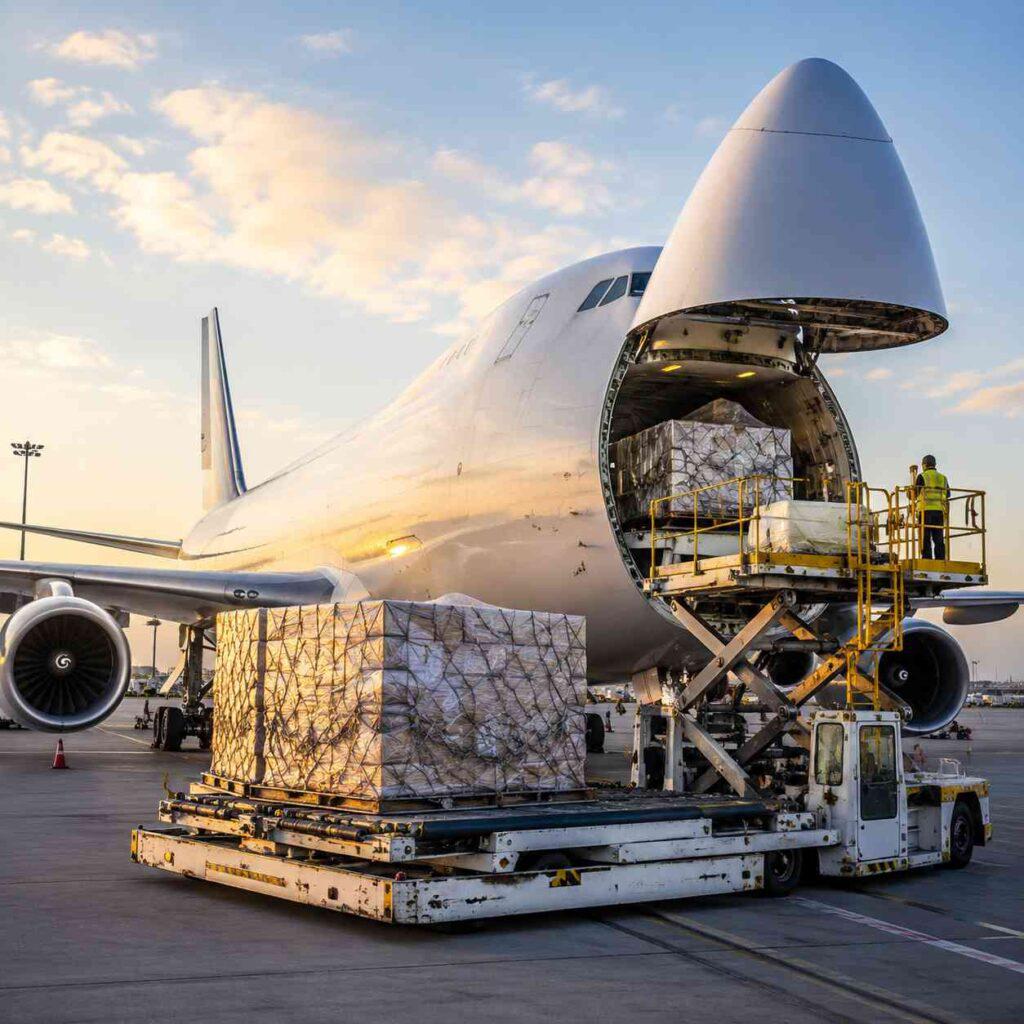
Before comparing air cargo rates, a forwarding desk aligns the shipment scope in a fixed order. Each field directly affects the quote basis and the handoff responsibility. If any field is incomplete or estimated, the quote is provisional and will change when the actual data arrives.
| Scope Field | What It Changes in the Quote | Who Must Confirm |
|---|---|---|
| Cargo-ready date | Airline space, cut-off, priority, and rebooking risk | Shipper or warehouse |
| Pickup address and access | Trucking, lift-gate, waiting time, and pallet jack needs | Origin warehouse contact |
| Main route and service level | Direct vs. consolidation, priority vs. economy, transit time | Forwarder and carrier |
| Cargo weight and dimensions | Chargeable weight, pallet fit, and aircraft capacity | Shipper or packing provider |
| Destination handoff type | Airport pickup, door delivery, or appointed delivery | Consignee or buyer |
| Delivery address and appointment | Accessorial charges, waiting time, and redelivery fees | Receiver or warehouse |
| Included work and services | Documentation, customs coordination, packaging, insurance | Forwarder and broker |
Once these fields are confirmed, the forwarding desk can quote on a comparable basis. Without them, two air cargo rates are essentially quoting two different shipments.
Charge Basis and Operational Cost Drivers for Air Cargo
Air freight rates are built on a chargeable weight calculation, but the operational drivers that change that calculation are not always obvious in the quote document. Understanding these drivers helps you review the quote with the forwarder and catch mismatches before booking.
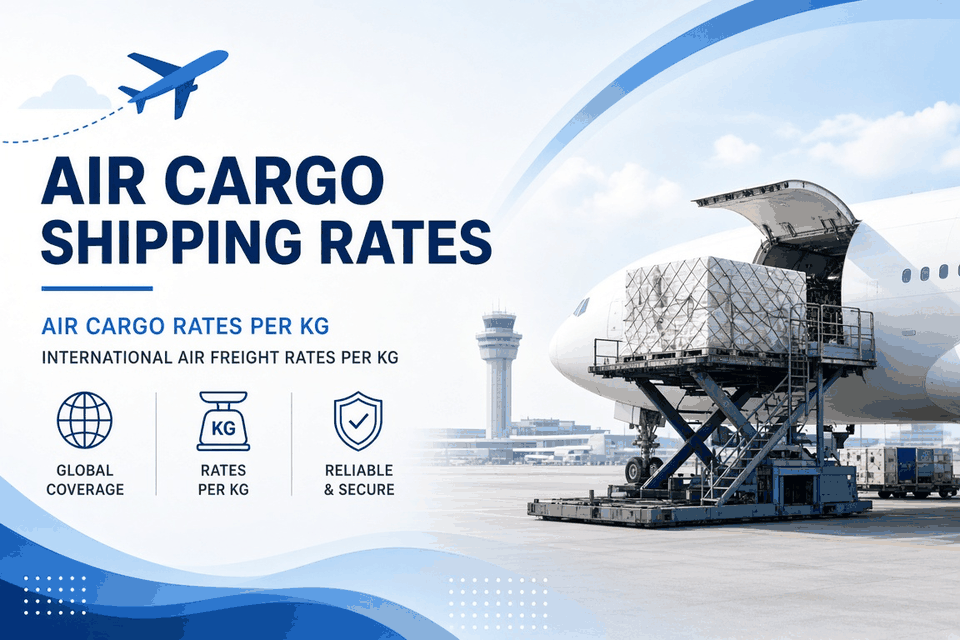
The chargeable weight is the greater of the actual gross weight and the volumetric weight. Volumetric weight is calculated from the cargo dimensions using a divisor set by the carrier or forwarder. If your shipment is light but bulky, the volumetric weight often governs the rate. If it is dense and heavy, the gross weight governs. The quote should state which weight basis was used and what dimensions were assumed.
Beyond the weight basis, the pickup and origin handling stage adds operational cost. A forwarder arranging a truck to collect cargo from a warehouse with a loading dock and pallet jack faces a different cost structure than one picking up from a site that requires manual loading, a lift-gate, or extended waiting time. The quote should specify whether pickup is included and what equipment is assumed.
The main carriage service level is the next cost driver. Direct flights on major carriers with priority handling cost more than consolidated services with one or more transshipment points. Express or guaranteed-time services carry a premium over standard air freight. The quote should name the service type, the carrier if confirmed, and the transit-time commitment.
Destination handling and delivery complete the cost picture. Charges at the destination airport include terminal handling, documentation, customs clearance coordination, and warehouse release. From the airport to the final delivery address, the quote may include trucking, lift-gate service, inside delivery, or an appointment window. Each of these is a potential accessorial if not scoped correctly.
Field note: When you review an air cargo rate quote, confirm the chargeable-weight basis, the pickup and delivery scope, and the service-level description. Ask the forwarder to state the assumed cargo dimensions, the carrier and route, and the destination handoff type in writing before you approve.
What the Air Freight Quote Includes and Who Acts
A usable air freight quote maps each line item to a handoff. When the quote document does not clearly state what is included, the forwarder’s standard terms fill the gap, often in ways that increase your cost. Review the scope against this operating map and ask for clarification on any line item that is not explicit.
At the origin, the quote may include pickup from your specified address, origin handling, palletization, documentation preparation, and customs export coordination. If the quote says “ex-works” or “from origin warehouse” without a pickup line, the pickup is likely excluded and will be quoted separately or arranged by you. Confirm who arranges the truck and who pays the waiting time if the cargo is not ready at the agreed time.
For the main carriage, the quote should state the air freight rate, the applicable chargeable weight, the carrier or service, and any fuel or security surcharges. These surcharges are often variable and may be adjusted at billing based on the prevailing index. Ask the forwarder whether the surcharges are fixed at the quote date or subject to change, and request a rate validity period.
At the destination, the quote may include terminal handling, customs clearance coordination, import documentation, and delivery to the final address. The threshold to watch is where the forwarder’s responsibility ends. Some quotes cover delivery to the destination airport only, leaving the consignee to arrange final transport. Others cover door delivery but exclude appointments, inside delivery, or residential access. Name the party who verifies each destination line item before booking.
Accessorials and optional services are the most common source of post-booking cost increases. Storage charges after free time, rebooking fees for missed cut-offs, document correction fees, and cargo inspection fees are often excluded from the base quote and triggered by operational events. Review the quote’s terms for these triggers and confirm the free-time allowance and rebooking procedure with the forwarder.
Note: A freight quote is tied to the cargo, handoffs, route, service level, timing, and destination work stated in it. Carrier and handling conditions can change. Align the scope first, then request confirmation for the specific shipment.
Service Options That Fit the Shipment
The choice of air freight service level changes cost, transit time, and the handoff control you retain. The best option for one shipment is rarely the best for another. Compare options on fit, not on price alone, and ask the forwarder to quote each option under the same scope so you can make a meaningful decision.
Priority air freight uses direct flights with guaranteed capacity and a defined transit window. It fits shipments with tight production deadlines, perishable goods, or high-value cargo that cannot tolerate delay. The weak fit is for non-urgent, bulky, or low-margin cargo where the premium outweighs the time benefit. The operational trade-off is firm cut-off times and limited flexibility for rebooking. Ask the forwarder: what is the guaranteed transit time, and what happens if the carrier misses it?
Economy or consolidated air freight moves cargo on a space-available basis through one or more hubs. It fits shipments where transit time is secondary to cost control and where the cargo can tolerate a two-to-four-day transit window. The weak fit is for time-critical deliveries, oversize cargo that may not fit on a specific flight, or shipments with rigid destination appointment windows. The operational trade-off is that the forwarder may re-route or hold cargo to optimize consolidation. Ask the forwarder: what is the typical transit range, and how is the shipment tracked through the consolidation network?
Express air freight offers door-to-door pickup, priority handling, and end-to-end tracking with a published service commitment. It fits urgent documents, samples, spare parts, and e-commerce fulfillment where the receiver expects a predictable delivery time. The weak fit is for palletized cargo over 100 kilograms or shipments to remote destinations where express networks have limited coverage. The operational trade-off is higher cost per kilogram and strict dimensional limits. Ask the forwarder: what is the weight and dimension limit for the express service, and what is the cutoff for same-day pickup?
When comparing options, require the forwarder to quote each service level with identical origin and destination scope, cargo data, and inclusion list. A priority quote that excludes destination delivery is not comparable to an economy quote that includes door delivery. Once the scope is aligned, the service-level decision becomes a practical trade-off between cost and delivery control.
For shipments where the delivery point is a residential address or a warehouse without a loading dock, consider whether a door-to-door air freight service with appointed delivery is more cost-effective than a port-to-port or airport-to-airport service that leaves the final leg to the consignee. The door-to-door option includes the forwarder’s coordination of the final delivery, including accessorials like lift-gate and appointment scheduling. The airport-to-airport option gives you control over the final leg but transfers the delivery risk and cost to your consignee or local provider. Align the service option with the receiver’s capability and the delivery appointment requirements.
Where Air Cargo Quotes Go Wrong and What Can Grow
Most cost increases on air freight shipments come from operational gaps that were not identified in the quoting stage. These gaps are not hidden fees; they are events that the quote assumed would not happen. When you review a quote, check for the following triggers and confirm how each is handled.
Incomplete or changed cargo data. If the actual weight or dimensions exceed the quoted values, the chargeable weight increases, and the rate may shift to a higher tier. A re-measurement at the carrier’s warehouse that shows different dimensions can result in a retroactive rate adjustment. Confirm the cargo data with the packing provider before the quote is finalized, and ask the forwarder how a dimension change is handled if it occurs after booking.
Pickup address and access assumptions. A quote that assumes a standard dock-high pickup with a pallet jack changes cost if the pickup site has limited access, requires a lift-gate, or involves waiting time beyond the included window. Confirm the pickup address and the loading conditions with the forwarder, and ask whether the quote includes waiting time and what the rate is for additional time.
Destination handoff and delivery appointment. If the delivery address requires an appointment, a lift-gate, inside delivery, or a specific time window, these are potential accessorials. A failed delivery attempt that requires re-delivery adds a second trucking charge. Confirm the delivery conditions with the receiver and ask the forwarder to include the required accessorials in the quote before booking.
Storage and free-time allowances. Most air freight quotes include a free-time allowance at the destination terminal before storage charges apply. If the consignee delays pickup or if customs clearance takes longer than expected, storage charges accrue daily. Confirm the free-time allowance and the storage rate with the forwarder, and ask about the procedure if the cargo arrives before the consignee is ready.
Documentation and customs coordination. If the documentation submitted to the forwarder has errors or omissions, the carrier may charge a document correction fee, and customs clearance may be delayed, triggering storage costs. Confirm the documentation checklist with the forwarder before the cargo departs, and assign a responsible party to review the paperwork against the forwarder’s requirements.
Common mistake: Assuming that a quoted air freight rate includes all destination charges, delivery accessorials, and storage allowances. Read the quote’s terms carefully and ask the forwarder to state which charges are included and which are billed separately. The rate itself is only one component of the total cost.
Risk alert: A missed airline cut-off due to late cargo readiness can trigger a rebooking fee, a rate change to a higher service tier, and a transit-time delay that affects delivery commitments. Confirm the cargo-ready date and the cut-off time with the forwarder before booking, and build a buffer into the timeline.
Quote-Request Handoff: What to Supply and Who Confirms
When you request a revised air freight quote or review a pending proposal, supply the following inputs to the forwarding desk in a structured handoff. Each input changes the quote directly, and the forwarder can verify each one against the current service offering. Group the inputs by the party responsible for confirming them.
Cargo and packing data. Supply the accurate weight, dimensions, pallet count, and any special handling requirements. This data sets the chargeable weight and the cargo eligibility for the service. Confirm with the packing provider or warehouse before sending.
Cargo-ready date and pickup window. Provide the date and time when the cargo is ready for pickup, the operating hours of the pickup site, and any loading constraints. This data determines the cut-off feasibility and the pickup scheduling. Confirm with the origin warehouse contact.
Route and service-level preference. State the preferred carrier if known, the service type, and any transit-time or routing constraints. This data allows the forwarder to match the service to the cargo urgency. Confirm with your supply chain or procurement team.
Delivery address and appointment conditions. Provide the full delivery address, the receiver’s operating hours, any appointment requirements, and the access conditions. This data determines the destination handoff cost. Confirm with the consignee or receiving warehouse.
Commercial scope and duty responsibility. State who is responsible for duties, taxes, and customs clearance coordination at the destination. This data affects the documentation scope and the broker coordination. Confirm with your trade compliance or procurement team.
Special handling or restrictions. Identify any dangerous goods, temperature-sensitive cargo, oversize items, or security restrictions. This data changes the carrier eligibility and the handling charges. Confirm with the cargo compliance or safety team.
When you send this handoff to the forwarder, ask for a quote that states the included work, the chargeable-weight basis, the service-level commitment, the pickup and delivery scope, and the validity period. The forwarder’s desk can then verify each input against the current carrier schedules, rates, and capacity and return a quote that matches your shipment.
For a more comprehensive view of how different transport modes compare for your shipment, review our air freight services page to understand the full service scope and available options.
Recommendation and Illustrative Example
For most commercial air freight shipments, the practical default is to request a quote on an economy or consolidated service with door-to-door delivery included, then compare it against a priority service quote under the same scope. This gives you a cost baseline and a time baseline for the same cargo and handoffs. The fact that changes the recommendation is the urgency of the delivery commitment and the receiver’s capability to handle the final leg.
If the delivery deadline is fixed and the penalty for delay is significant, default to the priority service and confirm the cut-off and the carrier commitment with the forwarder. If the deadline has buffer and the receiver can arrange its own pickup from the airport, default to the economy service with airport-to-airport or terminal delivery. In either case, align the quote scope first, then compare the rates.
Illustrative example: A buyer has 500 kilograms of commercial goods ready for pickup at a warehouse with a loading dock, to be delivered to a business address in a major city. The buyer requests a quote for a consolidated air freight service. The forwarding desk checks the pickup address, the cargo dimensions, and the delivery appointment requirements. After aligning the scope, the desk confirms that the pickup is included, the delivery appointment is scheduled, and the quote includes the destination terminal handling and the final trucking. The buyer reviews the quote scope, approves the service level, and requests a priority-service quote for comparison under the same scope. The priority quote shows a shorter transit window and a higher rate, allowing the buyer to make a cost-time decision.
This illustration is hypothetical and does not represent a specific shipment, quote, or customer result. Use it as a framework for reviewing your own air freight quote request.
When your shipment scope includes pickup and delivery coordination across both origin and destination, explore our door-to-door freight services for a comprehensive service option that covers the full logistics chain.
Key Takeaways
Align the shipment scope before comparing any air freight quote. Cargo-ready date, pickup, delivery, and included work must be identical to make a meaningful rate comparison.
Confirm the chargeable-weight basis and the cargo dimensions used in the quote. A dimension change after booking can increase the rate retroactively.
Map each quote line item to an operating handoff: origin pickup, main carriage, destination handling, and delivery. Know what is included and what is excluded.
Identify the operational triggers that can add cost: changed cargo data, access issues, delivery appointment failures, storage overruns, and documentation corrections.
Request a priority-service quote and an economy-service quote under the same scope to make a practical cost-time decision for your shipment.
Supply the forwarding desk with complete cargo, pickup, delivery, and special-handling data before the quote is finalized to avoid provisional rates and post-booking adjustments.
FAQ
What is the chargeable weight for air cargo rates?
The chargeable weight is the greater of the actual gross weight and the volumetric weight. Volumetric weight is calculated by multiplying the cargo dimensions and dividing by a carrier-specified divisor. The quote should state which weight basis was applied and what dimensions were used.
Why do two air freight quotes for the same route show different rates?
Different rates usually reflect different scope assumptions. One quote may exclude pickup or destination delivery while the other includes them. The service level, carrier, cut-off time, and chargeable-weight basis also differ. Align the scope before comparing.
What does door-to-door air freight include?
Door-to-door air freight includes pickup from the origin address, main carriage, destination terminal handling, customs clearance coordination, and delivery to the final address. The specific inclusions vary by forwarder and service level, so confirm the scope in the quote.
What are common accessorial charges on air freight shipments?
Common accessorial charges include lift-gate service, inside delivery, appointment scheduling, waiting time beyond the included window, storage after free time, rebooking fees, and document correction fees. Confirm these with your forwarder before booking.
How do I get an accurate air freight quote?
Supply the forwarding desk with accurate cargo data, the pickup address and access conditions, the delivery address and appointment requirements, the service-level preference, and any special handling needs. Ask the forwarder to state the included work and the validity period.
What is the difference between priority and economy air freight?
Priority air freight uses direct flights with guaranteed capacity and a firm transit commitment. Economy or consolidated air freight moves on a space-available basis through one or more hubs, with a longer and less certain transit time. Priority costs more but offers tighter delivery control.
Who arranges customs clearance for air freight?
Customs clearance can be arranged by the forwarder, a licensed customs broker, or the consignee. The quote should state who handles clearance coordination and whether the service is included or arranged separately. Confirm the party responsible before the cargo departs.
What happens if my cargo is not ready at the pickup time?
If the cargo is not ready at the scheduled pickup time, the truck may incur waiting time charges, or the pickup may be rescheduled with a rebooking fee. If the delay causes the cargo to miss the airline cut-off, the shipment may be rebooked on the next available flight with additional charges.
Disclaimer: This page is general quote-planning guidance, not a binding quotation or delivery commitment. Actual charges and handoffs depend on the cargo, route, timing, provider confirmation, and destination conditions. Where duties, customs, tax, insurance, or contract questions apply, confirm them with the relevant party before booking.