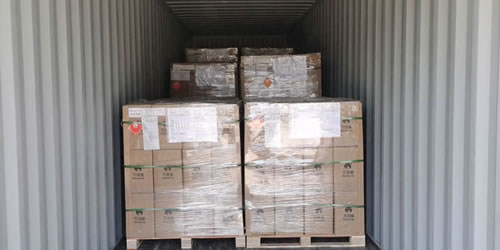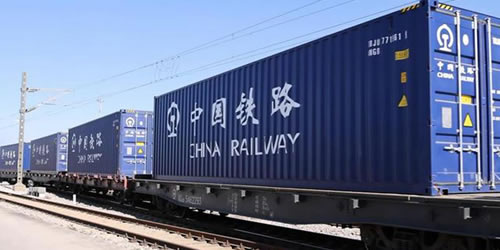
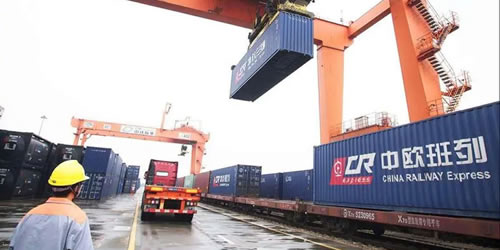
Faster than ocean, far cheaper than air, and greener than both. We move FCL, LCL, reefer, and dangerous goods across the New Silk Road — coordinated end to end, from your supplier’s door in China to your terminal in Europe.
Start here. Each mode between China and Europe trades off speed, cost, and carbon — this is the fastest way to see where rail wins for your cargo and deadline.
Transit ranges above are indicative industry figures; exact cost, timing, and carbon depend on your lane, season, and cargo — we confirm them for your shipment at quote.
Rail is a brilliant middle ground — but not for everything. An honest look at when it wins, and when another mode serves you better.
Quicker than ocean, far cheaper than air, and greener than trucks and planes. Here’s what that means for your cargo.
Rail can reach Europe from China in under three weeks — often around twice as fast as ocean freight. A practical choice when speed matters but air is out of budget.
≈2× faster than seaFor comparable routes, rail typically costs up to 50% less than air. It’s the middle ground for businesses balancing delivery speed against transport cost — especially for mid-value goods.
Up to 50% cheaper than airModern rail freight comes with end-to-end tracking and streamlined customs. That visibility lets you monitor every leg, cut uncertainty, and plan onward delivery with confidence.
Regular weekly departures on the main corridors make lead times predictable — easier to plan replenishment and hold less safety stock than lengthy ocean sailings allow.
Rail emits far less CO₂ per kilo than air, and less than long-haul road. For companies working to cut their carbon footprint, it’s a real step toward more sustainable trade.
Much lower CO₂ per kgFCL, LCL, reefer, and dangerous goods, coordinated from your supplier’s door in China to your terminal in Europe.
How long does rail freight take from China to Europe? Here are the key corridors and typical door-to-door times shippers see on the New Silk Road.
Rail hubs & New Silk Road corridors
Major corridors link China’s production hubs to European cities — usually 12–20 days end to end.
| Route from China | Typical transit time |
|---|---|
| China → Warsaw (Poland) | ~12 days |
| China → Brussels (Belgium) | 12–14 days |
| China → Hamburg (Germany) | ~14 days |
| China → Lyon (France) | 14–17 days |
| China → Duisburg (Germany) | 15–18 days |
| China → London (UK) | 18–20 days |
| China → Madrid (Spain) | 20–22 days |
How the routes work. China–Europe rail runs on dedicated New Silk Road corridors, crossing Kazakhstan, Russia, Belarus, and Poland via purpose-built terminals and customs lanes. Always check both your origin city in China and the European arrival terminal — both affect cost, speed, and onward delivery.
Match the service to your product to optimize cost, safety, and speed.
Every step managed: collection at your China supplier, rail transport, customs clearance, and final delivery in Europe. For those who want simplicity and full visibility end to end.
Learn more →Full Container Load for dedicated shipments, or Less-than-Container-Load to share space and cut cost on smaller volumes. LCL suits roughly 1–28 m³ and opens rail to small businesses.
Learn more →Temperature-controlled units keep food, pharmaceuticals, or chemicals within spec, maintaining the cold chain across the long Eurasian journey.
Learn more →Special safety rules cover hazardous cargo like lithium batteries or certain chemicals. Dedicated procedures keep these shipments compliant and handled safely.
Learn more →If your goods aren’t listed, tell us — most non-hazardous and correctly documented cargo can move by rail.
High-value goods that benefit from rail’s speed and security.
Just-in-time components for European assembly lines.
Palletized or crated industrial goods and spare parts.
Seasonal fashion and fabric that can’t wait 5–6 weeks by sea.
Temperature-controlled cargo kept in spec across Eurasia.
Replenishment for European warehouses and marketplaces.
Five clear stages from your supplier’s door to final delivery — we coordinate each one and keep you updated throughout.
Collection from your supplier and export-grade packing at our China terminal.
Export declaration, container loading, and dispatch from the origin rail hub.
The Eurasian crossing, including the gauge change at the border — handled for you.
Customs handled at the European terminal; duties and taxes settled.
Onward trucking to your warehouse or address when door service is booked.
We coordinate the corridor, the border gauge change, and customs — you get predictable lead times and a single team to talk to.
Rail pricing is more than one number. Knowing the parts helps you compare quotes fairly and avoid surprises at destination.
Per container (FCL) or per CBM / kg (LCL), driven by corridor, capacity, and season.
Pickup at your China supplier, export declaration, and loading at the origin rail hub.
Container transfer at the gauge-change points (e.g. Khorgos, Brest) between rail networks.
Import clearance, duties, and taxes set by the destination country on the declared value.
Onward trucking from the European terminal to your warehouse or address.
Reefer power, dangerous-goods handling, peak-season rates, and optional cargo insurance.
Accurate documents keep the border crossings moving and duty calculation correct. Your exact set depends on the product and destination.
Declared value, terms, and parties — the basis for duty.
Cartons, weights, and dimensions per shipment.
The CIM / SMGS waybill — the rail contract of carriage for the cargo.
Where required for duty preference or import rules.
For lithium batteries and other regulated goods, where applicable.
Cargo cover, when you insure the shipment.
The Belt and Road Initiative connects Chinese manufacturers to European markets by rail — the backbone that made long-distance freight trains a dependable option.
Since 2011, dedicated lines have linked over 15 Chinese cities to European hubs like Duisburg, Hamburg, Lyon, Madrid, and London. Fixed departures, multimodal terminals, and 14–18 day transit suit everything from electronics and auto parts to temperature-sensitive goods.
Trains cross Kazakhstan, Russia, Belarus, and Poland before reaching Europe — an overland alternative when ocean routes face delays. Inland hubs like Chengdu, Chongqing, Zhengzhou, and Xi’an connect directly to European cities, backed by both EU and Chinese investment.
Cross-border rail rewards experience. These are the things worth checking before you commit your cargo to a corridor.
Deep knowledge of routes, gauge changes, and border rules across China, Central Asia, and Europe prevents delays and surprise costs.
Built over a decade on the Silk Road corridors.
Direct links from China’s production centers to major European hubs mean fewer transfers and more destinations reached.
Some networks now connect 20+ countries.
Advance declarations and multiple customs regimes handled digitally, with 24/7 coordination, keep shipments moving across borders.
Right systems cut errors and waiting time.
Standard, reefer, and dangerous-goods options mean cargo of any size or sensitivity moves safely and efficiently.
Matching cargo to container is key.
Clear all-in pricing and published departures let you plan confidently, compare options, and avoid surprises.
Predictable rates, regular departures.
A team fluent in Mandarin, Russian, and English bridges documentation and regulations across continents, so problems get solved faster.
Support across languages and time zones.
Common questions from businesses weighing up the China–Europe rail corridor.
Rail bridges the gap between sea and air: about twice as fast as ocean freight, and significantly cheaper than air. For businesses that need reliability and speed but can’t justify air-cargo prices, it’s a practical middle ground.
The mix grows every year — electronics, automotive parts, machinery, clothing, and even temperature-controlled goods like food and pharmaceuticals routinely move by train in reefer containers.
On the China side: Yiwu, Chongqing, Zhengzhou, Chengdu, and Xi’an. On the European side: Duisburg, Hamburg, Lyon, Madrid, London, and Warsaw — each a hub for further distribution.
Yes. Tracking is available at every step via GPS and digital border checks, so you can see where your shipment is at any point — much like air express or courier services.
For comparable China–Europe routes, rail typically costs up to 50% less than air, while still arriving in roughly 12–20 days. We confirm current rates for your exact lane at quote.
Yes. Rail emits far less CO₂ per kilo than air and less than long-haul trucking. For a 40-ft container to Europe, rail’s per-tonne emissions are a fraction of air freight’s — a meaningful cut for carbon-conscious supply chains.
China/Europe and the former-Soviet network use different track gauges, so containers are transferred between trains at the border (e.g. Khorgos or Brest). It’s a routine, well-drilled step — we coordinate it so it doesn’t delay your cargo.
Send us your origin city in China, destination in Europe, cargo details, and target timeline. We’ll recommend the corridor and container type and return a clear, all-in quote. Contact our team to begin.