

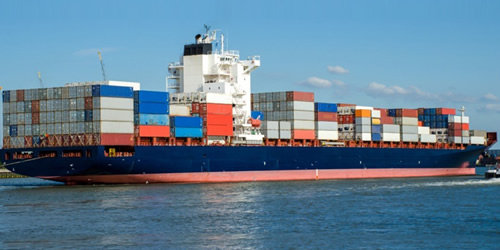
Marine and air cargo cover arranged through established insurers — protecting the full declared value of your shipment door to door, so a loss becomes a claim, not a write-off.
When cargo is lost, damaged, or caught in an incident at sea, the carrier’s liability rarely comes close to what the goods are worth — and even that is usually paid only if the carrier is shown to be at fault. Cargo insurance is designed to close that gap: it helps protect the value of your goods, door to door, and does not depend on proving who was to blame. TJ China Logistics arranges marine and air cargo cover for your shipments through established insurers, and helps you through a claim if something goes wrong. We are a freight forwarder placing cover on your behalf, not a licensed insurer or insurance broker; the policy terms and any claim decision rest with the insurer. Tell us the commodity, its value, and the route, and we will arrange cover to match.
Many shippers assume the shipping line or airline will make them whole after a loss. Usually they will not — at least not in full. International conventions cap a carrier’s liability by weight, and paying out at all usually depends on showing the carrier was at fault — a slow, uncertain process.
A worked example. A carton of electronics worth USD 8,000 lost in ocean transit is typically capped at the Hague-Visby package limit of 666.67 SDR — a fraction of its value, and payable only where the carrier is shown to be liable. Cargo insurance can cover the full declared value, subject to the policy terms, without you having to prove fault.
Tell us what you are shipping and we will arrange cover sized to its real value.
Marine cargo cover is written to the Institute Cargo Clauses — the market-standard wordings maintained by the Joint Cargo Committee. (A) is the broadest “all risks” cover; (B) and (C) cover a named list of perils. The table below is a general guide to the perils each clause is designed to respond to — not a promise of payment. Whether any particular loss is paid depends on the cause of loss, the exclusions, and the full policy terms. Which level fits depends on your commodity, packing, and route.
| Covered event | ICC (A) | ICC (B) | ICC (C) |
|---|---|---|---|
| Basis of cover | All risks, except exclusions | Named perils (broad) | Named perils (major only) |
| Fire, explosion, vessel sinking, stranding, collision | Typically covered | Typically covered | Typically covered |
| General average & salvage charges | Typically covered | Typically covered | Typically covered |
| Jettison | Typically covered | Typically covered | Typically covered |
| Washing overboard, water entering hold/container | Typically covered | Typically covered | Not covered |
| Earthquake, volcanic eruption, lightning | Typically covered | Typically covered | Not covered |
| Theft, pilferage, non-delivery, handling damage | Typically covered | Not covered | Not covered |
| War & strikes | Optional add-on | Optional add-on | Optional add-on |
War and strikes risks are excluded from all three clauses and covered only by separate Institute War and Strikes Clauses. For air shipments the equivalent wording is the Institute Cargo Clauses (Air). We recommend a level to match your goods and confirm the exact terms with the insurer at quote.
All-risk cover on the declared value, arranged with the freight — so a loss is a claim, not a write-off.
From sizing the insured value to issuing the certificate — placed with the freight so nothing falls between the two.
We recommend an ICC level to suit your commodity, packing, and route.
Typically CIF value plus 10%, following the market convention for insured value.
Cover placed with an established insurer, with a certificate or policy for your shipment.
Cover arranged to run warehouse to warehouse, not just port to port.
War and strikes cover added where the route or commodity calls for it.
If something goes wrong, we help you gather documents and file with the insurer.
Statutory liability limits by mode — capped by weight, not by the value of your cargo.
The insured value is what you would claim after a total loss; the premium is what you pay to protect it.
The market convention insures Cost, Insurance and Freight plus 10% — covering the goods and the incidental costs of a loss. This is also the minimum required of a seller under the CIF and CIP Incoterms.
Commodity and its fragility, the cover level, packing, route and transhipments, and loss history. Because these vary shipment to shipment, we confirm the premium with the insurer at quote rather than quote a rate here.
Premium is typically a small fraction of the insured value — modest against the cost of writing off a shipment. Your exact figure is confirmed before you commit.
If a vessel sacrifices cargo or incurs extraordinary expense to save the voyage — jettisoning containers, hiring salvage tugs after a grounding — the loss is shared among all cargo owners in proportion to value, under the York-Antwerp Rules.
Without insurance, you may have to post a deposit to get your goods back. When general average is declared, the shipowner can hold consignments — including yours, even if it is undamaged — until each owner posts a general-average bond or deposit. Cargo insurance to the Institute Cargo Clauses typically covers your general-average and salvage contribution, so you generally avoid funding it out of pocket.
Commodity, value, packing, and the origin-to-destination route.
We suggest an ICC level and any add-ons, and set the insured value.
The insurer confirms the premium; you approve before we bind.
Cover is placed and a certificate or policy issued for the shipment.
If a loss occurs, we help you document and file it with the insurer.
Acting fast and preserving evidence protects your claim. These steps matter before anything is moved or thrown away.
Record visible damage or shortage before you sign for the cargo.
Packaging, seals, container, and goods — before and during unpacking.
Keep the damaged goods and packing; insurers may need to survey them.
Tell us and the insurer quickly — policies carry time limits for notice.
Register a claim against the carrier too, to preserve the insurer’s right of recovery.
Having these ready keeps a claim moving. Your exact set depends on the loss and the insurer.
Proof of cover and the insured value for the shipment.
Establishes the value and contents of the goods lost or damaged.
The transport contract and record of how the cargo moved.
Evidence of the damage, and the surveyor’s findings where one attends.
The signed receipt showing damage or shortage recorded on delivery.
Copy of the notice filed with the carrier, preserving recovery rights.
Damage from poor packing is typically excluded under the standard clauses; pack for the journey, not the shelf.
Loss from the nature of the goods themselves — perishing, rust, natural leakage — is generally not covered.
Loss of market or loss caused purely by delay is generally excluded, even where the delay itself stems from a covered peril.
Normal wear, ordinary loss in weight or volume, and gradual deterioration usually sit outside cover.
These need the separate war and strikes clauses — flag risky routes so we add them.
Insure the full CIF+10%; declaring a lower value can reduce what you recover on a partial loss.
We place and support the cover; the insurer underwrites the policy and decides the claim. That split keeps your protection clear and your paperwork in one place.

Insure the cargo and let one team handle the whole journey.
No. We are a freight forwarder. We arrange marine and air cargo cover for your shipments through established insurers and help you through a claim. The policy is underwritten by the insurer, who sets the terms and decides any claim.
Only up to a statutory limit set by weight — for sea freight, 2 SDR per kg or 666.67 SDR per package under the Hague-Visby Rules; for air, 26 SDR per kg under the Montreal Convention. That is usually far below the value of the goods, and the carrier generally pays only where it is shown to be at fault. Cargo insurance is designed to protect the declared value without you having to prove fault, subject to the policy terms.
ICC (A) is “all risks” cover subject to standard exclusions. ICC (B) and (C) cover a named list of perils — (B) is broader, (C) covers only major casualties such as fire, sinking, and collision. See the coverage table above for what each includes.
The market convention is CIF value plus 10%, which also meets the minimum a seller must arrange under the CIF and CIP Incoterms. Insuring the full CIF+10% helps a partial loss be settled more fully, subject to the policy terms.
The premium is typically a small fraction of the insured value and depends on the commodity, cover level, packing, and route, so we confirm it with the insurer at quote rather than publish a rate. It is usually modest against the cost of writing off a shipment.
Not by the standard clauses — war and strikes are excluded and covered only by separate Institute War and Strikes Clauses. Tell us the route and commodity and we will add them where appropriate.
After a major incident, the loss and salvage costs are shared among the cargo owners in proportion to value under the York-Antwerp Rules. Without insurance you may have to post a bond or cash deposit before your goods are released — even if your cargo is undamaged. Insurance typically covers your contribution.
Note the damage on the delivery receipt, photograph everything, keep the goods and packing, and notify us and the insurer promptly — policies carry time limits. Also register a claim against the carrier to preserve recovery rights. We help you assemble and file the documents.
Send the commodity, its value, and the route, and we will recommend the cover, confirm the premium with the insurer, and arrange it alongside your freight.
Request an insurance quote