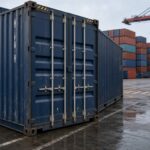

Shipping container dimensions determine how much cargo fits in a single unit, what equipment can handle it, and whether your shipment moves by the routes you plan. The three standard sizes—20-foot, 40-foot, and 40-foot high cube—each carry distinct internal volume, payload capacity, and door-opening dimensions that directly affect packing density, transport cost per unit, and equipment availability at origin and destination.
The operational consequence is straightforward: select the wrong container size and you either pay for unused space, exceed the container’s weight limit, or discover at the port that your cargo cannot be loaded through the door. This guide gives you the usable dimensions, the decision logic for each size, and the verification points that prevent last-minute rebooking or cargo rejection.
Standard Container Dimensions and What They Control
The international shipping industry operates primarily on three ISO-standard dry container sizes. These dimensions govern cargo capacity, handling equipment compatibility, chassis availability, and stowage planning on vessels and railcars. External dimensions determine whether a container fits cell guides, chassis, and terminal stacking equipment. Internal dimensions and door openings determine what cargo actually fits inside.
| Container type | External dimensions (L × W × H) | Internal dimensions (L × W × H) | Door opening (W × H) | Internal volume | Max payload |
|---|---|---|---|---|---|
| 20 ft standard | 20′ × 8′ × 8′6″ | 19′4″ × 7′9″ × 7′10″ | 7′8″ × 7′6″ | ~1,170 cu ft (33 cbm) | ~28,000 kg |
| 40 ft standard | 40′ × 8′ × 8′6″ | 39′5″ × 7′9″ × 7′10″ | 7′8″ × 7′6″ | ~2,390 cu ft (67 cbm) | ~26,500 kg |
| 40 ft high cube | 40′ × 8′ × 9′6″ | 39′5″ × 7′9″ × 8′10″ | 7′8″ × 8′6″ | ~2,690 cu ft (76 cbm) | ~26,000 kg |
The payload figures in the table are typical maximums for standard dry containers. Actual allowable payload depends on the carrier, route, vessel weight restrictions, and chassis or trailer weight limits. The critical number you need from your carrier is the operational weight limit for your specific booking, not the theoretical maximum printed on the container door.
Beyond the three standard sizes, specialized containers exist for specific cargo types: open-top containers for overheight goods, flat-rack containers for wide or long items, refrigerated containers for temperature-sensitive cargo, and pallet-wide containers for European pallet configurations. These are exception cases that require individual dimension verification with the carrier before booking.
Field note: Container dimensions vary slightly by manufacturer and age. The numbers in this table are industry-standard ISO values used for planning. Always verify the specific container’s internal dimensions and door opening from the carrier’s equipment specification before finalizing a packing plan, particularly for cargo that fills the container to its length, width, or height limits.
Choosing the Right Container for Your Cargo
The container size you select is a three-variable decision: cargo volume, cargo weight, and cargo dimensions (particularly height and length). A 40-foot high cube gives you the most volume and the tallest door opening. A 20-foot container gives you the lowest total capacity but often provides a better weight-to-volume ratio for dense cargo and may be more widely available at smaller ports or inland depots.
20-ft container: Best for dense, heavy cargo weighing more than 20,000 kg but occupying less than 30 cbm. Widely available, easier to handle in congested terminals, and often the only size that can be moved by certain chassis or rail equipment in regional networks.
40-ft container: Best for light to medium-density cargo that fills more than 30 cbm but stays under the payload limit. The standard choice for consolidated shipments, palletized goods, and most dry freight moving on major ocean routes.
40-ft high cube: Best for voluminous but light cargo that requires the extra 12 inches of internal height. Essential for cargo that exceeds 7′6″ in height, such as certain machinery, furniture, or stacked pallets with tall packaging.
Weak-fit cases are equally important to recognize. A 40-foot high cube is a poor choice for dense cargo approaching 26,000 kg because the extra height adds no value and the container’s tare weight reduces available payload compared to a standard 40-foot. A 20-foot container is a poor choice for light, bulky cargo that could fill 60 cbm because you would need two containers, doubling the per-unit transport cost.
The decision changes based on the ocean freight service you are using, the origin and destination ports’ equipment availability, and the chassis or trailer type at each end. For example, some inland rail ramps cannot handle 40-foot high cube containers on certain chassis types, and some vessel cells have height restrictions that affect stowage.
Trade-offs and Alternatives
The primary trade-off in container selection is between volume capacity and weight capacity. A 20-foot container offers lower volume but generally accepts a higher payload than a 40-foot container because the container itself weighs less. A 40-foot high cube offers the most volume but the lowest payload because the extra steel adds tare weight.
This trade-off matters most for cargo that is both heavy and bulky. If your cargo weighs 24,000 kg and occupies 35 cbm, a 20-foot container meets the weight but cannot fit the volume. A 40-foot container fits the volume but may exceed its payload limit of 26,500 kg if your cargo is at the upper end. A 40-foot high cube has even lower payload, so it would be worse. The practical solution in this scenario is to split the cargo across two 20-foot containers or use a specialized flat-rack container with a higher payload, if available.
Alternatives to standard dry containers include:
- Open-top containers for cargo that exceeds the standard door height or needs top-loading via crane.
- Flat-rack containers for cargo that exceeds standard container width or length, such as machinery or pipes.
- Pallet-wide containers (also called “Euro pallet containers”) that are slightly wider to accommodate two standard European pallets side by side.
- Refrigerated containers for temperature-sensitive cargo, which have different internal dimensions due to insulation and refrigeration equipment.
For cargo moving by rail freight or door-to-door services, container dimensions also affect equipment compatibility on railcars and truck chassis. A 40-foot high cube, for example, may exceed the height clearance on certain rail routes or under low bridges on the drayage route from the rail ramp to the final delivery address. Confirm height restrictions with your transport provider before booking a high-cube container.
The practical selection rule is to start with the cargo’s total weight and total volume. If volume exceeds 50 cbm, a 40-foot container is likely the correct choice. If volume is under 30 cbm and weight is over 20,000 kg, a 20-foot container is likely correct. If weight is under 20,000 kg and volume is between 50 and 70 cbm, the choice depends on height: standard 40-foot if cargo is under 7′6″ tall, high cube if it exceeds that threshold.
Operational Requirements
Before a container is assigned to your booking, you must provide accurate cargo dimensions, weight, and any special handling requirements to the carrier or freight forwarder. The operational requirements that affect container dimension decisions fall into four categories:
- Verified gross mass (VGM): You must provide the container’s total weight (container tare + cargo weight) before the vessel loads. The VGM must be within the container’s payload limit and the vessel’s stack weight limits. The responsible party is the shipper; verification occurs through a calibrated weighing method.
- Cargo dimensions: You must provide the length, width, and height of each piece of cargo, including packaging. The container’s internal dimensions and door opening must accommodate every piece. The verification point is the carrier’s equipment specification for the assigned container.
- Door clearance: For cargo that passes through the container door, the width and height of the door opening must exceed the cargo’s dimensions. This is a common failure point for cargo that fits the internal volume but cannot be loaded through the door.
- Equipment availability: The container size and type you request must be available at the origin depot on your desired pickup date. Lead times vary by location; confirm availability before finalizing a packing plan.
The variables to confirm with your carrier or forwarder before booking include: the specific container’s internal dimensions for the unit you will receive, the operational weight limit for your route, the door opening dimensions, and any route-specific height or weight restrictions that apply to your origin and destination.
Source note: Container specifications in this section are based on ISO standard 668:2020 for Series 1 freight containers. Individual carriers and container manufacturers may publish equipment specifications that vary slightly from the ISO standard figures. Always use the carrier-provided specification for the specific container unit assigned to your booking.
Mistakes and Operator Checks
Two errors recur in container dimension planning: assuming the door opening matches the internal dimensions, and treating the theoretical maximum payload as the operational limit. Each carries a distinct consequence and requires a specific prevention check.
Mistake: Planning cargo that fits the internal volume but exceeds the door opening. The trigger is measuring only the container’s length, width, and height while ignoring the door’s width and height. The consequence is that the cargo cannot be loaded through the door, requiring unpacking, repacking, or last-minute container substitution. Prevention: measure every piece of cargo at its widest and tallest points, including packaging, and compare those measurements to the container’s door opening dimensions before you begin packing.
Mistake: Using the container’s printed maximum payload as the allowable cargo weight. The trigger is reading the container door plate and assuming that number is your limit. The consequence is that your container may be rejected at the terminal for exceeding the carrier’s operational weight limit, which is often lower than the door plate maximum due to chassis, vessel, or route restrictions. Prevention: request the operational weight limit for your specific booking from the carrier before you load the container.
Risk alert: A container that exceeds its operational weight limit at the port will be refused for loading. The container must be unloaded and re-stuffed into two containers or a larger container with sufficient weight capacity. This process adds between 24 and 72 hours to your transit time and incurs terminal handling fees, equipment repositioning charges, and additional drayage costs. Confirm your cargo weight with a certified scale and compare it to the carrier’s operational limit before the container arrives at the terminal.
Operator checks that prevent these mistakes: always obtain the carrier’s equipment specification for the container unit you will use, request the operational weight limit in writing, measure every piece of cargo including packaging, and perform a load plan that verifies each piece fits through the door opening before the container is positioned for loading.
Field note: A common practice among experienced shippers is to maintain a 5% margin on both volume and weight. If your cargo occupies 63 cbm in a 67-cbm container, or weighs 25,000 kg on a 26,500 kg limit, you have room for packaging variation, uneven stowage, or re-weigh discrepancies. This margin also protects you if the actual container you receive has slightly smaller internal dimensions than the specification sheet.
Disclosure: This guide provides general logistics information and may refer to services relevant to the topic. Carrier terms, customs requirements, fees, service coverage, and operating conditions can change. Confirm current requirements and responsibilities before acting.
Key Takeaways
- Use a 20-foot container for dense cargo under 30 cbm that exceeds 20,000 kg. Verify the container’s door opening and internal height before packing.
- Use a 40-foot standard container for cargo between 30 and 67 cbm that stays under 7′6″ in height and within the carrier’s operational weight limit.
- Use a 40-foot high cube only when the cargo exceeds 7′6″ in height or when the extra 9 cbm of volume is essential and the weight is under 26,000 kg.
- Always request the carrier’s operational weight limit and equipment specification for the specific container unit you will receive.
- Maintain a 5% margin on both volume and weight to accommodate packing variation and last-minute adjustments.
- Confirm equipment availability, route-specific height restrictions, and chassis compatibility before booking a high-cube container.
Frequently Asked Questions on Container Dimensions
What are the standard shipping container dimensions for a 20-foot container?
The external dimensions of a standard 20-foot container are 20 feet long, 8 feet wide, and 8 feet 6 inches high. Internal dimensions are approximately 19 feet 4 inches long, 7 feet 9 inches wide, and 7 feet 10 inches high. The door opening is about 7 feet 8 inches wide and 7 feet 6 inches high. Internal volume is approximately 1,170 cubic feet (33 cubic meters).
What is the difference between a 40-foot standard and a 40-foot high cube container?
A 40-foot high cube container has the same length and width as a standard 40-foot container but is 12 inches taller. External height is 9 feet 6 inches compared to 8 feet 6 inches. Internal height increases from 7 feet 10 inches to 8 feet 10 inches. Door opening height increases from 7 feet 6 inches to 8 feet 6 inches. The high cube adds approximately 300 cubic feet (8.5 cubic meters) of internal volume.
Can I put a 40-foot high cube container on any chassis or railcar?
Not always. A 40-foot high cube container is taller than a standard container, and some chassis types, railcars, and routes have height restrictions. In the United States, certain rail routes have overhead clearance limits that prohibit high-cube containers, particularly on the eastern rail network. Confirm route-specific height restrictions and chassis compatibility with your transport provider before booking a high-cube container.
What is the maximum payload for a 20-foot shipping container?
The theoretical maximum payload printed on the container door is typically around 28,000 kg. The operational maximum you can actually use is determined by the carrier and route and is often lower due to vessel stack weight limits, chassis weight limits, and route-specific restrictions. Always request the operational weight limit for your booking from the carrier before loading.
How do I calculate how many pallets fit in a shipping container?
To calculate pallet capacity, you need the pallet dimensions (length, width, height), the container’s internal dimensions, and the door opening dimensions. Standard US pallets (48″ × 40″) fit two across and ten deep in a 40-foot container, for a total of 20 pallets, or ten pallets in a 20-foot container. European pallets (1200 mm × 800 mm) fit two across and eleven deep in a 40-foot container, for a total of 22 pallets. These counts assume standard pallet heights and no stackability restrictions.
What happens if my cargo exceeds the container door dimensions?
If your cargo exceeds the door opening width or height, it cannot be loaded through the door. You have three options: repack the cargo into smaller pieces, use an open-top container that allows top-loading via crane, or use a flat-rack container that has no side or top walls. The last two options require specialized equipment and may involve higher freight rates and limited availability.
How do container dimensions affect sea freight pricing?
Container dimensions directly affect sea freight pricing because carriers price by container type, not by cargo weight or volume within the container. A 20-foot container carries a lower base freight rate than a 40-foot container, but the rate per cubic meter is typically higher. A 40-foot high cube carries a small premium over a 40-foot standard due to the extra height and reduced stacking efficiency on vessels. The choice between container sizes should balance total freight cost against cargo volume and weight.
What should I do if the container I receive has different dimensions from the specification?
Container dimensions vary slightly by manufacturer, age, and maintenance history. If the actual container differs significantly from the specification, or if the difference affects your loading plan, document the discrepancy with photographs and measurements. Contact your freight forwarder or carrier immediately to request a replacement container or an adjustment to your packing plan. Do not proceed with loading a container that does not meet your verified requirements.
Disclaimer: This article is general informational guidance, not a binding quotation, legal opinion, customs ruling, carrier commitment, or delivery guarantee. Requirements, charges, service terms, and responsibilities can vary by route, cargo, contract, carrier, and jurisdiction. Confirm current requirements before booking or filing.