

Reviewed by TJ Logistics Team — October 2026. Market, cost, customs, tariff, and marketplace information has been checked for this review window and may change. The review applies practical route-planning checks across supplier pickup, gateway and transport-mode selection, customs handoff, and final delivery.
Shipping from China to Denmark: Route Update
For the China → Denmark FCL 20GP reference, the indicative shipping cost is $2,250–$2,750/container, with a planning transit time of 25–32 days. The shipment still needs a workable origin gateway, an appropriate international transport service, Danish import clearance, and a delivery arrangement suited to the receiving postcode.
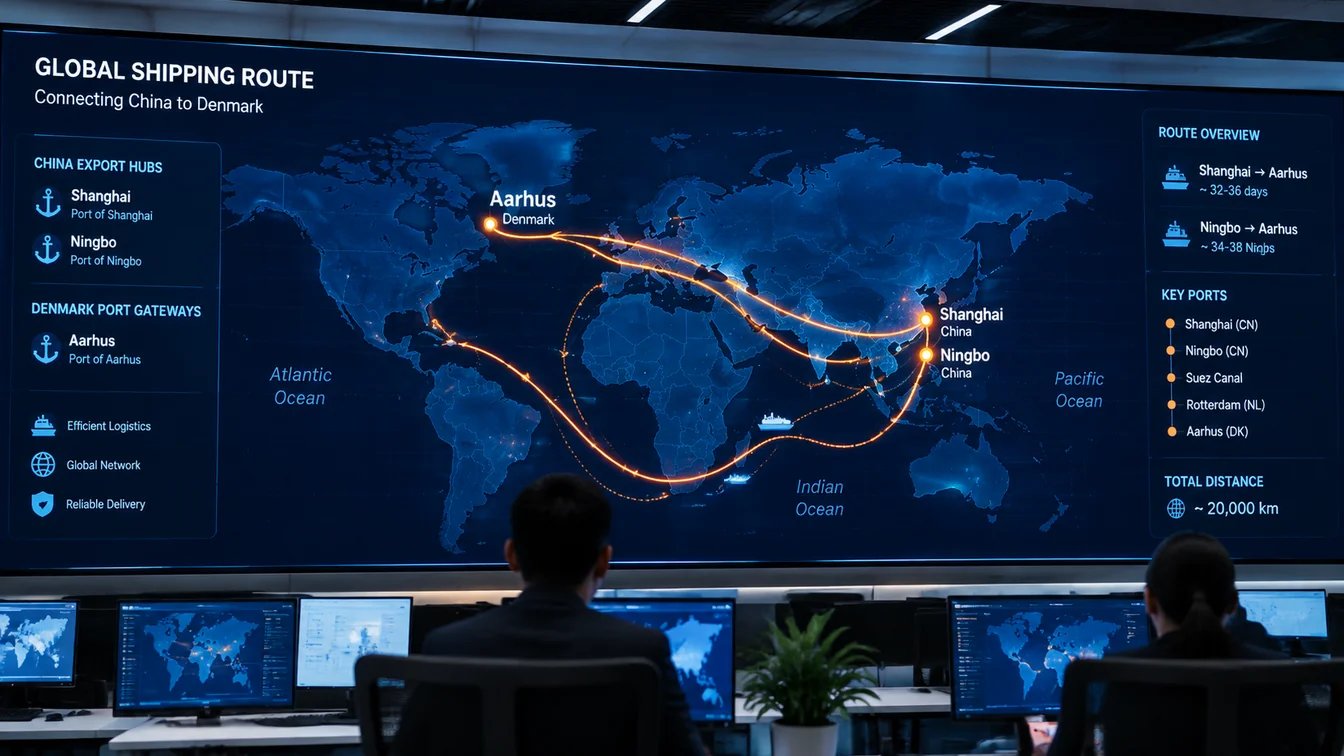
Sea freight is the starting point for non-urgent containerized or consolidated cargo moving from China to Denmark; sea freight services support the main route decision when cargo volume and delivery deadlines allow. Air freight, express, and rail-led multimodal transport are alternatives when urgency, cargo dimensions, chargeable weight, or the available corridor changes the practical choice.
Route Planning Summary
- Which China origin gateway should I use?
-
Start with the major export gateway closest to the supplier that supports a workable route to Denmark, then compare the final delivery postcode and the destination port’s onward transport connections.
- Which transport method fits the shipment?
-
Use FCL or LCL sea freight for non-urgent cargo, air freight for deadline-sensitive shipments, express for suitable urgent parcels, or rail-led multimodal FCL when the Poland/Germany hub corridor fits the cargo and delivery plan.
- How should I plan the transport time?
-
Use the supplied transit reference for the selected method, and distinguish the international movement from supplier readiness, export handling, Danish customs release, and the final delivery appointment.
- Who is responsible for Danish import clearance?
-
The legally responsible importer must ensure that the customs declaration, import duties, VAT, and applicable product requirements are addressed; an authorized customs representative can handle declaration work within the agreed scope.
- What makes the delivery service door-to-door?
-
The agreed service must specify the final Danish delivery address, the import-clearance and tax arrangement, destination handling, and any receiving, unloading, or appointment requirements.
China to Denmark Shipping Cost
The following table provides indicative shipping costs and planning transit references reviewed for October 2026. Each reference applies to its named route, transport method, and unit.
Cost data review: October 2026.
| Shipping route | Shipping method | Price | Transit time |
|---|---|---|---|
| China → Denmark | FCL 20GP | $2,250–$2,750/container | 25–32 days |
| China → Denmark | FCL 40GP | $3,240–$3,960/container | 25–32 days |
| Ningbo-Zhoushan, China → Aarhus, Denmark | FCL 40HQ | $3,700–$5,300/container | 35–45 days |
| China → Denmark | LCL | $45/CBM | 26–36 days |
| China → Denmark | Air freight | $4.00/kg | 5–7 days |
| China → Denmark | Express (DDP) | $7.20/kg | 5–8 days |
| China → Denmark via Poland/Germany hubs | Rail-led multimodal FCL 20GP | $4,100–$5,000/container | 20–30 days |
Cost scope: These indicative cost references apply to the route, method, and unit shown; they are not carrier freight rates, market averages, TJ selling prices, or binding quotations. The actual booking date, cargo details, and agreed service scope determine the commercial arrangement, including responsibility for relevant pickup, handling, customs, duty and tax, inland delivery, insurance, storage, examination, appointments, and surcharges.
Denmark Import Duty and Taxes
Commercial goods imported from China into Denmark are assessed under the EU customs framework, and Danish import VAT is generally 25%. The amount payable depends on the commodity code, customs value, origin, applicable trade measures, product category, and rules in force when the goods enter the EU.
- Classify the goods. Assign an appropriate EU Combined Nomenclature or TARIC commodity code using the product’s actual material, function, and characteristics.
- Check the applicable tariff measures. Search the EU TARIC database for the relevant third-country duty, trade-defence measures, quotas, prohibitions, restrictions, and supporting-document requirements for goods originating in China.
- Determine the customs value and duty. Use the applicable customs-valuation rules and transaction evidence, including required adjustments and relevant transport or insurance elements, to determine the customs value and any duty due.
- Arrange Danish import VAT. Apply the current VAT rules to the particular import and importer, taking account of the applicable tax base, registration, payment arrangement, and any permitted deduction. The Danish VAT guidance explains the relevant national tax framework.
This is a simplified route-planning explanation, not tax advice. The importer or appointed tax adviser should establish the applicable treatment before entry, particularly for regulated goods, products subject to trade-defence measures, and shipments with a special customs or tax arrangement.
China to Denmark Shipping Time
For China → Denmark FCL 20GP and FCL 40GP, the supplied planning transit reference is 25–32 days. China → Denmark LCL has a reference of 26–36 days. The other applicable references are shown below by route and method.
- China → Denmark, air freight: 5–7 days.
- China → Denmark, Express (DDP): 5–8 days.
- China → Denmark via Poland/Germany hubs, rail-led multimodal FCL 20GP: 20–30 days.
- Ningbo-Zhoushan, China → Aarhus, Denmark, FCL 40HQ: 35–45 days.
These transit values are planning references, not guaranteed delivery appointments. The supplier’s cargo-ready date, export handling, selected international route, customs release, and receiver availability all affect the delivery plan. Air or express transport has the shorter supplied international transit reference, while a rail-led multimodal service uses connecting transport legs rather than a direct rail-only connection to Denmark.
Shipping Methods from China to Denmark
For ordinary, non-urgent China-to-Denmark cargo, start by comparing FCL and LCL sea freight against the shipment’s actual form and volume. Choose a different method when the delivery deadline, chargeable weight, cargo restrictions, supplier location, available route, or final postcode makes it more suitable.
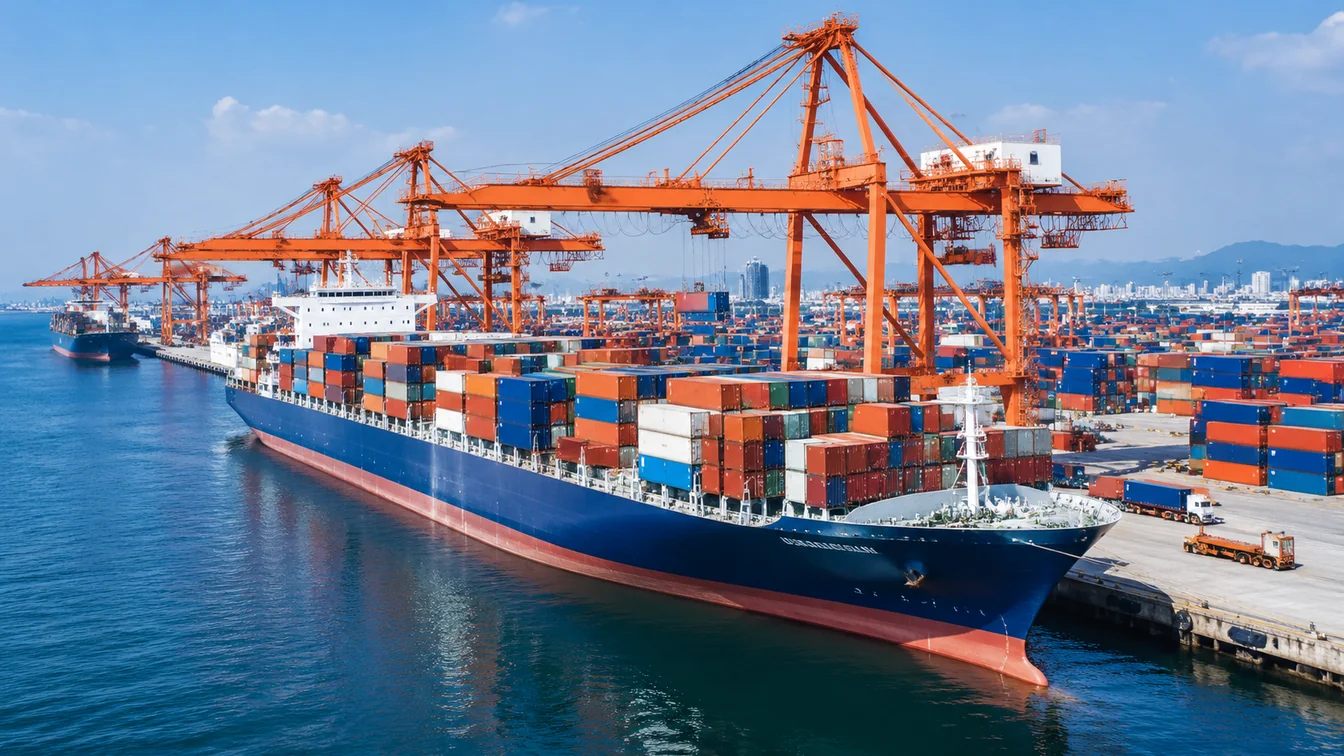
Full container load (FCL)
- Choose FCL when the shipment needs a dedicated container and its dimensions, gross weight, and loading characteristics fit the selected equipment, because the cargo can move without the consolidation and deconsolidation stages associated with LCL. Compare 20GP, 40GP, and 40HQ according to actual load dimensions and equipment acceptance, not volume assumptions alone.
Less than container load (LCL)
- Choose LCL when the cargo is suitable for consolidation with other shipments, because the movement is planned around measured shipment volume rather than a dedicated container. It is a practical choice for smaller consignments when the extra handling, packaging needs, and consolidation schedule fit the delivery requirement.
Air freight
- Choose air freight when a delivery deadline makes a shorter international movement more important than minimizing transport spend, because cargo can move through an air gateway without waiting for an ocean sailing. The decision must account for actual and chargeable weight, dimensions, commodity acceptance, the origin airport, destination handling, and the final Danish postcode. See the air freight service for the relevant transport scope.
Express shipping
- Choose express when urgent cartons or parcels fit the accepted commodity, package dimensions, and destination service, because a parcel-oriented network can simplify transport for suitable shipments. Actual chargeable weight, remote-area coverage, customs arrangements, and the precise meaning of DDP must be established for the shipment. Review the express shipping service when this is the intended method.
Rail-led multimodal freight
- Choose rail-led multimodal FCL when a full container needs a non-ocean-only corridor and movement via Poland/Germany hubs fits the schedule and delivery plan, because rail and connecting transport legs can form an alternative to a solely maritime route. Availability, transfer arrangements, equipment handling, and the final Danish delivery leg remain specific to the selected service. Compare the rail freight service when evaluating that corridor.
The practical choice should reflect the pickup address, cargo dimensions and measured weight, handling restrictions, deadline, receiving postcode, and responsibility for onward delivery. Container, cubic-metre, and kilogram references are different pricing units and should not be converted into a universal cheapest-method claim.
Door-to-Door Shipping from China to Denmark
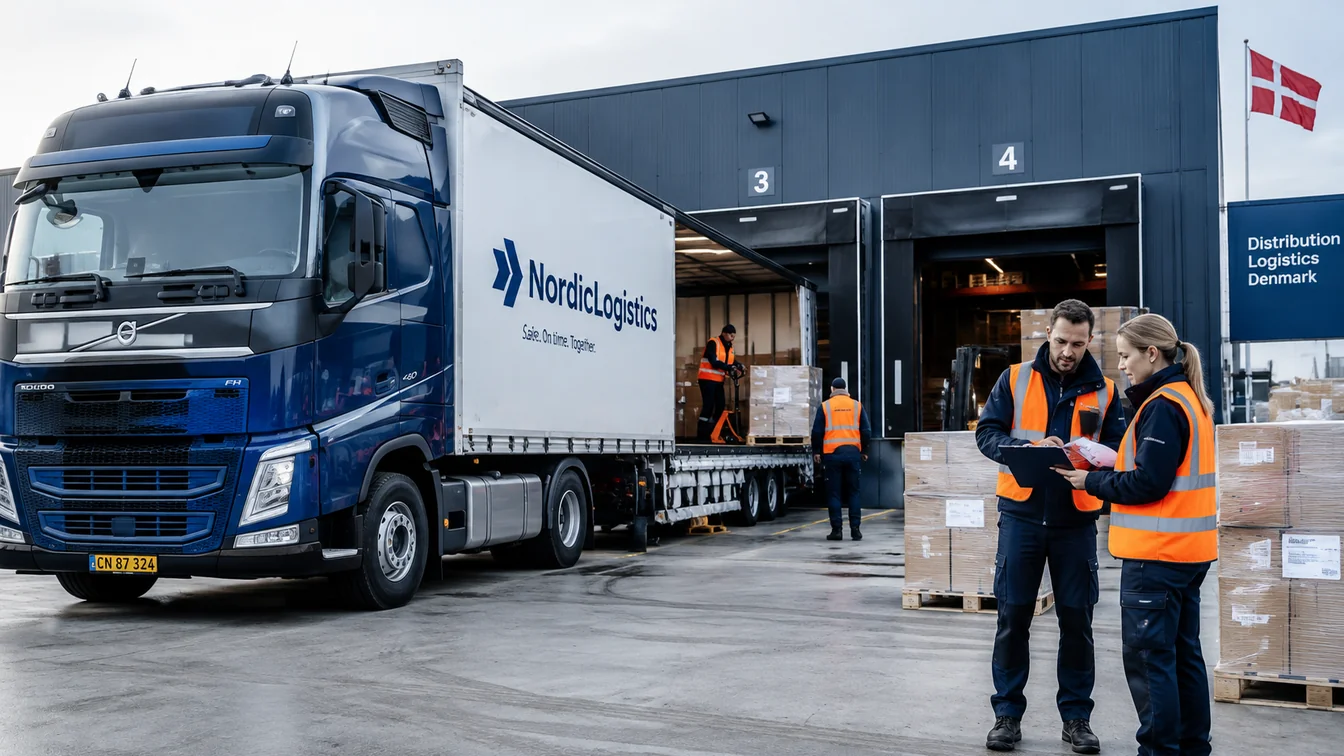
Door-to-door shipping from China to Denmark requires a defined handoff from the supplier’s premises through export handling, international transport, Danish import clearance, and delivery to the agreed receiving address. The door-to-door service is relevant when these legs need to be coordinated within one agreed movement plan.
-
Cargo and Compliance Review
Collect the supplier’s pickup address, commercial invoice details, packing list, dimensions, gross weight, commodity description, packaging type, and cargo-ready date. Flag batteries, dangerous goods, temperature requirements, or other restrictions that could affect carrier acceptance or the Danish import process.
-
Route and Method Selection
Compare the suitable Chinese export gateway, FCL or LCL sea freight, air freight, express, or rail-led multimodal transport against the deadline and final Danish postcode. Match the method to the cargo and the required delivery scope rather than choosing from international transit alone.
-
Supplier Coordination and Pickup
Agree the pickup location, cargo readiness, loading arrangements, package count, and handover responsibilities with the supplier. For containerized freight, establish whether the load requires factory loading or a separate collection and loading arrangement before the origin gateway receives it.
-
China Export Handling
Prepare the commercial invoice, packing list, transport data, and applicable export declaration information. Complete the required origin handling for the chosen mode and resolve discrepancies in cargo description, quantity, package measurements, or declared weight before international dispatch.
-
International Transportation
Move the shipment through the agreed ocean, air, express, or rail-led multimodal corridor. The selected routing determines the origin handoff, international transfer points, and destination gateway; connecting movements must be part of the agreed service plan.
-
Denmark Import Clearance
Ensure that the responsible importer and appointed representative have the information needed for the Danish customs declaration, applicable duty and VAT treatment, and product controls. If the agreed delivery term is DDP, the DDP shipping service can inform the service-scope discussion, but the import responsibility and tax arrangement must still be legally workable and explicitly allocated.
-
Final Delivery
Arrange onward movement from the Danish port, airport, or other agreed receiving gateway to the specified address. Check delivery access, unloading equipment, time slots, site restrictions, and any appointment requirements before the final-mile vehicle is dispatched.
-
Shipment Close-Out
Record delivery evidence, outstanding handling or delivery charges within the agreed service, and any damage or shortage that needs a documented claim. Retain the commercial and transport records required for the importer’s accounting and compliance obligations.
Main China to Denmark Routes
The most practical China-to-Denmark route normally starts at an export gateway that limits supplier-side inland movement while supporting a workable connection to the intended Danish destination. The preferred gateway can change when the receiving postcode, current carrier service, European hub transfer, container equipment, or final-mile scope changes the complete route.
Major China Export Ports for Denmark Shipping
- Shanghai
- Shanghai is a practical starting point for suppliers in Shanghai, southern Jiangsu, and the wider Yangtze River Delta. Compare it for general containerized cargo requiring an international ocean connection toward Denmark, particularly when the factory is already close to the Shanghai export gateway. Supplier pickup distance and the actual routing available for the required Danish destination can change the selection.
- Ningbo-Zhoushan
- Ningbo-Zhoushan is relevant to Zhejiang and parts of southern Jiangsu. It is a particularly useful gateway to compare for the named Ningbo-Zhoushan, China → Aarhus, Denmark FCL 40HQ route reference; the practical booking must still match the supplier location, cargo equipment, and receiving address.
- Shenzhen/Yantian
- Shenzhen/Yantian suits supplier clusters in eastern Guangdong, including Shenzhen and Dongguan. Compare it for containerized electronics, machinery, and general merchandise produced nearby, then assess whether the available destination routing and Danish inland movement fit the final delivery location.
- Guangzhou/Nansha
- Guangzhou/Nansha is worth comparing for suppliers in Guangzhou, Foshan, and nearby parts of the Pearl River Delta. A local pickup advantage may make this gateway practical even when another Chinese port has a different international routing; factory distance, cargo handling, and the connection to Denmark can change the result.
- Qingdao
- Qingdao is relevant to suppliers in Shandong and other northern Chinese production areas. Compare it when the factory is closer to Qingdao than to the Yangtze River Delta gateways, while checking the actual onward routing to the Danish entry area and the final delivery region.
Major Denmark Import Ports for Cargo from China
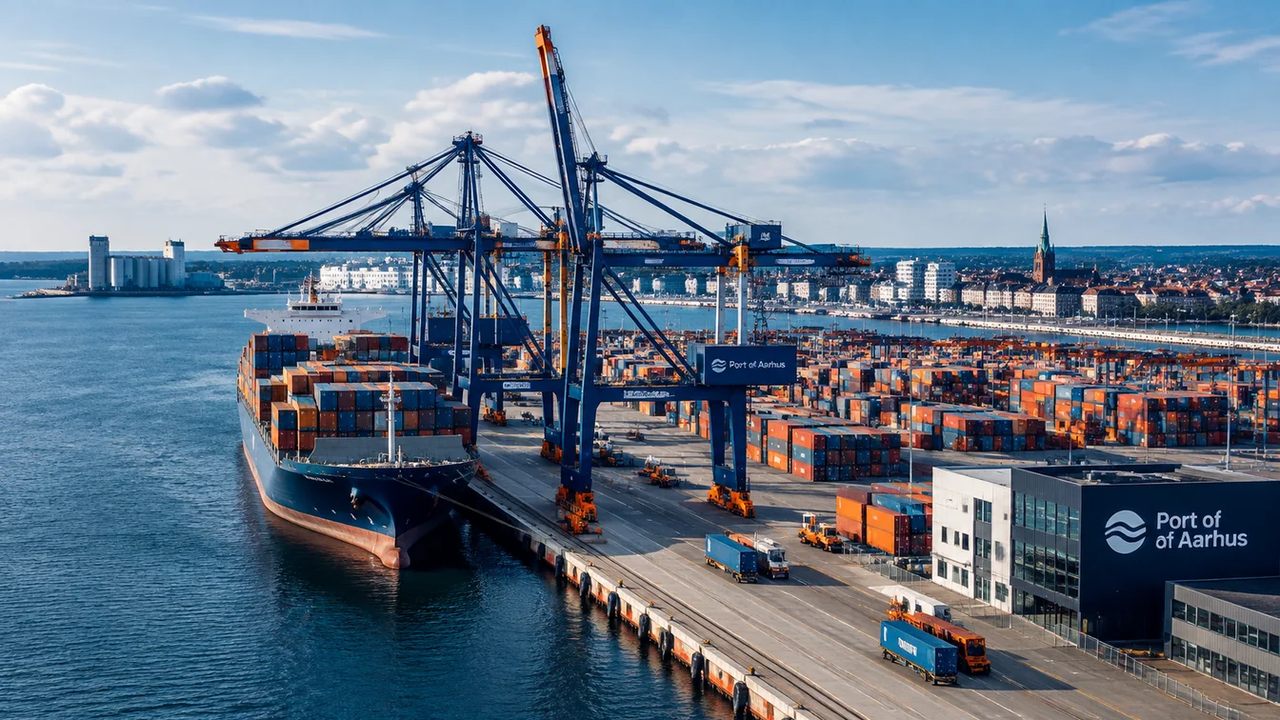
- Port of Aarhus
- Aarhus is the main starting comparison for Danish container imports because it is Denmark’s largest container port and has an extensive international container network. Its published network information describes direct access to Asian ports, but the actual connection and handling arrangement must fit the shipment. The Port of Aarhus container information is useful for understanding its role as a container gateway, while the buyer’s final postcode determines the onward-delivery decision.
- Port of Fredericia
- Fredericia is Denmark’s second-largest container port and is relevant to the Triangle Region, central Jutland, and onward delivery toward Funen. Its container network includes connections to major European ports, so China-origin cargo may require a connecting service rather than a direct ocean movement. Compare it when local distribution advantages could offset the available international routing or transfer arrangements.
- Port of Aalborg
- Aalborg is a container gateway for North Jutland with road and rail access. Its published terminal information describes a feeder connection to major European hubs including Hamburg and Bremerhaven. Compare it for northern destinations when the feeder schedule and onward delivery leg fit the shipment, rather than assuming direct China-to-Aalborg vessel service. See the Port of Aalborg container terminal information for its gateway role.
Supplier Region to Destination Routing Logic
The following comparisons connect Chinese production areas with plausible origin gateways, Danish entry ports, and final delivery regions. They are route-planning patterns rather than assertions that every named port pair has a direct sailing or a particular carrier schedule.
| Supplier region in China | Origin port to compare | Destination port and delivery region | Planning reason |
|---|---|---|---|
| Yangtze River Delta, including Shanghai and southern Jiangsu | Shanghai | Aarhus; central and eastern Jutland, with onward delivery elsewhere in Denmark where appropriate | Start by comparing Shanghai-origin container routing to Aarhus for local Yangtze River Delta suppliers. Change the comparison if a factory is closer to another gateway or the current connecting service creates a less suitable onward movement. |
| Zhejiang and southern Jiangsu | Ningbo-Zhoushan | Aarhus; Jutland and onward Danish distribution | Start by comparing Ningbo-Zhoushan with Aarhus for Zhejiang cargo, particularly when the named route reference matches the shipment configuration. Supplier pickup distance, available transport connections, and the receiver’s postcode may change the practical choice. |
| Eastern Pearl River Delta, including Shenzhen and Dongguan | Shenzhen/Yantian | Aarhus or Fredericia; Jutland, Funen, or onward delivery toward Zealand | Start by comparing Yantian for cargo produced near Shenzhen or Dongguan, then compare the Danish entry gateway against the final inland movement. A transfer through a European hub or a longer delivery leg toward Zealand may change the overall route preference. |
| Guangzhou, Foshan, and western or central Guangdong | Guangzhou/Nansha | Fredericia or Aarhus; central Jutland and Funen, with onward distribution as required | Start with Nansha when supplier pickup is local and compare available international connections toward Denmark. A different factory location, handling requirement, or less suitable connecting service can justify using another export gateway. |
| Shandong and northern China | Qingdao | Aarhus or Aalborg; central or northern Jutland | Start by comparing Qingdao for nearby suppliers, then choose between the available connections to Aarhus and a feeder-based option toward Aalborg. The service schedule, hub-transfer requirements, and final delivery location determine whether the alternative is practical. |
Destination Regional Delivery Logic
- Jutland
- Aarhus is a useful initial comparison for many container deliveries in eastern and central Jutland, while Fredericia may suit the Triangle Region and parts of western or central Jutland. Aalborg is relevant for North Jutland when its feeder and onward transport arrangements fit the receiving postcode. Local trucking distance and terminal access can change the choice.
- Funen and the Triangle Region
- Compare Fredericia when the consignee is near its distribution area, then assess Aarhus if the international routing or equipment arrangement is more suitable. The practical choice depends on how the container moves from the destination gateway to the receiver, including the road leg, delivery access, and any required appointment.
- Zealand and Copenhagen
- For deliveries around Copenhagen and eastern Zealand, compare the full onward movement from the actual Danish or connecting gateway rather than using the nearest city name as proof of port availability. An entry through Jutland can require an additional cross-country road or rail movement, so postcode, receiving restrictions, and agreed inland-delivery scope are important.
- North Jutland
- Aalborg can be relevant for receivers close to North Jutland’s container terminal, while Aarhus remains a comparison point when its international connection and onward trucking better fit the cargo. The feeder arrangement, transfer point, delivery distance, and cargo release timing determine which plan is practical.
How the Gateway Is Selected
A workable China-to-Denmark gateway is the one that supports the complete cargo movement, not simply the port closest to the supplier or receiver. Review these route-specific checks before choosing the movement.
- Supplier pickup: Compare the factory’s actual address, cargo-ready date, and loading arrangements against Shanghai, Ningbo-Zhoushan, Yantian, Nansha, and Qingdao as geographically relevant alternatives.
- International connection: Establish whether the chosen Danish gateway can be reached on the proposed service and whether a transfer through another European port is required.
- Final delivery postcode: Compare the onward road or rail leg from Aarhus, Fredericia, or Aalborg, including any site-access or appointment requirements.
- Cargo and equipment: Match container type, dimensions, gross weight, handling limits, and any special cargo requirements to the route and equipment that can accept the shipment.
- Agreed service scope: Compare the same operational boundary for each alternative, particularly where destination handling, customs responsibility, and inland delivery are arranged separately.
Denmark Customs Clearance
Commercial shipments entering Denmark from China require an accurate customs declaration, a responsible importer, appropriate identification, and payment or accounting for any applicable import duties and taxes. This guidance covers Denmark proper within the EU customs territory; Greenland and the Faroe Islands are outside the EU customs and VAT territory and require separate import planning.
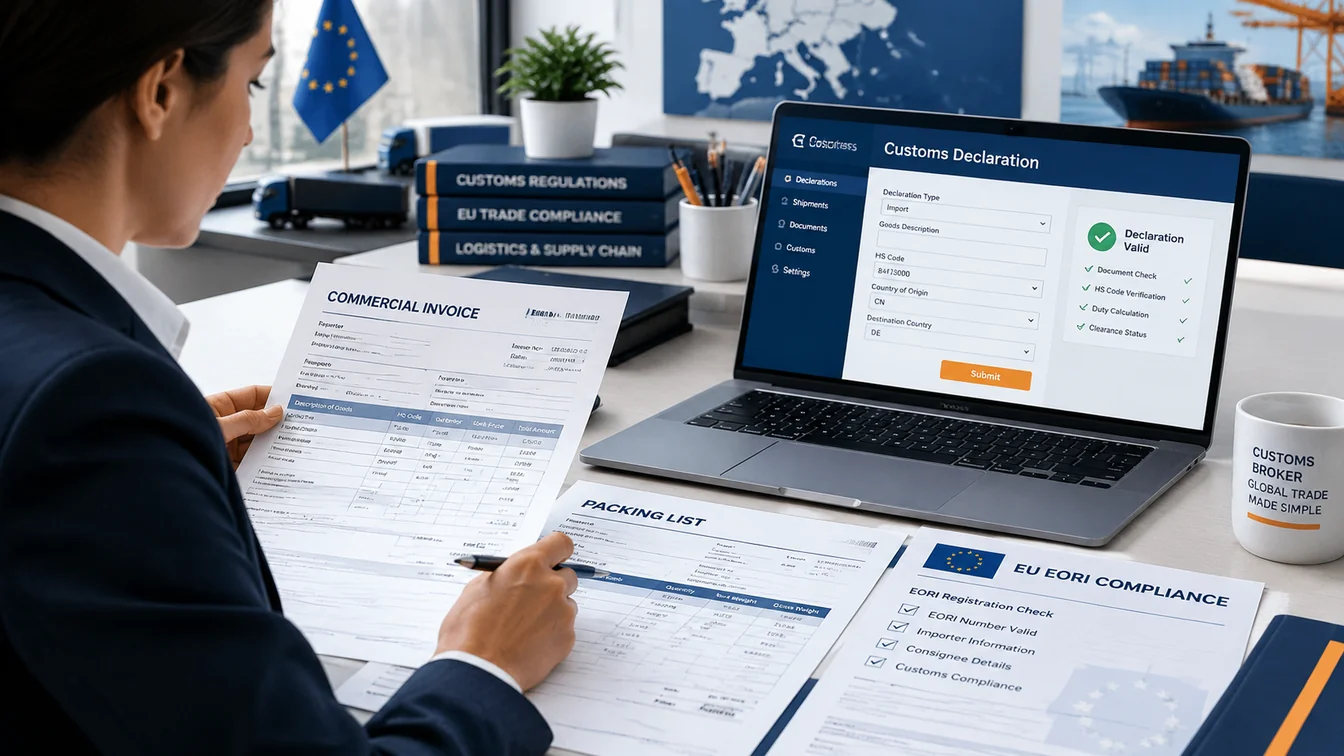
What the Denmark Importer Normally Needs
A Denmark-bound commercial shipment should have its importer, product classification, customs value, and supporting documents ready before the cargo departs China. The applicable requirements depend on the product, the import arrangement, and whether authorities require additional controls.
- EU EORI number The responsible economic operator must have the required customs identification. An EORI number is mandatory for relevant customs operations in the EU customs territory; check the EU EORI requirements before arranging the declaration.
- Commodity code Provide a defensible EU commodity classification based on the product’s material, function, and technical characteristics. The code informs the applicable tariff, trade measures, and documentary requirements.
- Customs value and origin Supply the transaction details, declared origin, and valuation information needed for the import declaration. Do not use the dispatch country alone as proof of preferential origin or assume that the same duty applies to every product from China.
- Commercial invoice Prepare an invoice with an accurate product description, seller and buyer details, quantities, currency, unit values, and relevant transaction terms. Descriptions should match the physical goods and the supporting shipment documents.
- Packing list and shipment measurements Provide package counts, packing types, dimensions, gross and net weights where applicable, and item-level details that can be reconciled with the invoice and transport document.
- Transport and security documents Prepare the bill of lading or sea waybill, air waybill, or relevant rail transport document for the selected method. Ensure the carrier receives the required shipment and security data for the applicable movement.
- Product permits and conformity evidence Check whether the product needs an import licence, conformity evidence, CE marking where applicable, safety documentation, or sanitary or phytosanitary controls. Requirements depend on the actual goods rather than the transport method.
- Customs declaration and tax arrangement Allocate responsibility for lodging the declaration, responding to customs queries, and addressing applicable duty and VAT. When a representative is appointed, ensure the required authority and division of responsibilities are documented; a customs brokerage service is relevant when declaration support is within the agreed scope.
Common Causes of Denmark Customs Delays
- An invoice and packing list that show inconsistent descriptions, quantities, package counts, or weights.
- A commodity code that does not match the product’s actual material, function, or intended use.
- Missing EORI details or uncertainty about which party is responsible for the import declaration.
- Declared values or origin information that cannot be reconciled with the commercial transaction and supporting records.
- Missing permits, conformity documents, or other evidence required for the product category.
- Incomplete transport or security information needed for the selected movement.
- Goods awaiting a customs query, inspection, required payment, or instructions from the responsible importer or representative.
Resolve identified document and product-control issues before the shipment leaves China wherever possible. When an authority requests additional evidence, the responsible importer should provide accurate supporting information so the cargo can proceed through the applicable release process.
Special Cargo, Packaging, and Insurance
Cargo Requiring Additional Review
Regulated, fragile, hazardous, or unusually large cargo can change the suitable China-to-Denmark route before pickup. Classify the cargo first and check acceptance, packaging, documentation, and handling requirements for the selected transport method.
- Batteries and battery-powered products: Identify the battery chemistry, whether batteries are installed or packed separately, and the applicable transport documentation and acceptance conditions.
- Dangerous goods and chemicals: Provide the substance identity and available safety documentation so the required classification, packaging, declaration, and carrier acceptance can be established.
- Liquids: Check leak protection, sealing, orientation, secondary containment where needed, and transport restrictions for the actual contents.
- Food and agricultural products: Review the applicable food-safety, sanitary, phytosanitary, and import-control requirements before dispatch.
- Cosmetics and medical goods: Check product classification, applicable EU compliance requirements, labelling, and any authorizations needed for import or sale.
- Wood packaging: Check whether solid-wood pallets, crates, or dunnage require compliant treatment and marking under the relevant international wood-packaging rules.
- Oversized cargo and industrial machinery: Review dimensions, centre of gravity, lifting points, securing arrangements, loading equipment, and final-site access. The project cargo shipping service is relevant when the cargo needs a separately planned handling and movement arrangement.
- Temperature-controlled and other controlled goods: Establish the required temperature range, monitoring, handling continuity, product authorizations, or special custody arrangements before choosing the route.
Packaging Checks
China-to-Denmark cargo should be packed for the actual handling sequence, including supplier collection, export handling, international movement, destination processing, and final delivery. Packaging must protect the goods while remaining suitable for the selected cargo equipment and any regulatory requirements.
Complete these practical checks before the supplier releases the cargo.
- Carton strength: Use packaging appropriate for stacking, weight, and the anticipated handling conditions.
- Internal protection: Secure fragile items, isolate components that can damage one another, and prevent movement inside the package.
- Pallets and loading: Ensure pallets are load-bearing, stable, suitable for available handling equipment, and arranged to prevent cargo movement.
- Moisture protection: Protect moisture-sensitive goods with suitable barriers and internal packing where the cargo needs them.
- Handling marks: Display legible handling instructions and orientation marks where appropriate for the goods.
- Labels and identification: Apply the required shipment labels, package identifiers, product labels, and receiving references for the actual cargo and delivery arrangement.
- Dimensions and weights: Record accurate package dimensions, individual and total weights, and any out-of-gauge or lifting requirements before choosing equipment.
- Regulated wood packaging: Ensure applicable solid-wood packaging complies with the relevant treatment and marking requirements for entry into the EU.
Cargo Insurance
Carrier liability is not the same as cargo insurance, so a shipper should not assume that compensation for loss or damage will equal the commercial value of the goods. Review the cargo insurance service when evaluating separate protection for the movement, and establish the insured value, covered events, exclusions, deductible, evidence requirements, and coverage period before dispatch.
Choosing a Freight Forwarder for Shipping from China to Denmark
A freight forwarder helps solve three practical problems on the China-to-Denmark route: turning cargo details into a workable movement definition, matching the shipment to a credible transport and gateway combination, and keeping commercial and operational handoffs aligned. The value lies in making the decisions and responsibilities visible before the cargo enters the transport chain.
- A usable Denmark-bound shipment definition
- The buyer may have supplier information without a complete movement specification; a forwarder helps turn the cargo description, dimensions, weight, pickup location, deadline, and delivery postcode into an operationally usable plan. Special cargo or an incomplete cargo-ready date may change which options can actually be accepted.
- A gateway that fits the cargo and destination
- A convenient Chinese port does not automatically create the best end-to-end route; the forwarder compares supplier-side movement, the available international connection, the Danish entry gateway, and the final delivery leg. The selected mode and the receiving postcode can change the preferred routing.
- Clear import and receiving handoffs
- Unclear responsibility for customs, destination handling, or delivery appointments can interrupt the planned movement; a forwarder helps document who handles each agreed handoff and which decision must happen next. The importer, relevant licensed representative, product-compliance owner, and tax adviser retain their respective legal responsibilities.
How TJ Logistics Team Plans a China-to-Denmark Shipment
- Define the movement before selecting the route
- TJ Logistics Team reviews the supplier location, cargo description, dimensions, weights, readiness date, and Danish delivery postcode. Missing product or shipment information that prevents a reliable method or handling decision is flagged before the next step is planned.
- Compare viable gateways and connections
- TJ Logistics Team reviews the available sea, air, express, and rail-led multimodal choices against the actual cargo and deadline. Gateway comparisons account for supplier-side pickup, the international routing, transfer arrangements where applicable, destination handling, and the final delivery region.
- Record the agreed service boundary
- Before preparing a formal commercial arrangement, TJ Logistics Team documents the intended transport scope, the agreed handoffs, and the parties responsible for customs, duty and tax arrangements, destination handling, and final delivery where these are part of the plan. Any unresolved responsibility is flagged rather than assumed.
- Coordinate the shipment and next decisions
- After the buyer confirms the agreed scope, TJ Logistics Team coordinates the applicable booking information, commercial documents, supplier handoff, and operational information for the next movement. If the route, timing, documents, cargo readiness, or receiving conditions change, the affected handoff and the next decision are reviewed against the agreed arrangement.
China to Denmark Shipping FAQ
How much does a 20ft container from China to Denmark cost?
The China → Denmark FCL 20GP indicative shipping cost is $2,250–$2,750/container in the October 2026 cost-data review. Use this reference for that specific method and unit when planning a 20ft container movement.
How long does sea freight from China to Denmark take?
China → Denmark FCL 20GP and FCL 40GP have supplied planning transit references of 25–32 days, while China → Denmark LCL has a reference of 26–36 days. Choose the applicable method according to the shipment form, and plan the final delivery around the actual customs-release and receiving arrangements.
What is the most cost-effective way to ship from China to Denmark?
FCL is a sensible starting comparison for cargo suited to a dedicated container, while LCL suits eligible smaller consignments that can move through consolidation. Air freight and express are relevant when urgency justifies them, and rail-led multimodal FCL is another option when the Poland/Germany hub corridor fits; the per-container, per-CBM, and per-kilogram references are not directly interchangeable.
Which China port or gateway should I choose for shipping to Denmark?
Start with the major export gateway closest to the supplier that has a suitable connection toward the intended Danish entry area. Shanghai and Ningbo-Zhoushan are relevant to Yangtze River Delta suppliers, Shenzhen/Yantian to eastern Pearl River Delta cargo, Guangzhou/Nansha to nearby Guangdong production, and Qingdao to Shandong; the final postcode and available transport connection can change the comparison.
Which Danish port should I compare for cargo from China?
Aarhus is a strong starting comparison for container imports because it is Denmark’s largest container port. Fredericia is relevant to the Triangle Region and central delivery areas, while Aalborg can suit North Jutland when the feeder routing via a European hub fits; the actual service connection and final delivery postcode determine the practical gateway.
What documents should be prepared before shipping from China to Denmark?
A China-to-Denmark commercial shipment should normally have an accurate commercial invoice, packing list, product commodity code, customs value and origin information, relevant transport document, and the required EU EORI details for the responsible customs operator. Regulated products may need additional permits or conformity evidence before import clearance can proceed.
Can I ship door-to-door from China to Denmark?
Yes, a door-to-door arrangement can cover supplier pickup, origin handling, international transport, Danish import-clearance coordination, and final delivery when those services are included in the agreed scope. The final Danish postcode, customs and tax responsibility, and any unloading or appointment requirements must be allocated before the movement is arranged.
Can I ship a full container from China to Denmark by rail?
A rail-led multimodal FCL option via Poland/Germany hubs is a route to compare for China-to-Denmark cargo. It uses connecting transport legs rather than a direct rail-only connection from China to Denmark, so the hub transfer, cargo acceptance, onward Danish movement, and final delivery requirements matter to the plan.