

Reviewed by TJ Logistics Team October 2026. Market conditions, indicative shipping costs, customs, tariff, and marketplace information have been reviewed for October 2026 and may change as transport availability and official requirements evolve. This review applies practical route-planning checks across supplier pickup, gateway and transport-mode selection, customs handoff, and final delivery.
Shipping from China to Uzbekistan: Route Update
Rail FCL 40HQ from Xi’an, China to Tashkent, Uzbekistan via Kazakhstan has an indicative cost reference of $2,800–$3,600/container and a planning transit of 18–24 days. This is a useful starting point for container shipments that can reach the Xi’an rail gateway and fit the available rail movement.
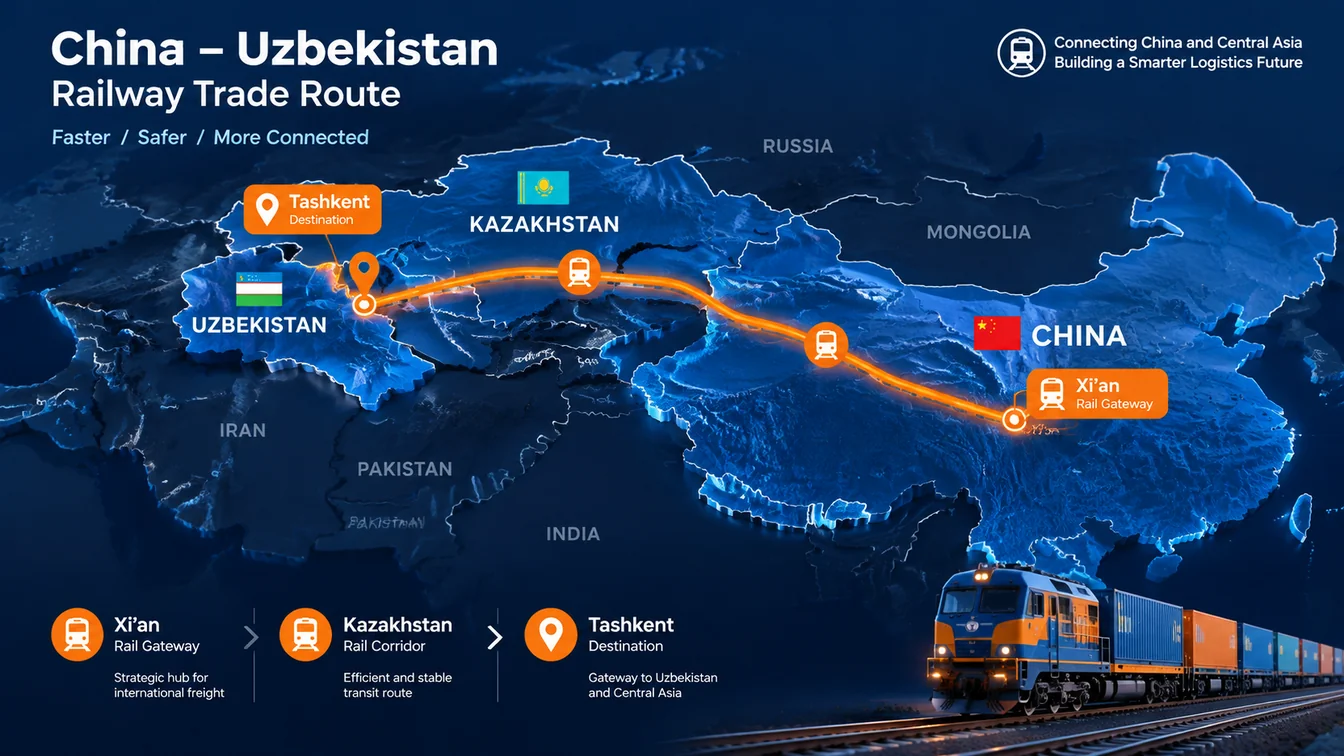
For container cargo, compare the Kazakhstan rail corridor with the sea-and-inland route through Bandar Abbas, Iran, before selecting the main transport mode. The Bandar Abbas option requires particular attention to current maritime security, carrier acceptance, transit arrangements, and insurance, while air freight and express are alternatives for more urgent cargo. The rail freight service is relevant when evaluating a rail-based movement into Tashkent.
Route Planning Summary
- How should the shipment move from the supplier to the origin gateway?
- For container cargo heading to Tashkent, compare supplier pickup to Xi’an and rail transit through Kazakhstan; use a China seaport and onward inland transit through Iran only when that corridor is operationally acceptable.
- Which transport method should be compared first?
- Rail FCL via Kazakhstan is a practical container option, while air freight suits priority cargo and express suits eligible parcels; supplier location, cargo dimensions, urgency, and delivery requirements can change the selection.
- What planning time should be used?
- The Xi’an-to-Tashkent rail FCL 40HQ reference is 18–24 days; use the specific method and route reference rather than applying one transit estimate to every China-to-Uzbekistan shipment.
- Who is responsible for Uzbekistan import clearance?
- The Uzbekistan importer remains responsible for applicable import requirements, accurate declarations, product permissions, and assessed customs payments, with authorized declaration support where needed.
- What determines the final-delivery arrangement?
- The agreed delivery address, unloading arrangements, receiving hours, customs responsibility, and final-mile scope determine how cargo moves from the destination gateway to the recipient.
China to Uzbekistan Shipping Cost
The table provides route-specific indicative shipping costs and planning transit references reviewed in October 2026. Each reference applies to its named geographic route, transport method, and supplied unit.
| Shipping route | Shipping method | Price | Transit time |
|---|---|---|---|
| China → Bandar Abbas, Iran → Tashkent, Uzbekistan | FCL 20GP | $6,104–$7,502/container | 35–55 days |
| China → Bandar Abbas, Iran → Tashkent, Uzbekistan | FCL 40GP | $8,578–$10,627/container | 35–55 days |
| China → Uzbekistan | LCL | $97.22/CBM | 9–19 days |
| Yiwu warehouse, China → Tashkent warehouse, Uzbekistan | Air freight | $9.00/kg | 5–10 days |
| China (origin city not specified) → Uzbekistan (destination city not specified) | Express | $5.50–$15.00/kg | 3–7 working days |
| Xi’an, China → Tashkent, Uzbekistan via Kazakhstan | Rail FCL 40HQ | $2,800–$3,600/container | 18–24 days |
Cost-table review: October 2026.
Cost scope: These indicative cost references apply to the route, method, and unit shown; they are not carrier freight rates, market averages, TJ selling prices, or binding quotations. The actual booking, cargo, and agreed service scope determine the commercial arrangement, including responsibility for relevant pickup, handling, customs clearance, duty and tax, inland delivery, insurance, storage, examination, appointment, and surcharge items.
Uzbekistan Import Duty and Taxes
Import duty and tax on goods shipped from China to Uzbekistan depend on the commodity code, customs value, origin, applicable trade measures, product category, and rules in force when the goods enter the country. Uzbekistan’s standard value-added tax (VAT) rate is 12% as of October 2026, but the applicable treatment of a particular product must be checked against current law.
For commercial cargo entering Uzbekistan, use the following sequence to establish the import charges before dispatch.
- Classify the goods using the applicable Uzbekistan commodity code and check the current Uzbekistan Integrated Tariff for import duty, applicable restrictions, and product-specific measures.
- Prepare a supportable customs value using the transaction and relevant commercial and transport documents. Keep the product description, quantity, currency, and declared value consistent across the paperwork.
- Check the customs duty and any applicable excise tax against the product classification, origin, and current import rules. Do not apply one duty percentage to every commodity.
- Determine the applicable import VAT treatment. The Uzbekistan Tax Code sets out VAT rules, including the standard 12% rate; product-specific provisions or legally applicable relief may change the result.
- Arrange the import declaration and payment of assessed charges through the responsible importer or authorized declarant before customs release, together with any required product approvals.
This sequence is a simplified shipment-planning explanation, not tax advice. The importer should verify the current tariff classification, assessment, and product-specific treatment before entry.
China to Uzbekistan Shipping Time
The shortest supplied planning reference is express shipping for eligible shipments, while rail provides a defined container route into Tashkent and the Bandar Abbas option follows a different international and inland path. Use the following method-specific references for initial scheduling rather than treating the times as interchangeable.
- Rail FCL 40HQ: Xi’an, China → Tashkent, Uzbekistan via Kazakhstan — 18–24 days.
- Air freight: Yiwu warehouse, China → Tashkent warehouse, Uzbekistan — 5–10 days.
- LCL: China → Uzbekistan — 9–19 days.
- Express: China (origin city not specified) → Uzbekistan (destination city not specified) — 3–7 working days.
- FCL 20GP and FCL 40GP: China → Bandar Abbas, Iran → Tashkent, Uzbekistan — 35–55 days.
Supplier readiness, origin handling, border and transit procedures, Uzbekistan import clearance, and the receiving location can affect the actual arrival sequence. In particular, the Iran-based route must be evaluated against current transport and security conditions before its planning time is used for a shipment commitment.
Shipping Methods from China to Uzbekistan
Rail FCL via Kazakhstan is a practical first comparison for container cargo that can reach Xi’an, while air freight or express is better suited to shipments where urgency outweighs the higher cost per unit of weight. The best fit changes with shipment volume, packed dimensions, chargeable weight, handling restrictions, supplier location, schedule, and final delivery requirements.
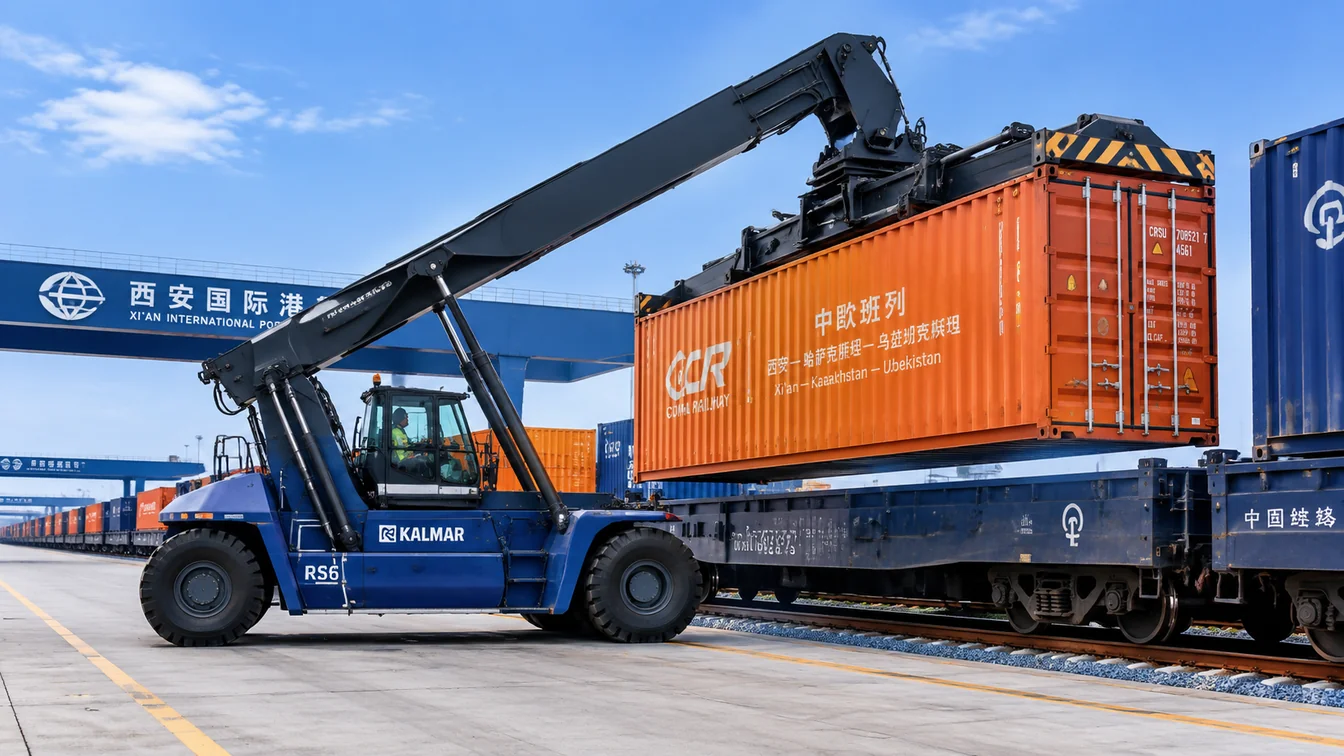
- FCL: Choose FCL when the shipment needs a dedicated container or controlled container-level handling, because the movement avoids LCL consolidation and deconsolidation. Compare rail through Kazakhstan against the sea-and-inland alternative through Bandar Abbas; the latter should be considered only when carrier acceptance, transit handling, and the current marine-risk position permit it. The sea freight service is relevant to assessing a sea-based plan.
- LCL: Choose LCL when the cargo does not require a dedicated container and can accommodate consolidation handling, because shared transport space may fit smaller consignments. Packed dimensions, commodity restrictions, handling tolerance, and the receiver’s address still determine whether the consolidation route is practical. A multi-modal freight arrangement is relevant when the movement combines transport modes.
- Air freight: Choose air freight when the delivery deadline justifies the air-transport cost, because it avoids the longer container-routing alternatives. Compare actual weight and chargeable weight from the packed dimensions, and check that the Tashkent receiving arrangement matches the intended delivery point. See the air freight service for the relevant service category.
- Express: Choose express when eligible parcels, samples, or small consignments need a time-sensitive delivery channel, because the service is designed for express shipment handling. Commodity acceptance, package dimensions, documentation, destination coverage, and the final delivery address can restrict the available service. The express shipping service is the relevant service category to evaluate.
- Rail-based transport: Choose rail FCL when cargo can be delivered to an appropriate rail gateway and the schedule suits the receiving plan, because the Kazakhstan corridor connects a China rail origin with Tashkent without relying on the Bandar Abbas maritime leg. Origin repositioning, container availability, border handling, and the final destination within Uzbekistan can change the operational fit.
Door-to-Door Shipping from China to Uzbekistan
A door-to-door plan for China-to-Uzbekistan cargo should define every handoff from supplier pickup through export handling, international transport, import clearance, and delivery to the agreed address. The written scope determines which parties perform customs work, pay import charges, arrange unloading, and handle any required appointments; the door-to-door shipping service is the relevant service category for this plan.
-
Cargo and Compliance Review
Record the supplier’s location in China, cargo description, quantities, packed dimensions, gross weight, readiness date, and any battery, dangerous-goods, or product-control requirements. Resolve any restriction that could prevent acceptance before selecting the route.
-
Route and Method Selection
Compare the applicable origin gateway, main transport mode, destination entry point, and receiving area. For Tashkent-bound container cargo, include rail via Kazakhstan and assess the Bandar Abbas option only against current maritime security, transit feasibility, insurance, and carrier acceptance.
-
Supplier Coordination and Pickup
Arrange the agreed cargo-ready date, supplier release, packing information, pickup point, and collection access. The supplier should provide consistent commercial information before the shipment is handed to the origin transport operator.
-
China Export Handling
Coordinate the cargo handoff to the agreed origin gateway, export documentation, and applicable export declaration. For rail, verify the designated rail terminal and container details; for a sea-based route, verify the port and accepted international movement before dispatch.
-
International Transportation
Move the cargo through the agreed rail, air, express, or multimodal route. For a Kazakhstan rail movement, align the China rail handoff with the onward movement into Uzbekistan; for an Iran-based route, the actual transit corridor and border documentation must match the accepted transport plan.
-
Uzbekistan Import Clearance
The Uzbekistan importer or authorized declarant must handle the applicable import declaration, product permissions, customs payments, and release requirements. Import clearance responsibility should be documented separately from physical transport so that cargo is not sent to final delivery without an agreed release process.
-
Final Delivery
Coordinate onward transport from the agreed destination gateway to the named Uzbek address. Check access restrictions, delivery appointments, unloading equipment, receiving hours, and whether the destination is in Tashkent or another region requiring additional inland transport.
-
Shipment Close-Out
Record delivery evidence, outstanding handling or customs documents, and any agreed exception items. Close the operational file only after the responsible parties have accounted for the cargo handoff and completed their respective shipment obligations.
Main China to Uzbekistan Routes
The most practical China-to-Uzbekistan route normally starts at a gateway that limits supplier-side movement while matching the final delivery area and credible destination handling. For container cargo that can reach Xi’an, compare the rail freight corridor via Kazakhstan; a sea route through Iran remains conditional because current maritime guidance recommends avoiding Strait of Hormuz transit where practicable unless the movement is operationally essential.
Major China Export Ports for Uzbekistan Shipping
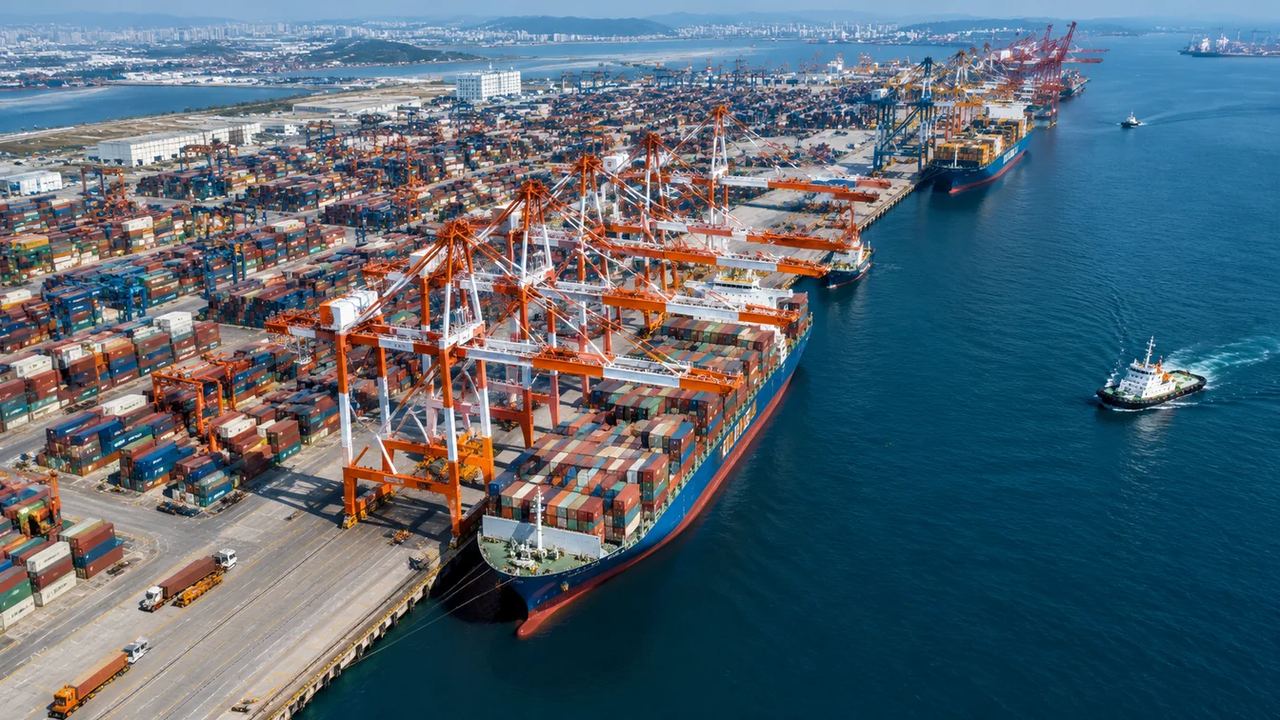
China seaports are relevant to Uzbekistan mainly when a sea leg is part of the agreed movement through a third-country gateway. The appropriate port depends on the supplier’s position, the current accepted route, and whether the onward transit into Uzbekistan can be arranged; a named origin port does not establish a current direct sailing to Bandar Abbas.
- Shanghai
- Compare Shanghai for suppliers in Shanghai and nearby Jiangsu or the broader Yangtze River Delta when the pickup distance and available port service fit the sea-based plan. The proposed route must still include an accepted third-country gateway and documented inland transit into Uzbekistan.
- Ningbo-Zhoushan
- Compare Ningbo-Zhoushan for Zhejiang suppliers and cargo positioned around Ningbo or Yiwu when the port-side movement is more practical than repositioning to another coastal gateway. A movement through Bandar Abbas requires separate verification of maritime and onward transit feasibility.
- Shenzhen/Yantian
- Compare Shenzhen/Yantian for Pearl River Delta suppliers, including manufacturing clusters around Shenzhen and Dongguan, when local pickup and the applicable sea service support this choice. Do not assume that a direct or currently accepted Bandar Abbas sailing is available.
- Qingdao
- Compare Qingdao for Shandong and nearby northern China suppliers when local collection and cargo positioning make it a credible origin gateway. The onward connection to an approved transit port and the receiving region in Uzbekistan remain part of the complete route decision.
- Guangzhou/Nansha
- Compare Guangzhou/Nansha for suppliers in Guangzhou, Foshan, and surrounding Guangdong manufacturing areas when the pickup plan and accepted sea routing favor this gateway over other South China options.
- Xiamen
- Compare Xiamen for Fujian suppliers when the factory-to-port movement is practical and the available international routing supports the intended shipment. The route should be evaluated through the complete onward transit plan rather than the origin port alone.
Main Gateway Ports for Uzbekistan Cargo
Uzbekistan is landlocked and has no seaport, so cargo entering by sea must pass through a third-country port before continuing inland. An inland rail gateway via Kazakhstan may be a better fit for container cargo when a suitable rail movement is available.
- Bandar Abbas and Shahid Rajaee Port, Iran
- Bandar Abbas, including the Shahid Rajaee container facilities, is the named sea gateway in the supplied FCL reference. Cargo must continue overland under an accepted transit arrangement into Uzbekistan; current Persian Gulf security and insurance conditions make this a route to evaluate conditionally, not a default booking assumption.
- Chabahar Port, Iran
- Chabahar is a potential third-country gateway to evaluate only where an authorized, currently workable inland transit arrangement into Uzbekistan is documented. It is not the gateway named in the supplied Bandar Abbas cost reference, and that reference should not be transferred to a Chabahar movement.
- Khorgos–Altynkol rail gateway
- The China–Kazakhstan rail interchange around Khorgos and Altynkol is relevant to rail cargo continuing toward Tashkent. It is an inland rail gateway rather than a seaport, and the actual terminal, border handoff, and onward rail movement must match the shipment arrangement.
Supplier Region to Destination Routing Logic
The comparisons below connect Chinese supplier regions with plausible origin gateways and Uzbekistan delivery areas. For Uzbekistan, the destination end is an inland receiving point or a third-country port followed by transit; none of the comparisons represents an independently confirmed sailing or schedule.
| Supplier region in China | Origin port to compare | Destination port and delivery region | Planning reason |
|---|---|---|---|
| Shaanxi and northwest China | Xi’an rail gateway via Kazakhstan, not a seaport | Tashkent rail receiving area and Tashkent delivery region | Compare the Xi’an rail option first when the supplier can reach the rail gateway and the rail schedule and equipment fit the cargo. The final postcode and onward delivery arrangement determine the last-mile plan. China’s official Xi’an–Tashkent rail announcement describes a route through Horgos and Kazakhstan, but does not establish a standing booking or current schedule. |
| Zhejiang and Yiwu | Ningbo-Zhoushan | Bandar Abbas, Iran, followed by an accepted inland transit route to Tashkent or another Uzbekistan region | Compare the nearby coastal gateway if a sea-based route is currently accepted and the supplier-to-port movement is practical. The current marine-risk position, actual port service, and onward border arrangements can change the selection. |
| Pearl River Delta and Guangdong | Shenzhen/Yantian or Guangzhou/Nansha | Bandar Abbas, Iran, followed by documented inland delivery toward the final Uzbekistan region | Compare the two South China origins using supplier pickup, current accepted international routing, and cargo-handling requirements. The final delivery region determines whether the inland leg remains suitable. |
| Shandong and northern China | Qingdao | Bandar Abbas, Iran, followed by documented inland delivery to Tashkent or the intended regional destination | Compare Qingdao when local supplier access makes it practical and a feasible onward movement is available. Port selection should change when pickup distance, accepted service, transit handling, or destination receiving conditions favor another corridor. |
Destination Regional Delivery Logic
- Tashkent and Tashkent Region
- Tashkent is the named receiving city in both the supplied rail and warehouse-to-warehouse air references. Use the actual delivery address to distinguish terminal or warehouse receipt from delivery to a business, residence, or distribution facility within the region.
- Samarkand, Bukhara, and Navoi
- Compare delivery through Tashkent with any currently available inland option appropriate to the destination. The extra domestic movement, cargo handling, and receiving arrangements should be included in the delivery plan rather than inferred from a Tashkent endpoint.
- Fergana Valley
- For destinations around Andijan, Namangan, or Fergana, compare the final inland movement against the recipient’s location and delivery requirements. Confirm the destination address, access restrictions, and final handoff rather than treating a Tashkent arrival as delivery to the valley.
- Southern and western Uzbekistan
- For destinations such as Termez, Karshi, Urgench, or Nukus, include the appropriate inland route and receiving arrangements in the plan. Regional distance, destination handling, cargo access, and the feasibility of the international corridor can change the final delivery pattern.
How the Gateway Is Selected
Choose the gateway by comparing the complete supplier-to-destination route, rather than selecting a seaport or rail terminal in isolation.
- Supplier access: Compare actual pickup distance and supplier readiness against Xi’an rail access or the appropriate coastal gateway.
- Transport feasibility: Establish whether the intended rail movement or sea-and-inland corridor is currently available for the commodity and equipment.
- Transit and border handoffs: Check the actual transit countries, border requirements, transport documents, and accepted customs handoffs for the chosen movement.
- Destination fit: Use the final Uzbekistan postcode or delivery area to compare receiving facilities, inland transport, unloading, and local access.
- Risk and schedule: For the Bandar Abbas alternative, the current Persian Gulf security guidance recommends deferring Strait of Hormuz transit where practicable unless it is operationally essential. Carrier acceptance, the route’s risk treatment, and applicable insurance must therefore be considered before that corridor is selected.
Uzbekistan Customs Clearance
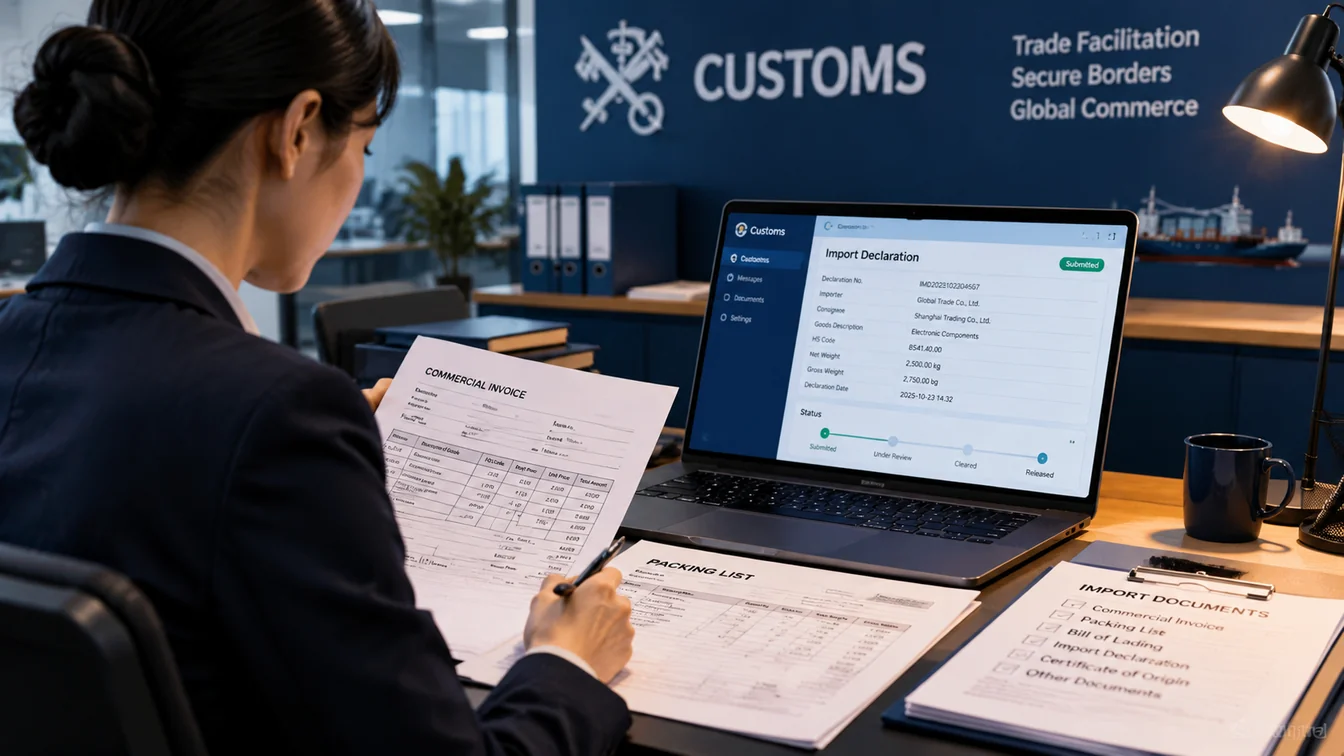
Commercial shipments entering the Republic of Uzbekistan require an appropriate import declaration, consistent supporting documents, and payment of applicable customs charges before release. The Uzbekistan importer is responsible for the import transaction and product compliance, while transit-country procedures along a Kazakhstan or Iran route remain separate from Uzbekistan import clearance. Customs brokerage is relevant when authorized declaration support is required, and any DDP shipping arrangement should expressly allocate import-clearance and duty-and-tax responsibilities without assuming that the service label removes local importer requirements.
What the Uzbekistan Importer Normally Needs
For commercial cargo from China, the Uzbekistan importer should prepare a consistent document set before dispatch and obtain any product-specific approvals that apply to the goods.
- Importer registration and tax identity Keep the applicable Uzbek business registration and tax identification details available for the named importer and the commercial import transaction.
- Commodity code and product description Use a defensible Uzbekistan tariff classification and a specific product description that agrees with the commercial invoice, packaging information, and actual goods.
- Commercial invoice Prepare the seller and buyer details, goods description, quantities, transaction currency, and value so that the importer can support the customs declaration and valuation.
- Packing list Show the package count, packing configuration, gross and net weights where applicable, and dimensions consistent with the cargo presented for transport and inspection.
- Transport document Prepare the transport evidence appropriate to the selected method, such as a bill of lading, air waybill, rail consignment document, or express shipment documentation.
- Customs cargo declaration Arrange the applicable import declaration and supporting tracking or movement documents. Uzbekistan’s Customs Single Window portal provides electronic declaration and related customs services.
- Certificate of origin, where required Prepare origin evidence when it is required by an applicable international agreement, product-specific measure, or other relevant customs rule; do not assume it is mandatory for every shipment.
- Licences, certificates, and declarant authorization Obtain any required import licence, conformity evidence, sanitary or other product approval, and authorization for a representative who submits the declaration on the importer’s behalf.
Common Causes of Uzbekistan Customs Delays
- The invoice description does not match the goods, packing list, or declared commodity code.
- The declared customs value cannot be supported by the commercial or transport documents.
- An applicable licence, conformity document, certificate, or restricted-goods approval is missing.
- Package counts, gross weights, dimensions, container details, or transport-document references do not match across the shipment records.
- The importer or authorized declarant is not ready to submit the declaration or arrange payment of assessed customs charges.
- Origin evidence is missing where an applicable rule or agreement requires it.
- Transit documents or border handoffs for the selected international corridor are incomplete or inconsistent with the actual movement.
Resolve document and product-control issues before the cargo leaves China, particularly when a shipment crosses an intermediate country before entering Uzbekistan. Transit release, Uzbekistan import release, and final delivery are separate operational handoffs and should be assigned to the responsible parties in advance.
Special Cargo, Packaging, and Insurance
Battery-powered goods, dangerous goods, chemicals, liquids, food, cosmetics, medical products, oversized cargo, and temperature-controlled shipments can change which China-to-Uzbekistan route is acceptable. Product classification, transport restrictions, packaging standards, import controls, and the capabilities of the chosen carrier should be checked before the shipment is assigned to rail, air, express, or a sea-and-inland movement.
Cargo Requiring Additional Review
- Batteries and dangerous goods: Check the applicable classification, safety information, packing instructions, marking, documentation, and carrier acceptance for the selected mode.
- Chemicals and liquids: Provide accurate contents, safety data where applicable, packaging details, and any required import or transport approval.
- Food and agricultural goods: Verify whether the product requires sanitary, veterinary, phytosanitary, or other product-specific documentation and entry approval.
- Cosmetics and medical goods: Check product registration, conformity, labelling, and import-control requirements before transport is arranged.
- Wood packaging: Check applicable treatment, marking, and inspection requirements for wood pallets, crates, and other regulated wood packaging.
- Oversized or heavy cargo: Verify dimensions, weight, equipment suitability, lifting arrangements, and route access before selecting the container or other transport equipment. The project cargo shipping service is relevant to evaluating non-standard cargo movements.
- Temperature-controlled cargo: Check the required temperature range, monitoring, handling capability, and route compatibility before committing to a transport method.
- Controlled or restricted goods: Check applicable import permissions and restrictions for goods such as regulated electronic equipment, radio devices, drones, or other controlled products.
Packaging Checks
Packaging for China-to-Uzbekistan shipments should protect the goods during the actual sequence of pickup, transfer, international movement, customs handling, and final delivery. Where cargo changes transport mode or undergoes additional handling, packaging and external marks should remain suitable for every stage of the planned route.
- Carton strength: Use cartons suitable for the packed weight, stacking conditions, and anticipated handling.
- Internal protection: Secure fragile goods and prevent movement, impact damage, or contact between components inside the package.
- Pallets and load stability: Check load distribution, securing, stacking limits, and compatibility with the intended handling equipment.
- Moisture protection: Protect sensitive cargo against the moisture and condensation risks relevant to the packing and transport environment.
- Handling marks and labels: Keep package identification, consignee details where needed, handling instructions, and regulated cargo marks legible and consistent with the shipping documents.
- Dimensions and weights: Record accurate packed dimensions and gross weights before selecting equipment or calculating chargeable weight.
- Regulated wood packaging: Where applicable, use compliant treated wood packaging and required marks before export dispatch.
Cargo Insurance
Carrier liability is not the same as cargo insurance, and the coverage applicable to a shipment must be checked independently. Review the insured value, policy period, exclusions, deductible, evidence requirements, and the claims process before dispatch. For the Bandar Abbas alternative in particular, the written policy should make clear how war and political-violence risks are treated rather than assuming that a standard cargo policy covers them. The cargo insurance service is the relevant service category to consider when planning this protection.
Why Use a Freight Forwarder for Shipping from China to Uzbekistan?
A freight forwarder helps solve three practical China-to-Uzbekistan problems: defining a shipment that can be handled, selecting a credible route for the cargo and deadline, and aligning commercial and operational handoffs. The value lies in turning those decisions into a coherent movement plan, while the importer, transport operators, and other authorized parties retain their respective responsibilities.
- Turn cargo information into a workable movement
- Incomplete shipment information can prevent a reliable mode or gateway decision. A defined cargo description, dimensions, weight, origin location, readiness date, and delivery requirement make it possible to compare relevant movement options; restricted goods or unusual packing may change the plan.
- Match the corridor to the real delivery need
- A route that looks suitable at the origin may not fit the cargo, current international conditions, or final Uzbek destination. Compare China pickup geography, equipment, actual route availability, customs handoffs, and the destination address before selecting rail, air, express, or a sea-and-inland plan.
- Keep the responsible parties aligned
- Unclear handoffs can leave cargo waiting between export, international transport, import release, and final delivery. A coordinated plan assigns the next action and responsible party at each stage; the importer and any legally required authorized representative retain their own customs, tax, and compliance duties.
How TJ Logistics Team Plans a China-to-Uzbekistan Shipment
- Define the shipment
- TJ Logistics Team reviews the stated cargo, supplier location, packed dimensions, gross weight, readiness date, and final delivery requirement. Missing cargo or receiving information is flagged when it prevents a reliable transport or handling decision.
- Review route feasibility
- TJ Logistics Team compares the applicable origin gateway, transport mode, international routing, and destination handoff against the defined shipment. For the Uzbekistan lane, the rail option via Kazakhstan and the conditional Bandar Abbas alternative require different route and handoff checks.
- Document the service boundary
- TJ Logistics Team records the agreed responsibilities for origin handling, main transport, transit handoffs, Uzbekistan import clearance, duty and tax, insurance, and final delivery before a formal commercial arrangement is prepared. Any responsibility not included in the agreed scope should remain explicitly assigned rather than assumed.
- Coordinate the operational handoffs
- After the buyer confirms the agreed scope, TJ Logistics Team coordinates the relevant shipment information, commercial documents, cargo handoff, and next operational decision. Changes in route availability, documentation, timing, or receiving conditions are flagged for the responsible parties to address.
China to Uzbekistan Shipping FAQ
China-to-Uzbekistan shipping decisions are shaped by the selected transport corridor, cargo requirements, Uzbekistan import readiness, and the final delivery address. These answers address the cost, timing, gateway, and execution choices that most directly affect the shipment plan.
How much does a 20ft container from China to Uzbekistan cost?
The indicative FCL 20GP cost reference for China → Bandar Abbas, Iran → Tashkent, Uzbekistan is $6,104–$7,502/container, reviewed in October 2026. This is the named route reference, and current carrier acceptance and marine-risk conditions should be checked before treating the route as operationally suitable.
How long does sea freight from China to Uzbekistan take?
The supplied China → Bandar Abbas, Iran → Tashkent, Uzbekistan FCL 20GP and FCL 40GP planning reference is 35–55 days. Because Uzbekistan is landlocked, this route includes an onward inland movement after the third-country port, and the current feasibility of the Iran-based corridor is an important route-selection condition.
Which shipping method should I compare first for a full container to Uzbekistan?
For a container that can reach Xi’an and fit the available rail arrangement, compare rail FCL 40HQ via Kazakhstan first as a defined inland-routing alternative. The supplied rail reference is specific to that container format and route, so it should not be treated as proof that rail has the lowest total landed cost for every cargo or service scope.
Which China port or gateway should I use for shipping to Uzbekistan?
The practical starting point is the gateway that minimizes supplier-side movement while supporting an accepted route to the final Uzbekistan delivery area. For suitable container cargo, compare Xi’an rail via Kazakhstan; for sea-based movements, compare nearby gateways such as Ningbo-Zhoushan, Shanghai, Shenzhen/Yantian, or Qingdao only when a workable third-country transit route is available.
Can I ship door-to-door from China to Uzbekistan?
A door-to-door movement can be planned from a Chinese supplier to an agreed Uzbekistan address when the transport and delivery scope supports the cargo. The written arrangement must allocate pickup, transport, import-clearance responsibility, duty and tax, unloading, and final delivery rather than assuming that every charge or customs obligation is automatically included.
What documents should be prepared before shipping from China to Uzbekistan?
Prepare the commercial invoice, packing list, method-appropriate transport document, consistent product description and commodity code, and the customs cargo declaration. The Uzbekistan importer should also arrange any applicable origin evidence, licences, conformity documents, and authorization for a representative submitting the import declaration.
What import duties and taxes apply to goods shipped from China to Uzbekistan?
Uzbekistan import duty depends on the commodity classification, customs value, origin, and applicable tariff measures, while the standard VAT rate is 12% as of October 2026. Excise tax or product-specific conditions may also apply, so the importer should check the current Uzbekistan Integrated Tariff and tax rules for the actual goods.
Is the Bandar Abbas route a suitable default for shipping to Uzbekistan?
No, the Bandar Abbas route should not be treated as a default without a current operational review. The Iran-based route is present in the supplied FCL cost reference, but October 2026 maritime guidance recommends avoiding Strait of Hormuz transit where practicable unless operationally essential; compare a feasible rail route via Kazakhstan and verify carrier acceptance, transit arrangements, and insurance before selecting the sea-based alternative.