

Reviewed by TJ Logistics Team October 2026. Market, cost, customs, tariff, and marketplace information was reviewed for October 2026; subsequent changes may affect route planning and import requirements. The review applies practical route-planning checks across supplier pickup, gateway and mode selection, customs handoff, and final delivery.
Shipping from China to Pakistan: Route Update
For a full-container shipment from China to Karachi Port, Pakistan, the FCL 20GP cost reference is $3,105–$3,794/container, with a planning transit reference of 15–25 days. The practical route is to collect the supplier’s cargo, move it to a suitable China export gateway, transport it internationally, clear it through Pakistan Customs, and arrange delivery to the final destination.
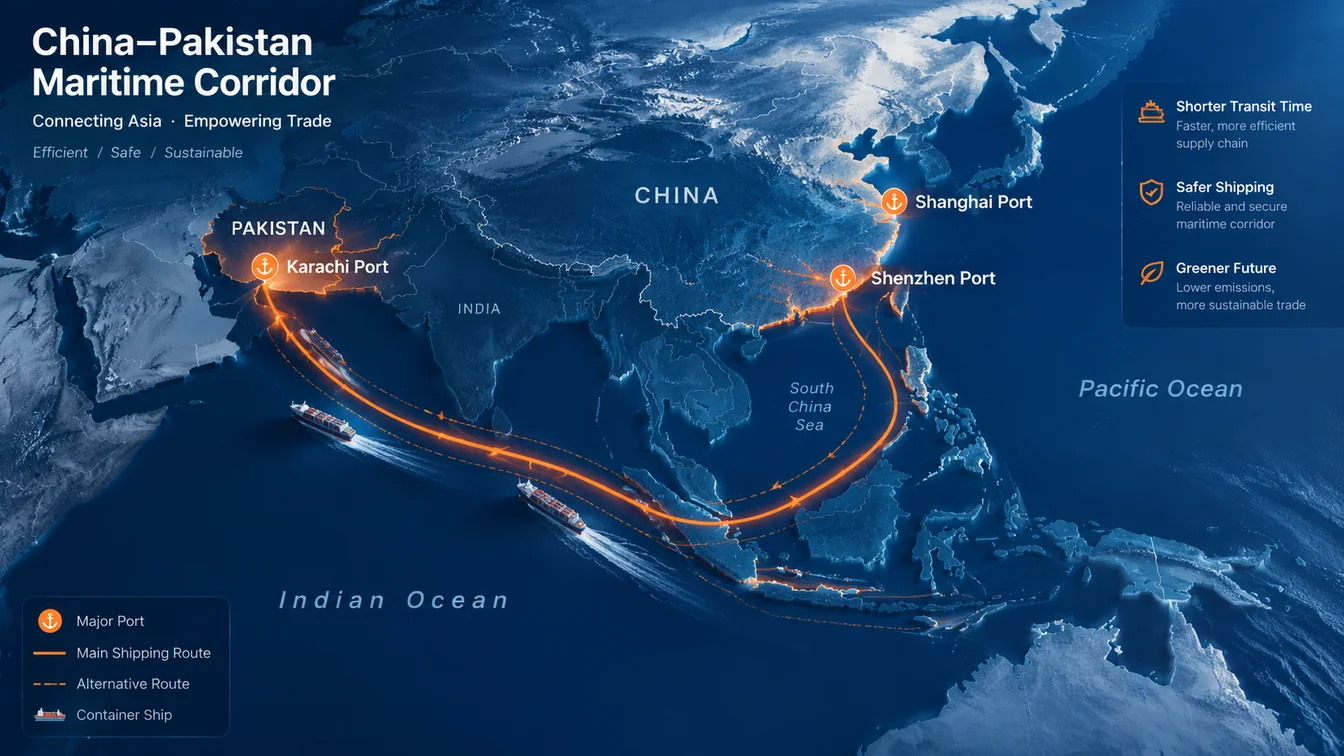
Sea freight is the starting point for non-urgent containerized cargo, while air freight and express are alternatives for shipments whose delivery urgency justifies their transport cost. The appropriate choice depends on the supplier’s location, packed dimensions, chargeable weight or container requirements, the receiving postcode in Pakistan, and the agreed customs and delivery arrangements.
Route Planning Summary
- How should cargo move from the supplier to the gateway?
-
Arrange pickup from the actual China factory or warehouse and compare the nearest practical export gateway with a suitable international service to Karachi or another supported Pakistan destination.
- Which transport method should I use?
-
Start with sea freight for non-urgent containerized or consolidated cargo; choose air freight or express when urgency, shipment dimensions, and delay costs justify the alternative.
- How should the delivery time be planned?
-
Use the supplied route-and-method transit reference for initial planning, then account separately for any supplier collection, export handling, import clearance, and final delivery activities that are not quantified in that reference.
- Who is responsible for Pakistan import clearance?
-
The eligible Pakistani importer remains responsible for the applicable import obligations, declarations, product permissions, and duty and tax arrangements, with an authorized customs professional involved where required.
- What determines final delivery?
-
The receiving address, customs release, inland transport arrangement, unloading requirements, and expressly agreed service scope determine how cargo moves from the Pakistan gateway to the consignee.
China to Pakistan Shipping Cost
The following table provides route-specific indicative shipping costs and planning transit references for the October 2026 review. Each reference applies to its named route, shipping method, and unit.
Cost-data review month: October 2026.
| Shipping route | Shipping method | Price | Transit time |
|---|---|---|---|
| China → Karachi Port, Pakistan | FCL 20GP | $3,105–$3,794/container | 15–25 days |
| China → Karachi Port, Pakistan | FCL 40GP | $3,595–$4,396/container | 15–25 days |
| China → Karachi Port, Pakistan | FCL 40HQ | $3,595–$4,396/container | 15–25 days |
| China → Karachi Port, Pakistan | LCL | $80–$170/CBM | 20–30 days |
| China → Karachi Airport (KHI), Pakistan | Air freight | $5.00/kg | 3–4 days |
| China → Karachi, Pakistan | Express | $8.00/kg | 3–5 days |
Cost scope: These indicative cost references apply to the route, method, and unit shown; they are not carrier freight rates, market averages, TJ selling prices, or binding quotations. The actual booking, cargo, and agreed service scope determine the commercial arrangement, including responsibility for relevant pickup, handling, customs clearance, duty and tax, inland delivery, insurance, storage, examination, appointments, and surcharges.
Pakistan Import Duty and Taxes
Pakistan import duty and taxes are determined by the product’s tariff classification, customs value, country of origin, applicable trade measures, product category, and current legislation. Import charges must be assessed for the particular goods rather than estimated from one universal national rate.
- Classify the product under the relevant Pakistan Customs Tariff code using its material, function, specifications, and intended use. The Federal Board of Revenue Customs Tariff publishes the fiscal-year tariff and associated schedules; use the version applicable to the entry date.
- Determine the customs value under the applicable valuation rules. The commercial transaction value is the starting point where acceptable, with required adjustments such as qualifying transport, handling, and insurance costs included as prescribed by law.
- Establish the applicable customs duty and check whether additional customs duty, regulatory duty, exemptions, concessions, or other product-specific measures apply under the current tariff and notifications.
- Determine the applicable sales tax at import, federal excise duty where relevant, and advance income tax collected at import. The amounts and treatment depend on the goods, current legislation, exemptions, and the importer’s circumstances.
- Check current import restrictions and approvals before dispatch. The Ministry of Commerce publishes import policy amendments and SRO notices that may change the requirements for particular products.
This is simplified shipment-planning information, not tax advice. The Pakistani importer or appointed customs professional should determine the correct tariff classification, assess applicable charges, and resolve product-specific restrictions before the goods leave China.
China to Pakistan Shipping Time
The supplied planning reference for China → Karachi Port, Pakistan, is 15–25 days for FCL 20GP shipping, while LCL on the same named route has a 20–30 days reference. These figures provide the starting comparison for sea freight before planning any additional handling or destination activities.

For air freight on China → Karachi Airport (KHI), Pakistan, the supplied transit reference is 3–4 days. For express shipping on China → Karachi, Pakistan, the supplied reference is 3–5 days.
Use the timing reference that matches the selected method and route rather than treating different transport services as interchangeable. The supplied values do not separately quantify supplier collection, customs release, or final delivery to a Pakistani street address, so they should not be treated as guaranteed door-to-door deadlines.
Shipping Methods from China to Pakistan
Sea freight is the practical starting point for non-urgent containerized or consolidated cargo moving from China to Pakistan. Air freight and express become more relevant when the required delivery window and the cost of delay outweigh the benefits of sea transport.

- Full container load (FCL)
- Choose FCL when the shipment needs a dedicated container, because containerized transport gives the shipment a defined loading unit and avoids sharing container space with unrelated cargo. Select among 20GP, 40GP, and 40HQ according to packed volume, cargo dimensions, loading limitations, and handling requirements. Review the sea freight service for the relevant service scope.
- Less than container load (LCL)
- Choose LCL when the shipment does not require a dedicated container, because consolidation allows compatible cargo to move with other shipments. Packed volume, package count, dimensions, cargo compatibility, handling requirements, and consolidation arrangements determine whether this is suitable. Allow for the handling stages associated with consolidated freight rather than assuming it follows the same process as a dedicated container.
- Air freight
- Choose air freight when the receiving schedule is tight and the shipment’s value or operational importance justifies faster international movement, because it offers an alternative to the sea-freight planning window. Compare actual weight with chargeable weight, package dimensions, cargo restrictions, airport handling, and the final delivery postcode. The air freight service is relevant when defining this option.
- Express shipping
- Choose express when the shipment consists of compact, time-sensitive parcels accepted by the selected service, because the express network can support parcel-oriented delivery rather than a container-based movement. Check dimensions, actual and chargeable weight, commodity acceptance, document requirements, destination coverage, and any remote-area or receiving restrictions. Use the express shipping service when defining the required parcel movement.
For China-to-Pakistan planning, the useful comparison is based on the actual shipment and delivery requirement: FCL for a suitable dedicated-container load, LCL for compatible consolidated cargo, air freight for time-sensitive cargo, or express for accepted parcels. No universal volume, weight threshold, or saving percentage can be inferred from the separate cost references.
Door-to-Door Shipping from China to Pakistan
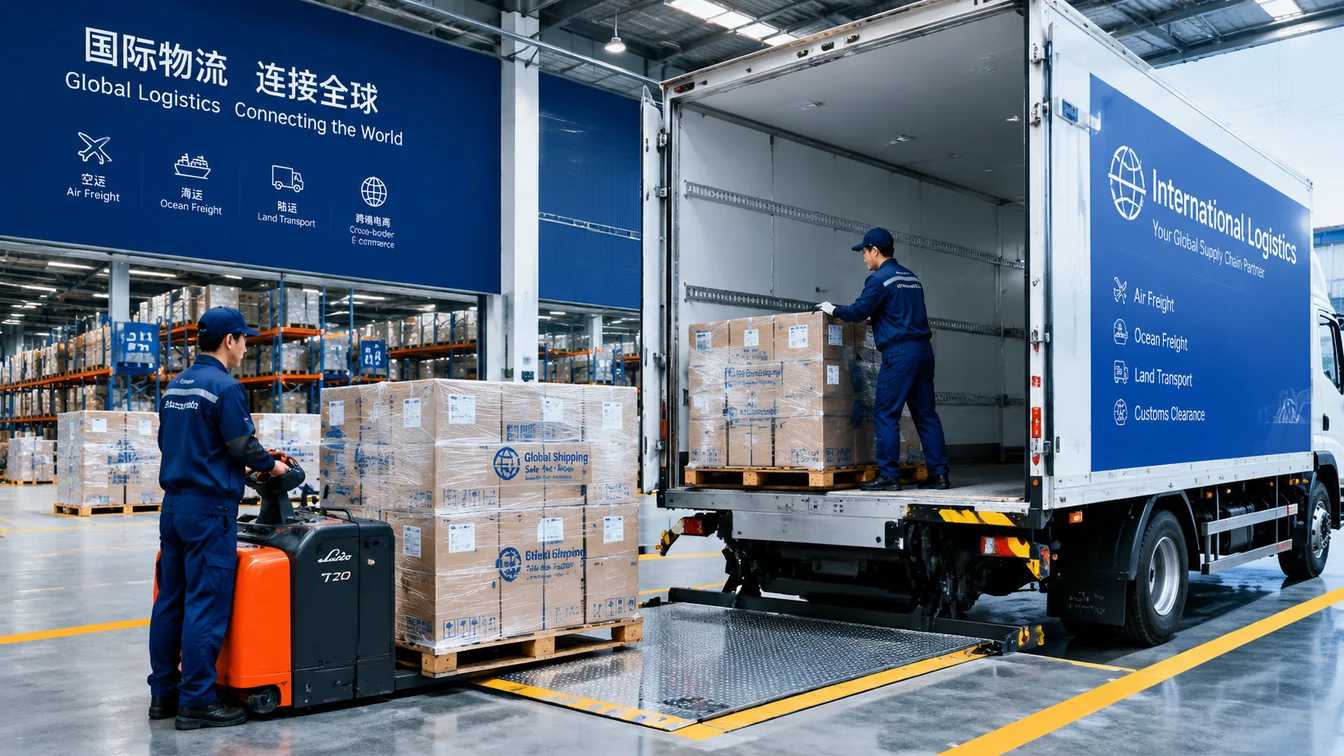
Door-to-door shipping connects supplier collection in China with delivery to a specified Pakistani receiving address under an agreed service scope. The door-to-door service is relevant when the shipment plan must cover more than international transport, but import clearance responsibility, duties and taxes, delivery access, and unloading arrangements still need to be allocated clearly.
-
Cargo and Compliance Review
Review the product description, quantity, package count, packed dimensions, gross weight, cargo value, and intended use. Check whether Pakistan imposes product-specific permits, conformity requirements, or transport restrictions that could affect acceptance or clearance.
-
Route and Method Selection
Match the supplier’s actual location and cargo profile to a suitable export gateway and international method. Compare sea freight through a relevant China port to Karachi Port or Port Qasim with air freight through Karachi Airport or an accepted express service when urgency justifies it.
-
Supplier Coordination and Pickup
Align the factory or warehouse collection point, cargo-ready date, packaging status, loading access, and handover instructions. Obtain final packed dimensions and weights before collection planning so the selected vehicle and transport method match the goods.
-
China Export Handling
Prepare the required commercial and transport documents, export declaration information, and cargo details before handover to the relevant origin facility. Resolve differences between the invoice, packing list, and physical cargo before the shipment enters the export process.
-
International Transportation
Move the cargo through the agreed sea, air, or express service using the selected gateway and transport documentation. The chosen service must match the cargo’s acceptance conditions and the destination handling plan rather than relying on an unverified direct connection.
-
Pakistan Import Clearance
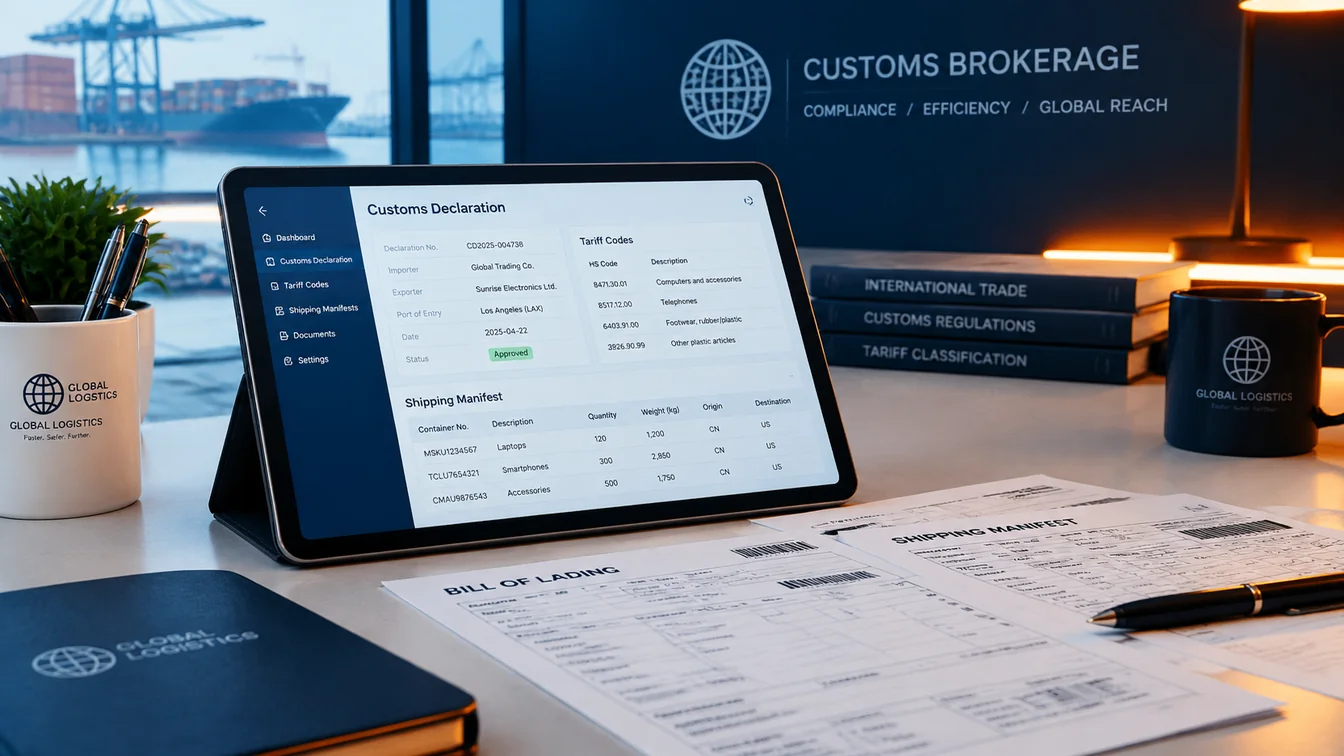
Arrange the Pakistan import declaration, tariff classification, applicable permissions, and settlement of assessed duties and taxes through the responsible importer and customs representative. The customs brokerage service is relevant when defining the agreed clearance support; it does not replace the importer’s legal responsibilities.
-
Final Delivery
After the cargo is released, coordinate inland transport to the agreed Pakistani delivery address. The receiving postcode, vehicle access, unloading equipment, appointment requirements, and permitted delivery window determine the appropriate final-mile arrangement.
-
Shipment Close-Out
Collect the available delivery evidence and transport records, check for package or quantity discrepancies, and close outstanding operational issues with the responsible parties. Record any exception affecting the agreed delivery scope so the shipment file reflects the completed handoffs.
Main China to Pakistan Routes
The most practical China-to-Pakistan route normally starts at an export gateway that limits supplier-side movement while fitting the destination region and a credible international service. Pickup distance, available carrier service, cargo requirements, import gateway handling, and the final Pakistani delivery location can change the preferred route.
Major China Export Ports for Pakistan Shipping
- Shanghai
- Shanghai is a relevant starting point for suppliers in Shanghai, Jiangsu, and the lower Yangtze River Delta. Compare Shanghai for containerized machinery, industrial goods, and general cargo when factory pickup is convenient, then assess suitable international services toward Karachi Port or Port Qasim.
- Ningbo-Zhoushan
- Ningbo-Zhoushan is worth comparing for suppliers in Zhejiang and nearby eastern China manufacturing areas. It may limit origin-side movement for a factory closer to Ningbo than Shanghai; the actual carrier service and destination handoff determine whether that advantage remains useful.
- Shenzhen/Yantian
- Shenzhen/Yantian is a relevant comparison for suppliers in Shenzhen, Dongguan, and the Pearl River Delta. It is particularly useful when factory pickup lies in southern Guangdong, but the chosen service must still support the cargo and the intended Pakistan destination.
- Qingdao
- Qingdao is a practical gateway to compare for suppliers in Shandong and northern coastal China. It can reduce unnecessary origin-side movement for northern factories; the final selection should account for actual service availability and the onward movement to Pakistan.
- Xiamen
- Xiamen is worth comparing for suppliers in Fujian and surrounding southeastern China. Use it as a starting option when the pickup point is nearby, while checking whether an alternative origin gateway offers a more suitable service and overall route.
Major Pakistan Import Ports for Cargo from China
- Karachi Port
- Karachi Port is a major container gateway for imports serving Karachi and Sindh, with onward delivery options toward other parts of Pakistan. The Karachi Port Trust identifies its container terminals and cargo-handling facilities. It is the named destination for the supplied sea-freight cost references, but the appropriate terminal and inland arrangement still depend on the shipment.
- Port Qasim
- Port Qasim is another relevant gateway for cargo serving Karachi’s eastern industrial areas and inland destinations reached from the greater Karachi region. The Port Qasim Authority describes its operational complex, including container-terminal facilities. Compare it with Karachi Port where the available service, terminal handling, and final delivery route may differ.
- Gwadar Port
- Gwadar is a geographically relevant port for certain western Balochistan or project-specific cargo plans, but it should not automatically be treated as an equivalent alternative to Karachi’s regular container gateways. Use it only where the proposed service, cargo handling, customs arrangements, and onward inland movement are demonstrably suitable for the shipment.
Supplier Region to Destination Routing Logic
| Supplier region in China | Origin port to compare | Destination port and delivery region | Planning reason |
|---|---|---|---|
| Pearl River Delta, Guangdong: start by comparing Shenzhen/Yantian to Karachi Port or Port Qasim, then delivery in Karachi or Sindh. | Shenzhen/Yantian | Karachi Port or Port Qasim; Karachi and Sindh | Use the nearby southern gateway as an initial comparison when supplier pickup is local; change the pattern when the actual factory location, available service, or destination terminal makes another route more suitable. |
| Shanghai and Jiangsu: compare Shanghai to Karachi Port or Port Qasim before arranging inland delivery to Punjab. | Shanghai | Karachi Port or Port Qasim; Lahore, Faisalabad, and other Punjab destinations | Begin with Shanghai when it limits supplier-side movement; compare Ningbo-Zhoushan if the collection point, available service, or total destination-side cost changes the route choice. |
| Zhejiang: compare Ningbo-Zhoushan to Karachi Port or Port Qasim, followed by delivery to Karachi or inland Punjab. | Ningbo-Zhoushan | Karachi Port or Port Qasim; Karachi, Lahore, or Faisalabad | Start with the nearby Zhejiang gateway; another port may be preferable when its actual schedule, pickup arrangements, and destination handoff fit the shipment better. |
| Shandong and northern China: compare Qingdao to Karachi Port or Port Qasim for deliveries toward Lahore, Islamabad, or Rawalpindi. | Qingdao | Karachi Port or Port Qasim; Punjab and Islamabad/Rawalpindi | Qingdao can limit origin-side movement for northern suppliers; the destination port choice should reflect the international service, inland route, delivery postcode, and handling requirements. |
| Fujian: compare Xiamen to Karachi Port or Port Qasim, followed by delivery in Sindh or inland Pakistan. | Xiamen | Karachi Port or Port Qasim; Sindh and central Punjab | Start with Xiamen when the supplier is nearby; compare an alternative export gateway if the confirmed service, pickup distance, or complete onward route changes the decision. |
Destination Regional Delivery Logic
- Karachi and Sindh
- Compare Karachi Port and Port Qasim against the receiving location and the actual available cargo service. The final-mile plan should account for industrial-area access, local handling, unloading, and any site-specific receiving window rather than treating every Karachi address as having the same delivery requirements.
- Punjab
- For Lahore, Faisalabad, Multan, and other Punjab destinations, compare the complete route through Karachi Port or Port Qasim with the inland movement required after release. The final postcode, truck or rail availability, handling needs, and delivery deadline can change the preferred destination gateway.
- Islamabad and Rawalpindi
- Plan the port-to-inland leg as a separate execution stage for deliveries in the Islamabad–Rawalpindi area. Release status, the receiving address, suitable vehicle access, and the inland service arrangement determine when the cargo can move to the consignee.
- Khyber Pakhtunkhwa and northern inland destinations
- Use the actual delivery address to determine the onward route from the port rather than assuming that a port serving Pakistan’s main import market also provides the best final-mile arrangement. Confirm the inland carrier’s coverage, cargo acceptance, access restrictions, and delivery scope for the destination.
How the Gateway Is Selected
The final gateway decision should connect the supplier’s pickup point to a workable Pakistan delivery plan through the selected transport method.
- Supplier proximity: use the factory or warehouse address to compare origin pickup distance to Shanghai, Ningbo-Zhoushan, Shenzhen/Yantian, Qingdao, or Xiamen.
- International service: select an origin gateway only when its available service and cargo acceptance fit the intended destination and timing requirement.
- Pakistan entry point: compare Karachi Port and Port Qasim for the actual cargo service, terminal handling, and destination region; use Gwadar only when the shipment has a credible handling and inland plan.
- Delivery destination: use the final postcode and receiving conditions to evaluate the inland leg, not just the destination port’s name.
- Service boundary: when the route involves different transport or inland legs, document how the handoffs fit together; multi-modal freight may be relevant where the agreed movement genuinely combines modes.
Pakistan Customs Clearance
Commercial imports into Pakistan require accurate customs declarations, an eligible importer, supporting documents, applicable product permissions, and settlement of assessed import charges. The relevant requirements are those of Pakistan’s customs and import-control system; product-specific restrictions and tax treatment must be checked against the rules applicable when the goods enter.
What the Pakistan Importer Normally Needs
A Pakistan import file should be prepared around the declared goods, their customs value and classification, the applicable transport document, and the importer’s ability to file the declaration and satisfy regulatory requirements.
- Importer registration and authority The Pakistani importer needs the applicable tax and customs registrations and authority to act for the business. Filing a Single Declaration through Pakistan Single Window import services requires a subscribed, authorized user and the appropriate integrated banking profile.
- Pakistan Customs Tariff classification Prepare the appropriate tariff code and a complete product description covering material, function, specifications, and intended use. Classification must reflect the actual goods rather than a broad commercial label.
- Commercial invoice and packing list The invoice should accurately describe the transaction, goods, quantities, currency, and value; the packing list should match the actual packages, dimensions where relevant, and contents. Resolve differences before dispatch.
- Transport document Prepare the applicable bill of lading for sea freight, air waybill for air freight, or shipment and tracking documentation for express. The shipper, consignee, goods description, and shipment details should remain consistent across the file.
- Customs value and payment information Maintain transaction and payment records that support the declared value and relevant adjustments under customs valuation rules. The import declaration and associated financial information must satisfy the applicable banking and customs requirements.
- Import permissions and restrictions Check current policy conditions, prohibitions, restrictions, and licensing requirements for the actual product. A shipment that requires an import permit, certificate, or approval must follow the relevant procedure before the applicable clearance decision.
- Product conformity and regulatory documents Prepare applicable standards, inspection, conformity, health, safety, or other regulatory documentation where the product category requires it. Requirements can vary substantially between ordinary commercial goods and controlled products.
Common Causes of Pakistan Customs Delays
- An incorrect tariff classification or a product description too vague to support the customs declaration.
- Differences between the commercial invoice, packing list, transport document, and physical cargo.
- A customs value that lacks adequate transaction evidence or does not account for required valuation adjustments.
- Missing import permits, product approvals, certificates, or conformity evidence required for a particular category.
- An incomplete importer registration, declaration profile, banking arrangement, or authorization for the responsible representative.
- Inconsistent consignee information, package counts, cargo descriptions, or financial details in the import documents.
- Examination, terminal handling, storage, or other release requirements that remain unresolved when the shipment arrives.
The importer should resolve classification, valuation, registration, and product-approval issues before the supplier releases the cargo in China. Early document consistency reduces avoidable handoff problems, although the customs authority retains control over examination, assessment, and release.
Special Cargo, Packaging, and Insurance
Pakistan-bound cargo with controlled contents, unusual dimensions, or special handling requirements should be reviewed before supplier handover, because acceptance conditions and import controls can change the suitable transport method and clearance plan.
Cargo Requiring Additional Review
- Batteries and battery-powered goods: provide battery specifications and packaging details, and check the acceptance conditions of the selected sea, air, or express service.
- Dangerous goods and chemicals: establish the correct classification, safety documentation, packaging, and any transport or import authorization requirements before booking.
- Liquids and potentially hazardous substances: check leakage protection, compatibility, handling conditions, and product-specific restrictions.
- Food, cosmetics, and medical goods: review applicable product registration, health, labeling, quality, and import-permission requirements for the specific goods.
- Wood packaging: check applicable phytosanitary and marking requirements for regulated solid-wood packaging before cargo pickup.
- Oversized or heavy cargo: assess dimensions, weight, loading equipment, vehicle access, and the receiving site’s unloading capability. The project cargo shipping service is relevant where ordinary cargo handling is not suitable.
- Temperature-controlled cargo and other controlled goods: verify the required temperature range, handling equipment, documentation, storage conditions, and any applicable Pakistan import controls.
Packaging Checks
Pakistan-bound cargo should be packed to withstand the handling associated with its selected transport method and any agreed transfers. Accurate package dimensions and weights are also essential for transport planning, shipping documentation, and destination delivery arrangements.
Before the supplier hands over the cargo, check that the packaging and shipment details match the actual goods.
- Use cartons or outer packaging suitable for the actual product weight, stack load, and expected handling.
- Protect fragile items and prevent movement, impact, leakage, or abrasion inside the package.
- Use appropriate pallets and secure loads when the cargo and handling process require them.
- Protect moisture-sensitive cargo against foreseeable exposure during storage and transport.
- Apply clear handling marks and shipment labels that match the cargo documentation and receiving instructions.
- Record accurate package dimensions, gross weight, package count, and any oversized or irregular measurements.
- Check applicable treatment and marking requirements whenever regulated wood packaging is used.
Cargo Insurance
Carrier liability is not the same as cargo insurance and may not provide equivalent protection for the goods’ value. Before shipment, define the insured value, covered transport period, exclusions, deductible, evidence requirements, and procedure for reporting loss or damage. The cargo insurance service is relevant when reviewing the proposed coverage and its limits against the shipment’s actual risk profile.
Why Use a Freight Forwarder for Shipping from China to Pakistan?
A freight forwarder helps resolve three practical China-to-Pakistan shipping problems: converting cargo information into a workable shipment definition, selecting a credible gateway and transport method, and aligning the commercial and operational handoffs. The benefit is a clearer movement plan, while the importer, required licensed representatives, and product-compliance owners retain their respective legal responsibilities.
- A shipment definition that can be executed
- Incomplete or inconsistent cargo information can undermine transport selection and downstream documentation. A forwarder can organize the shipment description, packed dimensions, quantities, readiness date, and delivery requirement into a defined movement, with unusual or regulated goods receiving additional review when necessary.
- A workable factory-to-destination route
- A suitable origin port does not automatically produce a suitable final delivery route. A forwarder can compare supplier-side movement, the selected sea, air, or express service, Karachi-area entry options, and the required inland handoff against the actual delivery region.
- Clear commercial and operational responsibility
- Unclear responsibility for clearance, handling, taxes, or final delivery can interrupt the sequence after international transport. Recording the responsible parties and agreed handoffs helps distinguish the transport plan from the importer’s separate legal and regulatory obligations.
How TJ Logistics Team Plans a China-to-Pakistan Shipment
- Shipment definition review
- TJ Logistics Team reviews the cargo description, package count, dimensions, weights, collection location, cargo-ready date, and Pakistan delivery postcode. Missing information that prevents a reliable route or method decision is flagged before the shipment plan proceeds.
- Route and gateway comparison
- TJ Logistics Team compares relevant China origin gateways, the available international transport options, and the intended Pakistan destination handoff against the defined shipment. The comparison can change when the cargo requires special handling or when the factory location and final destination favor a different route.
- Agreed service boundary
- TJ Logistics Team records the agreed responsibilities for supplier collection, export handling, international movement, import-clearance coordination, duty and tax arrangements, and final delivery. Where DDP is proposed, the DDP shipping service scope should be reviewed against the intended arrangement; the delivery term does not remove mandatory Pakistan import requirements.
- Operational handoff coordination
- After the buyer confirms the agreed scope, TJ Logistics Team coordinates relevant booking information, commercial documents, cargo handoff details, and the next operational decision. Changes to cargo readiness, routing, documentation, or receiving conditions are flagged for the responsible parties rather than treated as guaranteed outcomes.
China to Pakistan Shipping FAQ
China-to-Pakistan shipment planning is primarily a decision about the cargo’s origin, transport urgency, suitable Pakistan entry gateway, import readiness, and final delivery requirement.
How much does a 20ft container from China to Pakistan cost?
The indicative FCL 20GP cost reference for China → Karachi Port, Pakistan, is $3,105–$3,794/container. The cost-data review month for this reference is October 2026, and the figure is a route-specific planning reference rather than a binding quotation.
How long does sea freight from China to Pakistan take?
For China → Karachi Port, Pakistan, the supplied planning reference is 15–25 days for FCL 20GP and 20–30 days for LCL. Use the reference matching the selected method; it does not separately establish the completion time for customs clearance or final delivery to a Pakistani address.
What is the most cost-effective way to ship from China to Pakistan?
Sea freight is the practical starting point for non-urgent cargo that can move by container or consolidation. FCL suits a shipment needing a dedicated container, LCL suits compatible cargo that can be consolidated, and air freight or express is more relevant when delivery urgency justifies the alternative. Per-container, per-volume, and per-kilogram references are not directly interchangeable.
Which China port or gateway is best for shipping to Pakistan?
The best starting gateway is normally a suitable export port that limits movement from the actual supplier location. Compare Shenzhen/Yantian for suitable Guangdong suppliers, Shanghai or Ningbo-Zhoushan for eastern China, and Qingdao for Shandong; then compare the available route toward Karachi Port or Port Qasim against the final Pakistani delivery region.
Should cargo for Lahore or Islamabad enter through Karachi Port or Port Qasim?
Karachi Port and Port Qasim are the principal gateways to compare for these inland destinations when the selected service supports them. The suitable choice depends on the actual international service, destination terminal handling, customs release, inland transport arrangement, and final postcode rather than the destination city alone.
Can I arrange door-to-door shipping from China to Pakistan?
Door-to-door shipping can cover the agreed movement from a China supplier to a specified Pakistani delivery address. The service scope must state who handles collection, export handling, Pakistan import clearance, duties and taxes, inland delivery, and any unloading or appointment requirements; the eligible importer remains subject to Pakistan’s legal requirements.
What documents should be prepared before shipping from China to Pakistan?
Prepare a consistent commercial invoice, packing list, applicable bill of lading or air waybill, product description and tariff classification, customs-value evidence, and any product-specific permits or certificates. The Pakistani importer also needs the appropriate authority and declaration arrangements, including an eligible Pakistan Single Window user and banking profile where required for import filing.