

Reviewed by TJ Logistics Team — Content and cost data reviewed November 2026. This China-to-Netherlands route page reflects practical planning checks across supplier pickup, origin gateway and mode selection, Dutch customs handoff, and final delivery under current market, tariff, and marketplace conditions.
Shipping from China to the Netherlands: Route Update
A 20GP container from Shanghai to Rotterdam costs an indicative $2,080–$2,975 with a 40–49 day transit reference, giving sea freight the widest cost advantage on this lane for non-urgent, volume cargo.
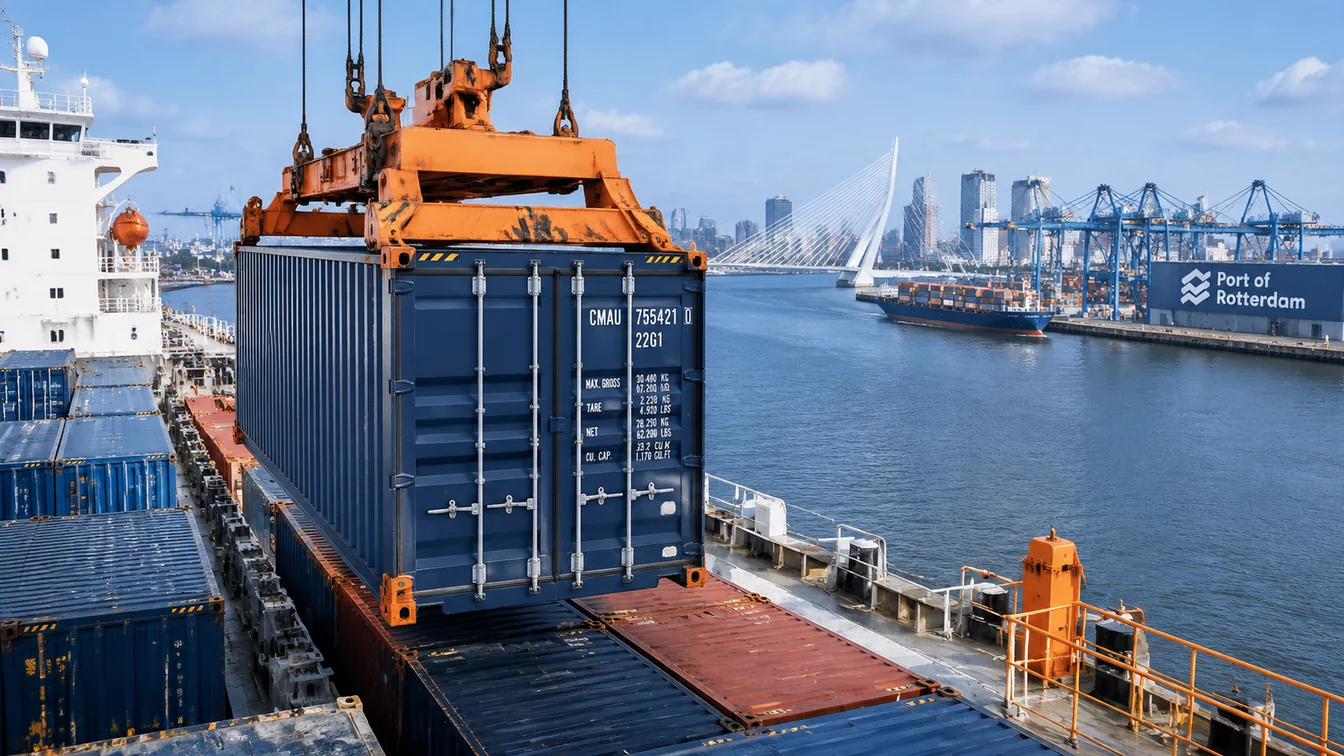
Air freight from Shanghai Pudong to Amsterdam Schiphol moves at $3.00–$3.80/kg in 1–2 days for urgent, low-density consignments, while rail-dominant multimodal service to the Netherlands provides a middle path when sea transit is too slow and air cost is too high. The mode that fits depends on cargo deadline, dimensions, and whether the final delivery address can absorb a port-to-door or door-to-door scope.
Route Planning Summary
- Which China gateway should a Netherlands shipment start from?
- Shanghai, Ningbo, and Shenzhen/Yantian are the main China export gateways for Dutch ocean cargo, and the supplier’s inland location normally decides which one minimises pickup cost. A supplier in Jiangsu or Zhejiang usually starts from Shanghai or Ningbo, while a Pearl River Delta supplier compares Shenzhen/Yantian before routing cargo north.
- Which transport mode fits a China-to-Netherlands shipment?
- Sea freight fits palletised or containerised cargo that can wait 40–49 days, air freight fits time-critical consignments under roughly a few hundred kilograms of chargeable weight, and rail multimodal fits shipments that need faster-than-ocean timing with lower cost than air. The deciding inputs are deadline, cargo value, density, and whether the final postcode requires a door-to-door scope.
- How long does China-to-Netherlands shipping take in planning terms?
- A Shanghai–Rotterdam FCL sailing carries a 40–49 day transit reference, while Shanghai Pudong–Amsterdam Schiphol air freight lists 1–2 days and express 3–6 days. Rail-dominant multimodal 20GP service is supplied at 16–20 days. These are planning references for the named route and method, not fixed door-to-door commitments.
- Who is responsible for Dutch customs clearance?
- The importer of record named on the customs declaration carries legal responsibility for the entry, even when a broker or forwarder files the declaration electronically. A Dutch EORI number and a Dutch VAT registration, or a fiscal representative arrangement for non-EU businesses, are normally required before clearance can proceed.
- What does final delivery from the Dutch gateway involve?
- Final delivery from Rotterdam or Schiphol runs by truck, and the delivery scope determines whether the seller or the buyer arranges the inland leg and unloading. A door-to-door scope should be agreed in writing before booking so that port charges, customs formalities, and final-mile handoffs are assigned to a named party.
China to Netherlands Shipping Cost
The table below provides route-specific indicative shipping costs and planning transit references for the November 2026 review, covering the named origin–destination pairs, methods, and units supplied for this lane.
| Shipping route | Shipping method | Price | Transit time |
|---|---|---|---|
| Shanghai, China → Rotterdam, Netherlands | FCL 20GP | $2,080–$2,975/柜 | 40–49 days |
| Shanghai, China → Rotterdam, Netherlands | FCL 40GP | $3,400–$4,350/柜 | 40–49 days |
| Shanghai, China → Rotterdam, Netherlands | FCL 40HQ | $3,400–$4,350/柜 | 40–49 days |
| China → Netherlands | LCL | $100–$160/CBM | 37–52 days |
| Shanghai Pudong International Airport (PVG), China → Amsterdam Schiphol (AMS), Netherlands | Air freight | $3.00–$3.80/kg | 1–2 days |
| Shanghai, China → Amsterdam, Netherlands | Express | $31.50–$42.00/kg | 3–6 days |
| China → Netherlands | Rail-dominant multimodal 20GP | $3,635.10–$4,442.40/柜 | 16–20 days |
Cost scope: The indicative cost references apply to the route, method, and unit shown; they are not carrier freight rates, market averages, TJ selling prices, or binding quotations. The actual booking, cargo, and agreed service scope determine the commercial arrangement, including responsibility for relevant pickup, handling, customs, duty and tax, inland delivery, insurance, storage, examination, appointment, and surcharge items.
Netherlands Import Duty and Taxes
Dutch import duty and import VAT are calculated separately, and the amount depends on the commodity code, customs value, origin, applicable trade measures, and current rules rather than one universal rate for all goods from China.
- Confirm the TARIC commodity code for the product. The EU applies a common external tariff, so the duty rate for a given code is the same whether goods enter through Rotterdam or another EU port. China-origin goods normally attract the standard third-country rate, and some product categories carry anti-dumping duties on top.
- Establish the customs value as the goods value plus international transport and insurance to the EU border. Dutch customs uses this value, not the supplier invoice alone, as the basis for both duty and import VAT.
- Multiply the customs value by the TARIC duty rate to arrive at the import duty. Rates vary by product and some goods are charged per quantity rather than by value.
- Apply Dutch import VAT at the standard 21% rate to the customs value plus duty, unless a reduced rate applies to the specific category. A business registered for Dutch VAT can normally reclaim this import VAT through its return, and an Article 23 licence allows eligible importers to report and deduct import VAT in the same return instead of paying at the border.
- Check current trade measures before dispatch, because anti-dumping duties, safeguard measures, and origin rules for specific product groups can change the effective duty burden. This explanation is simplified and is not tax or legal advice; confirm the applicable rate with a customs broker or the Dutch tax administration before entry.
China to Netherlands Shipping Time
A Shanghai–Rotterdam FCL sailing carries a 40–49 day planning transit reference, and this is the most commercially relevant timing baseline for full-container sea freight on the China–Netherlands lane. The LCL reference on the same broad lane is 37–52 days, reflecting consolidation and deconsolidation time rather than a faster sailing.
Air freight from Shanghai Pudong to Amsterdam Schiphol lists 1–2 days for the airport-to-airport segment, which is the fastest supplied reference but does not include origin handling, customs clearance, or final delivery. Express from Shanghai to Amsterdam lists 3–6 days for the door-to-door service scope typical of courier networks, while rail-dominant multimodal 20GP service is supplied at 16–20 days and sits between sea and air on both cost and speed.
Supplier pickup, export handling, Dutch import clearance, and final delivery sit outside these transit references and can extend the total planning window. A shipment that needs to reach a Dutch warehouse on a fixed date should treat the supplied transit value as the international movement segment only and allow separate time for the origin and destination handoffs.
Shipping Methods from China to the Netherlands
Choosing a China-to-Netherlands shipping method starts with the cargo deadline and the shipment form, not with a single cheapest label. The method entries below are decision rules: each begins with the observable condition that makes the mode the practical default.
- FCL sea freight
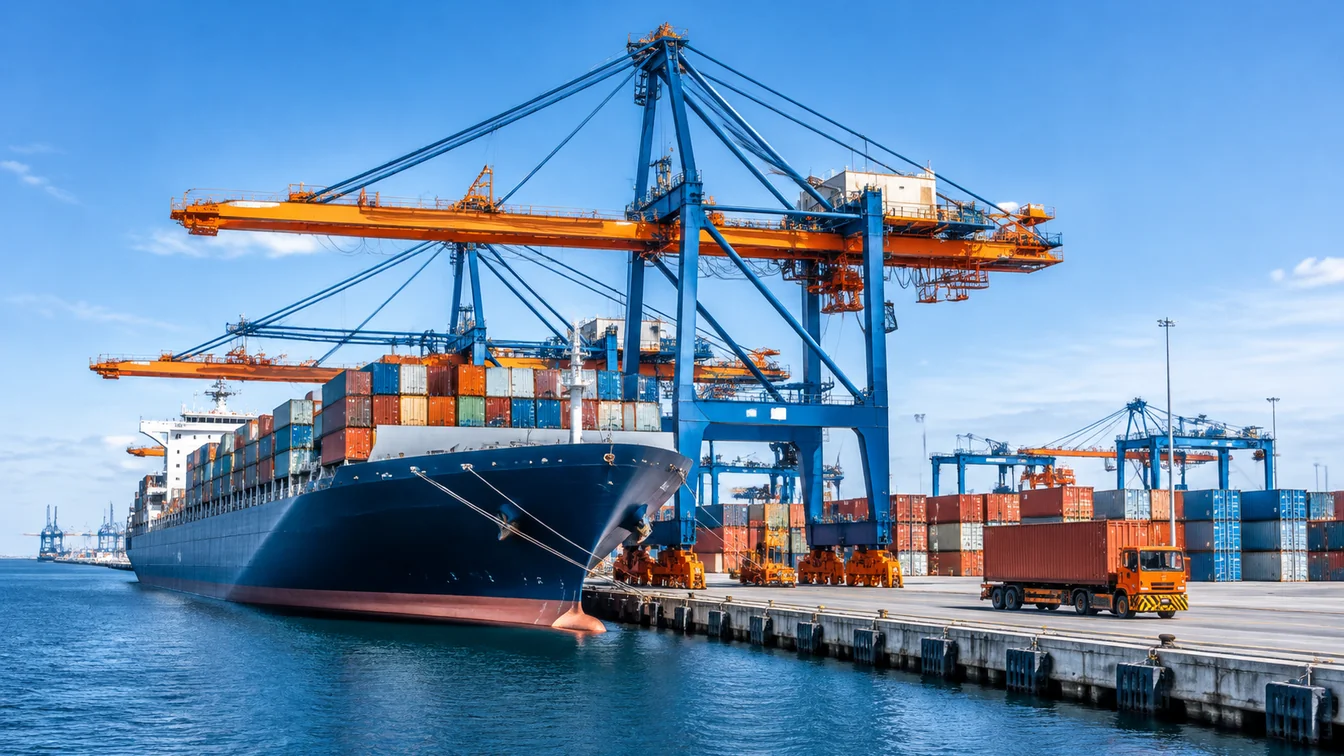
- Choose FCL when the cargo fills or nearly fills a 20GP, 40GP, or 40HQ container and the deadline allows 40–49 days of ocean transit, because a full container avoids LCL consolidation stops and gives the importer direct control over stuffing and seal records. Compare FCL 20GP against FCL 40GP or 40HQ by chargeable volume and cargo weight, not by a derived per-unit saving.
- LCL sea freight
- Choose LCL when the shipment is too small or too irregular to justify a full container and the 37–52 day reference fits the stock plan, because LCL consolidates multiple shippers’ cargo and bills by cubic metre. LCL adds co-loading and deconsolidation handling, so fragile or high-value cargo should be assessed for additional protection before booking.
- Air freight
- Choose air freight when the cargo is time-critical, high-value, or low-density enough that the $3.00–$3.80/kg reference and 1–2 day airport-to-airport segment outweigh the ocean cost, because air moves the shipment to Amsterdam Schiphol quickly. Air freight is charged on chargeable weight, so bulky low-weight cargo can price differently from its physical weight alone.
- Express courier
- Choose express when the shipment is small, urgent, and needs a door-to-door scope with tracking, because the $31.50–$42.00/kg reference covers a faster 3–6 day service pattern than standard air freight. Express has weight and size ceilings per piece, so oversized cartons or palletised freight should be checked against the courier’s acceptance rules before booking.
- Rail-dominant multimodal
- Choose rail-dominant multimodal when the shipment needs faster-than-ocean timing and lower-than-air cost, because the supplied 16–20 day 20GP reference lands in the Netherlands through a rail corridor rather than a seaport. Rail capacity on the China–Europe corridor can tighten seasonally, so space should be confirmed early when the delivery window is fixed. Rail service availability and routing should be confirmed with a forwarder before the mode is committed.
Door-to-Door Shipping from China to the Netherlands
A door-to-door China-to-Netherlands shipment follows a fixed sequence from supplier premises to the final Dutch delivery address, with a named responsible party at each handoff. The eight steps below describe that sequence so the importer can see where a forwarder’s scope begins and ends.
-
Cargo and Compliance Review
The shipment’s product category, commodity code, dimensions, weight, and any regulated content are reviewed first, because a missing CE document or an unclassified battery product can stop the route before a booking is useful. The output is a defined cargo profile that the remaining steps can act on.
-
Route and Method Selection
The origin gateway, transport mode, and Dutch entry gateway are compared against the cargo profile and deadline, because a shipment that fits FCL may be poorly served by LCL consolidation and vice versa. The selected route is recorded with its transit reference and service boundary before commercial arrangements are finalised.
-
Supplier Coordination and Pickup
The supplier’s location and readiness date determine the pickup plan, because a factory in Jiangsu may load naturally through Shanghai while a Pearl River Delta supplier may compare Shenzhen/Yantian or a consolidation point first. Pickup timing is aligned with the export handling window so cargo does not wait at origin.
-
China Export Handling
Export declaration, terminal or airport handover, and the transport document are completed at the China gateway, because the shipment cannot move internationally without a consistent export record. The export data must match the commercial invoice and packing list that will later support Dutch import clearance.
-
International Transportation
The main carriage moves by the selected mode to Rotterdam or Amsterdam Schiphol, because the mode choice made earlier determines the transit window and the arrival gateway. The shipment’s arrival notice and transport document are monitored so the Dutch clearance step can begin without avoidable delay.
-
Netherlands Import Clearance
Dutch import clearance is filed under the importer’s EORI number and, where applicable, with the Article 23 licence details, because the declaration belongs to the importer of record even when a broker submits it. Duty and import VAT liability, product compliance responsibility, and any inspection or document query are resolved at this stage before the cargo is released.
-
Final Delivery
Released cargo moves from the Dutch gateway to the final postcode by truck, because Rotterdam and Schiphol are entry points rather than final delivery addresses for most importers. The delivery scope, unloading responsibility, and any appointment or access requirement at the receiving site are confirmed before the truck is dispatched.
-
Shipment Close-Out
Proof of delivery, final charges, and any customs or insurance documentation are reconciled at close-out, because an unresolved charge or missing document can complicate the next shipment on the same lane. The closed file becomes the reference for the next booking’s scope and documentation.
Main China to Netherlands Routes
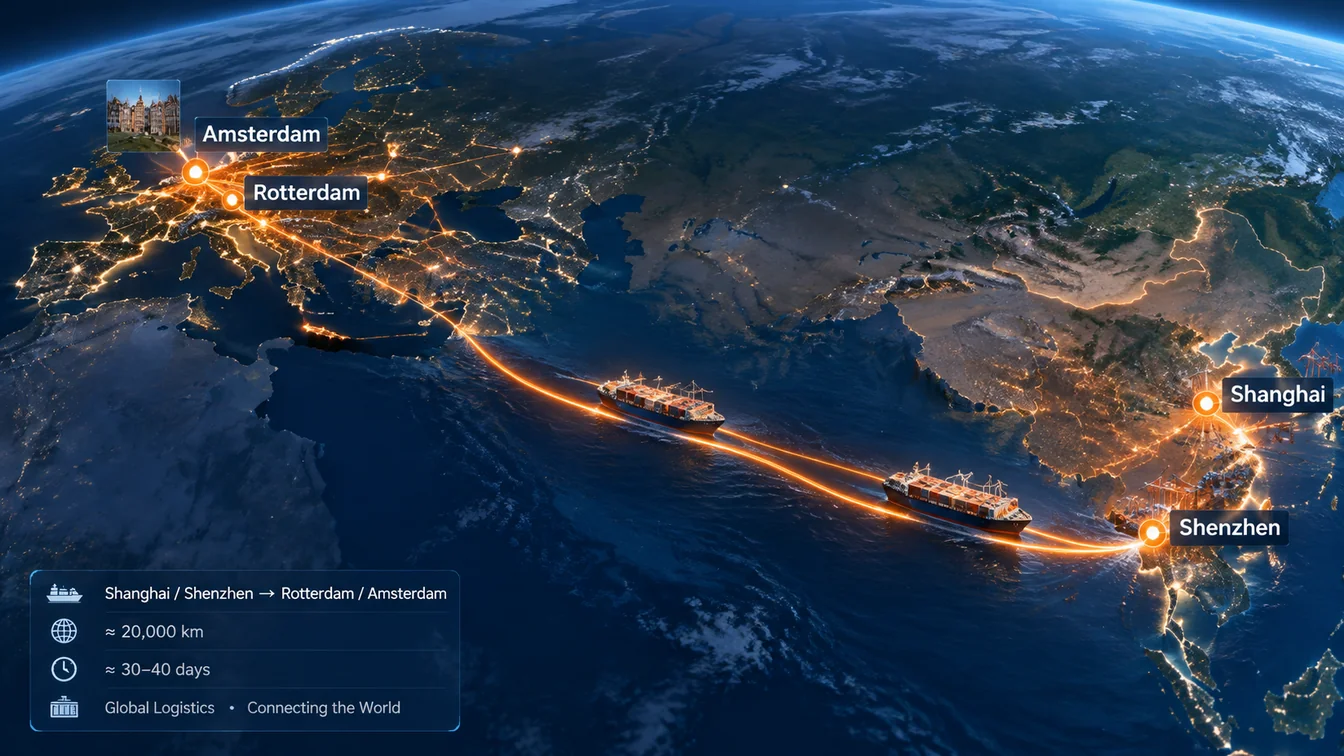
The most practical China-to-Netherlands route normally starts at a China gateway that limits supplier-side movement while fitting the Dutch delivery area and credible destination handling. The transfer, inland distance, equipment availability, or final-postcode delivery scope can change that comparison, so the gateway decision should follow the cargo profile rather than a fixed port ranking.
Major China Export Ports for Netherlands Shipping
- Shanghai
- Shanghai serves suppliers across Jiangsu, Zhejiang, and the Yangtze River Delta and has direct ocean connections to Rotterdam through multiple carrier services. It is the natural origin port for a supplier in or near Shanghai and a common consolidation point for LCL cargo bound for Rotterdam.
- Ningbo-Zhoushan
- Ningbo-Zhoushan is a high-volume container port for Zhejiang and eastern China suppliers and appears on Asia–North Europe rotations that call Rotterdam. It is a practical alternative to Shanghai when a supplier sits closer to Ningbo or when a specific sailing offers a better equipment fit.
- Shenzhen/Yantian
- Shenzhen/Yantian serves Pearl River Delta manufacturers and connects to Rotterdam through direct and transhipment services. A Guangdong-based supplier should compare Yantian against routing cargo north to Shanghai or Ningbo, because the inland leg can outweigh a sailing preference.
- Qingdao
- Qingdao serves Shandong and northern China suppliers and is relevant for cargo that originates outside the Yangtze or Pearl River clusters. It should be compared when the supplier’s inland distance to Qingdao is materially shorter than to Shanghai or Ningbo, and when the sailing schedule supports the delivery window.
Major Netherlands Import Ports for Cargo from China
- Port of Rotterdam
- Rotterdam is Europe’s largest seaport and the primary Dutch ocean gateway for containerised cargo from China, with direct services from Shanghai, Ningbo, and Yantian and an extensive barge, rail, and road hinterland network. It should be the default comparison for ocean cargo whose final delivery is in the Randstad, southern Netherlands, or onward EU markets.
- Port of Amsterdam
- Amsterdam handles a smaller container volume than Rotterdam and is more regionally focused, but it can serve cargo whose final delivery is in the Amsterdam metropolitan area or North Holland. It is a secondary comparison rather than a replacement for Rotterdam on most China-origin container services.
- North Sea Port (Vlissingen/Terneuzen)
- North Sea Port serves Zeeland and the Netherlands–Belgium border area and handles bulk, chemicals, and industrial cargo as well as some container traffic. It is relevant when the final delivery is in Zeeland or the Antwerp–Ghent corridor and the ocean routing or inland cost favours this gateway over Rotterdam.
Supplier Region to Destination Routing Logic
| Supplier region in China | Origin port to compare | Destination port and delivery region | Planning reason |
|---|---|---|---|
| Jiangsu, Zhejiang, or Shanghai | Shanghai or Ningbo-Zhoushan | Rotterdam, then truck or barge to Randstad and southern Netherlands | This pattern minimises supplier-side inland movement and uses direct China–Rotterdam sailings. It can change if the final postcode is closer to Amsterdam or if a specific sailing from Ningbo offers a better equipment fit. |
| Guangdong (Pearl River Delta) | Shenzhen/Yantian | Rotterdam, then truck to southern Netherlands or onward EU delivery | Yantian keeps the supplier leg short and connects to Rotterdam through direct or transhipment services. It can change if a Shanghai or Ningbo consolidation gives a better LCL schedule or if rail through Tilburg fits the deadline. |
| Shandong or northern China | Qingdao | Rotterdam, then inland truck or rail to the final Dutch postcode | Qingdao can reduce domestic haulage for northern suppliers while still reaching Rotterdam through carrier rotations. It can change if the sailing frequency or equipment availability at Qingdao is weaker than at Shanghai for the required departure week. |
| Central or western China (e.g. Sichuan) | Chengdu rail terminal or Shanghai feeder | Tilburg rail terminal, then truck to Dutch delivery region | Rail-dominant multimodal service from Chengdu to Tilburg offers a 16–20 day planning reference and avoids a sea leg for time-sensitive inland-origin cargo. It can change if rail space is unavailable or if the final delivery is closer to Rotterdam and ocean transit fits the deadline. |
Destination Regional Delivery Logic
- Randstad (Amsterdam, Rotterdam, The Hague, Utrecht)
- Randstad deliveries can use Rotterdam for ocean cargo or Schiphol for air cargo with short final-mile truck legs, because the major gateways sit inside or adjacent to this region. Barge and rail connections may still be relevant for container pick-up if the receiving site has dock or rail access.
- Southern Netherlands (North Brabant, Limburg)
- Southern Netherlands deliveries often compare Rotterdam with North Sea Port and may also consider Tilburg for rail-origin cargo, because the inland distance from these gateways is shorter than from Amsterdam. The final postcode and receiving-site access determine whether truck or rail is the practical inland mode.
- Northern and eastern Netherlands
- Northern and eastern deliveries may compare Rotterdam with Amsterdam or a rail terminal, because the inland truck leg from Rotterdam can be longer than from a closer gateway. Rail corridors through Tilburg or onward EU hubs can be relevant when the receiving site is rail-connected or when road congestion affects timing.
How the Gateway Is Selected
- Supplier-to-origin distance: compare the inland truck or rail leg from the factory to each candidate China port or rail terminal, because a shorter supplier leg reduces domestic cost and pickup time.
- Sailing or departure frequency: confirm that the candidate gateway offers a service pattern to Rotterdam or Schiphol that matches the required departure week, because a closer port with a weak schedule can delay the shipment.
- Final postcode and inland mode: compare the destination gateway against the final delivery address by truck, barge, or rail, because the inland leg can change the total route cost and transit window.
- Equipment and cargo fit: check whether the gateway and selected mode can handle the container size, weight, or special-handling requirement, because not every service or terminal accepts every equipment type.
- Service scope and responsibility: confirm which party arranges pickup, export handling, main carriage, Dutch clearance, and final delivery, because a gateway that looks cheaper at the port can cost more once the full scope is assigned.
Netherlands Customs Clearance
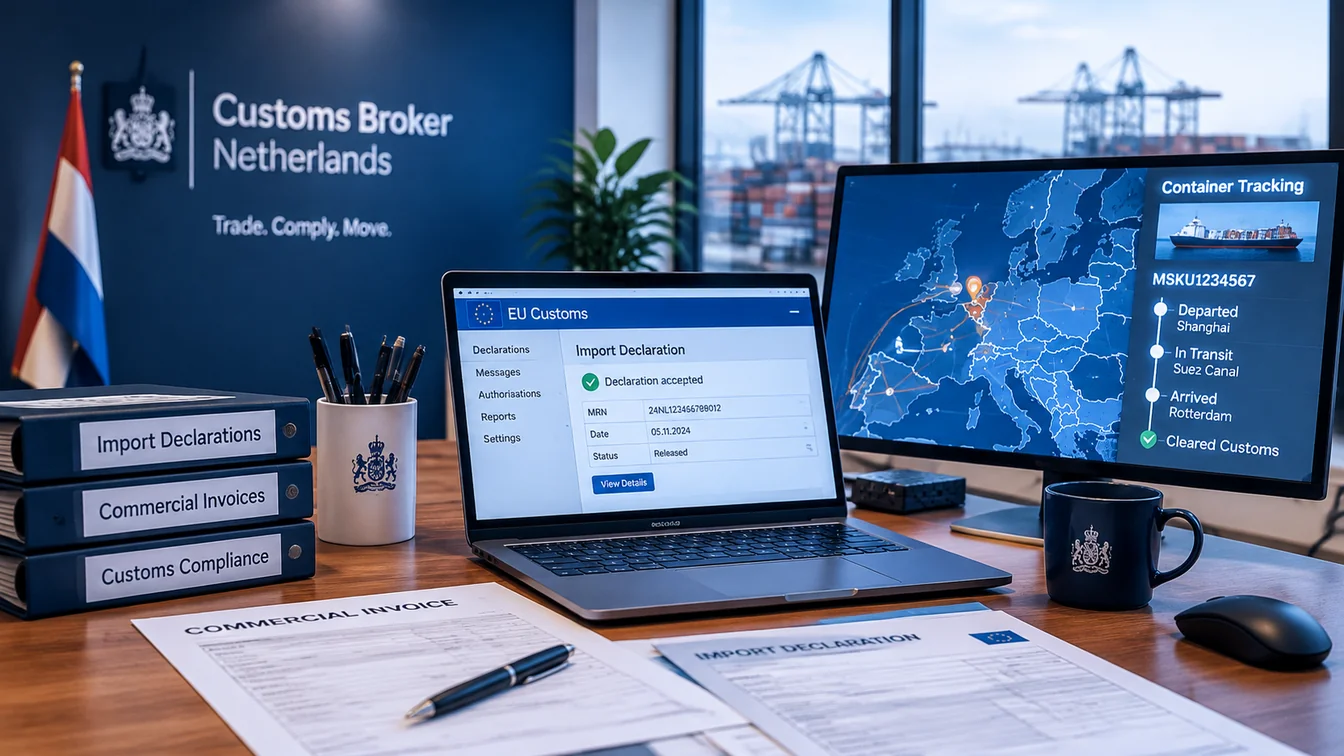
Dutch customs clearance requires an importer of record, a valid declaration, and payment or deferment of duty and import VAT, and the rules apply to goods entering the Netherlands as part of the EU customs territory. The importer of record remains responsible for the accuracy of the declaration and for product compliance even when a broker or forwarder files electronically.
What the Netherlands Importer Normally Needs
An importer bringing goods from China into the Netherlands normally needs the following identifiers, documents, and arrangements in place before the first clearance:
- Dutch EORI number A valid Economic Operators Registration and Identification number is required for customs declarations in the EU, and Dutch EORI numbers are issued through the Netherlands Chamber of Commerce (KVK) and Dutch Customs. The declaration runs on the importer’s EORI even when a broker submits it.
- Dutch VAT registration A Dutch VAT number is normally required to report and reclaim import VAT, and non-EU businesses typically need a fiscal representative or a Dutch establishment to use the Article 23 deferment licence.
- Commodity code (TARIC) The correct TARIC classification determines the duty rate, any anti-dumping measure, and the import VAT base; an incorrect code is a leading cause of customs queries and post-clearance adjustments.
- Commercial invoice The invoice must show seller and buyer, a clear product description, quantities, unit prices, total value, currency, and the agreed Incoterm, because Dutch customs uses it to establish the customs value.
- Packing list and transport document The packing list with carton counts, weights, and dimensions and the bill of lading or air waybill support the declaration and any physical inspection; inconsistencies between documents and cargo are a common delay trigger.
- Product compliance evidence CE marking documentation, the EU Declaration of Conformity, and test reports must be available where the product group requires them, because the importer carries responsibility for placing compliant goods on the EU market.
- EU responsible economic operator details Under the General Product Safety Regulation, non-food consumer products need an EU-based responsible party whose name and contact details appear on the product or packaging, and online listings must display that information.
- Article 23 licence (where applicable) An Article 23 licence allows eligible Dutch VAT-registered importers to report import VAT in their periodic return instead of paying at the border; the licence number should be passed to the customs broker before the declaration is filed.
Common Causes of Netherlands Customs Delays
- Incorrect or inconsistent HS/TARIC codes across the commercial invoice, packing list, and customs declaration.
- Missing or invalid EORI or VAT details, including a declaration filed under the wrong importer identifier.
- Commercial invoice values or product descriptions that do not match the actual cargo or the transport document.
- Absent product-compliance documents, such as a CE Declaration of Conformity or test report, for regulated goods.
- Missing import licences, certificates, or phytosanitary documents for controlled product groups.
- Pre-arrival safety and security declarations (ENS/ICS) not filed correctly or not linked to the entry declaration.
- Unresolved anti-dumping or trade-measure questions that require additional verification before release.
These issues should be resolved before departure from China, because correcting documents after the cargo arrives at Rotterdam or Schiphol adds storage, examination, or re-export costs and can break the final-delivery schedule.
Shipping to Amazon FBA Netherlands
Amazon FBA Netherlands shipments require an EU-established importer or an indirect customs representative, a Dutch VAT number, and a commodity code before inventory can be cleared into the EU, because the declarant must be established in the EU under the Union Customs Code. Amazon’s seller guidance treats the seller as the importer with a VAT number in the country of import, and a non-EU seller without a Dutch establishment normally needs a fiscal representative or an EU entity to act as importer of record.
The Netherlands is an active Amazon marketplace and participates in Pan-European FBA, with the requirement that all Pan-EU FBA products, new and existing, must have an active Netherlands offer from 3 September 2026 to enrol and to continue receiving Pan-EU benefits. FBA shipments must follow the shipment plan, carton labelling, and assigned-destination rules in Seller Central, and the appointment and receiving requirements at the assigned fulfilment centre should be checked before the truck is dispatched from Rotterdam or Schiphol.
Import VAT at 21% applies to FBA inventory at the point of entry, and an Article 23 licence can defer the cash flow for eligible importers. Product eligibility, dangerous-goods restrictions, and labelling requirements specific to the Dutch marketplace should be verified against Amazon’s current FBA guidance before the shipment plan is created. TJ Logistics Team’s Amazon FBA service covers the booking, labelling, and delivery coordination steps that connect the China origin to the assigned Dutch fulfilment centre.
Special Cargo, Packaging, and Insurance
Cargo Requiring Additional Review
- Lithium batteries and battery-powered devices, which may be regulated as dangerous goods and need carrier acceptance before booking.
- Dangerous goods, chemicals, and liquids, which require classification, packing, and documentation that standard freight services may not accept.
- Food, cosmetics, and medical goods, which may need product registration, labelling, or import licensing in the EU.
- Oversized or overweight cargo, which may require special equipment, route permits, or a different gateway.
- Temperature-controlled cargo, which needs a cold-chain scope that standard sea or air services do not provide.
- Controlled goods, which may need an export or import licence before they can move.
- Wood packaging, which must meet ISPM 15 treatment and marking rules for EU entry.
Packaging Checks
Packaging for a China-to-Netherlands shipment should protect the cargo through ocean, air, or rail handling and present the information Dutch customs and the receiving site need, because damaged cartons or missing labels can cause a delivery refusal or a customs query even when the goods themselves are compliant.
- Carton strength suitable for the stacked load and the selected mode, with adequate burst and compression ratings.
- Internal protection for fragile or high-value items, including dividers, cushioning, and moisture barriers where needed.
- Pallet condition and dimensions that match the carrier and receiving-site requirements, with no protruding fasteners.
- Handling marks, carton labels, and product identification that remain legible after transit.
- Regulated wood packaging treated and marked to ISPM 15 where applicable.
- Label information required for the product group, including EU responsible-party details where the GPSR applies.
Cargo Insurance
Carrier liability is not the same as cargo insurance, because a carrier’s liability is normally limited by convention or contract and may not cover the full commercial value of a China-to-Netherlands shipment. Coverage, exclusions, deductible, insured value, evidence requirements, and the coverage period should be confirmed before dispatch, and the cargo insurance service can be arranged alongside the freight booking.
Why Use a Freight Forwarder for Shipping from China to the Netherlands?
A freight forwarder helps a China-to-Netherlands importer turn cargo facts into a workable shipment definition, select a credible route and gateway, and keep the commercial and operational handoffs aligned. Those three problems are connected: an undefined cargo profile produces a weak route comparison, and a route without a clear handoff produces delays at the Dutch gateway.
- Defining the shipment before comparing quotes
- A forwarder converts supplier location, carton dimensions, weight, product category, and deadline into a movement definition that can be priced and booked consistently. The condition that changes the definition is a regulated product or an unusual loading requirement, which may shift the mode or the gateway before cost comparison begins.
- Matching the route to the final Dutch postcode
- A forwarder compares China origin gateways, ocean and air or rail options, and Dutch entry points against the final delivery area, because a route that looks efficient at the port can be expensive once inland trucking is added. The condition that can change the match is a final address outside the Randstad or a delivery site without standard truck access.
- Keeping commercial and operational handoffs aligned
- A forwarder records who arranges pickup, export clearance, main carriage, Dutch import declaration, duty and VAT settlement, and final delivery, so the importer does not assume a service that is outside the agreed scope. The condition that can change the handoff is a DDP offer from a supplier whose EORI and importer identity are not transparent, which can affect VAT recovery and compliance responsibility.
How TJ Logistics Team Plans a China-to-Netherlands Shipment
- Shipment definition review
- TJ Logistics Team reviews the supplier location, cargo dimensions, weight, product category, deadline, and final delivery postcode, and flags any missing input that would prevent a reliable route or mode comparison. A missing commodity code or an unconfirmed product-compliance document is identified at this stage rather than after booking.
- Route and handoff comparison
- The team compares China origin gateways, ocean, air, express, and rail options, and Dutch entry points against the shipment definition, and identifies the destination handoffs that need a named responsible party. The comparison is recorded so the buyer can see which route fits the deadline and which service scope each option assumes.
- Service boundary and responsibility record
- Before a formal commercial arrangement is prepared, TJ Logistics Team records the agreed service boundary, including pickup, export handling, main carriage, customs clearance, duty and tax, and final delivery, and confirms who is responsible for each next handoff. This record reduces the risk of a scope gap at the Dutch gateway.
- Booking, documents, and operational coordination
- After the buyer confirms the agreed scope, the team coordinates booking information, commercial documents, cargo handoff, and the next operational decision if timing, route, documents, or receiving conditions change. The coordination covers the China-side handoff and the information the Dutch customs broker needs to file a consistent declaration.
China to Netherlands Shipping FAQ
How much does a 20ft container from China to the Netherlands cost?
A 20GP container from Shanghai to Rotterdam carries an indicative cost reference of $2,080–$2,975 for the November 2026 review, with a 40–49 day transit reference. The price applies to the named route and container size and does not by itself establish what is included in the commercial scope. A 40GP or 40HQ container on the same route is referenced at $3,400–$4,350.
How long does sea freight from China to the Netherlands take?
Sea freight from Shanghai to Rotterdam carries a 40–49 day transit reference for FCL 20GP, 40GP, and 40HQ, and this is the timing baseline for ocean cargo on the China–Netherlands lane. LCL on the same broad lane is referenced at 37–52 days, which reflects consolidation and deconsolidation time. These are planning references for the international movement and do not include origin pickup, Dutch clearance, or final delivery.
What is the most cost-effective way to ship from China to the Netherlands?
FCL sea freight is the cost-effective default for cargo that fills a 20GP or 40GP container and can wait 40–49 days, because the supplied per-container reference spreads the freight cost over the full load. LCL is cost-effective for smaller shipments that cannot fill a container and can use the $100–$160/CBM reference, while air and express become cost-effective only when the deadline or cargo value justifies the higher per-kilogram reference. The practical choice depends on the shipment form and the cost of delay, not on a single universal cheapest label.
Which China port is best for shipping to the Netherlands?
Shanghai is the most frequently used China gateway for Netherlands ocean cargo because it combines dense direct sailings to Rotterdam with strong access for Yangtze River Delta suppliers. Ningbo-Zhoushan, Shenzhen/Yantian, and Qingdao are practical alternatives when the supplier’s inland location is closer to those ports or when a specific sailing offers a better equipment fit. No single port is universally best; the supplier region and the final Dutch postcode normally decide the comparison.
Can I ship door-to-door from China to the Netherlands?
Door-to-door shipping from China to the Netherlands can be arranged, but the scope must define who files the Dutch import declaration, who pays duty and import VAT, and who handles final delivery to the postcode. A door-to-door quote should name the importer of record and confirm that the seller is not leaving the buyer with an unrecoverable import VAT position. The final-delivery condition that can change the scope is a receiving site without standard truck access or an appointment requirement.
What documents should be prepared before shipping from China to the Netherlands?
A China-to-Netherlands shipment should have a commercial invoice, packing list, bill of lading or air waybill, the importer’s Dutch EORI and VAT details, and any product-compliance documents such as a CE Declaration of Conformity before the export leaves China. The commercial invoice and packing list must match the actual cargo and the transport document, because inconsistency between them is a common reason for a Dutch customs query. An Article 23 licence number should also be passed to the broker where the importer holds one.
What VAT rate applies to imports into the Netherlands?
The standard Dutch import VAT rate is 21%, applied to the customs value plus import duty, and a reduced 9% rate applies to categories such as food, medicines, and books where the product qualifies. A Dutch VAT-registered business can normally reclaim import VAT through its return, and an Article 23 licence allows eligible importers to report and deduct import VAT in the same return instead of paying at the border. The applicable rate and recovery position should be confirmed against the specific commodity code before entry.
Does rail freight from China to the Netherlands go direct?
Rail-dominant multimodal service from China to the Netherlands operates through the Chengdu–Tilburg corridor, with the supplied 20GP reference at 16–20 days and Tilburg serving as the Dutch rail terminal. This is a rail-based multimodal route rather than a single direct train to every Dutch destination, and onward truck delivery from Tilburg is normally required. Rail capacity on the China–Europe corridor can tighten, so space should be confirmed early when the delivery window is fixed.