

Reviewed by TJ Logistics Team — October 2026. This content and cost-data review covers market, shipping-cost, customs, tariff, and marketplace information available for October 2026; these conditions and rules may change. The review applies practical route-planning checks across supplier pickup, gateway and transport-mode selection, customs handoff, and final delivery.
Shipping from China to Egypt: Route Update
For Shanghai, China → El Sokhna, Egypt, the FCL 20GP indicative cost reference is $4,500/container with a 22–28 day planning transit. This reference is specific to that named route and container method, rather than a nationwide estimate for every Egyptian destination.
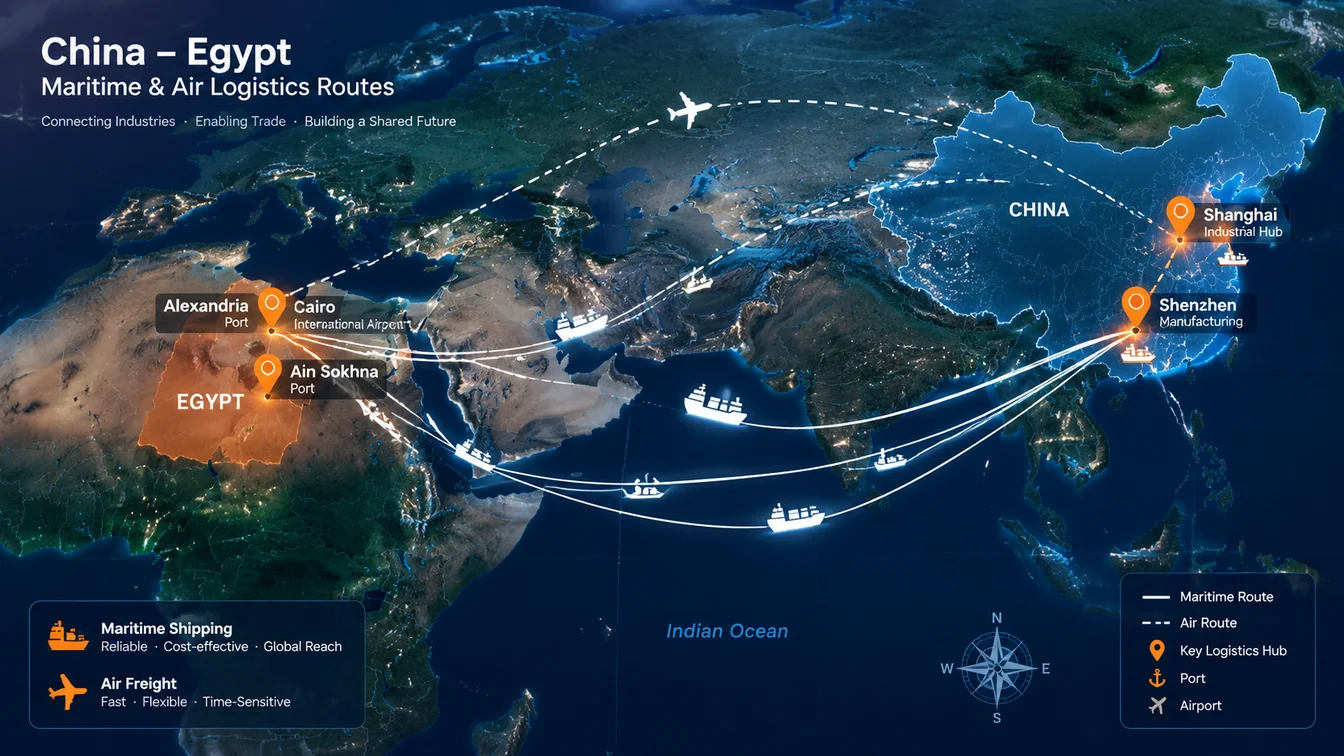
Sea freight is the main route to compare for containerized commercial cargo, while air freight to Cairo International Airport (CAI) is a relevant alternative for time-sensitive shipments. The practical choice starts with supplier location and cargo dimensions, then matches the origin gateway to the Egyptian entry point, customs requirements, and final delivery address. Compare sea freight services with air freight services when the cost of delay may justify a different transport mode.
Route Planning Summary
- How should supplier pickup connect to the China gateway?
-
Start with the supplier’s actual factory address and compare Shanghai, Ningbo-Zhoushan, Shenzhen Shekou, Yantian, Guangzhou Nansha, or Qingdao according to the pickup region and available transport service.
- Which transport mode fits the shipment?
-
Use FCL for cargo planned around a full container, LCL for compatible consolidated cargo, air freight for time-sensitive commercial shipments, and express for suitable parcel-style consignments.
- What planning time should be used?
-
The Shanghai-to-El Sokhna FCL reference is 22–28 days; the appropriate planning reference changes with the selected route and method, including the separate LCL, air, and express options.
- Who is responsible for Egypt import clearance?
-
The Egyptian importer remains responsible for its import obligations, advance cargo information, applicable permits, duties, and taxes, using an authorized customs representative where required.
- What must be decided before final delivery?
-
The delivery plan must name the receiving address, the responsible party for customs release, the required inland transport, and any agreed warehouse or fulfillment-center receiving arrangements.
China to Egypt Shipping Cost
The table provides route-specific indicative shipping costs and planning transit references reviewed for October 2026. Each reference applies only to its named route, transport method, and unit.
Cost-data review month: October 2026.
| Shipping route | Shipping method | Price | Transit time |
|---|---|---|---|
| Shanghai, China → El Sokhna, Egypt | FCL 20GP | $4,500/container | 22–28 days |
| Shanghai, China → El Sokhna, Egypt | FCL 40GP | $6,480/container | 22–28 days |
| Shanghai, China → El Sokhna, Egypt | FCL 40HQ | $6,480/container | 22–28 days |
| Shenzhen Shekou, China → Ain Sokhna, Egypt | LCL | $76.5–$112.5/CBM | 26–34 days |
| China → Cairo International Airport (CAI), Egypt | Air freight | $5.08/kg | 3–5 days |
| China → Egypt | Express | $12.20/kg | 9–12 days |
Cost scope: The indicative cost references apply to the route, method, and unit shown; they are not carrier freight rates, market averages, TJ Logistics Team selling prices, or binding quotations. The actual booking, cargo, and agreed service scope determine the commercial arrangement, including responsibility for relevant pickup, handling, customs, duty and tax, inland delivery, insurance, storage, examination, appointments, and surcharges.
Egypt Import Duty and Taxes
Egyptian import duty and tax are determined by the product’s customs classification, customs value, origin, applicable trade measures, and current product-specific rules. The same duty or tax rate does not apply to every shipment entering Egypt, so the product classification and importer status should be resolved before the shipment is dispatched.
Use this simplified calculation sequence to establish the likely import-tax treatment for commercial goods entering Egypt’s customs territory.
- Classify the goods. Match the product’s material, function, composition, and intended use to the appropriate Egyptian tariff item. Use the Nafeza tariff inquiry as a starting point, then resolve any classification uncertainty before declaring the shipment.
- Determine the customs value. Prepare the commercial invoice and supporting transaction documents, and apply the relevant Egyptian customs valuation rules. The invoiced product price should not automatically be treated as the final customs value without checking the applicable valuation requirements.
- Determine customs duty and applicable taxes. The duty depends on the tariff classification and relevant measures, while VAT and any applicable schedule tax or other statutory charges depend on the goods and current law. Egypt’s standard VAT rate is generally 14% where standard-rate VAT applies, but exemptions, special treatments, and category-specific rules can change the amount. Refer to the Egyptian VAT Law and its applicable amendments.
- Allow for product-specific controls. Check whether the goods require import approval, registration, conformity documents, health or safety certificates, or inspection by the relevant Egyptian authority before customs release.
This explanation is a simplified shipping-planning guide, not tax or legal advice. The Egyptian importer and its qualified tax or customs adviser should establish the applicable tariff classification, duty, VAT treatment, and other charges for the actual goods before entry.
China to Egypt Shipping Time
For Shanghai, China → El Sokhna, Egypt, the supplied FCL references for 20GP, 40GP, and 40HQ containers are 22–28 days. The separate Shenzhen Shekou, China → Ain Sokhna, Egypt LCL reference is 26–34 days, while air freight to Cairo International Airport (CAI) has a 3–5 day planning reference and express from China to Egypt has a 9–12 day reference.
These figures provide method-specific planning references for comparing the listed routes, not guaranteed arrival dates. The shipment plan should separately allow for supplier readiness, any origin handling required, Egyptian import clearance, and inland delivery when those stages fall outside the agreed transit scope. Goods requiring regulatory approval, inspection, or additional receiving arrangements may need more time before final delivery can be completed.
Shipping Methods from China to Egypt
The most suitable China-to-Egypt shipping method is the one that matches the shipment’s dimensions, actual and chargeable weight, cargo handling requirements, urgency, supplier location, and final delivery needs. Make the decision against the complete operational route rather than comparing prices expressed in incompatible units.
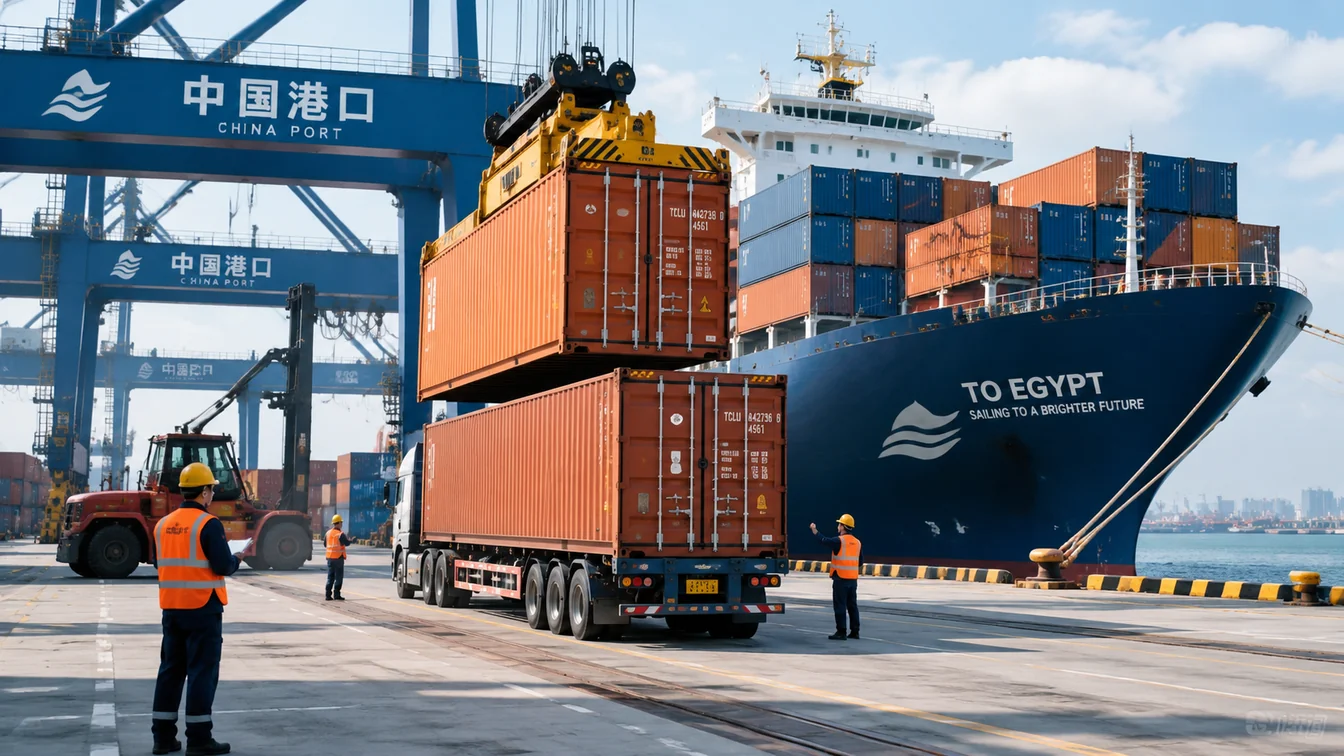
Use these route-specific conditions to narrow the transport choice before arranging the supplier handoff.
- Choose FCL when the cargo is planned for a dedicated container and the shipment requires controlled container loading, because a full-container movement connects the China export gateway to the selected Egyptian port without depending on shared-container consolidation. Select the appropriate 20GP, 40GP, or 40HQ equipment only after checking cargo dimensions, usable loading space, gross weight, and handling restrictions.
- Choose LCL when the shipment is compatible with consolidated container transport and does not require a dedicated container, because shared-container handling can suit smaller commercial consignments. The supplied Shenzhen Shekou-to-Ain-Sokhna reference is the relevant starting point for that named lane; cargo volume, packing dimensions, consolidation handling, and final destination still affect the practical choice.
- Choose air freight when delivery urgency justifies transporting the cargo by air and its chargeable weight and dimensions fit the available service, because the route can move through Cairo International Airport rather than waiting for an ocean movement. Actual weight, dimensional weight, cargo value, shipment size, product restrictions, and post-arrival delivery requirements determine its suitability.
- Choose express when the shipment has a parcel-style handling profile and a courier service accepts the cargo, because coordinated parcel processing can suit small consignments that need individual-piece handling. Check the actual and dimensional weight, package dimensions, delivery postcode, product restrictions, and whether import-clearance and final-delivery responsibilities are covered by the agreed service.
A continuous rail-only route from China to Egypt should not be treated as a standard end-to-end option. A rail-based alternative would require a separately verified corridor, transfer arrangements, and a credible onward connection to Egypt; any such proposal should be treated as multi-modal freight, not as uninterrupted rail delivery into Egypt.
Door-to-Door Shipping from China to Egypt
Door-to-door shipping from China to Egypt requires an agreed pickup address, transport route, Egyptian customs handoff, and final delivery address. The door-to-door service scope should define the locations and responsibilities covered, while any DDP shipping arrangement must separately establish whether the importer, duties, taxes, and local clearance responsibilities can legally and operationally be covered for the goods.
-
Cargo and Compliance Review
Define the commodity, packaging, dimensions, gross weight, cargo value, and any batteries, liquids, chemicals, or other regulated characteristics. Determine whether the intended Egyptian importer can satisfy the relevant registration, advance cargo information, and product approval requirements before committing the goods to transport.
-
Route and Method Selection
Match the supplier’s location to an appropriate China gateway and select FCL, LCL, air freight, or express according to the shipment and delivery requirements. Compare the actual destination entry point and final Egyptian address rather than assuming the nearest port automatically produces the best end-to-end result.
-
Supplier Coordination and Pickup
Arrange the cargo handoff at the agreed factory, warehouse, or collection point. The supplier should provide final packing dimensions, weights, package counts, cargo-readiness timing, and the commercial information needed to prepare the export and import shipment records.
-
China Export Handling
Coordinate the required origin handling, export documentation, cargo delivery to the relevant terminal or airport, and the applicable advance cargo information process. For Egypt-bound sea freight and air freight, the exporter and importer should resolve the required ACID data before dispatch and make sure the transport documents carry the required identifiers.
-
International Transportation
Move the shipment by the agreed mode through the selected transport gateway. The operational handoff should match the actual container or package details, transport document, declared destination, and agreed service scope; any transfer or change of gateway must be reflected in the movement plan.
-
Egypt Import Clearance
The Egyptian importer or its authorized representative handles the applicable declaration, commodity classification, valuation, duties, taxes, and product controls. The shipment should not proceed on the assumption that an international freight booking by itself completes Egyptian import clearance.
-
Final Delivery
After customs release and any applicable inspections, coordinate the onward movement from the actual destination gateway to the named delivery address. The receiving location, vehicle access, unloading responsibilities, operating hours, and any warehouse or fulfillment appointment must match the agreed delivery scope.
-
Shipment Close-Out
Close the movement by recording the final delivery outcome and resolving outstanding transport or handling documents. Retain the invoice, packing list, transport document, customs records, relevant payment evidence, and proof of delivery needed by the importer for its commercial and statutory records.
Main China to Egypt Routes
The most practical China-to-Egypt route normally starts with a gateway that limits supplier-side movement while fitting the final delivery region and credible destination handling. The comparison can change when the supplier is far from the port, the required terminal or service is unavailable, the destination is closer to another Egyptian gateway, or inland delivery and receiving requirements alter the total route.
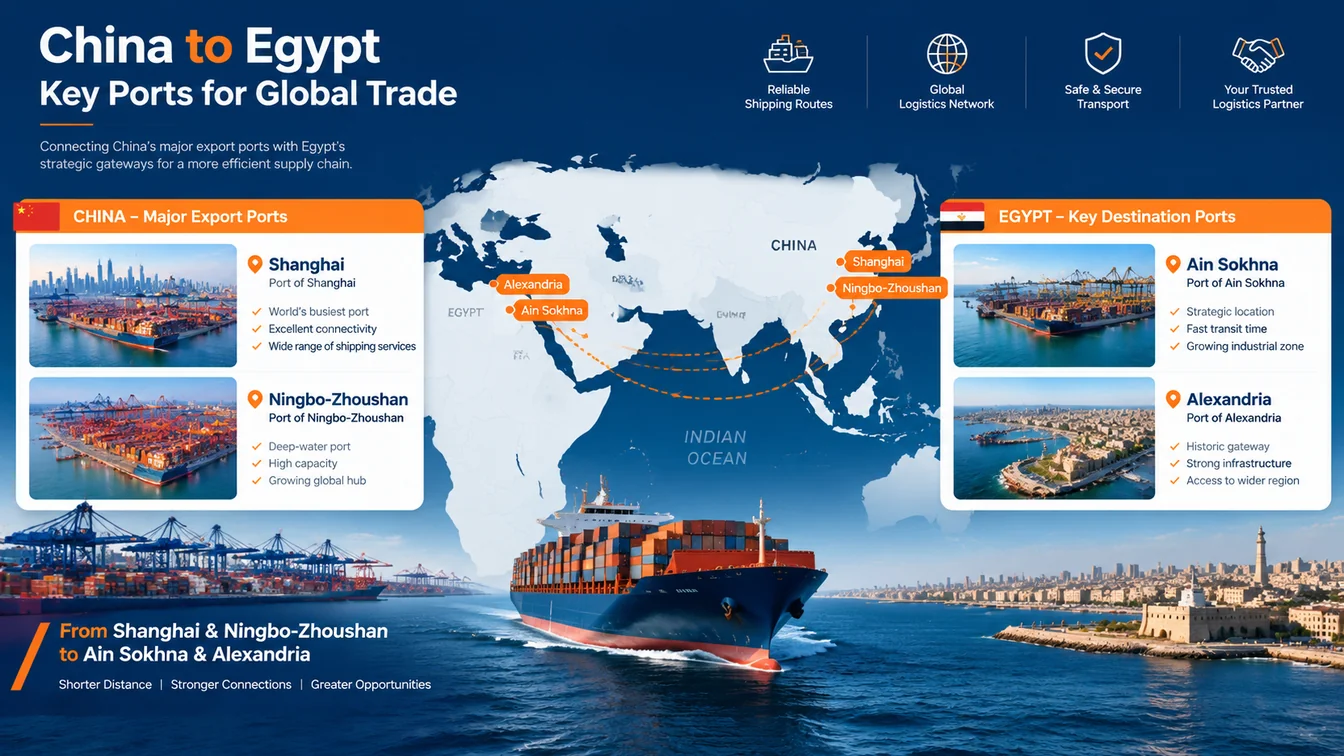
Major China Export Ports for Egypt Shipping
- Shanghai Port
- Shanghai is a practical first comparison for suppliers in Shanghai, Jiangsu, and parts of the Yangtze River Delta. It is particularly relevant to containerized cargo, including the supplied Shanghai-to-El-Sokhna FCL references. The actual shipping service and Egyptian discharge gateway still determine whether the route fits the required destination.
- Ningbo-Zhoushan Port
- Ningbo-Zhoushan is worth comparing for suppliers in Ningbo, Zhejiang, and nearby manufacturing areas. It may reduce supplier-side movement for cargo originating in those areas; the selected service, equipment availability, and destination inland route can change the overall result.
- Shenzhen Shekou Port
- Shekou is a relevant comparison for factories in Shenzhen and the western Pearl River Delta, especially when cargo is prepared for consolidation or containerized export. The supplied LCL reference names Shenzhen Shekou to Ain Sokhna, so that specific route should remain distinct from other Shenzhen terminals or unverified service alternatives.
- Shenzhen Yantian Port
- Yantian is another major South China gateway to compare for export-ready cargo from eastern Shenzhen and nearby manufacturing clusters. It is a separate terminal choice from Shekou; factory pickup distance, cargo acceptance, available transport service, and the intended Egyptian entry gateway influence the comparison.
- Guangzhou Nansha Port
- Nansha is relevant for suppliers in Guangzhou, Foshan, and other Pearl River Delta manufacturing areas where it provides a workable pickup connection. Compare it with Shenzhen terminals when the supplier location, cargo handling, and available international routing make the difference operationally meaningful.
- Qingdao Port
- Qingdao is worth comparing for suppliers in Shandong and northern China. It can reduce inland movement for appropriate northern origins, while southern factories may incur additional pickup and transfer work. The chosen Egyptian port and available routing must be reviewed together.
Major Egypt Import Ports for Cargo from China
- Ain Sokhna Port
- Ain Sokhna is a Red Sea gateway to compare for shipments intended for Greater Cairo, eastern industrial areas, and locations along the Gulf of Suez corridor. It is directly relevant to the supplied Shenzhen Shekou LCL lane and the Shanghai-to-El-Sokhna FCL references. Final delivery requirements and the actual nominated terminal should determine whether this port fits the shipment.
- Alexandria Port
- Alexandria is a key Mediterranean gateway to compare for destinations in Alexandria and the western and central Nile Delta. It may also be relevant where an available service and inland delivery plan suit other northern Egyptian destinations. The receiving postcode and onward transport cost can change the comparison with Red Sea entry.
- Damietta Port
- Damietta is relevant to shipments destined for Damietta and parts of the northern Nile Delta. Compare it when the supplier’s available service can reach the port and the consignee’s delivery area benefits from the northern location rather than an alternative gateway requiring a different inland route.
- East Port Said
- East Port Said is a gateway to consider for cargo intended for the eastern Mediterranean, Suez Canal area, or nearby designated receiving locations. It may also be relevant for shipments linked to logistics or industrial activities in that area, provided the actual cargo terminal, handling arrangements, and inland connection suit the consignment.
Supplier Region to Destination Routing Logic
| Supplier region in China | Origin port to compare | Destination port and delivery region | Planning reason |
|---|---|---|---|
| Shanghai and the Yangtze River Delta | Start with Shanghai Port; compare Ningbo-Zhoushan when supplier location supports it. | Ain Sokhna for an appropriate Greater Cairo or eastern Egypt delivery plan. | Use the Shanghai-to-El-Sokhna FCL reference as the initial named-lane comparison. Change the origin or entry port when pickup distance, the available service, nominated terminal, or final delivery requirements favor another complete route. |
| Ningbo, Zhejiang, and surrounding eastern China manufacturing areas | Start with Ningbo-Zhoushan; compare Shanghai when the cargo’s pickup and terminal arrangements justify it. | Alexandria or Damietta for suitable northern and Nile Delta destinations; compare Ain Sokhna for eastern or southern delivery requirements. | Use the gateway that gives the supplier a practical export handoff and the consignee a suitable inland connection. The available route, terminal, and delivery postcode can outweigh proximity to the origin port alone. |
| Shenzhen and the western Pearl River Delta | Compare Shenzhen Shekou first, with Yantian as a separate terminal option where appropriate. | Ain Sokhna for a suitable Cairo-side or eastern Egypt delivery plan. | Keep the specified Shenzhen Shekou-to-Ain-Sokhna LCL lane distinct from other terminal options. Factory pickup, consolidation handling, transport service, and the intended destination address determine whether an alternative creates a more workable shipment. |
| Guangzhou, Foshan, and nearby Pearl River Delta manufacturing areas | Compare Guangzhou Nansha, Shenzhen Shekou, and Yantian based on the actual supplier address. | Ain Sokhna for an appropriate eastern delivery plan; compare East Port Said or Alexandria when the final location and service support them. | Start with the origin gateway that minimizes unnecessary inland handling, then compare the confirmed destination gateway and post-clearance movement. The available terminal service and final postcode may change the preferred combination. |
| Shandong and northern China | Start with Qingdao Port; compare another origin only when the supplier-side movement and international routing make it reasonable. | East Port Said, Alexandria, or Damietta for appropriate northern or canal-area delivery requirements; compare Ain Sokhna for a different final region. | A northern origin can reduce domestic pickup movement for the supplier, but it does not establish a direct sailing or a better overall route. The actual international service, destination port, and onward inland cost must fit the consignee’s location. |
Destination Regional Delivery Logic
- Greater Cairo and eastern Cairo
- Ain Sokhna is an important port to compare for Cairo-side delivery, but the final postcode, nominated terminal, customs-release arrangements, and inland transport plan still matter. Alexandria or another entry port should remain under comparison when the available service or total inland route supports it.
- Alexandria and the northern Nile Delta
- Alexandria and Damietta are practical gateways to compare for their respective northern delivery areas. The destination address, terminal handling, available international service, and onward road movement should determine the selected port.
- Suez Canal area and eastern Egypt
- Compare Ain Sokhna and East Port Said according to the final receiving location and the cargo’s handling requirements. The appropriate gateway depends on the designated terminal, available onward transport, and whether the destination is closer to the eastern Mediterranean or the Red Sea side.
- Upper Egypt and more distant inland destinations
- Choose the entry gateway only after examining the full inland route to the actual governorate and postcode. A port with a workable international service can still produce a less suitable overall movement if inland distance, transfer arrangements, or destination charges do not fit the delivery plan.
How the Gateway Is Selected
The correct China-to-Egypt gateway is the one that fits the cargo’s origin, international movement, customs entry, and final delivery requirements as a single route.
- Factory pickup: compare the supplier’s actual address with the road or other transport needed to reach Shanghai, Ningbo-Zhoushan, Shenzhen Shekou, Yantian, Nansha, or Qingdao.
- Container or cargo handling: match the shipping terminal to the selected equipment, packing dimensions, weight, consolidation needs, and any restricted-cargo requirements.
- International routing: evaluate the service actually available for the nominated origin and Egyptian destination port instead of assuming a direct sailing or a fixed carrier schedule.
- Final delivery region: compare Ain Sokhna, Alexandria, Damietta, and East Port Said against the receiving postcode, inland transport, and required delivery scope.
- Entry and receiving conditions: include Egyptian customs requirements, applicable destination handling, inspection needs, warehouse access, and any receiving appointment in the route decision.
Egypt Customs Clearance
Commercial imports into Egypt’s general customs territory require an eligible importer, accurate shipment declarations, the applicable advance cargo information, supporting documents, and payment or settlement of the duties and taxes required for release. Free zones and other specially regulated arrangements may follow different procedures, so this section concerns ordinary imports into Egypt rather than assuming that special-zone treatment applies.
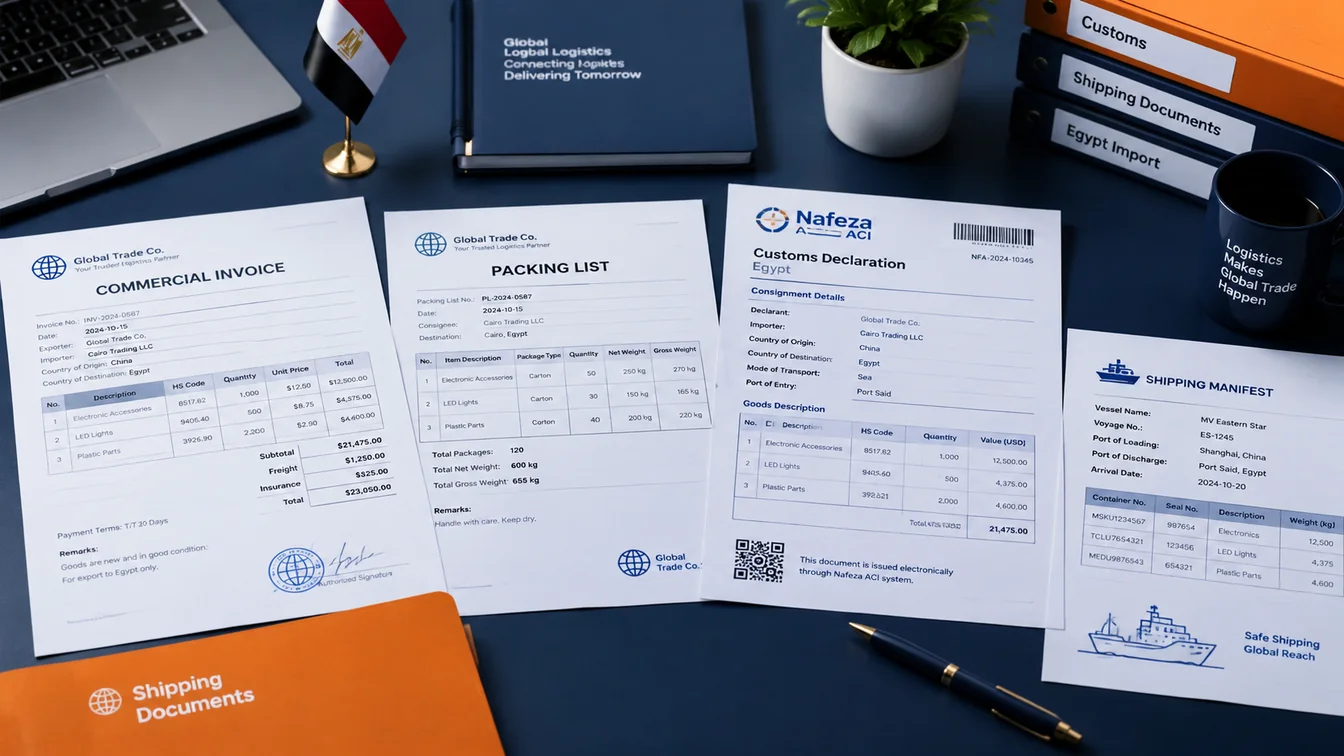
The Egyptian importer remains responsible for its legal import and tax obligations even when a shipping company or representative coordinates documentation. Customs brokerage support may assist with the declaration handoff, but it does not replace the importer’s statutory responsibilities or the authority of Egyptian customs and product-control agencies.
What the Egypt Importer Normally Needs
Egypt import preparation should begin with the importer record and advance cargo data, then align the commercial documents with the product classification and actual transport details.
- Importer registration The Egyptian importer should have the customs registration and tax records applicable to its import activity. Commercial imports for trading purposes may require registration in the GOEIC Importers Register; the exact registration requirements depend on the importer and the nature of the import.
- Advance cargo information for sea freight For an Egypt-bound ocean shipment, the importer must arrange the applicable Nafeza advance cargo information filing and obtain the ACID before shipment. Coordinate the data with the foreign exporter, and ensure the applicable identifier is reflected in the shipping documentation. Refer to the official Nafeza ACI process for sea cargo.
- Advance cargo information for air freight Egypt’s Aviation ACI system entered its mandatory operation phase on January 1, 2026. Before air dispatch, the Egyptian importer and overseas exporter should follow the applicable Nafeza process for the ACID, exporter identification, required cargo data, and air-transport document references. Check the Nafeza air-cargo ACI guidance for the current filing process.
- Commercial invoice Prepare an invoice with an accurate goods description, quantity, unit values, currency, seller and buyer details, and country of origin. The invoice information should be consistent with the advance cargo data and the actual goods being dispatched.
- Packing list and cargo details Record the package count, packing type, gross and net weights where required, and dimensions for the actual shipment. These details support transport handling, declaration checks, and any applicable examination or inspection.
- Transport document and shipment identifiers Prepare the appropriate bill of lading for sea freight or air waybill for air freight, with parties, cargo details, and route information aligned with the commercial and advance cargo records. The document must carry the required shipment identifiers under the applicable procedure.
- Commodity classification, value, and origin Assign the appropriate Egyptian tariff item and establish the declared customs value and origin from reliable product and commercial records. A tariff classification used for tax planning must also match the goods actually imported.
- Product approvals and representative authorization Obtain the permits, inspection records, certificates, or other documents required for the specific product. Where a customs representative is used, provide the authorization or power of attorney required for that representative to act in the import process.
Common Causes of Egypt Customs Delays
- The ACID or advance cargo data is missing, invalid, inconsistent with the shipment documents, or not completed before the applicable dispatch deadline.
- The invoice description, customs classification, origin, value, quantities, or shipment identifiers do not agree across the declared records.
- The importer does not hold the registration, authorization, or import status required for the transaction.
- A product-specific permit, conformity document, health certificate, or other approval has not been obtained before the relevant clearance stage.
- The packing list, package count, dimensions, gross weight, or cargo description does not match the physical consignment.
- The shipment is selected for examination or regulatory review, or the declared goods require further clarification from the importer.
Resolve document discrepancies, missing ACID information, and required product approvals before the cargo departs China. For regulated goods, the importer should establish the applicable Egyptian entry requirements before the supplier completes packing, because missing approvals can affect both transport acceptance and customs release.
Shipping to Amazon FBA Egypt
Shipping inventory to Amazon’s Egyptian fulfillment network is a relevant option for sellers using Amazon.eg, but the international freight leg must be coordinated with the seller’s actual account eligibility, import arrangement, and assigned receiving destination. Amazon’s Amazon Egypt FBA guidance describes fulfillment by Amazon as an available selling and fulfillment option for the Egyptian marketplace; it does not make a China-to-fulfillment-center international shipment automatically customs-cleared.
- Seller and listing eligibility: make sure the products and selling account are eligible for the applicable Amazon.eg fulfillment arrangement before dispatching inventory.
- Importer and tax responsibility: establish who will act as the importer of record in Egypt and who will handle customs declarations, applicable duties, VAT, and product approvals. Do not assume Amazon will act as the importer or complete international import clearance.
- Product and customs classification: use accurate product descriptions and tariff classifications, and resolve any Egyptian product-registration or import-control requirements before the goods leave China.
- Shipment plan and assigned destination: create the shipment through the relevant seller workflow and use the fulfillment center and delivery instructions designated for that shipment.
- Carton preparation and labeling: follow the current product-preparation requirements, carton and package rules, shipment ID labeling, and any other specified inbound labels.
- Receiving and delivery appointment: coordinate the domestic delivery only after the assigned destination and appointment requirements are available. Customs release at an Egyptian port or airport is not the same as acceptance into an Amazon fulfillment center.
- Inventory capacity and receiving status: check current Seller Central requirements and applicable capacity limits before dispatch, then track the inventory through the agreed delivery and receiving handoffs.
For the freight leg, use sea freight or air freight according to inventory volume, replenishment urgency, packaging, and the approved inbound plan. The Amazon FBA shipping service is relevant to the delivery-planning decision when the seller has a valid Amazon.eg inbound destination and the customs and receiving responsibilities are separately defined.
Special Cargo, Packaging, and Insurance
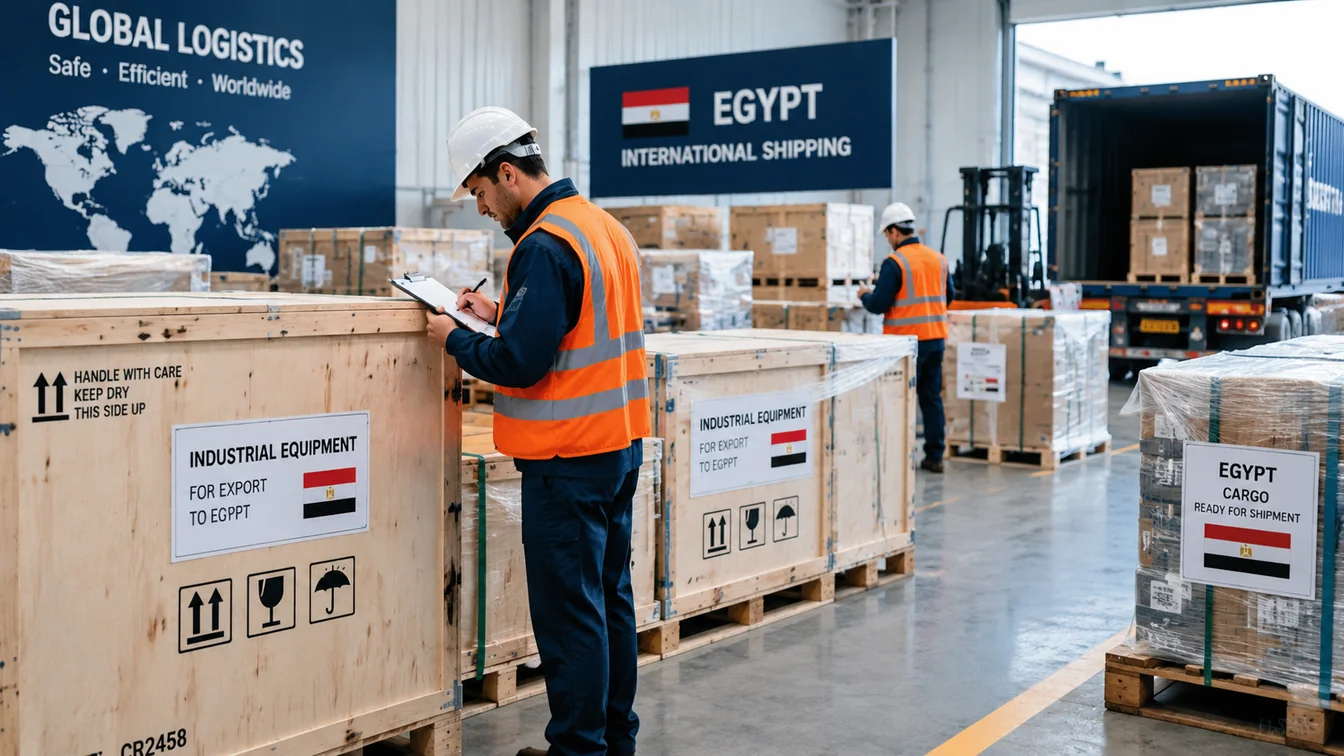
Egypt-bound cargo that has hazardous characteristics, special storage needs, regulated product status, or nonstandard dimensions may need a different transport arrangement or additional import approvals. Its actual characteristics should be assessed before choosing a China gateway or accepting a standard shipment plan.
Cargo Requiring Additional Review
- Batteries and battery-powered equipment may require a battery declaration, test documentation, packaging controls, or carrier-specific acceptance conditions.
- Dangerous goods and hazardous chemicals require accurate classification, safety documentation where applicable, compliant packing, and a transport service authorized to handle the specific goods.
- Liquids, powders, and chemical products need clear product descriptions, packaging details, and any relevant safety or regulatory documentation.
- Food and agricultural products may require health, sanitary, phytosanitary, inspection, labeling, or other approvals before Egyptian entry.
- Cosmetics and medical goods may be subject to product registration, controlled-import requirements, or specific supporting certificates.
- Wooden crates and pallets may need to meet the applicable international wood-packaging treatment and marking rules; untreated or incorrectly marked packaging can create entry or handling problems.
- Oversized or heavy cargo may require different equipment, lifting access, loading arrangements, or a specialized movement plan. Temperature-controlled cargo and controlled goods need an accepted handling chain and any required product authorization.
Packaging Checks
Egypt-bound packaging should protect the goods through origin handling, international movement, customs examination where required, and final delivery. Packing dimensions and weights must describe the actual prepared cargo so the transport method, vehicle access, and receiving arrangements remain workable.
Complete these packaging checks before the shipment is handed over to the China-origin transport provider.
- Use carton strength appropriate to the packed weight, stacking, and expected handling conditions.
- Fit internal protection to the product’s fragility, movement risk, and resistance to impact or vibration.
- Use pallets or other handling units when required by the selected transport or delivery arrangement, with secure wrapping and stable loading.
- Protect moisture-sensitive goods against the exposure expected during storage and transit.
- Apply handling marks and shipping labels that match the actual contents, package count, and required handling instructions.
- Record the final package dimensions, gross weight, net weight where needed, and total package count after packing.
- Check that wooden packaging complies with applicable treatment and marking requirements and that regulated goods carry the required labeling and documents.
Cargo Insurance
Carrier liability is not the same as cargo insurance and may not cover the full commercial value of goods lost or damaged during a China-to-Egypt shipment. Before transport begins, review whether the proposed cargo insurance service fits the consignment and document the insured value, coverage period, exclusions, deductible, evidence requirements, and claims procedure. The policy scope should match the agreed movement, including any separately arranged inland or warehouse stages when those stages need cover.
Choosing a Freight Forwarder for Shipping from China to Egypt
A freight forwarder helps resolve three practical problems on the China-to-Egypt route: turning supplier and cargo information into a workable shipment definition, matching a credible gateway and transport mode to the delivery need, and keeping commercial and operational handoffs aligned. The value lies in clarifying those decisions and responsibilities, not in replacing the Egyptian importer or guaranteeing a customs or transport outcome.
- A shipment definition that can be executed
- Incomplete cargo dimensions, an uncertain pickup address, or an unclear final destination can make a transport plan unreliable. A forwarder can turn the available cargo and location information into a defined movement, while the remaining information gaps determine what can be planned next.
- A workable gateway and mode combination
- A route that looks suitable by port name alone may not suit the supplier’s location or Egyptian delivery address. A forwarder can compare credible ocean, air, express, or separately designed multi-modal alternatives against the actual cargo, urgency, pickup geography, and receiving conditions.
- Clear responsibility at each handoff
- Unclear responsibility for export documents, advance cargo data, import clearance, destination handling, or final delivery can leave a shipment waiting for a decision. Defining the responsible party for each handoff makes the next action clearer, while legal import, tax, and product-compliance duties remain with the parties responsible under Egyptian rules.
How TJ Logistics Team Plans a China-to-Egypt Shipment
- Shipment definition review
- TJ Logistics Team reviews the supplier location, cargo dimensions, package count, gross weight, commodity description, readiness date, and Egyptian delivery address to flag gaps that prevent a reliable route or service decision.
- Gateway and route comparison
- TJ Logistics Team compares credible China origin gateways, the relevant international transport mode, Egyptian entry options, and the expected next handoff against the cargo definition and final delivery requirement. The preferred route can change when the supplier location, accepted cargo type, service availability, or final postcode changes.
- Service boundary and responsibility record
- TJ Logistics Team records the agreed movement scope, the locations covered, and the parties responsible for export handling, advance cargo information, import clearance, duties and taxes, destination handling, and delivery where those items are part of the arrangement. The Egyptian importer remains responsible for its applicable statutory and product-compliance obligations.
- Operational coordination after scope agreement
- After the buyer confirms the agreed commercial and operational scope, TJ Logistics Team coordinates the relevant booking information, supplier handoff, commercial documents, and next movement decision. If cargo details, routing, required documents, or receiving conditions change, the team reviews the affected handoff rather than assuming the original plan remains valid.
China to Egypt Shipping FAQ
How much does LCL shipping from China to Egypt cost?
The indicative LCL cost reference for Shenzhen Shekou, China → Ain Sokhna, Egypt is $76.5–$112.5/CBM, reviewed in October 2026. This is a volume-based reference for that named route and method, not a calculated shipment total or a binding quotation for every Egyptian destination.
How long does sea freight from China to Egypt take?
The Shanghai, China → El Sokhna, Egypt FCL reference is 22–28 days, while Shenzhen Shekou, China → Ain Sokhna, Egypt LCL is referenced at 26–34 days. Use the timing that matches the actual origin, method, and destination lane rather than combining the two routes into one Egypt-wide estimate.
When should I choose air freight instead of express to Egypt?
Air freight to Cairo International Airport is a relevant choice for time-sensitive commercial cargo when its chargeable weight, dimensions, and handling requirements fit the available service. Express may suit a parcel-style consignment that needs courier-style handling, but its cargo acceptance, destination delivery scope, and customs responsibilities should be checked separately.
Which China port or gateway is best for shipping to Egypt?
Start with the major export gateway that offers a practical pickup from the supplier and a suitable service toward the required Egyptian entry area. Shanghai suits a Shanghai or Yangtze River Delta origin to compare, Shenzhen Shekou or Yantian suits a relevant Pearl River Delta origin, and Qingdao is worth comparing for Shandong suppliers; the final choice depends on the available route and destination delivery needs.
Which Egyptian port should I use for final delivery?
Ain Sokhna is an important port to compare for Greater Cairo and eastern Egypt, while Alexandria and Damietta are relevant gateways for their respective northern and Nile Delta delivery areas. East Port Said may suit a different Suez Canal or eastern Mediterranean destination. Select the port against the actual receiving address, available international service, and inland delivery plan.
Can I ship door-to-door from China to Egypt?
Door-to-door shipping from China to Egypt can be arranged when the supplier pickup, transport route, Egyptian customs handoff, and final delivery address are included in an agreed service scope. The importer or its authorized representative must still fulfill the applicable import obligations, and a warehouse or fulfillment-center delivery may require a separate receiving appointment.
What documents should be prepared before shipping from China to Egypt?
Prepare an accurate commercial invoice, packing list, applicable bill of lading or air waybill, tariff classification and origin information, and any product-specific permits or certificates. Egypt also requires advance cargo information under the applicable Nafeza process: resolve the ACID and required shipment data before dispatch for both sea and air cargo.
Can I ship inventory from China to Amazon FBA in Egypt?
Amazon.eg offers Fulfillment by Amazon for eligible sellers and products, so inventory can be planned for an assigned Egyptian fulfillment destination. The seller must align the import arrangement, applicable Egyptian customs and tax responsibilities, product eligibility, shipment plan, labels, and required receiving appointment before the goods leave China.