

Reviewed by TJ Logistics Team — October 2026. This content and cost-data review considers current market, customs, tariff, and marketplace information for route-planning purposes; regulatory requirements and operating conditions may change. The review applies practical route-planning checks across supplier pickup, gateway and transport-mode selection, customs handoff, and final delivery.
Shipping from China to Chile: Route Update
For Shanghai, China → San Antonio, Chile, the indicative FCL 20GP cost reference is $4,320–$4,590/container, with a planning transit of 35–45 days. This named route is an ocean-freight option for containerized shipments, using the sea freight service pathway to plan the supplier-to-port and international movement.
For urgent, compact, or delay-sensitive cargo, air freight to Santiago International Airport (SCL) is an alternative to ocean transport, while express shipping may suit smaller consignments requiring courier handling. The origin airport, cargo dimensions, chargeable weight, Chilean delivery postcode, and agreed handling scope determine which alternative fits the shipment.
Route Planning Summary
- Which China origin gateway should I use?
- Start with the major export gateway closest to the supplier that has a suitable route toward San Antonio or Valparaíso; Shanghai and Ningbo-Zhoushan suit many eastern China supply chains, while Yantian serves Shenzhen-area exporters.
- Which transport method fits the cargo?
- Choose FCL for shipments suited to a dedicated container, LCL for consolidated cargo, air freight for time-sensitive goods, or express for eligible smaller consignments requiring courier handling.
- How should the transport time be planned?
- Use the supplied transit reference for the specific route and method as the planning anchor, then schedule supplier readiness, destination customs release, and final delivery as separate operational milestones where their duration is not specified.
- Who is responsible for Chilean import clearance?
- The Chilean importer remains responsible for the accuracy of the import declaration, applicable product approvals, and tax obligations, with a qualified customs broker handling the declaration where legally required.
- What must be settled before final delivery?
- Define the receiving address, delivery access, handling requirements, and responsible parties for the final-mile leg so cargo can move from the destination gateway to the consignee without an unassigned handoff.
China to Chile Shipping Cost
The following table provides route-specific indicative shipping costs and planning transit references for the October 2026 review. Each reference applies only to its named route, shipping method, and stated unit.
Content and cost-data review month: October 2026.
| Shipping route | Shipping method | Price | Transit time |
|---|---|---|---|
| Shanghai, China → San Antonio, Chile | FCL 20GP | $4,320–$4,590/container | 35–45 days |
| China (origin unspecified) → Valparaíso / San Antonio, Chile | FCL 40GP | $4,941–$6,039/container | 35–45 days |
| Shenzhen, China → San Antonio, Chile | FCL 40HQ | $5,220–$5,490/container | 34–45 days |
| China (origin unspecified) → San Antonio, Chile | LCL | $108–$139.5/CBM | 40–55 days |
| China (departure airport unspecified) → Santiago International Airport (SCL), Chile | Air freight | $10.17/kg | 2–4 days |
| China (origin unspecified) → Chile (destination unspecified) | Express | $16.28/kg | 2–5 days |
Cost scope: These indicative cost references apply to the route, method, and unit shown; they are not carrier freight rates, market averages, TJ selling prices, or binding quotations. The actual booking, cargo, and agreed service scope determine the commercial arrangement, including responsibility for relevant pickup, handling, customs clearance, duty and tax, inland delivery, insurance, storage, examination, appointments, and surcharges.
Chile Import Duty and Taxes
Chile’s import duty and tax liability depends on the product’s tariff classification, customs value, origin, applicable trade measures, product category, and current regulations. Chile’s general ad valorem customs duty is commonly 6%, while eligible goods originating in China may qualify for preferential or zero-duty treatment under the Chile–China Free Trade Agreement; the applicable treatment must be established for the actual product.
Use the following sequence to prepare the Chilean import calculation before dispatch:
- Classify the goods. Assign the appropriate Chilean tariff classification using the product’s material, function, composition, and intended use. An incorrect code can change both the applicable duty and the required approvals.
- Determine the customs value. Prepare evidence supporting the transaction value and the costs relevant to the import valuation, including freight and insurance where applicable. The customs value is a calculation input, not automatically the invoice amount alone.
- Check the China–Chile trade preference. Determine whether the goods satisfy the agreement’s product-specific rules of origin and whether the required certificate of origin and supporting records are available. The Chile–China trade agreement provides the relevant agreement framework; dispatching goods from China does not by itself establish Chinese origin.
- Determine duty, IVA, and other applicable taxes. Apply the current tariff treatment and assess Chilean import VAT, known locally as Impuesto al Valor Agregado (IVA), generally charged at 19% on its applicable taxable base, including customs value and customs duty. Certain product categories may also attract additional taxes or regulatory requirements. Current official guidance is available from the Chilean Internal Revenue Service.
This calculation is simplified operational guidance, not tax or legal advice. The tariff classification, preference eligibility, valuation, and taxes for an individual commercial shipment must be determined under the rules applicable when it is entered into Chile.
China to Chile Shipping Time
Ocean freight is the main planning option for containerized cargo moving from China to Chile, while air freight and express are alternatives for shipments with tighter delivery requirements. The supplied transit references are method-specific planning inputs rather than guaranteed delivery dates.
- FCL 20GP: Shanghai, China → San Antonio, Chile: 35–45 days.
- FCL 40GP: China (origin unspecified) → Valparaíso / San Antonio, Chile: 35–45 days.
- FCL 40HQ: Shenzhen, China → San Antonio, Chile: 34–45 days.
- LCL: China (origin unspecified) → San Antonio, Chile: 40–55 days.
- Air freight: China (departure airport unspecified) → Santiago International Airport (SCL), Chile: 2–4 days.
- Express: China (origin unspecified) → Chile (destination unspecified): 2–5 days.
For a planned replenishment shipment, use the relevant FCL or LCL reference when building the delivery schedule; urgent, higher-value, or delay-sensitive cargo may justify evaluating air freight instead. The supplied values do not define all timing endpoints, so supplier release, origin handling, Chilean customs release, and final-mile delivery need their own milestones in the operational plan.
Shipping Methods from China to Chile
Choose a shipping method by matching the cargo’s dimensions, actual and chargeable weight, volume, handling needs, delivery deadline, and final postcode to a credible route. For ocean cargo, the practical starting point is whether the shipment suits a dedicated container or shared container space; time-sensitive goods warrant a separate air or express comparison.
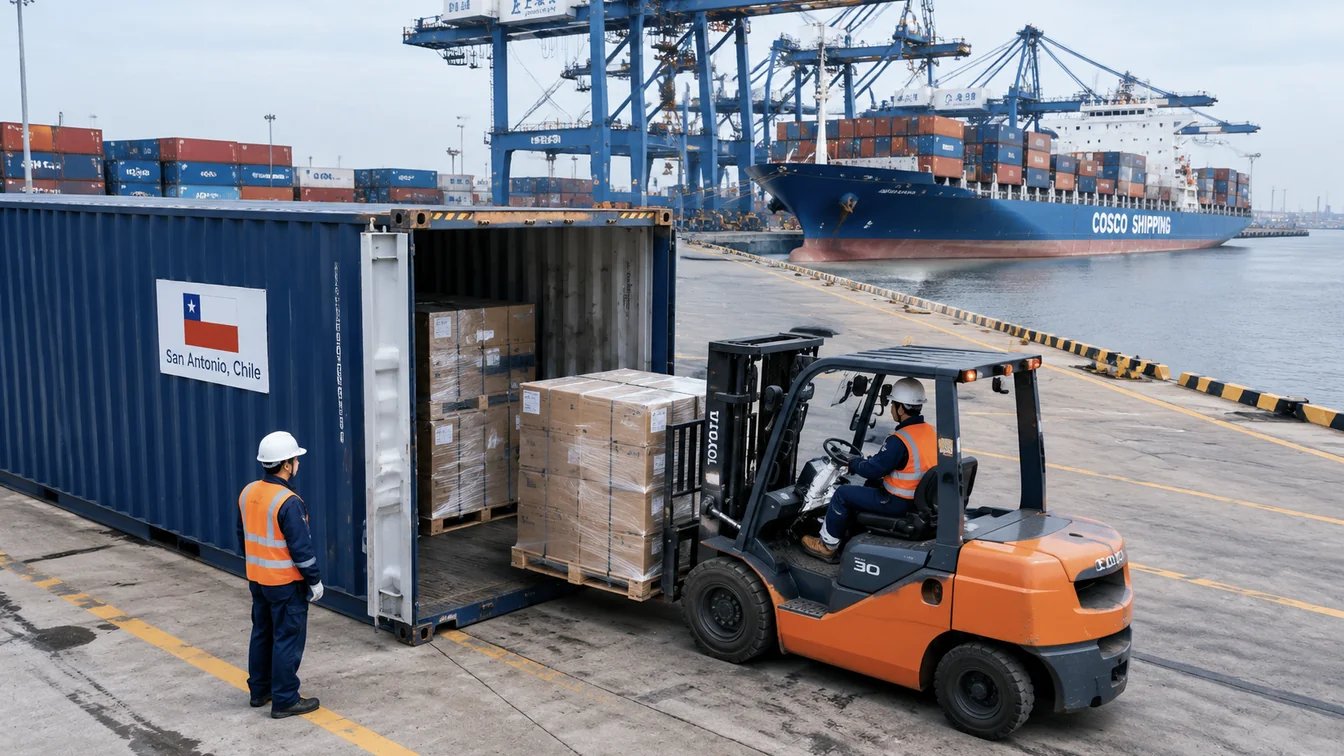
Full container load (FCL)
- Choose FCL when the cargo benefits from a dedicated container or requires more controlled loading arrangements, because containerized movement can simplify coordination for a single shipment lot. Compare 20GP, 40GP, and 40HQ according to usable cargo dimensions, payload, packing arrangement, and unloading access rather than assuming that a larger container is automatically more suitable.
- For Shanghai-area suppliers, compare a Shanghai-origin route toward San Antonio with alternatives available from nearby export gateways. For southern China suppliers, evaluate the Shenzhen/Yantian export path before adding inland movement to another port.
Less than container load (LCL)
- Choose LCL when the shipment can be consolidated safely with other cargo, because it avoids reserving an entire container for the goods. Provide accurate carton or pallet dimensions, gross weight, packaging details, and cargo description so the consolidation and handling requirements can be determined.
- LCL adds consolidation and deconsolidation handling to the route. For fragile, irregular, high-value, or handling-sensitive goods, check whether the added handling and the receiving arrangements suit the cargo before choosing shared container space.
Air freight
- Choose air freight when the cost of a delayed delivery outweighs the benefit of a slower ocean movement, because an airport-based route can shorten the international transport stage. Compare chargeable weight, package dimensions, cargo density, handling restrictions, and supplier readiness before selecting this option.
- For goods destined for Santiago or central Chile, use Santiago International Airport (SCL) as the named destination-airport reference. If the consignee is elsewhere in Chile, the airport-to-delivery route must also fit the final postcode and agreed inland handling.
Express shipping
- Choose express shipping when eligible smaller consignments need courier-style handling and a specific delivery address, because the service can combine the parcel movement with last-mile delivery within its accepted coverage. Check the actual origin pickup location, shipment dimensions, chargeable weight, item eligibility, and destination postcode before relying on the general express reference.
- For courier-eligible shipments, the express shipping service is the relevant service pathway; bulky freight, restricted goods, and unusual receiving requirements may need a different arrangement.
China-to-Chile rail transport is not a practical direct alternative across the intervening ocean; evaluate ocean, air, or express transport rather than planning a direct rail shipment. The final method should follow the cargo’s actual specifications and required delivery point, not a comparison between unlike units or service scopes.
Door-to-Door Shipping from China to Chile
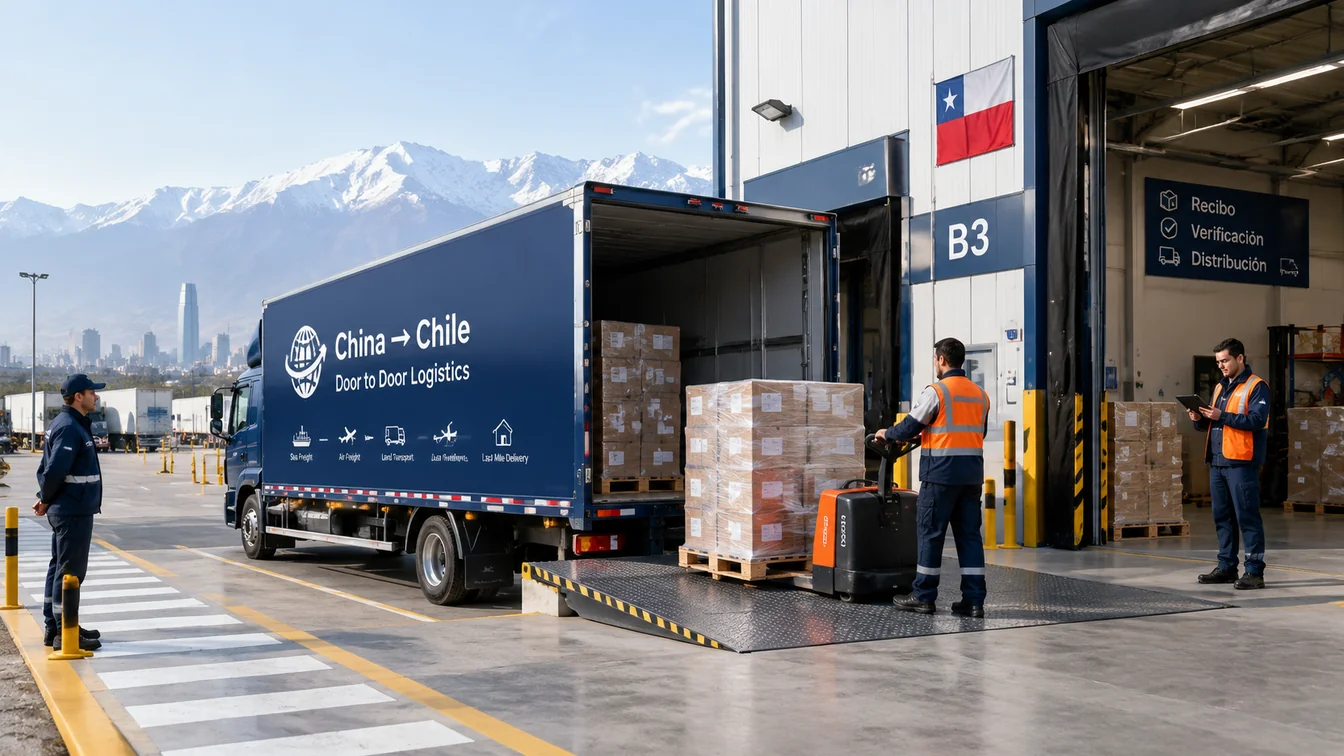
Door-to-door shipping connects supplier pickup in China with delivery to a specified address in Chile through a coordinated sequence of origin handling, international transport, import clearance arrangements, and final-mile movement. The door-to-door shipping service is the relevant starting point for defining that sequence; the named service should be matched to the actual locations, cargo, and agreed responsibility for each leg.
-
Cargo and Compliance Review
Review the supplier’s cargo description, quantity, package dimensions, gross weight, ready date, and collection address. Flag batteries, dangerous goods, regulated products, or missing product information before the cargo is assigned to a transport method.
-
Route and Method Selection
Match the shipment to FCL, LCL, air freight, or express according to its physical characteristics and deadline. Compare the appropriate China origin gateway with San Antonio, Valparaíso, or SCL, depending on the mode and destination.
-
Supplier Coordination and Pickup
Align cargo readiness, supplier loading arrangements, warehouse opening hours, collection access, and export-document preparation. The collection plan should use the supplier’s actual address rather than assuming that the factory is located inside the named port city.
-
China Export Handling
Coordinate the cargo handoff for weighing, measurement, required export formalities, and transport to the agreed origin gateway. For containerized cargo, the packing plan and equipment arrangement should match the confirmed shipment details.
-
International Transportation
Move the shipment through the agreed ocean, air, or express route. Where the plan combines international transport with separate inland or other transport legs, a multimodal freight arrangement may be relevant to defining the handoffs between those legs.
-
Chile Import Clearance
Prepare the Chilean import entry, supporting documents, applicable product approvals, and tax arrangements with the importer or its authorized representative. The importer remains responsible for its legal obligations even when logistics coordination or customs-broker services are part of the agreed shipment plan.
-
Final Delivery
Coordinate delivery from the released destination gateway to the recipient’s actual address. The delivery plan should account for road access, unloading equipment, vehicle restrictions, receiving hours, appointments, and any separate inland or regional transfer requirements.
-
Shipment Close-Out
Record the delivery evidence and outstanding documents, and resolve discrepancies in package counts, visible cargo condition, or agreed handoff records. Retain the commercial and transport documentation needed by the importer for its records and any later customs or tax review.
Main China to Chile Routes
The most practical China-to-Chile route normally starts at a gateway that limits supplier-side movement while fitting the destination region and credible Chilean cargo handling. The comparison can change when a different port offers a more suitable service, when inland pickup costs differ materially, or when the destination postcode changes the final-mile plan.
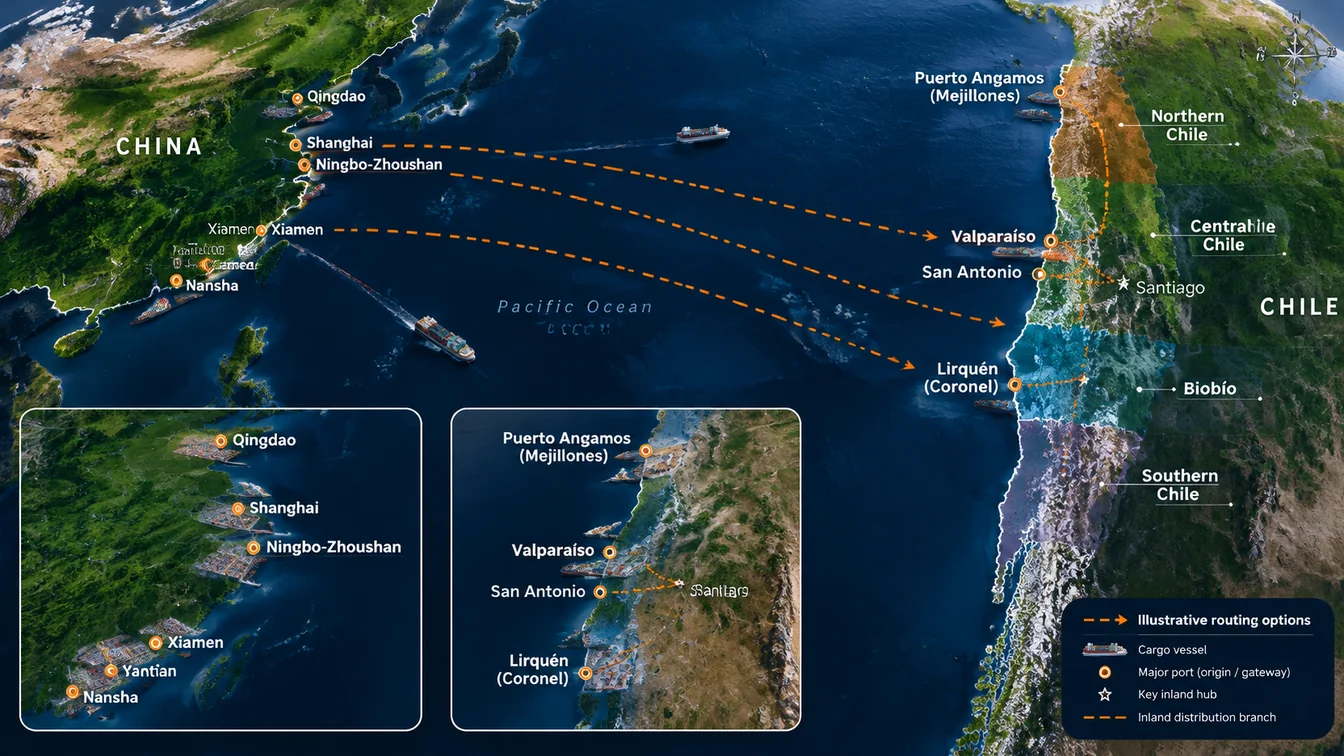
Major China Export Ports for Chile Shipping
- Shanghai Port
- Shanghai suits suppliers in the Shanghai–Suzhou–Jiangsu manufacturing and distribution network. Compare a Shanghai-origin FCL route toward San Antonio or Valparaíso for containerized goods, particularly when the supplier already operates near the Yangtze River Delta’s main export gateways.
- Ningbo-Zhoushan Port
- Ningbo-Zhoushan is worth comparing for suppliers in Zhejiang and nearby eastern China locations. It can reduce supplier-side inland movement when the cargo originates near Ningbo; the selected route still needs a suitable international service and destination-port arrangement.
- Yantian Port, Shenzhen
- Yantian is relevant to manufacturers and exporters around Shenzhen, Dongguan, and the eastern Pearl River Delta. Compare it with other southern China gateways for container cargo moving toward San Antonio or Valparaíso, considering the actual factory location and available routing.
- Nansha Port, Guangzhou
- Nansha suits certain suppliers in Guangzhou, Foshan, Zhongshan, and surrounding Guangdong manufacturing areas. Compare it with Yantian when factory pickup distance and export cut-off arrangements favor one gateway over the other.
- Qingdao Port
- Qingdao is a practical origin to evaluate for suppliers in Shandong and other northern China locations. It can avoid unnecessary domestic movement to a southern port, but the planned route should account for the actual vessel routing and any transshipment requirements.
- Xiamen Port
- Xiamen provides an option for suppliers in Fujian and parts of southeastern China. Compare it with other eastern gateways when the collection address, cargo readiness, and available international route align more closely with Xiamen.
Major Chile Import Ports for Cargo from China
- Port of San Antonio
- San Antonio is a primary port to compare for containerized cargo serving Santiago and central Chile. Its terminal system handles container and other cargo operations; review the destination handling and onward delivery arrangements against the consignee’s location. The official Port of San Antonio information provides port and terminal context.
- Port of Valparaíso
- Valparaíso is another central Chile gateway to compare for cargo destined for the Valparaíso region or onward delivery toward Santiago. Its suitability depends on the chosen international route, terminal arrangements, and inland leg, rather than the city name alone. The Port of Valparaíso publishes information about its port operations.
- Port of Coronel
- Coronel is relevant to certain cargo requirements in the Biobío region and nearby southern-central industrial areas. Compare it when the delivery address is closer to the regional market than to Santiago, provided the selected international routing and container-handling arrangement support that destination.
- Port of Lirquén
- Lirquén, in the Biobío area, is worth evaluating for appropriate regional industrial and containerized cargo. The comparison should be driven by the consignee’s location, local handling capability, and the available routing from China rather than assuming a direct service.
- Puerto Angamos, Mejillones
- Puerto Angamos is an option to investigate for compatible cargo serving the Antofagasta and northern industrial regions. Confirm that the planned service accepts the shipment type and that a northern gateway makes sense for the final delivery, since moving central-Chile-bound cargo inland from the north may be less practical.
Supplier Region to Destination Routing Logic
Use the following end-to-end comparisons as starting points for supplier pickup, origin-port selection, destination entry, and regional delivery. The route should change when actual collection distances, suitable transport services, equipment needs, or the consignee’s postcode favor another combination.
| Supplier region in China | Origin port to compare | Destination port and delivery region | Planning reason |
|---|---|---|---|
| Shanghai, Suzhou, and nearby Yangtze River Delta manufacturing areas | Start by comparing Shanghai Port with Ningbo-Zhoushan Port. | Compare San Antonio or Valparaíso for delivery to Santiago and central Chile. | Use the gateway that fits the supplier’s collection address and the available international route. Change the comparison when inland pickup, terminal arrangements, or final delivery favor the alternative port. |
| Zhejiang and the Ningbo area | Start with Ningbo-Zhoushan Port. | Compare San Antonio or Valparaíso for central Chile deliveries. | A nearby origin gateway may simplify supplier-side movement, but the final choice should reflect the selected service, cargo readiness, equipment availability, and the destination handling plan. |
| Shenzhen, Dongguan, Guangzhou, and surrounding Pearl River Delta manufacturing areas | Start by comparing Yantian Port with Nansha Port. | Compare San Antonio or Valparaíso for Santiago and other central Chile destinations. | Choose the origin that fits the factory’s location and available routing. The comparison changes if collection distance, the international service, or the delivery postcode changes. |
| Shandong and northern China | Start with Qingdao Port. | Compare San Antonio or Valparaíso for central Chile, or a suitable regional gateway where the destination requires it. | Keeping the origin close to the supplier can reduce unnecessary domestic movement. The actual vessel routing, cargo handling, and Chilean inland leg determine whether another origin is more practical. |
| Fujian and southeastern China | Start with Xiamen Port and compare other suitable eastern gateways. | Compare San Antonio or Valparaíso for central Chile delivery, with regional ports evaluated for other destinations. | The supplier’s collection point and suitable service toward Chile should determine the initial route. Transshipment, the destination terminal, and onward transport can change the preferred combination. |
Destination Regional Delivery Logic
- Central Chile
- For Santiago, the Metropolitan Region, Valparaíso, and nearby central areas, compare San Antonio and Valparaíso first for ocean cargo. Use the final postcode, destination handling, and road-delivery arrangements to decide which port provides the more practical onward movement.
- Northern Chile
- For Antofagasta, Mejillones, Iquique, and surrounding northern destinations, compare a suitable northern gateway with a central-Chile entry followed by inland transport. A northern port is useful only when the available route, terminal acceptance, and delivery requirements justify it.
- Biobío and south-central Chile
- For destinations around Concepción and the Biobío region, evaluate Coronel and Lirquén where suitable services and cargo handling are available. Compare those options with central Chile gateways using the actual inland distance, destination charges, and delivery requirements.
- Southern and remote Chile
- For destinations farther south, the correct plan may require a main port entry followed by additional inland or regional transport. The final address, road accessibility, onward-service availability, and cargo requirements matter more than choosing a gateway solely by its distance from the coastline.
How the Gateway Is Selected
Choose the China-to-Chile gateway by comparing the complete shipment path rather than evaluating an origin or destination port in isolation.
- Supplier pickup: Compare the actual factory or warehouse address with the road movement required to reach Shanghai, Ningbo-Zhoushan, Yantian, Nansha, Qingdao, or Xiamen.
- Transport suitability: Match container type, cargo dimensions, required handling, cargo readiness, and the available international route to the selected origin gateway.
- Destination entry: Compare San Antonio and Valparaíso for central Chile cargo, or investigate a suitable regional port when the final destination lies elsewhere.
- Final delivery: Use the consignee’s postcode, access conditions, unloading needs, and inland transport requirements to test whether a candidate gateway makes practical sense.
- End-to-end service: Review the planned responsibilities for export handling, import clearance, destination handling, and final-mile movement so a preferred port does not leave an unplanned handoff.
Chile Customs Clearance
Commercial imports into Chile require an accurate customs declaration, supporting commercial and transport documents, and compliance with applicable product controls and tax obligations. The Chilean importer remains responsible for meeting import requirements even when a freight forwarder or customs broker coordinates the operational handoff; special regimes and controlled products may require additional procedures.

What the Chile Importer Normally Needs
Prepare the Chilean import file before the shipment departs China, using the importer, supplier, and transport documents that correspond to the actual cargo.
- Importer identity and RUT Provide the Chilean importer’s correct legal name, address, and Rol Único Tributario (RUT) details where applicable so the customs entry and associated tax records identify the proper responsible party.
- Commodity classification Provide an accurate product description, materials, intended function, and relevant technical specifications so the correct Chilean tariff classification, duty treatment, and product requirements can be determined.
- Commercial invoice Prepare a consistent invoice showing the seller, buyer, goods description, quantities, unit values, currency, and transaction information. Explain material differences between the invoice and other shipment records before the import declaration is submitted.
- Packing list Record carton or pallet counts, package marks, dimensions where required, gross and net weights, and the contents of each package. The packing list should match the goods handed over for export and the physical cargo.
- Transport document Arrange the appropriate bill of lading for ocean freight, air waybill for air freight, or applicable express transport record. The consignee, shipment description, and transport details should remain consistent with the commercial file.
- Customs value and supporting costs Keep records supporting the transaction value and relevant freight, insurance, and other valuation adjustments where applicable. Chilean Customs may require additional evidence to establish the value declared for import.
- Certificate of origin and trade preference Where preferential treatment under the Chile–China trade agreement is claimed, prepare the required origin documentation and supporting evidence. A Chinese supplier or China departure port does not automatically make every product eligible for preferential origin treatment.
- Product approvals and customs representation Obtain applicable permits, certificates, sanitary approvals, or other authorizations before entry where required. Commercial imports above US$1,000 generally require a customs agent under Chilean procedures, subject to the applicable rules and exceptions; official entry information is available from Chilean National Customs Service.
Common Causes of Chile Customs Delays
- Product descriptions or tariff classifications are too broad to establish the correct duty treatment or applicable product controls.
- The commercial invoice, packing list, physical package marks, weights, or quantities do not agree.
- The declared customs value cannot be supported by the transaction records or relevant freight and insurance documentation.
- A claimed Chile–China preferential tariff treatment lacks valid origin documentation or the product does not meet the agreement’s origin criteria.
- Required sanitary, health, technical, import, or other product authorizations are missing or incomplete.
- Wood packaging lacks the required treatment and marking evidence, or the cargo requires an inspection that has not been prepared for.
- The import declaration or customs-agent instructions arrive too late to complete the required destination handoff in the intended sequence.
Resolve these document and product-control issues before the goods leave China whenever possible. Missing approvals or inconsistent declarations can interrupt the route after arrival, while correcting them before dispatch gives the importer and its representative a clearer basis for preparing the Chilean entry.
Special Cargo, Packaging, and Insurance
Chile-bound cargo needs additional pre-dispatch checks whenever its composition, hazard classification, packaging, dimensions, or regulatory status changes the transport method or import requirements. The supplier’s normal export preparation should not be treated as proof that the goods are accepted by every carrier or cleared automatically in Chile.
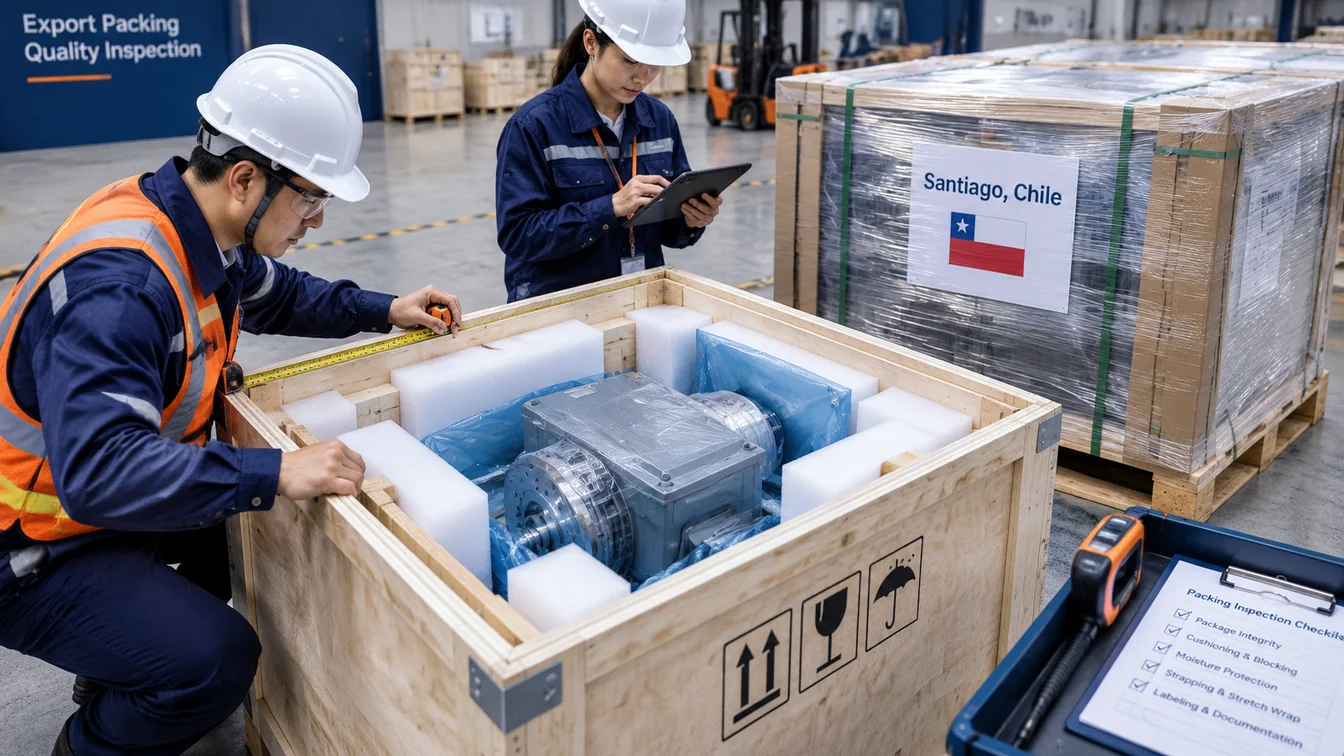
Cargo Requiring Additional Review
- Batteries and dangerous goods: Identify battery chemistry, dangerous-goods classification, UN number where applicable, safety documentation, and any carrier-specific packaging or acceptance conditions before choosing sea, air, or express transport.
- Chemicals, liquids, and aerosols: Prepare accurate product identities and safety data, determine applicable hazard restrictions, and establish any Chilean import or handling authorization needed for the substance.
- Food and agricultural products: Check sanitary, phytosanitary, or other product-specific requirements with the relevant Chilean authority before dispatch. Plant, animal, and food-related goods may require conditions beyond ordinary commercial documents.
- Cosmetics and medical goods: Verify whether the product requires health-sector authorization, registration, labeling, or other Chilean regulatory clearance before the transport method is selected.
- Wood packaging: Assess pallets, crates, and dunnage made from regulated wood against applicable treatment and marking requirements. Incorrect or non-compliant packaging can create an inspection or corrective-action problem at destination.
- Oversized or project cargo: Establish the actual dimensions, weight, lifting points, center of gravity, loading arrangement, and receiving equipment. For cargo requiring engineered handling or out-of-gauge planning, evaluate the scope described by project cargo shipping.
- Temperature-controlled and controlled goods: Set the required temperature range and handling conditions where applicable, and verify restrictions or permits for regulated, controlled, or otherwise restricted products before booking.
Packaging Checks
Packaging should protect the cargo through supplier handling, export movement, international transportation, destination handling, and final delivery in Chile. The packing specification should reflect the actual handling risks and product fragility rather than relying only on the outer carton size.
- Carton strength: Use packaging strong enough for the actual gross weight, stacking arrangement, and expected handling.
- Internal protection: Secure fragile parts and moving components against impact, vibration, and movement within the package.
- Pallets and load restraint: Check pallet condition, load stability, wrapping, strapping, and any equipment required for safe loading and unloading.
- Moisture protection: Use suitable protection for goods vulnerable to humidity, condensation, or water exposure during handling.
- Handling marks and labels: Apply clear package identifiers, handling instructions, and any required regulated-product labels consistent with the shipment documents.
- Dimensions and weights: Measure the packed shipment and record gross weight accurately before transport planning or cargo handoff.
- Regulated wood packaging: Verify the applicable treatment and marking requirements for wood packaging used in international shipment.
Cargo Insurance
Cargo insurance can protect against covered transit losses, while carrier liability is a separate legal or contractual framework and is not equivalent to full cargo insurance. Before transport begins, establish the insured value, covered journey, exclusions, deductible, evidence requirements, and applicable claim conditions; the cargo insurance service is the relevant service reference for reviewing coverage options.
Why Use a Freight Forwarder for Shipping from China to Chile?
A freight forwarder helps solve three practical problems: turning supplier and cargo details into a workable shipment definition, matching that shipment to a credible route, and keeping commercial and operational handoffs aligned. The value comes from resolving the decisions that affect the movement, not from replacing the Chilean importer’s regulatory responsibilities.
- Define a shippable movement
- Incomplete cargo details can prevent accurate equipment selection and export preparation. A forwarder helps translate the supplier’s shipment information into a usable movement plan, with any missing cargo or collection detail resolved before the next operational decision.
- Match the route to the delivery need
- A nearby China port may not fit the cargo’s required service or Chilean delivery point. A forwarder compares credible origin gateways, transport methods, and destination handoffs against the shipment’s actual origin, urgency, cargo characteristics, and receiving address.
- Coordinate the responsible handoffs
- Unclear responsibility can leave pickup, customs preparation, terminal handling, or final delivery unassigned. A forwarder helps document the agreed operational boundaries and next actions while the importer and other responsible parties retain their respective legal and regulatory duties.
How TJ Logistics Team Plans a China-to-Chile Shipment
- Shipment definition review
- TJ Logistics Team reviews the supplier’s location, cargo description, package dimensions, gross weight, required handling, readiness, and Chilean delivery address. Any information gap that prevents a reliable method or gateway decision is flagged for resolution.
- Route and gateway comparison
- TJ Logistics Team compares suitable ocean, air, or express options with the origin gateway, destination entry point, and onward delivery requirement. The comparison follows the actual cargo and route rather than assuming a direct sailing, a specific schedule, or a universally preferred port.
- Service boundary and responsibility record
- TJ Logistics Team reviews the proposed responsibilities for supplier pickup, export handling, international transport, Chilean import clearance, taxes, destination handling, and final delivery. Where a seller-paid-duty structure is contemplated, the proposed DDP shipping arrangement should be reviewed against the actual importer-of-record and tax responsibilities; the trade term alone does not settle every regulatory obligation.
- Operational coordination after scope agreement
- After the buyer confirms the agreed scope, TJ Logistics Team coordinates the relevant shipment information, commercial and transport documents, cargo handoff, and next operational decisions within that scope. Changes to cargo readiness, routing, documents, or receiving conditions are flagged for the responsible parties to address before the affected handoff proceeds.
China to Chile Shipping FAQ
How much does a 20ft container from China to Chile cost?
The October 2026 indicative reference for FCL 20GP shipping from Shanghai, China to San Antonio, Chile is $4,320–$4,590/container, with a planning transit of 35–45 days. This is a named route reference rather than a nationwide price for every Chinese origin or Chilean destination.
How long does sea freight from China to Chile take?
The supplied Shanghai, China → San Antonio, Chile FCL 20GP reference is 35–45 days. For the actual shipment, supplier readiness, origin handling, destination customs release, and final delivery must also be incorporated into the operational schedule where those stages are not included in the stated transit period.
What is the most cost-effective way to ship from China to Chile?
For a shipment suited to a dedicated container and a planned replenishment schedule, FCL is the natural ocean-freight option to evaluate first; for smaller consolidated cargo, assess LCL. Air freight and express are alternatives when delivery urgency justifies them, and their different charging units should not be treated as directly comparable container or per-volume prices.
Which China port should I use for shipping to Chile?
Start with the major export gateway that serves the supplier’s actual location and has a suitable route toward Chile. Shanghai or Ningbo-Zhoushan can suit eastern China suppliers, Yantian or Nansha can suit the Pearl River Delta, and Qingdao can suit Shandong-area cargo; factory pickup distance and the available international route can change the comparison.
Which Chile port should I choose for delivery to Santiago?
San Antonio and Valparaíso are the main central-Chile port options to compare for ocean cargo destined for Santiago. The practical choice follows the selected international service, destination handling arrangements, and road delivery plan rather than the port name alone.
What documents should be prepared before shipping from China to Chile?
Prepare a consistent commercial invoice, packing list, bill of lading or air waybill, accurate product classification and valuation details, and any permits or product certificates required for the goods. For a claim under the Chile–China Free Trade Agreement, also prepare the required origin documentation and evidence that the product satisfies the agreement’s rules.
Can Chinese goods receive preferential import duty in Chile?
Goods that qualify under the Chile–China Free Trade Agreement may receive preferential or zero-duty treatment, but eligibility depends on the product-specific tariff staging and rules of origin. The importer should establish the applicable tariff classification and origin evidence before claiming the preference; shipment from China alone is not sufficient.
Can I ship door-to-door from China to Chile?
Yes, a door-to-door shipment can connect supplier pickup in China with a specified Chilean delivery address when the agreed service covers those stages. Before dispatch, assign responsibility for import declaration, customs clearance, duties and taxes, destination handling, and final-mile delivery, and check whether the recipient’s access or appointment requirements change the delivery plan.