

Reviewed by TJ Logistics Team — November 2026. This route page reviews market, cost, customs, tariff, and marketplace information current as of November 2026. The review applies practical route-planning checks across supplier pickup, gateway and mode selection, customs handoff, and final delivery for China-to-Vietnam shipments.
Shipping from China to Vietnam: Route Update
A Shanghai Port to Hai Phong Port FCL 20GP shipment is listed at $268–$275 per container with an 8-day transit reference for the current review month, making it the lowest-priced fully supplied ocean container entry in the route data.
The China-to-Vietnam route typically moves from a supplier location in China through an origin seaport or airport, across the South China Sea corridor or the China–Vietnam land border, into a Vietnamese entry gateway such as Hai Phong, Cai Mep, or Hanoi, then through import clearance to the final delivery address. Sea freight and air freight cover the main commercial volumes, while rail-based options connect southern China to Hanoi for cargo that suits an overland corridor.
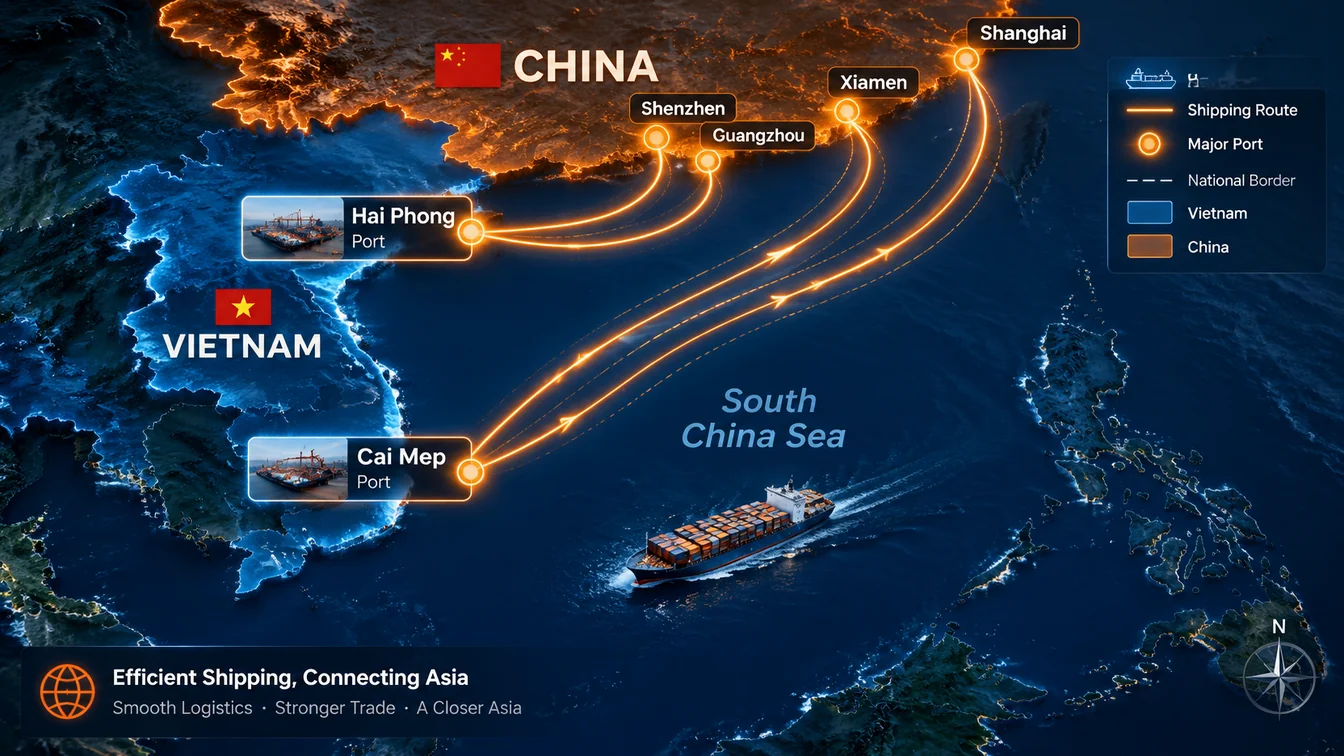
Route Planning Summary
- Which origin gateway should a China supplier ship from?
- The closest major China export seaport with a credible sailing toward the intended Vietnamese entry area normally minimizes supplier-side trucking. A Shenzhen or Shanghai origin usually shortens pre-carriage for factories in Guangdong or the Yangtze Delta, while Qingdao suits northern supplier clusters but adds domestic repositioning before the Vietnam leg.
- Which transport mode fits a China-to-Vietnam shipment?
- FCL suits full container loads where the cargo fills a 20GP or 40GP/40HQ and the buyer wants a single container seal from origin to destination. LCL suits smaller volumes moving through a consolidation service, and air freight or express suits urgent or high-value cargo where the per-kilogram cost is justified by speed.
- How long does the China-to-Vietnam route take?
- Ocean FCL from Shanghai to Hai Phong is listed with an 8-day transit reference, while China-origin air freight to Hanoi is listed at 3–4 days and express from Wuxi to Ho Chi Minh City at 5–7 days. These are planning references for the named route and method, not door-to-door commitments.
- Who is responsible for Vietnam import clearance?
- The Vietnamese importer of record or its authorized customs agent files the declaration, pays duty and VAT, and responds to any document or inspection request. A foreign seller without a Vietnamese importing entity cannot act as the importer of record on its own.
- What final-delivery scope should be agreed before booking?
- Final delivery may stop at the destination port or airport, at a Hanoi or Ho Chi Minh City warehouse, or at the buyer’s postcode depending on the agreed service boundary. Door-to-door scope should be recorded in the commercial arrangement before dispatch because port-to-port pricing does not include inland trucking or appointment handling.
China to Vietnam Shipping Cost
The table below provides route-specific indicative shipping costs and planning transit references for the November 2026 review. Each reference applies to the named route, method, and unit shown.
| Shipping route | Shipping method | Price | Transit time |
|---|---|---|---|
| Shanghai Port, China → Hai Phong Port, Vietnam | FCL 20GP | $268–$275/柜 | 8 days |
| Shanghai Port, China → Hai Phong Port, Vietnam | FCL 40GP | $349–$360/柜 | 8 days |
| Shanghai Port, China → Hai Phong Port, Vietnam | FCL 40HQ | $356–$367/柜 | 8 days |
| China → Hai Phong Port, Vietnam | LCL | $10/CBM | 9–17 days |
| China → Hanoi Airport, Vietnam | Air freight | $1.00/kg | 3–4 days |
| Wuxi City, China → Ho Chi Minh City, Vietnam | Express | $3.38–$9.52/kg | 5–7 days |
| Qingdao, China → Hanoi Station, Vietnam | Rail FCL 20GP | $2,356.62/柜 | 7 days |
Cost scope: The indicative cost references apply to the route, method, and unit shown; they are not carrier freight rates, market averages, TJ selling prices, or binding quotations. The actual booking, cargo, and agreed service scope determine the commercial arrangement, including responsibility for relevant pickup, handling, customs, duty and tax, inland delivery, insurance, storage, examination, appointment, and surcharge items. Cost data reviewed November 2026.
Vietnam Import Duty and Taxes
Vietnam import duty and VAT are calculated on the customs value, the commodity’s eight-digit HS code, origin, and applicable trade measures; no single rate applies across all goods. As of November 2026, Vietnam applies the CIF method for customs valuation, meaning product value plus international freight and insurance forms the dutiable base.
- Classify the goods under Vietnam’s eight-digit HS code. Vietnam Customs classifies according to its own tariff schedule, not the exporting country’s code, and the HS code determines the applicable duty rate and any product-specific controls.
- Establish the CIF customs value. The General Department of Vietnam Customs uses cost, insurance, and freight to the Vietnamese border as the valuation basis, so under-declaring freight does not reduce the dutiable amount.
- Check origin eligibility. A valid certificate of origin may qualify goods for preferential rates under ASEAN–China or other trade agreements; without an eligible C/O, the MFN rate applies.
- Apply VAT at the applicable rate. The standard VAT rate is 10%, with a 5% reduced rate for certain foodstuffs and a temporary 8% rate for some goods otherwise at 10% through the current relief period; import VAT is paid at clearance unless a deferral applies.
- Account for the removal of the low-value threshold. Vietnam has eliminated the VND 1 million de minimis exemption for courier shipments, so most low-value imports now attract duty and VAT; the simplified explanation here is not tax advice and should be confirmed against current official guidance before entry.
China to Vietnam Shipping Time
Shanghai Port to Hai Phong Port FCL carries an 8-day transit reference, which is the most commercially relevant supplied timing value for ocean container cargo on this route. China-origin air freight to Hanoi is listed at 3–4 days, making it the faster option when the cargo is urgent or high-value, while express from Wuxi to Ho Chi Minh City carries a 5–7-day reference.
LCL from China to Hai Phong is listed at 9–17 days, reflecting the additional consolidation and deconsolidation time at both ends, and rail FCL from Qingdao to Hanoi Station is listed at 7 days. These transit values are planning references for the named route and method; they do not include supplier pickup, export handling at origin, Vietnam customs clearance time, or final delivery to the buyer’s address.
Shipping Methods from China to Vietnam
- FCL ocean freight
- Choose FCL when the cargo fills or nearly fills a 20GP, 40GP, or 40HQ container, because a single container seal from the China origin port to Hai Phong or Cai Mep reduces handling and exposure compared with LCL consolidation. The condition that changes this choice is a cargo volume too small to justify a full container, in which case LCL or air becomes more practical.
- LCL ocean freight
- Choose LCL when the shipment occupies only part of a container and the buyer can accept consolidation and deconsolidation time, because the $10/CBM reference keeps per-shipment ocean cost low for smaller volumes. The condition that changes this is cargo that is fragile, high-value, or needed on a schedule shorter than the 9–17-day LCL reference, where FCL or air is more suitable.
- Air freight
- Choose air freight when the cargo is urgent, high-value relative to its weight, or needed in Hanoi within days rather than weeks, because the 3–4-day reference from China to Hanoi Airport compresses transit substantially compared with ocean. The condition that changes this is chargeable weight: bulky low-density cargo can make air economically unattractive even when speed is useful.
- Express
- Choose express when the shipment is small, time-sensitive, and can move through an integrated carrier network to a Ho Chi Minh City address, because the 5–7-day reference from Wuxi covers door-to-door convenience for parcels and small cartons. The condition that changes this is cargo beyond express size or weight limits, or goods requiring formal customs brokerage that an express network does not handle as part of its standard service.
- Rail FCL
- Choose rail FCL when the supplier is in northern or eastern China and the delivery point is Hanoi or northern Vietnam, because the Qingdao-to-Hanoi Station reference of 7 days avoids the sea leg and connects through the China–Vietnam land corridor. The condition that changes this is a supplier in the Pearl River Delta or a final destination in southern Vietnam, where an ocean sailing to Hai Phong or Cai Mep is usually the more direct choice.
Door-to-Door Shipping from China to Vietnam
A door-to-door China-to-Vietnam shipment moves through eight operational stages from supplier coordination to final delivery and close-out. Door-to-door service should be scoped against the actual supplier location, cargo, and final Vietnamese address before booking, because each stage introduces a different responsible party and cost boundary.
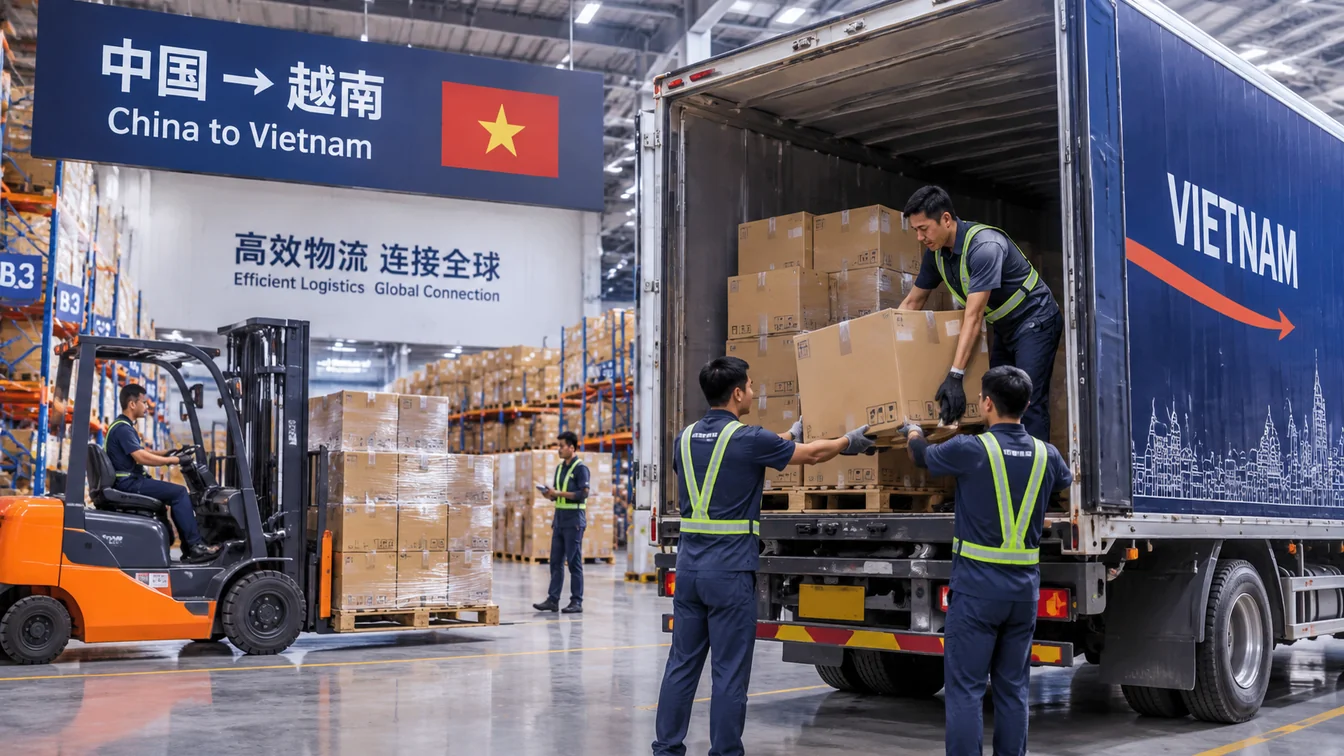
-
Cargo and Compliance Review
The shipment definition starts with the cargo description, HS code, declared value, dimensions, weight, and any product-specific licence or inspection requirement. Vietnam’s import rules distinguish between banned goods, goods subject to specialised inspection, and goods requiring an import licence, so this review determines whether the shipment can proceed on the planned route.
-
Route and Method Selection
The route and mode are matched to the supplier region, cargo urgency, and final delivery area. A Shanghai-origin FCL shipment to Hai Phong follows a different gateway path from a Wuxi-origin express parcel to Ho Chi Minh City, and the selected method determines the documentation, handling, and timing that follow.
-
Supplier Coordination and Pickup
Supplier pickup is scheduled against the confirmed cargo ready date and the origin gateway’s cutoff. The pickup scope should state whether the supplier loads the vehicle, whether pallet exchange or tail-lift is required, and whether the supplier can provide the export documents needed for the China export declaration.
-
China Export Handling
China export handling covers the export declaration, any required export licence or inspection, terminal handling at the origin port or airport, and the handover to the international carrier. The shipper or its agent is responsible for the accuracy of the China export declaration, and discrepancies between the invoice, packing list, and declared value can hold the shipment at origin.
-
International Transportation
International transportation moves the cargo by the selected mode: ocean from a China port to Hai Phong or Cai Mep, air to Hanoi, express to a Vietnamese city, or rail across the China–Vietnam land border. The carrier’s schedule and the port or airport of entry determine the next handoff to the Vietnamese clearance party.
-
Vietnam Import Clearance
Vietnam import clearance is filed by the Vietnamese importer of record or its authorised customs agent through the VNACCS/VCIS system. The declaration is routed to a green, yellow, or red channel based on risk scoring; green releases immediately, yellow requires a document check, and red adds a physical inspection before release.
-
Final Delivery
Final delivery moves the released cargo from the Vietnamese gateway to the buyer’s address, warehouse, or another named destination. Delivery scope should state whether the carrier provides tail-lift, inside delivery, appointment scheduling, or unloading assistance, because these services affect both cost and feasibility at the destination.
-
Shipment Close-Out
Shipment close-out reconciles the delivered cargo against the booking, confirms that all charges and documents are settled, and records any damage, shortage, or exception for insurance or carrier claims. The close-out step also provides the document trail needed for the importer’s VAT records and post-entry audit response.
Main China to Vietnam Routes
The most practical China-to-Vietnam route normally starts at the China export gateway closest to the supplier that also has a credible sailing or service toward the intended Vietnamese entry area. The condition that can change this comparison is the final delivery postcode: a supplier in Shandong may find Qingdao convenient for pre-carriage, but a consignee in southern Vietnam may still compare a Cai Mep routing through a different origin port if the inland delivery saving outweighs the origin trucking cost.
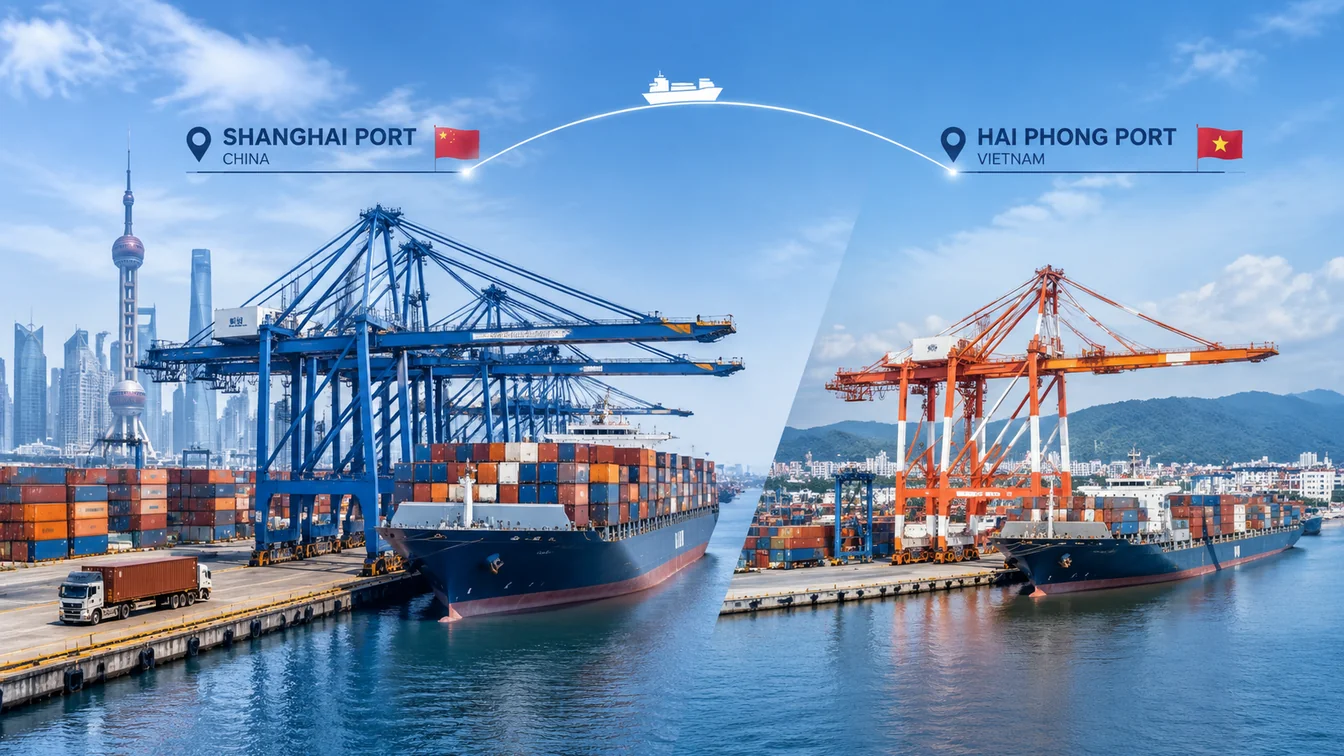
Major China Export Ports for Vietnam Shipping
- Shanghai (CNSHA)
- Shanghai serves suppliers across the Yangtze River Delta and offers the widest carrier selection for Vietnam services, including direct sailings to Hai Phong and connections to Ho Chi Minh City. It is the supplied origin for the FCL 20GP, 40GP, and 40HQ cost references on this page, with an 8-day transit reference to Hai Phong.
- Ningbo-Zhoushan (CNNGB)
- Ningbo-Zhoushan handles high volumes for Zhejiang factories and is a practical origin for suppliers in Ningbo, Yiwu, and the surrounding manufacturing belt, with weekly Vietnam sailings through multiple near-sea carriers. It is commonly compared with Shanghai when the supplier is in Zhejiang and the destination is northern Vietnam.
- Shenzhen (Yantian / Shekou, CNYTN / CNSHK)
- Shenzhen serves Pearl River Delta suppliers and is the closest major export gateway for factories in Guangdong, with short ocean transits to Hai Phong and strong feeder connections to Ho Chi Minh City and Cai Mep. It is the natural origin comparison when the supplier is in Shenzhen, Dongguan, or Guangzhou.
- Qingdao (CNQIN)
- Qingdao serves Shandong and northern China suppliers and is the supplied origin for the rail FCL 20GP reference to Hanoi Station. For ocean cargo, it can connect to Hai Phong, but the domestic repositioning from inland Shandong to Qingdao should be weighed against the sailing frequency and rate.
- Guangzhou (Nansha, CNNSA)
- Guangzhou’s Nansha terminal serves Pearl River Delta suppliers west of Shenzhen and is a practical origin for cargo moving to Ho Chi Minh City and Cai Mep, particularly for suppliers in Foshan, Zhongshan, and Jiangmen. It should be compared with Shenzhen when the supplier’s exact location determines which terminal reduces pre-carriage.
Major Vietnam Import Ports for Cargo from China
- Hai Phong
- Hai Phong is northern Vietnam’s primary seaport gateway, serving Hanoi, the Red River Delta, and industrial parks across the north. It is the supplied destination for the Shanghai FCL and China-origin LCL cost references and is the natural entry point for cargo ultimately delivered to Hanoi or northern provinces.
- Cai Mep (Ba Ria–Vung Tau)
- Cai Mep is a deep-water port cluster in southern Vietnam that handles direct ocean services and has ranked among the world’s most efficient container ports. It serves Ho Chi Minh City, Dong Nai, Binh Duong, and the southern industrial belt, and is compared with Ho Chi Minh City’s inner terminals when vessel size, sailing frequency, and inland distance to the final factory or warehouse differ.
- Ho Chi Minh City (Cat Lai / Hiep Phuoc)
- Ho Chi Minh City’s river terminals serve the city and surrounding southern provinces with closer inland access than Cai Mep for some consignees, though vessel size and draft restrictions can limit which services call directly. It is the supplied destination city for the express reference and is compared with Cai Mep when the final delivery postcode is in the city core or nearby industrial zones.
- Da Nang
- Da Nang serves central Vietnam and is a practical entry point for cargo destined to Hue, Hoi An, and the central provinces, reducing inland trucking compared with routing through Hai Phong or Cai Mep. It should be compared when the final delivery area is in central Vietnam and the origin sailing or feeder connection supports a Da Nang call.
Supplier Region to Destination Routing Logic
| Supplier region in China | Origin port to compare | Destination port and delivery region | Planning reason |
|---|---|---|---|
| Pearl River Delta (Shenzhen, Dongguan, Guangzhou) | Shenzhen (Yantian / Shekou) or Guangzhou (Nansha) | Hai Phong for northern Vietnam, or Cai Mep / Ho Chi Minh City for southern Vietnam | The closest origin terminal limits pre-carriage, but the final postcode determines whether a northern or southern Vietnamese gateway avoids a long domestic truck leg; sailing frequency and current rate can shift the comparison. |
| Yangtze River Delta (Shanghai, Ningbo, Jiangsu, Zhejiang) | Shanghai or Ningbo-Zhoushan | Hai Phong for Hanoi and the north; Cai Mep for Ho Chi Minh City and the south | Shanghai offers the widest carrier choice and is the supplied origin for the 8-day FCL reference to Hai Phong, while Ningbo may reduce pre-carriage for Zhejiang suppliers; final delivery region and inland cost decide the destination port. |
| Shandong and northern China (Qingdao, Jinan, Weifang) | Qingdao | Hai Phong for northern Vietnam, or Hanoi Station via the rail corridor | Qingdao is the supplied origin for the 7-day rail FCL reference to Hanoi, and its ocean connection to Hai Phong suits northern Vietnam delivery; the choice between rail and ocean turns on cargo readiness, equipment availability, and the final postcode. |
| Inland central China (Wuhan, Changsha, Zhengzhou) | Shanghai, Ningbo, or Shenzhen depending on rail/road pre-carriage | Hai Phong or Cai Mep by ocean, or Hanoi by air | Inland suppliers may not have a single closest port, so the comparison should weigh rail or road feeder cost to each origin gateway against the sailing and destination inland cost; air to Hanoi becomes relevant when urgency outweighs the per-kilogram reference. |
Destination Regional Delivery Logic
- Northern Vietnam (Hanoi, Red River Delta, Hai Phong industrial zones)
- Hai Phong is the default ocean gateway for northern Vietnam delivery because it places the container closest to Hanoi and the surrounding industrial parks. Rail to Hanoi Station is an alternative for cargo that suits the land corridor, and air to Hanoi suits urgent shipments; the condition that changes the choice is the final address distance from Hai Phong versus Hanoi and the cargo’s urgency.
- Southern Vietnam (Ho Chi Minh City, Binh Duong, Dong Nai, Ba Ria–Vung Tau)
- Cai Mep and Ho Chi Minh City’s river terminals serve the southern industrial belt, with Cai Mep handling larger direct vessels and the city terminals offering closer inland access for some consignees. The comparison should include the inland trucking distance, terminal handling charges, and the sailing schedule, because a lower ocean rate to Cai Mep can be offset by a longer or more expensive inland leg.
- Central Vietnam (Da Nang, Hue, Quang Nam)
- Da Nang is the natural entry point for central Vietnam delivery, avoiding the longer inland truck from Hai Phong or Cai Mep. The condition that changes this is service availability: if a direct sailing or feeder to Da Nang is not available on the required schedule, routing through Hai Phong or Cai Mep with an inland leg may still be the practical option.
How the Gateway Is Selected
The gateway selection starts with the supplier’s province and the final delivery postcode, then narrows the comparison by service availability and total inland cost.
- Origin proximity: Compare the trucking or rail feeder cost from the supplier to each candidate China export port; the closest port is not automatically the lowest total cost if its sailing schedule adds dwell time.
- Destination proximity: Compare the inland trucking distance from Hai Phong, Cai Mep, Ho Chi Minh City, or Da Nang to the final delivery address; a port with a lower ocean rate can lose its advantage if the inland leg is longer.
- Service credibility: Check whether the candidate port pair has a current sailing, feeder, or rail service that matches the required schedule, rather than assuming every port pair has a direct call.
- Cargo and equipment fit: Confirm that the selected origin port and vessel or rail service can handle the container size and cargo type, particularly for 40HQ, oversized, or hazardous cargo.
- Clearance and delivery scope: Confirm which party handles Vietnam import clearance and whether the quoted service ends at the port, the container yard, or the buyer’s door, because the gateway choice must align with the agreed delivery boundary.
Vietnam Customs Clearance
Vietnam import clearance requires a Vietnamese importer of record or an authorised customs agent to file an accurate declaration, pay duty and VAT, and satisfy any product-specific licensing or inspection requirement. The rules apply across Vietnam’s customs territory, and the importer remains responsible for the accuracy of the HS code, customs value, and origin claimed.
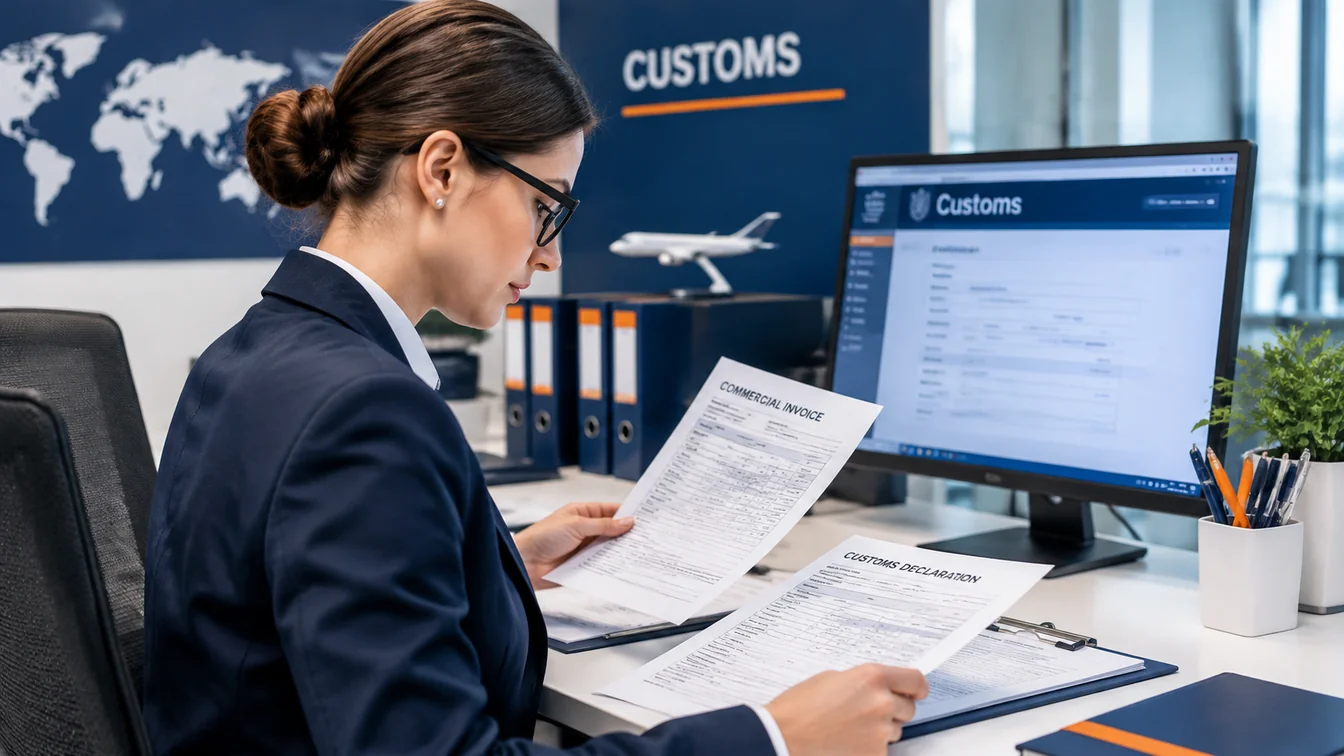
What the Vietnam Importer Normally Needs
The Vietnamese importer should prepare the following before the cargo arrives at the border gate, because the declaration can be filed in advance but must be lodged within 30 days of arrival.
- Importer registration and tax code The importer must be registered in Vietnam and hold a tax code for VAT and duty accounting; the importer of record is the party legally responsible for the declaration.
- Customs declaration Filed electronically through the VNACCS/VCIS system, the declaration is routed to green, yellow, or red based on risk scoring; the registered declaration remains valid for 15 days.
- Commercial invoice The invoice must show the seller and buyer, goods description, quantity, unit price, total value, currency, and Incoterm; it forms the basis for the customs value together with freight and insurance.
- Packing list A detailed packing list identifies the packages, dimensions, gross and net weight, and contents, and must be consistent with the invoice and transport document.
- Bill of lading or air waybill The transport document establishes the carrier, route, port or airport of entry, and consignee, and a copy is part of the customs dossier.
- Certificate of origin A valid C/O may qualify the goods for preferential duty rates under an applicable trade agreement; without an eligible C/O, the MFN rate applies.
- Import licence or specialised inspection result Goods subject to import licensing or specialised inspection need the relevant permit or inspection result before clearance; this requirement depends on the product category and HS code.
- Customs agent authorisation If a customs broker files on the importer’s behalf, the authorisation must be documented; the importer remains responsible for the accuracy of the declared information.
Common Causes of Vietnam Customs Delays
- An incorrect or inconsistent HS code across the invoice, packing list, and declaration, which can trigger a document check or reclassification.
- A missing or invalid certificate of origin when a preferential rate is claimed, resulting in the MFN rate or a post-clearance adjustment.
- Under-declared freight or insurance on a CIF valuation, which can lead to a customs value review and delay.
- A missing import licence or specialised inspection result for goods that require one.
- Inconsistent consignee details between the bill of lading, invoice, and importer registration.
- An unpaid tax or fee at the time of clearance, because goods are generally released only after the relevant taxes and fees are paid.
- A red-channel inspection triggered by the declarant’s compliance history or cargo risk profile, which adds physical examination time.
These issues should be resolved before dispatch rather than at the Vietnamese border gate, because a document or inspection hold at arrival can add cost and disrupt the final-delivery schedule.
Shipping to Amazon FBA Vietnam
Amazon operates a Vietnam marketplace and fulfillment route through Amazon Seller Central Vietnam, and inventory shipped from China to an Amazon fulfillment center in Vietnam must arrive fully prepared because Amazon does not act as the importer of record for FBA inventory. The seller or its designated importer must clear the goods through Vietnam customs and ensure that FNSKU labels, poly-bagging, carton labels, and packaging comply with Amazon’s current requirements before the cargo leaves China.
The relevant Amazon FBA route for Vietnam involves the seller or a designated Vietnamese importer acting as the importer of record, paying import duty and VAT, and arranging delivery to the fulfillment center Amazon assigns. Amazon requires cartons to be prepared to its specifications: cartons should not exceed 23 kg unless a single item exceeds that weight, dimensions should not exceed 63.5 cm on any side unless oversized, and boxes weighing 15 kg or more require heavy-package labels viewable from the top and sides. Amazon FBA preparation, labeling, and carton compliance should be completed at the China supplier or a pre-export facility because Amazon’s fulfillment centers do not perform prep or labeling for inbound FBA shipments. The seller should also confirm the current importer-of-record, tax, commodity-code, product-eligibility, shipment-plan, tracking, and appointment requirements against Amazon’s current Seller Central guidance before booking.
Special Cargo, Packaging, and Insurance
Cargo Requiring Additional Review
- Lithium batteries and battery-containing products, which may require dangerous-goods documentation, state-of-charge limits, and carrier acceptance before booking.
- Dangerous goods, chemicals, and flammable liquids, which require classification, safety data sheets, and a carrier or freight forwarder that accepts the specific UN number and packing group.
- Food, cosmetics, and medical goods, which may require product registration, specialised inspection, or a certificate of free sale before Vietnam import clearance.
- Wood packaging and pallets, which must meet ISPM 15 treatment and marking requirements to avoid customs hold or re-treatment at destination.
- Oversized or overweight cargo, which may require flat-rack, open-top, or breakbulk handling and a route survey at both the China origin and Vietnamese destination.
- Temperature-controlled cargo, which requires a validated cold chain and carrier equipment that can maintain the required range through the ocean or air leg and destination handling.
Packaging Checks
Packaging for a China-to-Vietnam shipment should protect the cargo through ocean or air handling, multiple terminal transfers, and the final inland delivery. The checks below should be completed at the supplier before the cargo is handed to the carrier, because re-packing after export is difficult and costly.
- Carton strength: Use double-wall or triple-wall corrugated cartons for heavier cargo, and verify that the board grade suits the stacked weight and handling environment.
- Internal protection: Use void fill, foam, or air pillows to prevent movement, and protect fragile or sharp items with the appropriate wrap and edge protection.
- Pallets: Confirm that the pallet type and size suit the carrier and destination handling, and that pallets are heat-treated or marked to ISPM 15 where wood is used.
- Moisture protection: Add desiccant or moisture barrier where the route or cargo is sensitive to humidity, particularly for ocean container shipments.
- Handling marks and labels: Apply “Fragile,” “This Side Up,” or heavy-package labels where required, and keep labels visible on the top and sides of the carton.
- Dimensions and weights: Record the actual carton dimensions and gross weight before booking, because carrier charges and equipment selection depend on the declared measurements.
Cargo Insurance
Carrier liability is limited and does not provide the same protection as cargo insurance. The coverage, exclusions, deductible, insured value, claims evidence, and insurance period should be confirmed before the shipment departs, because a claim after loss or damage depends on the policy terms and the evidence collected at the time of the incident.
Why Use a Freight Forwarder for Shipping from China to Vietnam?
A freight forwarder helps the buyer turn cargo facts into a workable shipment definition, select a credible route, and keep commercial and operational handoffs aligned across the China origin, international leg, and Vietnam destination. The value is in coordinating the decisions that connect the supplier, carrier, customs broker, and final-delivery party, rather than replacing any of those responsible parties.
- Defining the shipment from incomplete inputs
- A buyer with a supplier quote, a target delivery date, and a carton count but no confirmed HS code or cargo ready date needs those gaps filled before a route can be priced or booked. A forwarder reviews the available inputs and flags the missing information that prevents a reliable next decision, such as the Vietnam importer’s tax code, the product’s licence status, or the actual carton dimensions.
- Matching the route to the real origin, urgency, and delivery point
- A forwarder compares the credible transport and gateway options against the supplier’s location, the cargo’s urgency, and the final Vietnamese postcode, rather than defaulting to a single port pair. The route-specific condition that can change the recommendation is the final delivery area: a Hai Phong routing suits Hanoi delivery, while a Cai Mep or Ho Chi Minh City routing is more direct for southern Vietnam.
- Keeping commercial and operational handoffs coordinated
- A forwarder aligns the booking terms, document instructions, and handoff responsibilities so that the China export party, the carrier, the Vietnam customs broker, and the final-delivery provider work from the same shipment definition. The condition that can change this is a service-scope gap, such as a port-to-port booking paired with a buyer who expects door delivery; that gap should be identified before the commercial arrangement is prepared.
How TJ Logistics Team Plans a China-to-Vietnam Shipment
- Shipment definition review
- TJ Logistics Team reviews the supplier, cargo, HS code, declared value, dimensions, cargo ready date, Vietnam importer details, and final delivery address, and flags any missing input that prevents a reliable route or cost comparison.
- Transport and gateway comparison
- The team compares the credible ocean, air, express, or rail options against the shipment definition, including the origin port or airport, the Vietnamese entry gateway, the international routing, and the destination handoff, and identifies where the supply chain requires a confirmed service scope.
- Service boundary and responsibility record
- Before a formal commercial arrangement is prepared, TJ Logistics Team records the agreed service boundary and the parties responsible for the next handoffs, including origin pickup, export declaration, main carriage, Vietnam clearance, duty and VAT payment, and final delivery, so that each responsible party is clear.
- Booking, document, and exception coordination
- After the buyer confirms the agreed scope, the team coordinates the booking information, commercial documents, cargo handoff, and the next operational decision if timing, route, document, or receiving conditions change, including customs brokerage coordination at the Vietnam entry point.
China to Vietnam Shipping FAQ
How much does a 20ft container from China to Vietnam cost?
A Shanghai Port to Hai Phong Port FCL 20GP is listed at $268–$275 per container for the November 2026 review, with an 8-day transit reference for the ocean leg. This is an indicative cost reference for the named route, method, and container size; the booking, cargo, and agreed service scope determine the actual commercial arrangement, including any origin handling, destination charges, customs, duty, VAT, or inland delivery not stated in the reference.
How long does sea freight from China to Vietnam take?
Shanghai Port to Hai Phong Port FCL carries an 8-day transit reference, while China-origin LCL to Hai Phong is listed at 9–17 days because consolidation and deconsolidation add time. The FCL timing applies to the port-to-port ocean leg and does not include supplier pickup, China export handling, Vietnam customs clearance, or final delivery, so the door-to-door schedule is longer than the ocean transit alone.
What is the most cost-effective way to ship from China to Vietnam?
LCL at $10/CBM is the lowest-cost ocean option for small volumes that do not justify a full container, provided the cargo can tolerate the 9–17-day consolidation window. FCL becomes more cost-effective per unit when the cargo fills a 20GP or 40GP container, and air or express should be compared only when the cargo’s urgency or value justifies the higher per-kilogram reference.
Which China port is best for shipping to Vietnam?
The closest major China export port to the supplier that also has a sailing toward the intended Vietnamese entry area is normally the practical default. For a Pearl River Delta supplier, Shenzhen or Guangzhou Nansha usually reduces pre-carriage, while a Yangtze Delta supplier typically compares Shanghai or Ningbo-Zhoushan; the final delivery postcode in northern or southern Vietnam can change the destination port and therefore the origin port comparison.
Can I ship door-to-door from China to Vietnam?
Door-to-door service can cover pickup at the China supplier, export handling, international transport, Vietnam import clearance, and final delivery to a Vietnamese address, but the scope must be agreed before booking. The condition that changes the delivery plan is the final postcode and the destination handling requirement, because port-to-port pricing does not include inland trucking, appointment scheduling, or unloading assistance.
What documents should be prepared before shipping from China to Vietnam?
The Vietnam importer should prepare a customs declaration, commercial invoice, packing list, bill of lading or air waybill, certificate of origin where a preferential rate is claimed, and any import licence or specialised inspection result required for the product. The invoice, packing list, and transport document should agree on the consignee, goods description, quantity, and value before the declaration is filed.
How much is Vietnam import VAT and duty on China-origin goods?
Vietnam applies VAT at a standard rate of 10%, with a 5% reduced rate for certain foodstuffs and a temporary 8% rate for some goods otherwise at 10% during the current relief period, while import duty depends on the eight-digit HS code and origin. The duty and VAT are calculated on a CIF customs value, and the exact amount cannot be stated without the product’s HS code, declared value, and applicable trade measure.
Is there a rail option from China to Vietnam?
Rail FCL from Qingdao to Hanoi Station is listed at $2,356.62 per 20GP with a 7-day transit reference, and a cross-border intermodal rail corridor also connects China’s Guangxi region to Yen Vien Station in Hanoi. Rail is a practical alternative for northern Vietnam delivery when the supplier is in northern or eastern China and the cargo suits a container rail service; a southern Vietnam destination is usually better served by an ocean gateway such as Cai Mep or Ho Chi Minh City.