

Reviewed by TJ Logistics Team — November 2026. This route-planning review reflects the current market, cost, customs, tariff, and marketplace information available during November 2026 and applies practical checks across China supplier pickup, gateway and mode selection, UK customs handoff, and final delivery. Shipping costs and transit times shown are indicative planning references for the named route, method, and unit; they are not carrier freight rates, market averages, or binding quotations.
Shipping from China to the UK: Route Update
Shenzhen-to-Felixstowe FCL 20GP is listed at $2,490 per container with a 35-day planning transit, and LCL from South China to Felixstowe or Southampton is listed at $55–$120 per CBM with a 35–45-day planning transit. These indicative references anchor the sea-freight option; air freight from Shanghai Pudong to London Heathrow is listed at $4.50–$6.50 per kg with a 5–8-day transit, and express from China to the UK at $7.00–$10.00 per kg with a 3–5-day transit. Rail-led multimodal LCL to the London area is listed at $230+ per CBM with a 22–28-day transit. The operating chain runs from China supplier pickup through the origin gateway (seaport or airport), the applicable transport mode, the UK destination gateway (Felixstowe, Southampton, London Gateway, or Heathrow), UK customs clearance, and final delivery to the consignee or Amazon fulfilment centre.
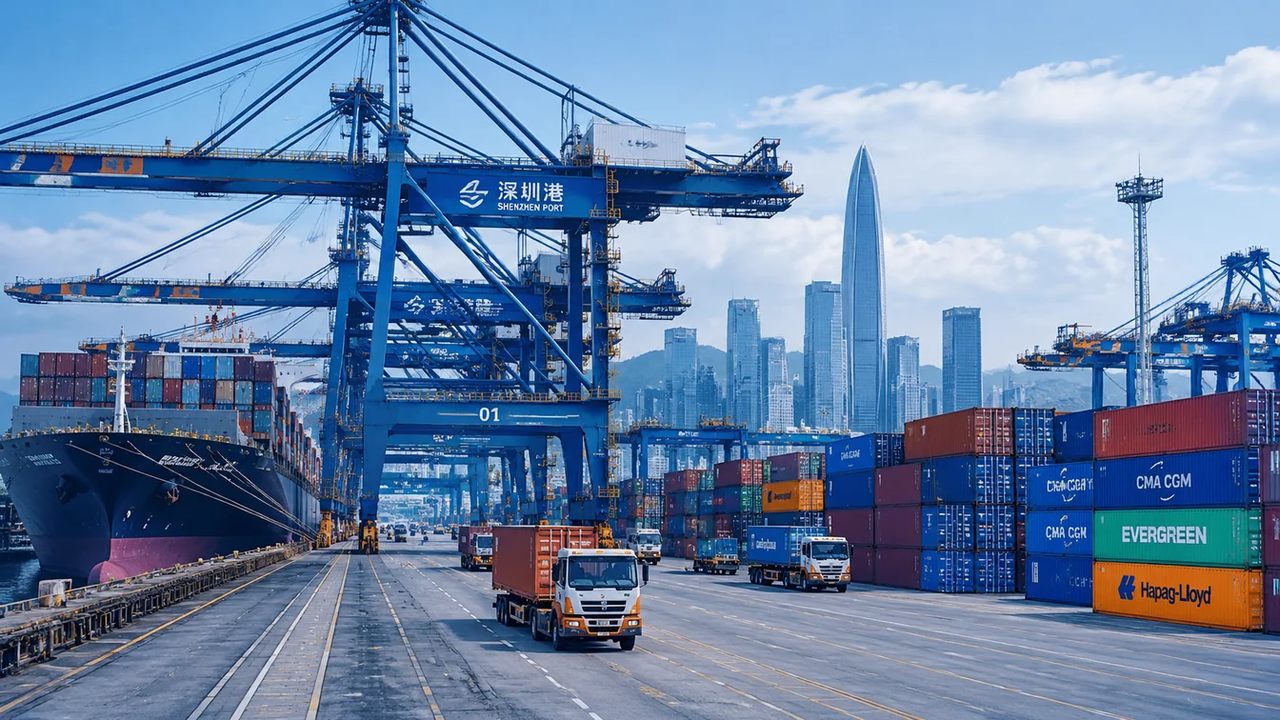
Sea freight is the default choice for palletised or container-load cargo where the buyer can plan around a five-to-six-week door-to-door cycle; air and express take over when inventory timing or product value justifies the higher per-kilogram cost. Rail-led multimodal sits between the two on cost and time, but it is a transhipment product — the container travels by rail to a European hub and then crosses to the UK by ferry or road, so it does not offer a direct China-to-UK rail service. The sections below help match the shipment to one of these modes, compare the Felixstowe and Southampton gateways, and assemble the import and final-delivery requirements that follow. Sea freight, air freight, and multi-modal freight are the transport services relevant to these decisions.
Route Planning Summary
- How does the shipment move from a China supplier to the UK gateway?
-
The supplier hands the cargo to a China origin port or airport, and the route-planning sequence starts by matching the supplier location to the closest credible export gateway. Shenzhen and South China suppliers typically use Yantian, Shekou, or Nansha for Felixstowe or Southampton sailings; Shanghai and Ningbo suppliers use Pudong for air cargo or Ningbo-Zhoushan for ocean; a supplier in a different province may need a feeder or truck leg to one of those gateways before the main international movement begins.
- Which transport mode fits a given shipment?
-
Sea FCL fits palletised or container-load cargo where a 35-day transit is acceptable; LCL fits smaller volumes that can share a container; air and express fit urgent or high-value cargo where the per-kilogram cost is justified; and rail-led multimodal fits a middle position on cost and time for London-area deliveries. The mode decision changes when the final postcode is outside the gateway’s natural delivery zone, when the cargo exceeds a mode’s dimensional or weight limits, or when the product requires temperature control or dangerous-goods handling.
- What planning time should the buyer allow for the China-to-UK route?
-
The supplied planning references range from 3–5 days for express and 5–8 days for air freight through 22–28 days for rail-led multimodal and 35–45 days for LCL sea freight to 35 days for the named FCL routes. These are indicative transit references for the named method and route; actual door-to-door time also depends on supplier readiness, origin handling, UK customs clearance, and the final-delivery postcode.
- Who is responsible for UK customs clearance?
-
The UK importer — the party named as Importer of Record on the customs declaration — is responsible for import clearance, duty, and import VAT, and must hold a GB EORI number to use HMRC’s Customs Declaration Service (CDS). The importer can appoint a customs broker or freight forwarder to file the declaration, but the legal responsibility remains with the importer unless a different arrangement is explicitly agreed.
- What final-delivery and service scope should be agreed?
-
The agreed service boundary should state whether the forwarder is handling only the international leg or also origin pickup, export declaration, UK customs clearance, duty and tax, and final delivery to the consignee or Amazon fulfilment centre. Delivery to a UK postcode outside the gateway’s standard haulage area, a delivery to an Amazon FBA centre with a specific appointment window, or a shipment requiring inside delivery or a tail-lift changes the scope and must be reflected before the commercial arrangement is set.
China to UK Shipping Cost
The table below provides route-specific indicative shipping costs and planning transit references for the November 2026 review. Each reference applies to the named route, method, and unit; the cost table is a planning input, not a carrier freight rate or a formal quotation.
| Shipping route | Shipping method | Price | Transit time |
|---|---|---|---|
| Shenzhen, China → Felixstowe, UK | FCL 20GP | $2,490/container | 35 days |
| Shenzhen, China → Felixstowe, UK | FCL 40GP | $3,845/container | 35 days |
| Shenzhen, China → Felixstowe, UK | FCL 40HQ | $3,845/container | 35 days |
| South China (Yantian/Shekou/Nansha), China → Felixstowe/Southampton, UK | LCL | $55–$120/CBM | 35–45 days |
| Shanghai Pudong (PVG), China → London Heathrow (LHR), UK | Air freight | $4.50–$6.50/kg | 5–8 days |
| China → United Kingdom | Express | $7.00–$10.00/kg | 3–5 days |
| China → London area, UK | Rail-led multimodal LCL | $230+/CBM | 22–28 days |
Cost scope: The indicative cost references above apply to the route, method, and unit shown; they are not carrier freight rates, market averages, TJ selling prices, or binding quotations. The actual booking, cargo, and agreed service scope determine the commercial arrangement, including responsibility for relevant pickup, handling, customs, duty and tax, inland delivery, insurance, storage, examination, appointment, and surcharge items.
UK Import Duty and Taxes
The amount of UK import duty and VAT payable depends on the commodity code, customs value, origin of the goods, applicable trade measures, product category, and current rules; there is no single universal rate. The steps below outline the practical calculation logic for a commercial consignment.
- Classify the product with a commodity code in the UK Trade Tariff to establish the applicable duty rate and any product-specific measures.
- Establish the customs value on a CIF basis — the invoice price of the goods plus international freight and insurance to the UK border — because UK duty and VAT are calculated on that value rather than the invoice alone.
- Calculate customs duty by applying the commodity-code rate to the CIF value; typical UK Global Tariff rates range from 0% to around 12% for many consumer goods, with higher rates for some product categories.
- Calculate import VAT at the standard rate of 20% on most goods, applied to the customs value plus any customs duty and excise due; reduced or zero rates apply only to specific categories such as some children’s car seats, books, and certain food items.
- If the importer is VAT-registered in the UK, use Postponed VAT Accounting to account for import VAT on the VAT Return rather than paying it at the border, subject to eligibility; this explanation is simplified and is not tax or legal advice.
China to UK Shipping Time
The most commercially relevant sea-freight timing reference for this route is the Shenzhen-to-Felixstowe FCL movement at 35 days; LCL from South China to Felixstowe or Southampton is listed at 35–45 days, which reflects the additional consolidation and deconsolidation time. Air freight from Shanghai Pudong to London Heathrow is listed at 5–8 days, express from China to the UK at 3–5 days, and rail-led multimodal LCL to the London area at 22–28 days.
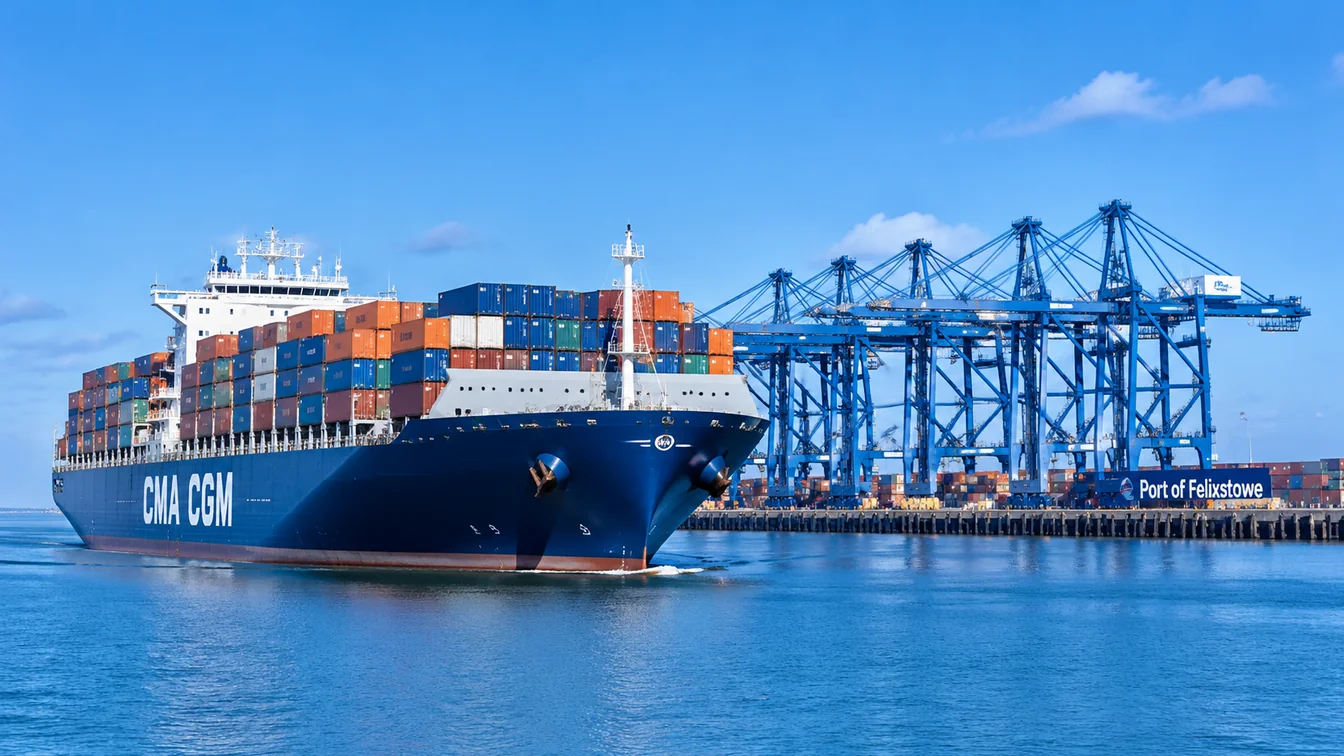
These are planning references for the named route and method. A door-to-door movement adds supplier pickup scheduling, origin export handling, UK customs clearance, and final delivery beyond the listed port-to-port or airport-to-airport transit, so the buyer should treat the supplied value as the international-leg reference and allow for the surrounding handoffs when setting a delivery date. The rail-led product is not a direct China-to-UK rail service; it combines rail to a European hub with a ferry or road leg to the UK, and the listed 22–28-day transit covers that multimodal sequence for London-area delivery.
Shipping Methods from China to the UK
Choose FCL when the cargo fills or nearly fills a 20GP, 40GP, or 40HQ container, because the container is sealed at origin and the per-unit cost is usually more efficient than LCL for that volume. Choose LCL when the cargo is smaller than a full container but still sea-freight-appropriate, because consolidation at a South China CFS allows the buyer to pay only for the cubic metres used. Choose air freight when the shipment is urgent enough to justify $4.50–$6.50 per kg and the chargeable weight is manageable, because the 5–8-day transit from PVG to LHR compresses the inventory cycle. Choose express when the consignment is small, time-critical, and can bear $7.00–$10.00 per kg for a 3–5-day transit. Choose rail-led multimodal when the delivery is in the London area and the buyer wants a middle position between sea and air on both cost and time.
The mode decision changes when the final postcode is far from the natural delivery zone of the chosen gateway, when the cargo exceeds a mode’s dimensional or weight limits, or when the product requires special handling such as dangerous goods, temperature control, or oversized-cargo arrangements. A shipment to a remote UK postcode may add inland haulage time and cost that changes the comparison between a southern gateway and a more northerly entry point; a shipment to an Amazon FBA centre adds appointment and labelling requirements that may favour a forwarder experienced with that delivery pattern. Express shipping and rail freight are the relevant service pages for those two options.
Door-to-Door Shipping from China to the UK
A door-to-door China-to-UK movement follows the same operational sequence regardless of mode, but the handoffs between supplier, origin gateway, carrier, customs broker, and final-delivery party must be explicitly assigned. The eight steps below outline that sequence.
-
Cargo and Compliance Review
The shipment starts with the product, commodity code, value, dimensions, weight, and any licence or certificate requirement, because these facts determine which modes and entry procedures are available. A product with a battery, a food-contact component, or a regulated ingredient may need additional documentation before the route can be confirmed.
-
Route and Method Selection
The route planner compares the supplier location, the required delivery date, the cargo size, and the final postcode against the available sea, air, express, and rail-led options. The selected route should name the China origin gateway, the international leg, the UK entry gateway, and the delivery scope.
-
Supplier Coordination and Pickup
The supplier receives a pickup instruction that states the cargo readiness date, packaging standard, loading method, and document handover. If the supplier is not at the origin port city, the pickup leg to the export gateway must be booked and its timing built into the overall plan.
-
China Export Handling
Export declaration, terminal or airport handling, and any export licence or inspection are completed at the China origin gateway. The export documents must align with the commercial invoice and packing list that will support the UK import declaration.
-
International Transportation
The cargo moves on the booked sea, air, express, or rail-led service. The buyer should track the vessel, flight, or multimodal handoff against the planning transit, and the forwarder should flag any schedule change that threatens the UK delivery window.
-
UK Import Clearance
The UK importer, identified by GB EORI, lodges the import declaration through CDS and pays or accounts for duty and import VAT. The clearance step requires the commodity code, customs value, origin, invoice, packing list, and transport document to be consistent and complete.
-
Final Delivery
After release, the cargo moves from the UK gateway to the consignee or Amazon fulfilment centre. The delivery scope should state whether the carrier is responsible for unloading, whether a booking or appointment is required, and whether the receiving location has access restrictions that affect the vehicle type.
-
Shipment Close-Out
The close-out confirms that the delivered cargo matches the booking, that the proof of delivery is recorded, and that the customs and tax documents are retained for the importer’s records. Any damage, shortage, or discrepancy should be documented at delivery so that an insurance claim or carrier claim can be assessed if necessary.
Main China to UK Routes
The most practical China-to-UK route normally starts at a gateway that limits supplier-side movement while fitting the final delivery area and the credible destination handling. For South China suppliers, Shenzhen/Yantian or Shekou to Felixstowe or Southampton is the natural ocean comparison; for East China suppliers, Ningbo-Zhoushan or Shanghai to Felixstowe or London Gateway is the usual starting point. The comparison changes when the final postcode is closer to Southampton than to Felixstowe, when a carrier’s current service rotation favours one gateway over another, or when the cargo needs a specialist terminal or equipment type.
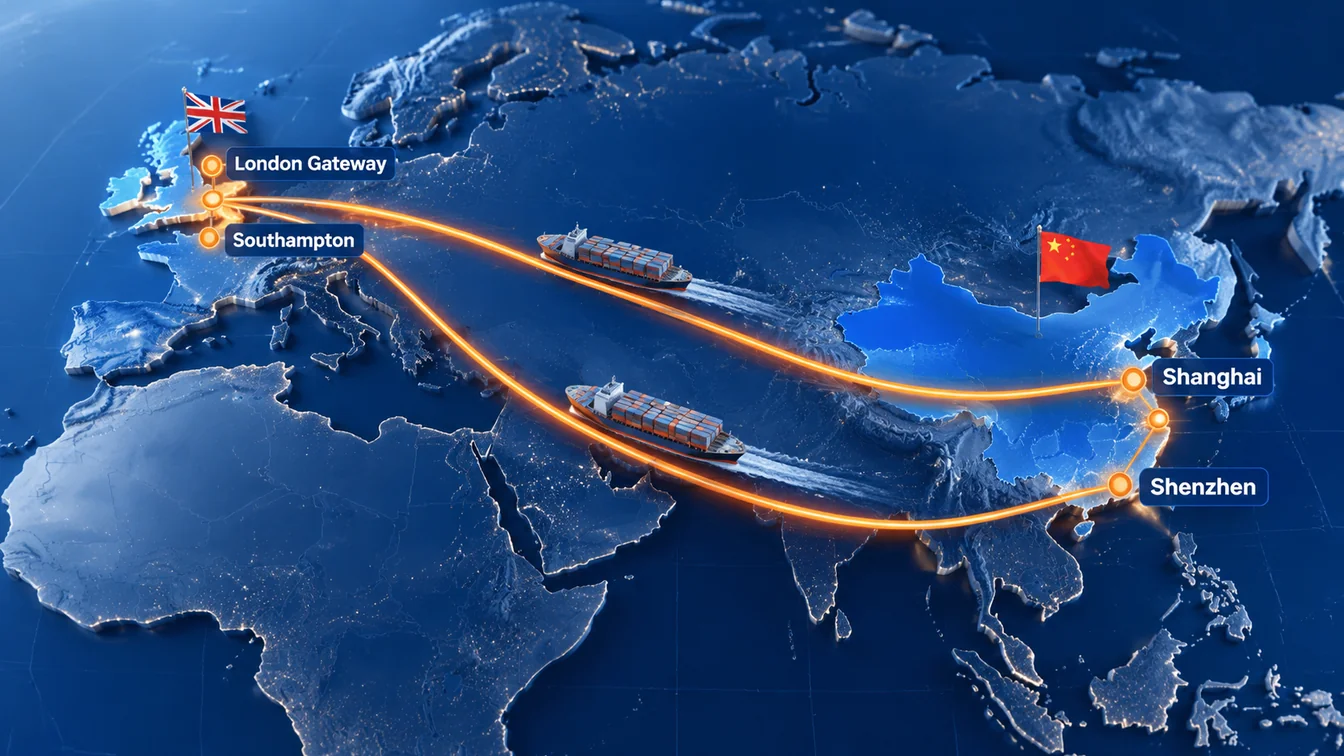
Major China Export Ports for UK Shipping
- Shenzhen (Yantian, Shekou, Nansha)
- The South China manufacturing cluster around Shenzhen, Dongguan, and Guangzhou uses Yantian, Shekou, and Nansha for ocean export to Felixstowe and Southampton. These ports are the practical origin for consumer electronics, general merchandise, and LCL consolidation from Guangdong and nearby provinces; a supplier further inland may need a feeder or truck leg to reach them.
- Shanghai (Yangshan / Waigaoqiao)
- Shanghai is the dominant export gateway for East China suppliers and offers frequent ocean services toward Felixstowe, Southampton, and London Gateway. A Shanghai-origin shipment can also use Pudong airport for air freight to Heathrow when urgency justifies the air option; the ocean and air choices share the same supplier region but differ in cost, transit, and handling.
- Ningbo-Zhoushan
- Ningbo-Zhoushan serves the Zhejiang manufacturing belt and is a high-volume container gateway for UK-bound ocean cargo. Suppliers in Ningbo, Hangzhou, and surrounding areas can often use Ningbo-Zhoushan without a long domestic pre-carriage, and the port’s deep-water terminals handle large container vessels on the Asia–North Europe trade.
- Qingdao
- Qingdao is the natural ocean gateway for Shandong and northern China suppliers and offers sailings toward UK ports including Felixstowe. A Qingdao-origin shipment may have fewer direct UK options than Shanghai or Ningbo, so the route comparison should check whether a direct sailing or a transhipment service gives the better schedule for the required delivery date.
- Xiamen
- Xiamen serves the Fujian cluster and is relevant for suppliers in southeast China that are closer to Xiamen than to Shenzhen or Ningbo. The port can connect to UK gateways through direct or transhipment services, and the planning comparison should weigh the domestic pickup distance against the sailing frequency and transit offered from the larger gateway alternatives.
Major UK Import Ports for Cargo from China
- Port of Felixstowe
- Felixstowe is the UK’s largest container port and handles a large share of Asian container traffic, with direct services from Shanghai, Ningbo, and Yantian. It is the default comparison for deliveries to the Midlands, the North, and London when the carrier’s rotation and inland haulage costs align; the port’s size means more service options but also potential congestion during peak periods.
- Port of Southampton
- Southampton is the UK’s second-largest container terminal and serves southern England, the West Country, and the London area via the south coast. It is a strong alternative when the final delivery is closer to Southampton than to Felixstowe, and it can be compared when Felixstowe’s schedule or congestion makes the south-coast option more practical for the required delivery date.
- London Gateway
- London Gateway is a deep-sea container port on the Thames estuary and has become a credible alternative for London and South East deliveries. It is particularly relevant when the consignee is in London or the surrounding region and the buyer wants to compare a Thames-side entry point against Felixstowe or Southampton for inland haulage distance and delivery timing.
Supplier Region to Destination Routing Logic
| Supplier region in China | Origin port to compare | Destination port and delivery region | Planning reason |
|---|---|---|---|
| Guangdong (Shenzhen, Dongguan, Guangzhou) | Yantian or Shekou | Felixstowe or Southampton; Midlands, North, and London delivery | Start with a direct South China sailing to Felixstowe or Southampton because the supplier-side pre-carriage is short; change the comparison if the final postcode is closer to Southampton or if the carrier’s current rotation offers a better schedule from the other gateway. |
| Zhejiang (Ningbo, Hangzhou, Yiwu) | Ningbo-Zhoushan | Felixstowe or London Gateway; London and South East delivery | Ningbo-Zhoushan is the closest high-volume ocean gateway for Zhejiang suppliers; compare Felixstowe and London Gateway when the final delivery is in London or the South East, because inland haulage distance and port congestion can shift the better total route. |
| Shanghai and Jiangsu | Shanghai (Yangshan) | Felixstowe or Southampton; national distribution | Shanghai offers frequent sailings to both Felixstowe and Southampton; the choice should follow the carrier’s service rotation and the final delivery region rather than assuming one gateway is always faster or cheaper for every postcode. |
| Shandong and North China | Qingdao | Felixstowe; Midlands and North delivery | Qingdao is the natural export port for Shandong suppliers; check whether a direct or transhipment service to Felixstowe gives a workable schedule, and compare the total route if the final delivery is closer to a southern gateway. |
| Fujian (Xiamen, Fuzhou) | Xiamen | Felixstowe or Southampton; national delivery | Xiamen can serve UK gateways through direct or transhipment services; the practical comparison should weigh the shorter domestic pickup against the sailing frequency and transit available from the larger alternative gateways. |
Destination Regional Delivery Logic
- London and the South East
- London and the South East can be served through Felixstowe, Southampton, or London Gateway; London Gateway is often the shortest inland haulage distance for Thames-side postcodes, while Felixstowe and Southampton may offer more sailing choices. The comparison should include the final postcode, the delivery appointment requirements, and the congestion or schedule reliability at the time of booking.
- Midlands and the North
- The Midlands and the North are conventionally served through Felixstowe because the port has strong rail and road connections toward Manchester, Birmingham, Leeds, and Glasgow. Southampton can also work for West Midlands deliveries, and the choice should follow the inland haulage cost and transit from each gateway to the specific postcode rather than a general regional rule.
- South West and Wales
- The South West and south Wales are natural delivery areas for Southampton because the port is on the south coast and reduces the inland distance compared with Felixstowe. A buyer with a Bristol, Cardiff, or Plymouth delivery should compare Southampton first and treat Felixstowe as the alternative when the sailing schedule or freight cost materially favours the east-coast port.
- Scotland and Northern Ireland
- Scotland can be served from Felixstowe via rail or road, and the planning should allow for the longer domestic leg; Northern Ireland movements may require a different customs and transit arrangement because the XI EORI and Windsor Framework rules can apply. The gateway comparison should include the final destination’s postcode and any additional domestic leg or Irish Sea crossing that the delivery scope requires.
How the Gateway Is Selected
- Confirm the supplier’s exact city and the distance to the candidate China export port or airport, because a shorter pre-carriage can make a smaller gateway competitive against a larger but more distant one.
- Compare the current sailing or flight options from the candidate origin gateway to the UK entry gateway that serves the final postcode, because the best gateway is a function of the actual service available on the booking date.
- Check the inland haulage distance and delivery scope from each UK gateway to the consignee or Amazon fulfilment centre, including any appointment, tail-lift, or inside-delivery requirement that changes the final-mile cost.
- Match the cargo dimensions and handling needs to the gateway and mode, because an oversized or dangerous-goods shipment may need a specialist terminal or carrier that is not available at every port.
- Review the total route — origin pickup, international leg, UK clearance, and final delivery — rather than comparing only the ocean or air freight rate, because a lower main-leg cost can be offset by a more expensive or slower inland leg.
UK Customs Clearance
Importing goods into the UK involves the importer of record, accurate declarations, product-specific requirements, supporting documents, and responsibility for duty and import VAT. The rules apply to Great Britain (England, Scotland, and Wales); Northern Ireland movements can involve different arrangements under the Windsor Framework, including the XI EORI where applicable, so the importer should confirm the correct scope before the shipment is dispatched.
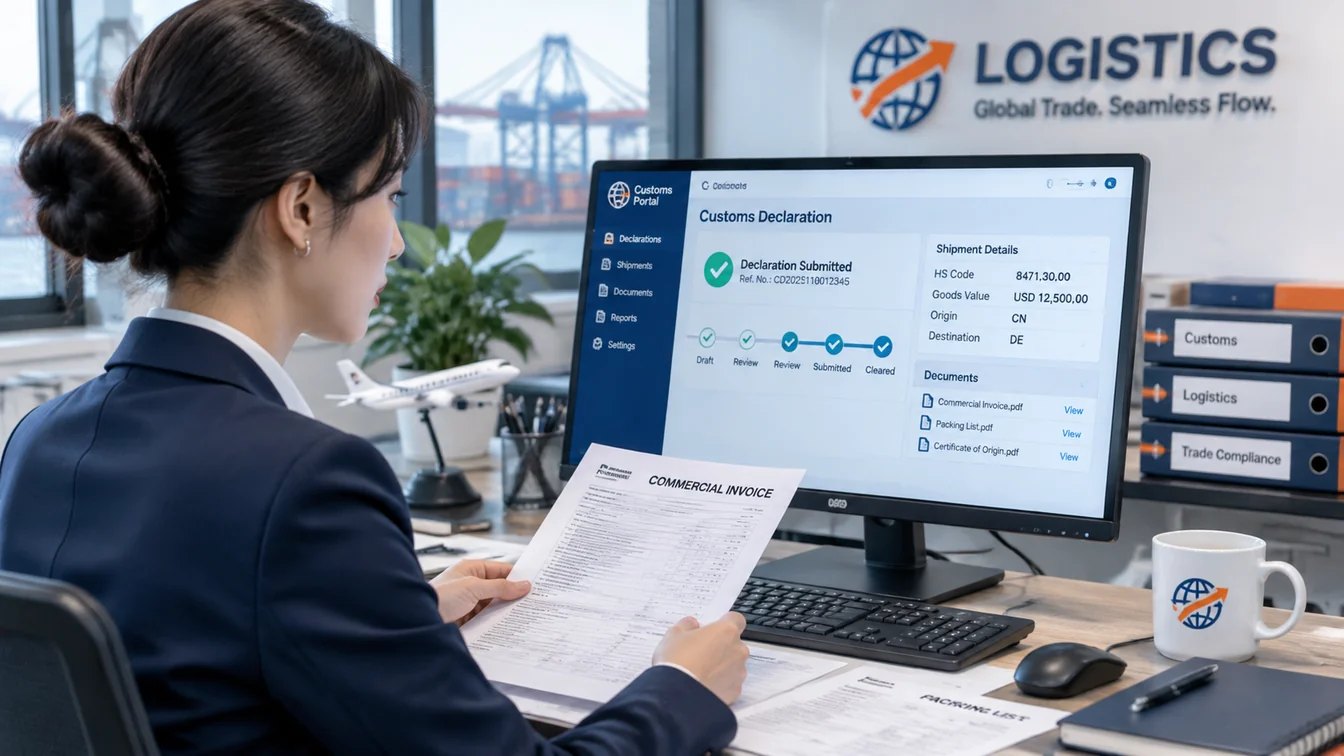
What the UK Importer Normally Needs
A UK commercial import normally requires the following items to be in place before the declaration is lodged. The list is a practical preparation set rather than a complete statement of every product-specific rule.
- GB EORI number A UK EORI starting with GB is required to use HMRC’s customs systems, including CDS; a business not established in the UK may still need a GB EORI for allowed limited customs activities. HMRC EORI guidance explains the registration basis.
- UK VAT registration A VAT-registered importer can use Postponed VAT Accounting to account for import VAT on the VAT Return; a non-established seller using FBA may need to register for UK VAT from the first sale rather than relying on a threshold.
- Commodity code The product’s commodity code determines the duty rate and any product-specific controls; it should be checked in the UK Trade Tariff before the declaration is prepared.
- Customs value evidence The commercial invoice must support the CIF customs value, including the goods value, international freight, and insurance; an inaccurate or unsupported value is a common cause of delay or post-clearance adjustment.
- Commercial invoice and packing list The invoice should show the seller, buyer, goods description, quantity, unit value, total value, currency, origin, and Incoterm; the packing list should reconcile the carton count, dimensions, and weights with the invoice.
- Transport document The bill of lading, air waybill, or multimodal transport document identifies the cargo and the parties and is required to support the import declaration and cargo release.
- Licences and certificates Products such as pharmaceuticals, medical devices, lithium batteries, food, plants, animal products, and wood packaging may require a licence, certificate, or ISPM 15 compliance; the importer should confirm the requirement for the specific commodity code.
- Agent authorization If a customs broker or forwarder is filing the declaration, the importer should provide written instructions and agree the representation terms, because the importer remains responsible for the accuracy of the declaration.
Common Causes of UK Customs Delays
- An incorrect or unsupported commodity code, which can change the duty rate or trigger a product-specific control that was not anticipated.
- An inaccurate customs value or an invoice that does not reconcile with the freight and insurance components of the CIF value.
- Missing licences, certificates, or ISPM 15 evidence for regulated goods or wood packaging.
- A mismatch between the invoice, packing list, and transport document, such as a different quantity, description, or consignee.
- An importer without a valid GB EORI or without the correct representation authority for the customs broker.
- An Amazon FBA shipment that names the fulfilment centre as the importer of record, which Amazon does not accept and which can lead to refusal or return.
- Incomplete or inconsistent origin evidence where a preferential rate or trade measure is being claimed.
These issues should be resolved before the cargo departs China, because correcting a declaration after arrival can add storage, examination, or demurrage cost and can delay final delivery.
Shipping to Amazon FBA UK
Amazon UK operates a fulfilment network that receives inventory from China, but Amazon does not act as the importer of record for FBA shipments. The seller is the importer of record for inventory sent to Amazon fulfilment centres, which means the seller must hold a GB EORI, maintain a valid UK VAT registration where required, and ensure the customs declaration names the seller rather than Amazon. Amazon’s Seller Central guidance states that the seller is the importer of record for all shipments into Amazon fulfilment centres, and a shipment that names an Amazon fulfilment centre as the importer of record can be refused.
An FBA shipment to the UK therefore needs the same customs preparation as any commercial import, plus Amazon-specific requirements: a shipment plan and carton labelling that match the assigned fulfilment centre, a commercial invoice and packing list that are consistent with the shipment plan, and a delivery arrangement that meets the centre’s appointment and receiving requirements. The seller should also confirm product eligibility and any category-specific documentation before the inventory is shipped, because a product that cannot be listed or received at the centre creates a cost without a sale. Amazon FBA shipping support and DDP shipping are relevant service scopes when the seller wants the forwarder to coordinate the import and delivery under an agreed boundary.
Special Cargo, Packaging, and Insurance
Cargo Requiring Additional Review
- Lithium batteries and battery-powered devices, which may require dangerous-goods documentation, a UN38.3 test summary, and mode-specific packaging.
- Dangerous goods, chemicals, and liquids, which may be restricted or prohibited by air or ocean carrier rules and may require a safety data sheet and specialist packing.
- Food, cosmetics, and medical goods, which can require product registration, labelling, or health certificates before UK entry.
- Wood packaging, which must meet ISPM 15 heat-treatment or fumigation standards and display the correct mark.
- Oversized or heavy cargo, which may need flat-rack, open-top, or break-bulk handling and a delivery vehicle that can access the receiving site.
- Temperature-controlled cargo, which requires a validated cold chain and a carrier that can maintain the temperature through the China origin, international leg, UK clearance, and final delivery.
- Controlled goods, which may require an import licence or end-use certificate and should be reviewed before the booking is confirmed.
Packaging Checks
Packaging for a China-to-UK shipment must survive ocean or air handling, terminal transfer, customs examination, and final delivery, so the carton strength, internal protection, and pallet configuration should match the mode and the cargo. A shipment that is packed only for a clean warehouse-to-warehouse move may not survive a multi-handling sea route or an LCL consolidation and deconsolidation cycle.
- Use cartons with sufficient burst strength for the stacked load and the expected handling, and avoid reusing weak or damaged cartons for export.
- Protect the contents with internal cushioning, dividers, or moulded packaging that prevents movement inside the carton during transit.
- Use pallets that are sound, dry, and compatible with the receiving site’s forklift or pallet-truck access; confirm whether the consignee can accept a palletised delivery.
- Add moisture protection where the route or the cargo is sensitive to humidity, particularly for LCL cargo that may be handled in a shared container.
- Apply handling marks, carton labels, and any Amazon FBA labels in the format required by the consignee or marketplace.
- Record the carton dimensions and weights accurately, because dimensional weight can determine the chargeable weight for air and express and can affect the LCL chargeable volume.
- Use ISPM 15-compliant wood packaging where solid wood is used, and keep the treatment evidence available for customs or carrier inspection.
Cargo Insurance
Carrier liability is not the same as cargo insurance: a carrier’s liability is typically limited by the convention or terms applicable to the mode, and it may not cover the full commercial value of the goods. Cargo insurance can cover loss or damage within the policy terms, but the coverage, exclusions, deductible, insured value, evidence requirements, and claim period must be confirmed before the shipment departs. Cargo insurance should be arranged for high-value or fragile cargo, and the policy should be aligned with the Incoterm and the agreed delivery scope.
Why Use a Freight Forwarder for Shipping from China to the UK?
A freight forwarder helps the buyer turn cargo facts into a workable shipment definition, select a credible route, and keep the commercial and operational handoffs aligned. The three customer-facing entries below explain how that support applies to the China-to-UK route, and the workflow that follows shows how TJ Logistics Team approaches the planning sequence.
- Defining the shipment from incomplete or mixed inputs
- A buyer may know the product and the supplier but not the chargeable weight, the suitable container size, or the customs value basis; a forwarder helps convert those facts into a movement definition that can be compared across modes. The definition changes when the cargo is reclassified, when the supplier’s packaging changes the dimensions, or when the delivery scope adds a requirement that was not part of the original request.
- Matching the route to the origin, cargo, and final delivery
- A forwarder compares the China origin gateway, the international mode, the UK entry gateway, and the final-delivery requirement so that the chosen route is workable from end to end rather than optimised for one leg only. The match changes when the final postcode is outside the natural delivery zone, when a carrier’s schedule shifts, or when the cargo needs a specialist handling arrangement that is not available on the first-choice route.
- Keeping commercial and operational handoffs coordinated
- A forwarder helps the importer, supplier, carrier, customs broker, and delivery party understand who is responsible for the next action, so that a document gap or a missed appointment does not become a customs delay or a failed delivery. The coordination changes when the importer appoints a different customs representative, when the supplier misses a document deadline, or when the receiving site changes its delivery requirements.
How TJ Logistics Team Plans a China-to-UK Shipment
- Shipment definition review
- TJ Logistics Team reviews the product, commodity code, value, dimensions, weight, supplier location, required delivery date, and final postcode, and flags any missing input that would prevent a reliable mode or route comparison. The review may request the supplier’s packing list, the invoice draft, or a product specification before the next step.
- Transport and gateway comparison
- TJ Logistics Team compares the credible sea, air, express, and rail-led options against the shipment definition, including the China origin gateway, the UK entry gateway, the planning transit, and the final-delivery scope. The comparison records the conditions that could change the recommendation, such as schedule availability, cargo limits, or destination handling requirements.
- Service boundary and responsibility record
- TJ Logistics Team records the agreed service boundary — including origin pickup, export handling, international transport, UK customs clearance, duty and tax, and final delivery — and identifies the parties responsible for the next handoffs before a formal commercial arrangement is prepared. This step does not commit the buyer to a booking; it clarifies what is included and what remains outside the scope.
- Booking and operational coordination
- After the buyer confirms the agreed scope, TJ Logistics Team coordinates the booking information, commercial documents, cargo handoff, and the next operational decision if timing, route, documents, or receiving conditions change. The coordination may involve the customs brokerage and door-to-door service scopes where those are part of the agreed arrangement.
China to UK Shipping FAQ
How much does a 20ft container from China to the UK cost?
A 20GP container from Shenzhen to Felixstowe is listed at $2,490 per container for the November 2026 review, with a 35-day planning transit. The 40GP and 40HQ on the same route are listed at $3,845 per container with the same 35-day transit. These are indicative shipping costs for the named route and unit, not carrier freight rates or binding quotations; the actual booking, cargo, and agreed service scope determine the commercial arrangement.
How long does sea freight from China to the UK take?
Sea freight from Shenzhen to Felixstowe is listed at 35 days for FCL, and LCL from South China to Felixstowe or Southampton is listed at 35–45 days. The LCL range reflects the additional consolidation and deconsolidation time; the FCL figure is a port-to-port planning reference for the named route, and the door-to-door time will also depend on supplier pickup, UK customs clearance, and final delivery.
What is the most cost-effective way to ship from China to the UK?
Sea freight is normally the cost-effective default for palletised or container-load cargo where a 35-day ocean transit is acceptable, because the per-unit cost of a 20GP, 40GP, or 40HQ container is usually lower than air or express for that volume. LCL can be cost-effective for smaller sea-freight-appropriate shipments, and rail-led multimodal can sit between sea and air on both cost and time for London-area delivery. The cost-effective choice changes when the cargo is too small for a container, when urgency justifies air or express, or when the final delivery is outside the natural delivery zone of the sea gateway.
Which China port is best for shipping to the UK?
The practical default is the closest major export gateway to the supplier that has a suitable service toward the relevant UK entry area: South China suppliers normally compare Yantian or Shekou, East China suppliers compare Ningbo-Zhoushan or Shanghai, and Shandong suppliers compare Qingdao. The best port changes when the final postcode is closer to a different UK gateway, when the carrier’s current rotation favours another origin port, or when the cargo needs specialist handling that is not available at the nearest port. No single China port is universally best for every UK shipment.
Can I ship door-to-door from China to the UK?
Door-to-door shipping from China to the UK is available as a service scope when the forwarder is engaged to coordinate origin pickup, export handling, international transport, UK customs clearance, duty and tax, and final delivery. The service boundary should state whether the final delivery includes unloading, whether the receiving site requires an appointment, and whether the delivery postcode is within the standard haulage area; a delivery to an Amazon FBA centre adds marketplace-specific labelling and appointment requirements.
What documents should be prepared before shipping from China to the UK?
A UK-bound commercial shipment normally needs a GB EORI, a commodity code, a commercial invoice, a packing list, and a transport document, plus any licence or certificate required for the specific product. The invoice and packing list should reconcile with each other and with the transport document, and the customs value should be supported on a CIF basis. If a customs broker is filing the declaration, the importer should provide written instructions and agree the representation terms before the cargo arrives.
Why can two China-to-UK shipping costs differ?
Two China-to-UK shipping costs can differ because the quotes may cover different routes, methods, units, or service scopes — for example, a 20GP port-to-port rate from Shenzhen to Felixstowe is not directly comparable with a per-CBM LCL rate from South China, a per-kilogram air rate from PVG to LHR, or a door-to-door quote that includes UK duty and final delivery. The comparison should confirm the origin gateway, destination gateway, chargeable quantity, transit basis, and inclusion or exclusion of customs, duty, tax, and inland delivery before treating two figures as alternatives.