

Reviewed by TJ Logistics Team — November 2026. This route page reflects practical route-planning checks across China supplier pickup, origin gateway and mode selection, India customs handoff, and final delivery, with market, cost, tariff, and marketplace information reviewed for the current month. Shipping conditions, carrier schedules, and regulatory requirements can change; use the references as planning inputs and confirm the agreed scope before dispatch.
Shipping from China to India: Route Update
A Shanghai-to-Nhava Sheva FCL 20GP booking is currently referenced at $585–$990 per container with an 18–22 day planning transit, making ocean freight the default starting point for non-urgent, volume-bearing cargo from China to India. That reference applies to the named port pair and container size only, and the final choice still depends on supplier location, cargo readiness, destination delivery postcode, and the import documentation set that the India-side importer can produce before cargo arrival.
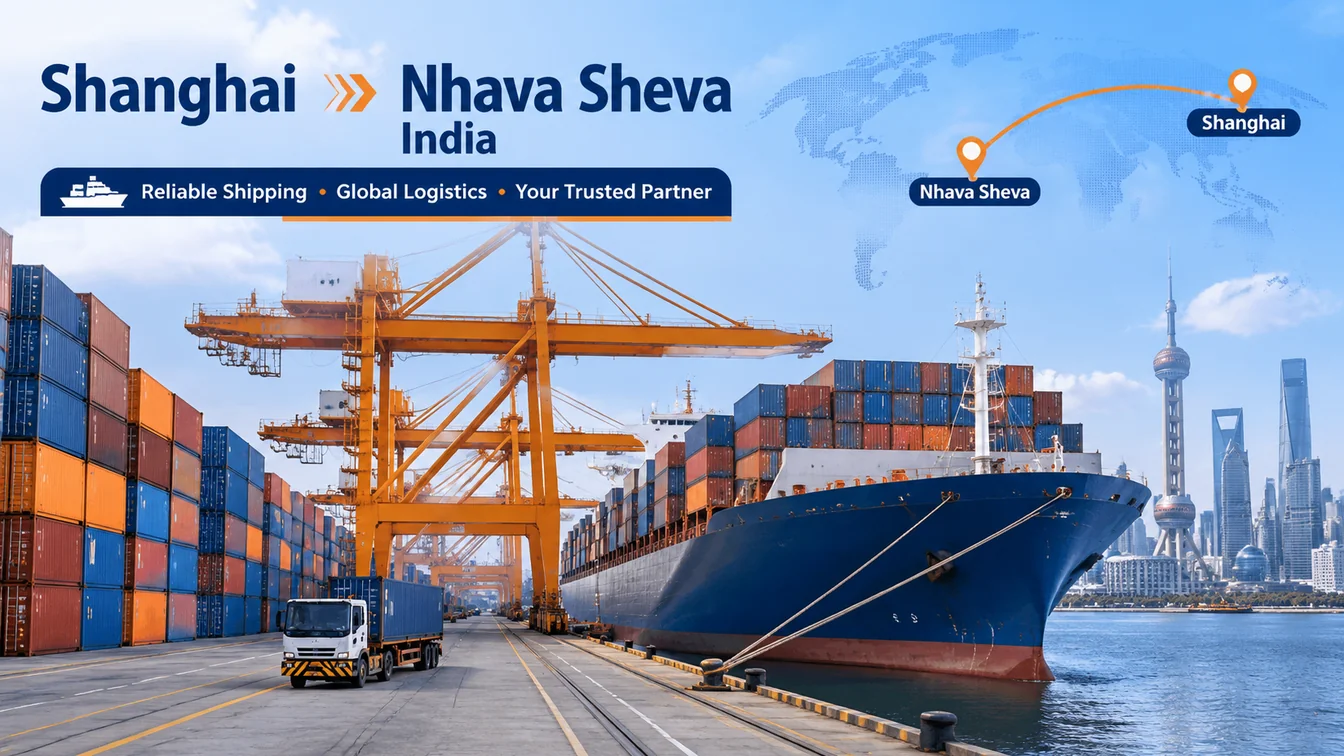
For time-sensitive shipments, air freight from China to India is referenced at $6.50–$8.00/kg with a 3–7 day transit, while express sits at $7.00–$12.00/kg for smaller, time-critical parcels. The practical route normally runs from a China supplier through an origin seaport or airport, across the applicable international leg, into an India gateway such as Nhava Sheva or an air cargo terminal, through customs clearance on ICEGATE, and onward to the importer’s warehouse or Amazon fulfillment center. Sea freight and air freight are the two primary mode decisions on this lane.
Route Planning Summary
- How does cargo move from a China supplier to the first India gateway?
- The supplier’s province determines the practical China export port: Shanghai and Ningbo serve central and eastern China, Shenzhen and Guangzhou serve South China, and Qingdao serves northern suppliers. Cargo moves by truck or rail to the chosen origin port, loads onto an ocean vessel for the India west coast or east coast, and the first India handoff normally occurs at Nhava Sheva (JNPT) for Mumbai and northern hinterlands, or Chennai for South India.
- Which transport mode fits a China-to-India shipment?
- FCL or LCL ocean freight is the default for planned, volume-bearing cargo, while air freight and express fit urgent or high-value shipments that justify the higher per-kilogram cost. The deciding condition is whether the shipment’s urgency and value per kilogram outweigh the lower per-unit ocean cost, not a universal weight threshold.
- How long should a China-to-India shipment be planned to take?
- The supplied ocean reference for Shanghai to Nhava Sheva is 18–22 days for FCL and 20–28 days for LCL, while air freight is 3–7 days and express is 3–6 days. These are port-to-port or airport-to-airport planning references; India customs clearance and inland delivery to the final postcode add time that the table does not state.
- Who is responsible for India import clearance?
- The India importer of record is responsible for filing the Bill of Entry on ICEGATE and paying assessed duties and taxes. A foreign seller without an Indian entity normally needs a local importer or a service arrangement that clearly assigns the importer-of-record role, IEC, and GST responsibility before cargo departs China.
- What does final delivery cover on a China-to-India route?
- Final delivery scope depends on the agreed service boundary: port-to-port ends at the India gateway, while door-to-door adds destination clearance, inland transport, and delivery to the consignee’s postcode. The consignee’s delivery region and postcode determine whether the last leg runs from Nhava Sheva by road into Maharashtra, by rail to an inland container depot such as Tughlakabad, or through Chennai for South India.
China to India Shipping Cost
The table below provides route-specific indicative shipping costs and planning transit references for the current November 2026 review.

Each reference applies to the named route, method, and unit shown; it is a planning figure, not a carrier rate or a formal quotation for a specific cargo.
| Shipping route | Shipping method | Price | Transit time |
|---|---|---|---|
| Shanghai, China → Nhava Sheva (JNPT), India | FCL 20GP | $585–$990/柜 | 18–22 days |
| Shanghai, China → Nhava Sheva (JNPT), India | FCL 40GP | $945/柜 | 18–22 days |
| Shanghai, China → Nhava Sheva (JNPT), India | FCL 40HQ | $1,350–$2,160/柜 | 18–22 days |
| Shanghai, China → Nhava Sheva (JNPT), India | LCL | $36–$54/CBM | 20–28 days |
| China → India | Air freight | $6.50–$8.00/kg | 3–7 days |
| China → India | Express | $7.00–$12.00/kg | 3–6 days |
Cost scope: The indicative cost references above apply to the route, method, and unit shown; they are not carrier freight rates, market averages, TJ selling prices, or binding quotations. The actual booking, cargo characteristics, and agreed service scope determine the commercial arrangement, including responsibility for relevant pickup, handling, customs clearance, duty and tax, inland delivery, insurance, storage, examination, appointment, and surcharge items.
India Import Duty and Taxes
India import duty is not a single rate; the amount depends on the commodity’s ITC-HS classification, the customs assessable value, the country of origin, applicable trade measures, and current tariff notifications.
- Basic Customs Duty (BCD) applies at the rate in the First Schedule to the Customs Tariff Act, 1975, or a lower effective rate notified by the Central Government, on the assessable value of the goods. As of the November 2026 review, BCD rates vary by ITC-HS line and are not uniform across product categories.
- Social Welfare Surcharge (SWS) is charged at 10% of the BCD amount for most goods, adding a second layer to the duty stack. Some categories carry exemptions or different treatment, so the SWS should be checked against the specific ITC-HS code.
- Integrated GST (IGST) applies on the aggregate of the assessable value, BCD, and SWS, at rates that commonly fall at 5%, 12%, 18%, or 28% depending on the goods. IGST is creditable against the importer’s GST liability, unlike BCD and SWS.
- Agriculture Infrastructure and Development Cess (AIDC) applies only to specified goods and is not a general levy; whether it applies to a particular shipment must be confirmed against the current tariff notification for the ITC-HS code.
- Trade remedy duties, such as anti-dumping duty, apply only where notified for a specific origin and product, and are separate from the standard duty stack. The importer’s customs broker should verify whether any trade remedy measure covers the shipment before the Bill of Entry is filed on ICEGATE.
This explanation is simplified and is not tax or legal advice. Duty and tax outcomes depend on the importer’s declarations and the customs officer’s assessment; current official guidance from the Central Board of Indirect Taxes and Customs and the applicable tariff notifications should be checked before entry.
China to India Shipping Time
The most commercially relevant ocean timing reference on this lane is Shanghai to Nhava Sheva FCL at 18–22 days, which sets the baseline planning window for full-container cargo moving into Maharashtra and the northern hinterland.
LCL from Shanghai to Nhava Sheva is referenced at 20–28 days, reflecting the additional consolidation and de-consolidation steps that a less-than-container load normally carries. Air freight from China to India is referenced at 3–7 days, and express at 3–6 days, but those windows cover the airport-to-airport or express-network leg only; India customs clearance and final delivery to the consignee’s postcode sit outside those figures.
Supplier pickup in China, origin port handling, vessel schedule, India port dwell time, and the importer’s readiness to file the Bill of Entry all sit around the supplied ocean transit value. The practical planning decision is not to extend or average the supplied numbers, but to add explicit buffer for the customs and inland legs when the final delivery postcode is outside the gateway city.
Shipping Methods from China to India
- Choose FCL when the shipment fills or nearly fills a 20GP, 40GP, or 40HQ container
- FCL suits planned inventory replenishment, machinery, and cartons that would otherwise incur LCL consolidation and destination handling charges. The practical reason is that the container stays sealed from the China origin port through the India gateway until customs clearance, which reduces handling and cargo-mixing risk. The changing condition is the shipment’s volume-to-value ratio: below a certain cube, LCL may be the more practical route even before comparing the per-CBM reference to the container price.
- Choose LCL when the cargo measures a few cubic meters and does not justify a full container
- LCL from Shanghai to Nhava Sheva is referenced at $36–$54/CBM with a 20–28 day transit. It fits smaller commercial orders, samples, and mixed-carton shipments, but the trade-off is consolidation time at origin, de-consolidation at destination, and the possibility of cargo being co-loaded with other shippers’ goods. The condition that can change the decision is the India importer’s ability to clear LCL cargo from a container freight station without delays that would erase the ocean-cost saving.
- Choose air freight when the shipment’s urgency or value per kilogram justifies the higher cost
- Air freight from China to India is referenced at $6.50–$8.00/kg with a 3–7 day transit, and it fits launch stock, urgent top-ups, and compact high-value goods where an ocean delay would cost more than the air premium. The changing condition is chargeable weight: air freight prices against volumetric or actual weight, whichever is higher, so a light but bulky shipment can price differently from its physical weight suggests. Air freight planning should start from the cargo’s chargeable weight and the consignee’s ability to clear at the arrival airport.
- Choose express when the parcel is small, time-critical, and needs a simplified handoff
- Express from China to India is referenced at $7.00–$12.00/kg with a 3–6 day transit, and it fits documents, samples, and small parcels that do not justify a separate air cargo file. The changing condition is the commodity’s regulatory status: express does not remove the need for an IEC, GSTIN, and a compliant declaration, so a product that requires BIS certification or another Indian regulatory approval will still be held even on an express service. Express shipping is a handoff choice, not a compliance shortcut.
Door-to-Door Shipping from China to India
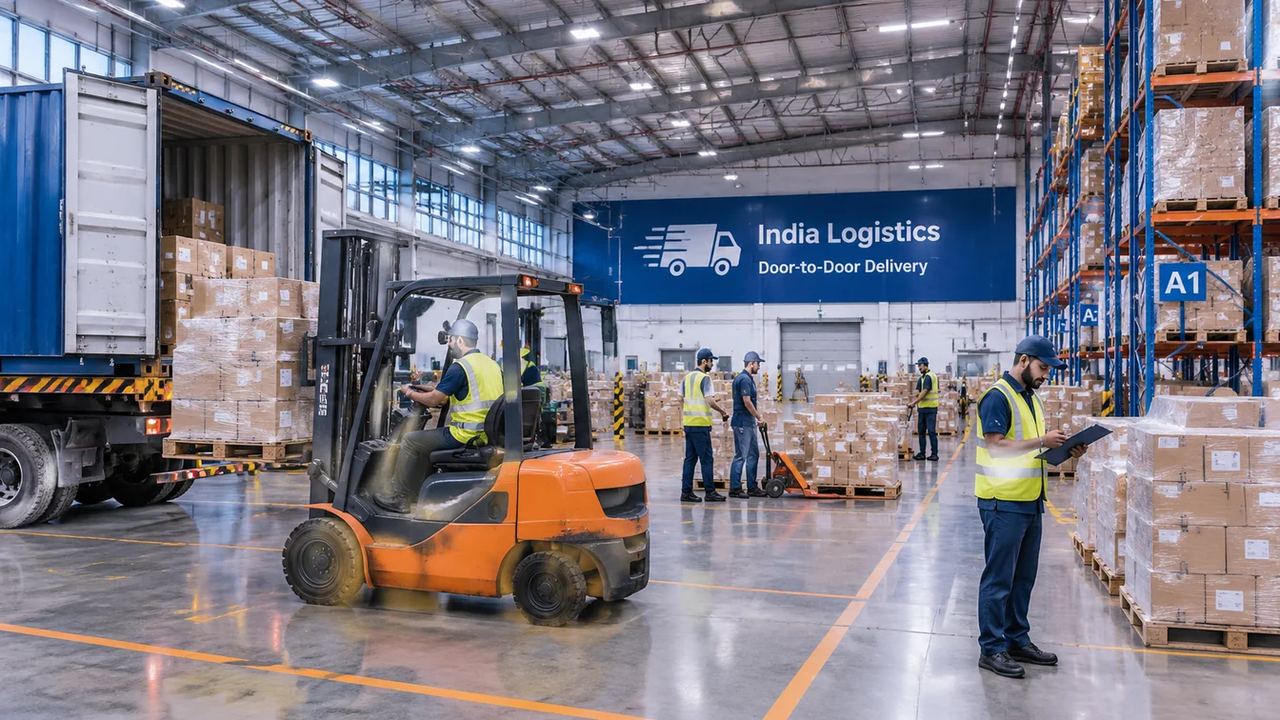
A door-to-door China-to-India movement links supplier pickup, China export handling, the international leg, India import clearance, and final delivery into one planned sequence, but the service boundary must be written down before booking because the importer of record and the delivery endpoint do not sit inside the transport leg by default.
-
Cargo and Compliance Review
The shipment’s ITC-HS classification, declared value, product certifications, and importer-of-record details are reviewed before the mode or gateway is fixed. A product that requires BIS certification, a WPC approval, or another Indian regulatory clearance cannot be treated as a standard ocean or air booking, because the approval sits outside the transport file and can hold the cargo at the gateway even after the vessel or flight arrives.
-
Route and Method Selection
The practical route is selected by matching the supplier’s province to a China export port, the cargo’s urgency and volume to FCL, LCL, air, or express, and the India consignee’s postcode to an entry gateway that can reach the final delivery region without an unnecessary inland leg. Shanghai to Nhava Sheva is the default ocean comparison for central and eastern China suppliers serving Maharashtra and northern India, while South China suppliers and South India consignees may compare a different origin port and Chennai or another east-coast gateway.
-
Supplier Coordination and Pickup
The supplier’s readiness date, carton count, gross and net weight, CBM, and loading location are confirmed before a pickup or origin haulage is arranged. A supplier in Zhejiang or Jiangsu normally feeds Shanghai or Ningbo, a supplier in Guangdong normally feeds Shenzhen or Guangzhou, and a northern supplier may feed Qingdao; the pickup plan should follow the supplier’s actual loading address rather than a province-level assumption.
-
China Export Handling
Export declaration, origin terminal handoff, and the transport document are prepared on the China side before the vessel or flight departs. The commercial invoice, packing list, and bill of lading or airway bill must agree on the consignee, the goods description, and the declared value, because India customs compares those documents against the Bill of Entry at the destination.
-
International Transportation
The ocean leg moves the container or LCL cargo from the China origin port to the India gateway, while air and express move the shipment through an airport or courier network. The supplied transit references apply to this leg, and the operational decision during this stage is to keep the arrival notice, the transport document release status, and the importer’s document readiness aligned so that clearance can start as soon as the cargo is available.
-
India Import Clearance
The India importer of record files the Bill of Entry on ICEGATE and pays the assessed BCD, SWS, and IGST before the goods are released for home consumption. The importer’s IEC and GSTIN must match the consignee details on the transport document and invoice; a foreign seller without an Indian entity normally cannot act as the importer of record on its own, so the clearance handoff needs a named Indian importer or a clearly scoped service arrangement.
-
Final Delivery
The released cargo moves from the India gateway to the consignee’s warehouse or fulfillment center by road or rail, depending on the destination postcode and the gateway’s inland connections. Nhava Sheva feeds Maharashtra and the northern hinterland through road and rail links including inland container depots, while Chennai feeds Tamil Nadu and South India; the final delivery scope should state whether the carrier or the consignee arranges this leg.
-
Shipment Close-Out
Proof of delivery, the out-of-charge status, and the commercial documents are reconciled after final delivery so that the importer retains a clean record for GST credit and future customs audits. Any damage, short-landing, or customs query that remains open at this stage should be documented before the file is closed, because the evidence window for a cargo claim or a reassessment can close earlier than the commercial relationship does.
Main China to India Routes
The most practical China-to-India route normally starts at a China export gateway that limits supplier-side movement while fitting the India destination region and the importer’s clearance capability. That comparison can change when the supplier’s actual loading address is far from the assumed port, when the India consignee’s postcode is closer to an east-coast gateway than a west-coast one, or when equipment availability at a preferred terminal is constrained.
Major China Export Ports for India Shipping
- Shanghai
- Shanghai serves suppliers across Jiangsu, Zhejiang, and the Yangtze River Delta and is the origin port in the supplied Shanghai–Nhava Sheva cost reference. It offers frequent ocean services toward India’s west coast and is a practical comparison point for FCL and LCL cargo originating in central and eastern China, but the supplier’s actual distance to Shanghai versus Ningbo should be checked before fixing the origin port.
- Ningbo-Zhoushan
- Ningbo-Zhoushan is a deep-water container hub in Zhejiang that serves many of the same eastern China supplier clusters as Shanghai and is a credible alternative origin port when Shanghai terminal schedules or space availability push a booking elsewhere. For India west-coast cargo, Ningbo is a normal comparison against Shanghai, especially when the supplier is located in Zhejiang or southern Jiangsu.
- Shenzhen/Yantian
- Shenzhen/Yantian serves Guangdong and South China suppliers, including electronics and consumer-goods clusters, and is a practical origin for cargo moving toward India’s west or east coast depending on the carrier rotation. South China suppliers should compare Shenzhen against Guangzhou before defaulting to a Shanghai origin that adds unnecessary inland haulage.
- Qingdao
- Qingdao serves Shandong and northern China suppliers and is a relevant origin port for cargo that would otherwise move south to Shanghai or Ningbo. It is a practical comparison for northern suppliers shipping to India’s west coast, but the vessel schedule and the specific India gateway rotation should be checked because Qingdao’s India service pattern is not identical to Shanghai’s.
Major India Import Ports for Cargo from China
- Nhava Sheva (JNPT)
- Nhava Sheva is India’s largest container gateway and the default entry point for cargo destined for Maharashtra, Madhya Pradesh, and much of northern India, including Delhi NCR through rail-linked inland container depots. It is the destination port in the supplied cost reference and should be compared first for China-origin FCL and LCL cargo with a western or northern India delivery postcode.
- Mundra
- Mundra is a private deep-water port in Gujarat and India’s second major container hub, serving Gujarat, Rajasthan, and northwestern India. It is a practical comparison for cargo whose final delivery is closer to Ahmedabad or northwestern India than to Mumbai, and it can offer an alternative when Nhava Sheva terminal or landside conditions are constrained.
- Chennai
- Chennai anchors South India and serves Tamil Nadu’s automotive, electronics, and manufacturing clusters, making it the natural comparison for China-origin cargo with a South India delivery postcode. For suppliers loading in southern China, Chennai can also offer a shorter sailing distance than the west-coast gateways, but the inland delivery cost to the final postcode should be compared rather than assuming the closer port is cheaper.
Supplier Region to Destination Routing Logic
| Supplier region in China | Origin port to compare | Destination port and delivery region | Planning reason |
|---|---|---|---|
| Jiangsu, Zhejiang, and Shanghai | Shanghai or Ningbo-Zhoushan | Nhava Sheva (JNPT), then Maharashtra or Delhi NCR by road or rail | This pattern keeps the supplier’s inland haulage short and uses the most frequent China–India west-coast services; it can change if the India consignee’s postcode is closer to Mundra or if Ningbo offers a better equipment fit for the cargo. |
| Guangdong and South China | Shenzhen/Yantian or Guangzhou | Chennai for Tamil Nadu and South India, or Nhava Sheva for western and northern India | South China suppliers gain a shorter sailing to Chennai than to Nhava Sheva, but the final delivery region decides whether the east-coast gateway or the west-coast gateway produces the lower landed route; the comparison should include inland cost, not only ocean transit. |
| Shandong and northern China | Qingdao | Nhava Sheva (JNPT) or Mundra, with onward delivery to northern or western India | Qingdao avoids sending northern cargo south to Shanghai before it sails west, but the India gateway choice still depends on the consignee’s delivery region and the vessel rotation available at the time of booking. |
| Fujian and eastern Guangdong | Xiamen or Shenzhen/Yantian | Chennai or Nhava Sheva, depending on the final delivery postcode | Fujian suppliers can compare Xiamen and Shenzhen for the China leg, while the India gateway decision follows the same postcode logic: Chennai for South India and Nhava Sheva for western or northern India, subject to current schedule and inland-cost checks. |
Destination Regional Delivery Logic
- Western India and Maharashtra
- Nhava Sheva is the natural gateway for Mumbai, Pune, and much of Maharashtra, with road and rail links feeding the state and the northern hinterland. The delivery decision is whether the consignee’s postcode is served directly by road from the port or requires an inland container depot handoff; that choice changes the clearance location and the final delivery timeline.
- Northern and Central India
- Delhi NCR and central India are commonly served through Nhava Sheva and rail-linked inland container depots such as Tughlakabad and Dadri, or through Mundra for northwestern postcodes. The practical comparison is rail versus road from the gateway, because the port-to-door leg can be longer than the ocean leg and the inland container depot may become the effective customs point.
- South India and Tamil Nadu
- Chennai is the primary gateway for Tamil Nadu and South India, and it can be the better entry point for cargo originating in southern China. The delivery decision is whether the consignee is in the Chennai metro, where road delivery is direct, or further inland in Karnataka or Telangana, where the inland leg and the possible use of an alternate gateway should be compared.
- Gujarat and Northwestern India
- Mundra serves Gujarat, Rajasthan, and northwestern India, and it can be a practical alternative to Nhava Sheva when the consignee’s postcode is closer to Ahmedabad or the Gujarat industrial belt. The comparison should include current terminal conditions and inland haulage availability, because a port that is geographically closer can still produce a higher landed route if the landside evacuation is constrained.
How the Gateway Is Selected
The India gateway is selected by working backward from the consignee’s final delivery postcode, then comparing that gateway against the China origin port and the available service pattern.
- Confirm the consignee’s postcode and the delivery region first; Nhava Sheva, Mundra, and Chennai serve materially different inland directions, and the closest port on a map is not automatically the lowest-cost or fastest final-delivery option.
- Match the supplier’s actual loading address to a China origin port; a Zhejiang supplier feeding Ningbo instead of Shanghai can reduce origin haulage, while a Guangdong supplier should compare Shenzhen and Guangzhou before defaulting to an eastern port.
- Check whether the shipment’s equipment needs, such as a 40HQ or a temperature-controlled container, are available at the shortlisted origin and destination terminals before fixing the route.
- Confirm the importer’s clearance capability at the proposed gateway; an inland container depot clearance may be more practical than a port clearance for a northern India consignee, but it depends on the importer’s registration and the customs broker’s coverage.
India Customs Clearance
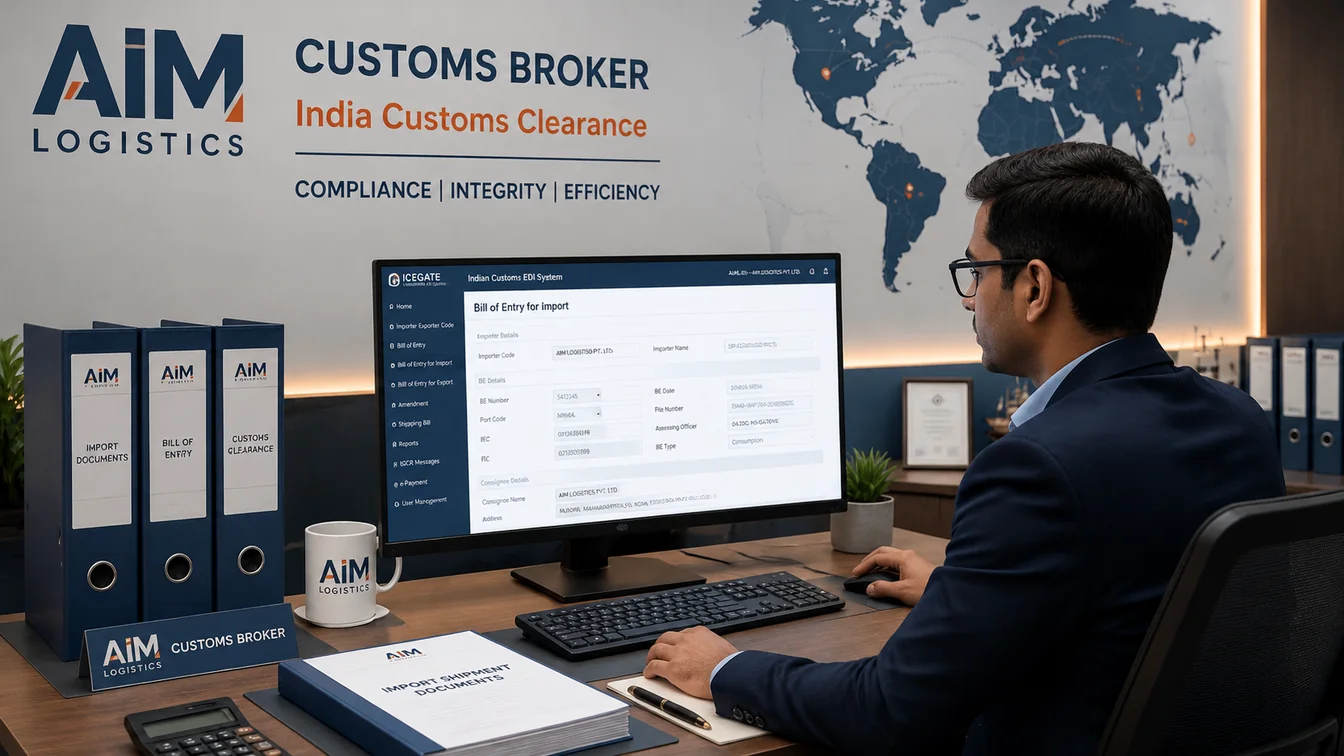
Importing goods into India involves a named importer of record, an accurate Bill of Entry filed on the customs electronic gateway, product-specific regulatory approvals where applicable, and payment of assessed duties and taxes before the goods are released for home consumption.
The rules described here apply to the customs territory of India as administered by the Central Board of Indirect Taxes and Customs. Special economic zones, export-oriented units, and certain notified areas can carry different procedural treatment, so the importer’s registration category should be checked against the specific entry point before the shipment is cleared.
What the India Importer Normally Needs
The India importer of record normally needs a valid Importer-Exporter Code, active GST registration, and a document set that ties the commercial transaction to the transport document and the customs declaration. Mumbai Customs guidance confirms that the Bill of Entry is filed electronically on ICEGATE by the importer or an authorised customs broker, with supporting documents uploaded through the e-Sanchit repository.
- Importer-Exporter Code (IEC) A 10-character code issued by the Directorate General of Foreign Trade; it is mandatory for commercial import activity, and the importer’s IEC must appear on the customs filing.
- GST registration and GSTIN The importer’s Goods and Services Tax identification is required for the Bill of Entry and for claiming input tax credit on the IGST paid at import; a foreign seller without an Indian GSTIN normally cannot act as the importer of record.
- Bill of Entry The primary customs declaration, filed electronically on ICEGATE; it carries the ITC-HS classification, declared value, duty calculation, and importer details that customs assesses.
- Commercial invoice and packing list The invoice states the transaction value, currency, Incoterm, buyer and seller, and goods description, while the packing list states carton count, weights, and dimensions; both must agree with the Bill of Entry.
- Bill of lading or airway bill The transport document identifies the consignee and the cargo and must be released or endorsed in a form that customs accepts before the goods can be cleared.
- Regulatory approvals and certificates Where the product falls under a Quality Control Order, BIS certification, WPC approval, or another Indian regulatory regime, the applicable certificate or licence must be in place before clearance; the scope is product-specific.
- Customs broker authorisation If the importer uses a licensed customs broker to file and clear, the authorisation and the broker’s details must be recorded so that the filing and the duty payment are properly attributed.
- Insurance certificate where applicable A cargo insurance certificate is normally requested where the sale terms or the importer’s internal controls require insured transit; it is separate from the transport document and from carrier liability.
Common Causes of India Customs Delays
- An ITC-HS classification on the commercial invoice, packing list, and Bill of Entry that does not match, which triggers a reassessment and can extend clearance by several days.
- A declared value that customs considers inconsistent with the transaction or with its risk benchmarks, leading to a valuation query before the Bill of Entry is cleared.
- A missing or expired BIS certification, WPC approval, or another product-specific regulatory clearance that the goods require at the Indian border.
- An importer’s IEC or GSTIN that does not match the consignee on the transport document, or a foreign seller attempting to clear without an Indian importer of record.
- Incomplete document upload on ICEGATE’s e-Sanchit, including a missing invoice, packing list, or transport document release, which prevents the Bill of Entry from moving to assessment.
- A customs examination or query that requires a response from the importer or the China supplier and remains open while the cargo sits at the gateway.
These issues are better resolved before the cargo departs China than after it arrives at an Indian gateway, because a customs query at the destination can add days that the ocean or air transit reference does not account for.
Shipping to Amazon FBA India
Amazon India operates fulfillment centers across multiple Indian states, including Maharashtra, Delhi NCR, Karnataka, Telangana, Tamil Nadu, and Gujarat, and a China-origin seller can route inventory to an assigned fulfillment center only after the shipment has been imported and cleared by an India importer of record. Amazon Seller Central India states that foreign sellers typically need GST registration and an Importer-Exporter Code, and that goods must be stored within India for FBA.
Amazon does not act as the importer of record for overseas-origin FBA inventory; the seller must arrange the import and customs clearance before the goods reach the fulfillment center. That means the seller’s FBA shipment plan must name the India importer of record, confirm the importer’s IEC and GSTIN, and align the commercial invoice and Bill of Entry with the seller’s shipment and carton data before cargo leaves China.
The product must be eligible for the assigned fulfillment center and must carry the labeling and carton requirements that Amazon India specifies for the shipment. The seller should also confirm whether the product falls under a Quality Control Order or another mandatory BIS certification regime, because FBA eligibility does not override the Indian import compliance requirement. Amazon FBA support on this lane should begin with the importer-of-record and product-compliance check, not with the fulfillment-center appointment.
Special Cargo, Packaging, and Insurance
Cargo Requiring Additional Review
- Lithium batteries and battery-containing devices, which may require UN38.3 test evidence and dangerous-goods documentation for air or ocean transport.
- Dangerous goods, chemicals, and liquid products, which need a safety data sheet, correct packing group classification, and carrier acceptance before booking.
- Food, cosmetics, and medical goods, which can require Indian import licences, product registration, or labelling approvals in addition to customs clearance.
- Wood packaging and pallets, which must meet ISPM 15 treatment and marking requirements to enter India.
- Oversized or temperature-controlled cargo, which may require special equipment, a modified routing plan, and a delivery appointment that matches the consignee’s handling capability.
- Electrical appliances and consumer electronics covered by a Quality Control Order, which may require BIS certification and ISI marking before import clearance.
Packaging Checks
Packaging for a China-to-India shipment should be checked against the mode, the cargo’s handling profile, and the India delivery leg, because a carton that survives the ocean container may still fail during the inland truck or rail movement to the final postcode.
- Carton strength and closure should match the stacking load in the container and the handling the shipment will receive at the India gateway and inland leg.
- Internal protection should be specified for fragile, electronic, or high-value goods, with the supplier’s packaging sample reviewed before mass packing.
- Pallets should be sized to the container and the consignee’s unloading capability, and wood pallets must carry ISPM 15 treatment marks where applicable.
- Moisture protection is relevant for ocean cargo and monsoon-season delivery, especially for cartons that may wait at an inland container depot or container freight station.
- Handling marks, labels, and carton numbering should match the packing list and the Bill of Entry so that customs examination and consignee receiving do not require a document reset.
- Dimensions and weights should be captured accurately at the supplier’s site, because chargeable weight for air and express, and the container load plan for ocean, depend on those measurements.
Cargo Insurance
Carrier liability is not the same as cargo insurance; a carrier’s liability is normally limited by the transport convention or the bill of lading terms, while cargo insurance covers the insured value under the policy’s terms, exclusions, deductible, and claims evidence requirements.
The insured value, coverage period, and claim evidence should be confirmed before dispatch, and any known pre-existing damage or special cargo condition should be disclosed to the insurer. Cargo insurance arrangements on a China-to-India route should also account for the inland leg, because a policy that ends at the India gateway may not cover damage during the road or rail movement to the final postcode.
Why Use a Freight Forwarder for Shipping from China to India?
A freight forwarder helps the buyer turn cargo facts into a workable shipment definition, select a credible China origin port and India gateway, and keep the commercial and operational handoffs aligned so that the importer of record, the customs filing, and the final delivery are not left to chance after the vessel sails.
- Turning supplier and cargo details into a defined movement
- A forwarder reviews the supplier’s location, readiness date, carton dimensions, weight, CBM, product classification, and delivery postcode, then converts those inputs into a mode, a gateway pair, and a document set that can actually be executed. The condition that can change the definition is a product-compliance gap, such as a missing BIS certificate, because that gap sits outside the transport scope and can stop the shipment at the India gateway even if the booking is correct.
- Matching the route to urgency, cargo form, and final delivery
- A forwarder compares FCL, LCL, air, and express against the shipment’s urgency and volume rather than presenting every mode as interchangeable, and matches the China origin port to the supplier’s actual loading address and the India gateway to the consignee’s delivery region. The condition that can change the match is a schedule or equipment constraint at a preferred port, which may make a secondary gateway the more practical route even when the primary gateway is closer on a map.
- Keeping commercial and operational handoffs connected
- A forwarder keeps the booking, the transport document, the commercial invoice, the Bill of Entry, and the delivery appointment linked so that a change in one does not silently invalidate another. The condition that can change the handoff is the importer’s clearance readiness: a forwarder cannot replace the importer of record, the customs authority, or a licensed customs broker where Indian law requires one, so the importer’s IEC and GSTIN must be in place before the cargo arrives.
How TJ Logistics Team Plans a China-to-India Shipment
- Reviewing the defined shipment and flagging information gaps
- TJ Logistics Team reviews the supplier’s loading address, cargo readiness date, carton count, weight and CBM, product description, ITC-HS classification, and the consignee’s delivery postcode, and flags any gap that prevents a reliable mode or gateway decision. A missing importer IEC or an unresolved product-certification question is treated as a pre-booking gap, not a post-arrival issue.
- Comparing credible transport and gateway options
- The team compares FCL, LCL, air, and express against the shipment’s urgency and cargo form, and matches the China origin port to the supplier’s province and the India gateway to the consignee’s delivery region. Where ocean freight is the fit, the comparison includes Nhava Sheva, Mundra, and Chennai as appropriate to the postcode, and the multi-modal freight option is considered only when the inland leg genuinely changes the gateway choice.
- Recording the agreed service boundary and responsible parties
- Before a formal commercial arrangement is prepared, TJ Logistics Team records whether the scope ends at the India gateway or extends through customs clearance and final delivery, and names the party responsible for the importer-of-record role, the customs filing, the duty payment, and the inland handoff. Customs brokerage involvement is confirmed against the importer’s registration and the entry point, not assumed from the transport booking.
- Coordinating booking, documents, and the next operational decision
- After the buyer confirms the agreed scope, TJ Logistics Team coordinates the booking information, the commercial and transport documents, the cargo handoff, and the next decision if timing, route, document, or receiving conditions change. The team does not claim to replace the importer of record or to guarantee a carrier booking, but it keeps the document set and the operational handoffs aligned so that a change at one stage does not require the shipment to restart at the next.
China to India Shipping FAQ
How much does a 20ft container from China to India cost?
A Shanghai-to-Nhava Sheva FCL 20GP container is referenced at $585–$990 per container for the November 2026 review, with an 18–22 day planning transit. That figure applies to the named port pair and container size; a 20GP booking from a different China origin port or to a different India gateway may carry a different reference, and the cost scope does not automatically include destination clearance, duty, or inland delivery.
How long does sea freight from China to India take?
Shanghai-to-Nhava Sheva FCL is referenced at 18–22 days, while the same lane’s LCL service is referenced at 20–28 days. The difference reflects the additional consolidation and de-consolidation steps in LCL, and the supplied transit values cover the ocean leg only; India customs clearance and inland delivery to the final postcode add time outside those references.
What is the most cost-effective way to ship from China to India?
FCL ocean freight is normally the most cost-effective choice for planned, volume-bearing cargo, as shown by the Shanghai-to-Nhava Sheva 20GP reference of $585–$990 per container against air freight at $6.50–$8.00/kg. LCL is the practical alternative for smaller consignments that do not justify a full container, but the cost-effectiveness comparison should include the India destination handling and clearance cost, not only the ocean or air charge.
Which China port is best for shipping to India?
Shanghai or Ningbo-Zhoushan is normally the practical first comparison for suppliers in Jiangsu, Zhejiang, and the Yangtze River Delta, while Shenzhen/Yantian is the practical origin for Guangdong and South China suppliers and Qingdao for Shandong and northern suppliers. The final choice depends on the supplier’s actual loading address and the vessel rotation available toward the India gateway that serves the consignee’s postcode; no single China port is universally best for every India shipment.
What documents are needed to clear customs in India?
India customs clearance normally requires a Bill of Entry filed on ICEGATE, a commercial invoice, a packing list, a bill of lading or airway bill, the importer’s IEC, and the importer’s GSTIN. Product-specific certificates, such as a BIS certification or another regulatory approval, are required where the goods fall under a Quality Control Order or another Indian import-control regime, and those documents must be in place before the Bill of Entry can be assessed for release.
Can I ship door-to-door from China to India?
Door-to-door shipping from China to India is available when the service scope explicitly covers the India import clearance and the inland delivery leg, but the importer of record must still be a named Indian entity or a properly arranged importer, because the transport provider does not replace the importer’s IEC and GST obligations. The final-delivery leg should state whether it runs from the India gateway by road or rail to the consignee’s postcode, and that scope should be agreed before the booking is confirmed.
Why can two China-to-India shipping costs differ?
Two China-to-India shipping costs can differ because the route, method, equipment, cargo weight or volume, origin port, destination gateway, and agreed service scope are not identical, and the supplied cost references apply only to their named route and unit. A 40HQ from Shanghai to Nhava Sheva is referenced at a different level from a 20GP, LCL is priced per CBM rather than per container, and air and express are priced per kilogram, so unlike units should not be treated as directly comparable when evaluating a quote.
Does Amazon India FBA require an importer of record?
Amazon India FBA requires a named India importer of record for overseas-origin inventory, and Amazon does not act as that importer of record. The seller must arrange the import and customs clearance before the goods reach the assigned fulfillment center, and the importer’s IEC, GSTIN, and Bill of Entry details must align with the shipment’s commercial invoice and transport document before cargo departs China.