

Reviewed by TJ Logistics Team — October 2026. This page is for route-planning purposes only; reconfirm schedules, service acceptance, customs requirements, and final delivery scope against the exact cargo and destination postcode before booking. Market, cost, customs, tariff, sanctions, and marketplace information has been reviewed for the current October 2026 review window and may change. The review applies practical route-planning checks across supplier pickup, gateway and mode selection, customs handoff, and final delivery.
China to Iran Shipping Update
Shipping from China to Iran should be planned as one connected movement: collect from the Chinese supplier, compare the appropriate origin gateway, select sea, rail-based, air, or a combined route, clear the cargo through the Iranian import process, and then move it from the selected gateway to the final postcode. Current service availability also needs shipment-level compliance screening because Iran-related transport and financial restrictions have changed during 2026; applicable parties should review the current Iran sanctions guidance before booking.

For planning, the supplied references show FCL sea freight at 20–28 days, rail at 12–26 days, LCL at 22–35 days, and air freight at 3–6 days. The most suitable choice depends on where the supplier is located in China, cargo dimensions and weight, the Iranian delivery postcode, customs readiness, and how much schedule risk the shipment can absorb.
Route Planning Summary
- How should the supplier move to the gateway?
- First match the supplier’s province or industrial cluster to a practical China gateway such as Shanghai, Ningbo-Zhoushan, Shenzhen/Yantian, Qingdao, or Xiamen, then compare pickup distance against the available international service.
- Which transport mode applies?
- FCL and LCL are the main sea choices, rail-based transport can be considered for time-sensitive containerized cargo, and air freight is suited to lighter or more urgent shipments; actual acceptance must be confirmed for the cargo and route.
- What planning time should be used?
- Use the supplied mode-specific transit references as planning inputs only: sea FCL 20–28 days, LCL 22–35 days, rail 12–26 days, and air freight 3–6 days, with the start and end points still to be confirmed.
- Who is responsible for destination clearance?
- The Iranian importer remains responsible for the import entry, applicable duties and taxes, and required product compliance; a customs representative may coordinate filing where legally permitted and properly authorized.
- What should the final delivery and quotation cover?
- The route should state the exact destination postcode, gateway, customs scope, inland delivery, insurance, and any storage, examination, appointment, or surcharge exposure before the quotation is compared.
China to Iran Shipping Cost
There is no single China-to-Iran shipping cost because the final amount changes with the supplier location, cargo profile, gateway, delivery scope, and import requirements. For October 2026 route planning, the cost references supplied for this page are shown below as indicative shipping costs, not carrier freight rates, TJ selling prices, or binding quotations. Sea options can be assessed through sea freight, while the rail-based figures should be checked against the actual corridor and operating arrangement through rail freight.
| Shipping option | Indicative shipping cost | Supplied transit time | Main cost drivers |
|---|---|---|---|
| FCL 20GP | $6,000–$7,700/container | 20–28 days | Supplier pickup distance, container and origin handling, international routing, destination handling, inland delivery, and shipment-specific surcharges. |
| FCL 40GP | $8,900–$10,750/container | 20–28 days | Container positioning, supplier pickup, origin handling, international route, destination handling, inland movement, and shipment-specific surcharges. |
| LCL | $180–$210/CBM | 22–35 days | Chargeable volume, consolidation, origin pickup and handling, destination deconsolidation, delivery distance, and applicable local charges. |
| Rail 20GP | $4,350–$7,500/container | 12–26 days | China first-mile movement, rail terminal handling, cross-border transfers, route availability, Iranian inland movement, and final delivery scope. |
| Rail 40GP | $7,500–$7,800/container | 12–26 days | Container handling, cross-border rail interfaces, service availability, inland movement, terminal charges where applicable, and final delivery scope. |
| Air freight | $4.50–$6.50/kg | 3–6 days | Chargeable weight, flight and routing availability, origin and destination handling, security procedures, and final delivery requirements. |
Cost scope: The supplied figures provide a cost reference and transit value, but they do not specify which charges are included. Confirm origin pickup, export and origin handling, main transport, destination handling, customs-clearance service, duty and tax, inland delivery, insurance, storage, examination, appointments, and surcharges as relevant before comparing quotations.
Final cost should also be checked against the supplier location, cargo description, pieces, dimensions, CBM or chargeable weight, destination ZIP or postcode, required delivery scope, customs requirements, duties and taxes, destination charges, possible storage or examination, and insurance. A quotation should clearly separate what is included from what remains payable at destination.
Iran Import Duty and Taxes
Iranian import duty and tax are determined by the commodity classification and current import rules rather than by one universal route rate. The customs assessment can depend on the HS code, customs value, origin, product category, current tariff measures, applicable commercial import charges, and any exemptions or special treatment. For ordinary commercial imports, import VAT is generally part of the calculation; current 2026 rules have moved the general VAT framework to 10%, while certain products can have different rates or treatment. The latest tax position should be checked with the Iran National Tax Administration before entry.
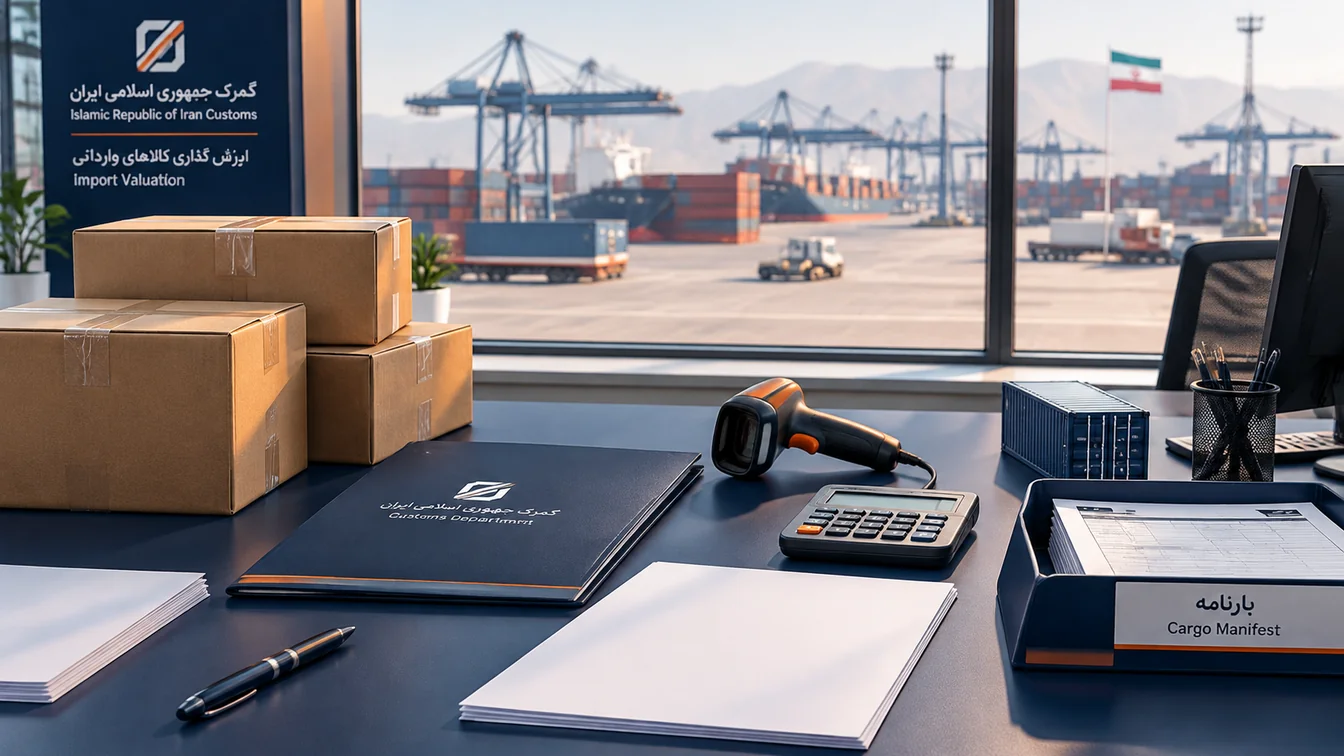
Use the following simplified sequence for planning, not as tax advice:
- Confirm the correct HS or commodity code and whether the product is permitted for commercial import.
- Establish the customs value using the documents and valuation rules applicable to the shipment.
- Apply the current customs duty, commercial profit or other import charges applicable to that commodity and import regime.
- Apply the current import VAT treatment, noting that the standard 2026 framework is generally 10% but special categories can differ.
- Check any product-specific permits, exemptions, additional levies, or valuation adjustments before the customs declaration is finalized.
China to Iran Shipping Time
The supplied planning references are 20–28 days for both FCL 20GP and FCL 40GP, 22–35 days for LCL, 12–26 days for both rail 20GP and rail 40GP, and 3–6 days for air freight. These values must not be treated as guaranteed door-to-door delivery times. The start point, end point, terminal or airport scope, international schedule, customs time, and final-mile movement should be confirmed for the actual shipment.
For sea freight, the quoted planning window should be separated from Chinese factory pickup, export handling, and Iranian customs and inland delivery. For rail-based transport, the corridor can involve cross-border terminal interfaces in Central Asia before entry into Iran, so a shorter rail movement on paper does not automatically mean a shorter door-to-door route. Air freight can reduce the international movement window, but flight availability, screening, destination acceptance, customs, and final delivery still need confirmation.
Shipping Methods from China to Iran
FCL is generally the clearest fit when the cargo can use a full container and the shipper wants a dedicated container movement. LCL can fit smaller volumes when consolidation is practical, but destination deconsolidation and inland delivery must be included in the route comparison. Air freight is more appropriate for urgent, lighter, or higher-value cargo where schedule matters more than the economics of container movement; the route should be checked through air freight.

Rail-based freight can be a useful middle option for time-sensitive containerized cargo. A relevant architecture runs west from China through Central Asian networks and into Iran, with border and terminal interfaces that vary by service. Where more than one transport mode is involved, the route should be assessed as a complete multimodal freight movement rather than comparing one leg in isolation.
Express parcel transport is not treated as a standard China-to-Iran option in the cost module because current international-integrator coverage for Iran is restricted. Any specialist courier arrangement would require shipment-level confirmation of destination acceptance, payment, compliance, customs handling, and delivery capability. The choice among sea, rail-based, and air movement should therefore be made against supplier location, cargo size and weight, final postcode, delivery scope, schedule, and the cost of delay.
Door-to-Door Shipping from China to Iran
Door-to-door China-to-Iran shipping should be quoted as a sequence of handoffs rather than as a single undefined transport price. The supplier address, selected gateway, main transport, Iranian customs responsibility, and exact final postcode should all be identified before the delivery scope is treated as workable. Where the customer needs a coordinated final-mile service, the door-to-door shipping scope should be matched to the actual cargo and destination.
-
Cargo and Compliance Review
Confirm the goods, quantity, dimensions, weight, HS classification, product restrictions, packaging, and any batteries, chemicals, food, cosmetics, medical goods, or controlled items before assigning the route.
-
Route and Method Selection
Compare the supplier’s pickup distance to the practical China gateway, then select sea, rail-based, air, or a combined movement according to cargo profile, deadline, destination postcode, and current service acceptance.
-
Supplier Coordination and Pickup
Confirm the factory or warehouse address, cargo readiness date, packing condition, loading instructions, package marks, and handoff contact so the origin movement reaches the selected gateway without avoidable rehandling.
-
China Export Handling
Prepare the commercial documents and export declaration, complete origin handling, and make sure the cargo description, quantity, weight, marks, and transport instructions remain consistent before departure.
-
International Transportation
Move the shipment through the selected sea, rail-based, air, or multimodal corridor while tracking the planned gateway and any transfers that can affect the expected arrival sequence.
-
Iran Import Clearance
The Iranian importer or properly authorized customs representative completes the import declaration, valuation, permits, duty and tax process, and any examination or release steps before the cargo leaves the controlled gateway.
-
Final Delivery
After release, arrange inland movement from the Iranian gateway or customs location to the stated postcode, including any appointment, unloading, access, storage, or special handling requirements. A duty-paid structure should only be used when the importer-of-record and tax responsibilities are legally arranged; the DDP shipping framework should be confirmed for the actual transaction.
-
Shipment Close-Out
Confirm final delivery, retain the shipment and customs records, reconcile destination charges, and close any outstanding exception, examination, damage, or insurance matters.
Main China to Iran Routes
The practical route is the one that connects the supplier to the final Iranian postcode with the least unnecessary inland movement and the clearest handoffs. For sea freight, the main comparison is between the Chinese supplier cluster, available origin service, Iranian import gateway, customs location, and final inland delivery. For rail-based movement, the route is instead built through a Central Asian corridor, with border interfaces and terminal arrangements that need to be confirmed for the actual service.
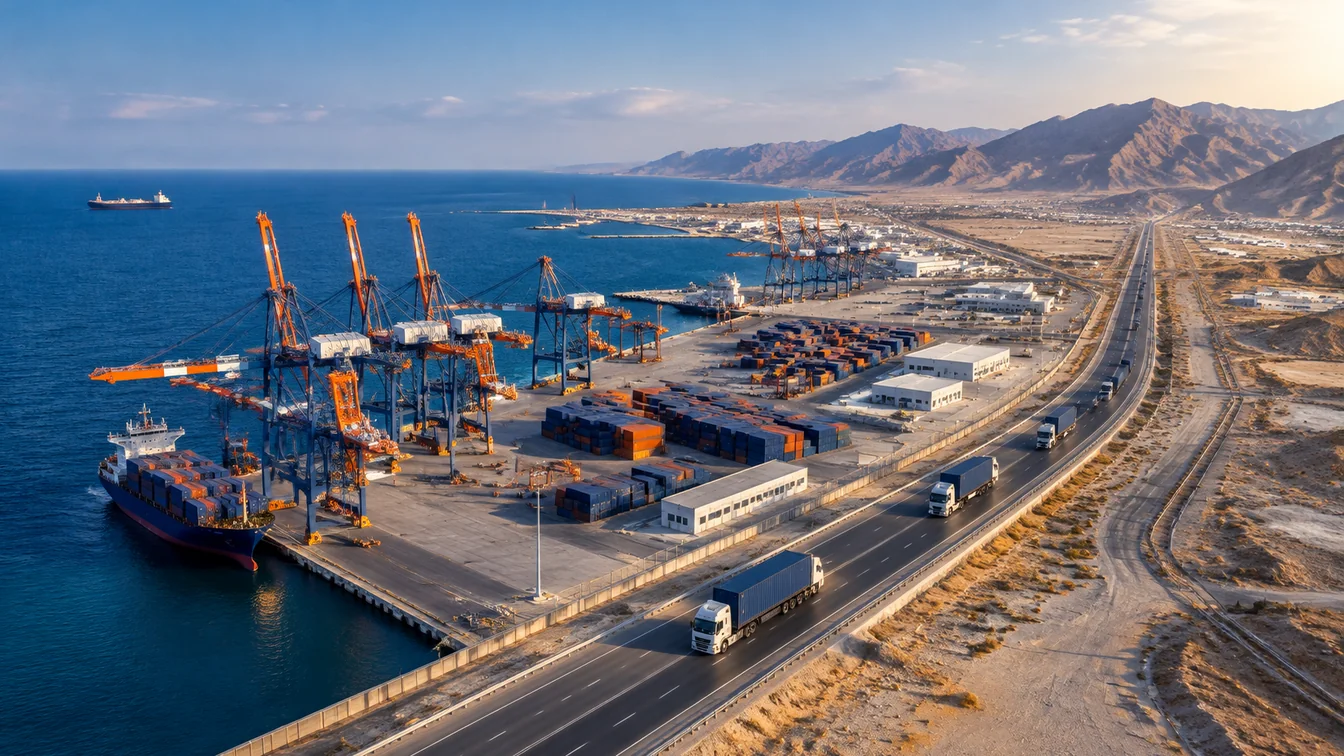
Major China Export Ports for Iran Shipping
- Shanghai
- Best compared for suppliers in Shanghai and nearby Jiangsu manufacturing clusters, especially general manufactured cargo and industrial goods. It should be compared with the available Iranian gateway and final inland route rather than assumed to have the same service on every sailing.
- Ningbo-Zhoushan
- A practical option for Zhejiang suppliers, including the broader Ningbo, Yiwu, and surrounding manufacturing belt. Compare it with Shanghai when pickup distance, vessel schedule, and Iranian destination handling make the choice material.
- Shenzhen/Yantian
- Relevant to Guangdong suppliers around Shenzhen, Dongguan, and the Pearl River Delta, including electronics and general export manufacturing. It can be a natural gateway when factory pickup is substantially closer to southern China port infrastructure.
- Qingdao
- Useful for Shandong suppliers and northern China manufacturing clusters. It should be weighed against the longer inland pickup or repositioning distance that may arise when the supplier sits outside the port’s natural hinterland.
- Xiamen
- Relevant to Fujian and nearby inland manufacturing areas. For southwestern Iranian demand, compare a Xiamen-origin routing when an appropriate China-to-Iran service is actually offered and the resulting gateway and inland movement are commercially workable.
Major Iran Import Ports for Cargo from China
- Shahid Rajaee Port, Bandar Abbas
- Iran’s principal container gateway on the Persian Gulf and the main port to compare for cargo moving toward Tehran, Isfahan, and other central or northeastern demand areas. Current service, terminal handling, customs procedure, and onward inland movement should still be confirmed for the shipment.
- Imam Khomeini Port
- Located in Khuzestan, it is relevant when the final delivery is in the southwest or when the cargo profile and available maritime service make this gateway preferable. Compare the inland route to the actual destination rather than choosing it only by port location.
- Bushehr Port
- Relevant to Bushehr and parts of southwestern Iran, including routes toward Fars when an appropriate service is available. It can reduce inland distance for some southwest deliveries, but China service frequency and routing need shipment-level confirmation.
- Chabahar Port
- Located on the Gulf of Oman and relevant to southeastern Iran. It can be considered for eastern or southeastern final destinations and route-diversification scenarios, but the available China connection, transshipment structure, and inland delivery should be checked before selection.
Supplier Region to Destination Routing Logic
| Supplier region in China | Origin port to compare | Destination port and delivery region | Planning reason |
|---|---|---|---|
| Guangdong: Shenzhen, Dongguan, Foshan | Shenzhen/Yantian | Shahid Rajaee Port, Bandar Abbas — Tehran and Central Iran | Compare the short supplier-to-port move against the available international service and the inland route from Bandar Abbas to the final postcode. |
| Zhejiang: Ningbo, Yiwu, Taizhou | Ningbo-Zhoushan | Shahid Rajaee Port, Bandar Abbas — Mashhad and Northeast Iran | Useful for comparing eastern-central China pickup efficiency with the longer inland movement required after Iranian customs clearance toward the northeast. |
| Shanghai and Jiangsu manufacturing belt | Shanghai | Imam Khomeini Port — Khuzestan and Southwest Iran | Compare the Shanghai gateway with a southern Iranian destination when final-mile distance and current destination service make the southwest route relevant. |
| Shandong: Qingdao, Jinan, Weifang | Qingdao | Shahid Rajaee Port, Bandar Abbas — Isfahan and Central Iran | Allows a northern supplier cluster to be evaluated against available ocean service and the inland delivery cost and distance from Bandar Abbas to central Iran. |
| Fujian and nearby inland manufacturing areas | Xiamen | Bushehr Port — Bushehr and Fars/Southwest Iran | Compare a regional gateway when a suitable service is available and when the reduced inland movement to the final destination offsets any schedule or transshipment differences. |
Every row remains a comparison scenario rather than a fixed fastest or cheapest route. The final choice should be based on supplier pickup distance, current carrier or service schedule, transfer structure, final postcode, inland cost, destination handling, customs scope, and the delivery requirement.
Destination Regional Delivery Logic
- Tehran and Central Iran
- Shahid Rajaee is usually the first gateway to compare for ocean cargo moving inland toward Tehran and central industrial areas. The final comparison should include the complete inland leg and any destination handling after customs release.
- Northeast Iran
- For Mashhad and surrounding areas, compare the total inland route from the selected southern gateway against any rail-based corridor that can connect toward northeastern Iran. The final postcode and schedule matter more than the gateway name alone.
- Southwest and Khuzestan
- Imam Khomeini and Bushehr become relevant comparisons for cargo destined for Khuzestan, Bushehr, or parts of Fars. Gateway selection should account for current service availability, port handling, customs location, and the distance to final delivery.
- Southeast Iran
- Chabahar can be considered for destinations in the southeast when a workable international service exists. The shorter regional inland route must be weighed against service frequency, transfer requirements, and total route scope.
How the Gateway Is Selected
Gateway selection should be made from the complete China supplier-to-Iran delivery chain:
- Compare the supplier’s actual factory or warehouse location with the inland distance to the Chinese origin gateway.
- Confirm current vessel, rail-based, or air service acceptance, departure pattern, transfer points, and cargo restrictions for the shipment.
- Compare the Iranian gateway against the final postcode, inland distance, destination handling, and customs location.
- Check whether the requested delivery scope includes only transport to the gateway or also customs coordination, inland delivery, unloading, appointments, storage, and examination exposure.
- For oversized machinery or project movements, establish the required route, handling points, and permits before choosing the gateway; specialized project cargo shipping may require a different routing approach.
Iran Customs Clearance
Ordinary commercial imports into Iran’s customs territory require the importer to provide accurate commercial and transport information, complete the applicable import and customs procedure, and satisfy product-specific requirements before release. Free trade zones, special customs regimes, and certain controlled products can follow different rules. The Islamic Republic of Iran Customs Administration should be treated as the primary customs authority for the current procedure.
What the Iran Importer Normally Needs
The precise document set depends on the goods and import procedure, but a normal commercial shipment should be prepared around the following requirements:
- Importer identity and commercial authorization The importer should have the required commercial identity and, where applicable to the transaction, a valid commercial card or other authorization used for commercial import.
- Import order registration Where the transaction is subject to import registration, the order should be registered through Iran’s National Trade Single Window process and match the commercial shipment details.
- Commodity code and customs value The declared HS classification, product description, quantity, origin, and customs value should be consistent and support the duty and tax assessment.
- Commercial invoice The invoice should identify the seller and buyer, describe the goods clearly, show quantities and values, and use terms consistent with the actual transaction.
- Packing list Provide package counts, marks, dimensions, net and gross weights, and the packing breakdown needed for customs and transport checks.
- Transport document Use the applicable bill of lading, airway bill, or rail consignment documentation and make sure the consignee, cargo description, package count, and weight align with the customs entry.
- Licences and product certificates Restricted or regulated products may require permits, standards documentation, inspection certificates, health or other product approvals before release.
- Customs declaration and authorization The importer or an appropriately authorized representative completes the customs filing and supporting process; a customs brokerage arrangement can be considered where the legal and operational scope permits.
Common Causes of Iran Customs Delays
- Invoice, packing list, transport document, and declaration data do not match on value, quantity, weight, marks, or consignee information.
- Incorrect or incomplete HS classification creates questions about duty, permits, or product treatment.
- Required import registration, licence, certificate, or product approval is missing or does not match the cargo.
- Declared customs value is challenged or supporting valuation evidence is incomplete.
- Importer identity, authorization, or customs representation is not ready when the shipment reaches the clearance stage.
- Examination, inspection, controlled-goods review, or additional documentation is triggered after arrival.
- Sanctions, payment, carrier-acceptance, or insurance screening affects the shipment before or during the international movement.
Resolve the classification, document, permit, importer, and route-compliance issues before departure wherever possible. Customs clearance should be treated as a planned handoff in the China supplier-to-Iran route, not as a task that starts only after the cargo arrives.
Special Cargo, Packaging, and Insurance
Cargo Requiring Additional Review
- Batteries and battery-powered equipment may require pre-acceptance checks, transport classification, and supporting safety documentation.
- Dangerous goods and chemicals require correct classification, packaging, declarations, and carrier or terminal acceptance.
- Liquids, food, cosmetics, and medical goods can require product-specific import approvals, labeling, health documentation, or other controls.
- Wood packaging should be checked for the applicable treatment and marking requirements before loading.
- Oversized or heavy machinery may require route, lifting, equipment, road-access, and permit planning beyond a standard container move.
- Temperature-controlled cargo needs equipment acceptance, temperature requirements, and a route that can support the required handling conditions.
- Controlled or otherwise regulated goods should be screened for Iranian import restrictions and any applicable international trade or sanctions requirements before dispatch.
Packaging Checks
Packaging should support the actual China-to-Iran route, including supplier pickup, container or terminal handling, international movement, customs inspection, and final inland delivery. Poorly protected cargo can create damage or examination problems even when the transport booking itself is valid.
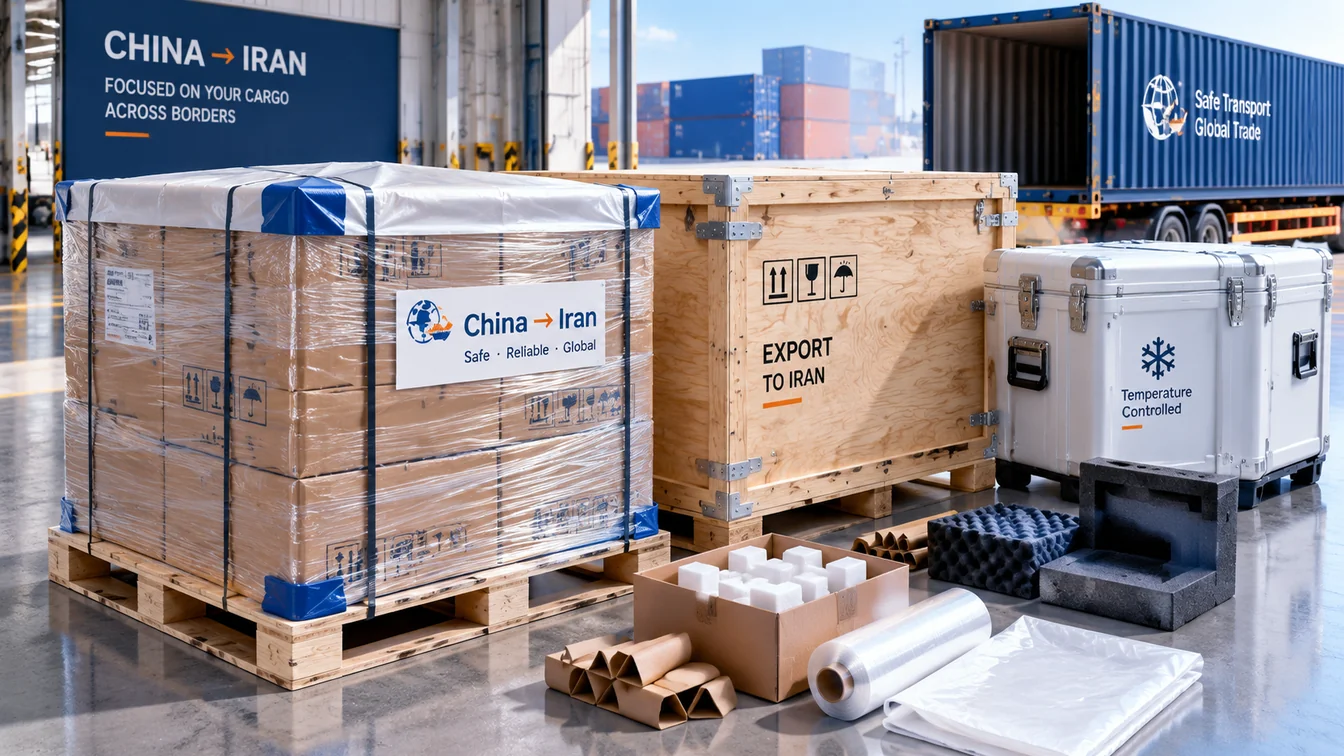
Before pickup, confirm the following:
- Carton strength, internal protection, pallet stability, and load distribution are appropriate for the cargo.
- Moisture protection is suitable for the planned transport and handling environment.
- Handling marks, product labels, carton labels, and package identifiers are consistent with the commercial documents.
- Package dimensions, gross weights, and total quantities are accurate before booking and declaration.
- Regulated wood packaging is treated and marked according to the applicable requirements where relevant.
Cargo Insurance
Carrier liability is not the same as cargo insurance. Before dispatch, confirm the coverage scope, exclusions, deductible, insured value, required evidence, claims procedure, and coverage period. For cargo where the financial exposure is material, review the applicable cargo insurance scope before the route is finalized.
Choosing a China to Iran Freight Forwarder
A usable China-to-Iran quotation should identify the origin pickup point, main transport, customs scope, destination charges, inland delivery, insurance, final ZIP or postcode, and the exact delivery condition. Two figures are not directly comparable when they use different units or include different portions of the route.
Why Use a Freight Forwarder for China-to-Iran Shipping
A route-specific forwarder can reduce coordination gaps between the separate stages of the shipment:
- One coordination point can connect the Chinese supplier pickup with the selected gateway and international booking.
- Mode selection can be compared using the supplier location, cargo profile, delivery deadline, and destination postcode rather than one transport leg alone.
- Consolidation or container planning can be coordinated where the cargo and service allow it.
- Document-readiness checks can identify mismatches before export or Iranian customs clearance.
- Origin and destination handoffs can be coordinated so that terminal arrival, customs release, and inland delivery are treated as one route.
- Exception handling can focus on route disruptions, missing documents, examination, storage, or final-delivery problems without implying that the forwarder replaces the importer, customs authority, compliance owner, or tax adviser.
Why Choose TJ for China-Iran Shipping
TJ can structure the shipment from the supplier location outward, compare applicable sea, rail-based, air, multimodal, and door-to-door options, and coordinate the origin-to-destination handoffs around the requested final postcode. For customers requiring a specific delivery or duty structure, the route should also identify the actual customs and importer responsibilities rather than assuming that every shipment can use the same scope.
The practical value is a quotation built around the complete route: supplier pickup, selected China gateway, transport mode, Iranian gateway, customs handoff, and final delivery. Where a particular movement requires specialized cargo planning or a defined customs arrangement, the applicable sea freight or customs brokerage scope can be reviewed alongside the shipment details.
Get a China to Iran Freight Quote with the supplier city or address, cargo description and HS code where known, number of packages, dimensions, gross weight, container size or CBM, Iranian delivery postcode, requested delivery scope or Incoterm, target shipping date, and any batteries, dangerous goods, food, cosmetics, medical products, oversized cargo, or other regulated characteristics.
Frequently Asked Questions
How much does shipping from China to Iran cost?
The current indicative references are $6,000–$7,700/container for FCL 20GP, $8,900–$10,750/container for FCL 40GP, $180–$210/CBM for LCL, $4,350–$7,500/container for rail 20GP, $7,500–$7,800/container for rail 40GP, and $4.50–$6.50/kg for air freight. Their cost scope is not specified, so pickup, handling, customs, duty and tax, inland delivery, insurance, and destination charges must be confirmed.
How long does sea freight from China to Iran take?
FCL is supplied at 20–28 days and LCL at 22–35 days as planning references. Those values do not define whether the clock starts at the supplier, Chinese port, or another origin point, so international transit, customs, and final delivery time must be confirmed separately.
Which major China ports handle cargo for Iran?
Shanghai, Ningbo-Zhoushan, Shenzhen/Yantian, Qingdao, and Xiamen are practical gateways to compare by supplier region. The correct origin port depends on factory location, current China-to-Iran service, pickup distance, routing, and the Iranian final destination.
Which Iran port should I compare for my final destination?
Shahid Rajaee at Bandar Abbas is the main port to compare for Tehran, Isfahan, and many central or northeastern deliveries, while Imam Khomeini is relevant to Khuzestan and parts of the southwest, Bushehr to the southwestern corridor when service is available, and Chabahar to southeastern Iran. Final-port selection should include inland delivery and destination handling, not just ocean arrival.
Can I ship from China to Iran door-to-door?
Yes, a door-to-door structure can be planned, but the quotation must define supplier pickup, international transport, Iranian customs responsibility, duty and tax treatment, and delivery to the exact postcode. The importer-of-record and customs responsibilities cannot be assumed away by calling a shipment door-to-door.
What documents are required to ship from China to Iran?
A normal commercial shipment commonly requires importer authorization, applicable import registration, a commercial invoice, packing list, transport document, commodity classification and customs-value information, plus any required product licences or certificates. The exact document set depends on the goods and import procedure.
Is rail or rail-based shipping from China to Iran available?
Yes, rail-based freight is an operationally relevant option through Central Asia, with the supplied planning reference at 12–26 days for both 20GP and 40GP. A practical corridor can run through Kazakhstan and Turkmenistan before entering Iran via gateways such as Sarakhs or Incheh Borun, but the actual service, border interfaces, cargo acceptance, and compliance conditions must be confirmed for the shipment.