

Reviewed by TJ Logistics Team — October 2026. This content and cost-data review covers market, cost, customs, tariff, and marketplace information available for the review month; requirements and commercial conditions may change. The review applies practical route-planning checks across supplier pickup, gateway and mode selection, customs handoff, and final delivery.
Shipping from China to Belgium: Route Update
For FCL cargo from China (origins mainly Yantian/Nansha) to Antwerp, Belgium, the indicative FCL 20GP cost reference is $1,950–$2,725/container, with a planning transit reference of 28–35 days. The working route is supplier collection, China export handling, international transport, Belgian import clearance, and delivery to the named receiving address.
Sea freight is the principal option to compare for planned container and consolidated cargo, while air freight suits shipments whose delivery deadline makes a longer ocean movement impractical. The right plan connects the factory to an appropriate Chinese gateway, selects a credible movement to Belgium, and assigns customs and final-mile responsibilities before dispatch.
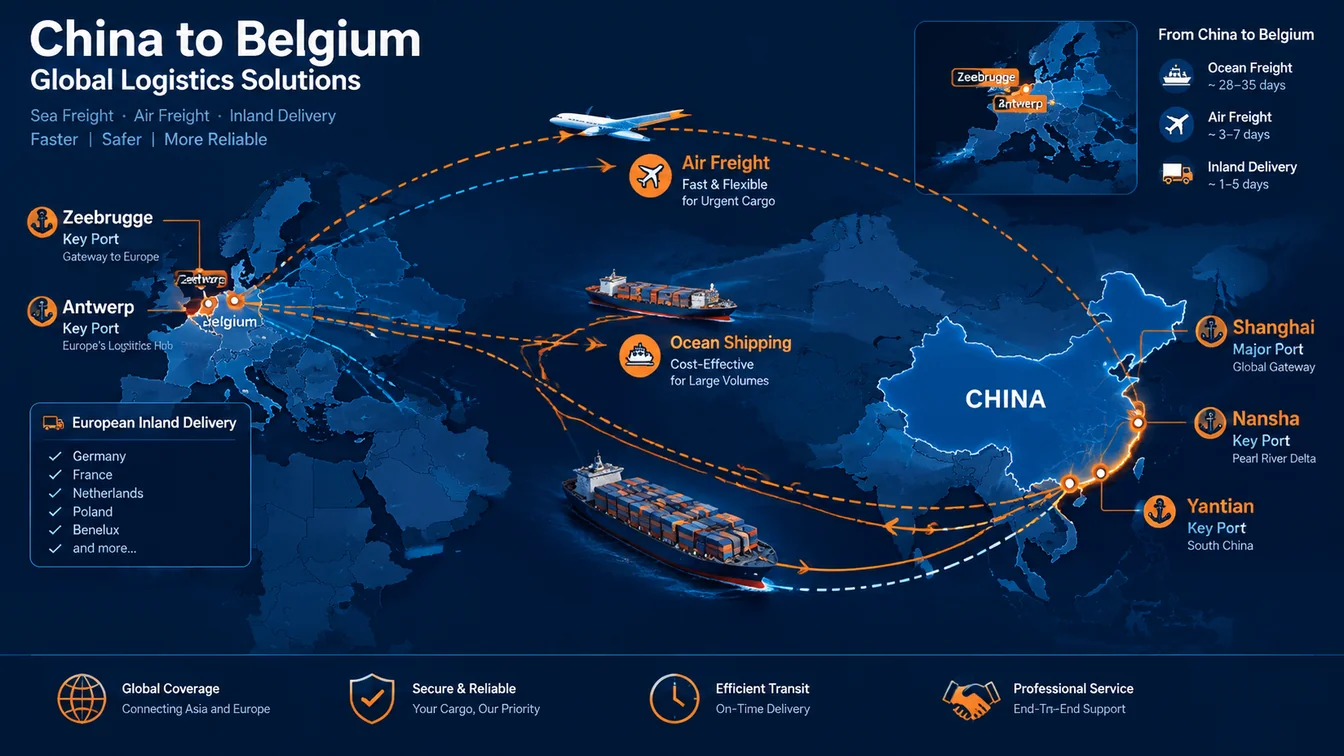
Route Planning Summary
- How should the supplier reach the China gateway?
- Use the export gateway that fits the factory location and booked transport plan. Yantian and Nansha are relevant starting points for the supplied FCL route to Antwerp, but pickup distance and the actual available service can change the choice.
- Which transport method fits the shipment?
- Use FCL for cargo booked as a dedicated container, LCL for compatible consolidated cargo, air freight for time-sensitive commercial shipments, express for eligible parcels, and rail-based transport when its timing and handling arrangements suit the cargo.
- How should transit time be planned?
- Use the reference for the exact route and method selected, then account separately for any supplier pickup, export processing, destination handling, customs release, and delivery stages outside the agreed movement.
- Who is responsible for Belgian import clearance?
- The importer remains responsible for the applicable import obligations, even when a customs representative prepares and submits declarations on the importer’s behalf.
- What determines final-delivery scope?
- The agreed service boundary determines whether collection, import clearance, duties and taxes, destination handling, and delivery to the final postcode are included or arranged separately.
China to Belgium Shipping Cost
The table provides route-specific indicative shipping costs and planning transit references for the October 2026 review. Each reference applies to its named route, shipping method, and charging unit.
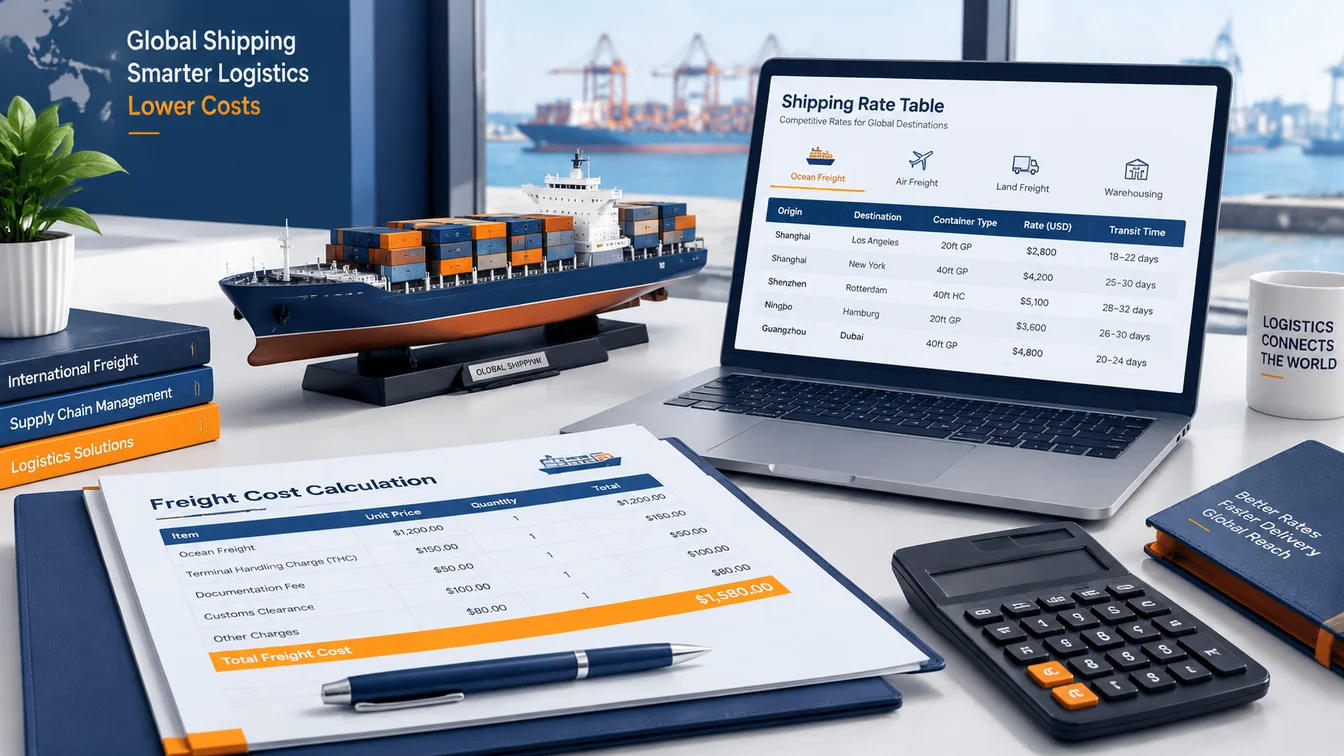
Cost-table review month: October 2026.
| Shipping route | Shipping method | Price | Transit time |
|---|---|---|---|
| China (origins mainly Yantian/Nansha) → Antwerp, Belgium | FCL 20GP | $1,950–$2,725/container | 28–35 days |
| China (origins mainly Yantian/Nansha) → Antwerp, Belgium | FCL 40GP | $2,900–$4,800/container | 28–35 days |
| China (origins mainly Yantian/Nansha) → Antwerp, Belgium | FCL 40HQ | $2,900–$4,800/container | 28–35 days |
| Shanghai, China → Antwerp, Belgium | LCL | $57/CBM | 35 days |
| PVG (Shanghai), China → BRU (Brussels), Belgium | Air freight | $3.18/kg | 2–3 days |
| China → Belgium | Express | $10.30/kg | 1–4 days |
| China → Belgium | Rail freight (CBM-based reference) | $150–$250/CBM | 15–23 days |
Cost scope: These indicative cost references apply to the route, method, and unit shown; they are not carrier freight rates, market averages, TJ selling prices, or binding quotations. The actual booking, cargo, and agreed service scope determine the commercial arrangement, including responsibility for relevant pickup, handling, customs clearance, duty and tax, inland delivery, insurance, storage, examination, appointments, and surcharges.
Belgium Import Duty and Taxes
Belgian import duty and tax depend on the commodity code, customs value, origin, applicable trade measures, product category, and rules in force when the goods enter the relevant customs procedure. Belgium applies the EU Common Customs Tariff, while Belgian import VAT treatment depends on the goods and applicable VAT rules; no single duty rate applies to every shipment from China.
Use the following sequence to prepare an import-cost assessment for goods entering Belgium from China.
- Classify the goods. Assign the appropriate Combined Nomenclature and, where applicable, TARIC code using the product’s material, composition, function, and technical specifications.
- Determine the customs value and origin. Prepare evidence of the transaction value and the valuation adjustments required under EU customs rules. China as the shipping country does not, by itself, establish every relevant origin or trade-measure detail.
- Check customs duty and additional measures. Search the official EU TARIC database for the commodity-specific duty, restrictions, additional duties, and document requirements applicable when the declaration is made.
- Determine Belgian import VAT. Belgium’s normal VAT rate is 21%, with reduced rates applying to certain categories. The taxable amount for imported goods generally includes the customs value, applicable duties, and relevant incidental expenses under the applicable rules. The appropriate treatment must be checked for the particular product and import arrangement using Belgian VAT guidance.
- Resolve product-specific obligations. Determine whether the goods require licences, conformity evidence, excise treatment, safety documentation, or measures such as anti-dumping duties before the customs declaration is prepared.
This is a simplified import-planning explanation, not tax, legal, or customs-compliance advice. Rates, trade measures, and tax treatment may change, so apply the current official rules to the actual product before dispatch or entry.
China to Belgium Shipping Time
For FCL sea freight from China (origins mainly Yantian/Nansha) to Antwerp, the supplied planning reference for 20GP, 40GP, and 40HQ containers is 28–35 days. Other methods and route labels have their own transit references, so the expected movement should be matched to the actual supplier gateway and the required Belgian receiving location.
The supplied transit references for the China-to-Belgium routes are as follows.
- FCL sea freight: China (origins mainly Yantian/Nansha) to Antwerp, Belgium, for 20GP, 40GP, and 40HQ containers: 28–35 days.
- LCL sea freight: Shanghai, China, to Antwerp, Belgium: 35 days.
- Air freight: PVG (Shanghai), China, to BRU (Brussels), Belgium: 2–3 days.
- Express: China to Belgium: 1–4 days.
- Rail freight: China to Belgium, using a CBM-based reference: 15–23 days.
These figures are planning references, not guaranteed door-to-door durations. Their labels do not define every included handling stage, so supplier collection, export processing, destination handling, customs release, and final delivery must be accounted for separately when those stages fall outside the selected movement.
Shipping Methods from China to Belgium
For planned container volumes, sea freight is the main starting point; air, express, and rail-based alternatives serve different urgency, cargo, and delivery requirements. Select the method using actual shipment dimensions, packed volume, gross and chargeable weight, handling restrictions, supplier location, the final Belgian postcode, and the consequences of missing the required arrival date.
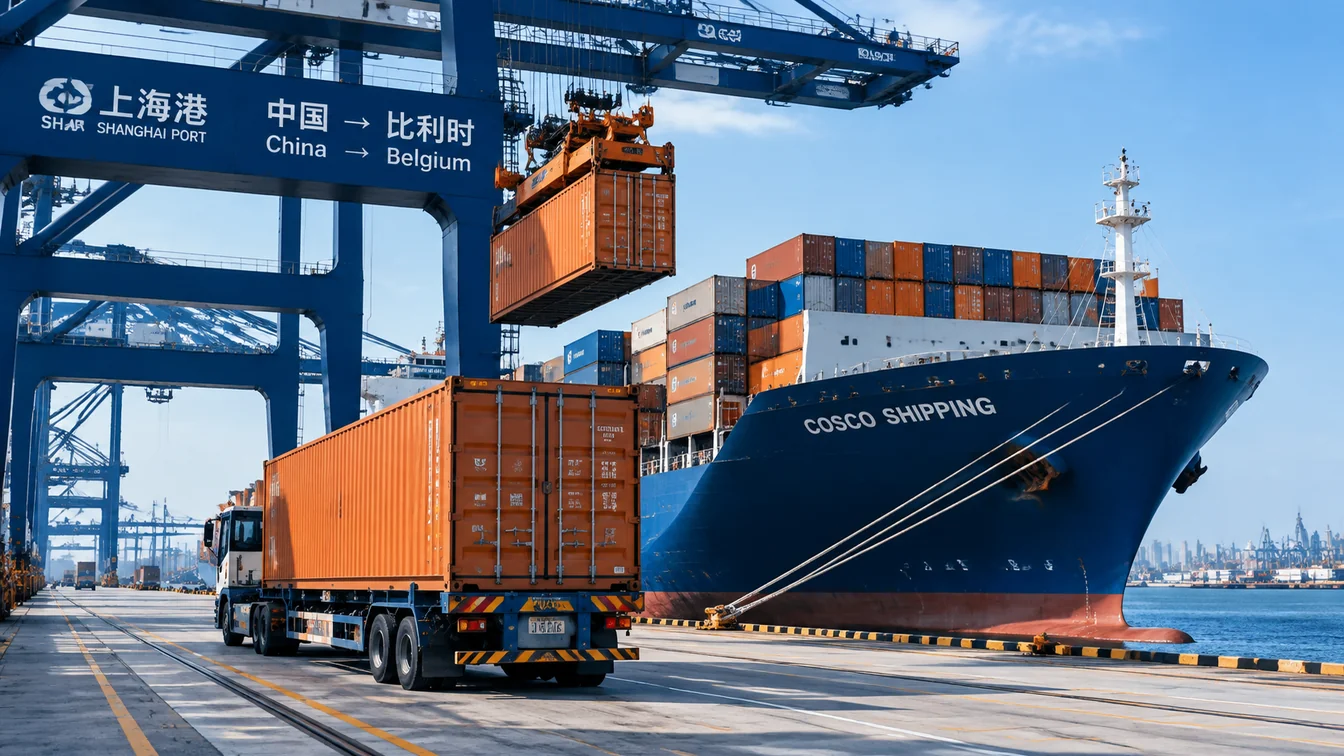
- FCL sea freight. Choose FCL when the cargo is suited to a dedicated container, because a 20GP, 40GP, or 40HQ booking provides a defined container-equipment arrangement for the move to Antwerp. Compare packed dimensions, container fit, factory pickup distance, destination handling, and final delivery needs before selecting equipment. See sea freight services.
- LCL sea freight. Choose LCL when the shipment is compatible with consolidation rather than requiring a dedicated container, because the cargo can move within a shared container arrangement. The Shanghai-to-Antwerp reference is relevant when the supplier can route cargo through Shanghai; pickup and consolidation needs can make another origin more practical.
- Air freight. Choose air freight when a commercial deadline makes ocean transit unsuitable and the goods can travel through an appropriate cargo-airport handling arrangement, because the international movement is designed for time-sensitive freight rather than container-volume planning. Compare actual weight, volumetric or chargeable weight, cargo eligibility, and the supplier’s distance from the export airport. See air freight services.
- Express shipping. Choose express when the shipment is an eligible parcel or small consignment that benefits from an integrated express movement, because parcel handling and delivery arrangements differ from general cargo bookings. Use the packed dimensions, chargeable weight, delivery postcode, commodity restrictions, and receiving deadline to determine whether the service fits. See express shipping services.
- Rail-based freight. Choose rail-based freight when the shipment can use a China–Europe rail movement and the planned transit, cargo restrictions, and destination handoffs suit the delivery requirement. Belgium may be reached through a rail-based or multimodal itinerary with intermediate terminals and onward road or rail legs; the supplied China-to-Belgium reference does not establish a direct train or a particular corridor. Review rail freight services and, where transfers are necessary, multimodal freight services.
Door-to-Door Shipping from China to Belgium
Door-to-door shipping from China to Belgium connects supplier collection with international transport, import arrangements, and delivery to the agreed Belgian address. The practical sequence below separates each handoff so that pickup, customs responsibility, and the final receiving arrangement are clear before cargo moves.
-
Cargo and Compliance Review
Collect the supplier’s factory or warehouse address, cargo description, packed dimensions, gross weight, volume, packaging type, and any dangerous-goods or product restrictions. Resolve any missing information that prevents a credible transport or customs plan.
-
Route and Method Selection
Match the supplier location to a suitable China gateway and the selected sea, air, express, or rail-based movement. Use the final Belgian postcode, delivery deadline, equipment needs, and expected transfer arrangements to compare workable routes.
-
Supplier Coordination and Pickup
Arrange the agreed collection window, cargo readiness, loading access, and packing status with the supplier. For container freight, determine whether loading occurs at the factory or another named location and whether the equipment can access that location.
-
China Export Handling
Coordinate the cargo handoff to the designated export gateway and prepare the commercial and transport documents required for the movement. Ensure that the invoice, packing details, cargo description, and declared goods correspond to the actual shipment.
-
International Transportation
Move the cargo through the agreed sea, air, express, or rail-based route. For an itinerary involving transfers, use the actual planned gateways and terminal handoffs rather than assuming that the shipment remains on one vehicle or vessel throughout.
-
Belgium Import Clearance
Arrange the agreed customs handoff with the importer or authorised customs representative. The responsible parties must have the applicable EORI details, commodity classification, customs value, supporting documents, and arrangements for duty and tax.
-
Final Delivery
Coordinate the onward movement from the release or receiving point to the named Belgian address. Check vehicle access, unloading equipment, delivery appointments, operating hours, and any site-specific receiving conditions that affect the last mile.
-
Shipment Close-Out
Reconcile the transport documents, delivery confirmation, and agreed charges with the actual movement. Record outstanding handling, customs, tax, storage, or delivery issues with the party responsible for resolving them.
Main China to Belgium Routes
The most practical China-to-Belgium route normally starts at a gateway that limits supplier-side movement while fitting the final delivery area and credible destination handling. The preferred comparison can change when the factory is inland, the available carrier service uses a different gateway, or the final postcode makes destination handling and onward delivery more important than the initial port choice.
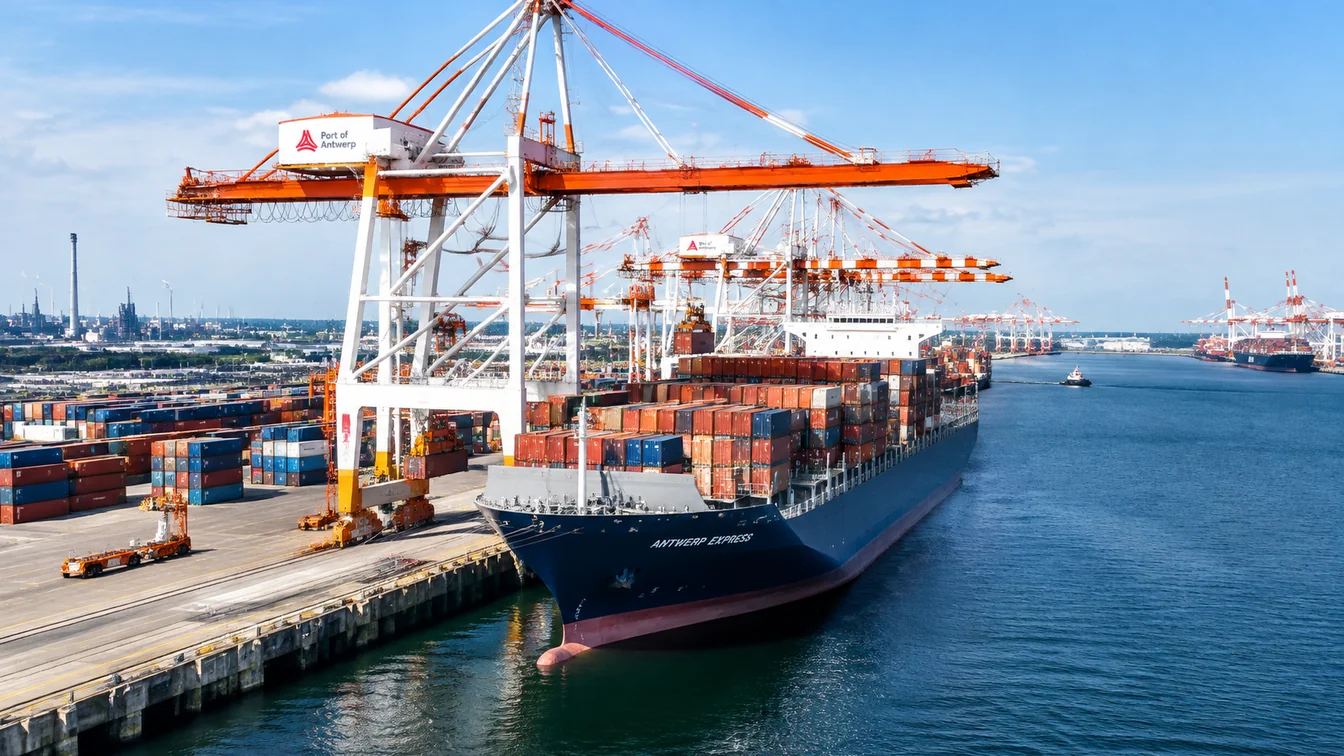
Major China Export Ports for Belgium Shipping
- Yantian Port, Shenzhen
- Yantian is a relevant export gateway for Shenzhen, Dongguan, and other Pearl River Delta manufacturing areas. Compare it for containerised goods moving to Antwerp or Zeebrugge when factory pickup and the available international service fit the shipment.
- Nansha Port, Guangzhou
- Nansha is a relevant option for Guangzhou, Foshan, and nearby Guangdong suppliers. Compare Nansha with Yantian when collection distance, cargo-loading location, and the actual sailing arrangement may change the total route.
- Shanghai Port
- Shanghai is a natural gateway to examine for suppliers in Shanghai and parts of the Yangtze River Delta. It is particularly relevant to the supplied Shanghai-to-Antwerp LCL route; the selected consolidation arrangement and factory location still matter.
- Ningbo-Zhoushan Port
- Ningbo-Zhoushan is relevant to suppliers in Ningbo and southern Zhejiang, as well as suitable nearby manufacturing areas. Compare it with Shanghai for cargo moving toward Antwerp or Zeebrugge when the supplier’s road distance and available service differ.
- Qingdao Port
- Qingdao is a gateway to compare for Shandong and nearby northern China suppliers. It can be considered for container cargo destined for Belgium when the regional pickup and actual international routing support using northern China rather than repositioning cargo to another coastal gateway.
Major Belgium Import Ports for Cargo from China
- Port of Antwerp
- Antwerp is a principal deep-sea container gateway for cargo serving Flanders, Brussels, and inland destinations across Belgium. Compare its available service, destination terminal, and onward transport requirements against other feasible entry routes. The Port of Antwerp-Bruges container facilities provide official information about container handling and hinterland connections.
- Port of Zeebrugge
- Zeebrugge provides a deep-sea container gateway on Belgium’s North Sea coast. Compare it when a booked service uses the port and the final delivery area, terminal handling, and inland transport arrangement make this entry point practical; a direct call from a particular China origin must not be assumed.
- Port of Ghent, within North Sea Port
- Ghent is a seaport connected to the North Sea through the Ghent–Terneuzen Canal, with multimodal links to inland markets. It is a conditional comparison for cargo whose booked routing supports this gateway and its receiving facilities, rather than a default direct China-origin container destination.
Supplier Region to Destination Routing Logic
| Supplier region in China | Origin port to compare | Destination port and delivery region | Planning reason |
|---|---|---|---|
| Pearl River Delta, including Shenzhen, Dongguan, Guangzhou, and Foshan | Yantian or Nansha | Antwerp for Flanders, Brussels, and onward Belgian delivery; compare Zeebrugge where supported by the planned service | Start with the closer suitable origin gateway to Antwerp, then compare Zeebrugge if its booked routing and inland handoff better fit the final postcode. Factory pickup distance and available service can change the choice. |
| Shanghai and nearby Yangtze River Delta suppliers | Shanghai | Antwerp for Brussels, central Belgium, and wider inland delivery | Start with Shanghai to Antwerp for suitable container or consolidated cargo, then plan Belgian import clearance and onward delivery. Supplier location, cargo consolidation arrangements, and available routing can change the comparison. |
| Ningbo and southern Zhejiang | Ningbo-Zhoushan, compared with Shanghai where appropriate | Antwerp or Zeebrugge for Flanders and other Belgian delivery regions | Start with Ningbo-Zhoushan when it limits supplier-side movement and offers a suitable international routing. Compare Shanghai if its pickup arrangement or booked service better fits the shipment. |
| Shandong and nearby northern China manufacturing areas | Qingdao | Antwerp or Zeebrugge for eastern Belgium, Wallonia, and other inland destinations | Start with Qingdao when the supplier’s location supports it and a suitable service is available. Compare the destination entry point using the actual delivery postcode, inland movement, and destination handling. |
Destination Regional Delivery Logic
- Flanders
- For destinations around Antwerp, Ghent, Bruges, and other Flemish locations, compare Antwerp and Zeebrugge against the final postcode and actual terminal arrangement. A gateway nearer the regional delivery area may still be less suitable if the booked international routing or onward transport is less practical.
- Brussels-Capital Region
- Compare an Antwerp entry followed by inland delivery with any other confirmed route that serves the exact receiving address. Urban delivery restrictions, vehicle access, unloading arrangements, and appointment requirements can materially change the final-mile plan.
- Wallonia
- For destinations including Liège, Namur, and Charleroi, compare the gateway and onward transport as a complete movement rather than selecting the port alone. Final distance, terminal release, road or rail availability, and the delivery address determine the practical inland route.
- Eastern Belgium and the Ardennes
- Use the final postcode to compare delivery from Antwerp or Zeebrugge and any suitable rail-to-road arrangement. Remote site access, unloading capability, and the timing of inland transport can outweigh a small difference in the main-carriage route.
How the Gateway Is Selected
Choose the gateway using four practical checks that connect the Chinese supplier with the actual Belgian receiving point.
- Supplier-side movement: Compare the factory’s distance from Yantian, Nansha, Shanghai, Ningbo-Zhoushan, or Qingdao with the collection arrangement actually available for the cargo.
- International routing: Compare the booked port or airport, equipment requirements, service pattern, and any transshipment or inland transfer rather than assuming a direct movement.
- Belgian entry and handling: Match the arrival gateway and receiving terminal to the selected service and its customs, storage, examination, and release arrangements.
- Final postcode: Compare the complete onward path to the consignee, including access, appointment, unloading, and any rail or road transfer between the gateway and the delivery location.
- Service boundary: Ensure the selected plan covers the intended pickup, main transport, customs handoff, and final delivery activities, with responsibility for any separate stages clearly assigned.
Belgium Customs Clearance
Imports entering Belgium for release into free circulation follow the applicable EU customs framework and Belgian import requirements. The importer or an appropriately authorised representative must arrange accurate declarations and supporting evidence, while the responsible commercial party must ensure that duties, taxes, and product-specific obligations are met.
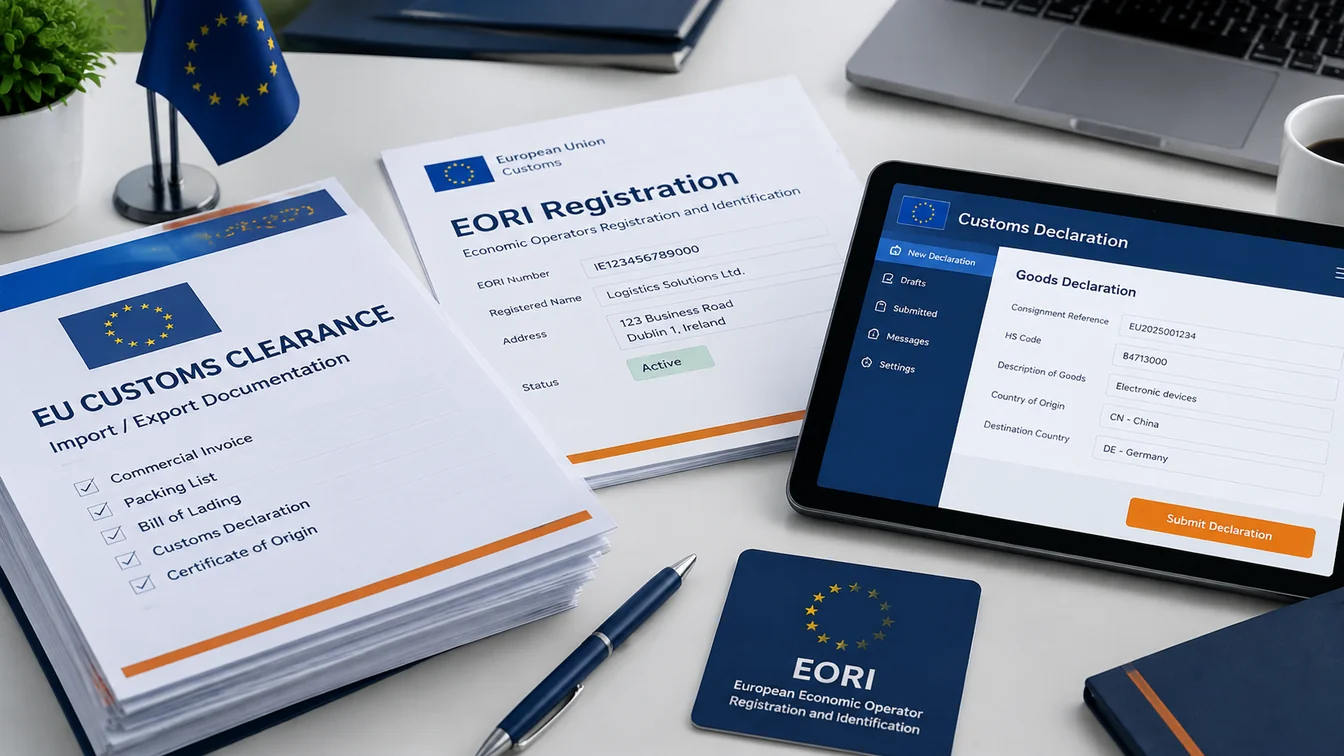
The relevant customs territory is the European Union customs territory, with Belgium as the destination country in this route. Goods already released into free circulation in another EU Member State may have a different subsequent movement and tax treatment from goods entering the EU from China for clearance in Belgium.
What the Belgium Importer Normally Needs
A Belgian import file should contain the following information and documents before the cargo departs China whenever they are available and applicable to the goods.
- EORI number The importer or relevant customs operator needs the appropriate Economic Operators Registration and Identification number for the applicable EU customs operations. Check the registration and responsibility of the declaration party using official EU EORI guidance.
- Commodity code Prepare the correct CN or TARIC classification using the product’s material, function, and specifications. Classification determines the applicable duty and may trigger additional documents or trade measures.
- Commercial invoice Provide the actual seller, buyer, product description, quantities, transaction value, currency, and other information required for the transaction and customs valuation. Commercial terms must reflect the agreed sale and shipment.
- Packing list Show the package or carton count, contents, packed dimensions, gross and net weights where required, and pallet details. Keep these figures consistent with the physical cargo and transport instructions.
- Transport document Prepare the applicable bill of lading or sea waybill, air waybill, rail consignment document, or express transport record. The document must match the actual shipping arrangement and parties.
- Customs declaration and representation Arrange the declaration and agree who submits it, who represents the importer, and who handles customs questions. The importer can review relevant customs brokerage services without assuming that a transport booking itself establishes customs representation.
- Product conformity and permits Check product-specific requirements before dispatch, including applicable CE marking, technical documentation, chemical restrictions, food controls, or licences. Requirements depend on the product rather than the shipping method alone.
- Origin evidence and trade measures Retain the information needed to substantiate non-preferential origin and any applicable product-specific measure. Additional certificates, permits, or supporting declarations may be necessary for particular categories of goods.
Common Causes of Belgium Customs Delays
- Product descriptions are too vague to support the proposed commodity classification.
- Invoice values, currencies, quantities, or commercial terms do not match the transaction or supporting documents.
- Packing lists and actual package counts, dimensions, or weights differ.
- The EORI or customs-representation arrangements needed for the declaration are incomplete.
- Required product certificates, import permissions, conformity documents, or other supporting evidence are missing.
- Applicable duties, tax arrangements, or additional trade measures have not been resolved.
- Required advance cargo-safety information or documents for a relevant inspection are incomplete or inconsistent.
Resolve these issues before the cargo leaves China whenever possible, particularly where product classification or compliance documents could affect whether the goods may be released in Belgium. The party responsible for the declaration should receive accurate information early enough to address discrepancies before arrival.
A DDP arrangement can allocate specified import and delivery responsibilities under the agreed commercial terms, but it does not automatically remove product-compliance obligations or every importer-related requirement. The parties should document the actual arrangement through the relevant DDP shipping service scope before dispatch.
Shipping to Amazon FBA Belgium
Amazon has a Belgian marketplace and offers Fulfilment by Amazon, but a China-origin inventory shipment must follow the assigned receiving instructions rather than assume that the physical receiving warehouse will be in Belgium. The official Amazon Belgium FBA guidance describes the fulfilment service and its role in serving Belgian customers.
For inventory intended for Amazon, plan the China pickup, export transport, import arrangement, and final delivery around the actual shipment plan and assigned fulfilment centre. A destination supplied by Amazon may be in another eligible European country, so the route and import arrangements must match the receiving location rather than simply the customer’s marketplace.
Prepare the following FBA-specific information before the supplier releases marketplace inventory.
- Importer and tax responsibilities: Decide who acts as importer of record and who is responsible for customs clearance and import charges. The seller must understand the applicable VAT registration and reporting obligations for the intended storage and sales arrangement.
- Product eligibility: Check that each item can be sold and fulfilled through the intended Amazon programme and that the applicable EU product-safety, labelling, and technical-documentation requirements are met.
- Shipment plan: Use the current seller instructions for the assigned destination, product quantities, shipment identification, transport method, and delivery requirements. Do not substitute an unassigned warehouse or receiving address.
- Cartons and pallets: Match supplier packing, carton measurements, weights, pallet configuration where applicable, and identification labels to the receiving instructions. Correct packing before dispatch is easier than arranging rework after arrival.
- Tracking and delivery appointment: Prepare the required shipment references, carrier information, and receiving appointment or delivery booking where applicable. The assigned fulfilment centre’s current instructions govern acceptance.
- Inventory movement and storage: Account for the countries in which the selected programme may store inventory. Storage location can affect VAT registration and reporting requirements even when the intended customers are primarily in Belgium.
TJ Logistics Team can review the transport and delivery handoffs associated with the agreed shipment scope through its Amazon FBA shipping service. The marketplace seller remains responsible for its seller-account instructions, product eligibility, importer arrangements, and applicable tax obligations.
Special Cargo, Packaging, and Insurance
Special cargo requirements can change the China-to-Belgium route before booking, particularly when goods need specific handling, regulatory approval, protective packaging, or controlled transport conditions. Check cargo acceptance and destination requirements before the supplier packs or releases the shipment.
Cargo Requiring Additional Review
- Batteries and battery-powered goods: Identify the battery chemistry, configuration, capacity where relevant, and applicable transport classification before selecting air, express, rail, or sea movement.
- Dangerous goods: Supply the applicable classification and dangerous-goods documentation, and check packaging, labelling, handling, and carrier acceptance restrictions.
- Chemicals and liquids: Review the safety data sheet, composition, leakage protection, hazard classification, and applicable EU product or chemical requirements.
- Food and agricultural goods: Check whether the product requires sanitary or phytosanitary documentation, approved entry arrangements, or border inspection before choosing the arrival route.
- Cosmetics and medical goods: Verify the applicable product-safety, ingredient, labelling, conformity, registration, or authorisation requirements for the specific goods.
- Wood packaging: Check whether solid-wood pallets, crates, or dunnage must meet ISPM 15 treatment and marking requirements for entry into the EU.
- Oversized or heavy cargo: Review dimensions, gross weight, lifting points, loading equipment, container suitability, road restrictions, and any special delivery access arrangements.
- Temperature-controlled cargo: Define the required temperature range, handling limits, monitoring arrangements, and whether the selected transport and destination handling can maintain the specified conditions.
- Controlled goods: Check any product-specific restrictions, import authorisations, or other permissions that apply to the actual commodity and intended use.
Packaging Checks
Packaging for China-to-Belgium transport must protect the cargo through loading, international movement, transfer, customs handling, and final delivery. The supplier should use final packed dimensions and weights when preparing the transport booking and verify that the goods can withstand the planned handling sequence.
- Carton strength: Select cartons suited to the goods’ weight, stacking, and expected handling conditions.
- Internal protection: Restrain fragile items and prevent crushing, abrasion, movement, and leakage within the package.
- Pallets and load security: Use stable pallets, appropriate wrapping and strapping, and a load arrangement that suits the planned handling equipment.
- Moisture protection: Protect moisture-sensitive products against condensation and exposure appropriate to the cargo and transport environment.
- Handling marks and labels: Apply legible package identifiers, destination information, and any necessary handling or regulatory marks.
- Dimensions and weights: Record actual outer-pack dimensions and weights after packing so that the transport information matches the cargo handed over.
- Regulated wood packaging: Check treatment, markings, and packaging acceptability where solid-wood pallets, crates, or dunnage are used.
Cargo Insurance
Carrier liability is not the same as cargo insurance, and its scope may not match the cargo owner’s financial exposure. Before departure, establish the proposed coverage, insured value, exclusions, deductible, evidence requirements, insured journey, and the period during which the goods are covered. Review the terms available through cargo insurance services against the actual cargo and route rather than assuming that transport handling automatically provides comprehensive protection.
Choosing a Freight Forwarder for China-to-Belgium Shipping
A freight forwarder helps resolve three practical route problems: turning shipment information into a workable movement definition, choosing a credible transport and gateway combination, and keeping commercial and operational handoffs aligned. The value is in making the next responsible party and decision clear for the actual shipment rather than treating international transport as an isolated booking.
- Define the movement before dispatch
- Incomplete cargo information can prevent a workable route and handling plan. A forwarder helps turn the supplier’s location, packed cargo, receiving requirement, and delivery deadline into a usable movement definition; the plan changes if the physical cargo or receiving conditions change.
- Match the gateway to the destination
- A gateway that works for one Chinese supplier may create unnecessary inland movement for another. Compare the actual origin, cargo restrictions, urgency, available transport routing, and final Belgian postcode to select a practical route rather than a port based on name recognition alone.
- Keep responsibilities visible
- Unclear ownership of customs, handling, and final delivery can leave a shipment waiting for a decision at a handoff. Record which party is responsible for the next action and which service conditions apply, while leaving the importer’s legal and tax responsibilities with the appropriate party.
How TJ Logistics Team Plans a China-to-Belgium Shipment
- Review the shipment definition
- TJ Logistics Team reviews the cargo description, dimensions, weight, supplier location, and destination requirement to flag missing information that prevents the next routing or handling decision.
- Compare workable route options
- TJ Logistics Team compares the credible transport method, China export gateway, Belgian entry arrangement, and final-delivery needs against the shipment definition. The comparison can change when the cargo needs special handling or the receiving postcode creates different inland requirements.
- Record the agreed service boundary
- TJ Logistics Team documents the agreed transport scope and the parties responsible for the next handoffs before a formal commercial arrangement is prepared. Customs representation, product compliance, import taxes, and other responsibilities must be assigned explicitly rather than presumed to transfer with the freight booking.
- Coordinate the operational handoffs
- After the buyer confirms the agreed scope, TJ Logistics Team coordinates the applicable booking information, commercial documents, and cargo handoff, while flagging the next operational decision if timing, route, document, or receiving conditions change.
China to Belgium Shipping FAQ
How much does a 20ft container from China to Belgium cost?
The indicative FCL 20GP cost for China (origins mainly Yantian/Nansha) to Antwerp, Belgium, is $1,950–$2,725/container in the October 2026 review. This is a route-specific cost reference, not a binding quotation; use the agreed booking scope to determine the actual commercial arrangement.
How long does sea freight from China to Belgium take?
For FCL sea freight from China (origins mainly Yantian/Nansha) to Antwerp, Belgium, the supplied planning reference is 28–35 days for 20GP, 40GP, and 40HQ containers. The Shanghai-to-Antwerp LCL route has a separate reference; any pickup, customs, or final-delivery stages outside the selected movement must be planned separately.
Which China port should I compare when shipping to Belgium?
For ocean cargo, start with a suitable export gateway near the supplier, then match the available route to Antwerp or Zeebrugge and the final Belgian postcode. Yantian and Nansha are relevant to Pearl River Delta suppliers, Shanghai to Shanghai-area cargo, Ningbo-Zhoushan to Ningbo and southern Zhejiang suppliers, and Qingdao to Shandong suppliers; collection distance and the booked routing can change the comparison.
Should I use air freight or express shipping to Belgium?
Air freight is worth comparing for time-sensitive commercial cargo that can use a suitable cargo-airport arrangement, while express is designed for eligible parcels and smaller consignments using an express delivery network. For the supplied air route, the named gateways are PVG in Shanghai and BRU in Brussels; cargo dimensions, chargeable weight, restrictions, and final delivery requirements determine which method fits.
Can rail freight be used to ship goods from China to Belgium?
Yes, rail-based freight is an option to evaluate for suitable China-to-Belgium cargo. The actual itinerary may include rail terminals, transfers, and onward road transport rather than a single direct train, so the selected service must match the cargo, timing requirement, and receiving location.
Can I ship door-to-door from China to Belgium?
Yes, a door-to-door arrangement can connect supplier collection in China with transport, agreed import arrangements, and delivery to a named Belgian address. The service description must specify who handles customs, who pays applicable import charges, and whether the final location requires appointments, special unloading, or restricted vehicle access.
What documents are needed to import goods into Belgium from China?
A typical Belgian commercial import file includes a commercial invoice, packing list, applicable sea, air, rail, or express transport document, correct commodity classification, relevant customs declaration information, and the importer’s or representative’s required EORI details. Product-specific permits, certificates, or conformity evidence may also be necessary, so the goods must be classified before the documentation is finalised.