

Reviewed by TJ Logistics Team — September 2026. This route page was reviewed in September 2026 for market, cost, customs, tariff, and marketplace planning purposes. The review applies practical route-planning checks across China supplier pickup, origin gateway and mode selection, Australian customs handoff, and final delivery execution.
Shipping from China to Australia: Route Update
A 20GP container from China to Sydney Port is listed at $2,350–$2,445 with a 20–27 day transit reference for September 2026, making ocean FCL the default planning basis for full-container loads on the Australia east coast lane. This figure applies to the named route and equipment unit only and does not establish a nationwide rate or a door-to-door scope. For smaller or urgent consignments, air freight from China to Sydney Airport is referenced at $4.30/kg with a 3–5 day transit, and express from Shenzhen to Sydney at $16.07/kg with a 5–10 working-day reference.
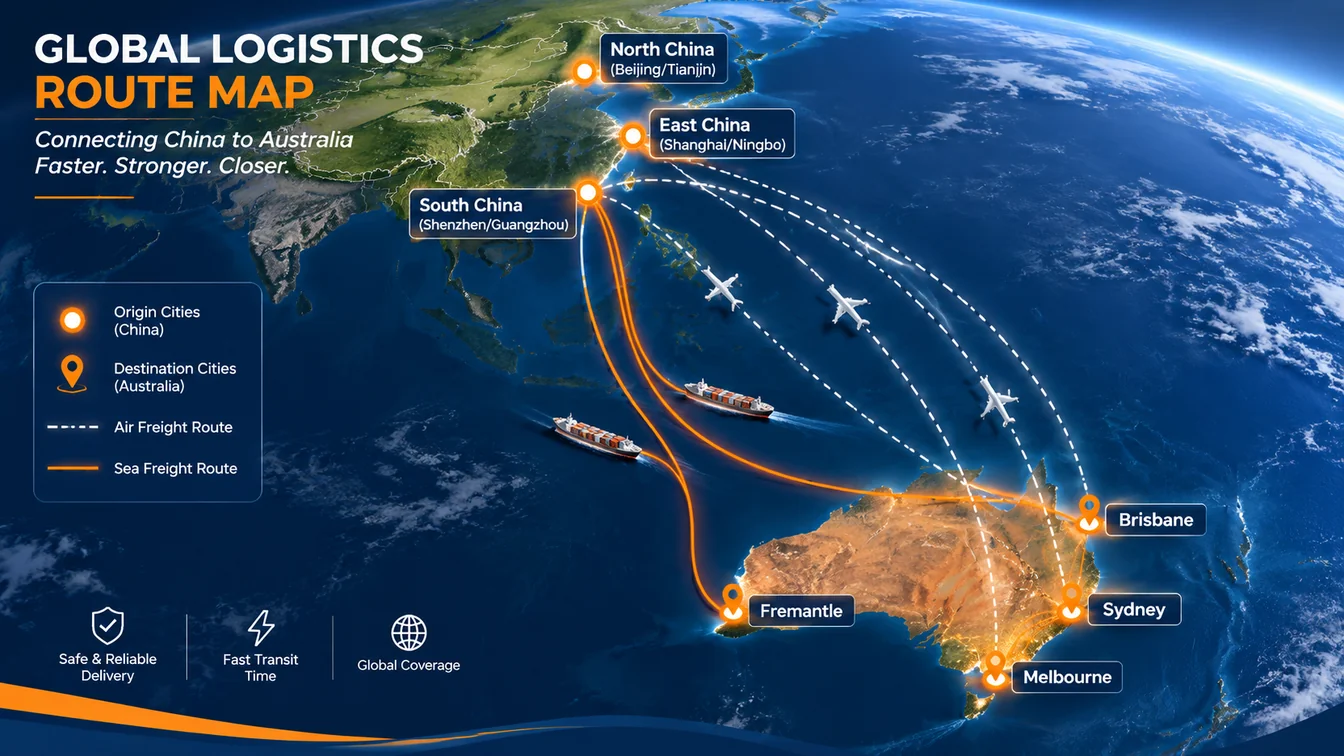
The operational chain runs from the China supplier through a selected origin gateway, onto the applicable transport mode, into an Australian destination gateway — most commonly Sydney for ocean and air — then through Australian Border Force clearance and biosecurity assessment before final delivery. The sections below follow that sequence so each decision is anchored to the route rather than to a general freight overview.
Route Planning Summary
- How does cargo move from the China supplier to the origin gateway?
- The supplier’s province determines which China export port or airport is the practical first handoff. Guangdong suppliers normally route through Shenzhen or Yantian, Zhejiang and Jiangsu cargo through Ningbo or Shanghai, and Shandong cargo through Qingdao. The origin gateway is selected after pickup distance, cargo readiness, and the sailing or flight schedule toward Australia are compared.
- Which transport mode applies to a China-to-Australia shipment?
- FCL ocean freight applies when the cargo fills or nearly fills a 20GP, 40GP, or 40HQ container and urgency does not justify air. LCL applies to smaller volumes that can share container space. Air freight and express apply to urgent or high-value cargo where the per-kilogram cost is justified by speed. Rail is not a practical direct mode for Australia because the destination is an island continent without a land corridor from China.
- What planning time should be used for a China-to-Australia shipment?
- Ocean FCL from China to Sydney Port carries a 20–27 day transit reference; LCL carries an 18–38 day reference; air freight to Sydney Airport carries 3–5 days; and express from Shenzhen to Sydney carries 5–10 working days. These are transit references for the named route and method and do not include supplier pickup, origin handling, Australian clearance, biosecurity inspection, or final delivery.
- Who is responsible for Australian customs clearance?
- The Australian importer — the owner of the goods at the time of import — is responsible for the import declaration, duty and GST liability, and product compliance. A licensed customs broker may lodge the declaration on the importer’s behalf, but the importer remains accountable for the accuracy of the tariff classification, customs value, and origin claims.
- What does final delivery and service scope include?
- Final delivery scope depends on what is agreed at booking: port-to-port, airport-to-airport, door-to-door, or a DDP arrangement each carries a different boundary. Australian postcodes outside metropolitan areas, rural tailgate inspection requirements, and appointment-based receiving windows can change the delivery plan, so the delivery address and receiving conditions should be defined before the service scope is fixed.
China to Australia Shipping Cost
The following table provides route-specific indicative shipping costs and planning transit references for the September 2026 review. Each reference applies to the named route, shipping method, and unit shown in its row.
| Shipping route | Shipping method | Price | Transit time |
|---|---|---|---|
| China → Sydney Port, Australia | FCL 20GP | $2,350–$2,445/container | 20–27 days |
| China → Sydney Port, Australia | FCL 40GP | $4,550–$4,870/container | 20–27 days |
| China → Sydney Port, Australia | FCL 40HQ | $5,020–$5,200/container | 20–27 days |
| China → Australia | LCL | $60–$125/CBM | 18–38 days |
| China → Sydney Airport, Australia | Air freight | $4.30/kg | 3–5 days |
| Shenzhen, China → Sydney, Australia | Express | $16.07/kg | 5–10 working days |
Cost scope: The indicative cost references above apply to the route, method, and unit shown in each row. They are not carrier freight rates, market averages, TJ selling prices, or binding quotations. The actual booking, cargo, and agreed service scope determine the commercial arrangement, including responsibility for pickup, origin handling, main transport, Australian customs clearance, duty and GST, biosecurity inspection, inland delivery, insurance, storage, examination, appointment, and any surcharge items. No row should be read as port-to-port, airport-to-airport, door-to-door, all-inclusive, or duty-paid unless the agreed service scope expressly says so.
Australia Import Duty and Taxes
The amount of Australian duty and GST payable on a China-origin shipment depends on the commodity’s tariff classification, the customs value, the origin status of the goods, applicable trade measures, and current rules at the time of entry; no single rate applies to every shipment. The steps below set out the practical calculation logic for a commercial import.
- Classify the goods under the Australian tariff. The tariff classification determines the general rate of duty. Many manufactured goods from China carry a general rate of 5%, but the applicable rate must be checked against the current Australian tariff for the specific commodity code.
- Establish whether the goods meet ChAFTA origin rules. Goods that originate in China and meet the rules of origin under the China–Australia Free Trade Agreement may qualify for preferential duty treatment, which for many goods is 0%. A valid ChAFTA certificate of origin or origin declaration is required to support the claim.
- Determine the customs value. Australian customs value is generally the price paid or payable for the goods, adjusted in accordance with customs valuation rules. Freight and insurance from the place of export are not part of the customs value used for the low-value threshold, but the value of the taxable importation used for GST includes them.
- Calculate GST on the value of the taxable importation. The standard GST rate is 10%. GST is payable on the value of the taxable importation, which is the customs value plus duty, plus international freight and insurance, plus any applicable charges. For consignments valued at AUD 1,000 or less, different point-of-sale rules may apply as set out by the Australian Taxation Office.
- Add any applicable charges and confirm current rules. An import processing charge and other border charges may apply to consignments over AUD 1,000. Tobacco, alcohol, and certain other products carry additional taxes or duties regardless of value. Customs and tax rules may change, and this explanation is simplified planning guidance, not legal, tax, or compliance advice.
China to Australia Shipping Time
Ocean FCL from China to Sydney Port carries a 20–27 day transit reference, which is the most commercially relevant timing figure for full-container loads on the Australia east coast lane. LCL shipments from China to Australia carry an 18–38 day transit reference, reflecting the additional consolidation and deconsolidation steps. Air freight from China to Sydney Airport carries a 3–5 day reference, and express from Shenzhen to Sydney carries a 5–10 working-day reference.
These transit references apply to the international movement between the named origin and destination gateways. Supplier pickup, China export handling, Australian customs and biosecurity clearance, and final delivery to the consignee’s address occur around that movement and can extend the total door-to-door timeline. The practical timing decision should therefore compare the transit reference against the buyer’s required in-store or in-warehouse date, allowing for the clearance and delivery steps that follow the gateway arrival. For ocean cargo subject to Australian biosecurity inspection, treatment or inspection at an approved arrangement site can add time before the container is released to final delivery.
Shipping Methods from China to Australia
Method selection on the China–Australia lane turns on cargo volume, urgency, handling requirements, and the final delivery postcode; each mode below states the observable condition that makes it the practical choice.
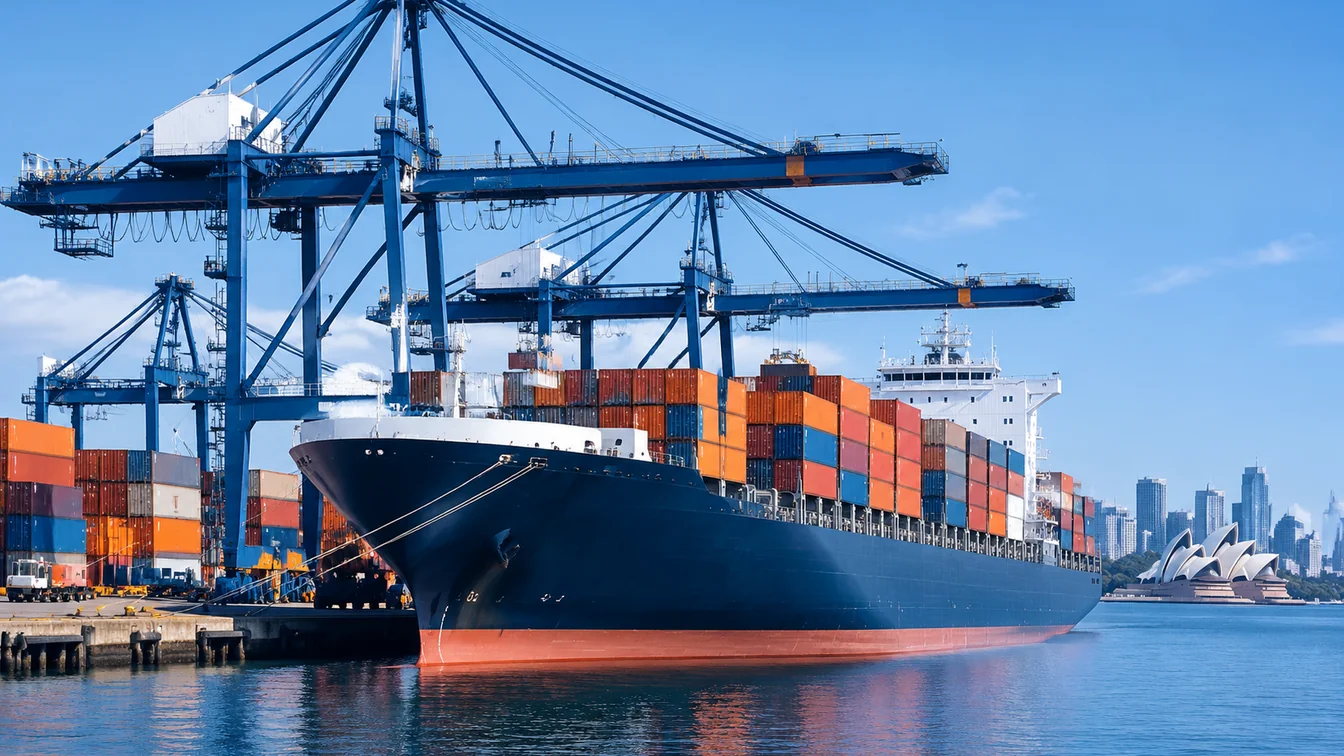
- FCL ocean freight
- Choose FCL when the cargo fills or nearly fills a 20GP, 40GP, or 40HQ container, because the per-container cost is fixed and the container moves under one bill of lading from the China origin port to Sydney or another Australian container port. The condition that can change this choice is a cargo volume too small to justify a full container, where LCL may avoid paying for unused space. FCL also suits cargo that should not be co-loaded with other shippers’ goods or that requires dedicated container cleanliness for Australian biosecurity purposes.
- LCL ocean freight
- Choose LCL when the cargo measures a few cubic metres rather than a full container, because the per-CBM cost reference allows the shipper to pay only for the space used. The condition that can change this choice is urgency or cargo sensitivity: LCL involves consolidation at origin and deconsolidation at an Australian approved arrangement site, and the 18–38 day transit reference reflects those additional handoffs. LCL cargo should be packaged to withstand co-loading and multiple handling points.
- Air freight
- Choose air freight when the shipment is urgent or high-value enough to justify the per-kilogram reference, because the 3–5 day transit to Sydney Airport is materially faster than ocean transit. The condition that can change this choice is the chargeable weight: air freight is billed on the greater of actual weight and volumetric weight, so low-density cargo can make air economics less attractive than the per-kilogram figure initially suggests. Air freight also suits cargo that is time-sensitive but too large for express courier limits.
- Express courier
- Choose express when the shipment is a small parcel or a few cartons that must reach Sydney quickly, because the 5–10 working-day reference from Shenzhen to Sydney is supported by door-to-door courier networks. The condition that can change this choice is shipment size and weight: express couriers apply per-piece and per-shipment limits, and larger consignments may be better served by air freight or LCL. Express is also less suited to cargo requiring special handling or biosecurity treatment on arrival.
Rail-based options are not a credible direct mode for China-to-Australia cargo because Australia has no land connection to China or to any trans-Asian rail corridor. Any rail movement would require an ocean leg, at which point the route is an ocean or multimodal service rather than a direct rail product. The fixed service pages for sea freight, air freight, and express shipping set out the available scopes for those modes.
Door-to-Door Shipping from China to Australia
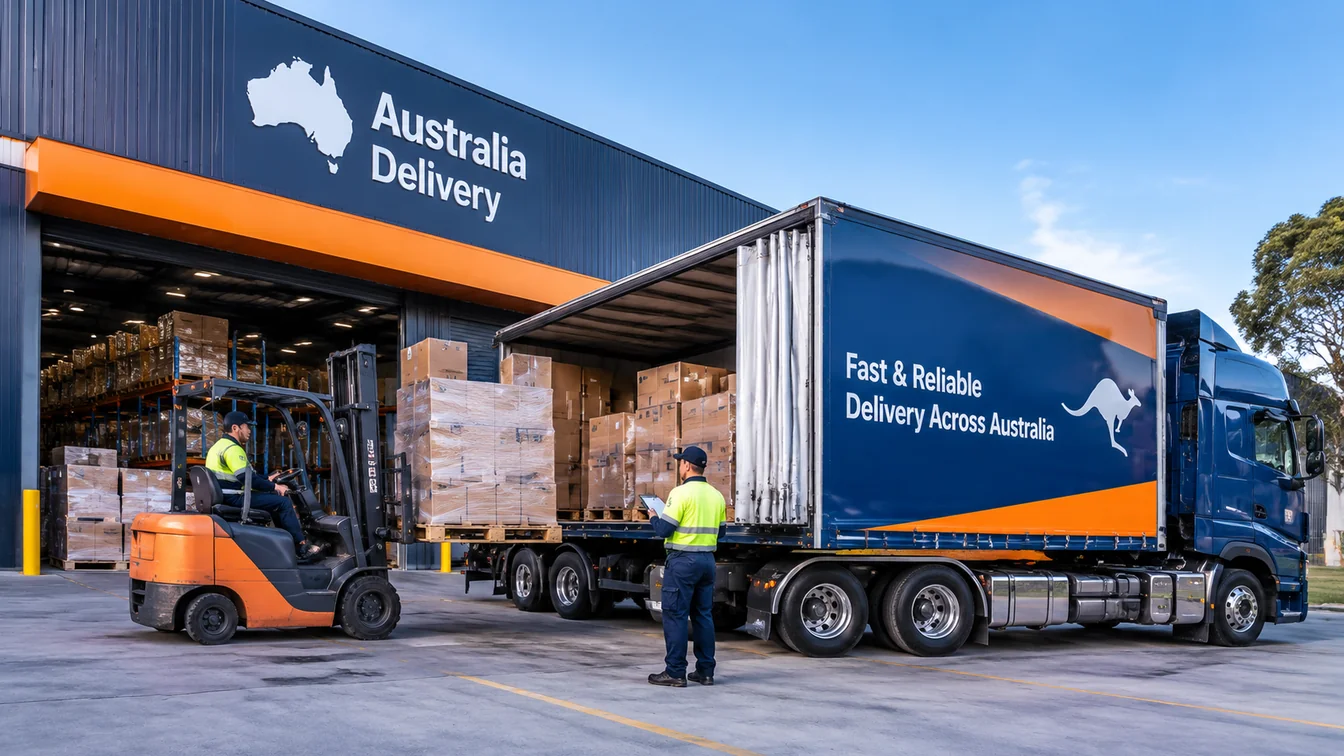
Door-to-door shipping on the China–Australia lane connects supplier pickup, export handling, international movement, Australian import clearance and biosecurity assessment, and final delivery into one coordinated sequence. The eight steps below define the operational handoffs; the agreed service scope determines which party is responsible for each.
-
Cargo and Compliance Review
The shipment is defined by commodity, HS or tariff code, quantity, dimensions, weight, value, origin, and destination postcode. The review flags whether the goods require an Australian import permit, a biosecurity import condition, a ChAFTA origin document, or product-specific certification before the route is booked.
-
Route and Method Selection
The China origin gateway is matched to the supplier location and the Australian destination gateway is matched to the final delivery region. The mode is selected against the cargo definition, urgency, and delivery scope, and the indicative cost reference is read against the agreed service boundary rather than treated as an all-inclusive price.
-
Supplier Coordination and Pickup
Pickup is arranged from the supplier’s factory or warehouse to the chosen China export port or airport. Cargo readiness, packaging condition, labelling, and the documents required for export are checked before the cargo leaves the supplier, because a late or incomplete pickup can miss the booked sailing or flight.
-
China Export Handling
Export declaration, terminal or airport handover, and any origin certificate or inspection are completed at the China gateway. For FCL cargo, the container is packed and sealed; for LCL, the cargo is delivered to a consolidation facility. The transport document and commercial documents are issued at this stage.
-
International Transportation
The main carriage moves the cargo from the China origin gateway to the Australian destination gateway by ocean, air, or express. The transit reference for the selected route and method applies to this leg, and schedule changes or carrier rollovers can move the arrival date.
-
Australia Import Clearance
The Australian importer or a licensed customs broker lodges the import declaration, pays duty and GST where applicable, and responds to Australian Border Force queries. Biosecurity requirements for the cargo, packaging, and container are assessed in parallel, and treatment or inspection at an approved arrangement site may be directed before release.
-
Final Delivery
After clearance and biosecurity release, the cargo moves from the Australian gateway to the consignee’s address. Delivery scope, receiving hours, forklift availability, and whether the postcode attracts a rural or remote delivery condition are confirmed so the final handoff matches the agreed service.
-
Shipment Close-Out
Proof of delivery, final charges, and any examination, storage, or treatment costs are reconciled against the agreed scope. Discrepancies, damage claims, or documents required for future shipments are identified so the next China–Australia movement starts from a complete record.
Main China to Australia Routes
The most practical China-to-Australia route normally starts at a China gateway that limits supplier-side movement while fitting the Australian final delivery area and the credible destination handling available at that gateway. Sydney is the busiest Australian container port and the primary air freight gateway, but Melbourne, Brisbane, and Fremantle each serve distinct delivery regions, and the final postcode, inland distance, and schedule can change which gateway comparison is worthwhile.
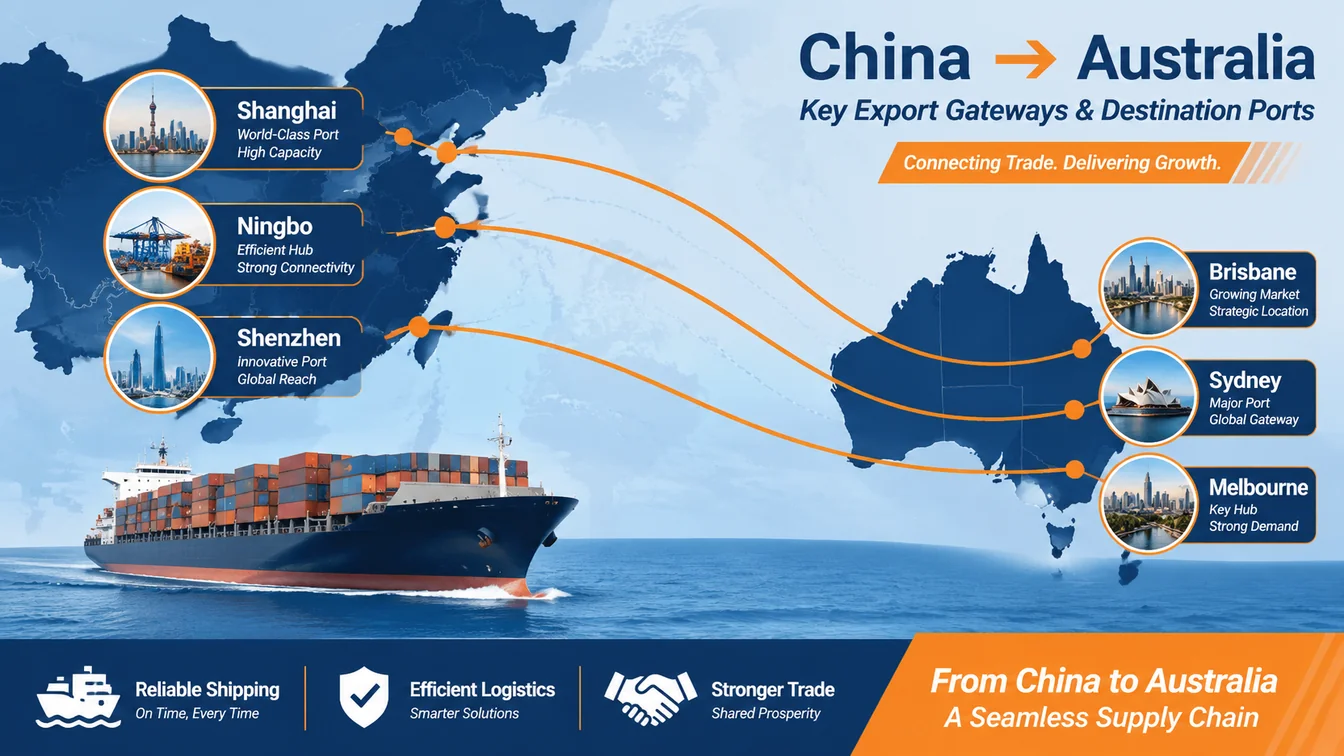
Major China Export Ports for Australia Shipping
- Shanghai
- Shanghai serves suppliers across Jiangsu, Zhejiang, and the Yangtze River Delta and is a principal loading gateway for east coast Australia services. It suits cargo from central and eastern China when the sailing schedule toward Sydney or Melbourne fits the required departure date, and it can be compared with Ningbo for suppliers located between the two ports.
- Ningbo-Zhoushan
- Ningbo-Zhoushan is a deep-water port serving Zhejiang and the broader Yangtze Delta manufacturing base. It is a practical origin gateway for suppliers in Ningbo, Hangzhou, and surrounding industrial areas, particularly when a direct sailing toward Sydney or Melbourne is available and inland trucking to Shanghai would add cost or time.
- Shenzhen/Yantian
- Shenzhen/Yantian serves Guangdong suppliers, including electronics, consumer goods, and light manufacturing clusters in the Pearl River Delta. It is a natural origin gateway for cargo from Shenzhen, Dongguan, Guangzhou, and nearby cities, and it supports both ocean services toward Australian east coast ports and express or air movements from Shenzhen Bao’an International Airport.
- Qingdao
- Qingdao serves Shandong and northern China suppliers and appears on several China–Australia service rotations that call at Sydney, Melbourne, or Brisbane. It is a useful comparison for suppliers in Qingdao, Weifang, and the broader Shandong industrial base when the schedule aligns with the required sailing date and avoids a long southbound repositioning move.
Major Australia Import Ports for Cargo from China
- Port of Sydney (Port Botany)
- Sydney is Australia’s busiest container port and the primary ocean gateway for inbound containerised trade, with strong connections to the national distribution network. It is the natural comparison for final delivery addresses in New South Wales and the Sydney metropolitan area, and the supplied cost table uses Sydney Port as the named ocean destination.
- Port of Melbourne
- Melbourne is Australia’s second-largest container port and a major gateway for consumer goods, industrial equipment, and retail cargo destined for Victoria, Tasmania, and the south-eastern mainland. It should be compared when the final delivery region is Victoria or when a Melbourne call offers a better inland delivery position than Sydney for the same China origin gateway.
- Port of Brisbane
- Brisbane is Queensland’s principal container gateway and receives regular scheduled services from China. It is the practical ocean comparison for final delivery addresses in Queensland and northern New South Wales, particularly when avoiding a southbound inland move from Sydney would reduce road or rail cost.
- Port of Fremantle
- Fremantle is the primary container gateway for Western Australia, serving Perth and the wider WA market. It should be compared when the consignee is in Western Australia, because routing through an east coast port and then moving the cargo west by rail or road can add inland distance and handling compared with a direct Fremantle call.
Supplier Region to Destination Routing Logic
| Supplier region in China | Origin port to compare | Destination port and delivery region | Planning reason |
|---|---|---|---|
| Guangdong (Shenzhen, Dongguan, Guangzhou) | Shenzhen/Yantian | Sydney; delivery to NSW and the Sydney metro area | Yantian offers direct or scheduled ocean services toward Sydney, and the shorter supplier-to-port move reduces origin trucking compared with routing via Shanghai. A final postcode outside the Sydney metro area, or a schedule that does not align with the Yantian sailing, can change the comparison. |
| Zhejiang (Ningbo, Hangzhou, Yiwu) | Ningbo-Zhoushan | Melbourne; delivery to Victoria and south-eastern Australia | Ningbo is the closer origin port for Zhejiang suppliers, and a Ningbo–Melbourne service can position the cargo for Victorian delivery without an extra east coast inland leg. The comparison changes if the carrier schedule favours a Sydney call or if Melbourne port congestion affects the delivery plan. |
| Jiangsu and Shanghai (Suzhou, Wuxi, Shanghai) | Shanghai | Brisbane; delivery to Queensland | Shanghai provides a wide choice of Australia-bound sailings, and a Shanghai–Brisbane rotation can avoid a southbound inland move from Sydney for Queensland consignees. The choice can change if the sailing frequency to Brisbane is lower or if the final delivery is closer to the NSW border than to Brisbane. |
| Shandong (Qingdao, Weifang, Yantai) | Qingdao | Sydney or Melbourne; delivery to the east coast | Qingdao is the natural northern origin gateway, and several China–Australia services include a Qingdao call before proceeding to Sydney or Melbourne. The comparison can change if the Qingdao schedule requires a transhipment or if a direct sailing from a southern port offers a better overall transit and cost position. |
Destination Regional Delivery Logic
- New South Wales and Sydney
- Sydney is the default ocean and air gateway for New South Wales delivery, with the shortest inland move for Sydney metro postcodes. Regional NSW postcodes can require linehaul beyond the metropolitan area, and rural delivery addresses may trigger a rural tailgate inspection for containerised cargo before unpacking.
- Victoria and South-Eastern Australia
- Melbourne is the practical gateway for Victorian delivery and for some south-eastern South Australia and Tasmanian feeder cargo. Melbourne port schedules and inland container park availability determine the final delivery plan, and the comparison against Sydney should include the inland road or rail cost for the destination postcode.
- Queensland and Northern NSW
- Brisbane is the natural Queensland gateway, and it can reduce inland distance for delivery addresses in northern New South Wales compared with a Sydney routing. The comparison against Sydney depends on sailing frequency to Brisbane, the final postcode, and whether the consignee can receive a container directly or requires deconsolidation at an approved arrangement site.
- Western Australia
- Fremantle is the primary container gateway for Western Australia. For Perth and surrounding postcodes, a direct Fremantle call usually avoids the transcontinental inland move that would follow an east coast discharge. The comparison should include Fremantle sailing frequency and any biosecurity requirements applicable to the cargo and packaging.
How the Gateway Is Selected
- Supplier-to-port distance. The China origin gateway that minimises pickup distance and export handling time is normally the starting comparison, unless the sailing schedule from a farther port is materially better for the required departure date.
- Ocean service and schedule. The availability of a scheduled service from the China origin port to the Australian destination port, and the frequency of that service, determines whether the transit reference is achievable for the booking window.
- Final postcode and inland distance. The Australian destination gateway should be compared on the inland delivery cost and transit to the final postcode, not only on the ocean freight reference.
- Biosecurity and destination handling. Some cargo, packaging, or container conditions require treatment or inspection at an approved arrangement site, and the availability of those facilities near the destination gateway can change the practical routing.
- Air versus ocean gateway. When urgency justifies air freight, Sydney Airport is the primary air gateway, and the airport-to-door delivery distance should be compared with the alternative of an ocean gateway plus faster inland transport.
Australia Customs Clearance
Importing goods into Australia requires the importer to make an accurate customs declaration, meet Australian biosecurity requirements, and pay applicable duty and GST. The rules apply across the Commonwealth of Australia, and the Australian Border Force administers customs clearance at the first point of entry. Most commercial consignments valued over AUD 1,000 require an Import Declaration, while consignments valued at AUD 1,000 or less may use a Self-Assessed Clearance Declaration unless a permit or other restriction applies.
What the Australia Importer Normally Needs
The Australian importer or its licensed customs broker normally prepares the following items before the cargo arrives at the Australian gateway.
- Australian Business Number (ABN) The importer generally needs an ABN to do business in Australia, and a customs broker will use it when lodging the import declaration. A non-resident importer should confirm with the broker what identifier is required for the specific transaction.
- Tariff classification and customs value The commodity must be classified under the Australian tariff and the customs value declared. The Australian Border Force import declaration requires the tariff classification, customs value, and a description of how the goods are transported.
- Commercial invoice and packing list The invoice should show the seller, buyer, goods description, quantity, unit value, total value, currency, and Incoterms, and the packing list should reconcile carton counts, dimensions, and weights against the invoice.
- Transport document The bill of lading for ocean cargo or the air waybill for air cargo identifies the consignee, notify party, cargo description, and release instructions and is required for clearance and delivery.
- ChAFTA certificate of origin or origin declaration A valid ChAFTA origin document is needed to claim preferential duty treatment for Chinese-origin goods. Without it, the general tariff rate, commonly 5% for many manufactured goods, may apply.
- Import permit or product approval where required Some goods, including certain chemicals, weapons, tobacco, and restricted products, require an import permit or approval before entry. The importer should check the ABF prohibited and restricted goods guidance for the specific commodity.
- Biosecurity documentation For containerised sea freight, a packing declaration and, where timber packaging is used, treatment certificates meeting Australian requirements should accompany the consignment. The Department of Agriculture, Fisheries and Forestry sets out the non-commodity and timber packaging requirements.
- Broker authorisation If a licensed customs broker lodges the declaration, the importer should provide written authorisation and ensure the broker has the correct importer details and ABN. The importer remains responsible for the accuracy of the declaration.
Common Causes of Australia Customs Delays
- Incorrect or incomplete tariff classification. A wrong commodity code can delay clearance, change the duty rate, or trigger a compliance query, particularly for goods with multiple possible classifications.
- Missing or invalid ChAFTA origin document. A claim for preferential duty without a valid certificate of origin or origin declaration can result in the general rate being applied or the claim being rejected.
- Biosecurity concerns with packaging or container cleanliness. Untreated timber packaging, bark, soil, or plant material can require treatment or inspection at an approved arrangement site before release, and the importer bears the cost.
- Undervalued or inconsistent invoice and packing list. Discrepancies between the declared value and the commercial documents can prompt a valuation query or examination.
- Missing import permit or product approval. Restricted goods presented without the required permit or approval may be held, refused, or exported at the importer’s expense.
- Incorrect consignee or notify party details. An inaccurate bill of lading or air waybill can prevent the broker from lodging the declaration or the carrier from releasing the cargo.
- Late document submission. Documents supplied after the cargo arrives can incur storage or demurrage charges while the declaration is being prepared.
These issues should be resolved before the cargo departs the China origin gateway, because correcting them after arrival generally adds time and cost to the Australian clearance and delivery sequence.
Shipping to Amazon FBA Australia
Amazon Australia operates a fulfilment network that can receive inventory from China, and Amazon provides a cross-border partner solution for shipments from China to Australian fulfilment centres. Sellers using FBA Australia should create an approved inbound shipment plan in Seller Central, apply the required labels and packaging, and deliver to the fulfilment centre assigned by Amazon rather than to an arbitrary warehouse address. The importer of record for an FBA shipment is the seller or the entity named on the customs declaration, and the seller remains responsible for GST registration and compliance where required.
Non-resident sellers shipping to Amazon FBA Australia may need to register for Australian GST from the first sale rather than waiting for the AUD 75,000 turnover threshold, because the threshold generally applies to Australian residents. The Amazon Australia shipping guidance sets out the inbound shipment options, including Amazon SEND Air and Ocean for China-to-Australia shipments, and the requirements for carton labels, box dimensions, and weight limits. The fixed Amazon FBA service page describes the scope TJ Logistics Team can support for this route.
Special Cargo, Packaging, and Insurance
Cargo Requiring Additional Review
- Batteries and dangerous goods. Lithium batteries and other dangerous goods are subject to Australian dangerous goods rules and carrier acceptance requirements, and some categories are not accepted by Amazon FBA Australia.
- Chemicals and liquids. Many chemicals and liquids require an import permit, safety data sheet, or biosecurity assessment, and some are prohibited or restricted.
- Food and agricultural products. Food, plant material, seeds, and animal products are subject to Australian biosecurity import conditions, and some require a permit or treatment before entry.
- Cosmetics and medical goods. These may require product registration, ingredient assessment, or therapeutic goods approval depending on their composition and claims.
- Wood packaging and dunnage. Solid timber packaging must meet Australian treatment and bark-free requirements, and non-compliant packaging can be directed for treatment or export.
- Oversized or temperature-controlled cargo. These categories require equipment, handling, and delivery arrangements that differ from standard container or air freight, and the destination gateway may need to be selected with those requirements in mind.
- Controlled or restricted goods. Weapons, certain chemicals, tobacco, and other controlled goods require permits or approvals before import and should be reviewed before booking.
Packaging Checks
Packaging for a China-to-Australia shipment should protect the cargo through multiple handling points and, for sea freight, through container loading and unloading. The checks below address the conditions that most often affect cargo condition and Australian biosecurity clearance.
- Carton strength and stacking. Cartons should be rated for the stack height and weight they will carry, especially in an LCL consolidation where other shippers’ cargo may be stacked around them.
- Internal protection. Void fill and cushioning should prevent movement inside the carton, and fragile items should be individually wrapped and separated.
- Pallet condition and dimensions. Pallets should be sound and free of bark, and pallet dimensions should be checked against container or air cargo limits to avoid wasted space or handling delays.
- Moisture protection. Ocean containers can experience condensation, so moisture-sensitive cargo should be protected with liners, desiccants, or sealed packaging as appropriate.
- Handling marks and labels. Shipping marks, carton numbering, and handling instructions should match the packing list and be legible to terminal, customs, and delivery staff.
- Timber packaging treatment. Solid wood packaging and dunnage should be ISPM 15 treated and accompanied by a valid treatment certificate where required, and the timber should be free of bark.
Cargo Insurance
Carrier liability is limited and is not the same as cargo insurance; it does not cover every cause of loss or damage across the full door-to-door journey. Cargo insurance coverage, exclusions, deductible, insured value, claims evidence, and the coverage period should be confirmed against the specific shipment and service scope before departure. The fixed cargo insurance service page sets out the coverage arrangement available for this route.
Why Use a Freight Forwarder for Shipping from China to Australia?
A freight forwarder helps the buyer solve three practical problems on the China–Australia lane: turning cargo facts into a workable shipment definition, selecting a credible route and mode, and keeping commercial and operational handoffs aligned so the importer, supplier, carrier, broker, and delivery parties are working from the same scope.
- Defining the shipment from incomplete inputs
- The buyer may know the product and the destination but not the chargeable weight, the container utilisation, or the tariff code implications. A forwarder helps convert the available cargo facts into a movement definition that can be quoted and booked. The condition that can change the approach is missing critical data such as dimensions or value, which must be resolved before a reliable next decision is possible.
- Matching mode and gateway to the actual requirement
- The route comparison must fit the China supplier location, cargo form, urgency, Australian delivery area, and biosecurity exposure rather than defaulting to a single gateway or mode. A forwarder compares credible ocean, air, and express options against those inputs. The condition that can change the recommendation is a schedule change, a destination postcode that affects inland cost, or a cargo condition that requires treatment or a specialised gateway.
- Keeping commercial and operational handoffs aligned
- The buyer, supplier, carrier, customs broker, and final-delivery party each hold a different part of the shipment, and misaligned documents or responsibilities can delay clearance or delivery. A forwarder coordinates the sequence and records the agreed scope. The condition that can change the plan is a document discrepancy, a customs or biosecurity query, or a change in cargo readiness that requires the next handoff to be re-timed.
How TJ Logistics Team Plans a China-to-Australia Shipment
- Shipment definition review
- TJ Logistics Team reviews the commodity, tariff code, dimensions, weight, value, origin, destination postcode, and required delivery date, and flags any information gap that prevents a reliable mode or route comparison. Missing dimensions, unclear product composition, or an unconfirmed delivery address are examples of gaps that are raised before a booking decision is made.
- Transport and gateway comparison
- The team compares credible China origin gateways, ocean and air services, and Australian destination gateways against the defined shipment and urgency. The comparison includes transit references, schedule fit, destination handling, and the biosecurity implications of the cargo and packaging, rather than presenting a single default as universally suitable.
- Service boundary and responsibility record
- Before a formal commercial arrangement is prepared, the team records the agreed service boundary, including which parties are responsible for pickup, export handling, main transport, Australian clearance, duty and GST, and final delivery. This record is used to keep the commercial and operational expectations aligned and to identify the next handoff.
- Booking and document coordination
- After the buyer confirms the agreed scope, the team coordinates booking information, commercial documents, cargo handoff, and the next operational decision if timing, route, documents, or receiving conditions change. The fixed door-to-door service page and customs brokerage service page describe the scopes available for these handoffs.
China to Australia Shipping FAQ
How much does a 20ft container from China to Australia cost?
A 20GP container from China to Sydney Port is referenced at $2,350–$2,445 per container for September 2026, with a 20–27 day transit reference. The figure applies to the named route and equipment unit and is an indicative cost reference, not a carrier freight rate or an all-inclusive door-to-door price. The 40GP and 40HQ references for the same route are $4,550–$4,870 and $5,020–$5,200 per container respectively.
How long does sea freight from China to Australia take?
Ocean FCL from China to Sydney Port carries a 20–27 day transit reference, and LCL from China to Australia carries an 18–38 day reference for September 2026. These figures describe the international movement between the named gateways and do not include supplier pickup, Australian customs and biosecurity clearance, or final delivery, so the door-to-door timeline should allow for those steps in addition to the transit reference.
What is the most cost-effective way to ship from China to Australia?
FCL ocean freight is normally the practical default for full-container loads on the China–Australia route because the per-container cost is fixed and the 20–27 day transit reference to Sydney Port suits non-urgent replenishment. LCL can be more economical for volumes of a few cubic metres, while air freight and express carry higher per-kilogram references and are justified only when speed or cargo value outweighs the transport cost. The shipment’s actual volume, weight, and urgency determine which mode is the practical cost choice.
Which China port is best for shipping to Australia?
The practical default is normally the closest major China export gateway to the supplier that has a suitable scheduled service toward the Australian destination entry area. Guangdong suppliers usually compare Shenzhen/Yantian, Zhejiang suppliers compare Ningbo-Zhoushan, Jiangsu and Shanghai suppliers compare Shanghai, and Shandong suppliers compare Qingdao. The final Australian postcode and the sailing schedule can change which of those gateways offers the better overall route, so no single China port is universally best for every Australia shipment.
Can I ship door-to-door from China to Australia?
Door-to-door shipping from China to Australia can be arranged as a coordinated service covering supplier pickup, China export handling, international transport, Australian import clearance, and final delivery. The service boundary must be agreed in advance because the importer remains responsible for the customs declaration, duty, and GST, and the forwarder’s role is operational coordination rather than replacing the importer of record. A rural or remote Australian postcode, or cargo subject to biosecurity treatment, can change the final-delivery scope.
What documents should be prepared before shipping from China to Australia?
A commercial invoice, packing list, bill of lading or air waybill, and tariff classification details should be prepared before departure, together with a ChAFTA certificate of origin or origin declaration if preferential duty is being claimed. For containerised sea freight, a packing declaration and, where solid timber packaging is used, a valid ISPM 15 treatment certificate should accompany the cargo. Restricted goods may also require an import permit or product approval before the shipment arrives.
Why can two China-to-Australia shipping costs differ?
Two quotes for the same China-to-Australia lane can differ because they may cover different service scopes, such as port-to-port versus door-to-door, or include different responsibilities for origin pickup, Australian clearance, duty and GST, biosecurity treatment, and final delivery. The mode, equipment size, sailing date, cargo weight or volume, and destination postcode can also change the cost reference. A lower figure should be compared against the agreed scope rather than treated as a like-for-like saving.
Does shipping to Amazon FBA Australia require GST registration?
Non-resident sellers shipping to Amazon FBA Australia may need to register for Australian GST from the first sale rather than waiting for the AUD 75,000 turnover threshold, which generally applies to Australian residents. GST on low-value imported goods is also collected at the point of sale for goods valued at AUD 1,000 or less sold to Australian consumers. Sellers should confirm their registration position with the Australian Taxation Office before their first FBA shipment.