

Reviewed by TJ Logistics Team — November 2026. This route page reflects a practical planning review of market, cost, customs, tariff, and marketplace information available for the China–Thailand lane during November 2026. The review applies route-planning checks across supplier pickup, gateway and mode selection, customs handoff, and final delivery; time-sensitive rules should be confirmed against current official guidance before dispatch or entry.
Shipping from China to Thailand: Route Update
A Shanghai-to-Bangkok Port FCL 20GP shipment is listed at $241.92–$249.48 per container with an 11-day transit reference, making ocean FCL the default commercial baseline for planned, non-urgent cargo on this lane.
For time-critical consignments, air freight from China to Bangkok is listed at $2.65–$3.90/kg with a 2–5 day transit window, while the China–Laos–Thailand rail-led multimodal option from Chongqing reaches Bangkok in 8 days. The route decision then turns on cargo readiness, supplier location, and whether the final delivery point is a Bangkok-area address, an Amazon fulfillment center, or an inland destination requiring onward trucking.
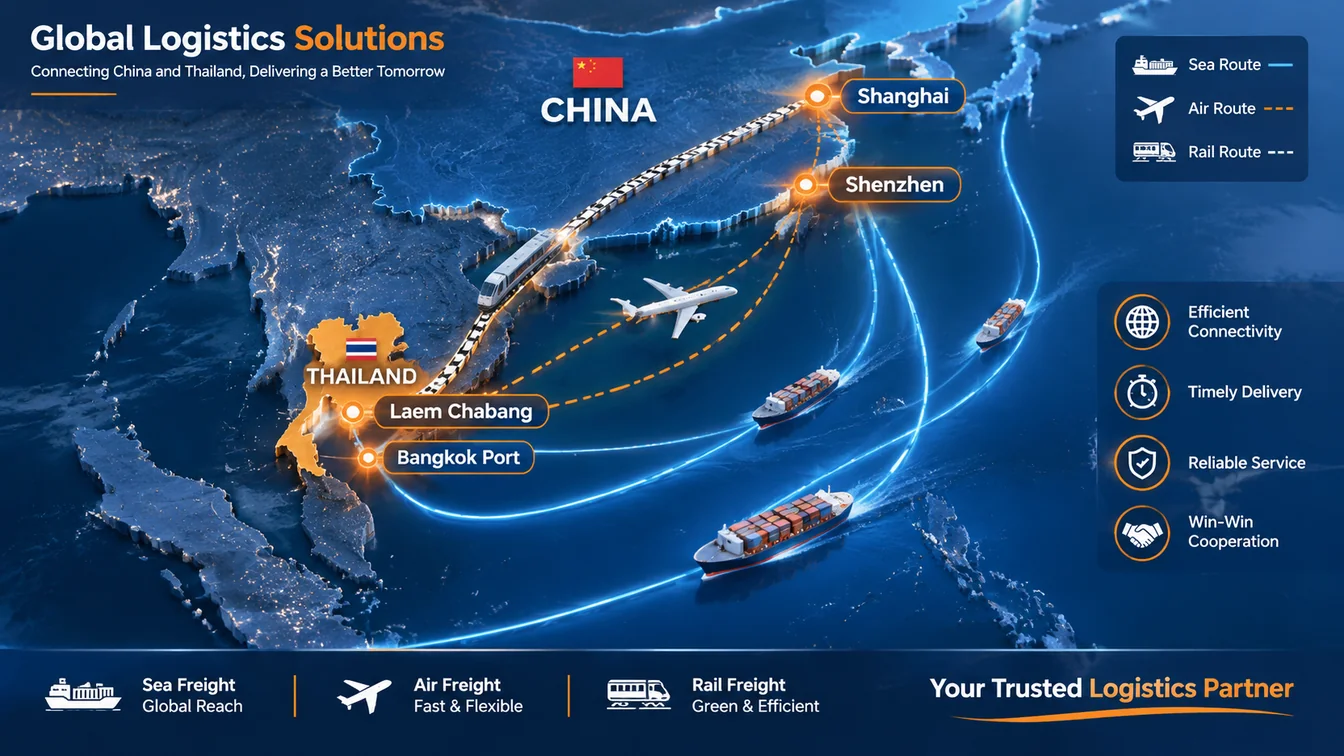
Route Planning Summary
- How does cargo move from a China supplier to the origin gateway?
- The supplier’s province determines the practical origin gateway: Shanghai and Ningbo-Zhoushan serve East China, Shenzhen/Yantian serves South China, and Qingdao serves North and Northeast China. Supplier pickup or consolidation at the named origin port should be confirmed before booking, because the city pair in the cost table does not by itself prove a door pickup scope.
- Which transport mode fits a China-to-Thailand shipment?
- Ocean FCL suits planned, volume-stable cargo with no urgent delivery deadline. Air freight and express are appropriate when urgency or high value per kilogram outweighs the higher per-unit cost, while rail-led multimodal via Laos offers an intermediate option for Chongqing-area cargo with an 8-day planning reference.
- What planning time should be allowed for China-to-Thailand shipping?
- Sea freight from Shanghai to Bangkok Port carries an 11-day transit reference for FCL and an 11–17 day reference for LCL; air freight is listed at 2–5 days and express at 3–6 working days. These are movement references, not total door-to-door durations, so customs clearance and final delivery should be added when the shipment requires a delivered timeline.
- Who is responsible for Thailand import clearance?
- The Thai importer of record is responsible for the import declaration, duty and VAT payment, and any product-specific licence. A customs broker can prepare and submit the entry, but the importer remains accountable for the accuracy of the declared value, commodity code, and origin.
- What final-delivery scope should be compared?
- Port-to-port ocean pricing ends at Bangkok Port or Laem Chabang and excludes inland trucking, while door-to-door service extends the scope through clearance and final delivery. For Amazon FBA, the delivery endpoint is an assigned fulfillment center rather than a commercial consignee, which adds appointment and labeling requirements.
China to Thailand Shipping Cost
The table below provides route-specific indicative shipping costs and planning transit references for the current November 2026 review. Each reference applies to its named route, method, and unit as shown.
| Shipping route | Shipping method | Price | Transit time |
|---|---|---|---|
| Shanghai, China → Bangkok Port, Thailand | FCL 20GP | $241.92–$249.48/柜 | 11 days |
| Shanghai, China → Bangkok Port, Thailand | FCL 40GP | $435.24–$449.28/柜 | 11 days |
| Shanghai, China → Bangkok Port, Thailand | FCL 40HQ | $439.56–$453.60/柜 | 11 days |
| China → Bangkok Port, Thailand | LCL | $10/CBM | 11–17 days |
| China → Bangkok, Thailand | Air freight | $2.65–$3.90/kg | 2–5 days |
| China → Thailand | Express (DHL, 1kg shipment) | $43.01/kg | 3–6 working days |
Cost scope: The indicative cost references above apply to the route, method, and unit shown; they are not carrier freight rates, market averages, TJ selling prices, or binding quotations. The actual booking, cargo, and agreed service scope determine the commercial arrangement, including responsibility for relevant pickup, handling, customs, duty and tax, inland delivery, insurance, storage, examination, appointment, and surcharge items.
Thailand Import Duty and Taxes
Thailand import duty and VAT are calculated on the CIF value plus applicable duty, and the combined burden is at least 17% for most imports following the removal of the low-value duty exemption on 1 January 2026; the exact amount depends on the eight-digit Thai tariff line, declared customs value, origin, and any applicable free trade agreement or product-specific control.
The simplified calculation sequence below reflects current official guidance as of the November 2026 review; it is not tax advice and does not replace a binding tariff ruling or a licensed customs broker’s declaration.
- Classify the product to its eight-digit Thai tariff line and read the general rate, any FTA rate, and control notes in the official Thai Customs tariff.
- Establish the CIF customs value from the commercial invoice, freight, and insurance; Thai Customs may adjust the declared value if supporting evidence is insufficient.
- Calculate import duty by applying the applicable tariff rate to the CIF value; for low-value goods the starting rate is 10%, while higher-value and category-specific lines follow the published tariff.
- Calculate 7% VAT on the sum of CIF value plus import duty, then add any excise tax, interior tax, or product-specific levy that applies to the commodity.
- Confirm whether an ASEAN–China FTA certificate of origin or another preferential instrument reduces the duty rate, and ensure the importer of record is eligible to claim it.
China to Thailand Shipping Time
Sea freight from Shanghai to Bangkok Port carries an 11-day transit reference for FCL 20GP, 40GP, and 40HQ, and an 11–17 day reference for LCL, making ocean the slower but generally more economical option for planned cargo.
Air freight from China to Bangkok is listed at 2–5 days, while express shipments on a 1kg DHL basis carry a 3–6 working day reference. The China–Laos–Thailand rail-led multimodal service from Chongqing to Bangkok is listed at 8 days, and scheduled express freight trains on this corridor have been reported to complete the journey to Laem Chabang in five to six days under current operations. The supplied transit values are planning references for the named route and method; total door-to-door time will also include supplier pickup, export handling, Thailand import clearance, and final delivery, each of which can vary by cargo and appointment availability.
Shipping Methods from China to Thailand
- FCL (full container load)
- Choose FCL when the cargo fills or nearly fills a 20GP, 40GP, or 40HQ container, because the per-container indicative cost from Shanghai to Bangkok Port is more economical than paying LCL per-CBM for a comparable volume, and the sealed container reduces handling exposure. The condition that can change this choice is a shipment volume that remains well below a container minimum even after consolidation.
- LCL (less than container load)
- Choose LCL when the cargo is too small to justify a dedicated container and the shipment can accept the longer 11–17 day consolidation and deconsolidation window, because LCL allows the buyer to pay only for the occupied cubic meters at the listed $10/CBM reference. The condition that can change this choice is a delivery deadline that cannot tolerate the additional handling time at origin or destination.
- Air freight
- Choose air freight when the cargo is time-sensitive, high-value, or needed to replenish stock before a selling window, because the 2–5 day transit reference from China to Bangkok is substantially faster than ocean and the $2.65–$3.90/kg cost reference applies to chargeable weight rather than container space. The condition that can change this choice is a shipment whose volumetric weight is high relative to its actual weight, which may shift the effective cost toward express or a different consolidation plan.
- Express (DHL and similar couriers)
- Choose express when the shipment is a small, urgent parcel or a sample that must clear customs through an integrated carrier network, because the 3–6 working day reference and door-to-door handling reduce the buyer’s coordination burden for low-weight consignments. The condition that can change this choice is a per-kilogram cost reference of $43.01 for a 1kg shipment, which becomes less attractive as weight scales and air freight or LCL may then offer a lower total cost.
- Rail-led multimodal (China–Laos–Thailand)
- Choose rail-led multimodal when the supplier is in or near Chongqing and the cargo can move on a fixed rail schedule through Laos into Thailand, because the 8-day transit reference sits between air and ocean and scheduled express services on this corridor have demonstrated reliable transit. The condition that can change this choice is a supplier located far from the Chongqing rail assembly point or a cargo profile that requires equipment not available on the rail corridor.
Door-to-Door Shipping from China to Thailand
A door-to-door China-to-Thailand shipment follows a defined sequence from supplier premises through Thailand import clearance to the final delivery address; the steps below show where each party’s responsibility begins and ends so the buyer can compare service scopes accurately.
-
Cargo and Compliance Review
TJ Logistics Team reviews the product description, declared value, quantity, dimensions, weight, and destination postcode to determine whether the cargo is restricted, requires a Thai import licence, or falls under FDA or TISI control. This review flags information gaps before a mode or route is selected, because an incomplete commodity definition can later delay clearance or change the applicable duty rate.
-
Route and Method Selection
The route is selected by matching the supplier’s province to a practical origin gateway, the cargo profile to a credible mode, and the final delivery area to a destination gateway. For example, a Shanghai supplier shipping planned palletized cargo to a Bangkok warehouse would normally compare FCL via Bangkok Port, while a Chongqing supplier with time-sensitive components may compare the rail-led multimodal option.
-
Supplier Coordination and Pickup
The supplier is asked to confirm cargo readiness, packaging, labeling, and the pickup address, and TJ Logistics Team coordinates the collection or consolidation step with the origin warehouse or trucker. The agreed service scope determines whether pickup is included or whether the supplier delivers to the origin terminal.
-
China Export Handling
Export declaration, terminal handover, and any required China-side inspection are arranged so the cargo can be loaded or consolidated for the selected mode. The supplier’s export documentation and the booking details must align before the container is gated in or the air cargo is tendered.
-
International Transportation
The cargo moves under the booked ocean, air, express, or rail-led multimodal service to the Thailand entry point, with the carrier or operator responsible for the main leg. Transit performance on this leg is reflected in the route-specific planning references, but the international movement is only one segment of the total door-to-door timeline.
-
Thailand Import Clearance
The Thai importer of record or its licensed customs broker submits the import declaration, pays duty and VAT, and responds to any examination or document request. TJ Logistics Team coordinates the handoff by ensuring the commercial invoice, packing list, transport document, and any licence or certificate are consistent before the entry is filed.
-
Final Delivery
After release, the cargo is moved from the port, airport, or rail terminal to the final delivery address or, for FBA shipments, to the Amazon fulfillment center assigned in the seller’s shipment plan. Final delivery may require a trucking appointment, tailgate or loading-dock access, and for FBA a carton-label and pallet check before the warehouse will accept the goods.
-
Shipment Close-Out
Proof of delivery, final charges, and any exception or damage report are reconciled so the buyer has a complete record of the movement. Close-out also captures lessons for the next shipment, such as a recurring customs query, a supplier packaging issue, or a delivery window that should be adjusted.
Main China to Thailand Routes
The most practical China-to-Thailand route normally starts at a China gateway that limits supplier-side inland movement while still connecting to a credible Thailand entry point for the final delivery area; the comparison changes when the supplier is far from a major export port, when the final postcode sits outside the Bangkok metropolitan area, or when the cargo requires a specialized terminal or equipment that is not available at every gateway.
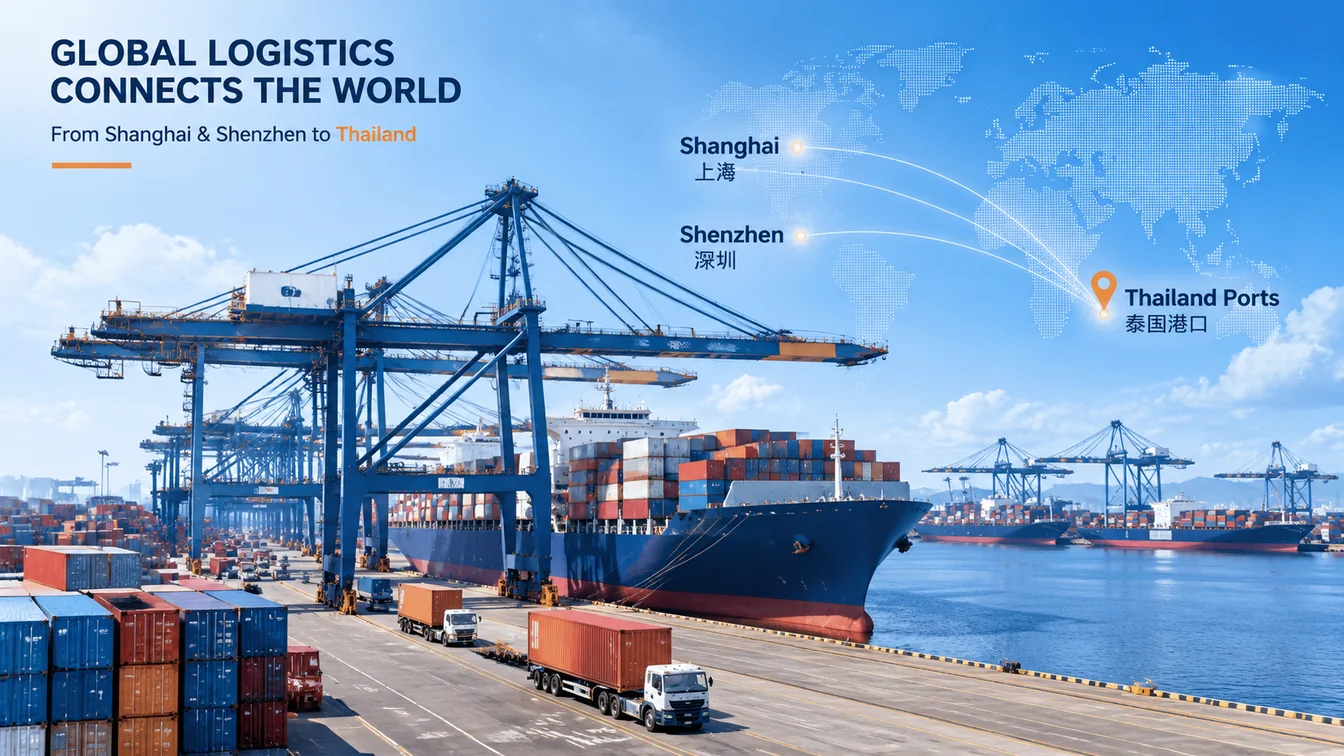
Major China Export Ports for Thailand Shipping
- Shanghai
- Shanghai serves suppliers across the Yangtze River Delta and eastern China, and it is the origin named in the supplied FCL and LCL cost references for Bangkok Port. Cargo from Jiangsu, Zhejiang, and Shanghai itself can usually reach the port with shorter inland trucking than South China alternatives, but a final delivery area in southern Thailand may still make a South China gateway worth comparing.
- Ningbo-Zhoushan
- Ningbo-Zhoushan handles a large share of East China’s export container volume and provides an alternative for Zhejiang-based suppliers that may face congestion or schedule constraints at Shanghai. It should be compared when the supplier is in Zhejiang or northern Fujian and the sailing schedule offers a better connection to Laem Chabang or Bangkok than the Shanghai options.
- Shenzhen/Yantian
- Shenzhen/Yantian is the natural gateway for suppliers in Guangdong and the Greater Bay Area, particularly for electronics, consumer goods, and e-commerce cargo. A South China supplier can often reduce origin trucking by using Yantian, but the buyer should confirm the sailing frequency and the destination port pair rather than assuming that every vessel calls at the same Thai terminal.
- Qingdao
- Qingdao serves Shandong, northern China, and parts of the Bohai Rim, and it can be the practical export port for suppliers in that region when the cargo is destined for Thailand. It should be compared when the supplier is closer to Qingdao than to Shanghai or Ningbo, but the final routing still depends on the available vessel schedule and the Thailand delivery point.
- Chongqing (rail-led multimodal)
- Chongqing is the origin for the supplied China–Laos–Thailand rail-led multimodal reference and has become a practical inland gateway for western and central China cargo that does not need to move to a coastal seaport. It should be compared when the supplier is in Chongqing or nearby provinces and the buyer values the 8-day transit reference over the lower per-unit cost of ocean FCL.
Major Thailand Import Ports for Cargo from China
- Bangkok Port (Khlong Toei)
- Bangkok Port is a river port close to the Bangkok metropolitan center and is the destination named in the supplied FCL and LCL cost references. It is relevant for cargo whose final delivery area is Bangkok or the surrounding urban zone, but the port’s draft and access limits mean that many deep-sea container services call at Laem Chabang instead and use Bangkok Port or an inland container depot for regional distribution.
- Laem Chabang Port
- Laem Chabang is Thailand’s main deep-sea container gateway, located on the eastern seaboard and connected to the Bangkok metropolitan area by road and rail through the Lat Krabang inland container depot. It should be compared for larger container vessels, for cargo requiring a wider range of carrier services, and for shipments whose final delivery area is in eastern Thailand or the Laem Chabang industrial zone.
- Lat Krabang Inland Container Depot (ICD)
- Lat Krabang ICD functions as a dry port for Bangkok and the surrounding region, with rail access to Laem Chabang and proximity to Suvarnabhumi Airport. It is a practical customs clearance and consolidation point for cargo that does not need to be handled at the deep-sea terminal itself, particularly when the final delivery is in the Bangkok area or when a rail-led multimodal service terminates inland.
- Suvarnabhumi Airport
- Suvarnabhumi Airport is the main air cargo gateway for Bangkok and is the relevant entry point for the supplied air freight and express references. It should be compared when the shipment is time-sensitive or high-value, but the airport’s clearance and delivery process is separate from the ocean terminals and should be planned as a distinct handoff.
Supplier Region to Destination Routing Logic
| Supplier region in China | Origin port to compare | Destination port and delivery region | Planning reason |
|---|---|---|---|
| Yangtze River Delta (Shanghai, Jiangsu, Zhejiang) | Shanghai or Ningbo-Zhoushan | Bangkok Port or Laem Chabang; Bangkok metropolitan delivery | Shanghai is the origin in the supplied cost references and offers frequent sailings; Ningbo-Zhoushan should be compared when the supplier is in Zhejiang and a different schedule or carrier service improves the routing. Final postcode, current sailing schedule, and whether the cargo is FCL or LCL can change the gateway choice. |
| South China (Guangdong, Fujian) | Shenzhen/Yantian | Laem Chabang; eastern seaboard or Bangkok via ICD | Yantian reduces origin trucking for Guangdong suppliers and connects to a range of ocean carriers serving Thailand; the comparison changes when the final delivery is in northern Thailand and an inland ICD or a different port pair offers a shorter inland leg. |
| North and Northeast China (Shandong, Hebei, Liaoning) | Qingdao | Laem Chabang; Bangkok or upcountry delivery via truck | Qingdao is the closest major export port for many northern suppliers, but the buyer should compare the sailing frequency and the destination handling cost against Shanghai or Ningbo before booking. Final delivery distance from Laem Chabang and the required equipment can change the economics. |
| Western and Central China (Chongqing, Sichuan, Henan) | Chongqing (rail-led multimodal) | Bangkok (rail terminal) or Laem Chabang via rail corridor | The China–Laos–Thailand rail corridor offers a direct inland option with an 8-day planning reference from Chongqing, avoiding the need to truck cargo to a coastal seaport; the comparison changes when the supplier is not near the rail assembly point or the cargo requires a container type not available on the corridor. |
Destination Regional Delivery Logic
- Bangkok Metropolitan Region
- Bangkok and its surrounding provinces are best served through Bangkok Port, Lat Krabang ICD, or Laem Chabang followed by truck, depending on the carrier service and the final delivery appointment. The short inland distance keeps trucking cost relatively low, but urban congestion and FBA appointment windows can extend the final-mile time beyond the port-to-port transit reference.
- Eastern Seaboard (Chonburi, Rayong)
- The eastern seaboard around Laem Chabang and Rayong is the most direct delivery region for cargo arriving at Laem Chabang Port, with shorter trucking distances and access to industrial estates and distribution centers. It should be compared when the final consignee is in this zone, because routing through Bangkok Port would add unnecessary inland movement.
- Northern and Northeastern Thailand (Chiang Mai, Khon Kaen, Udon Thani)
- Upcountry delivery to northern and northeastern provinces usually requires an additional inland truck leg from Laem Chabang or Bangkok, and the rail-led multimodal corridor through Laos may offer a different inland entry point. The choice depends on the final postcode, the receiver’s unloading capability, and whether the cargo can move on a scheduled linehaul or requires a dedicated truck.
- Southern Thailand (Phuket, Hat Yai, Songkhla)
- Southern Thailand delivery normally involves either a longer truck leg from Bangkok or Laem Chabang or a coastal feeder service to Songkhla, and the route comparison should include the total inland cost rather than only the ocean freight. The condition that can change the choice is a final delivery area that is closer to a southern port or a transshipment option via Malaysia.
How the Gateway Is Selected
Gateway selection on the China-to-Thailand lane is a sequence of practical checks rather than a single “best port” decision; the checks below connect the supplier, the cargo, and the final delivery point.
- Confirm the supplier’s exact city and the inland trucking distance to each candidate origin port, because a lower ocean rate can be offset by a longer origin haul.
- Match the cargo form to the gateway: FCL and LCL move through different terminal and consolidation processes, and air or express cargo should be routed through an airport rather than a seaport.
- Check whether the destination delivery area is better served by Bangkok Port, Laem Chabang, Lat Krabang ICD, or Suvarnabhumi Airport, and whether the final receiver has a loading dock or requires a tailgate delivery.
- Compare the available sailing or flight schedule against the required delivery window, because a port with a lower rate but an infrequent schedule may not meet the planning timeline.
- For FBA cargo, confirm the assigned fulfillment center before booking, since Amazon may route inventory to BKK1, BKK2, or another node and the delivery appointment must match the shipment plan.
Thailand Customs Clearance
Importing goods into Thailand requires a Thai importer of record, an accurate customs declaration, supporting commercial and transport documents, and payment of applicable duty and VAT; the rules apply across the Kingdom of Thailand’s customs territory and do not extend to separate customs jurisdictions.
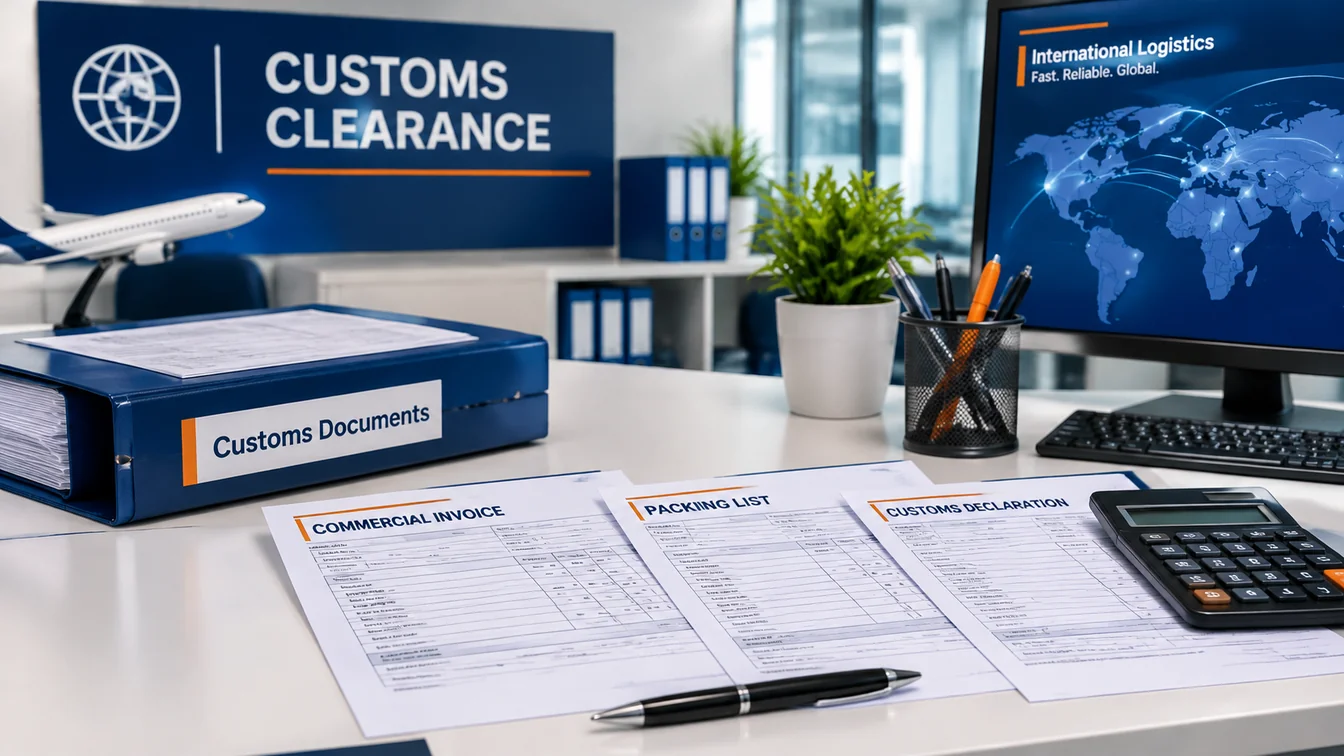
What the Thailand Importer Normally Needs
The importer of record is normally a Thai-registered entity or a foreign entity with a valid Thai tax and customs registration, and the following items should be prepared before the import declaration is filed.
- Importer registration and tax ID The importer must be registered with the Thai Customs Department and hold a Thai tax identification number; a foreign buyer without a Thai entity may need to appoint a registered importer or use a service that provides one.
- Eight-digit Thai tariff classification The commodity must be classified to the Thai tariff line, because the duty rate and any control or licensing requirement depend on the eight-digit code.
- Commercial invoice and packing list The invoice should show the transaction value, currency, Incoterm, seller and buyer details, and a precise goods description; the packing list should show carton counts, dimensions, weights, and marks.
- Transport document A bill of lading for sea freight, an air waybill for air freight, or the corresponding rail or multimodal transport document is required to link the cargo to the declaration.
- Certificate of origin or FTA form If an ASEAN–China FTA or other preferential rate is claimed, a valid certificate of origin must be presented and the importer must meet the origin and direct-consignment rules.
- Product-specific licence or FDA registration Food, cosmetics, medical devices, pharmaceuticals, hazardous substances, and certain consumer products require Thai FDA or another regulator’s approval before import; the licence is normally held by a Thai-registered importer.
- Customs broker authorization If a customs broker files the entry on the importer’s behalf, a power of attorney or authorization letter should be in place and the broker’s responsibilities should be clearly scoped.
- Insurance certificate If cargo insurance was purchased, the certificate should be available to support the CIF value and any potential claim.
Common Causes of Thailand Customs Delays
- The declared value is not supported by a complete invoice or payment evidence, leading to a valuation query.
- The eight-digit tariff classification is incorrect or inconsistent with the goods description, which can change the duty rate or trigger a control review.
- A required FDA licence, TISI certificate, or other product approval is missing or held by the wrong entity.
- The certificate of origin is invalid, incomplete, or does not meet the direct-consignment rule for the claimed FTA rate.
- The transport document, packing list, and invoice show different weights, marks, or consignee details.
- The importer of record has not completed customs registration or has an outstanding tax or compliance issue.
- For FBA cargo, the shipment arrives without a valid appointment or with carton labels that do not match the assigned fulfillment center.
These issues are normally easier to resolve before departure than after the cargo has arrived, because the supplier, importer, and broker can correct documents or obtain approvals without incurring storage or demurrage.
Shipping to Amazon FBA Thailand
Amazon operates fulfillment centers in Thailand, including BKK1 and BKK2 in the Bangkok area, and a China-to-Thailand FBA shipment must satisfy both Thai import law and Amazon’s inbound requirements; the seller or its designated agent must act as the importer of record, because the fulfillment center does not take that role.
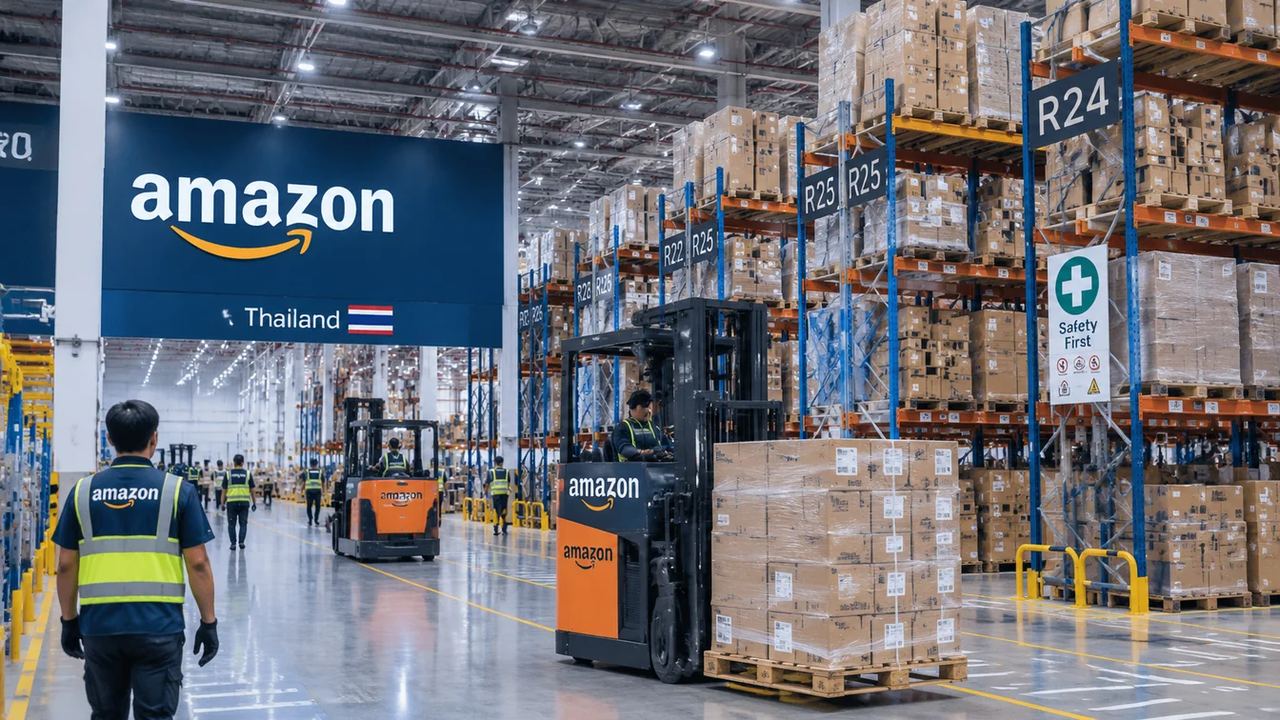
The shipment plan inside the seller’s Amazon account assigns the destination fulfillment center and specifies the carton labels, pallet configuration, and appointment process. Thai import clearance must be completed before the goods are delivered, and duty, VAT, and any product-specific licence are the importer’s responsibility. TJ Logistics Team can coordinate the export, main carriage, Thailand clearance, and delivery to the assigned FBA center within the agreed scope, but the seller remains responsible for the accuracy of the shipment plan, product compliance, and importer-of-record obligations.
Amazon FBA shipping support is available when the seller’s shipment plan, commercial documents, and delivery appointment are aligned; the route and mode should be selected using the same cost and transit references that apply to commercial cargo, with the added FBA labeling and appointment lead time.
Special Cargo, Packaging, and Insurance
Cargo Requiring Additional Review
- Lithium batteries and battery-powered devices, which may be regulated as dangerous goods for air or ocean transport.
- Flammable liquids, chemicals, and aerosols that require a safety data sheet and carrier approval.
- Food, beverages, cosmetics, and dietary supplements that require Thai FDA registration or notification before import.
- Medical devices, pharmaceuticals, and health products that are subject to Thai FDA licensing and labelling rules.
- Wood packaging materials, which must meet ISPM 15 heat-treatment or fumigation standards for Thailand.
- Oversized or heavy cargo that requires flat racks, open-top containers, or specialized lifting equipment.
- Temperature-controlled cargo that needs reefer equipment and a confirmed cold-chain handoff at the destination.
Packaging Checks
Thailand’s tropical climate and multi-handling route make packaging strength and moisture protection important for cargo that moves through ocean terminals, inland depots, or final-mile trucks; the checks below should be completed before the supplier releases the goods.
- Use export-grade corrugated cartons with sufficient burst strength for the stacked load and the expected number of handling points.
- Protect the contents with inner cushioning and, where relevant, moisture-barrier liners or desiccant to reduce humidity damage.
- Use pallets that are compatible with the receiver’s unloading equipment and confirm the maximum pallet height and weight accepted at the final warehouse or FBA center.
- Apply clear handling marks, carton labels, and any required Thai-language labeling before shipment, because labels added after arrival can delay clearance or delivery.
- Declare the correct carton dimensions and weights so that the forwarder can plan the container or air pallet build without last-minute rework.
- Confirm that any regulated wood packaging carries the ISPM 15 mark and that the supplier has not used unmarked solid wood.
Cargo Insurance
Carrier liability is limited by convention and does not provide the same protection as cargo insurance, so a separate marine or air cargo policy should be considered for high-value or fragile shipments. The coverage, exclusions, deductible, insured value, claims evidence, and policy period should be confirmed before departure, and the insurance certificate should be retained with the shipping documents.
Cargo insurance coordination can be arranged as part of the shipment scope when the buyer requires cover beyond the carrier’s default liability.
Why Use a Freight Forwarder for Shipping from China to Thailand?
A freight forwarder helps the buyer turn cargo facts into a workable shipment definition, select a credible route, and keep commercial and operational handoffs aligned so that the supplier, carrier, customs broker, and final receiver are not working from different assumptions.
- From cargo details to a movement definition
- The buyer may know the product and the supplier but not the chargeable weight, the correct Incoterm, or whether the cargo needs a licence; a forwarder converts those inputs into a shipment definition that a carrier and a customs broker can act on. The condition that can change the definition is a product that turns out to be regulated or a supplier that cannot meet the required packaging or labeling standard.
- From multiple options to a credible route
- A forwarder compares the practical gateways and modes against the actual origin, urgency, and final-delivery need, rather than presenting every available service as equally suitable. The comparison changes when the final postcode is outside the Bangkok metropolitan area or when the cargo requires a specialized container or appointment.
- From separate handoffs to a coordinated sequence
- The forwarder keeps the commercial arrangement, the export documents, the main carriage, the import clearance, and the final delivery aligned so that each party knows when the next decision is due. The scope can change when the buyer elects to use its own customs broker or arranges part of the route separately, in which case the responsibility boundary must be recorded.
How TJ Logistics Team Plans a China-to-Thailand Shipment
- Shipment definition review
- TJ Logistics Team reviews the product, supplier location, cargo dimensions and weight, destination postcode, and required delivery date, and flags any missing information that would prevent a reliable mode or route comparison.
- Route and handoff comparison
- The team compares credible origin gateways, transport modes, and Thailand entry points against the shipment definition, including the implications of FCL, LCL, air, express, or rail-led multimodal for the buyer’s timeline and coordination load.
- Service-boundary record
- Before a formal commercial arrangement, TJ Logistics Team records the agreed service boundary and the parties responsible for pickup, export handling, main carriage, import clearance, duty and tax, and final delivery, so that no handoff is left without an owner.
- Operational coordination after confirmation
- Once the buyer confirms the scope, TJ Logistics Team coordinates booking details, commercial documents, cargo handoff, and the next operational decision if timing, routing, documentation, or receiving conditions change.
China to Thailand Shipping FAQ
How much does a 20ft container from China to Thailand cost?
A 20ft FCL container from Shanghai to Bangkok Port is listed at $241.92–$249.48 per container for the November 2026 review, with an 11-day transit reference. The figure is an indicative cost reference for the named route and method, not a carrier freight rate or a binding quotation; the actual booking depends on the confirmed scope and cargo details.
How long does sea freight from China to Thailand take?
Sea freight from Shanghai to Bangkok Port carries an 11-day transit reference for FCL and an 11–17 day reference for LCL. These are port-to-port planning references for the named route and method; total door-to-door time also includes supplier pickup, export handling, Thailand clearance, and final delivery.
What is the most cost-effective way to ship from China to Thailand?
Ocean FCL from Shanghai to Bangkok Port is normally the cost-effective default for planned, volume-stable cargo, with a 20GP indicative reference of $241.92–$249.48 per container. LCL becomes more practical when the shipment volume is small, while air freight and express are justified when urgency or high value per kilogram outweighs the higher per-unit cost.
Which China port is best for shipping to Thailand?
The practical China origin port is normally the major export gateway closest to the supplier that offers a suitable service to the relevant Thailand entry point: Shanghai or Ningbo-Zhoushan for East China, Shenzhen/Yantian for South China, and Qingdao for North China. The choice can change when the final delivery area is outside the Bangkok metropolitan region or when the supplier is far from a coastal port and the Chongqing rail-led multimodal option fits better.
Can I ship door-to-door from China to Thailand?
Door-to-door shipping from China to Thailand is available when the service scope includes supplier pickup, export handling, main carriage, Thailand import clearance, duty and VAT, and final delivery to the consignee’s address. The material condition is that the importer of record and the customs broker must be properly appointed, and the final delivery point must be accessible to the selected trucking equipment.
What documents should be prepared before shipping from China to Thailand?
A Thailand import shipment normally requires a commercial invoice, packing list, bill of lading or air waybill, and an insurance certificate if cover was purchased; a certificate of origin is needed when an FTA rate is claimed, and an FDA or other product licence is required for regulated goods. The importer of record must also be registered for Thai customs and tax purposes before the declaration can be filed.
Why can two China-to-Thailand shipping costs differ?
Two China-to-Thailand shipping costs can differ because the quoted scope may include or exclude pickup, export handling, customs clearance, duty and tax, inland delivery, insurance, or destination charges, and because the cargo weight, volume, commodity code, and origin gateway can change the applicable rate. The supplied cost references are indicative for their named route and method; a buyer comparing quotations should confirm the service boundary rather than comparing the headline number alone.