

Reviewed by TJ Logistics Team — October 2026. This review covers market conditions, indicative cost references, customs and tariff information, and relevant marketplace guidance as of October 2026; these details may change. It also applies practical route-planning checks across China supplier pickup, gateway and transport-mode selection, Myanmar customs handoff, and final delivery.
Shipping from China to Myanmar: Route Update
For a named container reference, Shanghai, China → Yangon, Myanmar FCL 40GP is listed at $1,080/container with an indicative transit reference of ≈22 days. The shipment plan must connect the supplier’s collection point to an appropriate China export gateway, the international transport leg, Myanmar import clearance, and delivery to the final address.
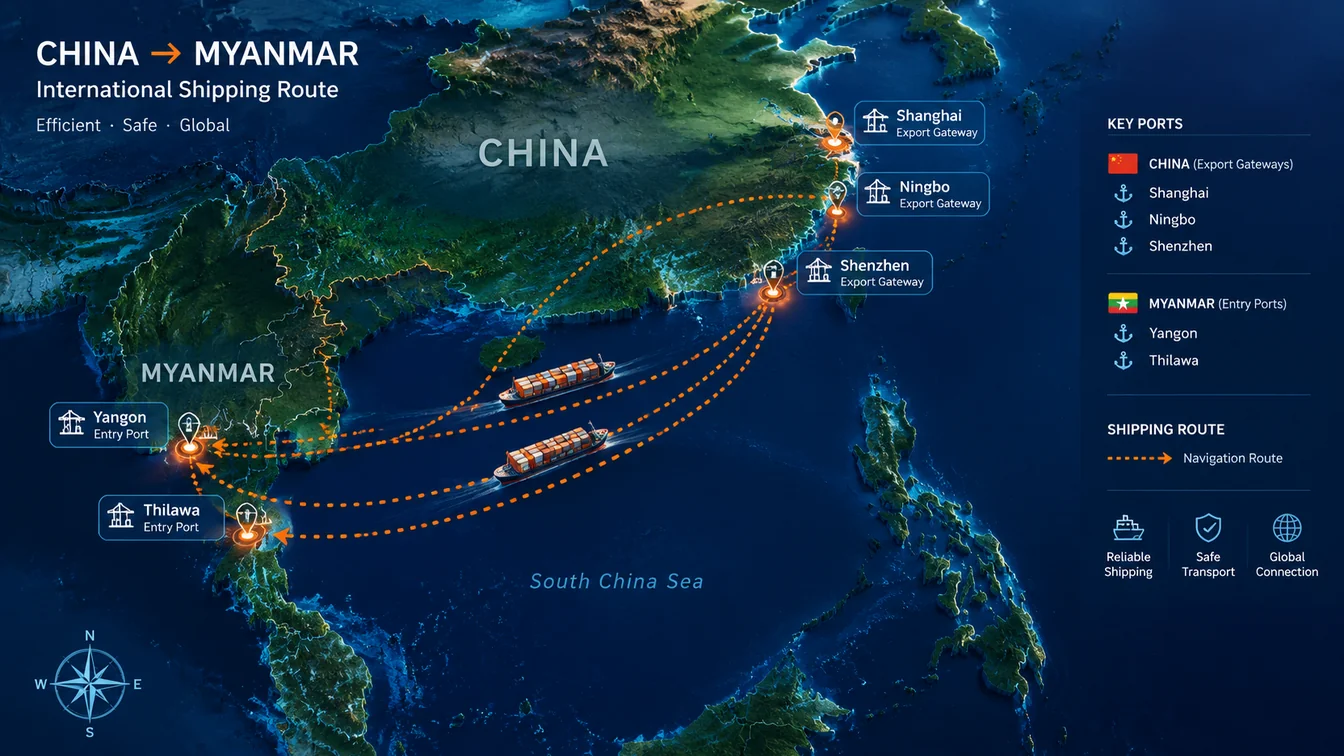
Ocean FCL or LCL is the practical starting point for most containerized or consolidated commercial cargo, while air freight and express suit shipments with tighter delivery requirements. Match the origin gateway and destination receiving point to the supplier’s location, cargo profile, and final delivery region before selecting the relevant sea freight service or air freight service.
Route Planning Summary
- Where should the China supplier send the cargo?
- Start with the supplier’s pickup address and compare Shanghai, Ningbo-Zhoushan, Yantian, Nansha, Xiamen, or Qingdao as appropriate, then match the selected gateway to an available route into Myanmar.
- Which transport method should be used?
- Use FCL or LCL ocean freight for suitable commercial cargo, air freight for urgent shipments, and express for compatible smaller consignments. A land-based multimodal alternative requires an operational crossing and a defined onward-delivery plan.
- How should the delivery date be planned?
- Use the transit reference for the exact route and method being considered, then account separately for supplier readiness, export handling, Myanmar customs release, and final delivery wherever those stages fall outside the selected transit scope.
- Who handles Myanmar import clearance?
- The eligible Myanmar importer remains responsible for import eligibility, declaration accuracy, applicable licences, and duties and taxes, even when a customs representative or freight forwarder assists with the process.
- What must the final-delivery plan cover?
- The delivery arrangement must specify the Myanmar receiving address, destination handling, customs responsibility, inland transport, unloading requirements, and the agreed responsibility for any charges outside the service scope.
China to Myanmar Shipping Cost
The October 2026 cost references provide route-specific indicative shipping costs and planning transit times for China-to-Myanmar shipments. Each reference applies to its named route, method, and unit.
Cost-table review: October 2026
| Shipping route | Shipping method | Price | Transit time |
|---|---|---|---|
| China → Myanmar | FCL 20GP | $686–$955/container | 9–14 days |
| Shanghai, China → Yangon, Myanmar | FCL 40GP | $1,080/container | ≈22 days |
| Shanghai, China → Yangon, Myanmar | FCL 40HQ | $1,080/container | ≈22 days |
| China → Myanmar | LCL | $28/CBM | 10–18 days |
| China → Myanmar | Air freight | $1.79/kg | 2–4 days |
| China → Myanmar | Express (DDP) | $3.23/kg | 2–5 days |
Cost scope: These indicative cost references apply to the route, method, and unit shown; they are not carrier freight rates, market averages, TJ selling prices, or binding quotations. The actual booking, cargo, and agreed service scope determine the commercial arrangement, including responsibility for relevant pickup, handling, customs, duty and tax, inland delivery, insurance, storage, examination, appointment, and surcharge items.
Myanmar Import Duty and Taxes
Myanmar import duty and tax depend on the commodity code, customs value, country of origin, applicable trade measures, product category, and rules in force when the goods are entered. The applicable tariff and tax treatment should be checked against the Myanmar tariff nomenclature rather than assumed from a general country-wide rate.
Myanmar’s current tax treatment must be checked against the 2026 Union Taxation Law and relevant product schedules; the official Internal Revenue Department legislation is the starting point for current tax provisions.
- Classify the goods using the applicable Myanmar tariff line and the eight-digit ASEAN Harmonized Tariff Nomenclature code where relevant. The product description, materials, function, and intended use must support the selected classification.
- Prepare the commercial invoice, sale contract, currency, quantities, origin details, and other valuation evidence. Myanmar Customs determines the applicable customs value under the rules in force rather than relying solely on an unsupported declared figure.
- Check the customs duty applicable to the tariff classification and China origin. A preferential rate under an applicable trade agreement may be available only when the goods satisfy the relevant origin rules and the required supporting evidence is accepted.
- Determine whether commercial tax, specific goods tax, excise, or other product-specific charges apply under the current rules. These charges are not interchangeable, and some goods have additional requirements or different tax treatment.
- Arrange payment of the assessed amounts through the required import-clearance process. Customs release and the resulting landed cost depend on the declaration, applicable approvals, assessment, and payment obligations.
This is a simplified planning explanation, not tax advice. The Myanmar importer should obtain a product-specific classification and tax assessment before dispatch or customs entry, particularly when preferential origin treatment, controlled goods, or revised tax provisions may affect the shipment.
China to Myanmar Shipping Time
For Shanghai, China → Yangon, Myanmar FCL 40GP, the indicative transit reference is ≈22 days. For the broader China → Myanmar references, FCL 20GP is 9–14 days and LCL is 10–18 days; the air-freight reference is 2–4 days, while Express (DDP) is 2–5 days.
These references are specific to their stated routes and methods, so the Shanghai-to-Yangon container entry should not be treated as the timing for every China-origin shipment. Supplier readiness, cargo collection, export documentation, gateway handling, customs release, and inland delivery must be incorporated into the delivery plan wherever they are not covered by the selected service.
For a time-critical shipment, compare the complete movement rather than the international leg alone. A shorter air or express transit reference is useful only when the cargo is accepted, the required export and import documents are ready, the Myanmar receiving address can accept the shipment, and the applicable clearance and last-mile arrangements fit the delivery deadline.
Shipping Methods from China to Myanmar
FCL or LCL ocean freight is the starting point for commercial cargo that can tolerate sea transit, while air freight and express are suitable alternatives when delivery urgency or cargo characteristics justify them. The selection should reflect shipment dimensions, actual and chargeable weight, volume, handling requirements, supplier location, destination postcode, and the cost of delay.
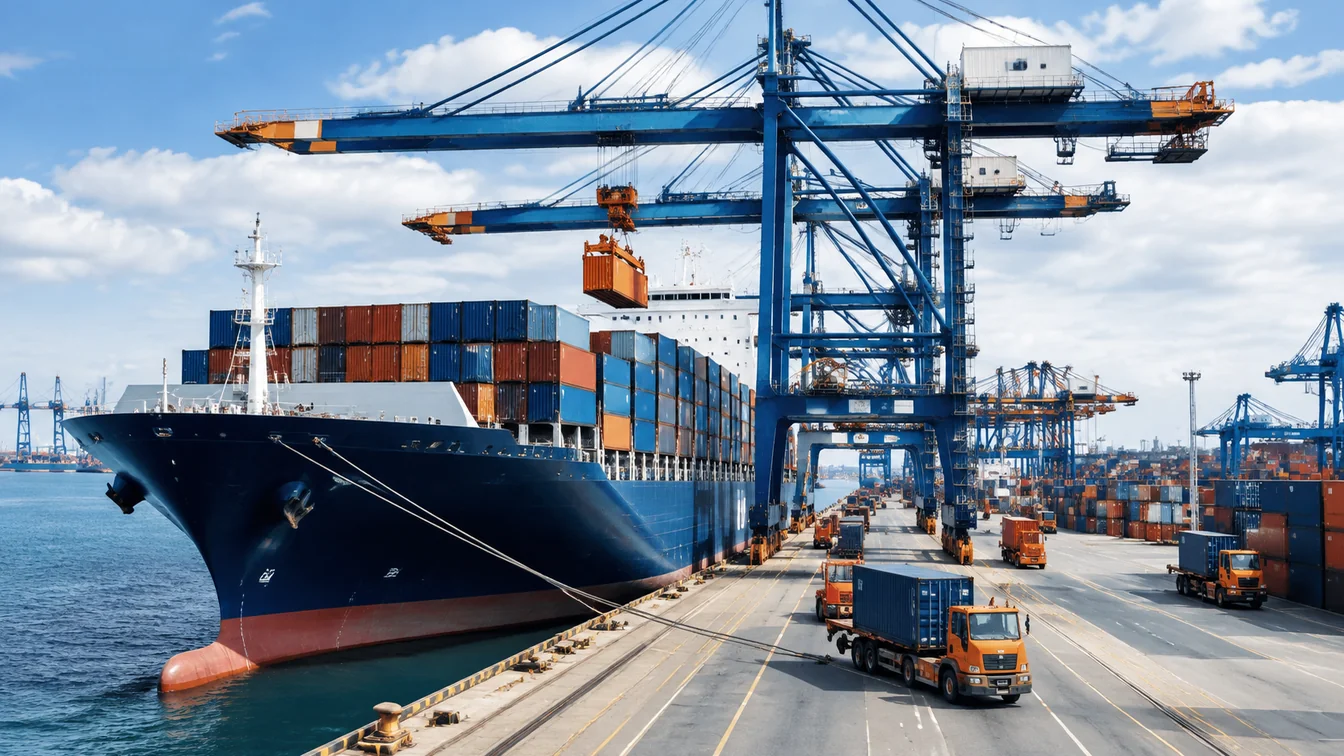
- FCL ocean freight
- Choose FCL when the cargo can use a dedicated container or requires exclusive loading and handling, because a full-container movement provides a defined equipment and loading plan for the China-to-Myanmar route. The appropriate 20GP, 40GP, or 40HQ configuration depends on the cargo’s dimensions, weight, loading plan, and receiving facilities; factory pickup distance and the destination’s container-unloading capability can change the choice.
- LCL ocean freight
- Choose LCL when the shipment is suitable for consolidation rather than a dedicated container, because shared-container transport can accommodate smaller commercial consignments. Actual volume, packaging dimensions, compatibility with other cargo, extra handling, and the destination’s receiving arrangements determine whether consolidation is practical.
- Air freight
- Choose air freight when the delivery deadline or the cost of delay makes a faster international movement more important than the ocean option, because the China-to-Myanmar air-freight reference is shorter. The actual and chargeable weight, package dimensions, cargo restrictions, available routing, and final delivery location affect the decision.
- Express and DDP
- Choose express when the shipment is a compatible, smaller consignment requiring a parcel-oriented service, because it can simplify the transport handoffs for eligible cargo. The express shipping service and DDP shipping arrangements should be evaluated against the actual package, commodity, Myanmar import requirements, named importer or other legally responsible party, and the precise duties, taxes, and delivery responsibilities included in the agreed service.
- Rail-based or multimodal transport
- Choose sea–road–rail multimodal transport only when a named corridor is currently operating for the shipment, because a rail-based plan for Myanmar may require a road transfer at the border, cargo transloading, and onward transport to the final destination. The Kunming Jinning–Myanmar route should be treated as a route-specific proposal rather than a default alternative until the crossing, operating conditions, cargo acceptance, transfer points, and final delivery arrangements are defined. A multimodal freight plan should specify those handoffs before the route is selected.
Door-to-Door Shipping from China to Myanmar
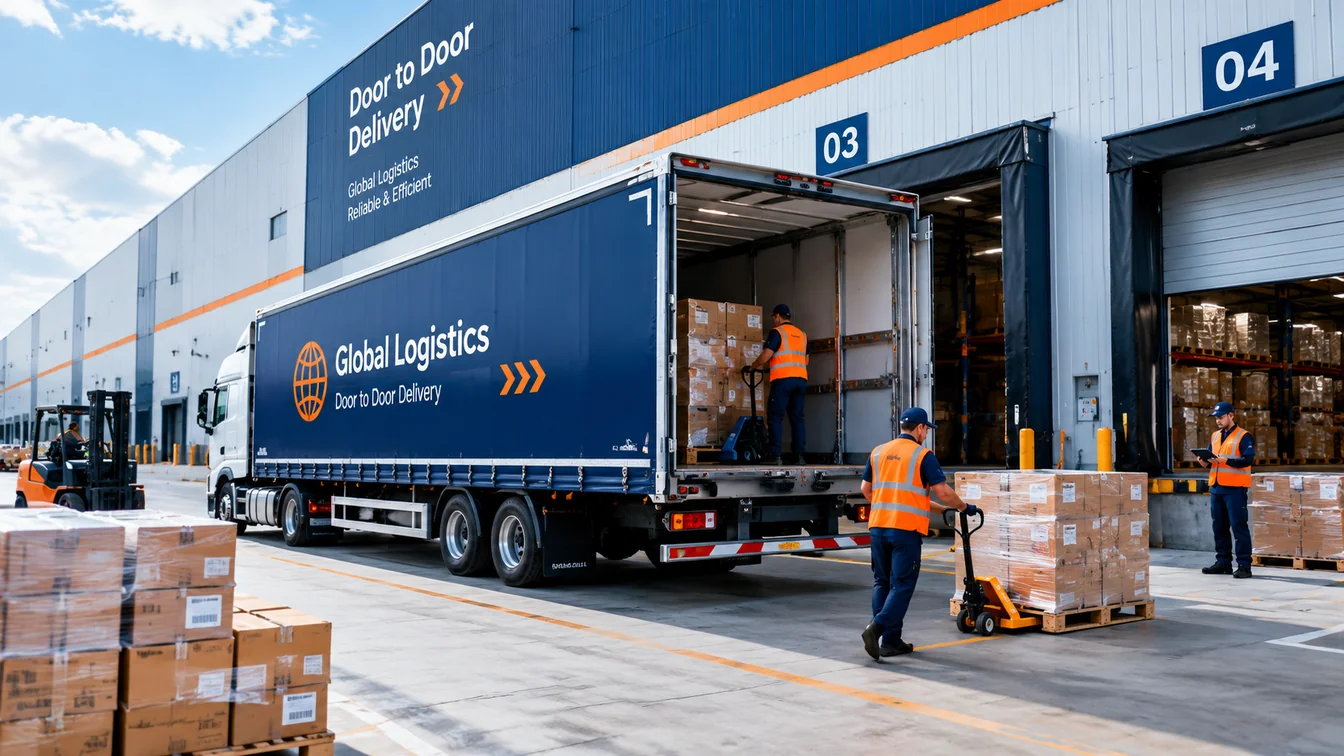
Door-to-door shipping connects the China supplier’s premises to the Myanmar consignee through an agreed sequence of pickup, export handling, international transport, import clearance, and final delivery. The door-to-door shipping service should have a clearly defined service boundary, including the importer or clearance party, receiving address, and any delivery or unloading requirements that remain outside the arrangement.
-
Cargo and Compliance Review
Review the goods description, packing dimensions, actual weight, cargo value, origin address, destination address, and any product restrictions. Determine whether Myanmar import licensing, special handling, or commodity-specific approvals are needed before cargo collection is arranged.
-
Route and Method Selection
Match the supplier’s location to a suitable China export gateway and select FCL, LCL, air freight, express, or a verified multimodal arrangement. The intended receiving region, cargo profile, delivery deadline, and availability of an appropriate international route determine the practical choice.
-
Supplier Coordination and Pickup
Agree the cargo-ready date, loading address, collection access, packaging status, and loading or forklift requirements with the supplier. For containerized cargo, verify that the premises and goods can accommodate the planned equipment and loading procedure.
-
China Export Handling
Prepare the shipping instructions and commercial documents, arrange the applicable origin handling, and match the cargo to the selected gateway. Invoice, packing list, cargo description, dimensions, and shipping instructions should be consistent before the export handoff.
-
International Transportation
Move the cargo through the agreed ocean, air, express, or approved multimodal route. The transport plan should identify the intended destination gateway and any transfer points rather than assuming an unverified direct connection.
-
Myanmar Import Clearance
The Myanmar importer or properly authorized representative submits the required declaration and supporting documents, obtains applicable approvals, and handles assessed duties and taxes. Customs release must be completed before delivery can proceed where the goods remain under customs control.
-
Final Delivery
Arrange transport from the released destination gateway or terminal to the named Myanmar receiving address. Check road access, receiving hours, unloading equipment, delivery appointments, and responsibility for any additional destination handling that is outside the agreed scope.
-
Shipment Close-Out
Record the delivery outcome, obtain the available proof of delivery, and reconcile outstanding shipment documents and agreed charges. Any discrepancy, damage, shortage, or unresolved delivery exception should be documented with the responsible party and supporting evidence.
Main China to Myanmar Routes
The practical China-to-Myanmar route normally starts at the export gateway that limits supplier-side movement while matching the destination’s receiving area and available cargo handling. Supplier pickup distance, the actual vessel or flight arrangement, equipment acceptance, the final postcode, and inland delivery can change the comparison.
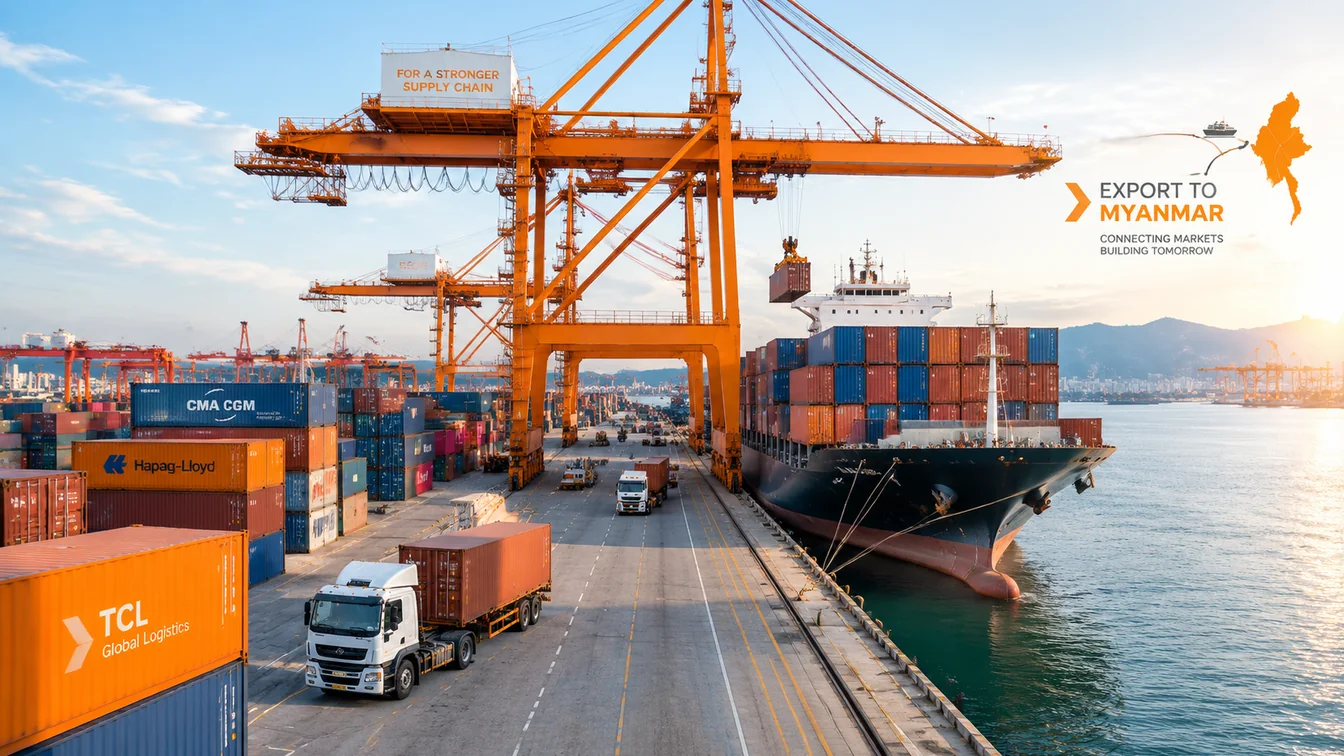
Major China Export Ports for Myanmar Shipping
- Shanghai Port
- Shanghai is a natural gateway to compare for suppliers in Shanghai, Jiangsu, and the wider Yangtze River Delta. It is especially relevant when container cargo can reach Shanghai efficiently and a suitable routing into Yangon or Thilawa is available. The actual vessel and transfer arrangement determines the international leg.
- Ningbo-Zhoushan Port
- Ningbo-Zhoushan is worth comparing for Zhejiang and nearby manufacturing areas in eastern China, particularly when the supplier is closer to Ningbo than to Shanghai. The choice should reflect factory collection, port handling, equipment availability, and the routing that serves the intended Myanmar gateway.
- Yantian Port, Shenzhen
- Yantian is a candidate for eligible container cargo from Shenzhen and the eastern Pearl River Delta. It can be compared with other Guangdong gateways when supplier pickup geography, terminal access, and the available routing to Yangon or Thilawa differ.
- Nansha Port, Guangzhou
- Nansha is useful to compare for suppliers in Guangzhou, Foshan, and surrounding Guangdong manufacturing areas. A shorter factory-to-port movement may favor Nansha, while the actual service routing and Myanmar receiving-terminal arrangement may favor another gateway.
- Xiamen Port
- Xiamen is a candidate for suitable cargo originating in Fujian and nearby supply areas. It is relevant when the supplier’s geography and available international movement justify using Xiamen rather than trucking cargo to a more distant eastern or southern China gateway.
- Qingdao Port
- Qingdao is a gateway to compare for Shandong and northern China suppliers. The origin-side movement, available vessel routing, any transfer arrangements, and the intended Myanmar destination determine whether Qingdao is more practical than moving the shipment south before export.
Major Myanmar Import Ports for Cargo from China
Yangon is the primary starting point for ordinary commercial imports by sea, while regional ports are alternatives only when their current cargo handling, customs arrangements, available service, and final delivery connections support the specific shipment. The Myanma Port Authority port listings distinguish the Yangon port areas from regional outports and developing deep-sea-port projects.
- Yangon Inner Harbour
- Yangon Inner Harbour serves the main commercial and industrial market around Yangon and provides a practical reference for shipments destined for the city and nearby demand areas. Compare the assigned terminal, cargo acceptance, and onward truck access when selecting an ocean routing from China.
- Thilawa Outer Harbour
- The Thilawa port area is relevant to industrial and logistics destinations around Thilawa and the wider Yangon region. Terminal assignment and the cargo’s intended delivery address determine whether this entry area is preferable to an inner-harbour destination.
- Pathein Port
- Pathein is relevant to destinations in the Ayeyarwady region. It should be compared with Yangon entry followed by inland delivery only when the actual cargo can be received and cleared through Pathein and a suitable transport arrangement is available.
- Mawlamyine Port
- Mawlamyine is a regional port to evaluate for Mon State and nearby southeastern destinations. Its suitability for cargo from China depends on the particular vessel or transfer arrangement, cargo handling capability, customs process, and onward delivery access.
- Sittwe Port
- Sittwe is a regional gateway to consider for Rakhine State where the specific port operation and cargo requirements support its use. Do not assume that ordinary container services, available handling capacity, or onward inland movements are equivalent to those around Yangon.
- Myeik Port
- Myeik is a regional port to compare for destinations in the Tanintharyi area when cargo-specific handling and the actual transport arrangement make it suitable. Port acceptance, the available route, customs arrangements, and delivery from the port must be established for the particular shipment.
Supplier Region to Destination Routing Logic
| Supplier region in China | Origin port to compare | Destination port and delivery region | Planning reason |
|---|---|---|---|
| Shanghai and the Yangtze River Delta | Shanghai or Ningbo-Zhoushan | Yangon Inner Harbour or Thilawa Outer Harbour; Yangon metropolitan area | For Yangtze River Delta suppliers, compare factory pickup → Shanghai or Ningbo-Zhoushan → ocean transport → the assigned Yangon-area terminal → final delivery. Pickup distance, actual service routing, and terminal allocation can change the choice. |
| Guangdong and the Pearl River Delta | Yantian or Nansha | Yangon Inner Harbour or Thilawa Outer Harbour; Yangon industrial destinations | For Guangdong suppliers, compare collection → Yantian or Nansha → the available international route → Yangon-area entry → the receiving address. Factory location, handling requirements, and the available vessel arrangement may favor a different gateway. |
| Fujian and surrounding eastern China supply areas | Xiamen | Yangon Inner Harbour or Thilawa Outer Harbour; Yangon or another Myanmar delivery region | For suitable Fujian-origin cargo, compare collection → Xiamen → a currently available route → the assigned Myanmar port → final delivery. The supplier’s distance from Xiamen, equipment acceptance, and available routing determine whether this path is practical. |
| Shandong and northern China | Qingdao | Yangon Inner Harbour or Thilawa Outer Harbour; Yangon or onward inland delivery | For northern China suppliers, compare collection → Qingdao → the available ocean routing → Yangon or Thilawa → the final Myanmar destination. Origin-side distance, transfer points, cargo requirements, and the final inland movement can change the preferred route. |
Destination Regional Delivery Logic
- Yangon and Thilawa
- Yangon Inner Harbour and Thilawa Outer Harbour are the principal areas to compare for deliveries around the commercial center and industrial estates. The assigned terminal, consignee postcode, container access, unloading arrangements, and destination handling determine the final-mile plan.
- Mandalay and Upper Myanmar
- For Mandalay and other inland destinations, compare a suitable Yangon-area sea entry followed by inland transport with a currently viable China–Myanmar land-based multimodal route. Border status, cargo acceptance, transloading, security, and the actual receiving address can change the choice; a cross-border route should not be assumed available merely because it is geographically possible.
- Ayeyarwady Region
- For Pathein and nearby destinations, compare Yangon-area entry followed by inland delivery with a port-specific arrangement through Pathein. Inland distance, the cargo’s port-handling requirements, and the availability of an appropriate service determine whether the regional port is a practical alternative.
- Mon, Tanintharyi, and Rakhine
- For destinations around Mawlamyine, Dawei, Myeik, or Sittwe, compare the appropriate regional port with a Yangon-based entry and subsequent delivery. The specific port’s acceptance, current operations, onward transport, and destination access must support the complete route before the entry gateway is chosen.
How the Gateway Is Selected
The right gateway is the one that supports the complete supplier-to-consignee movement, not simply the shortest distance between two port names.
- Match the supplier’s actual pickup address to Shanghai, Ningbo-Zhoushan, Yantian, Nansha, Xiamen, or Qingdao, accounting for the factory-to-port movement.
- For ocean freight, determine the receiving terminal in the Yangon port area and whether the intended cargo, equipment, and vessel arrangement can be accommodated.
- For final delivery outside Yangon, compare the inland distance, road accessibility, unloading equipment, delivery restrictions, and local handling requirements.
- For air cargo, connect the China-side export-airport arrangement to Yangon International Airport and then to the consignee’s actual address; airport arrival alone is not final delivery.
- For a land-based multimodal alternative, verify the named crossing, the permission and cargo conditions, transloading arrangements, and the complete onward route for the intended dispatch date.
Myanmar Customs Clearance
Commercial imports entering Myanmar require an eligible importer, an accurate customs declaration, supporting documents, and any applicable product approvals. The requirements described here apply to Myanmar’s customs territory; other countries’ transit procedures and border-trade arrangements do not replace Myanmar import requirements.
What the Myanmar Importer Normally Needs
Myanmar import clearance begins with an importer authorized for the relevant commercial activity and a document set that matches the actual goods and transport arrangement. The Myanmar National Trade Portal import guide explains the import process and associated registration and licensing requirements.
- Importer registration The Myanmar importer should have the appropriate business and exporter-importer registration required for the transaction. The responsible importer must be identified before shipment rather than assumed to be the transport provider.
- Commodity code and product description Prepare the applicable Myanmar tariff classification and a complete description covering the product, material, model, function, and intended use. Inconsistent descriptions can affect valuation, licensing, and the release decision.
- Import licence, permit, or recommendation Determine which licence, permit, or ministry recommendation applies under the rules in force for the product. Where approval is required, the responsible importer should obtain it through the applicable process before dispatch.
- Commercial invoice and sale contract Provide the actual transaction information, seller and buyer details, currency, quantities, goods description, and agreed commercial terms. The contract and invoice should describe the same transaction.
- Packing list Record the package count, dimensions, gross and net weights where applicable, and contents. The list should match the cargo physically presented for export and import.
- Transport document Prepare the bill of lading for sea freight, air waybill for air cargo, or the applicable road transport document for road-based movements. The consignee, cargo description, and shipment details must align with the commercial documents.
- Customs declarations and valuation Prepare the applicable CUSDEC-1 import declaration and CUSDEC-4 customs valuation form where required, with consistent supporting evidence. The importer or authorized representative must complete the required declaration and valuation process with Myanmar Customs.
- Product certificates and agent authorization Arrange any applicable food and drug, medical-product, health, phytosanitary, dangerous-goods, or other commodity-specific documentation. When an agent handles clearance, the importer must also meet the applicable authorization requirements.
The Myanmar Customs import-document list identifies core commercial and transport records alongside permits and other supporting documents for controlled products. A customs representative can assist with document preparation and declarations, but that assistance does not automatically transfer the importer’s legal or tax responsibilities.
Common Causes of Myanmar Customs Delays
- An import licence, permit, or required ministry recommendation has not been obtained for the commodity.
- The importer is not appropriately registered or the party responsible for clearance has not been properly authorized.
- The product description, tariff classification, origin, declared value, invoice, or sale contract contains inconsistencies.
- The packing list, bill of lading, air waybill, or other transport document does not match the physical shipment or consignee information.
- A regulated or restricted product requires an additional certificate, inspection, approval, or specialized handling arrangement.
- Customs selects the cargo for examination or requests further evidence to resolve a declaration or valuation issue.
- Required duty and tax payments, destination release arrangements, or the onward transport handoff remain unresolved.
Resolve product eligibility, registration, licensing, declaration data, and supporting documents before the cargo leaves China. A shipment that reaches Myanmar before its required approvals are ready can remain uncleared while storage and other destination consequences arise under the applicable arrangements.
Special Cargo, Packaging, and Insurance
Special cargo should be checked against Myanmar import controls and the selected transport method before collection. Commodity restrictions, packaging suitability, handling limitations, and the destination’s ability to receive the goods can change both the route and the required handoffs.
Cargo Requiring Additional Review
- Batteries and dangerous goods require the applicable classification, transport documentation, packing, marking, and carrier acceptance; battery type and equipment configuration can change the permitted method.
- Chemicals, liquids, aerosols, and temperature-sensitive products require product-specific safety information, packaging, storage conditions, and applicable transport acceptance.
- Food, cosmetics, medicines, medical devices, and other regulated health-related goods may require Myanmar licences, registrations, certificates, or ministry approvals before import.
- Wood products, seeds, plants, and other agricultural goods may be subject to restrictions, treatment, quarantine, phytosanitary, or other commodity-specific requirements.
- Oversized machinery, industrial equipment, and project cargo need dimensions, lifting points, gross weight, center-of-gravity information where relevant, and a feasible collection and delivery plan. The suitability of project cargo shipping depends on cargo acceptance and the actual handling requirements.
- Controlled, prohibited, or specially restricted goods require an eligibility decision before dispatch. Temperature-controlled cargo also needs a suitable handling plan for the complete movement, including any waiting or transfer stages.
Packaging Checks
Packaging for China-to-Myanmar shipments should protect the goods during the handling stages required by the selected route. Consolidated cargo, repeated handling, moisture exposure, and heavy or fragile items may require different protection from a dedicated container load.
- Use carton strength and internal protection suited to the cargo’s weight, fragility, stacking conditions, and handling.
- Secure pallets and oversized packages for lifting, truck movement, and the selected transport method.
- Protect moisture-sensitive goods against relevant exposure and use suitable wrapping or barriers where required.
- Apply handling marks and shipping labels that match the cargo, consignee, package count, and required handling instructions.
- Measure and record actual package dimensions and gross weights accurately so equipment, vehicle access, and handling arrangements can be checked.
- Use compliant regulated wood packaging, including applicable treatment and marking requirements, whenever the packaging and shipment fall under those rules.
Cargo Insurance
Carrier liability and cargo insurance are different protections, and neither should be assumed to cover every loss. Before dispatch, confirm the applicable insured value, covered risks, exclusions, deductible, evidence requirements, and coverage period for the complete shipment. The scope of cargo insurance arrangements must match the actual goods, transport legs, and agreed handoffs.
Choosing a Freight Forwarder for Shipping from China to Myanmar
A freight forwarder helps solve three practical problems on the China-to-Myanmar route: turning cargo details into a workable shipment definition, matching the shipment to a credible gateway and transport method, and coordinating commercial and operational handoffs. The value comes from keeping the movement and its responsibilities aligned, particularly when a port transfer, import approval, or inland delivery requirement changes the plan.
- A shipment definition that can be executed
- Incomplete cargo information can lead to the wrong equipment, handling plan, or transport method. A forwarder organizes the goods description, collection location, dimensions, weight, deadline, destination, and service boundary into a usable movement definition; unusual cargo or missing compliance information may require a different plan.
- A gateway matched to the actual cargo
- An origin port that is far from the supplier or poorly matched to the available Myanmar routing can add unnecessary movement and handling. A forwarder compares credible origin gateways, applicable transport modes, cargo acceptance, and destination connections against the shipment’s geography and urgency; current routing and equipment availability can change that comparison.
- Clear responsibility at each handoff
- Unclear ownership of export documents, import clearance, destination charges, or final delivery can interrupt the movement. A forwarder helps record the responsible party and next action at each agreed handoff; the importer, competent authorities, licensed representatives where required, and product-compliance or tax advisers retain their respective legal responsibilities.
How TJ Logistics Team Plans a China-to-Myanmar Shipment
- Shipment definition and readiness
- TJ Logistics Team reviews the cargo description, dimensions, gross weight, supplier pickup address, destination, timing requirement, and any known product restrictions. Missing details that prevent a sound equipment, handling, or routing decision are flagged for resolution before the next handoff.
- Route and destination comparison
- TJ Logistics Team reviews applicable transport modes and gateway possibilities against the defined origin, cargo profile, deadline, and receiving address. For Myanmar, this includes the practical distinction between Yangon-area port entry, air arrival followed by delivery, and a land-based multimodal proposal whose crossing and onward route must be operationally suitable.
- Service boundary and responsible parties
- TJ Logistics Team records the agreed movement scope and the parties responsible for pickup, export handling, international transport, Myanmar import clearance, duties and taxes, and final delivery. Any unallocated destination handling or unresolved importer responsibility should be made clear before the commercial arrangement is finalized.
- Booking information and operational handoffs
- After the buyer confirms the agreed scope, TJ Logistics Team coordinates the relevant booking information, commercial documents, cargo handoff, and next operational decision. Changes to timing, routing, documents, approvals, or receiving conditions are flagged for the responsible party to address before the affected handoff proceeds.
China to Myanmar Shipping FAQ
China-to-Myanmar shipping decisions are best resolved by matching the shipment’s size and urgency to the selected transport method, Myanmar import requirements, the entry gateway, and the receiving address.
How much does a 20ft container from China to Myanmar cost?
The China → Myanmar FCL 20GP indicative cost reference for October 2026 is $686–$955/container, with a planning transit reference of 9–14 days. This is a China-to-Myanmar route reference rather than a quote for a particular origin port, destination terminal, or agreed delivery scope.
How long does sea freight from China to Myanmar take?
Sea freight planning references for China → Myanmar are 9–14 days for FCL 20GP and 10–18 days for LCL. The separate Shanghai, China → Yangon, Myanmar FCL 40GP entry has its own route-specific timing reference; supplier readiness, customs release, and final delivery must be planned according to the selected service’s actual scope.
What is the most cost-effective way to ship from China to Myanmar?
For commercial cargo that can tolerate sea transit, FCL or LCL is the practical starting point, depending on whether the shipment needs a dedicated container or is suitable for consolidation. Air freight or express becomes more relevant when delivery urgency outweighs the transport-cost priority; container, volume, and per-kilogram references should not be compared as though they use identical units and service scopes.
Which China port should I use for shipping to Myanmar?
The appropriate China export port is normally the suitable gateway closest to the supplier that has a workable route into the intended Myanmar entry area. Compare Shanghai or Ningbo-Zhoushan for eastern China, Yantian or Nansha for Guangdong, Xiamen for suitable Fujian-origin cargo, and Qingdao for northern China; supplier pickup distance and the actual international routing can change the selection.
Should cargo for Mandalay enter through Yangon?
For a standard ocean shipment to Mandalay, compare Yangon-area entry followed by inland delivery as the starting plan. A China–Myanmar land-based multimodal alternative may suit a particular shipment only when the crossing, required permissions, cargo acceptance, transloading, and onward movement are currently viable for the intended destination.
What documents should be prepared before shipping from China to Myanmar?
Myanmar commercial imports normally require a commercial invoice, packing list, sale contract, and the relevant bill of lading or air waybill, together with CUSDEC-1 and CUSDEC-4 documentation where applicable. The importer must also obtain any required import licence, permit, product certificate, or ministry recommendation before the relevant clearance stage.
Can I ship door-to-door from China to Myanmar?
Door-to-door shipping can cover China pickup, export handling, the agreed international movement, Myanmar import-clearance coordination, and delivery to the named receiving address when those stages are included in the service arrangement. The importer or other legally responsible party must still meet Myanmar import obligations, and unloading, taxes, destination handling, and other additional services require clear allocation.