

Reviewed by TJ Logistics Team — October 2026. Market, cost, customs, tariff, and marketplace information has been reviewed for October 2026; official requirements and commercial conditions may change after this review. The review applies practical route-planning checks across supplier pickup, gateway and mode selection, customs handoff, and final delivery.
Shipping from China to Panama: Route Update
For full-container ocean cargo on the Shanghai, China → Balboa, Panama route, the FCL 20GP planning reference is $2,100–$4,500/container with a 25–35 day transit reference. The sea freight service is the relevant starting point for planning a dedicated container from the supplier to the selected Panama entry gateway.
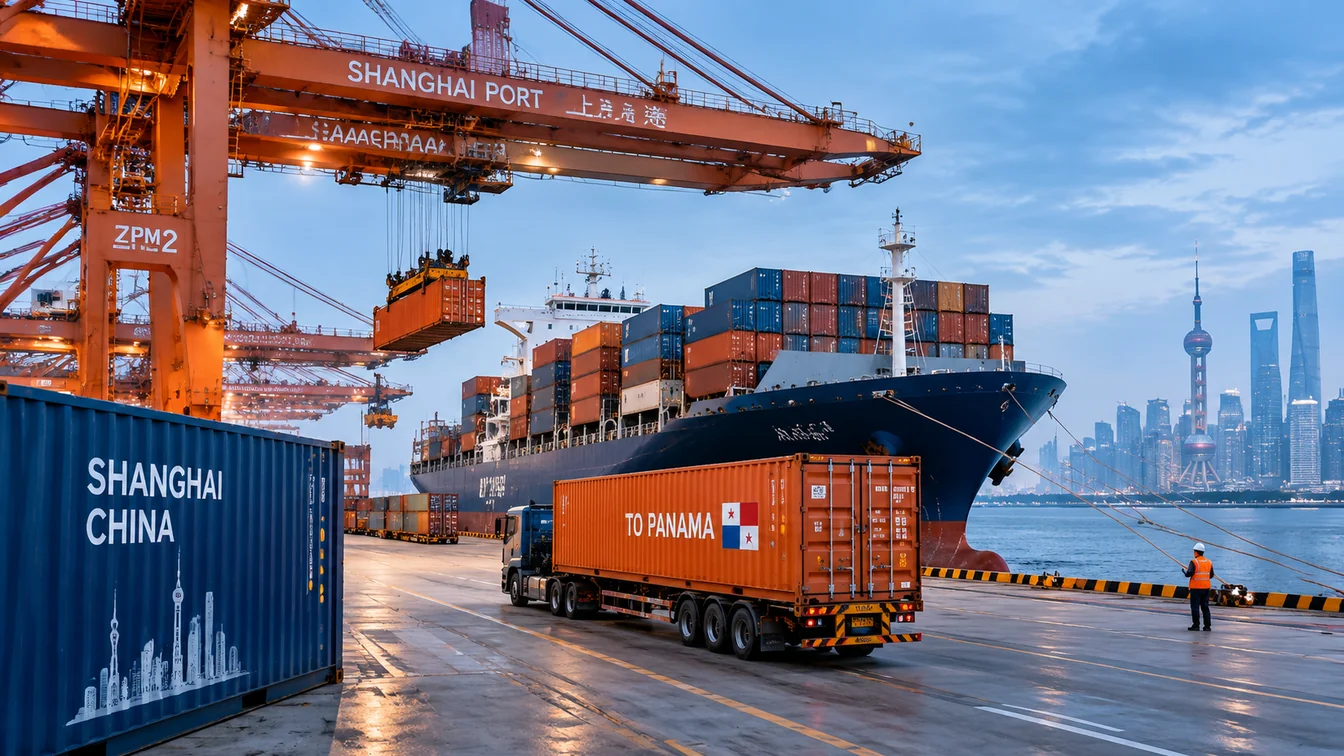
For urgent, compact consignments, compare air freight through Shanghai Pudong Airport (PVG) and Tocumen Airport (PTY) with accepted parcel express services. Chargeable weight, package dimensions, cargo acceptance, supplier location, and the final Panama delivery postcode determine which option fits the shipment.
Route Planning Summary
- Which China gateway should the supplier use?
- Match the export gateway to the supplier’s factory location first: compare Shanghai and Ningbo-Zhoushan for Yangtze River Delta suppliers, Guangzhou/Nansha and Shenzhen/Yantian for Pearl River Delta suppliers, and Qingdao for northern suppliers. The final Panama delivery region then helps determine the destination gateway.
- Which shipping method fits the cargo?
- Use FCL for a dedicated container, LCL for suitable consolidated cargo, air freight for time-sensitive goods, and express for eligible parcel shipments. Cargo dimensions, actual and chargeable weight, urgency, handling requirements, and the final delivery arrangement can change the selection.
- How should transit time be planned?
- Use the transit reference for the exact route and method selected, then include any separate origin handling, customs release, or final-delivery stages that fall outside the agreed transport scope.
- Who is responsible for Panama import clearance?
- The Panama consignee or importer remains responsible for accurate import information, applicable product permissions, and duty and tax obligations, even when an authorized customs representative handles the declaration.
- What determines final-delivery scope?
- The agreed delivery scope must name the receiving address and any relevant unloading, access, appointment, or receiving requirements. Arrival at a Panama seaport or Tocumen Airport does not by itself establish delivery to the final address.
China to Panama Shipping Cost
China-to-Panama indicative shipping costs in this module were reviewed in October 2026 and are shown with their corresponding planning transit references.
Each cost reference applies to its named route, shipping method, and unit.
Cost-data review month: October 2026.
| Shipping route | Shipping method | Price | Transit time |
|---|---|---|---|
| Shanghai, China → Balboa, Panama | FCL 20GP | $2,100–$4,500/container | 25–35 days |
| Shanghai, China → Balboa, Panama | FCL 40GP | $2,600–$4,800/container | 25–35 days |
| Shanghai, China → Balboa, Panama | FCL 40HQ | $3,200–$5,000/container | 25–35 days |
| Guangzhou City, China → Colón Port, Panama | LCL | $126.30–$156.45/CBM* | 24–38 days |
| Shanghai Pudong Airport (PVG), China → Tocumen Airport (PTY), Panama | Air freight | $4.80–$5.80/kg | 6–12 days |
| China → Panama | Express | $9.50–$13.20/kg | 3–6 days |
Cost scope: These indicative cost references apply to the route, method, and unit shown; they are not carrier freight rates, market averages, TJ selling prices, or binding quotations. The actual booking, cargo, and agreed service scope determine the commercial arrangement, including responsibility for relevant pickup, handling, customs, duty and tax, inland delivery, insurance, storage, examination, appointments, and surcharges.
Panama Import Duty and Taxes
Panama import duties and taxes are product-specific rather than one flat charge for every shipment. The applicable amount depends on the commodity code, customs value, origin, trade measures, product category, and rules in force when the goods enter Panama.
Use the following steps to prepare the duty and tax calculation for commercial goods entering Panama for domestic use.
- Classify the goods using the actual product material, function, composition, and specifications. The National Tariff Tool provides a starting point for checking the relevant tariff line and applicable tariff measures.
- Prepare the customs value using consistent commercial and transport documentation. Panama assesses import duties on an ad valorem basis using the declared CIF value as the general reference, subject to the applicable valuation rules and customs review; see the Panama customs valuation guidance.
- Determine the applicable ITBMS, or Impuesto de Transferencia de Bienes Corporales Muebles y la Prestación de Servicios. The general ITBMS rate is 7%, while specified categories, including alcoholic beverages and tobacco products, have different rates and certain products are exempt. Check the current DGI’s ITBMS guidance for the product’s treatment.
- Check product permissions and release conditions before dispatch. Goods subject to sanitary, phytosanitary, technical, or other import controls may require permits or supporting certificates in addition to the ordinary customs documents.
This is a simplified planning explanation, not tax advice. The importer should obtain the applicable tariff classification, tax treatment, and valuation decision for the actual goods before entry.
China to Panama Shipping Time
The Shanghai, China → Balboa, Panama FCL references for 20GP, 40GP, and 40HQ containers each show a planning transit of 25–35 days. This is the primary supplied sea-freight reference for the named Shanghai-to-Balboa route.
For smaller consolidated cargo, the Guangzhou City, China → Colón Port, Panama LCL reference is 24–38 days. The Shanghai Pudong Airport (PVG), China → Tocumen Airport (PTY), Panama air-freight reference is 6–12 days, while the China → Panama express reference is 3–6 days for the destination-unspecified service entry.
Use each timing reference only for its named route and method. Supplier collection, export handling, consolidation, transfers, customs release, destination handling, and final trucking can affect the required delivery date when they fall outside the transport stage covered by the actual arrangement.
Shipping Methods from China to Panama
Full-container and consolidated sea freight are the main starting points for non-urgent commercial cargo, while air freight and express suit shipments where delivery urgency justifies a different transport method. The cargo’s dimensions, actual and chargeable weight, volume, handling requirements, supplier geography, final postcode, and cost of delay determine which route should be compared.
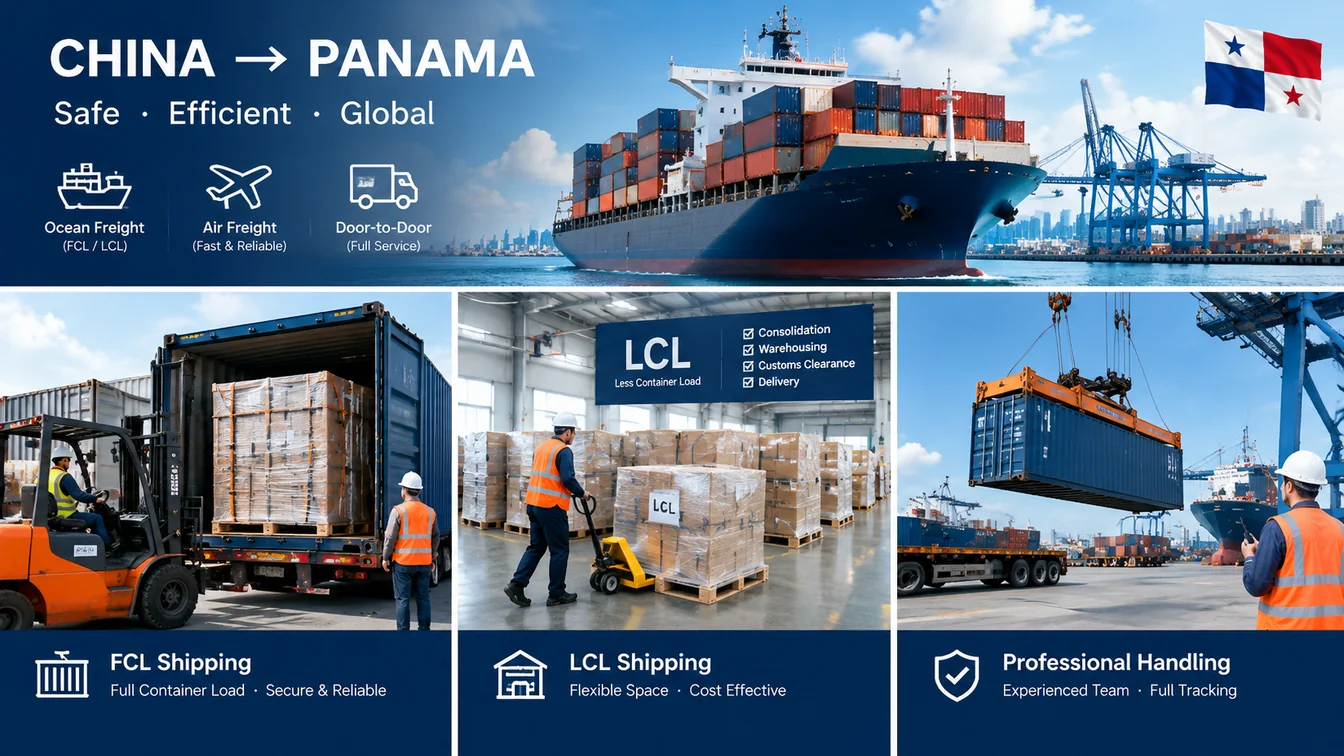
Full-Container Load (FCL)
Choose FCL when the shipment requires a dedicated container or container-level handling, because the Shanghai-to-Balboa references provide separate 20GP, 40GP, and 40HQ options. Factory pickup distance, cargo weight, loading dimensions, container suitability, and the receiving site’s unloading capacity determine which container plan is workable.
Less-than-Container Load (LCL)
Choose LCL when the cargo is suitable for shared-container consolidation, because the Guangzhou City-to-Colón reference is expressed by cubic metre rather than by a dedicated container. Actual chargeable volume, packaging dimensions, consolidation availability, cargo compatibility, and the time needed for consolidation should guide the decision.
Air Freight
Choose air freight when the cost of delay is significant and the cargo’s chargeable weight, dimensions, and handling requirements fit an air service, because the supplied Shanghai Pudong Airport-to-Tocumen Airport reference is the named airport-based option for time-sensitive commercial shipments. Actual and dimensional weight, security screening, commodity acceptance, airport handling, and delivery beyond Tocumen determine the usable service scope. See the air freight service for the relevant transport arrangement.
Express Shipping
Choose express when the shipment consists of eligible parcels, samples, or documents that benefit from parcel-network handling, because the supplied China-to-Panama express reference is a separate destination-unspecified service entry. Package dimensions, volumetric or chargeable weight, restricted-goods rules, remote-area serviceability, and the final postcode can change acceptance and delivery arrangements. The express shipping service is the relevant option to review for parcel consignments.
When a shipment combines supplier collection, international transport, destination handling, and an inland leg, an agreed multimodal freight arrangement can define the handoffs between those stages. A rail-based China-to-Panama route is not presented as a standalone option because the destination requires an international sea or air connection.
Door-to-Door Shipping from China to Panama
Door-to-door shipping connects the China supplier’s collection point with the agreed receiving address in Panama through defined transport, customs, and delivery handoffs. An agreed door-to-door service should specify who handles each stage and which delivery requirements the receiving location can support.
-
Cargo and Compliance Review
Review the supplier’s product description, packaging, measurements, gross weight, commodity classification information, and any restricted-goods characteristics. Flag missing specifications or product permissions before choosing a movement that the cargo cannot use.
-
Route and Method Selection
Match the factory location to a practical China export gateway, then select FCL, LCL, air freight, or eligible express according to shipment form and urgency. Compare Balboa or PSA for Pacific-side delivery with the Colón terminals for Atlantic-side delivery, taking the receiving address into account.
-
Supplier Coordination and Pickup
Arrange the agreed supplier handoff using the cargo-ready date, collection address, loading access, package or pallet count, and pickup responsibilities. Record who makes the cargo available and who is responsible for loading, weighing, and any origin-side movement included in the service.
-
China Export Handling
Prepare the commercial invoice, packing list, and relevant transport information for the selected mode. Align the cargo description, quantities, weights, and consignee details before export handling and resolve discrepancies that could interrupt the planned departure.
-
International Transportation
Move the cargo through the agreed sea, air, or express service and retain the applicable shipment references. The actual route, transfers, container or consolidation handling, and transport documents must match the selected gateway and method.
-
Panama Import Clearance
Coordinate the arrival documents and the handoff to the importer or authorized customs representative. The responsible party must address the import declaration, applicable duties and taxes, product permissions, inspections, and any destination-release requirements before the goods can be delivered.
-
Final Delivery
Arrange inland delivery from the released port or airport to the stated destination address under the agreed scope. Vehicle access, delivery appointments, unloading equipment, restricted receiving hours, road access, and the cargo’s dimensions can change the practical delivery plan.
-
Shipment Close-Out
Match delivery or receiving records against the shipment references and record any outstanding handling, inspection, storage, or delivery issue. Retain the final transport and customs documents for the importer’s accounting and shipment records.
Main China to Panama Routes
The most practical China-to-Panama route normally starts at an export gateway that limits supplier-side movement while matching the destination region and a credible Panama entry-terminal option. The comparison can change when an alternative port has a more suitable current service, when the shipment needs consolidation, or when the final delivery location makes inland transport from the other side of the isthmus more practical.
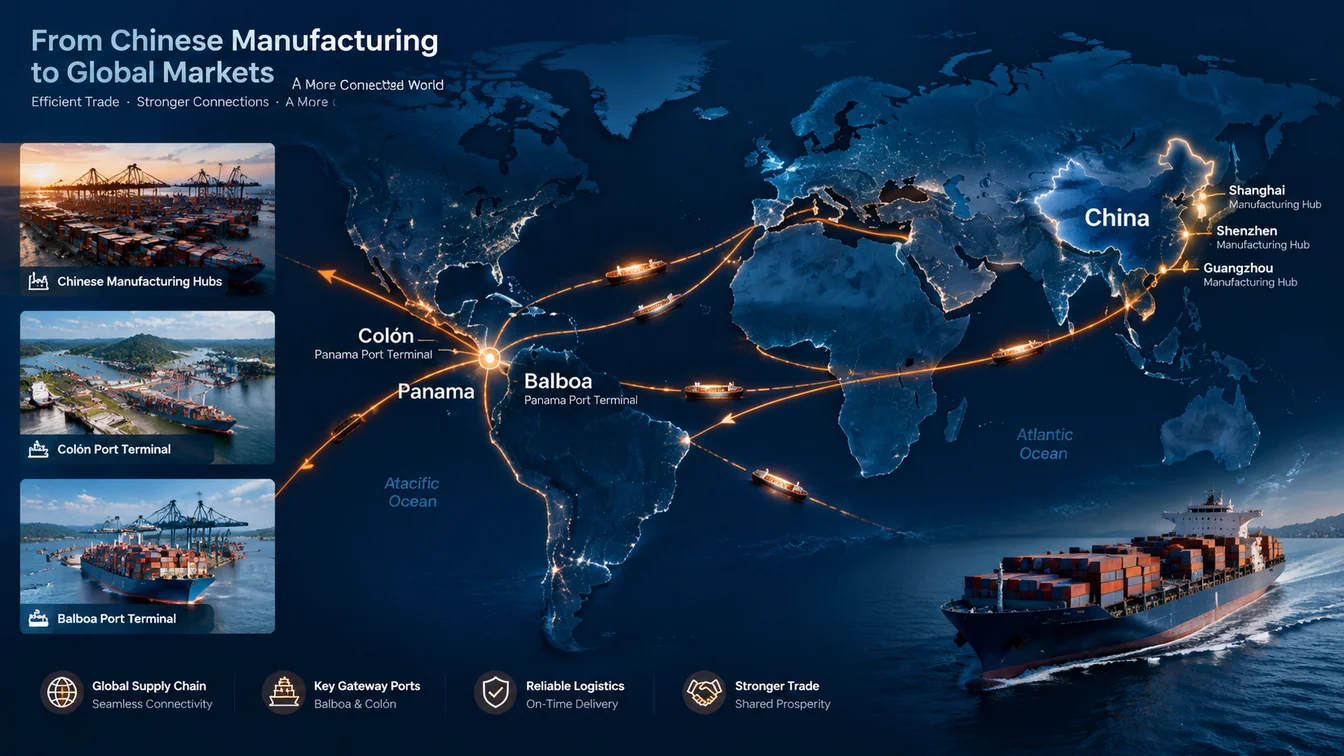
Major China Export Ports for Panama Shipping
The Panama Maritime Authority’s container-terminal list identifies container terminals on both the Pacific and Atlantic sides of Panama. China export-port selection should be matched to supplier location and the actual available international routing rather than treated as proof of a direct sailing.
- Shanghai Port
- Compare Shanghai for suppliers in Shanghai, Jiangsu, and the wider Yangtze River Delta. It is the named origin in the supplied Shanghai-to-Balboa FCL references and is a logical starting point for evaluating containerized cargo destined for Panama City or another region served through a Pacific-side entry gateway.
- Ningbo-Zhoushan Port
- Compare Ningbo-Zhoushan for suppliers in Zhejiang and nearby manufacturing areas when the factory’s pickup geography supports it. Evaluate the available routing to Balboa or a Colón-side container terminal against the additional inland movement required to reach the selected China gateway.
- Yantian Port, Shenzhen
- Compare Yantian for eligible cargo from Shenzhen, Dongguan, and the eastern Pearl River Delta. The destination may be Balboa or a Colón-area terminal, but the chosen port must fit the available service, cargo acceptance, and required delivery region.
- Nansha Port, Guangzhou
- Compare Nansha for suppliers in Guangzhou, Foshan, and nearby southern China manufacturing areas. It is relevant when factory pickup and consolidation are practical around Guangzhou, including shipments whose intended destination lies in Colón or the Atlantic-side logistics area.
- Qingdao Port
- Compare Qingdao for suppliers in Shandong and North China. The suitable Panama entry point depends on the actual international routing and whether the goods ultimately need delivery around Panama City, central Panama, or the Colón area.
- Xiamen Port
- Compare Xiamen for suppliers in Fujian when local pickup and export handling make it a practical origin option. The selected Panama gateway should follow the available routing, cargo requirements, and final delivery area rather than an assumed direct service.
Major Panama Import Ports for Cargo from China
- Port of Balboa
- Balboa is on the Pacific side of the Panama Canal near Panama City and is relevant for cargo destined for the capital and central Panama. It is the destination named in the supplied Shanghai FCL references, but terminal assignment and the final inland leg still determine the full movement.
- PSA Panama International Terminal
- PSA Panama International Terminal is a Pacific-side container gateway at Rodman. Compare it with Balboa when planning deliveries around Panama City or central Panama, using the actual port call, cargo release arrangements, terminal handling, and final address rather than treating the two terminals as interchangeable.
- Manzanillo International Terminal (MIT)
- MIT serves the Colón area on Panama’s Atlantic side. It is relevant for Atlantic-side distribution and cargo intended for logistics facilities around Colón, subject to the receiving party’s actual customs regime and the terminal handling arrangements.
- Colon Container Terminal (CCT)
- CCT is an operating container terminal in the Colón area and can be compared for deliveries to Colón and nearby destinations. The choice should follow the available service and inland-delivery requirements; the generic Colón location in a route description does not itself identify CCT as the assigned terminal.
- Port of Cristóbal
- Cristóbal is another container-handling gateway on the Atlantic side near Colón. Compare it with MIT and CCT where the actual routing, terminal charges, consignee location, and destination-release arrangements support the comparison.
Supplier Region to Destination Routing Logic
| Supplier region in China | Origin port to compare | Destination port and delivery region | Planning reason |
|---|---|---|---|
| Yangtze River Delta: Shanghai, Jiangsu, and Zhejiang | Shanghai or Ningbo-Zhoushan | Balboa or PSA Panama International Terminal; Panama City and central Panama | Compare a Yangtze River Delta supplier → Shanghai or Ningbo-Zhoushan → ocean movement → Balboa or PSA → central Panama route first. Use the origin with the more practical factory pickup; available service, terminal handling, and the final delivery address can change the choice. |
| Pearl River Delta: Guangzhou, Foshan, Dongguan, and Shenzhen | Nansha or Yantian, Shenzhen | Manzanillo International Terminal, Colon Container Terminal, or Cristóbal; Colón and the Atlantic-side delivery area | Compare a Pearl River Delta supplier → Nansha or Yantian → ocean movement → a suitable Colón-area terminal → Atlantic-side delivery when the final address is in that region. Pickup distance, LCL consolidation location, the available routing, and the consignee’s intended customs regime may change the selection. |
| Shandong and North China | Qingdao | Balboa or Cristóbal; Panama City and central Panama, or Colón and the Atlantic side | Compare a North China supplier → Qingdao → ocean movement → the gateway aligned with the final delivery region. A suitable international service, actual terminal handling, and the inland distance after release can outweigh a simple origin-port comparison. |
| Fujian and nearby southeastern China suppliers | Xiamen | Balboa, PSA Panama International Terminal, or a suitable Colón-area terminal | Compare a Fujian supplier → Xiamen → ocean movement → the terminal appropriate to the consignee’s destination. Factory pickup, current service routing, terminal availability, cargo acceptance, and final-mile delivery requirements can change the workable route. |
Destination Regional Delivery Logic
- Panama City and Central Panama
- Compare Balboa and PSA Panama International Terminal according to the assigned port call and the receiving address. The inland movement may be relatively direct for destinations near Panama City, but final unloading arrangements, access restrictions, appointments, and the delivery scope remain relevant.
- Colón and the Atlantic-Side Logistics Area
- Compare MIT, CCT, and Cristóbal for cargo delivered around Colón. A consignee using the Colón Free Zone must specify the intended regime and receiving location because entry into a special zone is not the same procedure as releasing goods into Panama’s domestic market.
- Western Panama and Chiriquí
- Compare the overall delivery plan from the available Pacific-side and Atlantic-side entry gateways, including the road leg toward destinations such as David. Inland distance, road access, cargo dimensions, handling requirements, and the chosen delivery scope can be more important than selecting a port solely by its coastal position.
- Interior Provinces
- For destinations in areas such as Coclé, Veraguas, Herrera, or Los Santos, compare the complete gateway-to-address movement rather than just the arrival port. The final address, inland transport, unloading capability, receiving hours, and any delivery appointment affect the workable plan.
How the Gateway Is Selected
Choose the gateway that provides a workable end-to-end movement from the supplier to the named receiving address, not merely the shortest international leg.
- Compare factory pickup distance to the relevant China export gateway, including whether the supplier is near Shanghai, Ningbo-Zhoushan, Yantian, Nansha, Qingdao, or Xiamen.
- Compare the actual available international routing and service schedule; do not assume a direct sailing or a specific terminal assignment from the city pair alone.
- Match Pacific-side or Atlantic-side arrival to the consignee’s location, especially when Colón-area cargo has a specific receiving facility or customs regime.
- Include the destination terminal’s actual handling arrangements and the inland route to the final postcode in the comparison.
- Record responsibility for customs release, inland transport, unloading, and delivery appointments before the route scope is agreed.
Panama Customs Clearance
Panama commercial imports require an accurate customs declaration, supporting shipment documents, applicable product permissions, and payment or settlement of the duties and taxes due. This section describes ordinary imports released into Panama’s customs territory for domestic use; goods destined for the Colón Free Zone or another special regime require the appropriate regime and receiving arrangements to be identified before dispatch.
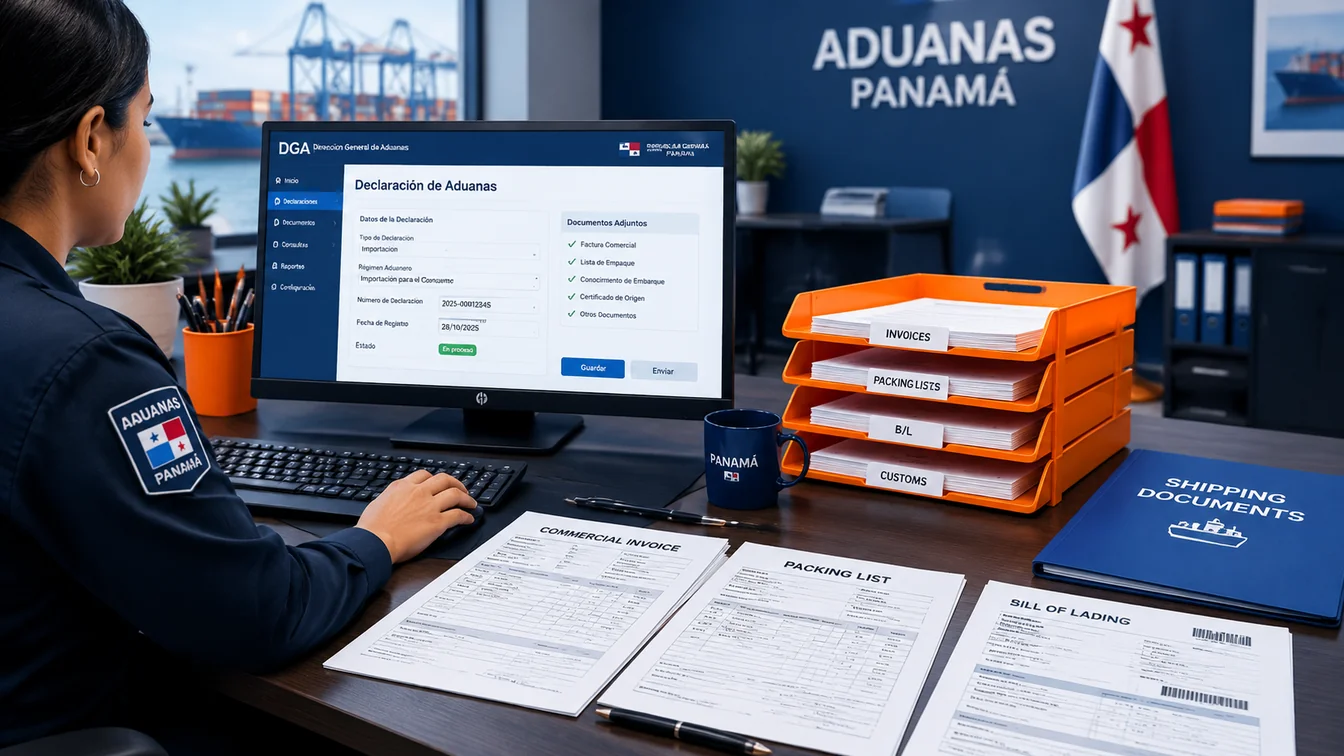
What the Panama Importer Normally Needs
The importer should prepare the following information before the China supplier releases the cargo for export so that the destination declaration and shipment documents can be aligned.
- Importer and consignee details Provide the correct legal name, address, contact details, and applicable registration or tax identifiers. Keep the consignee and receiving-party information consistent across the commercial and transport documents.
- Commercial invoice Describe the goods clearly and show the seller, buyer, product quantities, unit and total values, currency, and other information needed to support the declaration and customs valuation.
- Packing list Record package counts, packaging type, product quantities, dimensions where relevant, and net and gross weights so customs and transport records match the cargo actually presented.
- Transport document Prepare the bill of lading for sea freight, the air waybill for air freight, or the applicable express transport record. Check the shipper, consignee, cargo description, and package information before issuance.
- Commodity code and product description Use a defensible tariff classification based on the actual material, function, and product specifications. An inaccurate code can affect duty treatment, permits, and the customs examination process.
- Customs value and origin information Keep the invoice and supporting valuation information consistent, and prepare origin evidence when applicable. Customs may review declared values and supporting information under the rules for the specific import.
- Import permits and product certificates Check whether the cargo needs health, sanitary, phytosanitary, technical, or other authorization before shipping. The official Panama import-permit guidance describes core documentation and the need for permits for restricted goods.
- Declaration, authorization, and payment arrangements Assign responsibility for submitting the applicable customs declaration, authorizing any customs representative where required, and settling duties, ITBMS, and applicable release charges. The importer should know which party handles each responsibility before arrival.
Common Causes of Panama Customs Delays
- Invoices use broad descriptions that do not accurately identify the product, material, function, or model.
- Invoice values, packing-list quantities, gross weights, or transport-document details do not match one another or the physical cargo.
- The declared commodity code is inconsistent with the actual product or its supporting technical information.
- A required product permit, sanitary certificate, technical approval, or other regulatory document is missing or incomplete.
- The consignee, importer, receiving address, or intended domestic-versus-special-zone customs regime is unclear.
- Origin or valuation evidence is insufficient to support the declaration or the requested tariff treatment.
- Regulated goods, non-compliant packaging, or other cargo characteristics trigger inspection or corrective handling before release.
Resolve document, classification, permit, and consignee discrepancies with the responsible importer and customs representative before the cargo departs China. This is especially important for controlled goods and shipments intended for a specific Colón-area customs regime, where a change in the intended destination procedure can affect the release plan.
Special Cargo, Packaging, and Insurance
Cargo Requiring Additional Review
- Batteries and battery-powered goods: Check battery type, installed or packed configuration, classification, packaging, labeling, and the selected carrier’s acceptance requirements before choosing sea, air, or express.
- Dangerous goods and chemicals: Prepare applicable safety data, classification, packaging, and transport declarations. Acceptance may differ by method and by the characteristics of the actual product.
- Liquids, aerosols, and flammable products: Review leakage protection, product composition, hazard classification, and the transport restrictions applicable to the shipment.
- Food and agricultural products: Check whether sanitary or phytosanitary permits, certificates, handling conditions, or product-specific approvals are required before export.
- Cosmetics and medical goods: Verify the product category, ingredients or technical specifications where relevant, labeling, registration, and applicable import permissions.
- Controlled or restricted goods: Resolve the required authorization before dispatch instead of relying on the ordinary invoice and transport documents alone.
- Oversized or heavy cargo: Supply accurate dimensions, gross weight, center-of-gravity or lifting information where relevant, and loading and unloading requirements. The project cargo shipping service is relevant when the cargo requires a specialized movement plan.
- Temperature-controlled cargo: Define the required temperature range, handling instructions, monitoring arrangements, and acceptable transfer conditions before selecting a service.
- Solid-wood packaging: Check the applicable phytosanitary treatment and marking requirements for wood packaging before loading. Non-compliant packaging can lead to inspection or corrective action.
Packaging Checks
Packaging for the China-to-Panama route should protect the cargo during collection, export handling, consolidation or container loading, international movement, destination handling, and inland delivery. The packaging design should reflect the cargo’s weight, fragility, moisture sensitivity, stacking needs, and the handling equipment available at both ends.
- Use carton and outer-packaging strength appropriate to the cargo’s weight, stacking load, and expected handling.
- Secure internal protection against movement, abrasion, impact, and breakage, especially for mixed or fragile goods.
- Prepare stable pallets or load units suitable for the selected transport method, handling equipment, and destination receiving conditions.
- Protect moisture-sensitive products against exposure during transport and handling, using packaging appropriate to the actual cargo.
- Apply clear handling marks and shipment labels that match the packing list and transport documentation.
- Record external dimensions, package count, net weight, and gross weight accurately before the shipment is handed over.
- Use appropriately treated and marked solid-wood packaging where required, and keep any associated compliance evidence available.
Cargo Insurance
Carrier liability is not the same as cargo insurance and may not cover the full commercial value of a loss. Before dispatch, the cargo owner should review the insured value, covered transport period, exclusions, deductible, evidence requirements, and the conditions that apply to loading, unloading, storage, and inland delivery. The cargo insurance service is relevant when evaluating a separate cargo-coverage arrangement for the shipment.
Choosing a Freight Forwarder for Shipping from China to Panama
A freight forwarder helps solve three practical problems on the China-to-Panama route: converting supplier and cargo information into a workable shipment definition, matching a credible gateway and transport method to the cargo, and keeping commercial and operational handoffs aligned from origin through final delivery.
- A shipment definition the supplier can execute
- The buyer may have a product description and receiving address but lack a consistent movement definition; the forwarder helps organize the cargo, collection point, handling needs, and intended delivery scope into a usable operational plan. Special handling, missing specifications, or an unclear consignee can change what can be arranged.
- A gateway plan matched to the real cargo
- The lowest-effort origin port is not automatically the best complete route; comparing supplier geography, cargo form, urgency, destination gateway, and the final delivery area helps narrow the workable transport options. Current service routing, consolidation requirements, and destination handling can change the preferred path.
- Clear responsibilities at each handoff
- Unclear responsibility for pickup, export information, customs documents, destination release, or final delivery can interrupt execution; a defined movement plan records who handles each next action. The importer remains responsible for its own legal, product-compliance, and tax obligations, and a forwarder does not replace the customs authority or a legally required licensed representative.
How TJ Logistics Team Plans a China-to-Panama Shipment
- Review the shipment definition
- TJ Logistics Team reviews the supplier location, cargo description, dimensions, gross weight, readiness date, intended Panama destination, and delivery requirements. Missing specifications, unclear consignee information, or unresolved cargo restrictions are flagged when they prevent a reliable route decision.
- Compare workable routes and gateways
- TJ Logistics Team compares the applicable transport method and relevant origin gateways against the actual shipment definition. For Panama, that can include the Shanghai-to-Balboa FCL route, the Guangzhou-to-Colón LCL reference, the PVG-to-PTY air route, or eligible express movement, with destination handling and inland requirements considered separately.
- Document the agreed service boundary
- TJ Logistics Team records the agreed transport scope and the parties responsible for origin pickup, export handling, international movement, destination customs coordination, applicable payments, and final delivery. The commercial arrangement must distinguish included work from responsibilities retained by the buyer or importer.
- Coordinate the accepted movement
- After the buyer confirms the agreed scope, TJ Logistics Team coordinates the applicable booking information, commercial and transport documents, cargo handoff, and next operational action. Changes to cargo readiness, routing, documentation, or receiving conditions are reviewed against the agreed plan rather than treated as a guaranteed schedule outcome.
China to Panama Shipping FAQ
How much does a 20ft container from China to Panama cost?
The Shanghai, China → Balboa, Panama FCL 20GP indicative cost reference is $2,100–$4,500/container, reviewed in October 2026. This reference applies to that named route and container method; the agreed commercial scope determines which handling, clearance, and delivery responsibilities are covered.
How long does sea freight from China to Panama take?
The Shanghai, China → Balboa, Panama FCL 20GP, 40GP, and 40HQ references each show 25–35 days, while the Guangzhou City, China → Colón Port, Panama LCL reference shows 24–38 days. Use the timing associated with the applicable route and method, then plan any separate customs or final-delivery stage outside that movement.
What is the most cost-effective way to ship from China to Panama?
FCL is the starting comparison for cargo requiring a dedicated container, while LCL is the relevant comparison for suitable shared-container shipments. Air freight and express are alternatives when delay cost matters more, and their different route scopes and charging units should not be treated as directly equivalent to container or CBM references.
Which China port or gateway is best for shipping to Panama?
The closest practical export gateway to the supplier is the normal starting point, provided its available service matches the shipment and destination. Compare Shanghai or Ningbo-Zhoushan for Yangtze River Delta cargo, Nansha or Yantian for Pearl River Delta cargo, and Qingdao for North China suppliers; final delivery to Panama City or Colón can change the most practical arrival gateway.
Which Panama port should I use for delivery to Panama City or Colón?
For Panama City and central Panama, compare Balboa with PSA Panama International Terminal; for Colón and the Atlantic-side logistics area, compare Manzanillo International Terminal, Colon Container Terminal, and Cristóbal. The assigned port call, actual terminal handling arrangements, consignee’s customs regime, and final delivery address determine the workable choice.
Can I ship door-to-door from China to Panama?
Door-to-door shipping from China to Panama can be planned when the cargo, receiving address, transport method, and agreed service scope are accepted. The plan should name the party responsible for Panama import clearance and duties and taxes, as well as any separately arranged unloading, appointment, or restricted-access delivery requirements.
What documents should be prepared before shipping from China to Panama?
Prepare the commercial invoice, packing list, applicable bill of lading or air waybill, accurate commodity description and classification information, customs-value support, and any permits or certificates required for the product. The consignee and cargo details should agree across the documents before the China supplier releases the shipment.
How are Panama import duties and ITBMS calculated for goods from China?
Panama import duties depend on the tariff classification, customs value, origin, applicable trade measures, and product rules. The general ITBMS rate is 7%, but specified product categories have different rates or exemptions; check the applicable tariff line and current tax treatment before dispatch.