

Reviewed by TJ Logistics Team — November 2026. This route-planning review covers current market, cost, customs, tariff, and marketplace information for China-to-Russia shipments, with practical checks across supplier pickup, gateway and mode selection, customs handoff, and final delivery.
Shipping from China to Russia: Route Update
A Shanghai-origin FCL 20GP container to St. Petersburg, Russia, is listed at $4,500 per container with a 38–53 day planning transit, while air freight from Shanghai to Moscow is listed at $3.10/kg with a 3–7 working day reference. The route sequence runs from China supplier pickup through the origin gateway, the applicable transport mode, the Russian destination gateway, import clearance, and final delivery to the consignee.
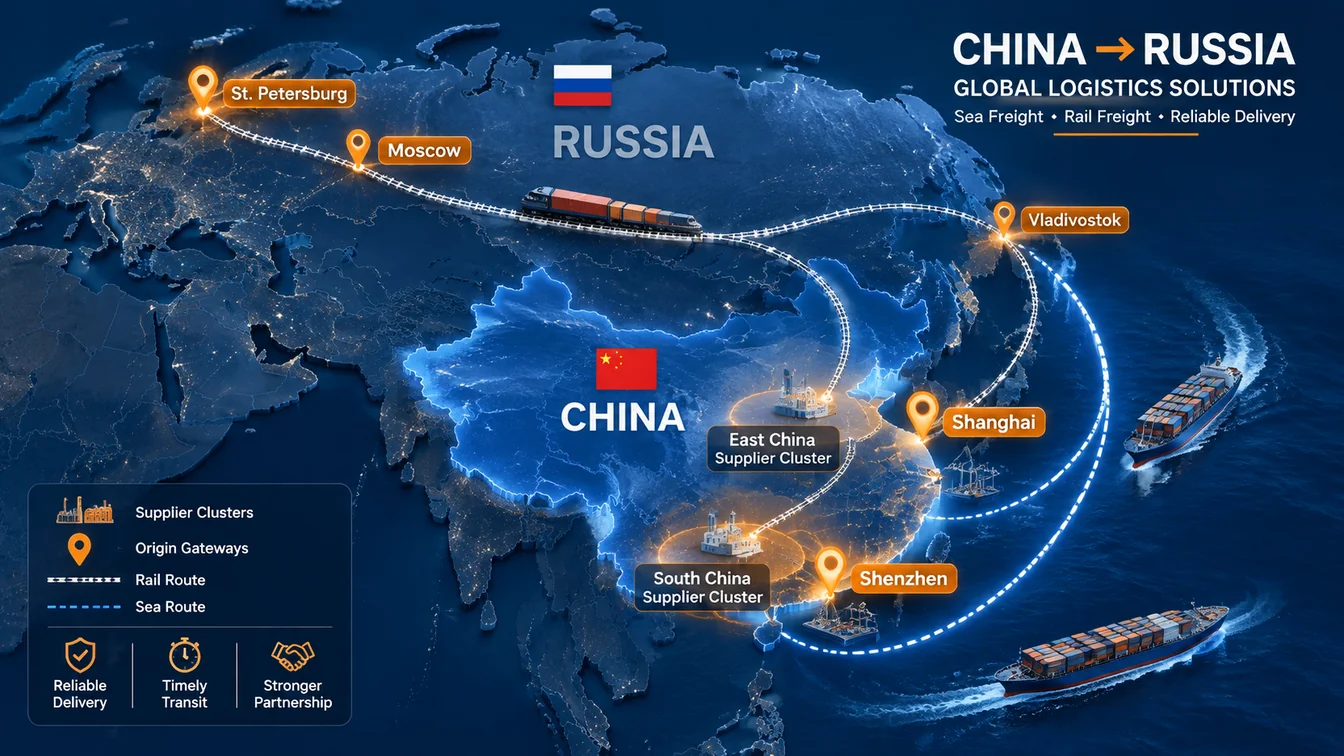
Sea freight via St. Petersburg suits full-container volume that can wait five to eight weeks, while rail freight to Moscow cuts the main-leg timing to a 16–20 day reference for a 40HQ container from Guangzhou. Air freight is the faster option for smaller, urgent cargo moving through Moscow, but the per-kilogram reference applies only to the named airport pair.
Route Planning Summary
- How does cargo move from the China supplier to the first gateway?
- The supplier’s province decides the practical origin gateway: East China suppliers normally route through Shanghai or Ningbo, South China suppliers through Shenzhen or Guangzhou, and Northeast suppliers through Dalian. The condition that changes this is the booked mode — sea freight needs a seaport, while rail freight collects at an inland rail terminal and air freight at a cargo airport.
- Which transport mode fits a China-to-Russia shipment?
- FCL sea freight fits full-container volume where a 38–53 day transit is acceptable; rail fits time-sensitive container volume heading to Moscow; air and express fit smaller urgent cargo. The shipment’s actual volume, weight, urgency, and final delivery region determine whether a full container, rail 40HQ, air, or express reference applies.
- What planning time should be used for the main leg?
- Use the supplied transit value for the exact route and method shown: 38–53 days for Shanghai–St. Petersburg FCL, 16–20 days for Guangzhou–Moscow rail 40HQ, 3–7 working days for Shanghai–Moscow air, and 2–4 days for China–Russia express. These are main-leg planning references, not total door-to-door commitments, and clearance or final delivery can add time beyond the named leg.
- Who is responsible for Russian import clearance?
- A Russian-resident importer of record — or a licensed customs broker acting on its behalf — files the declaration, pays duty and 22% import VAT, and presents conformity documents. A foreign seller without a Russian establishment normally cannot act as importer of record, so the Russian buyer or an authorized customs representative must hold that role.
- What does final delivery and service scope cover?
- Final delivery can extend from the Russian gateway to the consignee’s warehouse or nominated address, but the supplied cost references do not state whether inland carriage, clearance, duty, or unloading are included. The agreed door-to-door scope must be recorded before booking so the handoff at the gateway is clear.
China to Russia Shipping Cost
The table below provides route-specific indicative shipping costs and planning transit references for the November 2026 review. Each reference applies to its named route, method, and unit only.
| Shipping route | Shipping method | Price | Transit time |
|---|---|---|---|
| Shanghai, China → St. Petersburg, Russia | FCL 20GP | $4,500/柜 | 38–53 days |
| Shanghai, China → St. Petersburg, Russia | FCL 40GP | $5,200/柜 | 38–53 days |
| Shanghai, China → St. Petersburg, Russia | FCL 40HQ | $5,500/柜 | 38–53 days |
| Shanghai, China → Moscow, Russia | Air freight | $3.10/kg | 3–7 working days |
| China → Russia | Express | $10.97/kg | 2–4 days |
| Guangzhou, China → Moscow, Russia | Rail freight (pure rail, 40HQ) | $3,420–$4,950/柜 | 16–20 days |
Cost scope: The indicative cost references apply to the route, method, and unit shown; they are not carrier freight rates, market averages, TJ selling prices, or binding quotations. The actual booking, cargo, and agreed service scope determine the commercial arrangement, including responsibility for pickup, handling, customs, duty and tax, inland delivery, insurance, storage, examination, appointment, and surcharge items. The November 2026 review stamp covers content and cost-data review, not carrier rate validity.
Russia Import Duty and Taxes
Russian import charges are set by the commodity’s 10-digit EAEU TN VED code, its customs value, the applicable EAEU common tariff rate, and whether a preferential origin rate applies. As of November 2026, the standard import VAT rate is 22% of the customs value plus duty; a 10% reduced rate applies only to specific social goods such as certain food products, children’s goods, and medical items, and the duty rate itself typically falls between 0% and 20% depending on the code.
- Classify the goods under the correct 10-digit EAEU TN VED code, because the code determines the duty rate and whether EAC conformity documents are required before release.
- Build the customs value on the CIF basis — goods value plus international freight and insurance to the Russian border — because Russian customs assesses duty on that base, not on the invoice value alone.
- Apply the EAEU common tariff rate for that code, checking whether any anti-dumping, special, or safeguard duty applies in addition to the standard rate.
- Calculate import VAT at 22% of the customs value plus duty; a Russian VAT-registered importer can generally recover this as input VAT if the goods are used in VAT-taxable activity and the declaration is structured correctly.
- Add the customs clearance fee, which for standard declarations scales with customs value and falls in a published ruble range under current Russian rules.
This explanation is simplified and is not tax or legal advice. The duty and VAT result depends on the specific goods, the declared value, the origin evidence, and current EAEU and Russian rules, which should be checked against official guidance before dispatch.
China to Russia Shipping Time
Guangzhou-to-Moscow rail freight on a 40HQ container carries a 16–20 day transit reference, the fastest supplied main-leg time for container volume on the China–Russia route. Shanghai-to-St. Petersburg FCL sea freight carries a 38–53 day reference, while Shanghai-to-Moscow air freight carries a 3–7 working day reference and China-to-Russia express carries a 2–4 day reference for the applicable parcel or small-cargo service.
Supplier pickup, China export handling, Russian import clearance, and final delivery occur outside the supplied main-leg transit value. Rail and sea schedules can also add waiting time before departure, and Russian clearance can lengthen the overall door-to-door period when documents or conformity evidence are incomplete. The transit references are planning inputs for the named route and method, not guarantees of final delivery.
Shipping Methods from China to Russia
Choose FCL sea freight when the shipment fills or nearly fills a 20GP, 40GP, or 40HQ container and the 38–53 day Shanghai–St. Petersburg reference is commercially acceptable, because a full container avoids per-CBM consolidation handling and gives the cargo a dedicated box. Choose rail freight when container volume must reach Moscow in roughly 16–20 days from Guangzhou, because the rail corridor avoids the longer sea routing while keeping container handling. Choose air freight when the cargo is small enough for chargeable-weight pricing and urgent enough to justify the $3.10/kg Shanghai–Moscow reference. Choose express when the shipment is a parcel or small package that needs the 2–4 day door-to-door network and can accept the $10.97/kg reference. LCL sea freight was not included in the supplied cost table because no transit value was provided, so it should be evaluated separately if consolidation is the intended method.
Door-to-Door Shipping from China to Russia
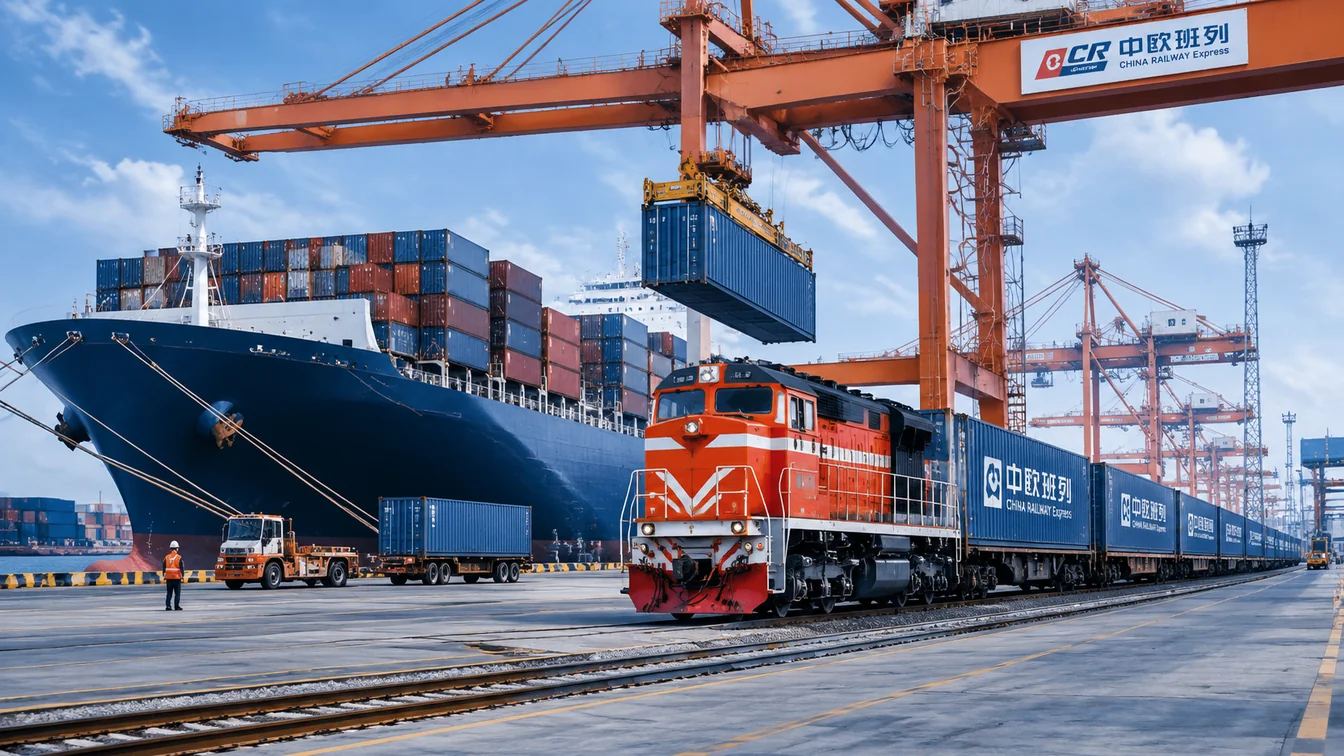
Door-to-door execution on the China–Russia route connects supplier pickup, origin export, the main leg, Russian import clearance, and final delivery into one coordinated sequence, with the importer of record and the agreed delivery address fixed before the cargo moves.
-
Cargo and Compliance Review
Confirm the product description, HS code, quantity, declared value, and any EAC conformity requirement before booking, because a missing certificate or a wrong code can stop the shipment at Russian customs and cannot be fixed retrospectively while the goods are held.
-
Route and Method Selection
Compare FCL sea via St. Petersburg, rail to Moscow, air to Moscow, and express against the cargo volume, urgency, and final delivery region, then select the mode whose supplied transit reference matches the buyer’s receiving window.
-
Supplier Coordination and Pickup
Align the supplier’s ready date, pickup address, and export documentation with the chosen origin gateway so the cargo reaches the port or rail terminal in time for the booked departure.
-
China Export Handling
Complete China export declaration, container stuffing or rail loading, and the handover of the transport document — bill of lading, rail waybill, or air waybill — to the party responsible for the main leg.
-
International Transportation
Move the cargo on the selected main leg: sea to St. Petersburg, pure rail to Moscow, air to Moscow, or the express network, tracking the departure and arrival against the planning reference.
-
Russia Import Clearance
File the Russian customs declaration through the importer of record or a licensed customs broker, pay duty and 22% import VAT, and present EAC certificates or declarations where the product category requires them.
-
Final Delivery
Arrange inland carriage from the Russian gateway to the consignee’s warehouse or nominated address, including unloading and any delivery appointment, under the service scope agreed before booking.
-
Shipment Close-Out
Confirm delivery receipt, reconcile the charges against the agreed scope, and archive the customs declaration, transport documents, and proof of delivery for the importer’s records and any VAT recovery claim.
Main China to Russia Routes
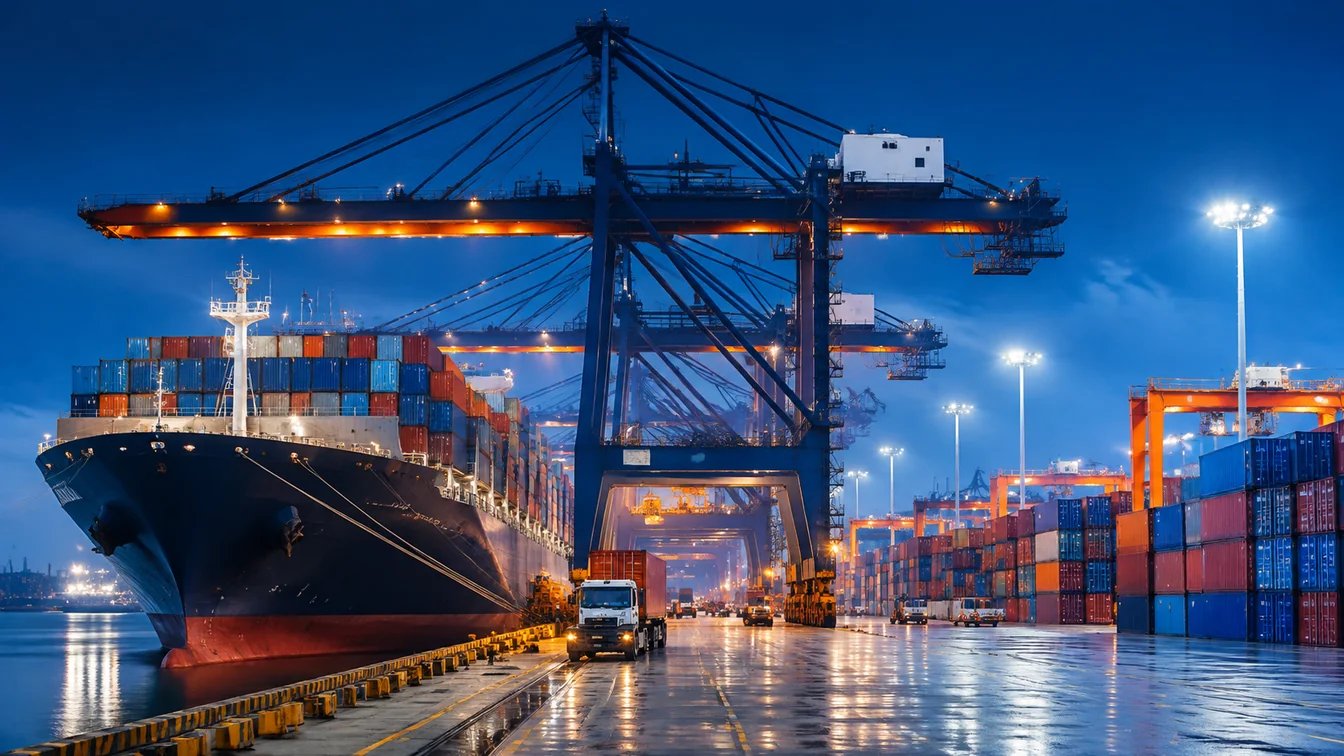
The most practical China-to-Russia route normally starts at the China gateway that limits supplier-side movement while fitting the Russian entry point and the final delivery region. A supplier in Zhejiang or Jiangsu usually compares Shanghai or Ningbo first; a supplier in Guangdong compares Shenzhen or Guangzhou; a supplier in Northeast China compares Dalian with rail or sea options toward the Russian Far East. The final postcode, the booked mode, and the Russian gateway’s inland connections can change that comparison.
Major China Export Ports for Russia Shipping
- Shanghai
- Shanghai serves suppliers across Jiangsu, Zhejiang, and the Yangtze River Delta and has regular container services toward St. Petersburg and other Baltic gateways. It is the natural first comparison for East China cargo booked on FCL sea freight to Northwest or Central Russia, while rail or air from Shanghai may suit time-sensitive cargo.
- Ningbo-Zhoushan
- Ningbo-Zhoushan is a high-throughput container port for Zhejiang and the wider East China manufacturing belt, with ocean services that connect to St. Petersburg and other Russian gateways. It is a practical alternative to Shanghai when the supplier is closer to Ningbo or when the sailing schedule fits the required departure window.
- Shenzhen/Yantian
- Shenzhen/Yantian serves Guangdong electronics, consumer goods, and e-commerce suppliers and connects to Russian gateways through ocean services and feeder routings. South China cargo can also use rail from Guangzhou to Moscow when the 16–20 day reference and the rail terminal location fit the shipment.
- Qingdao
- Qingdao serves Shandong and North China suppliers and offers ocean services toward Russian Baltic and Far East gateways. It is a relevant origin port for machinery, industrial goods, and consumer cargo from North China, with the final Russian delivery region determining whether a Baltic or Far East gateway is the better match.
- Dalian
- Dalian is the closest major China gateway to Northeast China and the Russian Far East, with sea connections to Vladivostok and other regional ports. It fits suppliers in Liaoning, Jilin, and Heilongjiang whose cargo is destined for the Russian Far East or can connect to the Trans-Siberian rail corridor.
Major Russia Import Ports for Cargo from China
- St. Petersburg
- St. Petersburg is the main Baltic container gateway for Northwest and Central Russia, including Moscow, and is the destination port in the supplied Shanghai FCL references. It suits sea freight whose final delivery region is St. Petersburg, Moscow, or the surrounding federal districts, while inland rail or truck connects the port to Moscow and other inland points.
- Vladivostok
- Vladivostok is the Russian Far East’s largest container port and handles China-origin cargo for the Far East consumer market and for onward rail movement to European Russia. It is the practical first entry point for Northeast China sea cargo and for multimodal routings that use the Trans-Siberian railway toward Moscow.
- Novorossiysk
- Novorossiysk is the main Russian Black Sea gateway and serves Southern Russia and the North Caucasus, with ocean connections from China through the Suez Canal or other routings. It is relevant when the final delivery region is in the south rather than Northwest or Central Russia.
- Nakhodka
- Nakhodka is a Far East port that handles container and general cargo from China and connects to the Russian rail network. It is a secondary Far East option alongside Vladivostok and should be compared when sailing schedules or inland rail capacity make it competitive for the final destination.
Supplier Region to Destination Routing Logic
| Supplier region in China | Origin port to compare | Destination port and delivery region | Planning reason |
|---|---|---|---|
| East China (Zhejiang, Jiangsu, Shanghai) | Shanghai or Ningbo-Zhoushan | St. Petersburg, then Moscow or Northwest Russia | Compare Shanghai or Ningbo sea freight to St. Petersburg when the shipment fills an FCL container and the 38–53 day reference fits; rail or air may replace sea when the receiving window is shorter or the cargo is urgent. |
| South China (Guangdong) | Shenzhen/Yantian or Guangzhou | St. Petersburg by sea; Moscow by rail | Compare Guangzhou–Moscow rail when a 40HQ container must reach Moscow in the 16–20 day reference; compare Shenzhen or Guangzhou sea to St. Petersburg when sea freight cost and volume suit the shipment and final delivery is in Northwest or Central Russia. |
| North China (Shandong, Hebei) | Qingdao | St. Petersburg or Vladivostok, depending on final region | Compare Qingdao sea services to St. Petersburg for Northwest and Central Russia, or to Vladivostok when the final delivery region is the Far East or the cargo can connect to the Trans-Siberian rail corridor. |
| Northeast China (Liaoning, Jilin, Heilongjiang) | Dalian | Vladivostok, then Far East or rail to Moscow | Compare Dalian sea to Vladivostok when the supplier is in Northeast China and the cargo is destined for the Far East; compare rail or multimodal options when the final delivery is in European Russia and the Trans-Siberian connection reduces inland distance. |
Destination Regional Delivery Logic
- Northwest and Central Russia
- St. Petersburg is the natural sea gateway for Northwest Russia and Moscow, with inland rail or truck completing the final leg. Rail freight from China to Moscow can bypass the sea leg when the 16–20 day reference and the rail terminal location suit the supplier and consignee.
- Far East
- Vladivostok or Nakhodka are the first entry points for Far East delivery, and Dalian is the closest major China origin port for Northeast suppliers. For cargo moving onward to European Russia, the Trans-Siberian rail connection turns Vladivostok into a multimodal gateway rather than a final destination.
- Southern Russia
- Novorossiysk is the Black Sea gateway for Southern Russia and the North Caucasus, with a longer sea routing from China than the Baltic or Far East options. It should be compared when the final delivery region is in the south and the inland distance from St. Petersburg or Vladivostok would outweigh the sea-leg difference.
How the Gateway Is Selected
- Match the China origin port to the supplier’s province first, because inland pickup distance and export handling often outweigh small differences in ocean freight.
- Match the Russian entry gateway to the final delivery region: St. Petersburg for Northwest and Central Russia, Vladivostok or Nakhodka for the Far East, and Novorossiysk for Southern Russia.
- Check whether the booked mode actually serves the candidate gateway — rail to Moscow is an inland terminal routing, not a St. Petersburg port routing, and air freight enters through a cargo airport rather than a seaport.
- Compare the inland leg from the Russian gateway to the final address, including rail or truck availability, transit time, and delivery scope, rather than comparing ocean freight alone.
- Confirm that the chosen gateway and mode combination can present the required customs declaration and conformity documents at the point of entry, because a gateway without the right clearance capability can turn a low-cost routing into a held shipment.
Russia Customs Clearance
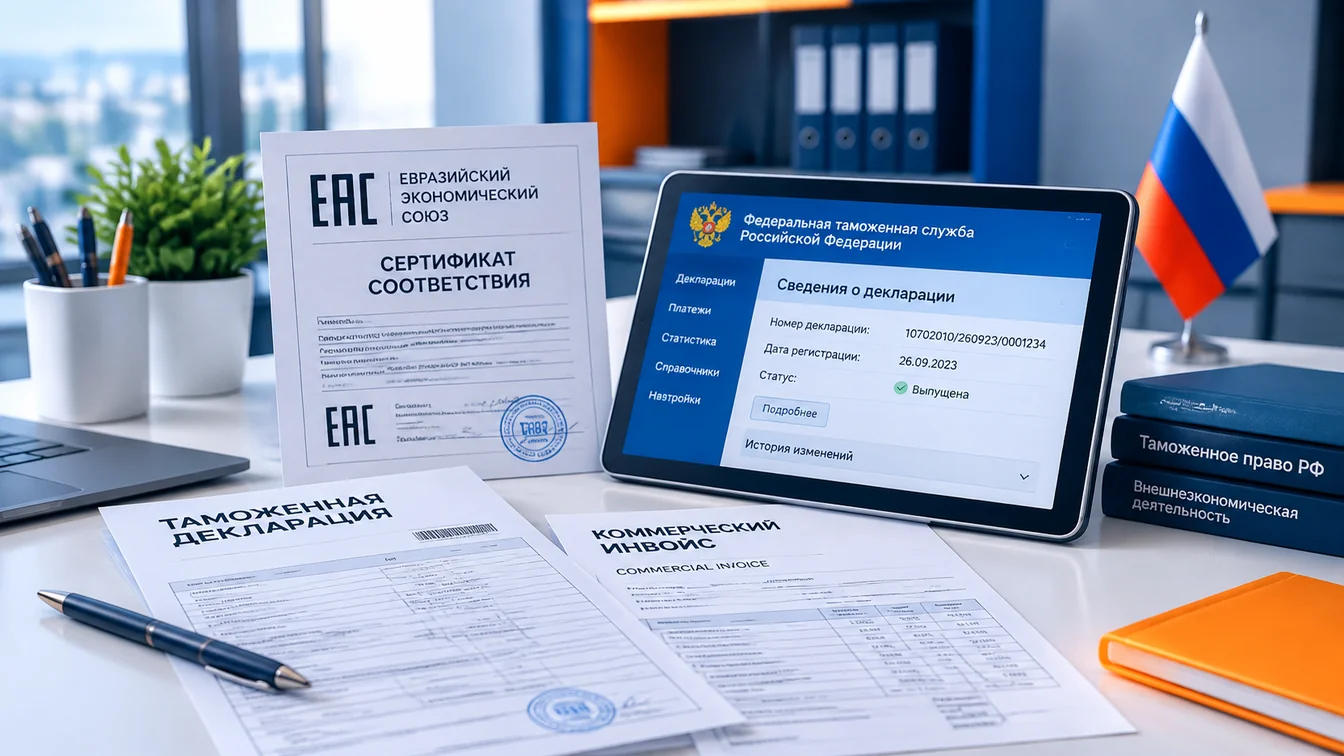
Russian import clearance requires a Russian-resident importer of record or a licensed customs broker to file an electronic declaration, supported by a foreign trade contract, commercial invoice, packing list, transport document, and conformity evidence for regulated products. The rules apply across the Russian Federation as an EAEU member state, and goods entering through another EAEU country are placed under transit and released for free circulation by Russian customs.
What the Russia Importer Normally Needs
A Russian importer of record must hold the legal identity and taxpayer identifiers that the customs authority links to the declaration; the following items are normally required before release.
- INN and KPP The taxpayer identification number and registration reason code identify the Russian importer in the customs declaration and tax system; a foreign company without a Russian establishment normally cannot act as importer of record.
- Customs declaration (ДТ) The declaration is filed electronically with a qualified digital signature and states the goods, TN VED code, customs value, origin, and applicable procedure.
- Foreign trade contract A signed contract between the Russian importer and the China supplier, preferably bilingual, establishes the transaction basis for the declaration.
- Commercial invoice and packing list The invoice must match the declared goods in description, quantity, unit price, total value, currency, and Incoterms; the packing list breaks the cargo down by item, carton, and weight.
- Transport document A bill of lading for sea freight, rail waybill for rail, air waybill for air, or CMR for road movement evidences the transport contract and the cargo handoff.
- EAC certificate or declaration Products within EAEU technical regulation scope need an EAC certificate of conformity or a registered declaration before customs release; a missing conformity document can lead to detention.
- Certificate of origin A certificate of origin is needed when the importer claims a preferential tariff rate under an applicable agreement or EAEU-origin treatment.
- Customs broker authorization A licensed customs broker acts under a contract with the importer and files the declaration on its behalf, while the importer remains responsible for the accuracy of the declared information.
Common Causes of Russia Customs Delays
- An incorrect or inconsistent 10-digit TN VED code, which changes the duty rate and the conformity requirements attached to the goods.
- An understated or unsupported customs value, especially on related-party transactions, which triggers a value adjustment and additional duty and VAT assessment.
- A missing EAC certificate or declaration for a regulated product category, which cannot be arranged retrospectively while the goods are held at the border.
- Incomplete or mismatched commercial documents — invoice, packing list, contract, and transport document — that do not align with the declaration.
- Failure to present the required QR code or pre-shipment notification when the routing enters Russia by road from another EAEU country under the current СПОТ system.
- Border congestion or increased customs inspection at China–Kazakhstan–Russia road crossings, which can extend the transit beyond the main-leg reference.
- Technical failures or data errors in the electronic declaration system, which delay release even when the underlying documents are correct.
Resolve document, classification, value, and conformity issues before the cargo departs China, because Russian customs generally does not release goods on a promise to provide missing documents after arrival.
Special Cargo, Packaging, and Insurance
Cargo Requiring Additional Review
- Lithium batteries and battery-powered devices, which may be regulated as dangerous goods and need carrier acceptance before booking.
- Chemicals, liquids, cosmetics, and food-contact products, which can require EAC conformity evidence, sanitation documentation, or import licensing.
- Medical goods, children’s products, and certain electrical equipment, which fall under higher-risk EAC certificate categories rather than declaration-only routes.
- Wood packaging and wooden pallets, which must meet ISPM 15 treatment and marking rules for entry into Russia.
- Oversized or heavy cargo, which needs special equipment, lifting plans, and a route survey at both the origin and destination gateways.
- Temperature-controlled cargo, which needs a verified cold-chain from supplier pickup through the Russian gateway and final delivery.
Packaging Checks
Russia-bound cargo crosses multiple handling points — supplier floor, China export terminal, main-leg carrier, Russian gateway, and inland delivery — so packaging must survive repeated loading and unloading as well as possible moisture and cold exposure on the northern sea or rail route.
- Use export-grade cartons with sufficient burst strength and internal cushioning for the actual cargo weight and stacking load.
- Secure pallets and unit loads so they can be handled by forklift at the China port or rail terminal and at the Russian warehouse.
- Add moisture protection — desiccant or barrier liners — for sea freight and rail containers, especially when the route crosses cold or humid climates.
- Apply handling marks and labels in a durable form, including the consignee’s Russian delivery details and any required warning symbols.
- Record carton dimensions and gross weights accurately, because air and express chargeable weight and rail container planning depend on them.
- Treat wood packaging with ISPM 15 heat treatment or fumigation and apply the visible mark before the cargo leaves the supplier.
Cargo Insurance
Carrier liability is not the same as cargo insurance: a carrier’s liability is normally limited by the transport convention or contract, while cargo insurance covers the insured value under a separate policy with its own exclusions, deductible, and claims evidence requirements. The coverage, exclusions, insured value, and claim period must be confirmed before dispatch, and the policy should match the mode and route because sea, rail, air, and express carriage carry different risk profiles.
Cargo insurance can be arranged for the China–Russia route, but the coverage scope must be agreed in writing so the buyer knows whether it responds to partial loss, general average, or the specific handling risks of the chosen gateway and mode.
Why Use a Freight Forwarder for Shipping from China to Russia?
A freight forwarder helps the buyer convert cargo facts into a workable shipment definition, select a credible route for the actual origin and destination, and keep the commercial and operational handoffs aligned across the China export, main leg, Russian clearance, and final delivery.
- Defining the shipment before comparing routes
- The forwarder turns the supplier’s product details, dimensions, weight, readiness date, and final Russian address into a movement definition that can be quoted consistently. A supplier in Guangdong with a 40HQ of time-sensitive goods may need a different definition from a Zhejiang supplier shipping a 20GP that can wait for a slower sailing, and the forwarder flags which inputs change the mode and gateway comparison.
- Matching the route to the real origin and destination
- The forwarder compares China origin gateways, main-leg modes, and Russian entry points against the supplier location, cargo urgency, and final delivery region. If the final address is in Moscow, rail to Moscow may be the practical comparison; if it is in the Russian Far East, Dalian-to-Vladivostok may fit better, and the forwarder explains the trade-off rather than treating one gateway as universally best.
- Keeping commercial and operational handoffs aligned
- The forwarder records who is responsible for supplier pickup, China export, main-leg booking, Russian import clearance, duty and VAT, and final delivery, so the buyer can see where the forwarder’s scope ends and the importer or broker’s responsibility begins. If the Russian importer of record has not been confirmed or the EAC evidence is incomplete, that gap is identified before the cargo moves rather than after it reaches the border.
How TJ Logistics Team Plans a China-to-Russia Shipment
- Shipment definition review
- TJ Logistics Team reviews the product, quantity, dimensions, weight, supplier readiness, and final Russian delivery address, and flags missing information — such as an unconfirmed TN VED code or an undeclared battery — that would prevent a reliable route or clearance decision.
- Route and gateway comparison
- TJ Logistics Team compares the credible mode and gateway combinations for that defined shipment: FCL sea via St. Petersburg, rail to Moscow, air to Moscow, or express, together with the relevant China origin port and Russian entry point, and explains how the supplied transit reference and cost reference apply to each option.
- Service-boundary and handoff record
- TJ Logistics Team records the agreed scope — pickup, export handling, main leg, clearance support, duty and tax responsibility, inland delivery, and insurance — and identifies the party responsible for the next handoff before a formal commercial arrangement is prepared.
- Booking and operational coordination after scope confirmation
- After the buyer confirms the agreed scope, TJ Logistics Team coordinates booking information, commercial documents, cargo handoff, and the next operational decision if timing, route, documents, or Russian receiving conditions change, using the multi-modal freight and customs brokerage service scopes where they match the defined shipment.
China to Russia Shipping FAQ
How much does a 20ft container from China to Russia cost?
A Shanghai-to-St. Petersburg FCL 20GP container is listed at $4,500 per container for the November 2026 review, with a 38–53 day planning transit. That reference applies to the named port pair and container size, and the actual booking scope — including pickup, clearance, duty, and delivery — determines what the final commercial arrangement covers.
How long does sea freight from China to Russia take?
Shanghai-to-St. Petersburg FCL sea freight carries a 38–53 day transit reference. The value covers the main sea leg for the named port pair and does not include supplier pickup, China export handling, Russian import clearance, or final inland delivery, so the door-to-door period can be longer than the sea reference.
What is the most cost-effective way to ship from China to Russia?
FCL sea freight via St. Petersburg is the practical cost default for full-container volume that can accept the 38–53 day reference, because a dedicated container avoids per-kilogram air pricing and consolidation handling. Rail from Guangzhou to Moscow can be more time-efficient for a 40HQ when the 16–20 day reference matters, but the cost comparison depends on the actual container size, origin, and delivery scope, not on a single cross-mode unit rate.
Which China port is best for shipping to Russia?
The closest major China export gateway to the supplier that has a suitable service toward the relevant Russian entry area is normally the best starting point. East China suppliers usually compare Shanghai or Ningbo-Zhoushan, South China suppliers compare Shenzhen/Yantian or Guangzhou, North China suppliers compare Qingdao, and Northeast suppliers compare Dalian; the final Russian delivery region and the booked mode can shift the choice.
Can I ship door-to-door from China to Russia?
Door-to-door shipping from China to Russia can be arranged when the scope includes supplier pickup, China export, the main leg, Russian import clearance, duty and VAT handling, and final delivery to the consignee’s address. The critical boundary is that a Russian-resident importer of record or a licensed customs broker must handle the import declaration, and the final delivery address and unloading responsibility should be written into the agreed scope before booking.
What documents should be prepared before shipping from China to Russia?
A Russia-bound shipment normally needs a foreign trade contract, commercial invoice, packing list, transport document (bill of lading, rail waybill, air waybill, or CMR), and the importer’s INN and KPP for the customs declaration. Products within EAEU technical regulation scope also need an EAC certificate or declaration before release, and a certificate of origin is needed only when a preferential tariff rate is claimed.
Why can two China-to-Russia shipping costs differ?
Two China-to-Russia costs can differ because they may cover different routes, modes, container sizes, or service scopes — for example, a Shanghai–St. Petersburg FCL 20GP reference and a Guangzhou–Moscow rail 40HQ reference are not directly comparable because the origin, destination, equipment, and transport mode differ. Chargeable weight for air and express, the declared customs value, and whether duty, clearance, or inland delivery are included can also change the commercial total.
Does rail freight from China to Russia clear customs at the destination station?
Rail freight from China to Moscow is an inland terminal routing, and Russian import clearance can be filed electronically by the importer of record or a licensed broker before or at the destination station. The rail waybill and the customs declaration are separate documents, and the cargo should not be released from the terminal until the declaration is accepted and any required EAC documents are presented.