

Reviewed by TJ Logistics Team — October 2026. Market, indicative shipping-cost, customs, tariff and marketplace information has been reviewed for this month; regulatory and commercial information may change. The review applies practical route-planning checks across supplier pickup, gateway and transport-mode selection, customs handoff, and final delivery.
Shipping from China to Slovenia: Route Update
For full-container cargo on the named Shanghai, China → Koper, Slovenia route, the FCL 20GP planning reference is $3,545–$3,759/container with transit of 31–48 days. A workable shipment plan connects the supplier’s actual pickup address in China to an appropriate export gateway, the selected international transport mode, the Port of Koper or another agreed entry gateway, Slovenian or other applicable EU customs clearance, and delivery to the final address.
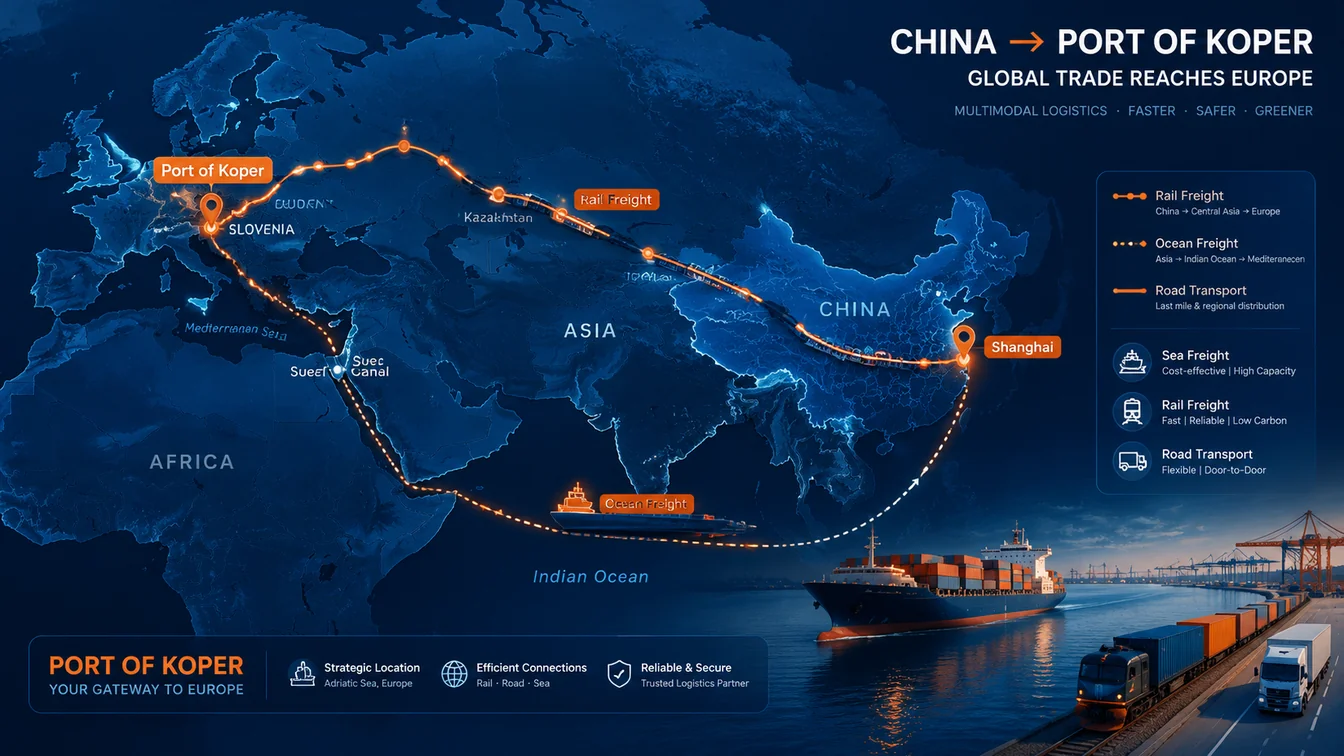
Sea freight is a practical starting point for planned container and consolidated cargo, while air freight or express is worth comparing when delivery urgency outweighs transport cost; a suitable rail-led multimodal service offers another option. The route should follow the supplier’s location and cargo requirements rather than assume that every China export port has the same sailing or connection. Review sea freight services for ocean cargo and rail freight options when a credible rail-based corridor fits the shipment.
Route Planning Summary
- How should a supplier in China reach the export gateway?
- Start with the supplier’s actual factory or collection address and compare Shanghai, Ningbo-Zhoushan, Shenzhen/Yantian, Qingdao or another suitable gateway against pickup distance, cargo readiness and available transport connections toward Slovenia.
- Which transport method should be selected?
- Use FCL or LCL for planned sea cargo, air freight or express for urgent shipments, and rail-led multimodal transport when its corridor and agreed service scope suit the cargo and destination.
- How should the delivery schedule be planned?
- Use the reference for the selected method as the starting point, then schedule supplier readiness, export handling, import release and final delivery as separate stages wherever the agreed transit scope does not include them.
- Who is responsible for Slovenian import clearance?
- The importer and any appointed customs representative must follow the applicable EU and Slovenian procedures, including correct declaration data, an appropriate EORI arrangement, and responsibility for import duties and VAT.
- What determines the final-delivery arrangement?
- The agreed destination address, postcode, customs handoff, unloading facilities, delivery appointments and contracted service boundary determine how cargo moves from the destination gateway to the receiving premises.
China to Slovenia Shipping Cost
This table provides route-specific indicative shipping costs and planning transit references reviewed in October 2026. Each reference applies to its named route, transport method and unit.
Cost-table review: October 2026.
| Shipping route | Shipping method | Price | Transit time |
|---|---|---|---|
| Shanghai, China → Koper, Slovenia | FCL 20GP | $3,545–$3,759/container | 31–48 days |
| Shanghai, China → Koper, Slovenia | FCL 40GP | $4,440–$4,868/container | 31–48 days |
| Shanghai, China → Koper, Slovenia | FCL 40HQ | $4,440–$4,868/container | 31–48 days |
| Shanghai, China → Koper, Slovenia | LCL | $56/CBM | 30 days |
| China → Slovenia | Air freight | $6.64/kg | 5–10 working days |
| China → Slovenia | Express | $8.98/kg | 5–10 working days |
| China → Slovenia | Rail-led multimodal (DDP) | $3.14/kg | 18–28 days |
Cost scope: These indicative cost references apply to the route, method and unit shown; they are not carrier freight rates, market averages, TJ selling prices or binding quotations. The actual booking, cargo and agreed service scope determine the commercial arrangement, including responsibility for relevant pickup, handling, customs clearance, duty and tax, inland delivery, insurance, storage, examination, appointments and surcharges.
Slovenia Import Duty and Taxes
Import duty and VAT on commercial goods entering Slovenia from China depend on the commodity code, customs value, origin, applicable trade measures, product category and rules in force when the goods are imported. As of October 2026, Slovenia’s standard VAT rate is 22%, while reduced rates apply to eligible goods; neither the duty rate nor the VAT treatment should be assumed to be identical for every product. The Slovenian VAT guidance explains the country’s applicable VAT framework.
For a commercial shipment from China to Slovenia, the importer or appointed customs representative should work through these steps before the goods are dispatched.
- Classify the product. Select the appropriate EU Combined Nomenclature or TARIC commodity code using the product’s actual materials, function and specifications. The EU TARIC database provides the applicable tariff measures, trade-defence measures and product-related import requirements.
- Determine the customs value. Prepare the commercial transaction evidence and account for the adjustments required under the applicable customs valuation rules. Transport, insurance and other relevant costs may affect the customs value depending on the circumstances.
- Determine customs duty and other measures. Apply the relevant tariff treatment to the correctly classified goods, taking account of origin and any applicable anti-dumping duties, safeguards, restrictions or other measures.
- Determine Slovenian import VAT. Calculate VAT using the applicable tax base, which generally includes the customs value, customs duties and other relevant import charges under the applicable rules. Apply the standard or an eligible reduced VAT rate as appropriate to the product and transaction.
These steps simplify the import-tax calculation for route planning and are not tax advice. The importer should establish the actual tariff, tax treatment, customs procedure and payment or accounting responsibility before entry; an agreed DDP arrangement does not remove the need to document those responsibilities correctly.
China to Slovenia Shipping Time
The named Shanghai, China → Koper, Slovenia FCL references each show 31–48 days for FCL 20GP, FCL 40GP and FCL 40HQ shipments. The corresponding LCL reference is 30 days, making the supplied LCL transit reference slightly different from the full-container reference without proving that every consolidation will follow the same operational route.
The supplied China-to-Slovenia air freight reference is 5–10 working days, and the express reference is also 5–10 working days. The rail-led multimodal (DDP) reference is 18–28 days. These are method-specific planning references, not guaranteed door-to-door delivery periods.
To build a usable delivery schedule, align the supplier’s cargo-ready date with export handling and the applicable departure arrangements. Ocean cargo may include a transshipment or feeder connection before reaching Koper; the port publishes connections to Asian and other international markets through a mix of mainline and feeder services. After arrival, customs release, terminal handling and onward truck or rail movement can affect when the receiving address can accept the shipment. Keep those stages separate in the schedule unless the agreed service explicitly includes them.
Shipping Methods from China to Slovenia
- Full container load (FCL)
- Choose FCL when the shipment is intended to occupy a dedicated container and the supplier can prepare it for container loading, because one container movement can simplify cargo segregation and handling. The practical choice between 20GP, 40GP and 40HQ depends on the cargo’s packed dimensions, weight, height, loading plan and equipment restrictions rather than container label alone.
- Less than container load (LCL)
- Choose LCL when the goods form a smaller consolidated sea shipment and do not require a dedicated container, because the cargo can move alongside other consignments. Shipment dimensions, actual weight, packaging, consolidation cut-offs and destination handling can affect the total arrangement, so the supplied per-CBM reference is not a complete shipment total.
- Air freight
- Choose air freight when stock is needed sooner than a planned sea movement can support, because it is suited to time-sensitive commercial cargo. Compare actual and chargeable weight, package dimensions, battery or dangerous-goods restrictions and the final delivery postcode before selecting an air freight service.
- Express shipping
- Choose express when a parcel-sized shipment or urgent replenishment benefits from a courier-style network, because the transport and delivery arrangement may be more suitable than a consolidated cargo service. Actual and dimensional weight, remote-area coverage, commodity acceptance, customs data and the destination address affect suitability; express shipping should be matched to the parcel’s specifications and receiving requirements.
- Rail-led multimodal transport
- Choose rail-led multimodal transport when the shipment can use a suitable rail-based corridor and combined transport arrangement, because it offers an alternative to both ocean and air movement. Do not assume the cargo travels entirely by rail or follows a direct rail connection to Slovenia. The corridor, terminal transfers, cargo acceptance and agreed DDP duties and tax arrangements must fit the shipment; review multimodal freight arrangements alongside the agreed DDP shipping scope.
The practical selection rule is to start with the shipment’s actual cargo form, urgency and delivery requirement. Supplier location determines the pickup leg; measurements and handling needs determine which services can accept the cargo; and the final Slovenian postcode and cost of delay help determine whether a gateway or mode that looks convenient at origin remains suitable end to end. The supplied per-kilogram, per-CBM and container references use different units and must not be treated as directly comparable totals.
Door-to-Door Shipping from China to Slovenia
Door-to-door shipping connects collection at the China supplier with an agreed final delivery address in Slovenia. The service should define the pickup point, export handling, international movement, import-clearance responsibilities, destination handling and final-mile conditions rather than assume every stage is included simply because the service is described as door-to-door.
-
Cargo and Compliance Review
Record the cargo description, packaging, dimensions, gross weight, commodity classification information, cargo-ready date and supplier location. Check whether the goods require specific export documents, import permits, dangerous-goods handling or other acceptance checks before choosing the route.
-
Route and Method Selection
Match the cargo to an appropriate sea, air, express or rail-led multimodal arrangement. Compare plausible origin gateways with the receiving postcode and delivery timing, including whether the destination handoff is planned through Koper or another explicitly agreed entry gateway.
-
Supplier Coordination and Pickup
Align the collection address, factory opening hours, cargo-ready date, packing status and loading access. For a container shipment, arrange loading and securing requirements; for consolidated or parcel cargo, use the packaging and measurements needed for acceptance by the selected service.
-
China Export Handling
Prepare the commercial invoice, packing list and applicable export and transport data. Coordinate the origin handoff, export declaration responsibilities and delivery to the applicable port, airport, consolidation point or rail terminal under the booked movement plan.
-
International Transportation
Move the cargo using the agreed mode and routing. Ocean cargo may use a mainline vessel and connecting service, air cargo uses the agreed air transport arrangement, and rail-led multimodal cargo may require multiple terminal and inland transfer legs.
-
Slovenia Import Clearance
Arrange the customs declaration using the appropriate importer, EORI, commodity classification, customs value and supporting documents. The responsible party must also manage applicable import duty and VAT; customs representation and tax payment must follow the actual agreed arrangement.
-
Final Delivery
After the required release and destination handling, move the cargo to the named consignee or warehouse. Check the final postcode, vehicle access, unloading equipment, booking or appointment conditions and any special handling requirements before the last-mile handoff.
-
Shipment Close-Out
Record delivery evidence, outstanding cargo discrepancies and relevant transport or customs documents. Resolve any damage, shortage, detention, storage or other exception through the party responsible under the agreed service and insurance arrangements.
The door-to-door shipping service can be considered when the intended movement requires coordinated origin and destination handoffs. The agreed scope should specify who arranges customs representation, who pays import charges, and whether final delivery includes unloading or special receiving arrangements.
Main China to Slovenia Routes
The most practical China-to-Slovenia route normally begins at an export gateway that limits supplier-side movement while providing a suitable connection toward the destination and final delivery area. The comparison can change when an alternative gateway has a more suitable departure, when a transshipment or inland transfer affects the movement, or when the final postcode makes destination handling and onward delivery more significant.
Major China Export Ports for Slovenia Shipping
- Shanghai Port
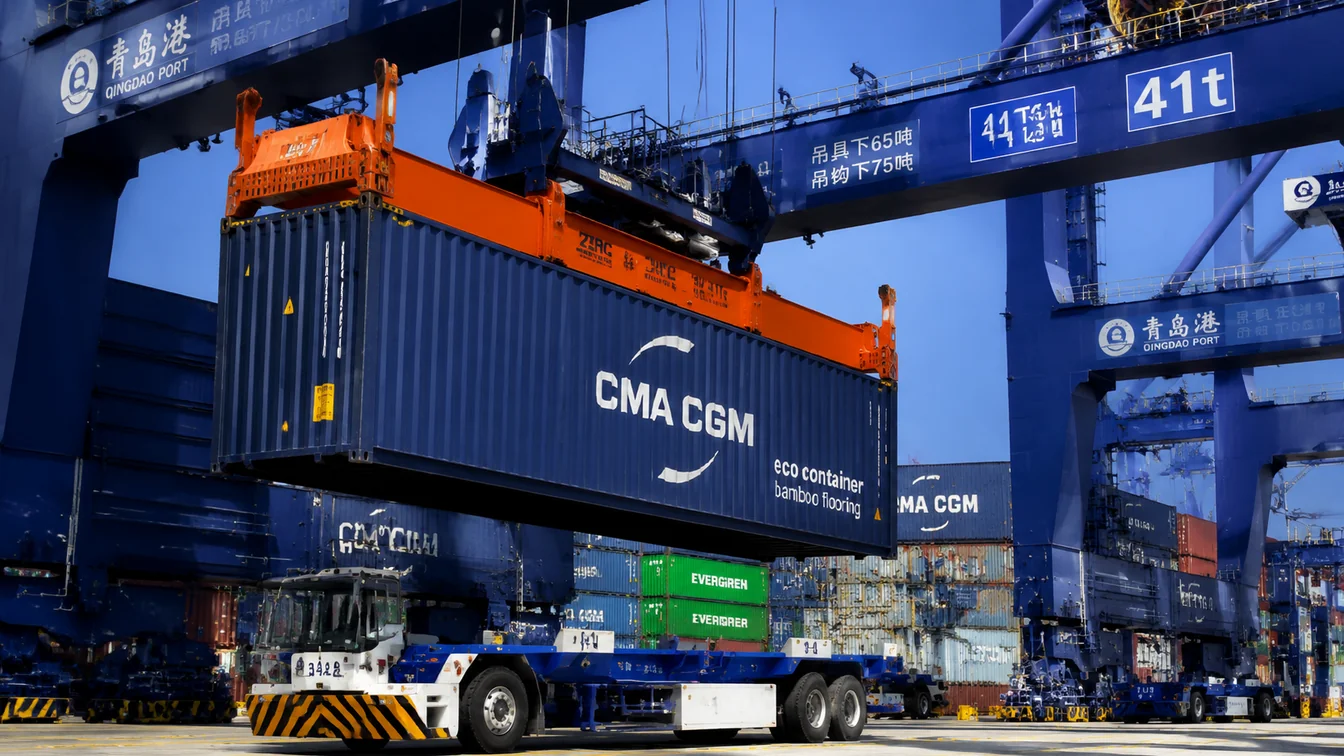
- Compare Shanghai for suppliers across Shanghai and the wider Yangtze River Delta, including factories around Suzhou. It is a natural candidate for planned FCL and LCL cargo when the supplier-side pickup is practical and a suitable route toward Koper is available. The actual service may include a connecting port rather than a direct sailing to Slovenia.
- Ningbo-Zhoushan Port
- Compare Ningbo-Zhoushan for Zhejiang suppliers and factories south or east of Shanghai when the pickup geography suits this gateway. It can be an alternative to Shanghai for containerized goods, but the usable departure, cut-off and onward connection toward Koper should govern the decision.
- Shenzhen Port, including Yantian
- Compare Shenzhen/Yantian for suppliers in Shenzhen, Dongguan and the wider Pearl River Delta. It is a relevant container-export gateway for manufacturing cargo from southern China; Guangzhou-area factories may have a different practical gateway because the origin pickup leg changes.
- Guangzhou Port, including Nansha
- Compare Guangzhou/Nansha for suppliers around Guangzhou, Foshan and surrounding industrial areas when its export arrangements fit the cargo. Compare its pickup and consolidation arrangements with Shenzhen/Yantian, particularly when the goods originate closer to Guangzhou than to Shenzhen.
- Qingdao Port
- Compare Qingdao for suppliers in Shandong and parts of northern China. It may reduce unnecessary inland movement for northern manufacturers, while a Shanghai or Ningbo alternative could still be more practical when the supplier location or actual onward transport arrangement points south.
- Xiamen Port
- Compare Xiamen for factories in Fujian and nearby southeastern China. Its relevance depends on where the cargo is manufactured, the available origin handling and the suitable international connection, rather than on the assumption that every named port serves the same route.
Major Slovenia Import Ports for Cargo from China
- Port of Koper
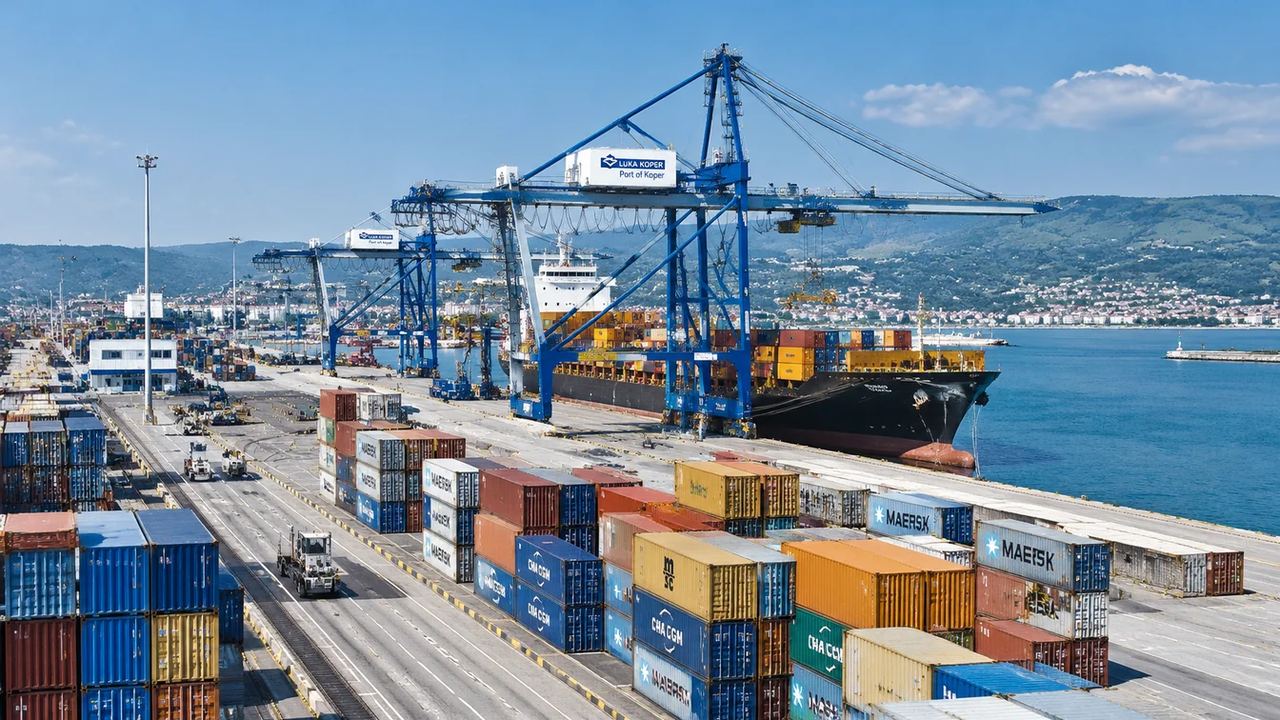
- Koper is Slovenia’s principal commercial seaport and the primary domestic port to compare for container cargo from China. Its container terminal handles vessel, truck and rail operations, and the port publishes international connections through mainline and feeder services. From Koper, cargo can move inland toward Ljubljana, Celje, Maribor and other Slovenian delivery areas using the agreed truck or rail arrangement. The Port of Koper container terminal provides official terminal and connectivity information.
- Port of Trieste, Italy — cross-border alternative
- Trieste is outside Slovenia and should be compared only when a suitable international routing and a workable inland movement to the Slovenian receiving area are available. A shipment using Trieste requires its own destination handling and customs or transit plan; it must not be treated as a domestic Slovenian port arrival.
- Port of Rijeka, Croatia — cross-border alternative
- Rijeka is also outside Slovenia and may be worth comparing for selected routing and final-delivery combinations. Its practical suitability depends on the actual sea service, cross-border movement, customs procedure, destination handling and inland leg to the receiver, not merely its geographic proximity to Slovenia.
Supplier Region to Destination Routing Logic
| Supplier region in China | Origin port to compare | Destination port and delivery region | Planning reason |
|---|---|---|---|
| Shanghai and the Yangtze River Delta | Shanghai Port | Port of Koper → Ljubljana and central Slovenia | Compare Shanghai → Koper → Ljubljana first for cargo near Shanghai or Suzhou. Change the origin gateway when the actual factory is closer to Ningbo or a different pickup and departure arrangement fits better. |
| Zhejiang and the southern Yangtze River Delta | Ningbo-Zhoushan Port | Port of Koper → Celje and eastern Slovenia | Compare Ningbo-Zhoushan → Koper → Celje or Maribor when factory location makes Ningbo practical. Shanghai may remain an alternative if the pickup, available departure or cargo-handling requirements favor it. |
| Guangdong and the Pearl River Delta | Shenzhen/Yantian or Guangzhou/Nansha | Port of Koper → Ljubljana and western or central Slovenia | Compare Yantian → Koper → western or central Slovenia for suppliers around Shenzhen and Dongguan. Guangzhou/Nansha may be more practical for factories nearer Guangzhou; the pickup leg and actual international service can change the result. |
| Shandong and northern China | Qingdao Port | Port of Koper → Maribor and northeastern Slovenia | Compare Qingdao → Koper → Maribor for northern suppliers when the cargo can be collected efficiently there. Revisit the origin gateway if an alternative pickup route or available international connection better fits the shipment. |
| Fujian and southeastern China | Xiamen Port | Port of Koper → southern and eastern Slovenia | Compare Xiamen → Koper → the final southern or eastern delivery area for Fujian suppliers. A neighboring Chinese gateway or a different departure arrangement may be more suitable after pickup distance, cargo readiness and the complete inland movement are considered. |
Destination Regional Delivery Logic
- Coastal and western Slovenia
- Koper is geographically relevant for coastal deliveries, but the last-mile arrangement still needs a named address, suitable vehicle access and unloading conditions. A cross-border gateway should be considered only when its international movement and inland handoff provide a workable alternative for the actual receiver.
- Ljubljana and central Slovenia
- Compare inland truck or rail movement from Koper against the required delivery date and receiving arrangements. Delivery around Ljubljana can involve a separate inland movement even when the international sea leg ends at Koper.
- Celje, Maribor and northeastern Slovenia
- For eastern and northeastern destinations, compare the complete Koper-to-delivery leg, including inland distance, rail or truck suitability, destination handling and receiver requirements. An alternative foreign gateway may merit review only if its full transport and customs arrangement is practical.
- Novo Mesto and southeastern Slovenia
- Compare the final postcode and truck movement from the agreed entry gateway rather than select a port by coastal proximity alone. Vehicle access, cargo size, delivery appointments and the agreed cross-border route can materially change the workable final-mile arrangement.
How the Gateway Is Selected
Choose an origin and destination gateway by testing the complete movement against five practical conditions.
- Supplier pickup: Use the actual factory or collection address, not simply the supplier’s registered office, when comparing Shanghai, Ningbo-Zhoushan, Yantian, Qingdao and other origin gateways.
- Export readiness: Check the cargo-ready date, loading requirements, export cut-off and the suitability of the available departure or consolidation arrangement.
- Destination entry: Use Koper as the primary domestic port comparison, with Trieste or Rijeka considered only when the actual cross-border routing and customs arrangement are suitable.
- Cargo and terminal fit: Match the handling needs of FCL, LCL, temperature-controlled or project cargo to the selected equipment, terminal and destination handling plan.
- Final delivery: Compare the complete onward movement to the receiver’s postcode, including delivery access, unloading, appointments, inland cost and required delivery timing.
Slovenia Customs Clearance
Commercial goods shipped from China into Slovenia are subject to the applicable EU customs framework and Slovenian import procedures. The importer or otherwise responsible party must provide accurate declaration data, ensure that product-specific requirements are met, and arrange the applicable duty and tax treatment. Cargo movement through another EU member state may change the customs handoff, depending on whether goods enter free circulation there or move under a customs transit procedure.
What the Slovenia Importer Normally Needs
A China-to-Slovenia commercial shipment should be prepared with the following information and supporting documents before the cargo leaves the supplier.
- EORI and importer details Provide the applicable Economic Operators Registration and Identification number and the correct importer information. An EORI number is required for relevant customs operations in the EU customs territory; the need and registration route depend on the operator’s establishment and role. Follow the EU EORI guidance.
- Commodity code Supply a defensible classification based on the goods’ actual composition, function and specifications. The tariff classification determines the applicable duty and helps reveal product restrictions, trade-defence measures and additional declaration requirements.
- Customs value and origin Prepare accurate transaction and valuation information, including relevant adjustments and supporting records. State the actual origin of the goods rather than assume that the dispatch country alone establishes origin or preferential tariff treatment.
- Commercial invoice Include a clear product description, quantities, values, parties to the transaction, currency and agreed sale or delivery terms. Vague descriptions or differences between invoice data and the physical cargo can delay the declaration.
- Packing list Provide package counts, marks, weights, dimensions and a description that can be reconciled with the invoice and cargo. Pallet, carton and container details should reflect the actual packed shipment.
- Transport documents Prepare the applicable bill of lading, air waybill, rail transport record or road consignment documentation. The document must match the actual movement and the parties or receiving details used for the customs and delivery handoffs.
- Product permissions and conformity evidence Provide the licences, certificates, test evidence, conformity documentation or sanitary and phytosanitary records required for the actual goods. CE marking, chemicals rules, food controls, timber requirements and other product-specific rules apply only where relevant to the item.
- Customs representation and authorization When a representative prepares or lodges the declaration, agree the representation arrangement and supply any required authorization. The responsible party must understand who provides declaration information, who acts as declarant or representative, and who is responsible for the related duty and VAT obligations.
The Slovenian import procedures describe the customs declaration process and supporting-document requirements. Product-specific permits and controls must be resolved for the actual goods rather than inferred from the transport method.
Common Causes of Slovenia Customs Delays
- Invoice descriptions are too vague to support a reliable commodity classification.
- Declared customs values, product quantities, origin information or package details do not match the supporting records.
- The importer or customs representative lacks the necessary EORI information or authorization for the planned declaration.
- Applicable duties, VAT treatment, trade-defence measures or other tariff requirements have not been determined.
- Required product certificates, conformity evidence, licences or controlled-goods documentation are missing.
- Transport documents, consignee details or the intended customs procedure do not match the actual route and delivery arrangement.
- Inspection, terminal handling, release or receiving arrangements have not been coordinated with the next party in the movement.
Resolve classification, valuation, authorization and product-document issues before departure whenever possible. For shipments routed through a non-Slovenian EU gateway, make sure the declaration or transit procedure is aligned with the intended customs release and final movement into Slovenia.
Special Cargo, Packaging, and Insurance
Cargo Requiring Additional Review
- Batteries and electrical goods: Check battery chemistry, installed or standalone status, applicable testing documents and packing requirements before selecting air, express, sea or rail-led transport.
- Dangerous goods and chemicals: Supply the correct classification, safety information and required transport declarations. Carrier acceptance and packaging rules can restrict the available route.
- Liquids, food and cosmetics: Review leakage protection, composition, labelling, shelf life where relevant, and applicable Slovenian or EU product and import controls.
- Medical and controlled goods: Determine whether the product requires regulatory authorization, specific conformity evidence or controlled import procedures before dispatch.
- Wood packaging: Check whether solid-wood pallets, crates or dunnage fall within applicable wood-packaging import requirements, including relevant ISPM 15 treatment and marking.
- Oversized and project cargo: Check dimensions, gross weight, lifting points, loading equipment, route restrictions and the destination’s unloading facilities. Project cargo shipping may be relevant when ordinary container or parcel handling is unsuitable.
- Temperature-controlled cargo: Determine the required temperature range, equipment, monitoring and handling arrangements, and verify that the planned service supports the necessary conditions throughout transfer and delivery.
Packaging Checks
Packaging for China-to-Slovenia shipments should protect the goods through supplier pickup, export handling, international transfer, import examination and final delivery. The required preparation changes with product fragility, dimensions, handling equipment and the restrictions attached to the selected transport mode.
Before cargo handoff, check the package and handling information against the actual shipment.
- Carton strength and internal protection: Use cartons and cushioning suitable for the product’s weight, fragility and stacking requirements.
- Pallets and load stability: Secure palletized goods against shifting, collapse and movement during lifting or transfer.
- Moisture and environmental protection: Apply suitable wrapping, seals or moisture protection for the cargo and expected handling conditions.
- Handling marks and labels: Make package identifiers, orientation and special-handling instructions legible and consistent with the shipment documents.
- Dimensions and weights: Record the actual packed dimensions, gross weight and package count so the selected service can assess acceptance and handling requirements.
- Regulated wood packaging: Verify applicable treatment, marking and packaging-condition requirements before using solid-wood pallets or crates for international movement.
Cargo Insurance
Carrier liability is not the same as cargo insurance and may not compensate the full commercial loss from damage, shortage or another transport incident. Before shipment, review the proposed coverage, exclusions, deductible, insured value, required evidence and coverage period, including whether the policy covers collection, international transit, customs-related storage and final delivery. The cargo insurance service is relevant when insurance protection needs to be arranged or reviewed for the agreed movement.
Why Use a Freight Forwarder for Shipping from China to Slovenia?
A freight forwarder helps resolve three common China-to-Slovenia shipment problems: turning cargo details into a workable movement definition, matching the shipment to a credible gateway and transport route, and keeping commercial responsibilities aligned across origin, customs and delivery handoffs. Its coordination supports the shipment plan, but it does not automatically replace the importer’s legal duties or the responsibilities of the competent authorities and other appointed professionals.

- A usable shipment definition
- Incomplete cargo descriptions, packaging details or collection information can make route comparisons unreliable. A structured shipment brief connects the cargo, supplier location, readiness and receiving requirements, with any remaining information gap flagged before the next operational decision.
- A route that fits the actual cargo
- A gateway that looks convenient by name can create a less practical movement when pickup, cargo handling or the destination postcode is considered. Compare the actual China origin, suitable transport mode, entry gateway and Slovenian inland handoff together, allowing for the service and schedule available for the shipment.
- Clear handoffs and responsibilities
- Unclear responsibility for customs data, import charges or receiving arrangements can obstruct a planned delivery. A documented movement sequence helps the parties understand who supplies each document, who coordinates each transport handoff, who manages import obligations and who accepts the final delivery.
How TJ Logistics Team Plans a China-to-Slovenia Shipment
- Shipment definition review
- TJ Logistics Team reviews the cargo description, packed dimensions, gross weight, supplier pickup location, readiness date and destination postcode. Missing product specifications, unclear packaging or incomplete receiving information are flagged when they prevent a reliable transport or handling decision.
- Gateway and movement comparison
- TJ Logistics Team compares plausible China export gateways, the selected transport mode, international routing and the planned Slovenia handoff against the shipment definition. The comparison can change with the factory’s location, the chosen entry gateway, a rail or transshipment arrangement, or the receiving area’s delivery requirements.
- Agreed service boundary
- TJ Logistics Team documents the agreed responsibilities for pickup, origin handling, main transport, customs representation, duty and tax arrangements, destination handling and inland delivery before a formal commercial arrangement is prepared. Items outside that boundary remain with the party assigned to them.
- Coordination after scope approval
- After the buyer confirms the agreed scope, TJ Logistics Team coordinates the applicable booking information, commercial documents and cargo handoff, then flags the next operational decision if the route, schedule, documents or receiving conditions change. Carrier acceptance, customs release and delivery remain subject to the relevant operational and regulatory requirements.
China to Slovenia Shipping FAQ
How much does a 20ft container from China to Slovenia cost?
The Shanghai, China → Koper, Slovenia FCL 20GP reference is $3,545–$3,759/container, reviewed in October 2026. The figure is an indicative shipping-cost reference for the named route and container method, not a binding quotation or proof that every origin, destination and delivery charge is included.
How long does sea freight from China to Slovenia take?
The Shanghai, China → Koper, Slovenia FCL 20GP reference is 31–48 days. The corresponding FCL 40GP and FCL 40HQ references show the same planning time, while the named Shanghai-to-Koper LCL reference is 30 days. Customs processing and any final delivery not covered by the applicable transport scope must be planned separately.
What is the most cost-effective way to ship from China to Slovenia?
FCL is a natural starting point for cargo suited to a dedicated container, while LCL is relevant for smaller consolidated sea shipments. Air freight, express and rail-led multimodal transport use different service arrangements and pricing units, so the displayed per-container, per-CBM and per-kilogram figures do not by themselves establish which option has the lowest total delivered cost.
Which China port should I use when shipping to Slovenia?
Start with the major export gateway closest to the actual supplier that also has a suitable onward transport arrangement toward Slovenia. Shanghai and Ningbo-Zhoushan are relevant for Yangtze River Delta and Zhejiang suppliers, Shenzhen/Yantian for southern China, and Qingdao for Shandong; the supplier pickup address and available route can change the comparison.
Which destination port should I compare for delivery in Slovenia?
The Port of Koper is the primary domestic seaport to compare for China-to-Slovenia container cargo. Trieste in Italy and Rijeka in Croatia are foreign gateway alternatives, not Slovenian ports; they are relevant only when the actual international movement, customs or transit arrangement and inland delivery to the receiving postcode are suitable.
Can I ship door-to-door from China to Slovenia?
Yes, a door-to-door arrangement can connect collection at a China supplier with delivery to a named address in Slovenia when the parties agree the required stages. The service boundary should specify who handles export and import procedures, who is responsible for duty and VAT, and whether unloading, appointments and other receiving requirements are included.
What documents should be prepared before shipping from China to Slovenia?
A commercial shipment normally needs a commercial invoice, packing list, applicable bill of lading or other transport document, correct commodity classification, customs value and origin information, and the relevant importer and EORI details. Product-specific licences, conformity evidence or inspection documents must also be prepared when the goods require them under current EU and Slovenian rules.