Container loads describe how cargo is packed into, allocated to, and moved through a shipping container. For most ocean shipments, the key operating choice is whether the cargo will move as a full container load (FCL) or as less than container load (LCL). That choice affects how the shipment is packed, handled, documented, charged, and transferred before final delivery.
The practical decision is not simply whether the goods could physically fit into a container. The shipper should compare cargo volume, weight, packaging, handling sensitivity, pickup requirements, destination arrangements, and the required delivery scope. A shipment that uses most of a container may be more straightforward as FCL, while smaller compatible cargo may be suitable for LCL consolidation. The final service design should be confirmed against the actual cargo and route.
How Container Loads Work
Container loading starts with a physical cargo plan and ends with a defined handoff through the transport chain. The shipper or packing party first determines the number of cartons, pallets, crates, or other handling units, then checks their dimensions and weight. The load plan should account for available container space, safe weight distribution, access for handling equipment, and the packaging needed to protect the goods during movement.
With FCL cargo, the container is allocated to one shipment under the agreed service arrangement, even when the cargo does not occupy every available cubic unit. With LCL, cargo from different shippers is consolidated into a shared container, so the shipment is handled through consolidation and deconsolidation points in addition to its ordinary transport stages. Those extra handling points can affect planning for fragile, irregular, or time-sensitive goods.
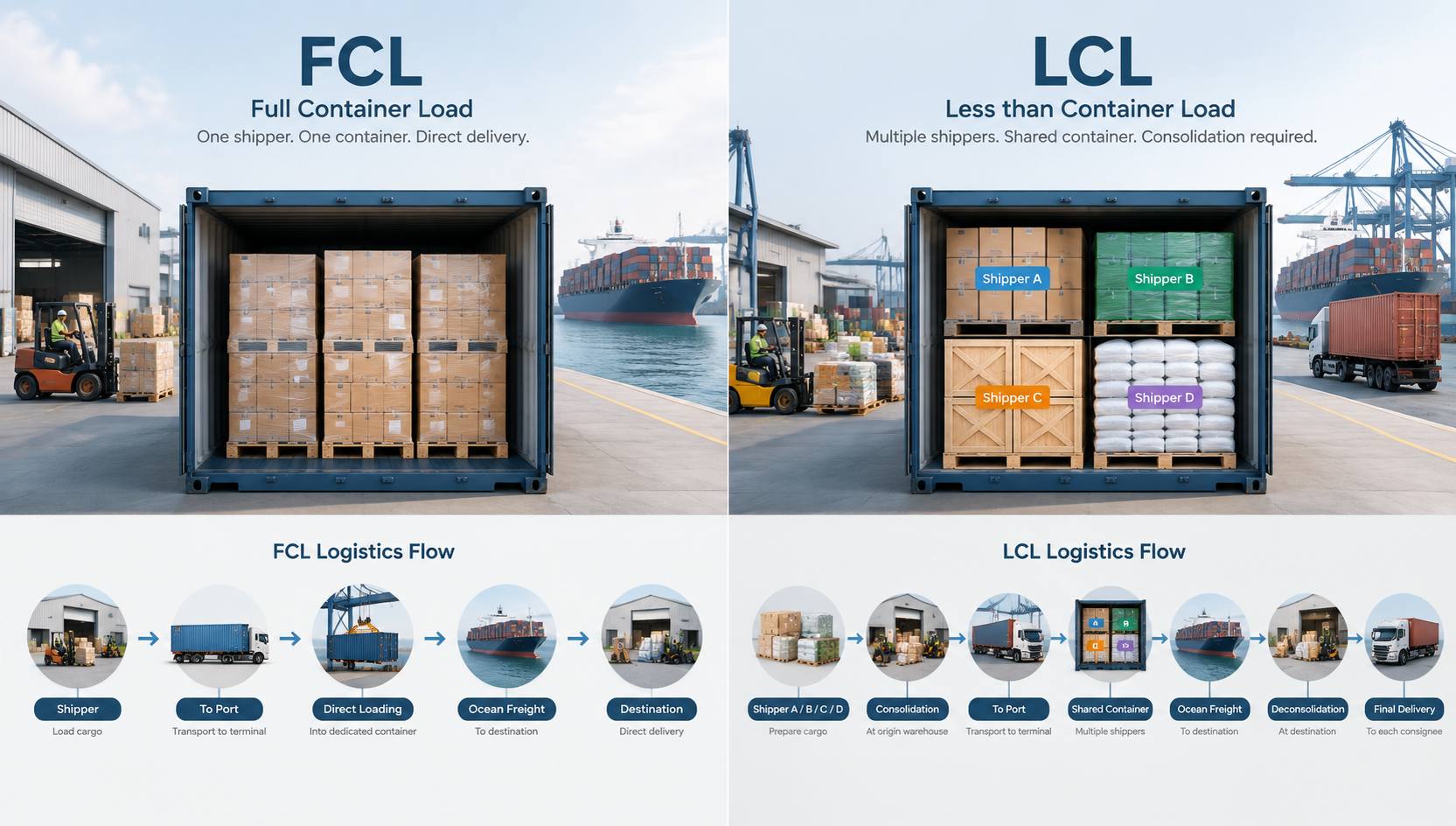
The transport mode also matters. Sea freight is the usual context for containerized cargo, but inland pickup and final delivery may involve trucks, rail, or another connecting service. A container should therefore be evaluated as part of the complete movement rather than as an isolated box.
| Load type | Typical structure | Main operational feature | Key check |
|---|---|---|---|
| FCL | One shipment uses an allocated container | Fewer cargo-sharing handoffs | Compare cargo volume and container cost |
| LCL | Shipment shares container space with other cargo | Consolidation and deconsolidation required | Check chargeable volume and handling points |
| Consolidated cargo | Multiple shipments combined for movement | Requires coordinated cargo segregation | Confirm labeling and release instructions |
| Containerized special cargo | Cargo needs additional loading controls | Packaging or stowage may drive the plan | Confirm dimensions, weight, and handling needs |
When Full Container Load Fits
FCL usually becomes more practical when the shipment has enough cargo to justify dedicated container space or when the shipper places a high value on controlling the loading and transfer process. The decision should consider more than cubic volume. High-density cargo can reach a practical weight limit before the container is physically full, while lightweight cargo may leave substantial unused space.
Larger shipment: A shipment that occupies a substantial share of the selected container may warrant an FCL comparison.
Controlled handling: Cargo that benefits from fewer shared handling events may fit FCL better.
Consistent packaging: Standardized cartons or pallets can make a dedicated loading plan easier to execute.
Planned inventory movement: Regular production shipments may be easier to schedule when container capacity is planned in advance.
FCL is not automatically the right choice whenever cargo volume is large enough to fill a container. The shipper should still compare the total transport scope, origin pickup, destination delivery, handling requirements, and available equipment. A dedicated container may be operationally attractive but commercially inefficient when the shipment uses only a small portion of the available capacity.
When Less Than Container Load Fits
LCL is designed for shipments that do not require a full container allocation and can be consolidated with other compatible cargo. The main attraction is that the shipper pays for the portion of transport service associated with the shipment rather than reserving an entire container. The exact commercial basis can vary by service, so the quote should clearly identify the chargeable measurement and included handling.
The trade-off is additional coordination. LCL cargo must be received, identified, consolidated, and later separated from other shipments. The shipper therefore needs accurate outer dimensions, gross weight, package counts, marks, and handling instructions. Poorly prepared cargo data can create remeasurement disputes, loading changes, or delays at consolidation points.
LCL may be a weak fit when the cargo is unusually fragile, difficult to stack, highly irregular in shape, or sensitive to repeated handling. In those situations, the shipper should compare the operational risks and total landed logistics cost rather than selecting the service solely from the initial shipment size.
What Changes the Container Load Decision
The deciding factor is often the combination of volume, weight, handling, and delivery scope rather than any single cargo measurement. A useful comparison begins with the same assumptions for both options. Otherwise, one quote may look cheaper because it excludes services or charges that appear in the other option.
Shippers should compare the transport price together with origin handling, consolidation or loading work, destination handling, customs clearance scope, and final delivery requirements. Cargo that needs additional destination coordination may also benefit from a clearly defined customs brokerage handoff so the responsible party for clearance is understood before the shipment moves.

Risk allocation also belongs in the comparison. Cargo damage exposure depends on the goods, packaging, handling path, contract terms, and coverage selected. Where appropriate, a shipper can review cargo insurance as a separate risk-management decision instead of assuming that a transport quote defines the full protection available for the cargo.
Field note: Compare FCL and LCL using the same origin, destination, cargo description, shipment weight, dimensions, delivery scope, and service assumptions. A lower headline price does not establish a lower total logistics cost when the scopes differ.
Operational Inputs to Confirm
The load decision depends on a small set of shipment inputs that should be fixed before booking. Each input should have a clear owner and verification point so the quoted service matches the physical cargo.
Confirm cargo measurements
The shipper or packing party should provide package count, dimensions, gross weight, and pallet or crate details using the final expected packing configuration.
Define loading requirements
The operations team should confirm whether the cargo can be stacked, whether loading equipment is required, and whether the package shape limits usable space.
Compare service scope
The booking party should compare FCL and LCL against the same pickup, port, handling, clearance, and delivery assumptions rather than comparing transport charges alone.
Verify destination handoffs
The consignee or appointed logistics party should confirm who receives the cargo, who handles clearance, and what final-delivery service is included.
Lock the booking data
The booking party should reconcile the final cargo details with the selected service and update the plan if the packed dimensions or weight change materially.
Container Loads and Final Delivery Scope
A container-load decision does not define the entire logistics service. A shipment can move by FCL or LCL while still using different combinations of pickup, port handling, customs processing, and destination delivery. Buyers should therefore ask where the quoted service starts and ends before comparing options.
For shipments that require coordinated pickup and final delivery, a door-to-door shipping arrangement can define the broader handoff more clearly. The important check is not the service label itself, but which party performs each stage and which charges or exclusions apply.
Some shipments also combine transport modes between origin and destination. In that case, multi-modal freight planning can be relevant when container movement includes more than one transport mode. The container remains part of the physical shipment, but the commercial and operational responsibilities may change at each transfer point.
Common Mistakes and Operator Checks
The most common container-load errors begin with incomplete cargo data or an inconsistent comparison basis. A shipment may be quoted from estimated carton dimensions, then packed differently after the booking decision. That change can affect space planning, handling, and the suitability of the selected load type.
Common mistake: Choosing FCL or LCL from carton count alone. The prevention step is to verify actual dimensions, gross weight, packaging form, and whether the cargo can be stacked before the service is finalized.
Another frequent issue is comparing an FCL transport figure with an LCL figure that uses a different service scope. The operator check is to reconcile pickup, origin handling, destination handling, clearance responsibility, and final delivery before treating one option as cheaper or more expensive.
Risk alert: Cargo that requires unusual handling, has irregular dimensions, or is vulnerable to repeated movement may need a different loading plan even when its volume appears suitable for consolidation. Confirm the handling method with the responsible logistics operator before booking.
Disclosure: This guide provides general logistics information and may refer to services relevant to the topic. Carrier terms, customs requirements, fees, service coverage, and operating conditions can change. Confirm current requirements and responsibilities before acting.
Key Takeaways
Start with cargo data: Dimensions, weight, package count, and packing form control the practical load assessment.
Compare like with like: Use the same service scope and destination assumptions for FCL and LCL.
Look beyond volume: Handling sensitivity, stackability, and delivery requirements can change the preferred setup.
Confirm responsibilities: Identify who handles pickup, consolidation, clearance, and final delivery at each handoff.
Recheck final packing: Update the plan when packed dimensions or weight differ from the information used for booking.
Container Loads FAQ
What are container loads in shipping?
Container loads describe how cargo is allocated, packed, and moved within containerized transport. The main commercial distinction is whether the shipment uses an allocated container as FCL or shares container capacity through LCL consolidation.
What is the difference between full container load and LCL?
FCL assigns a container to one shipment under the service arrangement, while LCL combines compatible shipments in shared container space. LCL therefore adds consolidation and deconsolidation stages that should be included in the operational comparison.
Does FCL mean the container must be completely full?
No. FCL refers to the shipment using an allocated container rather than requiring the cargo to fill every available space. The decision should consider total shipment economics, container capacity, and handling requirements.
When is LCL usually considered?
LCL is commonly considered when the shipment does not justify an entire container allocation and can be handled safely through consolidation. The quote should identify the chargeable measurement and the handling scope used to price the shipment.
Can fragile cargo move as LCL?
It can in some circumstances, but suitability depends on packaging, handling requirements, cargo shape, and the number of transfer points. The shipper should disclose handling sensitivities before the load type is selected.
What information is needed to compare container loads?
Provide package count, packed dimensions, gross weight, packaging type, origin, destination, pickup needs, delivery scope, and any special handling requirements. These inputs create a consistent basis for comparing FCL and LCL options.
Can container loads use door-to-door delivery?
Yes. FCL and LCL describe the containerized cargo arrangement, while door-to-door describes a broader delivery scope. The booking should confirm which pickup, clearance, handling, and final-delivery stages are included.
What should I verify before booking containerized cargo?
Verify the final packed cargo data, selected load type, service scope, handling requirements, clearance responsibility, destination handoffs, and any charges or exclusions shown in the current quotation or service terms.
Disclaimer: This article is general informational guidance, not a binding quotation, legal opinion, customs ruling, carrier commitment, or delivery guarantee. Requirements, charges, service terms, and responsibilities can vary by route, cargo, contract, carrier, and jurisdiction. Confirm current requirements before booking or filing.