DAP shipping terms mean the seller delivers the goods to a named destination, ready for unloading, and bears the transit risk until that point. The buyer normally handles import clearance and pays duties, taxes, and import fees unless the contract assigns those tasks differently. The practical consequence is that a DAP quote is only as clear as its named place and its customs arrangement.
DAP does not automatically mean all-in door delivery. It can end at a port terminal, airport, warehouse, or buyer’s facility, depending on the named place. Before booking, confirm who unloads, who appoints the import broker, which documents the seller must provide, and where risk transfers. Those details decide whether DAP fits the shipment or whether another arrangement is safer.
What DAP Delivery Terms Control
DAP delivery terms set the delivery point and the responsibility boundary between seller and buyer. The seller completes export clearance, arranges the main carriage, and bears the risk of loss or damage until the goods are placed at the buyer’s disposal at the named place, ready for unloading. The buyer receives the goods there and generally handles import clearance, duties, taxes, and onward delivery.
The DAP meaning in shipping is not a payment term and does not by itself set the final delivery address. It describes where the seller’s delivery obligation ends. That boundary matters because a vague destination can leave the buyer with unexpected terminal charges, unloading costs, or trucking from a carrier terminal to a warehouse.
| Stage | Seller | Buyer | Confirm |
|---|---|---|---|
| Export clearance | Completes export filing and provides export documents | Receives documents as needed | Licensing and data accuracy |
| Main carriage and transit risk | Arranges carriage and bears risk to the named place | Prepares import and monitors shipment | Carrier liability and insurance terms |
| Arrival at named place | Places goods at buyer’s disposal ready for unloading | Receives goods at the named place | Exact address, terminal, or warehouse |
| Unloading | Not required unless the contract says so | Usually arranges unloading unless agreed otherwise | Equipment, appointment, and cost |
| Import clearance and duties | Provides documents and shipment data | Clears import and pays duties, taxes, and import fees | Broker appointment and power of attorney |
| Onward delivery beyond named place | No obligation beyond the named place | Arranges and pays for onward transport | Final address and risk transfer |
The Named Place Is the Real Delivery Test
A DAP quote can say “DAP Los Angeles” or “DAP Chicago” without identifying the exact delivery point. That omission changes the operation. If the named place is a port terminal, the buyer may need to arrange drayage, terminal handling, and release formalities. If it is a warehouse, the seller’s carrier must be able to reach the dock, and the parties must agree who unloads and whether an appointment is required.
For ocean shipments, a port or terminal named place often leaves drayage, terminal handling, and demurrage exposure to confirm. The sea freight service terms should state the exact terminal, free time, and release process. For air shipments, an airport terminal named place can transfer risk before final trucking, so storage and pickup rules need review.
Field note: Treat “DAP destination” as incomplete until the contract or booking confirmation states the exact address or terminal, the unloading responsibility, and the party that arranges import clearance. A DAP place that is operationally unreachable for the seller’s carrier can turn into a buyer-side trucking problem.
When a shipper wants one provider to coordinate pickup, main carriage, import clearance, and final delivery, a door-to-door service can simplify the commercial arrangement. It does not remove the need to define the delivery point or customs responsibilities.
Buyer Import Clearance and Cost Exposure
Under standard DAP terms, the buyer clears the goods for import and pays duties, taxes, and import fees. The seller generally provides the commercial invoice, packing list, transport document, and any export documents or certificate of origin required for the shipment. The buyer then appoints a broker, provides a power of attorney where needed, and supplies import data before arrival.
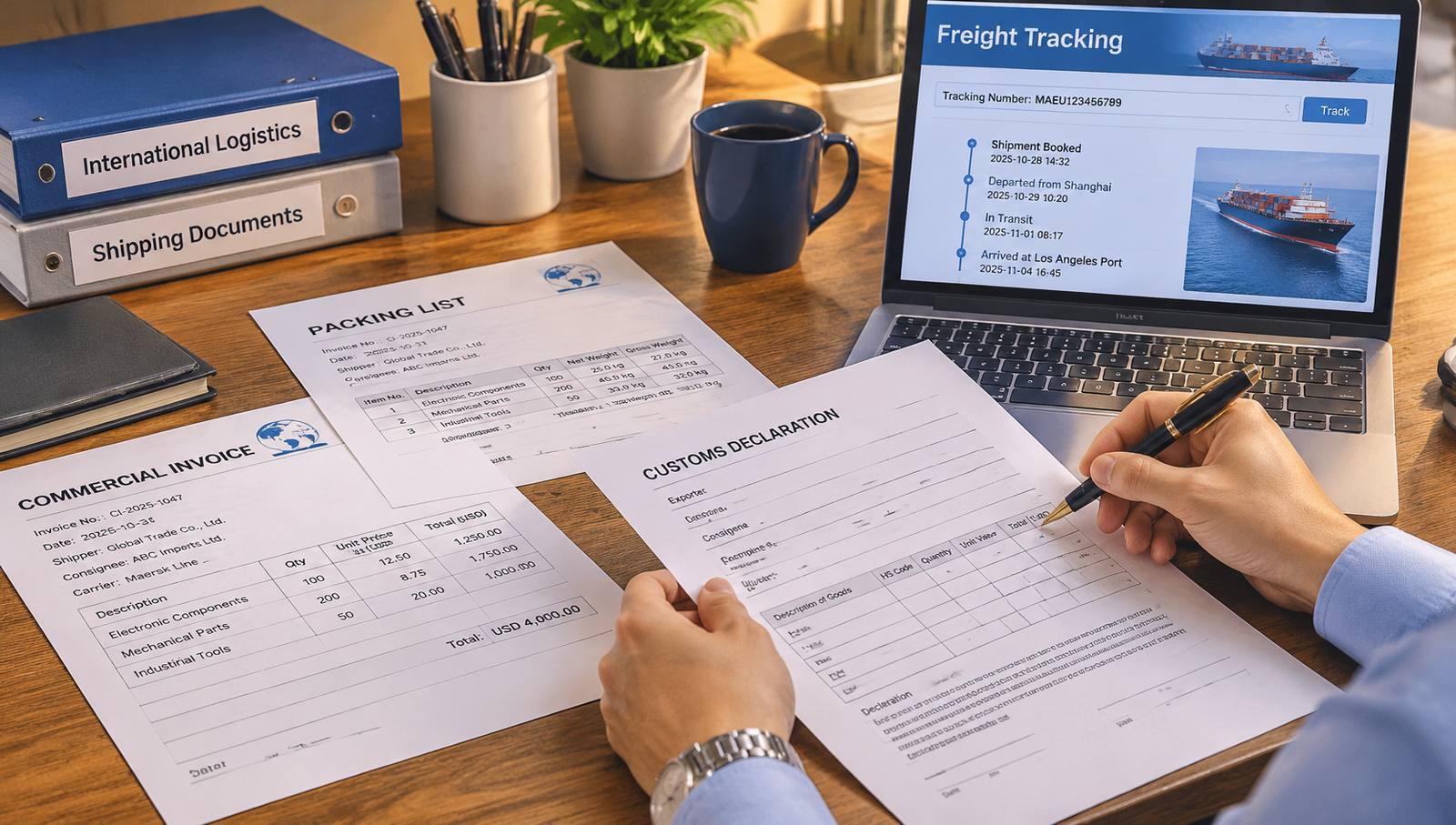
A buyer without an established import process can appoint a customs brokerage service to manage entry, classification support, and document handoff. The buyer should confirm broker fees, bond requirements, and whether the seller’s documents match the invoice and transport document before the shipment reaches the named place. If the seller agrees to clear import and pay duties, the arrangement is moving toward DDP and should be written into the contract.
DAP vs DDP: Which Responsibility Boundary Fits?
DAP leaves import clearance and duty payment with the buyer. DDP places those responsibilities with the seller, so the seller must be able to clear the goods and price the duty and tax exposure. DAP can suit a buyer that has a broker, wants control of the import entry, or can recover duties efficiently. DDP can suit a buyer that wants a landed-cost arrangement and a seller with proven import capability in the destination country.
Neither choice is universally better. The decision depends on who can clear import reliably, who carries the duty cost, and who has the documentation to support the entry. A seller that quotes DDP without local import capability can create delay at destination. A buyer that accepts DAP without a broker can face storage or customs hold. For seller-managed import clearance, review the DDP shipping service terms against the destination and cargo.
Hypothetical illustration: A buyer in Chicago orders machinery on DAP Chicago warehouse terms. The seller pays freight to Chicago and bears risk until the goods are ready for unloading at the warehouse. The buyer clears US import and pays duty. If the named place instead reads “DAP Chicago O’Hare terminal,” the seller’s risk ends earlier, and the buyer arranges trucking from the airport.
Risk, Insurance, and Proof of Delivery
The seller bears risk until the goods are placed at the buyer’s disposal at the named place, ready for unloading. Risk then transfers to the buyer. DAP does not require the seller to insure the goods, so the parties should confirm cargo insurance separately. A seller may insure its own transit exposure, while the buyer may need coverage from the point risk transfers or for onward delivery.
Review cargo insurance terms against the actual risk transfer point, not just the final destination name. Keep delivery receipts, unloading records, and condition notes, because a damage claim depends on when and where the loss occurred. For air cargo, an airport terminal named place can transfer risk before final trucking, so confirm pickup timing and storage liability.

Mistakes and Operator Checks
One common error is treating DAP as an all-in delivered price. The trigger is a quote that names only a city or country. The consequence is that the buyer later discovers terminal handling, unloading, import brokerage, or trucking costs outside the DAP boundary. Prevention starts with a written named place and a responsibility check for unloading, import entry, and onward transport.
A second error is assuming the seller pays duties because the quote says “delivered.” Under DAP, the buyer generally pays import duties and taxes. Confirm the customs arrangement before booking, especially when the buyer has no importer of record or broker. Ask the seller to state the documents it will provide and the point at which risk transfers.
Common mistake: Accepting “DAP warehouse” without confirming dock access, appointment rules, unloading equipment, and who pays for waiting time. A delivery point that cannot accept the carrier’s equipment can create redelivery or storage charges after risk has passed.
Operator checks should include the exact named place, the import broker, the duty payer, the unloading party, the insurance position, and the delivery receipt process. If any item is unclear, resolve it before the shipment arrives rather than after the carrier requests release.
Disclosure: This guide provides general logistics information and may refer to services relevant to the topic. Carrier terms, customs requirements, fees, service coverage, and operating conditions can change. Confirm current requirements and responsibilities before acting.
Key Takeaways
- DAP means the seller delivers to a named place ready for unloading and bears risk to that point.
- The buyer generally handles import clearance and pays duties, taxes, and import fees.
- The exact named place decides whether final trucking, terminal handling, or unloading remains with the buyer.
- DAP is not the same as door-to-door delivery or DDP; confirm the responsibility boundary in writing.
- Check insurance, broker appointment, delivery receipts, and unloading arrangements before booking.
DAP Shipping Terms FAQ
What is DAP shipping in practical terms?
DAP shipping means the seller delivers goods to a named place ready for unloading and bears the transit risk to that point. The buyer generally receives the goods there and handles import clearance and duties.
Who pays import duties under DAP delivery terms?
The buyer normally pays import duties, taxes, and import fees. The seller generally provides export and transport documents, but the buyer appoints the importer of record or broker unless the contract says otherwise.
Does DAP include unloading at the destination?
DAP does not require the seller to unload unless the contract explicitly assigns that task. The buyer should confirm who provides equipment, labor, and appointment scheduling at the named place.
Is DAP the same as door-to-door delivery?
No. DAP ends at the named place, which may be a terminal, airport, warehouse, or buyer facility. Door-to-door service is a broader commercial arrangement and should state whether import clearance and final delivery are included.
When does risk transfer under DAP shipping terms?
Risk transfers when the seller places the goods at the buyer’s disposal at the named place, ready for unloading. The exact point matters when the named place is a terminal rather than the buyer’s warehouse.
Can the seller deliver to the buyer’s warehouse under DAP?
Yes, if the named place is the buyer’s warehouse and the seller’s carrier can reach it. The parties should confirm dock access, unloading responsibility, appointment rules, and any waiting-time costs.
What should a buyer confirm before accepting a DAP quote?
Confirm the exact named place, who clears import, who pays duties and taxes, who unloads, what documents the seller provides, where risk transfers, and whether insurance covers the full exposure.
How is DAP different from DDP?
Under DAP, the buyer usually clears import and pays duties. Under DDP, the seller takes on import clearance and duty payment. Choose based on who has import capability, cost control, and reliable documentation at destination.
Disclaimer: This article is general informational guidance, not a binding quotation, legal opinion, customs ruling, carrier commitment, or delivery guarantee. Requirements, charges, service terms, and responsibilities can vary by route, cargo, contract, carrier, and jurisdiction. Confirm current requirements before booking or filing.