Standard shipping container sizes are built around a small set of common configurations, with 20ft, 40ft, and 40ft high-cube units covering many general cargo shipments. The practical choice depends on more than length: cargo volume, total weight, package dimensions, loading method, and available door or dock access all affect whether a container will work. A 40ft container provides roughly twice the floor length of a 20ft unit, while a 40ft high-cube adds interior height rather than additional floor length.
Use a shipping container size chart as a planning reference, not as the final booking specification. Manufacturer tolerances, equipment availability, carrier rules, maximum gross weight, and the actual dimensions of the cargo can change what fits. Before booking, match the container’s usable internal space and payload limits against the packed cargo, then confirm the exact equipment type with the forwarder or carrier.
How Standard Container Size Affects a Shipment
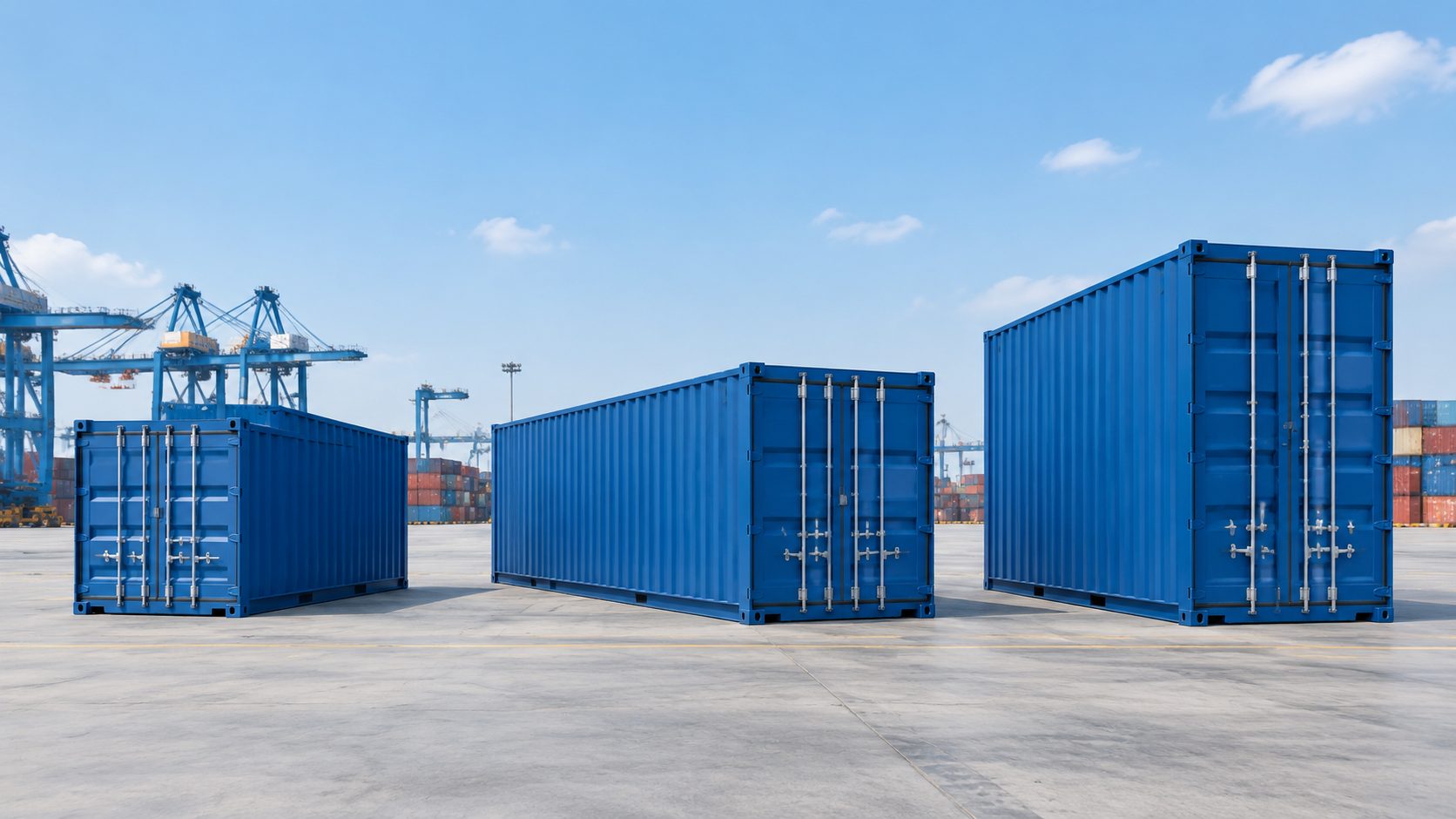
Container selection starts with two separate questions: how much space the cargo occupies and how much weight the equipment can legally and operationally carry. Volume alone does not determine suitability. A dense shipment can reach its practical weight limit before the container is physically full, while lightweight cartons may run out of cubic space first.
The common general-purpose configurations are usually described as 20ft dry containers, 40ft dry containers, and 40ft high-cube dry containers. Exact dimensions vary slightly by equipment manufacturer and fleet, so the figures below are planning references rather than a booking guarantee.
| Container | Approx. internal length | Approx. internal width | Approx. internal height | Typical use |
|---|---|---|---|---|
| 20ft | 5.9 m | 2.35 m | 2.39 m | Dense or smaller-volume loads |
| 40ft | 12.0 m | 2.35 m | 2.39 m | Higher-volume general cargo |
| 40ft high-cube | 12.0 m | 2.35 m | 2.69 m | Bulky or height-sensitive cargo |
The high-cube option changes the vertical clearance while keeping the same basic 40ft footprint. That additional height can help when cartons, pallets, furniture, packaging materials, or other light-volume cargo are difficult to arrange within a standard-height container. It does not automatically increase the permissible payload, so weight and floor-loading constraints still need separate confirmation.
Match Container Loads to the Physical Constraint

A practical container-load decision compares four inputs: packed volume, gross shipment weight, package dimensions, and loading configuration. The weakest constraint controls the decision. For example, a shipment can have enough cubic space on paper but still fail because pallets cannot be positioned as planned or because the cargo concentration creates a floor-loading issue.
Choose by volume: Use the larger container when cartons, pallets, or other packages are likely to consume most of the available floor and cubic space.
Choose by weight: Dense goods can make a smaller container operationally appropriate even when a larger unit has more volume.
Choose by height: A high-cube can help when cargo geometry leaves useful vertical space that a standard-height unit cannot accommodate.
Choose by loading method: Floor-loaded cartons, palletized cargo, long items, and forklift handling can produce very different space requirements.
For sea transport, containerized cargo is normally planned against the equipment actually available for the booking rather than an abstract container size. Sea freight planning therefore needs both the cargo specification and the equipment type confirmed before the shipment is finalized.
20ft, 40ft, or High-Cube: What Changes?
The core difference is the amount and shape of usable space. A 20ft container has about half the floor length of a 40ft unit, which can make it practical for denser cargo or lower-volume shipments. A 40ft unit provides substantially more cubic capacity and floor length. A 40ft high-cube keeps the 40ft footprint but adds vertical clearance.
The selection rule is conditional rather than universal. A 40ft container is not automatically better simply because it holds more cargo, and a 20ft unit is not automatically cheaper or more efficient in every shipment. The correct comparison should use the same origin, destination, cargo weight, packaging, loading method, equipment availability, and service scope.
When containerized freight must connect with inland transport, equipment choice can also affect the handoff plan. Rail freight may introduce different equipment availability or terminal constraints on applicable routes, while a multi-modal freight movement may require the same cargo dimensions and handling assumptions to be checked across more than one transport leg.
What to Confirm Before Booking
The booking request should contain enough detail for the provider to validate both equipment fit and the downstream handling plan. A simple container count is not enough when the cargo has unusual dimensions, concentrated weight, special packing, or restricted loading conditions.
Measure the packed cargo
Record the length, width, height, quantity, and gross weight of the cargo in its shipping-ready condition, including pallets or other packing that will travel inside the container.
Define the loading configuration
State whether the shipment will be floor-loaded, palletized, crated, bundled, or handled in another defined format. Package orientation can materially affect usable space.
Check equipment fit
Compare the cargo dimensions with the selected container’s internal dimensions, door opening, payload limits, and any known floor-loading constraints.
Confirm the booking equipment
Ask the forwarder or carrier to confirm the actual equipment type, availability, and applicable operating limits before the container is reserved.
Verify the delivery handoff
Check whether the loading site, destination facility, truck access, dock height, and unloading method can accommodate the selected container and planned cargo arrangement.
A container that fits the cargo internally can still create a delivery problem if the receiving location cannot handle the equipment or unloading method. A door-to-door shipping plan therefore needs the container decision tied to the actual pickup and delivery handoffs, not treated as a standalone ocean-freight calculation.
Responsibility can also change across the shipment. Import entry, documentation, and local clearance work should be assigned to the correct party rather than assumed from the container type. Where a shipment requires dedicated clearance support, customs brokerage can be evaluated as a separate service component.
Common Container-Size Mistakes
Common mistake: Estimating container fit from carton count alone. Identical carton counts can require different equipment when carton dimensions, pallet patterns, or weight distribution change. Prevent this by supplying packed dimensions and total gross weight, not only the number of pieces.
Operator check: Distinguish usable internal dimensions from external container dimensions. Also confirm door opening dimensions and equipment-specific limits when the cargo is close to the available clearance.
Hypothetical illustration: A lightweight product shipment may occupy most of a standard 40ft container’s floor and cubic space, making a high-cube relevant when package height is the limiting factor. A dense machinery shipment with the same nominal volume may instead require a separate weight and floor-loading review.
Oversized, unusually shaped, or exceptionally heavy cargo should not be forced into a standard-container assumption. When the cargo cannot meet the physical or handling requirements of ordinary equipment, a project cargo shipping assessment may be more appropriate because the planning problem extends beyond choosing between 20ft and 40ft equipment.
Cargo value and exposure also remain separate from container size. Container selection does not by itself determine how financial loss is protected during transit. Where risk transfer is part of the shipment decision, review cargo insurance separately against the cargo value and applicable coverage terms.
Disclosure: This guide provides general logistics information and may refer to services relevant to the topic. Carrier terms, customs requirements, fees, service coverage, and operating conditions can change. Confirm current requirements and responsibilities before acting.
Key Takeaways
Use 20ft, 40ft, and high-cube equipment as planning categories, then confirm the exact unit available for booking.
Compare packed volume, gross weight, package dimensions, and loading method together rather than relying on carton count.
Treat high-cube capacity as an added height option, not simply as a larger payload class.
Confirm door clearance, floor-loading needs, equipment availability, and pickup and delivery access before booking.
Escalate unusual dimensions or concentrated weight when ordinary container assumptions no longer describe the shipment accurately.
Standard Container Size FAQs
What is the most common standard shipping container size?
20ft and 40ft dry containers are common general-purpose equipment categories. A 40ft high-cube is also widely used when additional internal height is useful. Actual availability depends on the carrier, origin, destination, and equipment fleet.
What is the difference between a 40ft container and a 40ft high-cube?
The main difference is interior height. A high-cube is taller while keeping the basic 40ft length and width, so it can provide additional cubic capacity for cargo that is relatively light or vertically constrained.
Does a 40ft container always hold twice as much as a 20ft?
It has roughly twice the floor length, but the usable cargo capacity is not determined by length alone. Packaging, loading pattern, door clearance, weight, and internal equipment dimensions can reduce the practical difference.
Should container size be chosen by volume or weight?
Both matter. Dense cargo may be constrained by weight before the container is full, while lightweight bulky cargo may be constrained by cubic space. The correct choice comes from checking both limits against the packed shipment.
Can pallet size affect the container I need?
Yes. Pallet dimensions and orientation can create unused gaps or prevent efficient placement, even when the total pallet volume appears to fit. Provide the pallet footprint, stack height, quantity, and gross weight when requesting equipment.
Are the published container dimensions exact?
No. Published dimensions are useful planning figures, but equipment can vary slightly by manufacturer and fleet. Confirm the actual internal dimensions, door opening, payload limit, and available equipment before relying on a tight fit.
What should I include in a container booking request?
Provide cargo type, quantity, packed dimensions, total gross weight, pallet or floor-loaded configuration, pickup requirements, delivery requirements, and any unusual dimensions or handling constraints. These details allow the provider to validate the equipment request.
What should I do when the cargo does not fit a standard container?
Do not assume that a larger standard container will solve the problem. Recheck the packed dimensions, loading method, and weight distribution first, then ask the logistics provider whether alternative equipment or a specialized cargo plan is required.
Disclaimer: This article is general informational guidance, not a binding quotation, legal opinion, customs ruling, carrier commitment, or delivery guarantee. Requirements, charges, service terms, and responsibilities can vary by route, cargo, contract, carrier, and jurisdiction. Confirm current requirements before booking or filing.