Choose the Quote That Can Actually Move the Cargo
When someone asks about a shipping container price, the first decision is not whether one number looks lower. The first decision is whether you are comparing a container asset, a temporary equipment arrangement, or an ocean freight booking that includes the transport work your shipment actually needs.
A purchase quote answers a different question from a lease quote, and both differ from an ocean freight booking. A usable comparison needs the same cargo scope, cargo-ready date, pickup point, route, service level, destination handoff, delivery point, and included work. Otherwise, two shipping container costs can look comparable while covering different parts of the move.
The quote desk should therefore confirm what you are buying or booking, who controls each handoff, which charges are included, and what must be re-quoted when shipment details change. That review turns an incomplete price into a practical shipping decision.

Align the Quote Scope Before Comparing Prices
Start with the operating facts that can change the quote. The forwarding desk should review them in sequence rather than comparing a headline figure first.
| Quote field | What to provide | Why it changes the decision | Who confirms it |
|---|---|---|---|
| Cargo-ready date | Expected ready date and flexibility | Changes booking timing and equipment planning | Shipper |
| Pickup and origin handling | Pickup point, loading conditions, origin work | Defines the first physical handoff | Shipper and forwarder |
| Main route and service | Origin, destination, transport mode, service level | Determines the core movement being priced | Forwarder |
| Cargo basis | Container requirement, pieces, weight, dimensions | Determines equipment and rating basis | Shipper |
| Destination handoff | Port, terminal, broker, delivery scope | Separates transport from downstream work | Forwarder and destination parties |
| Quote date and validity | Issue date and stated validity condition | Shows when confirmation is still required | Forwarder |
A quote also needs a clear description of included work. Ask whether the number covers only the main ocean movement or also pickup, origin handling, destination handling, brokerage coordination, final delivery, and any identified accessorial work. The answer determines what remains outside the quoted scope.
For a move where the buyer wants one coordinated transport plan from origin pickup through delivery, review the scope described under door-to-door shipping rather than assuming a port-to-port booking provides the same handoff coverage.
Understand What Changes the Shipping Container Cost
The charge basis matters as much as the amount. For a container purchase or lease, the key question is the equipment arrangement: who supplies the container, how the equipment is used, and what period or operating condition the quote covers. For ocean freight, the key question is the transport scope attached to the container booking.
For full-container-load service, the main comparison generally starts with the container type and shipment requirement. The shipper should provide cargo dimensions, gross weight, packing configuration, and the required equipment so the forwarding desk can confirm whether the requested container fits the cargo. The current quote should also identify the route, service level, and included origin and destination work.
For less-than-container-load cargo, the freight basis changes because the shipment does not occupy a full container. The buyer should provide accurate dimensions, package count, and weight so the forwarder can verify the applicable rating basis and consolidation scope. The operational question is whether the quoted LCL service includes the same pickup and delivery handoffs as the alternative being compared.
Special handling can change the quote even when the cargo volume remains the same. Oversize cargo, restricted cargo, unusual loading conditions, fragile goods, temperature requirements, or project movements may require a different operating plan. A general container price should not be treated as a complete quote for cargo that falls outside ordinary handling conditions.
Quote checkpoint: Ask the forwarding desk to state the charge basis, the cargo information used for rating, the handoff covered by each major line item, and the exact shipment change that would require a revised quote.
When more than one transport mode can serve the shipment, multi-modal freight may be relevant when the quote combines transport stages instead of treating ocean movement as the only service decision.
Map Included Work to the Actual Handoffs
A practical quote review asks what each amount pays for and who confirms the scope. The buyer should not treat every line under a shipping quotation as part of the same physical service.
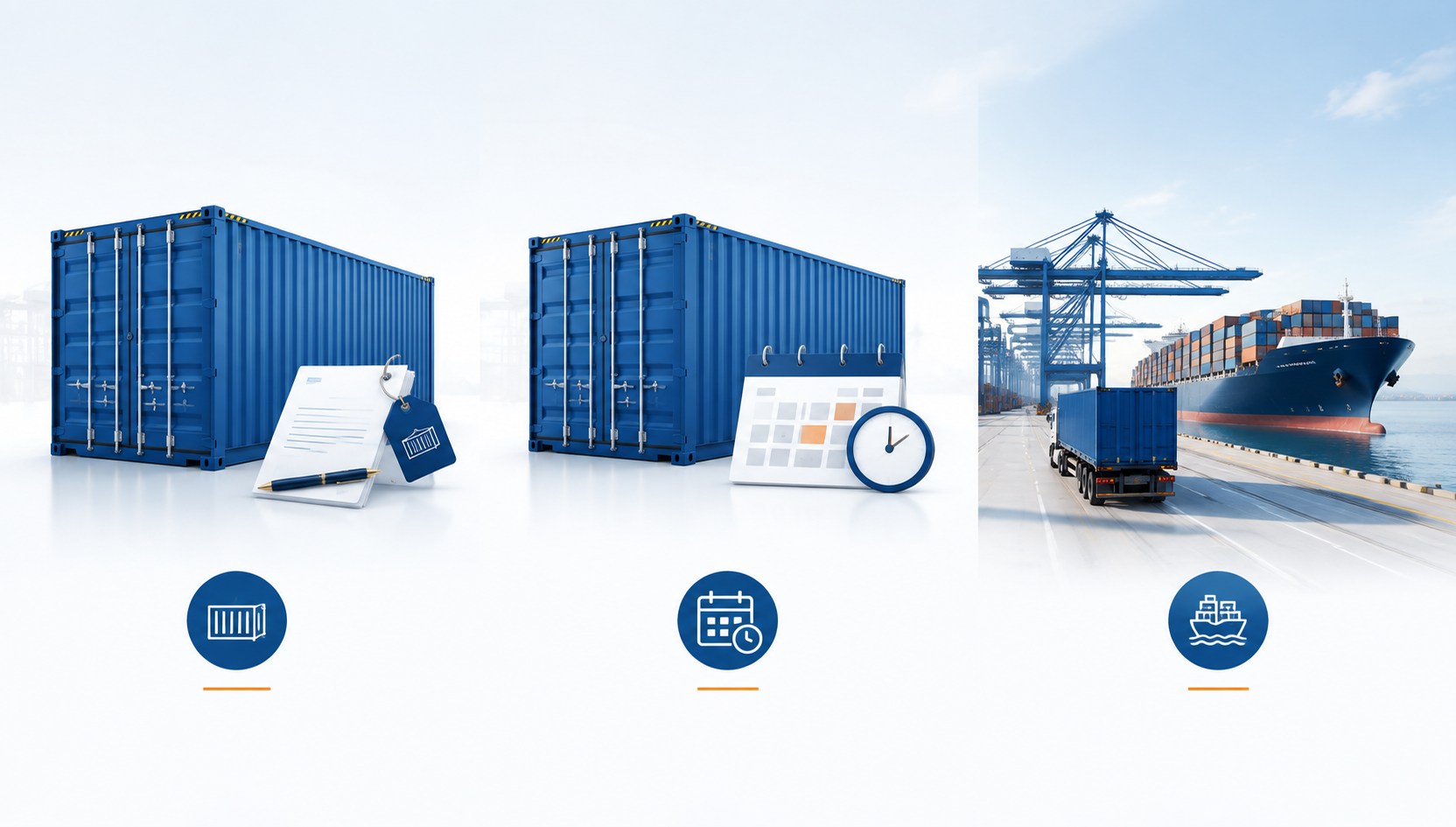
Pickup and origin handling: Confirm the pickup point, loading conditions, and origin work covered by the quote.
Main transport: Confirm the route, service level, container requirement, and transport segment being priced.
Destination handling: Ask whether destination terminal or handling work is included, excluded, or still awaiting confirmation.
Broker coordination: Confirm whether a broker is involved and whether the quoted service includes coordination with that party.
Final delivery: Confirm the delivery address, appointment requirements, unloading conditions, and access limitations.
Equipment return or accessorial work: Ask what container return obligations or shipment-specific extras remain outside the quoted scope.
For customs-related coordination, the practical checkpoint is not a generic promise of clearance. The buyer should ask which documents the forwarding desk collects, which party performs the brokerage work, and whether customs brokerage is part of the requested shipment scope.
When cargo value, route conditions, or buyer requirements make loss or damage exposure a separate operational concern, the quote review can also include cargo insurance as a distinct decision rather than blending it into the freight amount.
Note: A freight quote is tied to the cargo, handoffs, route, service level, timing, and destination work stated in it. Carrier and handling conditions can change. Align the scope first, then request confirmation for the specific shipment.
Compare the Option That Fits the Shipment
Buying a container, leasing equipment, and booking ocean freight solve different operating problems. The practical comparison depends on how often the equipment will be used, where it needs to be available, who controls the movement, and whether the shipment requires a coordinated transport service.
| Option | Buyer fit | Weak fit | Quote question |
|---|---|---|---|
| Buy a container | Recurring equipment need or controlled storage use | One-off movement with limited equipment use | What ownership, location, and onward-use assumptions apply? |
| Lease a container | Temporary or planned equipment requirement | Unclear duration or location requirement | What equipment period and operating conditions are included? |
| Book ocean freight | Cargo needs transport rather than equipment ownership | Buyer expects a container asset for long-term use | What origin, transport, destination, and delivery work is included? |
| LCL service | Cargo does not justify or require a full container | Shipment needs dedicated container control | What rating basis and consolidation handoffs apply? |
| Air alternative | Urgency outweighs the need for ocean capacity | Large-volume cargo with a longer planning window | Which delivery requirement makes the faster mode necessary? |
The right comparison keeps the scope equivalent. A container purchase is not directly comparable with a transport quote unless the business question is first defined. If the shipment requires a different mode because of timing, air freight can be reviewed as a separate service-level option rather than mixed into the container asset decision.
Find the Gaps Before the Quote Changes
Most quote problems begin when the operational facts used for pricing no longer match the shipment being booked. A forwarding desk should isolate those changes early because they can affect a different handoff from the one the buyer was originally reviewing.
Common mistake: Comparing a port-to-port ocean figure with a door-delivery figure and treating the difference as a freight-price gap. Ask both parties to identify the origin work, destination handling, and final-mile scope before comparing the amounts.
An incomplete pickup address can change the origin plan. A changed cargo-ready date can require a new booking review. Incorrect weight or dimensions can change the rating basis. A delivery address without access information can leave the final handoff undefined. Storage, rebooking, document correction, or appointment-related work may also require a separate confirmation when the original scope does not cover the new event.
The same principle applies to container equipment. If a buyer purchases or leases equipment but later changes the movement plan, the equipment decision may remain valid while the transport quote still requires revision. Keep the equipment question and the freight-booking question separate unless one operational plan genuinely joins them.
For cargo that requires non-standard handling, project cargo shipping may provide the more relevant operating framework because the quote needs to reflect the actual handling plan rather than ordinary container assumptions.
Risk trigger: Treat a quote as needing review when the pickup point, cargo-ready date, dimensions or weight, delivery address, service level, or handling condition changes after the quote was prepared. Ask for the affected line items to be re-confirmed rather than assuming the original scope still applies.
Prepare the Quote Request by Data Owner
A quote becomes easier to verify when each input has a clear owner. The shipper supplies cargo facts and timing, while the forwarding desk verifies routing, service availability, handoffs, and the scope attached to the requested shipment plan.
Cargo and packing
Provide product description, package count, dimensions, gross weight, packing method, and whether the cargo needs special handling. The forwarding desk uses these inputs to verify the container or service basis.
Cargo-ready and pickup
Provide the cargo-ready date, pickup address, loading conditions, and any pickup appointment requirement. These details establish the first handoff and affect booking coordination.
Route and service
State origin, destination, preferred mode, service level, and whether the request is for equipment, transport, or both. The desk can then compare equivalent operating scopes.
Delivery and appointment
Provide the delivery address, receiving hours, appointment rules, unloading conditions, and access restrictions. The quote can then distinguish transport from the actual final handoff.
Commercial scope
State which party is expected to coordinate each stage and identify any named commercial responsibility that matters to the shipment. The forwarder can confirm what belongs in the requested quote scope.
Special restrictions
Identify restricted cargo, oversize dimensions, unusual loading conditions, temperature needs, or other limits before booking. The desk can then determine whether the standard quote needs a different operating plan.
Request the Comparable Quote First
The practical default is to request the shipment quote that matches the cargo’s actual movement, then compare equipment purchase or lease only when the business also has a genuine equipment requirement. That sequence prevents an equipment price from being mistaken for an end-to-end transport price.
Start by locking the cargo data, pickup point, route, delivery point, service level, and included work. Then ask the forwarding desk to separate the container or equipment decision from the transport and handoff charges. The fact that changes the recommendation is the shipment’s operating pattern: recurring equipment use may justify a different equipment arrangement, while a one-time movement may make direct freight booking the more relevant comparison.
Illustrative example (not a customer case): Assume a buyer has a recurring shipment that requires a standard container, scheduled pickup, ocean transport, and delivery to a commercial receiving point. The buyer first requests a freight quote with the full pickup-to-delivery scope stated. The buyer then asks separately whether purchasing or leasing equipment would change the operating plan. If the cargo pattern becomes irregular or the delivery plan changes, the buyer asks which part of the original quote must be re-confirmed.
Key Takeaways
Define the object being priced: Separate container ownership, equipment use, and ocean transport before comparing amounts.
Align the scope: Match cargo, pickup, route, delivery, service level, timing, and included work across every quote.
Confirm the charge basis: Ask which cargo or equipment inputs produced the quoted amount and what change would require revision.
Assign each handoff: Identify who handles pickup, transport, destination work, brokerage coordination, and delivery.
Flag operational changes early: Re-check the quote when cargo, timing, access, routing, or handling requirements change.
Approve only a workable scope: Ask for written confirmation of the exact shipment conditions covered by the current quote.
FAQ
What should I compare when reviewing shipping container prices?
Compare the same equipment requirement, cargo information, route, service level, pickup and delivery scope, timing, and included work. A container purchase or lease price addresses equipment, while an ocean freight quote addresses transport and related handoffs. The forwarding desk should identify those differences before you treat the numbers as comparable.
Is buying a container the same as booking ocean freight?
No. Buying a container addresses an equipment asset, while booking ocean freight addresses movement of cargo. The two decisions can interact, but they should remain separate in the quote review unless the supplier is clearly pricing both under one defined operating scope.
When does leasing equipment become a separate quote decision?
Leasing becomes a separate decision when the buyer needs temporary access to equipment rather than ownership. The quote should state the equipment arrangement, expected operating period, location requirements, and any conditions that affect how the equipment can be used. The buyer should then compare that scope with the actual transport requirement.
Why can two shipping container costs be difficult to compare?
Two figures may cover different work. One may reflect equipment only, while another includes transport, pickup, destination handling, or delivery. Differences can also come from the cargo data, route, timing, or service level used to prepare each quote. Ask the provider to identify the scope and charge basis behind every comparison.
What cargo information should be ready before requesting a quote?
Prepare the product description, package count, dimensions, gross weight, packing method, cargo-ready date, pickup location, destination, delivery address, and any special handling requirements. These inputs give the forwarding desk enough information to assess the equipment requirement, route, service level, and handoffs without filling gaps with assumptions.
Does a container quote automatically include final delivery?
No. A container-related quote does not automatically establish the final delivery scope. The buyer should confirm whether the quoted service ends at a port or terminal or continues to a stated delivery point. Delivery access, receiving hours, appointment requirements, and unloading conditions should be verified as part of the shipment plan.
What should I ask the forwarder before approving the quote?
Ask what the quote includes, what it excludes, which cargo details were used, which handoffs are covered, how long the stated quotation conditions apply, and what changes would trigger a new review. The buyer should also ask who confirms any destination work or special handling that is not clearly defined in the quote.
What happens when the shipment changes after the quote is issued?
The affected scope should be reviewed rather than assumed to remain unchanged. A new cargo-ready date, different pickup point, revised weight or dimensions, changed delivery address, new handling requirement, or different service level can alter the operating plan. Ask the forwarding desk to identify the affected portions and confirm what needs to be re-quoted.
Disclaimer: This page is general quote-planning guidance, not a binding quotation or delivery commitment. Actual charges and handoffs depend on the cargo, route, timing, provider confirmation, and destination conditions. Where duties, customs, tax, insurance, or contract questions apply, confirm them with the relevant party before booking.