
Which Quote Can Actually Move the Cargo
A buyer comparing two quotes for cargo loading at Nansha Ocean Port is really asking which quote can move the shipment to the required delivery point, and what is still missing before approval. Two prices are not comparable until both quotes state the same cargo, cargo-ready date, pickup point, service level, and included work. A low headline rate may leave out terminal handling, yard timing, or the delivery leg. A higher quote may simply cover work that the cheaper one leaves to the shipper.
Nansha identifies a port area, not a single gate. The terminal, container yard, depot, and berth named on the booking decide where the truck goes and which deadlines apply. This guide explains those handoffs so the shipper can ask the forwarder precise questions. It does not publish rates or transit times, because every charge, cutoff, and free-time condition must come from the current quote and from carrier or terminal confirmation.
Nansha Ocean Port Terminals and Where Containers Go
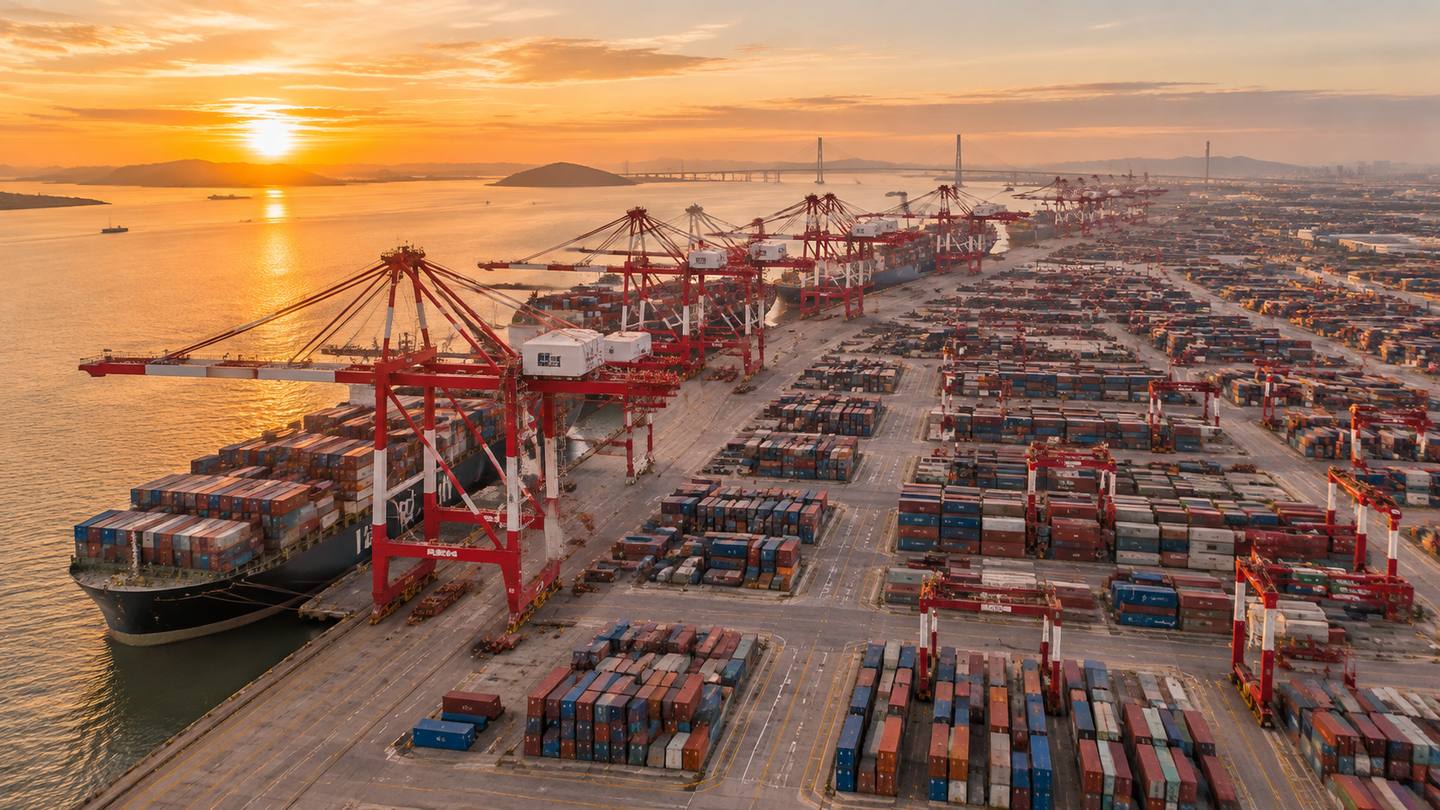
Nansha is a port area of Guangzhou Port in Guangdong, serving manufacturers and exporters across the Pearl River Delta. Guangzhou Port reports that the container terminals in the area span Phases I through IV, and that Phase IV is a fully automated terminal built for river, sea, and rail transfers. Shippers sometimes call the area Nansha Ocean Port, but that name does not tell a trucker which phase or operator to visit.
The Guangzhou South China Oceangate Container Terminal (GOCT) is one named facility. APM Terminals describes GOCT as having six berths along 2,100 meters of quay, a dedicated 800-meter barge quay, a bonded container freight station, and a shuttle barge network that links Nansha with more than 20 feeder ports in the Pearl River Delta. Barge links can matter to a shipper whose cargo reaches the terminal by water instead of road, but the routing, transfer arrangement, and handling charges still need confirmation for the specific booking.
The terminal that handles a shipment depends on the carrier, the vessel service, and the booking. The terminal name and gate-in instructions on the carrier’s booking confirmation take priority over any general port directory. Phase IV and a planned fifth phase are newer developments, and reports about their operating status change. Treat planned capacity as a future figure, and follow the terminal named in the shipment documents.
Terminal, Container Yard, Depot, and Berth: What Each Means
Several locations can appear in one export booking, and each can carry its own handoff. Mixing them up leads to wrong truck dispatches and unexpected handling lines.
Container terminal: The port facility that receives, handles, stores, and loads containers onto vessels. The terminal named on the booking is where the loaded export container must go.
Container yard (CY): The stacking area inside the terminal where containers wait before loading. Early arrival may bring storage conditions, and late arrival may miss the receiving window.
Off-dock depot: A separate site that may release or receive empty containers, or handle storage and repairs. The empty pickup depot and the loading terminal are often different addresses.
Container freight station (CFS): The warehouse where LCL cargo is received and consolidated into a container. Its deadline can differ from the terminal’s CY deadline.
Berth: The quay position where a vessel is scheduled to dock. The berth window describes vessel timing and is not the same thing as the cargo receiving deadline.
Depot arrangements are carrier-specific. Before the trucker leaves, confirm the empty release location, the equipment availability, and the return location. Also ask whether naming a terminal or depot other than the carrier’s usual one changes the charges, since some carriers apply a fee to such changes.
Cutoff Times to Check Separately
A sailing date is not the only deadline that matters. Carriers publish separate dates for container receiving, documents, and weight data, and a shipper can meet one while missing another. These dates differ by carrier, vessel, voyage, and terminal, so a general estimate cannot replace the booking confirmation.
ERD: The earliest date the terminal accepts a loaded export container. Arriving before it can mean refusal or extra storage.
CY receiving and closing: The window when the terminal accepts loaded containers, ending at the CY cutoff. Treat the opening time and the closing time as two separate facts.
SI cutoff: The deadline for submitting accurate shipping instructions, which feed the bill of lading.
VGM cutoff: The deadline for submitting the verified gross mass of the packed container.
Special cargo and LCL deadlines: Dangerous goods and refrigerated cargo may need extra approvals, and the LCL warehouse deadline may fall earlier than the FCL terminal deadline.
Berth timing can change during port operations, but a berth change does not by itself show that a cutoff has moved. Do not assume that an original deadline has been extended. If the vessel schedule changes, ask the forwarder to reconfirm the revised vessel timing and each cutoff in writing.
Align the Quote Scope Before You Compare Prices
A forwarding desk checks scope in a fixed order, because each field depends on the one before it. The cargo-ready date decides which sailing the booking can target, and the route and terminal decide where the container must be delivered.
| Check | Question for the forwarder | Who confirms | Quote effect |
|---|---|---|---|
| Cargo-ready date | Is the date firm, and which sailing does it target? | Shipper | Sets the booking window |
| Pickup and origin handling | Where is the pickup, and who loads, packs, or releases the empty container? | Shipper and forwarder | Defines origin charges |
| Route, terminal, and service | Which terminal and carrier service does the booking name? | Forwarder and carrier | Fixes the main leg and gate-in point |
| Cargo and weight basis | Which container, volume, or weight basis applies? | Shipper and forwarder | Drives the charge basis |
| Named trade term | Which sale term and named place did buyer and seller agree? | Buyer and seller | Shows who arranges each stage |
| Destination handoff and delivery | Where does forwarder work end, and is there an address or appointment? | Forwarder and consignee | Sets destination scope |
| Quote date and inclusions | What does each line include, and when does the quote expire? | Forwarder | Limits what the price covers |
The agreed sale term shows which party arranges and pays for each stage, but it does not describe what a forwarder’s quote contains. Two quotes under the same sale term can still differ in origin handling, documents, and terminal lines. The third row causes the most trouble: a quote that says only “port” leaves the terminal, the yard handoff, and the sailing open.
How Charge Basis and Handoffs Shape the Quote
The charge basis decides how the main freight line is built, and the handoffs decide which other lines appear. An FCL quote generally prices by container size, type, and quantity. The shipper must confirm the container specification and check that the cargo weight and the planned road transport stay within the relevant weight limits.
An LCL quote generally prices on a weight-or-measure basis. The forwarder compares the cargo’s volume with its gross weight under the stated conversion and charges on the greater figure. The shipper supplies accurate dimensions, gross weight, package count, and packing type, and the forwarder should state the conversion ratio, any minimum charge, and the rounding rule. A sea freight service quote should show this basis next to the route line instead of leaving it implied.
Terminal handling is the line most affected by the facility named in the booking. Some quotes use the term for gate-to-vessel movement only, while others bundle further steps. Ask what the line covers and whether origin work, such as empty release, loading, and trucking, appears as separate lines.
Ask the forwarder to write the terminal, the container yard assumption, and each cutoff beside the route line. A quote that names only the port leaves all three open, and any one of them can change the final invoice.
Storage, Demurrage, and Detention Questions
Ocean freight on a quote does not automatically include free terminal storage or unlimited container use. Terminal storage generally refers to cargo or containers occupying terminal space. Demurrage generally refers to a carrier’s container staying in the port or terminal past its permitted free time, and detention generally refers to carrier equipment staying outside the terminal past the allowed period. Definitions, free-time rules, and schedules vary by carrier, terminal, and local arrangement, and some quotes combine them into one term.
Storage versus carrier charges: Ask whether terminal storage appears separately from carrier demurrage. The forwarder confirms this against the carrier’s terms and the terminal’s rules.
Free time: Ask how many free days apply, when the clock starts and stops, and whether it counts calendar or working days.
Return and payer: Ask where the empty container must be returned and which party pays added storage, demurrage, or detention.
What the Quote Includes and Who Confirms It
Each line on a quote maps to a handoff. For every line, decide whether it is included, excluded, or still unconfirmed, and name the party who can verify it.
Origin work: Trucking, empty release, loading or stuffing, and export clearance. The forwarder verifies these with the trucker and the broker.
Terminal and documents: Terminal handling and document charges at origin. The carrier or terminal confirms the receiving window, and the forwarder confirms the lines.
Main ocean leg: Sailing, service level, charge basis, and surcharges. The forwarder gets these from the carrier booking.
Destination work: Destination handling, document release, and final delivery. The destination agent confirms whether the quote stops at the port or continues to the consignee.
Accessorials: Triggers for extra work and who approves added charges. The forwarder lists these before booking.
Pickup deserves special attention when the origin is inland. If the cargo travels by truck, barge, or rail before it reaches the terminal, each transfer adds a handoff. A multi-modal freight arrangement works only when one party owns the booking for every leg and confirms the transfer times between them.
Clearance coordination also belongs in the review. Ask whether the quote includes broker coordination and who corrects an error when the data does not match the cargo. A customs brokerage service can handle submission, but the shipper still supplies the commercial facts.
Cargo can wait at a terminal or depot before loading, so ask when cargo insurance coverage begins and ends, and read the policy wording on storage and exclusions instead of assuming it covers every waiting period.
Note: A freight quote is tied to the cargo, handoffs, route, service level, timing, and destination work stated in it. Carrier and handling conditions can change. Align the scope first, then request confirmation for the specific shipment.
Options That Fit the Shipment
Some options change the handoffs, not just the price. Compare them only under equivalent scope, and ask the same quote question of each.
FCL and LCL follow different receiving paths. FCL cargo goes into a dedicated container and reaches the terminal under the carrier’s CY instructions. LCL cargo goes to a consolidation warehouse first, which suits smaller volumes but depends on the consolidator’s deadline and sailing schedule. Ask which receiving facility the quote assumes and who handles that handoff.
A port-to-port quote covers the agreed ocean transportation between the named ports, while a door-to-door service can add pickup, origin handling, destination handling, and final delivery. Door-to-door fits a buyer who wants one party to own each handoff, and it fits poorly when the consignee already has a trucker or broker at destination.
Port choice is a separate decision. If a supplier sits within reach of more than one Pearl River Delta port, request quotes loading at each port under the same scope, and compare inland trucking or barge cost, terminal lines, and available sailings. Deadline pressure may also justify a look at air freight for small, urgent cargo, and a distant inland origin may justify rail freight for the pre-carriage leg where the lane supports it.
What Can Change Your Nansha Freight Quote
Most quote revisions trace back to a fact that changed after approval. Ask the forwarder which of three kinds of change trigger a re-quote.
Cargo changes come first. A moved cargo-ready date, an incomplete pickup address, or a gross weight that differs from the request can force a new booking, a new trucker appointment, or a new charge basis. A document correction after the container reaches the yard can delay loading and add handling work.
Terminal and schedule changes come second. A container that misses the receiving window may need rebooking onto a later sailing, and a delivery to the wrong terminal or depot creates the same risk. Ask who tells the shipper first when the carrier changes the schedule.
Handling and delivery requirements come third. A consignee with a narrow gate, a required appointment, or no unloading equipment can turn a failed delivery attempt into storage or redelivery work. Oversize or restricted goods may need different equipment or carrier approval, and a project cargo shipping review should happen before the quote is approved.
A common mistake is approving a quote that names only the port and the container size. The shipper later learns that terminal handling, yard timing, or the delivery leg sat outside the price. Request the scope in writing before the booking is confirmed.
Risk: If the container reaches the terminal after the CY cutoff on the booking, the forwarder may need to rebook it onto a later sailing, and the quote can change.
What to Send With the Quote Request
A complete request lets the forwarding desk build one quote instead of several guesses. Group the inputs by the party who supplies them, and expect the desk to verify each group against the carrier and the trucker.
Cargo and packing: The shipper supplies commodity, piece count, dimensions, gross weight, packing type, and FCL or LCL preference. These facts set the charge basis.
Cargo-ready and pickup: The shipper supplies the ready date, the full pickup address, loading limits, and the empty container source if known. The desk checks them against the sailing and the trucker’s availability.
Route and schedule: The shipper states the preferred service level and any transit limit. The desk confirms the terminal, the empty depot and return location, and the ERD, CY, SI, and VGM dates with the carrier.
Delivery address or appointment: The consignee supplies the address, access limits, and any appointment rule. These facts decide whether the quote must include final delivery work.
Commercial scope: Buyer and seller confirm the sale term, the named place, and who pays each stage. The desk matches the quote lines to that agreement and records the quote validity and currency.
Special handling: The shipper flags temperature, hazard, fragility, or oversize conditions. The desk confirms whether the carrier and terminal accept the cargo as described.
Ask the desk to mark every charge as included, excluded, or subject to confirmation. When these six groups are ready, the shipper can send them through the inquiry form, so the forwarding desk can review one complete set of facts.
Recommendation: What to Request First
Start by asking each forwarder to quote the same scope in writing, then compare the quotes against that single scope. As a practical default, treat a quote that names the terminal, the yard and depot handoffs, the separate cutoffs, and the storage terms as more usable than one that names only the port.
The default changes when the cargo is unusual, the origin is inland, or the delivery point has access limits. In those cases, the missing fact matters more than the headline rate, and the shipper should resolve it before approving any quote.
Illustrative example (not a customer case): A buyer receives two quotes for the same container load. One lists the loading terminal, the cutoffs, terminal handling, and the delivery leg. The other lists only a main freight line. Before comparing totals, the buyer asks the second forwarder to state which of those items it covers, and who handles the rest.
Key Takeaways
Name the facility: Nansha has several terminals, so the quote should state the booked terminal, the empty depot, and the gate-in instructions.
Separate the deadlines: ERD, CY, SI, VGM, and special cargo dates differ, and a berth change does not extend any of them automatically.
Ask about storage: Free time, demurrage, and detention terms vary, and ocean freight does not automatically include them.
Assign an owner: Every line needs a named party who confirms it, and every change needs a stated re-quote rule.
FAQ
Is Nansha Port the same as Guangzhou Port?
Nansha is one port area within Guangzhou Port, so the names overlap but are not always interchangeable in shipping documents. Guangzhou Port also includes other port areas. For an export booking, confirm that Nansha is the intended loading port, then obtain the exact container terminal from the carrier or forwarder.
How can a shipper confirm the correct Nansha terminal?
Nansha has several container terminals, and the assigned one depends on the carrier, vessel service, and booking. Ask the forwarder for the terminal name, operator, gate address, and gate-in instructions shown on the booking confirmation. Confirm the empty pickup depot and return location separately, because the port name alone does not tell a trucker where to go.
What is the difference between a terminal, a container yard, and a depot?
The terminal is the whole facility where containers are received and loaded onto vessels. The container yard is the stacking area inside it. A depot is usually a separate site for empty containers. Ask the forwarder which place each quote line refers to, because each one changes where the container waits and who handles it.
Are ERD, CY, SI, and VGM dates the same?
No. ERD is the earliest date the terminal accepts a loaded container, and the CY cutoff is the latest. SI covers shipping instructions, and VGM covers verified weight data. They can differ for the same vessel, so check each one separately against the latest booking instructions rather than relying on a single date.
Does a berth change automatically extend the CY cutoff?
No. A change in berth timing does not by itself mean the carrier or terminal has revised a receiving deadline. Ask the forwarder to confirm in writing whether a revised cutoff has been issued, and keep following the latest written booking instructions until that confirmation arrives.
What is the difference between terminal storage and demurrage?
Terminal storage generally covers cargo or containers occupying terminal space, while demurrage generally covers a carrier’s container staying in the port or terminal past its free time. The two can appear as separate lines or be combined, and the terms depend on the carrier and terminal. Ask the forwarder to show both in the quote.
Does a port-to-port quote include delivery to the consignee?
Not unless the quote says so. A port-to-port scope usually ends at the port, and the consignee or another party arranges final delivery. If the buyer wants delivery to a specific address, ask the forwarder to quote that leg and to name who handles appointments and access limits.
Disclaimer: This page is general quote-planning guidance, not a binding quotation or delivery commitment. Actual charges and handoffs depend on the cargo, route, timing, provider confirmation, and destination conditions. Where duties, customs, tax, insurance, or contract questions apply, confirm them with the relevant party before booking.