

Full Truckload Shipping vs LTL Freight: The Decision Rule
Choose full truckload shipping when your shipment needs dedicated trailer space, controlled handling, direct movement, or a delivery plan built around one shipper’s cargo. Choose LTL freight when the shipment can share transportation space with other cargo and the service scope matches a less direct handling process. The decision usually changes when cargo characteristics, delivery requirements, destination handling, or quote scope change.
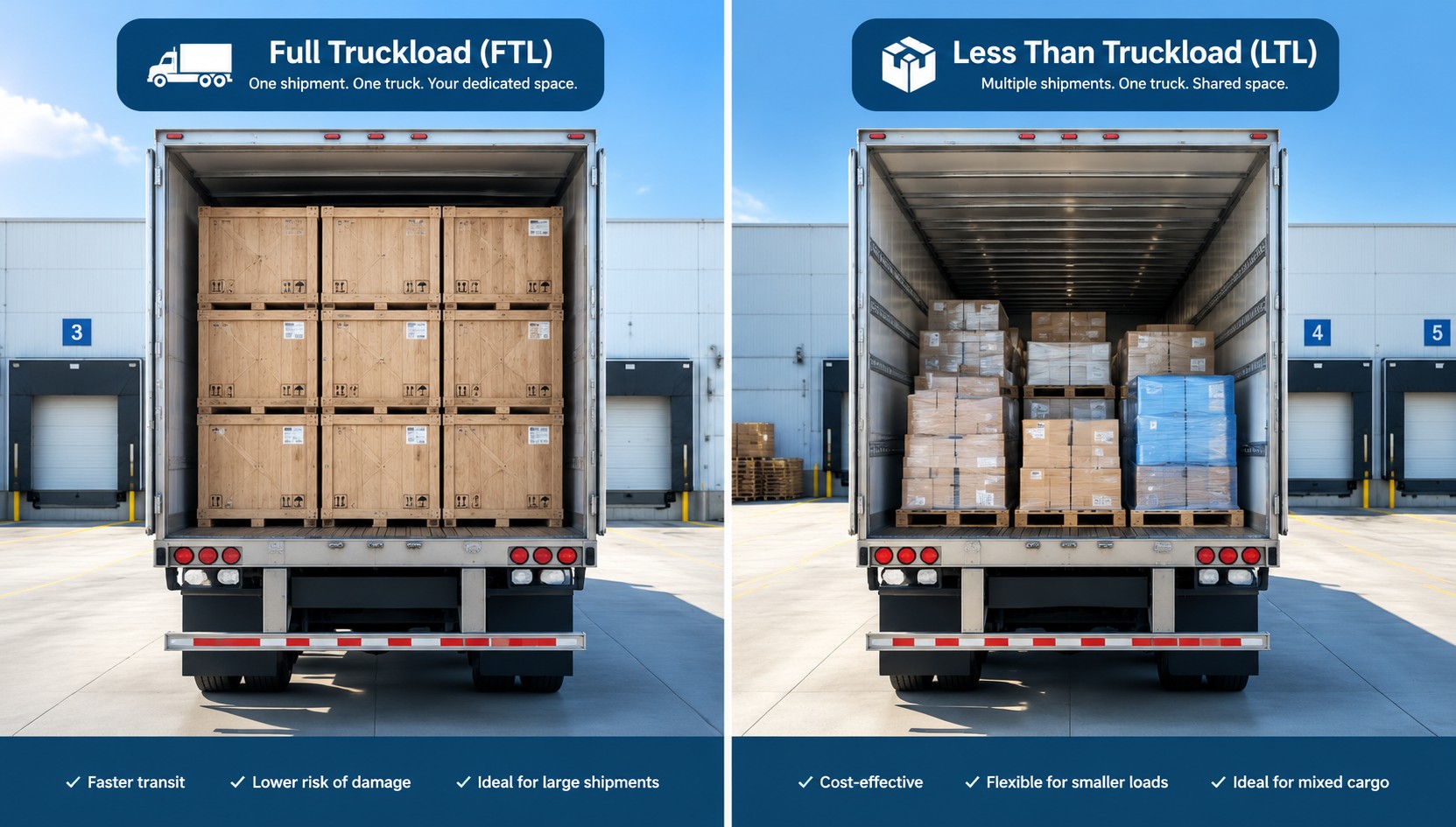
Full truckload shipping gives the shipper control over the assigned equipment and movement plan, while LTL freight focuses on shared transportation capacity and scheduled network handling. A buyer should compare the two options using the same cargo details, route, delivery point, service responsibilities, and quotation assumptions. The lowest headline charge may not represent the same operational scope, so the buyer should confirm what each option includes before selecting a carrier or forwarding solution.
The key choice is not simply whether a shipment is large or small. The right method depends on how the cargo needs to move, how much handling it can accept, and which delivery controls matter for the shipment.
Build a Fair Comparison Before Choosing
A reliable comparison starts with identical shipment assumptions. Buyers should align the cargo profile, route, delivery point, service level, quotation scope, and responsibility boundaries before comparing full truckload and LTL options.
| Decision Area | What to Confirm | Why It Matters |
|---|---|---|
| Cargo | Dimensions, handling needs, packaging, and restrictions | Determines equipment and handling suitability |
| Route | Origin, destination, transfer points, and delivery location | Defines available transport options and handoffs |
| Service Scope | Pickup, transport, terminal handling, and final delivery | Prevents unequal quote comparisons |
| Responsibility | Customs role, documentation, and delivery obligations | Clarifies who manages each stage |
Option Profiles and Shipment Fit
Each method fits a different operating situation. The correct selection depends on cargo behavior, route requirements, and the level of control the shipper needs.
Full truckload shipping: Fits cargo that benefits from dedicated equipment, fewer handling points, or a direct transportation plan. The shipment flow usually moves from pickup to delivery through an assigned truck capacity arrangement. It becomes a weaker fit when the cargo does not require dedicated movement or when shared transportation better matches the shipment requirements.
LTL freight: Fits cargo that can move through a shared transportation network and does not require exclusive trailer use. The shipment may involve more network handling and transfer coordination. It becomes a weaker fit when cargo requires dedicated control, specialized handling, or a direct movement plan.
A buyer should select the method that matches the shipment objective rather than choosing based only on a general cargo description. The selection trigger is the operational requirement that matters most, such as control, handling tolerance, scheduling flexibility, or delivery scope.
Full Truckload Shipping and LTL Decision Matrix
The following comparison focuses on operating fit rather than a universal winner. Each option can be suitable when the shipment conditions match its strengths.
| Option | Strong Fit | Weak Fit | Main Trade-Off | What to Verify |
|---|---|---|---|---|
| Full truckload shipping | Dedicated movement and controlled cargo handling needs | Cargo does not require dedicated transport space | More control with less shared network flexibility | Equipment, route plan, pickup, and delivery scope |
| LTL freight | Shared transportation needs and flexible network use | Cargo needs limited handling or dedicated movement | Network efficiency with additional coordination points | Handling process, terminals, and delivery requirements |
Field note: A shipment that appears suitable for one method may change after reviewing cargo handling requirements, destination access, delivery appointments, or the complete service scope.
Cost and Quote-Scope Trade-Offs
Freight cost comparisons are only meaningful when both options include the same shipment responsibilities. A quoted charge may reflect different transportation stages, handling services, access requirements, or delivery boundaries.
Full truckload shipping and LTL freight use different charge structures because they organize transportation capacity differently. The final shipment cost depends on cargo characteristics, route conditions, equipment requirements, handling needs, service scope, and the responsibilities included in the quotation.
When comparing quotes, buyers should confirm whether pickup, line movement, terminal or transfer handling, final delivery, documentation support, and additional shipment requirements are included. A quote with a narrower scope may not represent the same service outcome as another option.
Note: Freight rates and total shipment charges change with cargo details, route, service scope, carrier conditions, timing, destination handling, and applicable responsibilities. Compare current quotes only after their scope has been aligned.
Time, Handoffs, and Delivery Cycle
Full truckload shipping and LTL freight follow different operating flows. Full truckload movements may involve fewer transportation handoffs, while LTL shipments may move through a broader network with additional coordination stages.
| Method | Timing Scope | Approximate Reference | Factors That Change Timing |
|---|---|---|---|
| Full truckload shipping | Main transport cycle | Approximate timing depends on route and delivery scope | Pickup readiness, route conditions, appointments, and destination access |
| LTL freight | Total delivery cycle | Approximate timing depends on network handling | Transfers, terminal processing, appointments, and final delivery requirements |
Transit planning should separate the main transportation movement from the complete delivery cycle. Buyers should confirm booking timing, cargo availability, transfer requirements, customs involvement when applicable, and final delivery coordination before relying on a schedule.
Responsibility and Service Boundaries
Transportation method selection does not automatically define every service responsibility. Buyers should separate the freight method from pickup arrangements, delivery scope, customs support, and other operational responsibilities.
| Area | Full Truckload Shipping | LTL Freight |
|---|---|---|
| Transport Control | Dedicated movement planning | Shared network movement |
| Handling | Fewer shared handling points | Network handling coordination |
| Delivery Scope | Confirm pickup and final delivery responsibilities | Confirm terminal and final delivery responsibilities |
| Documentation | Confirm required shipment documents | Confirm required shipment documents and handoffs |
Buyers that require broader transportation coordination may also review door-to-door shipping options to understand how pickup, transport, and final delivery responsibilities can be arranged together.
Selection Rules and Quote Preparation
Start with cargo requirements
Choose the method that matches handling needs, packaging condition, equipment requirements, and cargo sensitivity.
Match the route and delivery point
Review origin access, destination conditions, transfer requirements, and the final delivery location before selecting a method.
Confirm service scope
Compare pickup, transportation, handling, documentation, and delivery responsibilities using the same assumptions.
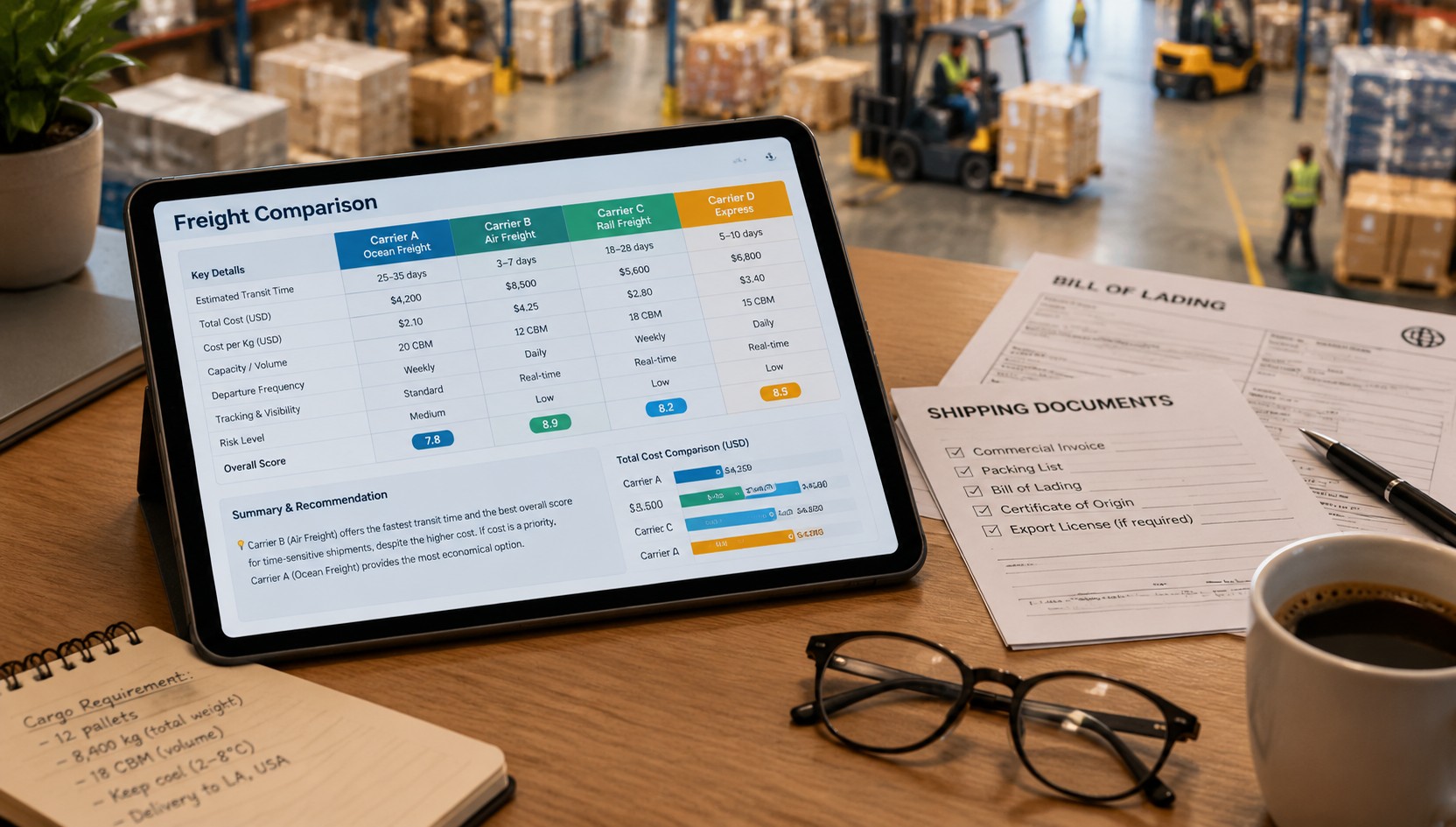
A full truckload choice may change when delivery control becomes less important than shared network flexibility. An LTL choice may change when cargo handling requirements or delivery coordination become more demanding.
Illustrative example (not a customer case): A shipper with cargo requiring controlled movement reviews dedicated transportation, while another shipper with cargo that can move through shared handling evaluates an LTL option. Both confirm cargo details, route conditions, and delivery scope before booking.
Mistakes and Shipment Controls
Many freight decisions fail because buyers compare different service scopes instead of comparable transportation options. A shipment plan should identify every handoff and responsibility before accepting a quote.
Common mistake: Selecting a method based only on the initial transportation charge without checking handling requirements, delivery scope, and operational responsibilities.
Risk alert: Cargo requirements, destination access, or delivery restrictions that are not disclosed before booking can change the suitability of the selected freight method.
Disclosure: This page provides general freight comparison guidance and may mention freight services available through this website. Actual cost, timing, service scope, customs requirements, carrier conditions, and destination handling depend on the shipment and can change. Confirm the current shipment plan before booking.
Key Takeaways
Full truckload shipping fits when dedicated movement and cargo control are important.
LTL freight fits when shared transportation matches the shipment requirements.
Quote comparisons should use identical service scope and responsibility assumptions.
The final choice depends on cargo, route, handling needs, and delivery objectives.
FAQ
What does LTL stand for?
LTL stands for less-than-truckload freight, a transportation method where cargo shares trailer capacity with other shipments.
When should a shipper choose full truckload shipping?
A shipper should consider full truckload shipping when dedicated transportation control, reduced shared handling, or specific delivery coordination matters.
Is full truckload shipping always the faster option?
No. Timing depends on the route, booking conditions, delivery requirements, and shipment scope.
What information is needed to compare FTL shipping and LTL freight?
Buyers should provide cargo details, origin, destination, delivery requirements, handling needs, and the service scope they need.
Can LTL freight handle every type of cargo?
No. Cargo suitability depends on handling requirements, packaging, restrictions, and the available service arrangement.
Does the transportation method define customs responsibility?
No. Customs responsibilities depend on the agreed service arrangement and the parties involved in the shipment.
Disclaimer: Freight comparison information on this page is general planning guidance, not a binding quotation, carrier commitment, customs ruling, legal opinion, or delivery guarantee. Suitability depends on cargo, route, scope, timing, provider terms, and destination conditions. Confirm current shipment requirements before booking.