
3PL warehousing is a logistics service in which a third-party logistics provider manages inventory storage and warehouse operations for another business. Depending on the service agreement, those operations can include receiving, unloading, inspection, put-away, inventory tracking, order picking, packing, labeling, and outbound dispatch. Unlike basic storage, 3PL warehousing can also include active inventory management and order fulfillment, which is why the term often appears alongside 3PL storage and 3PL fulfillment provider services.
Outsourcing warehouse work does not transfer inventory ownership or every commercial duty to the provider. The shipper usually keeps control of product data, inventory decisions, order rules, and applicable compliance requirements, while the 3PL performs the physical activities assigned in the contract. This guide explains the usual flow from inbound receiving to outbound dispatch, the inventory and cost questions to confirm, and where responsibility sits at each handoff. Actual steps, charges, and release rules depend on the facility, cargo, contract, and jurisdiction, so confirm current terms before tendering stock.
How a 3PL Warehouse Works: From Receiving to Dispatch
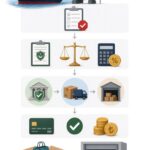
The operating model is a controlled handoff chain. Cargo arrives against an appointment and advance notice, the warehouse records what it actually received, inventory records and storage locations are updated, orders are released and picked, and the outbound carrier takes custody with a documented transfer. Each stage produces a record that affects inventory accuracy, billing, and service performance.
Receiving and inbound inspection
The warehouse checks the shipment against the advance shipping notice, purchase order, or agreed receiving documents. Staff verify pallet and carton counts, scan barcodes, inspect visible damage, and record SKU, lot, or serial data where required. Shortages, overages, labeling mismatches, and damage should be documented under the receiving procedure and reported within the agreed discrepancy window. When inbound cargo moves by more than one mode, multi-modal freight planning can clarify who controls each transfer point before the warehouse receives the load. The receiving record should reflect the quantity and condition actually received, not simply copy the shipping documents.
Put-away and inventory storage
Accepted inventory is assigned to warehouse locations, and the warehouse management system records the SKU, quantity, location, and any lot, serial, or expiration data. Storage rules depend on the product. FIFO can support stock rotation, while FEFO is more appropriate when expiration dates matter. Replenishment and cycle counting help maintain accuracy. Shippers should confirm how discrepancies are investigated, how inventory adjustments are approved, and how often physical counts are reconciled with system records.
Order release and inventory allocation
When an order arrives, the warehouse checks availability and applies the agreed allocation rules. These may include channel priority, reserved stock, cutoff times, backorder handling, and substitution limits. For multi-channel sellers, allocation is critical: stock reserved for one marketplace or retail order should not be treated as freely available for another. Accurate available-to-promise inventory helps reduce overselling and avoid unnecessary cancellations.
Picking, packing, and value-added work
Warehouse staff pick the required products from assigned locations. Depending on the order profile, picking may involve individual units, cartons, or full pallets. Picked items are checked against the order before packing, and the warehouse applies the agreed packaging, labels, carton markings, inserts, or handling instructions. Some providers also offer kitting, bundling, repacking, and returns processing. These activities should be defined in the service agreement because they can require extra labor, materials, and charges.
Dispatch and carrier handoff
Completed orders move to an outbound staging area and are organized by carrier, service level, route, or pickup schedule. Before dispatch, the warehouse should verify quantities, package labels, carrier documents, and shipping instructions. The outbound handoff should create a record showing which carrier collected the shipment and when custody transferred. Shippers should agree on dispatch cutoffs, missed-pickup procedures, tracking updates, and responsibility for shipment exceptions. A warehouse can pick and pack on schedule, but final delivery also depends on carrier collection and transport performance.
When Is 3PL Warehousing a Good Fit?
3PL storage and fulfillment usually fit when order volume fluctuates, SKU counts are high, and the shipper needs variable space without committing to a fixed warehouse. They also fit when the shipper needs pick-and-pack labor, returns handling, or marketplace replenishment support but does not want to run those processes in-house. A 3PL fulfillment provider can also prepare marketplace replenishments, including Amazon FBA inbound shipments, when labeling, carton marking, and appointment rules are confirmed.
Weak-fit cases include very low volume, highly specialized handling, strict temperature or security controls that the provider cannot document, and operations that require deep real-time integration with the shipper’s own systems. Heavy or bulky goods can still work in 3PL storage, but the shipper should confirm racking, floor capacity, equipment, and handling rules before assuming the facility is suitable. The decision depends on whether the expected cost of operating an in-house warehouse, including facility, labor, equipment, technology, and management, outweighs the total cost of outsourcing the same activities.
| Service | Primary focus | Typical activities |
|---|---|---|
| 3PL warehousing | Inventory storage and warehouse management | Receiving, put-away, storage, inventory tracking, replenishment, stock control |
| 3PL fulfillment | Processing and preparing orders for shipment | Order receipt, inventory allocation, picking, packing, labeling, dispatch |
Many providers offer both services as one integrated operation, but some offer storage without full order fulfillment, while others specialize in e-commerce fulfillment. Before selecting a provider, confirm whether the service scope covers both inventory management and outbound order processing.
How Much Does 3PL Warehousing Cost?
3PL warehousing costs depend on the amount of inventory stored, the volume of inbound and outbound activity, the warehouse location, and the level of service required. Most providers use a combination of storage charges, handling fees, fulfillment fees, and additional service charges rather than one fixed rate. The exact structure varies by provider and contract, and a quoted rate should be read as one part of the total operating cost.
| Fee category | What it covers | Common pricing basis |
|---|---|---|
| Receiving fees | Unloading, counting, inspecting, and checking inbound inventory | Per pallet, carton, unit, container, or labor hour |
| Storage fees | Space occupied by stored inventory | Per pallet, bin, cubic foot, or square foot |
| Pick and pack fees | Retrieving products and preparing customer orders | Per order, first item, and additional item |
| Outbound handling | Preparing and loading bulk shipments | Per carton, pallet, or shipment |
| Value-added services | Labeling, kitting, bundling, and repacking | Per unit, task, project, or labor hour |
| Returns processing | Inspecting, sorting, and restocking returned products | Per unit or return |
Several factors affect the storage portion of the bill: inventory volume, storage duration, product characteristics, order activity, warehouse location, and additional services. Slow-moving inventory can increase cumulative storage charges, while oversized, fragile, regulated, or temperature-sensitive goods may require specialized space and handling.

When comparing quotes, request an itemized quotation that identifies receiving charges, recurring storage fees, pick-and-pack rates, outbound handling, packaging materials, account minimums, and accessorial charges. Confirm how storage occupancy is measured, when billing begins, how long-term inventory is charged, and whether the contract includes minimum monthly commitments. Comparing the same inventory volume, order profile, and service requirements across providers makes cost differences easier to evaluate.
Trade-Offs, Limits, and Alternatives
Outsourcing shifts operating labor, space, and some handling risk to the provider, but it does not shift commercial responsibility for inventory, order promises, or product compliance. The main trade-off is control versus flexibility. A self-operated warehouse can offer closer day-to-day control and custom processes; a 3PL can offer faster scaling, shared labor, and access to multiple warehousing solutions. Neither choice is universally better, and the right answer depends on order profile, service level, system fit, and total cost.
Storage risk should be written into the contract. The provider’s liability may be limited by its terms, and the shipper may need separate cargo insurance for stock in custody. Confirm who files claims, what evidence is required, and which party is responsible at each custody point. Some importers combine 3PL storage with door-to-door transport when they want one commercial contact from origin to final delivery; the trade-off is less direct control over each handoff.
Documents, Data, and Responsibility Boundaries
The shipper should provide accurate item masters, SKU and barcode data, lot or serial rules, packaging instructions, and order release rules before the first receipt. The warehouse needs an advance shipping notice, delivery appointment details, and a clear exception contact. For imported goods, warehouse delivery and release arrangements depend on customs status, the type of facility, and applicable import procedures. A standard commercial warehouse generally receives cargo after the required customs release and delivery arrangements are complete, while bonded warehouses may operate under different customs controls. For U.S. imports, the Importer of Record generally retains responsibility for reasonable care in the entry process, including accurate classification, valuation, and other required information. A customs brokerage service can prepare and file entry documents on the importer’s behalf, but using a broker does not automatically remove the importer’s compliance responsibilities.
System access and data refresh frequency also matter when managing inventory through a 3PL. The warehouse management system should provide the fields the shipper needs to monitor stock, orders, and movements.
| Data field | What it shows | Why it matters |
|---|---|---|
| On-hand inventory | Total quantity physically recorded at the warehouse | Shows stock presence but not necessarily what is sellable |
| Available inventory | Stock that can be allocated to new orders | Supports order promises and replenishment decisions |
| Reserved inventory | Stock already committed to open orders or allocation rules | Prevents overselling across channels |
| Inventory location | Bin, rack, or storage area assigned to each SKU | Helps trace picking and counting discrepancies |
| Pending receipts | Inbound inventory that has arrived but not completed receiving | Separates in-transit or uninspected stock from available stock |
| Order status | Stage of each order from release to dispatch | Supports customer service and cutoff management |
| Inventory adjustments | Approved changes from discrepancies, damage, or counts | Explains variances and supports reconciliation |
Before onboarding, agree on required data fields, update frequency, access permissions, reporting format, and exception alerts. A daily file exchange may be sufficient for some operations, while high-volume, multi-channel businesses may require more frequent synchronization. The goal is not simply to receive inventory reports, but to ensure that warehouse records support accurate purchasing, order allocation, and customer commitments.
Common Mistakes and Operator Checks
Common mistake: Treating the 3PL inventory record as automatically accurate after receipt. If the shipper does not reconcile the advance shipping notice against the warehouse receipt within the agreed discrepancy window, short shipments, mislabeled cartons, or damaged units can become inventory shortages later. The trigger is often a supplier packing error or a missing SKU label; the consequence is a stockout, canceled order, or disputed storage charge. Prevention is a written receiving check: confirm carton count, SKU identity, lot or serial data where required, and damage evidence before the window closes.
Hypothetical example: An advance shipping notice lists 1,000 units across 100 cartons. The warehouse receives 980 units. The 3PL should record the actual received quantity and document the 20-unit discrepancy under the agreed receiving procedure, identifying the affected SKU, expected quantity, actual quantity, and available evidence. The shipper should then review the supplier’s packing records and coordinate with the supplier or carrier to investigate the shortage. Until the discrepancy is resolved, inventory records should reflect the verified receipt rather than treating the missing units as available stock. This example shows why receiving reconciliation affects availability, allocation, replenishment, and later claims.
Operator check: Review inventory aging on a regular schedule. Without an aging review, slow-moving stock can accumulate storage charges and crowd out active SKUs. Set a review cadence, a replenishment cap, and a written disposal or return authorization. Also confirm the cutoff time for same-day dispatch and the carrier tender rules, because a warehouse can pick an order on time and still miss the outbound handoff if the carrier appointment or document set is incomplete.
Disclosure: This guide provides general logistics information and may refer to services relevant to the topic. Carrier terms, customs requirements, fees, service coverage, and operating conditions can change. Confirm current requirements and responsibilities before acting.
Key Takeaways
Define the boundary first. Confirm which party owns inventory decisions, customs data, insurance, returns, and disposal before the first receipt.
Control the receiving window. Reconcile the advance shipping notice, carton count, SKU identity, and damage evidence within the agreed discrepancy period.

Separate warehousing from fulfillment. Warehousing manages stored inventory; fulfillment processes orders. Confirm whether the provider covers both.
Compare itemized costs. Evaluate receiving, storage, pick-and-pack, outbound handling, and accessorial charges against the cost of in-house control.
Agree on data and handoffs. Put system fields, update frequency, dispatch cutoffs, carrier tender rules, and exception contacts in the operating agreement.
3PL Warehousing FAQ
What does 3PL warehousing include?
3PL warehousing can include receiving, unloading, inspection, put-away, storage, inventory tracking, replenishment, order picking, packing, labeling, and outbound dispatch. The exact scope depends on the service agreement, and some providers offer storage without full order fulfillment.
What is the difference between 3PL warehousing and 3PL fulfillment?
3PL warehousing focuses on receiving, storing, tracking, and managing inventory inside a third-party warehouse. 3PL fulfillment focuses on processing customer orders, including inventory allocation, picking, packing, labeling, and dispatch. Many providers offer both as part of one operation, but the scope should be confirmed in the contract.
How is 3PL warehousing priced?
Pricing typically combines receiving, storage, pick-and-pack, outbound handling, and additional service fees. Storage may be charged per pallet, bin, cubic foot, or square foot, while receiving and fulfillment may be calculated per pallet, carton, unit, or order. Compare itemized quotations and confirm minimum charges, long-term storage fees, packaging costs, and accessorial services before signing.
Who owns inventory in a 3PL warehouse?
The shipper usually retains ownership of the inventory unless the contract states otherwise. The provider takes custody for handling purposes, but ownership, risk, and insurance responsibility should be confirmed in writing before stock arrives.
What should a receiving check confirm?
A receiving check should confirm the carrier handoff, carton count, SKU identity, visible damage, and any lot or serial data required by the shipper. The shipper should also confirm the discrepancy reporting window and the evidence needed to support a claim.
Can a 3PL fulfillment provider handle Amazon FBA replenishment?
Some providers can prepare Amazon FBA inbound shipments, including labeling, carton marking, and appointment coordination. Eligibility depends on the provider’s capabilities and current marketplace rules, so confirm the exact service scope before relying on it.
How should shippers manage inventory visibility?
Agree on data fields, refresh frequency, and exception alerts. Useful records include on-hand, available, and reserved inventory, location, pending receipts, order status, and adjustments. The provider can confirm its system capabilities, but the shipper must decide which data supports purchasing, allocation, and customer commitments.
When is 3PL warehousing a weak fit?
It can be a weak fit when volume is very low, handling is highly specialized, the provider cannot document required controls, or the shipper needs deep system integration that the provider cannot support. A self-operated warehouse or a specialized provider may be a better match in those cases.
Disclaimer: This article is general informational guidance, not a binding quotation, legal opinion, customs ruling, carrier commitment, or delivery guarantee. Requirements, charges, service terms, and responsibilities can vary by route, cargo, contract, carrier, and jurisdiction. Confirm current requirements before booking or filing.