

Which Shipping Option Fits the Shipment?
For shipping from USA to United Kingdom, the practical choice depends on cargo size, urgency, pickup location, and the level of delivery control required. Ocean freight generally fits planned commercial cargo that can tolerate a longer transit cycle, while air freight suits time-sensitive inventory, samples, or higher-value cargo that needs a shorter transportation cycle. Express shipping is better suited to small urgent consignments where speed matters more than freight efficiency.
For buyers comparing shipping US to UK options, the key decision is not simply the transport mode. The quote should match the same pickup point, loading format, destination scope, customs responsibility, and delivery requirement. A port-to-port ocean price cannot be compared directly with a door-to-door service. Before booking, confirm who provides the customs entry data, who coordinates UK clearance, whether duties and taxes are included, and which final delivery location the quotation actually covers.
What Shipment Profile Makes the Route Work?
The route works best when the buyer can define the cargo, pickup point, destination address, and import arrangement before requesting a quote. The forwarder then has enough information to evaluate the transport mode and build a comparable origin-to-destination scope.
Planned commercial cargo: Use ocean freight when the shipment can follow a scheduled export and import cycle without an unusually tight delivery deadline.
Time-sensitive cargo: Use air or express when stock availability, production continuity, launch timing, or another business requirement makes transit speed the main constraint.
Defined UK delivery scope: Confirm whether the shipment ends at a UK gateway, terminal, warehouse, or final business address before comparing quotations.
Operational trigger: If the consignee, final delivery address, or customs contact is still undecided, do not compare final delivered quotes yet. Lock those inputs first so every provider prices the same handoff.
The UK destination also needs an import plan. Commercial importers should confirm the appropriate customs registration, importer details, commodity classification, and any product-specific controls before cargo is dispatched. The UK government explains the import setup and declaration sequence for goods entering Great Britain. Check the current UK import guidance before the shipment is finalized.
How Should the US-to-UK Route Be Structured?
The route should follow the cargo’s physical movement from the US pickup point to an appropriate export gateway, across the Atlantic, through a UK gateway, through customs, and into the final delivery leg. The main routing decision is therefore tied to the shipment condition rather than to a single “best” service for every buyer.
| Mode | Best-fit condition | Operational logic | Weak fit |
|---|---|---|---|
| Sea FCL | Dedicated container cargo | US pickup to export gateway, ocean carriage, UK gateway, customs, inland delivery | Tight delivery deadlines |
| Sea LCL | Smaller commercial cargo | Origin consolidation, ocean carriage, UK deconsolidation, customs, delivery | Cargo needing minimal handling |
| Air freight | Urgent or high-value cargo | US airport handling, air carriage, UK airport handling, customs, delivery | Routine cargo where speed is not important |
| Express | Small urgent consignments | Courier-managed collection, international transport, clearance coordination, delivery | Large or containerized cargo |
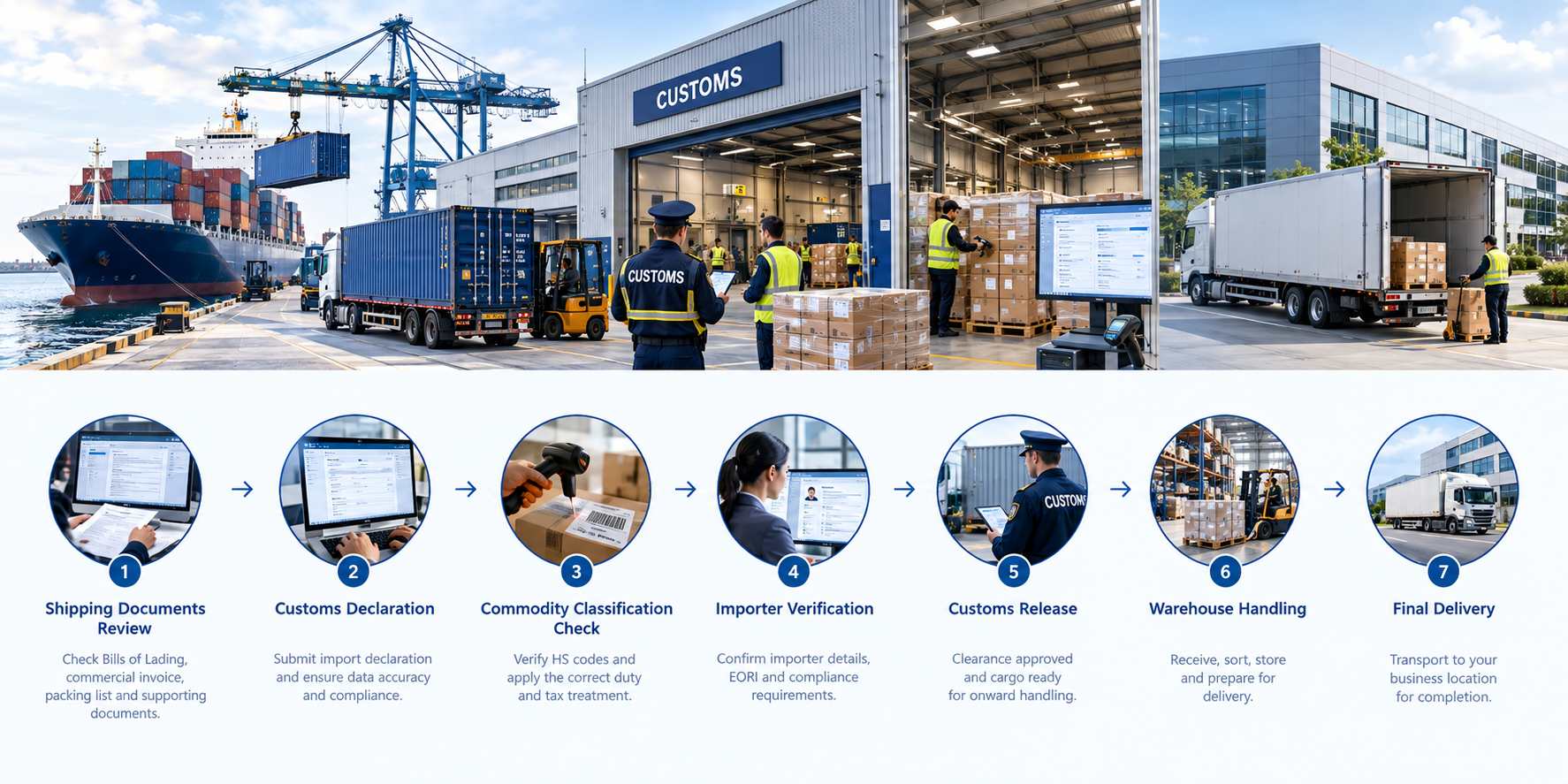
FCL removes the need to consolidate the shipment with unrelated cargo, which can simplify handling when the shipment already fits a dedicated container. LCL introduces consolidation and deconsolidation handoffs, so the buyer should verify the warehouse handoff and final delivery scope. Air freight follows a similar pickup-to-delivery chain but uses airport handling and a different charge basis.
A multi-modal freight arrangement can be useful when the pickup or final delivery geography makes a single transport leg impractical. The important check is whether each handoff is clearly assigned and whether the quote states which party controls the inland legs. Oversized or unusually heavy commercial cargo may require project cargo planning rather than a standard container booking.
For routine commercial shipments, choose the route that meets the delivery requirement with a clear chain of custody. A mode should be ruled out when its handling pattern, shipment format, or delivery scope conflicts with the cargo or deadline.
What Transit Time Should Buyers Plan For?
Transit should be treated as a planning reference rather than a carrier commitment. Because US origin geography materially changes the ocean leg, a country-level average can hide the actual route decision. The benchmarks below use representative gateway pairs to make the distinction visible; they are approximate planning ranges, not booked schedules.
| Service pattern | Origin gateway | UK gateway | Main carriage | Door-to-door planning cycle |
|---|---|---|---|---|
| FCL ocean | New York/Newark | Southampton | Approx. 13–18 days | Approx. 16–23 days |
| FCL ocean | Los Angeles/Long Beach | Southampton | Approx. 22–30 days | Approx. 27–36 days |
The main-carriage figure measures the international movement between the named gateways. The door-to-door figure adds the origin and destination handling cycle, including inland movement and customs coordination. Actual timing changes with pickup geography, routing, consolidation, vessel or flight schedules, cargo readiness, document accuracy, customs processing, and final delivery conditions.
East Coast cargo can therefore support a different planning window from West Coast cargo even when the UK destination is the same. Air and express should be considered when the business requirement makes the ocean planning cycle unacceptable, but the forwarder should confirm the current airport pair, service pattern, cutoffs, and delivery scope before booking.
How Should a Shipping Quote Be Compared?
A useful US-to-UK freight comparison starts with the same cargo and the same scope. The charge basis changes by mode and loading format, so the buyer should first confirm exactly what the quoted amount covers and what remains outside the quoted scope.
- Confirm the cargo description, package count, dimensions, gross weight, and whether the shipment moves as FCL, LCL, air cargo, or express.
- Separate US pickup and export-side charges from the main international freight charge.
- Check whether UK destination handling, warehouse activity, customs clearance, and inland delivery are included in the quotation.
- Confirm whether customs duty and import taxes are paid separately or included within the agreed service scope.
- Check accessorial assumptions such as delivery restrictions, special handling, storage exposure, liftgate requirements, or other site-specific conditions.
FCL quotes are commonly structured around the selected container and service scope. LCL quotes depend on the shipment’s chargeable measurement under the applicable tariff, while air and express use the carrier’s chargeable-weight rules. The quote should state the actual basis rather than leaving the buyer to infer how weight and volume will be compared.
For a delivered service, door-to-door shipping should identify the pickup location, UK delivery address, customs handoff, and excluded destination charges. A DDP arrangement can place duties and taxes within the agreed seller-arranged scope, but the quotation still needs to identify the importer setup and the party coordinating the UK customs entry. Review DDP shipping scope only after those responsibilities are clear.
The best quote is therefore the one with the clearest scope, not simply the lowest headline freight charge. Ask each provider to price the same shipment facts and the same delivery boundary.
Note: Freight rates change with cargo details, route, carrier capacity, fuel costs, seasonal demand, service scope, and destination charges. Request a current quote for the specific shipment.
What Are the Critical Shipment and Customs Handoffs?
The shipment should move through six controlled handoffs. Each step has a clear owner and a verification point so that transport progress does not outrun the customs or delivery setup.
Request Quote
Owner: Buyer and forwarder. Provide pickup, cargo, package, dimensions, weight, destination, delivery scope, cargo-ready timing, and customs requirements; verify that the quotation reflects those exact inputs.
Cargo Pickup
Owner: Origin shipper and pickup provider. Confirm cargo availability, packaging, loading access, and collection instructions; verify that the collected cargo matches the booked shipment details.
Export Customs Clearance
Owner: Exporter and appointed filing party. Supply accurate product descriptions, values, origin information, and required export data; verify that the export declaration can be completed before departure.
International Transportation
Owner: Carrier and forwarder. Confirm the booked service, transport document, routing, and shipment status; verify that the cargo is moving under the agreed loading format and destination scope.
Destination Customs Clearance
Owner: UK importer, customs agent, and supporting forwarder. Confirm importer details, commodity classification, customs data, and any required product documents; verify that the entry package is complete before release is requested. Coordinate customs brokerage when a broker is handling the declaration.
Final Delivery
Owner: UK delivery provider and consignee. Confirm delivery address, receiving hours, site restrictions, and appointment requirements; verify the delivery handoff and any proof-of-delivery requirement.
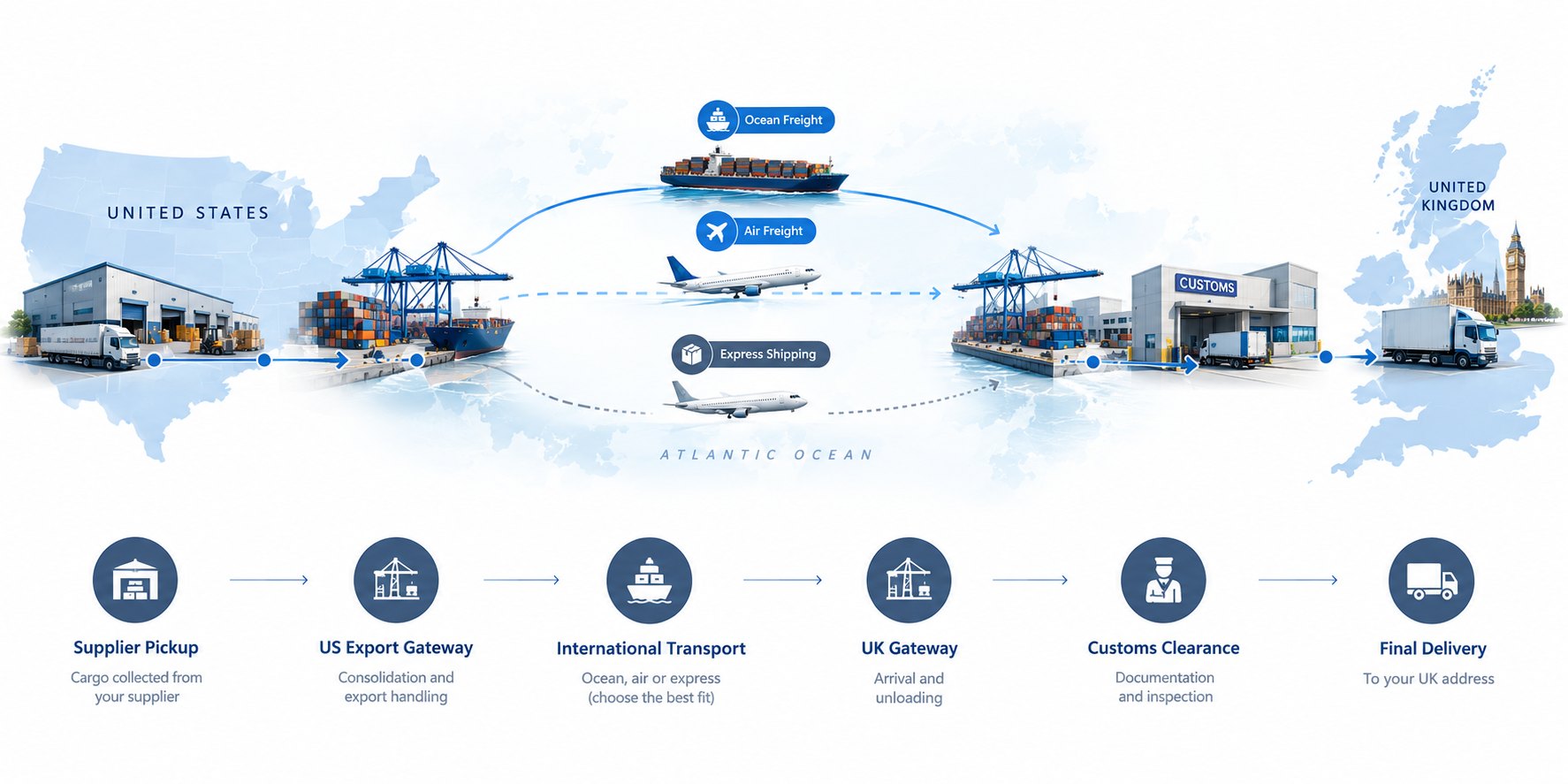
The UK importer should also confirm the current commodity code and related duty or control treatment before entry. The government Trade Tariff service provides the current commodity-code and duty-reference framework for UK imports. Check the UK Trade Tariff for the shipment’s product classification before the customs filing is prepared.
Which Problems Should Be Controlled Before Booking?
The most preventable problems occur when the commercial shipment description, customs information, and delivery scope do not match the actual cargo movement. The buyer should resolve those discrepancies before the carrier booking is treated as final.
Classification mismatch: Align the product description and commodity classification with the actual merchandise rather than relying on a generic description supplied for quoting.
Scope mismatch: Reconcile pickup, port handling, customs, and final delivery responsibilities so the buyer does not assume a charge or handoff is covered when it is not.
Consolidation exposure: For LCL cargo, confirm where the shipment is consolidated and deconsolidated and who manages each warehouse handoff.
Cargo condition: Confirm packaging, dimensions, handling needs, and delivery-site restrictions before equipment or service is selected.
Common mistake: Comparing a port-to-port ocean quotation against a door-to-door quotation because the headline freight charge appears lower. The correct comparison uses the same delivery boundary and the same customs scope.
Trigger: The UK consignee cannot confirm the importer record, cargo classification, or required customs documents before booking. Action: stop the customs handoff and have the appointed customs broker validate the entry setup before the shipment departs.
Higher-value, fragile, or handling-sensitive cargo also deserves a deliberate risk review before transit begins. Cargo insurance planning should be based on the cargo value, handling exposure, agreed coverage, and the actual policy terms rather than being assumed to follow automatically from the freight quotation.
Disclosure: This page provides general route-planning information and may mention freight services available through this website. Transit times, freight costs, customs requirements, carrier schedules, and destination conditions can change. Confirm the current shipment plan before booking.
What Should Change the Final Shipping Decision?
The practical default is to start with ocean freight for planned commercial cargo and then change the mode when the shipment’s physical profile or business deadline requires it. Cargo that cannot justify the additional speed of air or express should not be pushed into a faster mode simply because the route is international.
Choose FCL when a dedicated container and controlled handling fit the shipment. Shift toward LCL when consolidation is operationally acceptable and a dedicated container is not the right format. Move toward air or express when the business consequence of delay is more important than the additional freight cost. Use a delivered service when the buyer needs a clearly defined handoff through UK clearance and final delivery rather than separate coordination of each leg.
Before requesting the final quote, prepare these inputs:
- US supplier or pickup location
- Cargo type and accurate commercial description
- Package count, dimensions, CBM, and gross weight
- UK delivery address and postcode
- Required delivery scope and receiving restrictions
- Cargo-ready timing and preferred transit window
- Customs requirements, importer information, and any known product controls
- Preferred transport mode or service level, if already determined
When the shipment needs multiple transport legs, confirm the handoff between carriers before accepting the quotation. The same principle applies to UK final delivery: the address alone may not describe the receiving conditions well enough for the forwarder to price the service accurately.
Illustrative example (not a customer case): A commercial shipment of standard, non-controlled goods is moving from a US supplier to a UK business address, and the buyer has enough scheduling flexibility for ocean service. Ocean freight is the practical default. If the buyer later faces a business-critical delivery deadline, the decision flips toward air or express because the controlling condition has changed from freight efficiency to transit urgency.
Key Takeaways
- Choose the transport mode from the shipment’s urgency, loading format, and delivery requirement.
- Compare quotations only when pickup, customs scope, and final delivery boundaries match.
- Keep customs classification and importer information aligned with the actual cargo before departure.
- Separate international transport from origin handling, destination clearance, and inland delivery when reviewing quote scope.
- Treat transit information as planning guidance and confirm the live service before booking.
FAQ
Can a US supplier arrange shipping directly to a UK customer?
Yes, the supplier can arrange transportation, but the commercial setup still needs to identify the UK consignee, customs arrangement, and delivery scope. The buyer should agree in advance on who supplies the customs information, who coordinates the import entry, and who receives the cargo after clearance. A transport booking alone does not define those responsibilities.
Who should provide the information needed for UK customs?
The exporter, importer, and customs agent each contribute information. The commercial party holding the product details should provide an accurate description, value, origin, and supporting documents, while the importer confirms its own customs information and any product-specific requirements. The appointed customs agent uses that data to prepare the entry according to the agreed arrangement.
Does shipping to England differ from shipping to other parts of the UK?
The broad international freight decision is similar, but the final delivery and customs setup depend on the actual destination and movement structure. A shipment destined for England, Scotland, or Wales should be quoted against its real delivery address rather than treated as a generic UK delivery. Northern Ireland can involve a different customs framework, so confirm the destination before booking.
Should I request a port-to-port or door-to-door quote?
Use port-to-port scope when your team can separately manage destination handling, customs, and inland delivery. Use door-to-door scope when you want the quote to cover the shipment through the final address. The important point is consistency: compare quotations using the same endpoint and the same responsibilities so that missing destination charges do not distort the comparison.
What cargo information has the biggest effect on the shipping decision?
The most useful inputs are cargo type, package dimensions, gross weight, package count, pickup location, delivery address, urgency, and any special handling or product controls. These facts determine whether the shipment fits a particular loading format and whether customs or delivery conditions create additional handoffs that need to be priced and coordinated.
Can duties and taxes be included in a delivered shipping arrangement?
They can be included when the agreed service structure and importer arrangement support that scope. The quote should clearly state whether duties and taxes are included, excluded, or handled separately. The buyer should also confirm who is named for the customs entry and who supplies the information needed for the declaration rather than assuming that delivery coverage automatically includes every import charge.
What should I verify before accepting a US-to-UK freight quote?
Verify the cargo description, shipment format, pickup point, UK delivery address, customs responsibility, delivery endpoint, and all stated exclusions. Ask the provider to confirm the transport document, planned routing, and current service availability. The final check should establish exactly where the forwarder’s responsibility ends and where the buyer or another service provider takes over.
Disclaimer: Transit times, cost explanations, customs information, and shipping suggestions on this page are general planning references, not a binding quotation, customs ruling, or delivery guarantee. Confirm the current route, service scope, charges, documents, and import requirements before booking.