
Rail Freight from China to Europe: The Balanced Choice
China-Europe rail freight occupies the middle ground between ocean and air shipping. For cargo that cannot tolerate the extended sea transit but does not justify airfreight costs, rail offers a practical compromise. The service operates along the Eurasian land bridge, connecting major Chinese inland hubs such as Chongqing, Chengdu, Xi’an, Zhengzhou, and Yiwu to European terminals in Poland, Germany, the Netherlands, and other key distribution centers.
The commercial decision for rail rests on three factors: urgency, volume, and value density. Rail works best for shipments with a total door-to-door timeline of 18 to 25 days, where sea freight at 30 to 45 days would disrupt inventory or production schedules, and where airfreight at 3 to 5 days would erode margins. The actual route, border crossing procedures, and destination handling determine the achievable transit time and total cost.
This guide walks through shipment fit, route logic, timing, cost components, customs checkpoints, and risks. Use it to determine whether rail makes sense for your cargo and to prepare the information your freight forwarder needs for a current quotation.
Shipment Fit: Who Should Use China-Europe Rail Freight
Rail freight suits a specific range of cargo profiles. The mode works well for finished goods, automotive parts, machinery, electronics, consumer products, and industrial components that are not time-critical enough for air but too time-sensitive for ocean. Typical shipment sizes range from a few pallets for LCL consolidation to full container loads of 40-foot or 20-foot containers.
Rail is a poor fit for highly perishable goods, dangerous cargo requiring special handling, oversized or overweight items that exceed rail gauge or terminal handling limits, and shipments with extremely tight delivery windows under 14 days. It also does not serve destinations outside the Eurasian rail network; for the USA, Canada, Australia, and island markets, ocean or air are the only practical modes.
Operational trigger: If your shipment weighs more than 500 kg or occupies more than 3 pallets, rail becomes cost-competitive with air. For smaller volumes under 100 kg, express or air consolidation usually works better. Confirm these thresholds with your forwarder, as they vary by lane and carrier consolidation programs.
Before requesting a quote, define your delivery destination precisely. Rail terminals in Europe are typically inland intermodal hubs, not coastal ports. Final delivery via truck or intermodal service adds 1 to 4 days depending on the distance from the rail terminal to the warehouse. This inland leg must be included in your total timeline and cost comparison. Likewise, for China origin, rail service begins with truck pickup from your factory or warehouse to the inland rail terminal, which can add 1 to 2 days.
Route Logic: How China-Europe Rail Freight Operates
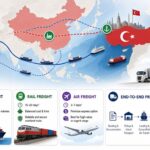
The China-Europe rail corridor is a multimodal land bridge that moves containers by rail across the Eurasian continent. The primary route runs from Chinese inland terminals through Kazakhstan, Russia, Belarus, and Poland, then onward to destinations across Europe. Alternative routes via the southern corridor through Central Asia, the Caucasus, and Turkey exist but are less commonly used for regular LCL and FCL services.
The operational chain involves four handoffs: truck pickup from origin to the Chinese rail terminal, rail transport across the China-Europe corridor with gauge changes and border crossings, destination rail terminal handling, and final truck delivery to the consignee’s warehouse. Each handoff introduces transit variability, handling costs, and documentation requirements.
Rail freight is offered in two primary service scopes:
- FCL (Full Container Load): Your cargo occupies an entire container, either 20-foot or 40-foot. FCL provides the fastest rail transit because the container moves without consolidation delays, and you control the loading and sealing. Use FCL for shipments of 15+ cubic meters or when security and direct routing are priorities.
- LCL (Less than Container Load): Your cargo shares container space with other shippers. LCL is cost-effective for smaller volumes but adds consolidation and deconsolidation time at both ends. Transit times are typically 2 to 4 days longer than FCL due to the consolidation process.
The service scope also determines the Incoterms that work best. Rail shipments are commonly arranged under FCA (Free Carrier), DAP (Delivered at Place), or DDP (Delivered Duty Paid). The choice affects who bears the customs clearance responsibility, duty and tax liability, and risk at each stage. DAP and DDP place more responsibility on the seller, while FCA transfers risk at the origin terminal.
Transit-Time Planning: What to Expect from Rail
The transit time for China-Europe rail freight consists of the main rail movement plus pickup, consolidation, origin handling, border crossings, destination handling, and final delivery. The approximate total door-to-door timeline ranges from 18 to 25 days for FCL shipments and 20 to 28 days for LCL shipments, depending on the specific origin, destination, carrier schedule, and border conditions.
The main rail leg from a Chinese inland terminal to a European terminal typically takes 12 to 18 days, with variations caused by gauge changes at the China-Kazakhstan border, customs inspections, and congestion along the corridor. The pickup and delivery legs add 2 to 4 days at each end, and consolidation adds 2 to 3 days for LCL shipments.
Several factors affect the actual transit time:
- Carrier schedule frequency and weekly departure windows
- Border crossing wait times, especially at Alashankou / Dostyk or Khorgos / Saryagash
- Weather conditions affecting the rail infrastructure in winter months
- Container availability at the origin terminal
- Destination terminal congestion and customs processing speed
When comparing rail transit times to sea and air freight, use the following general relationship: rail is approximately twice as fast as sea and one-quarter to one-third the speed of air for the same China-Europe corridor. The actual comparison depends on the specific origins and destinations, but rail consistently fills the middle tier of the transit-time spectrum.
For your shipment planning, work backward from the required delivery date to identify the latest feasible pickup week. Confirm the carrier’s schedule and current border conditions with your freight forwarder before booking, as the actual transit can shift by several days based on operational factors that are not predictable more than two weeks in advance.
Cost and Quote Scope: Understanding Rail Freight Pricing
Rail freight costs are structured differently from sea and air. The quote components typically include origin pickup, export customs clearance, rail freight (the main transport charge), destination handling and terminal fees, destination customs clearance, duty and tax (if DDP), and final delivery. Each component varies by service scope, Incoterm, and the specific cargo characteristics.
For FCL shipments, the rail freight quote is per container based on the container size (20-foot or 40-foot) and the route. LCL shipments are quoted per cubic meter or per kilogram, with a minimum charge. The rail freight rate itself covers the line-haul transport from the Chinese terminal to the European terminal, including all rail handling and border crossing fees but excluding pickup, delivery, customs, and duties.
When comparing quotes from different providers, ensure you are comparing the same service scope and Incoterm. A DAP quote includes rail freight, destination terminal handling, and customs clearance but excludes duties and taxes. A DDP quote includes all of the above plus the duties and taxes paid by the seller. A quote that excludes pickup or delivery may appear lower but will incur additional costs.
Accessorial charges that affect the rail freight quote include container detention and demurrage at the origin or destination terminal, chassis fees, overweight or over-dimensional surcharges, and special container requirements such as reefers or open-tops. These charges are not included in the base rail freight rate and must be requested separately if applicable to your cargo.
Note: Freight rates change with cargo details, route, carrier capacity, fuel costs, seasonal demand, service scope, and destination charges. Request a current quote for the specific shipment.
Process and Customs Checkpoints for Rail Shipments
Request Quote and Book Capacity
Provide your forwarder with the origin address, destination address, cargo description, dimensions, weight, number of pallets or cartons, and requested service scope (FCL or LCL). Specify the Incoterm you require. The forwarder will confirm the available sailing week and provide a booking confirmation with the container pickup date and terminal cut-off time.
Cargo Pickup and Origin Handling
The forwarder arranges truck pickup from your supplier’s warehouse to the designated rail terminal. For FCL shipments, the empty container is delivered to the origin warehouse for stuffing; for LCL, the cargo is delivered to the consolidation warehouse. Confirm the pickup date and ensure the cargo is packed, labeled, and documented before the truck arrives.
Export Customs Clearance in China
The exporter or forwarder files the export customs declaration with Chinese customs using the commercial invoice, packing list, bill of lading, and export license if required. Customs inspects the shipment based on the product classification and declared value. The rail terminal releases the container for loading only after customs clearance is complete.
International Rail Transportation
Containers are loaded onto rail wagons and depart from the origin terminal. The train crosses the China-Kazakhstan or China-Russia border, where the container undergoes gauge change and customs transit procedures. The rail operator manages the transport documentation and border clearance throughout the corridor.
Destination Customs Clearance in Europe
Upon arrival at the destination rail terminal, the consignee or the forwarder’s customs broker files the import declaration with the customs authority of the destination country. Required documents include the commercial invoice, packing list, bill of lading, certificate of origin, and any product-specific permits or licenses. Duties and VAT are assessed and paid based on the customs value and classification.
Final Delivery to Consignee
After customs clearance, the container is released from the terminal. The forwarder arranges truck delivery to the consignee’s specified address. For FCL shipments, the container is delivered to the warehouse for unloading; for LCL, the cargo is deconsolidated at the destination warehouse and delivered by smaller truck.
Risks and Controls in China-Europe Rail Freight
Rail freight along the China-Europe corridor carries specific risks that are distinct from sea or air operations. The primary risk is schedule variability caused by border crossing delays, gauge-change operations, and corridor congestion. These delays can extend the total transit by several days and disrupt downstream supply chain plans.
Border crossings are the most critical risk point. The rail route crosses multiple national borders, each with its own customs procedures, inspection protocols, and documentation requirements. A delay at any border affects the entire train schedule, and these delays are often unpredictable. Use a forwarder with established relationships at key border crossings to minimize processing time.
Common mistake: Assuming rail transit is a single uninterrupted movement. In practice, the train stops for gauge changes, customs inspections, and crew changes. Build 2 to 3 buffer days into your timeline beyond the published transit estimate to absorb these operational variations.
Cargo security and damage risk also require attention. Containers on rail wagons are exposed to vibrations, shifting, and temperature fluctuations. Proper palletization, shrink-wrapping, and container blocking and bracing are essential to prevent damage. Use a cargo insurance policy that covers rail transport risks, including the unique hazards of the land bridge corridor.
Risk alert: If your cargo includes lithium batteries, chemicals, or other hazardous materials, verify that the rail carrier accepts the UN Class and packaging group. Rail operators have stricter restrictions than ocean carriers on certain hazard classes, and non-compliance results in rejection at the origin terminal or border.
Documentation errors cause the most frequent clearance delays. The commercial invoice, packing list, and bill of lading must match exactly, and the harmonized system (HS) codes must be accurate for customs valuation and duty calculation. Incorrect HS codes or missing certificates of origin can delay clearance by several days and incur fines.
Disclosure: This page provides general route-planning information and may mention freight services available through this website. Transit times, freight costs, customs requirements, carrier schedules, and destination conditions can change. Confirm the current shipment plan before booking.
Recommendation and Quote Preparation
For most China-Europe shipments, rail freight is the practical default when the cargo is not urgent enough for air and not large enough to justify the low cost but long transit of sea freight. The operational recommendation depends on your specific shipment profile:
- Use rail freight when: Your shipment has a delivery timeline of 3 to 4 weeks, the cargo value is moderate to high, and you are shipping finished goods, components, or machinery from an inland Chinese origin to an inland European destination.
- Use sea freight when: The cargo is low-value, dense, or not time-sensitive, and you can tolerate 35 to 45 days of transit. Sea freight becomes more cost-effective for shipments over 10 to 15 containers.
- Use air freight when: The cargo is high-value, perishable, or urgently needed within 5 days. Air freight is the only option for very small shipments under 100 kg that cannot be consolidated economically.
Illustrative example (not a customer case): A manufacturer of automotive components in Chongqing needs to supply a production line in Stuttgart. The cargo occupies 15 pallets weighing 4,800 kg. Sea freight transit of 42 days is too long for the production schedule, and airfreight costs exceed the component margin. Rail freight offers a 22-day door-to-door transit at approximately one-third of the air cost, making it the recommended choice.
Before requesting a rail freight quote, prepare these inputs for your freight forwarder:
- Origin address and contact (factory or warehouse)
- Destination address and contact (warehouse or store)
- Cargo description with HS code, weight, volume, and pallet count
- Requested service scope (FCL or LCL) and container size if FCL
- Preferred Incoterm (FCA, DAP, or DDP)
- Required delivery date window
- Any special handling requirements (reefer, hazardous, oversized)
Provide the same information to multiple forwarders to compare quotes. Ensure each quote uses the same service scope, Incoterm, and route. Rail freight rates vary significantly between carriers and consolidators, and the quote differences often reflect the quality of border handling and destination services rather than the base transport rate.
Key Takeaways
China-Europe rail freight is the optimal middle option between sea and air, with 18–25 day door-to-door transit for most FCL shipments.
Rail works best for finished goods and components that are time-sensitive but not urgent enough for airfreight costs.
Border crossing delays are the main schedule risk; include 2–3 buffer days and use a forwarder with strong border relationships.
Compare quotes on the same service scope, Incoterm, and route; watch for excluded pickup, delivery, or destination charges.
Prepare detailed cargo, origin, destination, and timing information before requesting a quote to get accurate rates.
FAQ
What is the typical transit time for China-Europe rail freight?
The total door-to-door transit time is approximately 18 to 25 days for FCL shipments and 20 to 28 days for LCL shipments. The main rail leg takes 12 to 18 days, with pickup, consolidation, border crossing, and final delivery adding the remaining days. Actual times vary by origin, destination, carrier schedule, and border conditions.
What cargo types are suitable for rail freight?
Rail freight suits finished goods, automotive parts, machinery, electronics, consumer products, and industrial components. It is a poor fit for highly perishable goods, dangerous cargo requiring special handling, oversized items exceeding rail gauge limits, and shipments destined outside the Eurasian rail network.
How does rail compare to sea and air for China-Europe shipments?
Rail is approximately twice as fast as sea freight and one-quarter to one-third the speed of air for the same corridor. Rail is cost-competitive with sea for time-sensitive cargo and significantly cheaper than air for most consolidated shipments. The choice depends on the delivery deadline and the cargo value density.
What documents are required for rail shipments from China to Europe?
The key documents are the commercial invoice, packing list, bill of lading, certificate of origin, and any product-specific permits or licenses. Export customs clearance in China and import customs clearance in Europe require all documents to match exactly, with accurate HS codes and declared values.
What is the difference between FCL and LCL for rail?
FCL (Full Container Load) means your cargo occupies an entire container, providing faster transit and better security. LCL (Less than Container Load) means you share container space with other shippers, which is cost-effective for smaller volumes but adds consolidation and deconsolidation time of 2 to 4 days.
What about customs clearance at borders for rail shipments?
The rail carrier and forwarder manage customs transit procedures at each border crossing along the corridor. The container is cleared for transit at the China-Kazakhstan or China-Russia border, with customs inspection based on the declared cargo. Delays at borders are the primary risk factor in rail transit.
How do I get a current rail freight quote?
Provide your forwarder with the origin and destination addresses, cargo description, weight and volume, container size or LCL requirement, and the requested Incoterm. Rates vary with route, carrier capacity, fuel costs, and seasonal demand. Request quotes from multiple providers to compare the full service scope.
Disclaimer: Transit times, cost explanations, customs information, and shipping suggestions on this page are general planning references, not a binding quotation, customs ruling, or delivery guarantee. Confirm the current route, service scope, charges, documents, and import requirements before booking.