
Prepare the U.S. Import Before the Cargo Moves
For shipping from Japan to USA, confirm the U.S. importer, product description, tariff classification, customs value, country-of-origin facts, transport mode, and final delivery scope before the shipment is handed to the carrier. The most important variable is the actual product and transaction structure, because commodity, manufacturing facts, entry type, and service scope can change which data must be reviewed and which agencies may become involved. The Japanese exporter should supply accurate commercial and cargo information. The U.S. importer or designated customs broker should review the entry data and determine how the shipment should be presented to U.S. authorities. A freight forwarder can coordinate documents, transport, and handoffs, but it should not be treated as the party making the authority’s final decision. For ocean cargo, advance security information also needs a clearly assigned owner before the vessel moves. The practical objective is not to collect every possible document. It is to make the commercial data, product data, import role, and delivery instructions agree before filing or handoff.
The current U.S. tariff schedule is published by the U.S. International Trade Commission, and U.S. Customs and Border Protection explains importer and broker responsibilities in its Customs Broker Guidance. These sources should be checked against the specific shipment rather than treated as a universal clearance checklist.
Define the Shipment Scope Before Reviewing Documents
Shipping from Japan to the United States is not one fixed customs scenario. Preparation changes when the cargo is commercial inventory, a sample, a temporary import, a return, a repair shipment, or another transaction type. The physical mode also matters because ocean, air, and express movements use different transport records and can create different advance information requirements.
| Variable | What to confirm | Why it matters | Primary owner |
|---|---|---|---|
| Direction | Japan export to U.S. import | Sets the customs handoff and authority sequence | Exporter and importer |
| Cargo | Product, materials, use, quantity, condition | Supports classification and agency review | Importer and supplier |
| Transaction | Sale, sample, return, repair, temporary movement | Can change entry treatment and supporting data | Importer |
| Mode | Ocean, air, express, or multimodal | Changes transport records and advance filings | Forwarder and importer |
| Delivery | Named consignee and final receiving location | Determines the destination handoff after release | Importer and delivery provider |
Do not assume that the country printed as the shipping origin answers every origin question. Country of origin can depend on the manufacturing facts and any processing performed before import. CBP applies specific rules to origin and marking, so products with components or processing in more than one country should be reviewed from the actual manufacturing sequence rather than from the export address alone.
Field note: Record the product’s actual manufacturing country, the seller’s shipping location in Japan, and any meaningful processing or assembly performed elsewhere as separate fields. This avoids treating ship-from country, country of origin, and delivery country as interchangeable.
Keep Importer, Broker, Forwarder, and Carrier Roles Separate
The cleanest handoff starts when each party knows whether it is supplying data, reviewing data, filing, coordinating transport, approving charges, receiving the cargo, or making a regulatory decision. A customs broker can prepare and file customs entries when authorized, while the importer of record remains responsible for the accuracy and compliance of its importation. CBP distinguishes the broker’s role from the government’s authority and does not treat a broker or forwarder as the authority that decides whether merchandise may enter.
| Party | Typical input or action | Verification point | Decision boundary |
|---|---|---|---|
| Japanese exporter | Commercial and cargo data | Product and package details match the shipment | Does not make the U.S. authority decision |
| U.S. importer | Transaction, product, importer, and value information | Business facts support the proposed entry | Owns the importer-side approval and responsibility |
| Customs broker | Entry preparation and customs coordination when engaged | Classification, value, and supporting records are reviewable | Acts for the importer; does not control CBP’s final decision |
| Freight forwarder | Transport and document coordination | Transport records and handoffs are consistent | Does not substitute for importer or authority decisions |
| Carrier or warehouse | Move, receive, hold, or release cargo under its scope | Delivery instructions and cargo identity match | Acts within its transport or facility scope |
When a broker is used, give the broker the commercial invoice, packing information, transport record, product data, importer information, and any supporting documents already available. Customs brokerage services can be discussed as a coordination layer, but the importer should still know what information is being submitted and which party is approving the final entry data.
For ocean shipments, assign the advance cargo-security data handoff before sailing. CBP identifies the Importer Security Filing as applying to cargo arriving by vessel, so the importer, broker, and forwarder should agree in advance on who collects, checks, and transmits the required information. The filing responsibility should be treated as an operating handoff, not as an assumption that the carrier or forwarder automatically owns the importer-side obligation.
Align the Commercial, Product, and Import Records
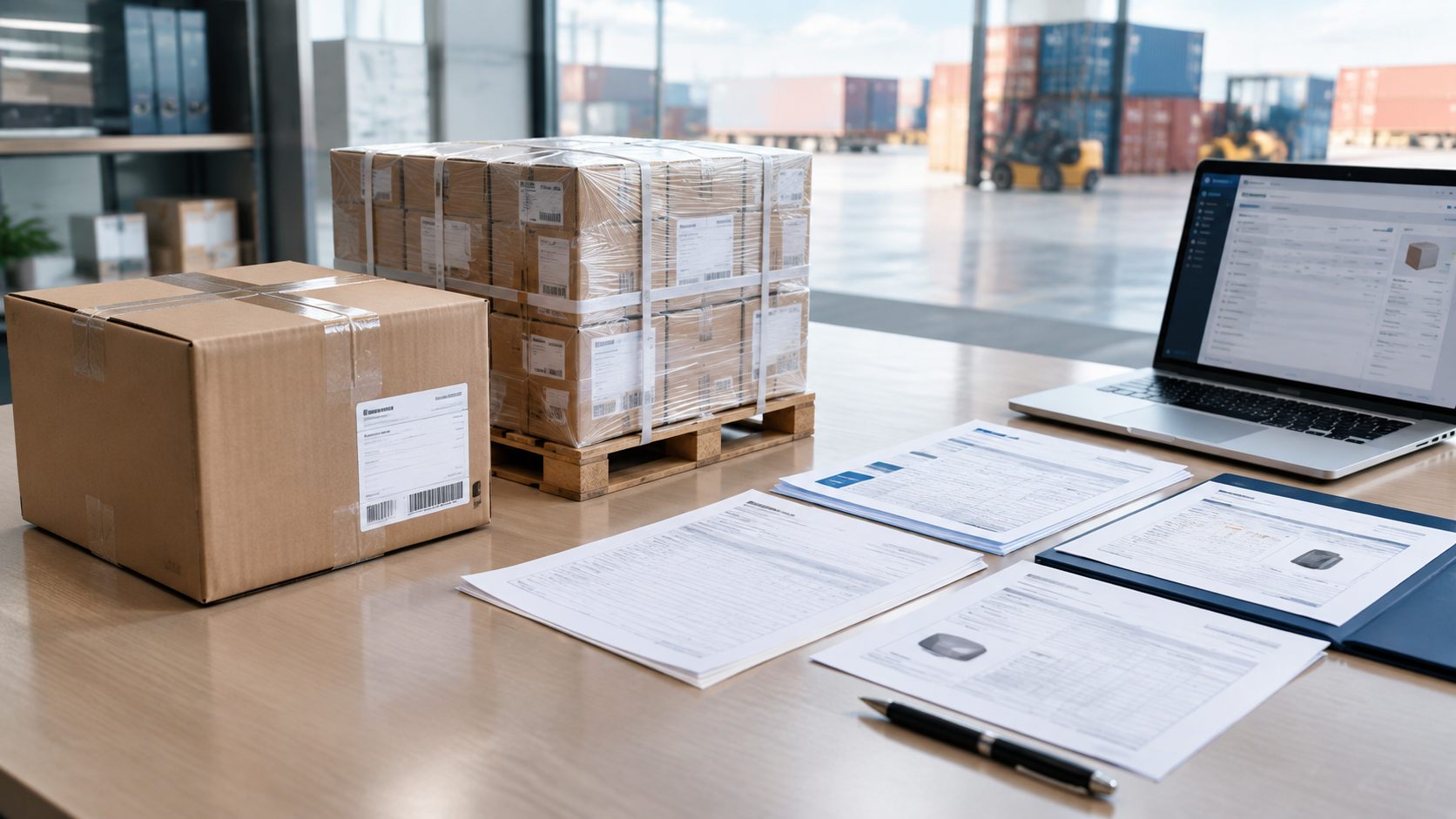
A usable document package should tell the same story across the invoice, packing information, transport record, product description, classification data, and importer records. The key risk is not simply a missing paper. It is a mismatch that makes one document describe a different product, quantity, value, origin, or consignee than another.

| Record | Purpose | Owner | Verification point | Common mismatch |
|---|---|---|---|---|
| Commercial invoice | Shows seller, buyer, goods, price, and transaction context | Exporter and importer | Product lines and values match the sale | Vague description or inconsistent value |
| Packing information | Shows packages, quantities, weights, and dimensions | Exporter | Physical cargo agrees with the document | Package count or weight differs |
| Transport record | Identifies the movement and transport parties | Carrier or forwarder | Consignee and shipment references agree | Wrong consignee or reference |
| Classification data | Supports tariff and statistical treatment | Importer with broker or specialist review | Code reflects actual product facts | Code selected from a similar but different product |
| Product compliance records | Supports agency or product-specific review when relevant | Importer and product owner | Required supporting material exists for the exact product | Generic certificate used for a different model or composition |
Product classification should be reviewed from actual characteristics such as material, function, composition, technical specifications, and condition. The current U.S. tariff schedule changes through published revisions, so the importer or broker should verify the applicable HTS provision at the time of entry rather than relying on an old code copied from a prior shipment. The current schedule also contains U.S.-Japan tariff provisions for certain products, so any claimed preferential treatment should be checked against the exact tariff provision and product facts.
Questions about import duties from Japan to USA should therefore begin with the product and classification record, not with a destination-country percentage. The same principle applies to questions about import tax from Japan to USA: identify which charge is actually being discussed, determine whether it is tied to the customs entry or another transaction or service cost, and have the appropriate party confirm the current treatment.
When the commodity falls under another U.S. agency’s authority, the importer should identify that agency before the cargo moves. CBP notes that importers may need to address requirements involving agencies such as FDA, EPA, DOT, CPSC, FTC, or USDA depending on the merchandise. The relevant agency and product-specific requirements should be confirmed from the actual commodity rather than from a generic list.
For commercial loads, sea freight services may involve vessel-specific information and container documentation, while air freight services depend on accurate air transport records and concise cargo descriptions. Time-sensitive small shipments may instead use express shipping, where the courier’s operating process and importer information should still be confirmed before dispatch.
Use a Six-Step Preparation Workflow
The workflow should move from facts to review, then from review to filing and delivery coordination. Each handoff should happen only after the preceding information is internally consistent.
Collect the Shipment Facts
Record seller, buyer, importer, product names, materials, quantities, package count, dimensions, weight, transaction type, origin facts, cargo-ready status, and final delivery instructions. Separate facts supplied by the Japanese exporter from assumptions made by the U.S. buyer.
Build the Product Record
Give the importer or broker enough technical detail to assess classification and product-specific controls. Use product specifications, composition, model information, intended use, photographs when useful, and manufacturing facts rather than a generic commercial description.
Match the Transport File
Confirm that the invoice, packing information, and transport record identify the same parties, cargo, quantities, and references. For ocean cargo, assign the advance filing handoff before the shipment proceeds to loading or vessel movement.
Review the U.S. Entry Data
Have the importer or authorized broker review the classification, customs value information, country-of-origin facts, importer details, and any product-specific agency information. Resolve questions before the documents move into formal filing or carrier coordination.
Coordinate the Import Handoff
Confirm who will receive broker questions, approve corrections, provide missing records, and handle authority communications. Keep the broker’s filing role separate from CBP’s authority to review, examine, hold, or otherwise decide on the merchandise.
Release the Delivery Instructions
Once the responsible parties confirm the shipment is ready for the next operating handoff, give the carrier, forwarder, warehouse, or delivery provider the correct consignee, destination, receiving hours, references, and service scope. Avoid treating customs review and final delivery as one responsibility.
For shipments where one provider coordinates several transport legs, multimodal freight services can be considered after the importer-side preparation is defined. The customs record still needs to reflect the actual transaction and movement structure, even when more than one transport mode is used.
Control Cost, Timing, and Delivery Exposure
Preparation failures can create exposure even when the freight itself is moving normally. The practical issue is that a document or decision gap can interrupt the handoff between the authority, broker, carrier, terminal, warehouse, or final delivery provider.
| Exposure | Typical trigger | Verification action |
|---|---|---|
| Storage or holding | Entry or receiving information is incomplete | Confirm the broker and destination contact before arrival |
| Inspection-related delay | Product details or records need clarification | Make technical and commercial records available for review |
| Document correction | Invoice, packing, or transport data conflicts | Reconcile all records before filing or handoff |
| Rebooking or rehandling | Cargo cannot move under the planned operating scope | Confirm mode, consignee, and service responsibilities in advance |
| Delivery failure | Address, warehouse rules, or receiving instructions do not match | Validate the final delivery details before release to transport |
A quote that includes transport does not automatically establish who handles brokerage, duties and taxes, customs communication, or final delivery. Review the service scope line by line. A door-to-door movement can involve several separate parties and handoffs, so door-to-door shipping scope should be matched to the actual origin pickup, import coordination, and destination delivery responsibilities.
Where duties and taxes are presented as part of an all-in service, ask for a clear statement of who is acting for the importer, who pays the authority-assessed amounts, who handles brokerage, and where the delivery provider’s responsibility begins and ends. Do not treat a duties-and-taxes-included quotation as proof that the legal import role has been transferred.
Prevent the Common Preparation Failures
Most operational problems can be traced to a mismatch between commercial facts and the records used for entry or delivery. The earlier that mismatch is found, the more options the operating team has to correct it without disrupting the next handoff.
Match the product description. Use a description that identifies what the product is, what it is made of, and how it is used instead of a broad label that could describe several tariff categories.
Confirm the importer role. Put the actual U.S. importer and the broker relationship on the same page before the shipment is tendered.
Review product-specific controls. Identify whether the product could require another agency’s review, then verify the applicable requirement for that exact merchandise.
Reconcile origin facts. Do not assume that a Japanese shipping address automatically determines every origin or marking question.
Define the delivery scope. Separate customs handling, terminal or warehouse movement, inland transport, and final receiving responsibilities.
Common mistake: A buyer copies the tariff code, value, product description, and consignee details from an earlier shipment because the new order looks similar. That shortcut can fail when the model, composition, transaction terms, packaging, origin facts, or importer structure has changed. Reconfirm the current shipment instead of treating a previous entry as permanent proof.
Risk alert: If the commercial invoice, packing information, and transport record identify different quantities, values, product names, or consignees, stop the handoff and reconcile the records before asking the broker or carrier to proceed.
Disclosure: This page provides general logistics and customs-preparation information and may mention freight services available through this website. Actual requirements, authority decisions, duties, taxes, document obligations, service scope, and delivery conditions depend on the shipment, jurisdiction, commodity, transaction, and current rules. Confirm current requirements before booking or filing.
Make the Preparation Decision Before Requesting Review
Before asking a broker, forwarder, carrier, or other service provider to review a Japan-to-U.S. shipment, prepare a single shipment file that contains the commercial facts, product facts, importer information, transport plan, and delivery instructions. The practical default is to resolve identity and ownership first, product and classification second, transport and filing handoffs third, and destination delivery scope last. That sequence helps prevent one party from making assumptions that belong to another.
Rule 1: Confirm the U.S. importer and transaction structure before relying on a quoted service scope.
Rule 2: Give the reviewer product information detailed enough to support classification and any relevant agency checks.
Rule 3: Make invoice, packing, transport, and product data describe the same shipment.
Rule 4: Treat duties, taxes, brokerage charges, transport charges, and final delivery charges as separate cost questions until the service scope is documented.
Rule 5: Ask for current authority verification whenever the product, tariff treatment, agency requirements, or import role creates uncertainty.
The changing fact is the shipment itself. A repeat buyer may use the same supplier but still change product composition, packaging, valuation, quantity, entry structure, or delivery destination. Those changes can require a new review even when the route remains shipping from Japan to United States.
For sellers using a fulfillment model, Amazon FBA shipping coordination should be treated as a separate operating scope from customs preparation. The importer, entry party, destination facility, labeling requirements, appointment rules, and delivery instructions should be confirmed for the specific inventory program rather than inferred from the phrase “FBA.”
Where the service is structured to include duties and taxes within the commercial scope, DDP shipping coordination should only be discussed after the named parties, import role, brokerage arrangement, and charge responsibility have been explicitly confirmed. A transport quotation should not be used to assume that every import responsibility has moved to the logistics provider.
For high-value or project cargo, the preparation file may also need a more detailed delivery and handling plan. Project cargo shipping coordination is relevant where cargo dimensions, handling equipment, route restrictions, installation sequence, or receiving-site constraints change the operational handoff.
Insurance is another separate decision. Cargo insurance information can be reviewed when the shipment requires a separate risk-transfer arrangement, but insurance coverage does not determine customs classification, duty treatment, agency requirements, or the authority’s import decision.
Illustrative example (not a customer case): A U.S. buyer purchases a finished electronic product from a Japanese supplier, but the product contains components manufactured in several countries. The buyer gives the broker the purchase invoice, packing details, technical specifications, importer information, and manufacturing facts. The broker reviews the proposed classification and asks for clarification about the product’s main function and composition. The buyer confirms the facts with the supplier before filing. The example ends at the verification handoff; it does not assume a tariff result, authority decision, or delivery outcome.
Primary references: Current tariff classification and applicable U.S. tariff provisions should be checked in the 2026 Harmonized Tariff Schedule. Importer and broker roles are described by U.S. Customs and Border Protection guidance. The United States also publishes the U.S.-Japan Trade Agreement text; any applicable product treatment should be confirmed against the current tariff schedule and shipment facts.
Key Takeaways
Confirm the U.S. importer and transaction structure before treating the transport quotation as a complete import plan.
Build classification and product review from the actual merchandise, materials, function, and manufacturing facts.
Keep the exporter, importer, broker, forwarder, carrier, warehouse, and authority roles distinct.
Make invoice, packing, transport, origin, and product information agree before filing or transport handoff.
Verify current tariff and product-specific requirements rather than copying treatment from an earlier shipment.
Define brokerage, duties and taxes, transport, and final delivery responsibilities separately before booking.
FAQ
What should I confirm first when shipping from Japan to the United States?
Start with the U.S. importer, transaction type, exact product, manufacturing facts, and final delivery location. Those facts establish the operating scope for broker review and determine which additional product or transport information may be relevant. Do not begin with a generic document list because the required preparation can change with the commodity and transaction.
Does shipping from Japan automatically make the goods Japanese origin?
No. The location from which cargo ships and the legal country-of-origin analysis are separate questions. The importer should provide the actual manufacturing and processing history when more than one country is involved. The applicable origin and marking treatment should then be confirmed using the facts of the specific merchandise.
Who is responsible for U.S. customs entry information?
The importer and authorized customs broker should establish the entry workflow together. A broker can prepare and file customs documentation when authorized, but the importer should understand the information being submitted and retain responsibility appropriate to its importer role. A freight forwarder may coordinate transport and documents without becoming the authority that decides the import outcome.
How should I check import duties from Japan to USA?
Start with the exact product classification, customs value information, origin facts, and the applicable provisions in the current U.S. tariff schedule. Japan-specific tariff treatment may exist for certain products, but the relevant treatment must be matched to the actual tariff provision and shipment facts. A prior shipment’s duty treatment should not be assumed to apply automatically.
Do ocean shipments from Japan need different preparation?
Yes. Ocean cargo uses vessel transport records and can involve advance cargo-security information that does not apply in the same way to air or express shipments. The importer, broker, and forwarder should decide who supplies, reviews, and transmits the relevant information before the cargo moves so that no party assumes another party has completed the handoff.
Can a freight forwarder handle customs and delivery together?
A logistics provider may coordinate several services, but the commercial scope should identify which party handles brokerage, which party acts for the importer, who pays authority-assessed amounts, and who controls final delivery. Transport coordination and government decision-making remain separate functions. A combined quotation should therefore be reviewed as a set of defined responsibilities rather than one broad promise.
What documents should I send to a U.S. customs broker?
Provide the commercial invoice, packing information, transport record, importer details, product specifications, classification support, manufacturing or origin facts, and any product-specific certificates or agency information already available. The exact package depends on the commodity and entry structure. The strongest submission is internally consistent and gives the broker enough detail to identify what still needs verification.
What is the practical preparation point before booking shipping from Japan to USA?
Before booking, make sure the importer, product identity, commercial value, package data, origin facts, transport mode, customs handoff, and final delivery scope are known. Then ask the responsible broker or service provider to review the current shipment facts. This approach reduces avoidable corrections because the review starts from the actual transaction rather than from a generic route assumption.
Disclaimer: This page is general operational guidance, not legal, customs, tax, insurance, product-safety, regulatory, classification, or licensing advice. Requirements, authority decisions, responsibilities, charges, and deadlines depend on the controlling documents, product, jurisdiction, transaction, service terms, and current official guidance. Confirm current shipment requirements with the relevant authority, licensed broker, carrier, or qualified adviser.