
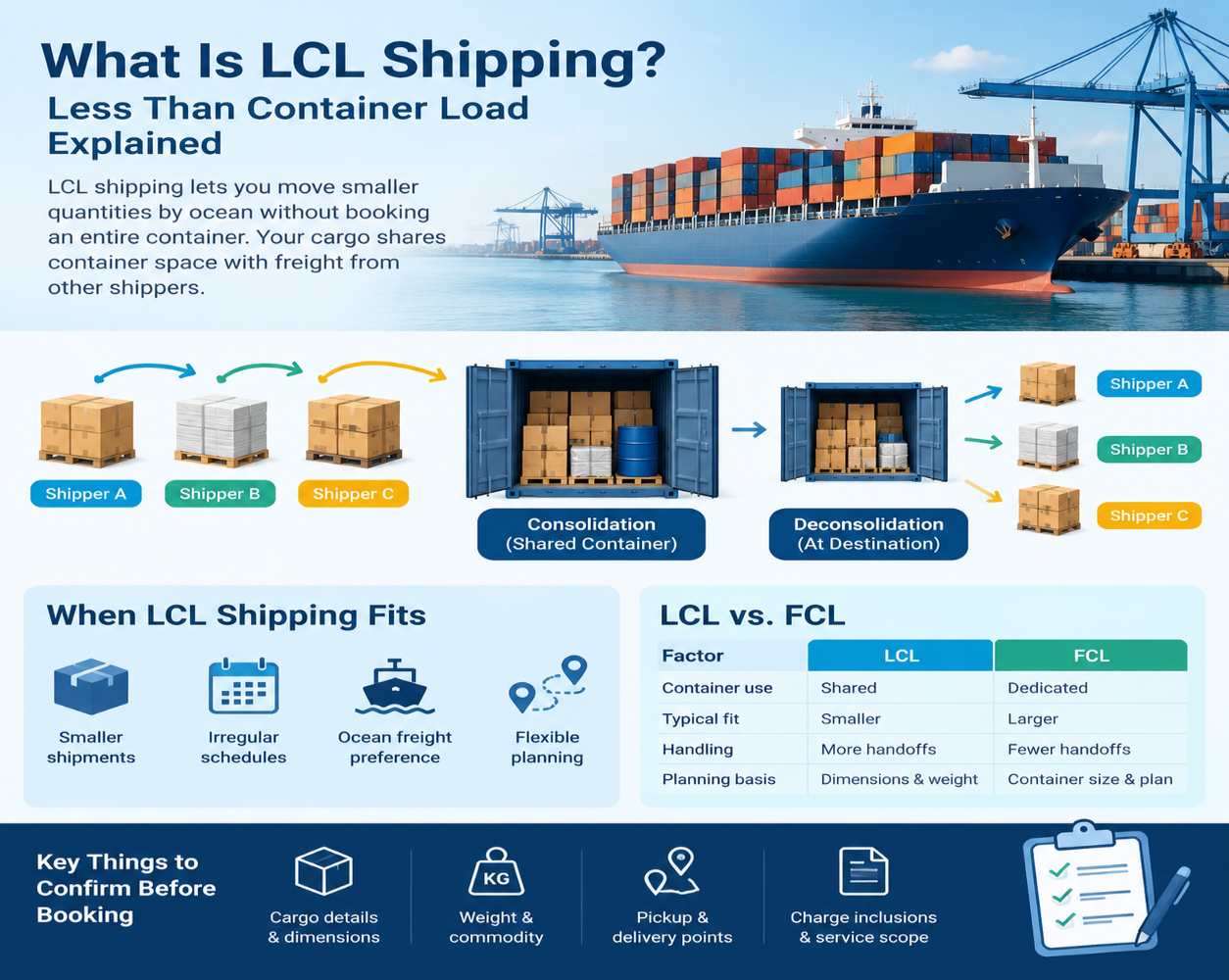
LCL shipping, or Less Than Container Load shipping, is an ocean freight method for cargo that does not require an entire container. Instead of booking a full container exclusively for one shipment, the cargo shares container space with freight from other shippers. The shipment is consolidated before the ocean leg and separated again at a destination facility.
The main operational benefit is that you can move smaller quantities by ocean without waiting until you have enough cargo to fill a container. The trade-off is additional handling and coordination at consolidation and deconsolidation points. Before booking LCL, check the cargo’s dimensions, weight, packaging, origin and destination handling requirements, and the actual service scope included in the quote.
How LCL Shipping Works
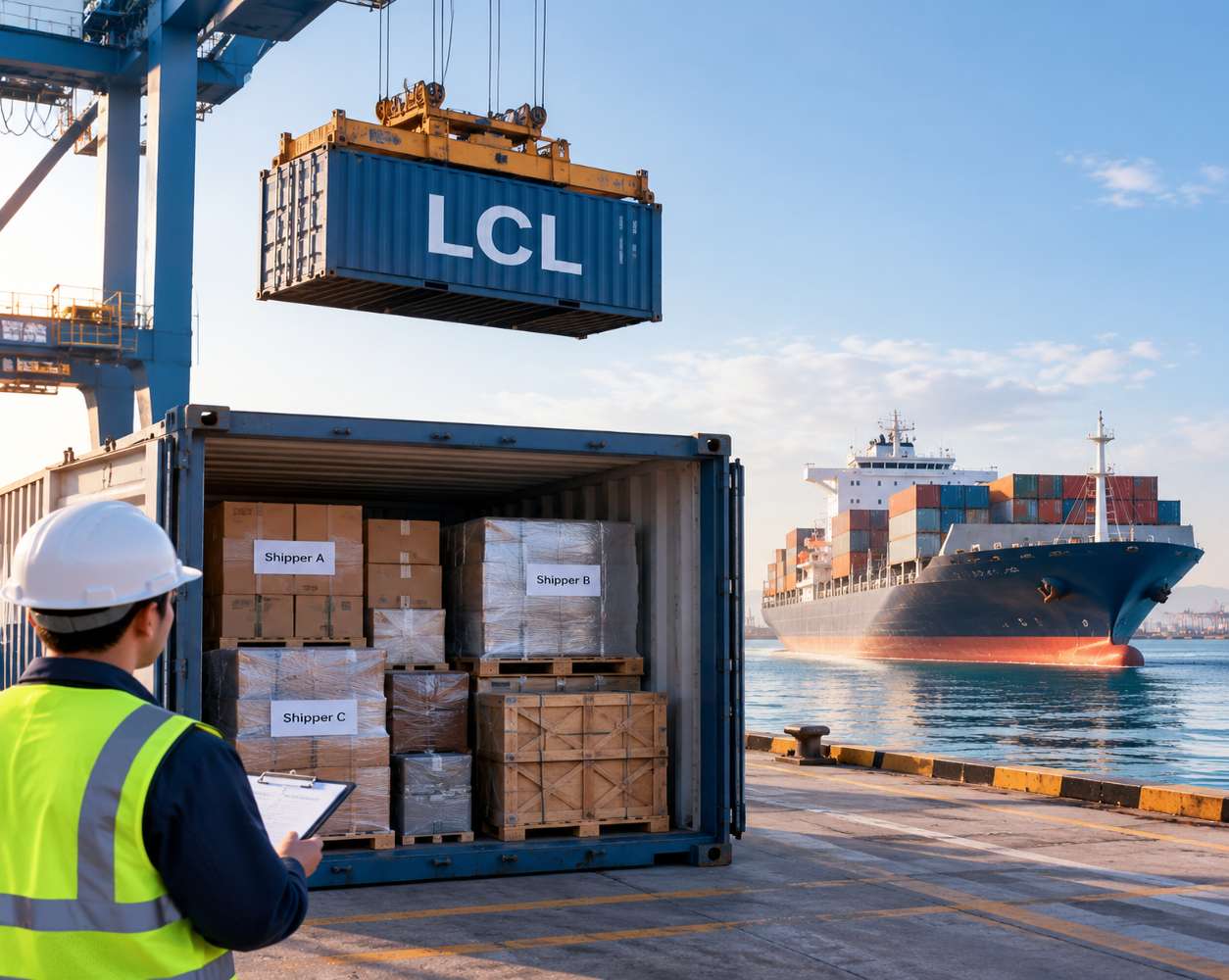
LCL follows a shared-container flow rather than a shipper-dedicated container flow. The forwarder or consolidator receives cargo from multiple shipments, groups compatible freight into a container, arranges the ocean movement, and coordinates deconsolidation after arrival. The exact facilities and handoffs depend on the route and service arrangement.
Prepare the shipment
The shipper provides cargo dimensions, weight, package count, commodity information, pickup details, and destination information. Accurate measurements matter because LCL pricing and handling depend on shipment characteristics.
Deliver or collect the cargo
The cargo moves to the designated consolidation point either through shipper-arranged delivery or an included pickup service. The booking should clearly identify who handles this movement.
Consolidate the cargo
The consolidation facility combines the shipment with other compatible LCL cargo inside a container. Packaging must be suitable for additional handling and shared-container movement.
Move the container by ocean
The consolidated container enters the ocean freight network. Transit time depends on the route, service pattern, transshipment requirements, port operations, and other shipment conditions.
Deconsolidate at destination
After the container reaches the destination consolidation facility, the individual shipments are separated. The cargo then follows the agreed destination delivery or collection process.
Operational check: Ask where the cargo will be received, consolidated, deconsolidated, and released. These handoffs help determine which charges, documents, and parties are involved.
When LCL Shipping Fits
LCL is generally useful when the shipment is too small to justify dedicating an entire container and the shipper wants an ocean freight option. The right choice still depends on cargo characteristics, handling requirements, timing, and the complete landed logistics cost rather than cargo volume alone.
Smaller shipments: LCL can suit cargo that occupies only part of a container and does not require exclusive equipment.
Irregular shipping schedules: Shippers can move available cargo without necessarily accumulating enough freight to fill a full container.
Ocean freight preference: LCL can provide an ocean option when air freight is not the preferred solution for the shipment’s cost or cargo requirements.
Flexible shipment planning: Smaller consignments can enter the logistics network without reserving an entire container for one shipper.
LCL can be a weaker fit when cargo is unusually fragile, difficult to handle, poorly packaged, highly time-sensitive, or large enough that a full-container arrangement becomes operationally or economically more appropriate. The forwarder should confirm whether the cargo is suitable for the proposed consolidation service.
LCL vs. FCL: The Practical Difference
The central difference is equipment use. LCL shares container capacity among multiple shipments, while FCL assigns a container to one shipper’s cargo. The better option depends on the shipment’s size, handling needs, timing, and total charges rather than on a simple assumption that one mode is always cheaper.
| Factor | LCL | FCL |
|---|---|---|
| Container use | Shared among shipments | Dedicated to one shipment |
| Typical fit | Smaller consignments | Larger consignments |
| Cargo handling | More consolidation handoffs | Fewer shared-cargo handoffs |
| Planning basis | Cargo dimensions and weight | Container size and loading plan |
| Main check | Complete LCL charge scope | Complete container cost and capacity |
For a small shipment, LCL may avoid paying for unused container capacity. As shipment volume increases, however, the comparison should shift from the ocean freight line item to the complete cost of each option, including origin handling, destination handling, documentation, delivery, and other applicable charges.
What Affects LCL Shipping Cost?
An LCL quote is normally driven by shipment characteristics and the service scope rather than by ocean freight alone. Cargo volume and weight are important inputs, but the chargeable basis and applicable handling structure should be confirmed with the provider for the specific shipment.
Origin and destination handling can materially affect the total. Other variables may include pickup or delivery requirements, consolidation and deconsolidation services, documentation, customs-related services, terminal or warehouse handling, and cargo characteristics that require special treatment. A low headline ocean rate does not necessarily represent the lowest total logistics cost.
When comparing quotes, use the same shipment dimensions, weight, commodity information, origin and destination points, and service scope. Ask the provider to identify which charges are included and which are payable separately before comparing the totals.
What to Confirm Before Booking
The booking information should describe the cargo accurately enough for the provider to determine routing, handling, and applicable charges. The shipper is responsible for supplying accurate shipment information and confirming any cargo-specific requirements with the relevant service provider.
| Input | Purpose | Verify With |
|---|---|---|
| Package dimensions | Supports space and handling assessment | Shipper / forwarder |
| Total weight | Supports shipment and charge assessment | Shipper / forwarder |
| Commodity details | Identifies handling and documentation needs | Shipper / provider |
| Pickup and delivery points | Defines service scope | Forwarder / carrier |
| Charge inclusions | Enables meaningful quote comparison | Forwarder |
Packaging deserves particular attention because LCL cargo may be handled alongside other shipments during consolidation and deconsolidation. Packaging should protect the goods against the handling and transport conditions reasonably expected for the shipment. Cargo with unusual dimensions, weight, fragility, or handling requirements should be disclosed before booking.
If the shipment also requires broader ocean freight coordination, review the scope of the provider’s sea freight service rather than assuming that an LCL quote covers every stage from origin pickup through final delivery.
Common LCL Mistakes and Operator Checks
Common mistake: Comparing LCL quotations only by the quoted ocean freight amount. A shipper can reach the wrong conclusion when one quote includes handling or delivery elements that another quote prices separately. Compare equivalent scope and request a clear list of included and excluded charges.
Operator check: Reconfirm the final package count, dimensions, weight, cargo description, pickup location, delivery location, and requested service scope before the shipment enters consolidation. Changes after booking may affect handling or pricing and should be addressed with the provider.
Another common problem occurs when the cargo’s actual dimensions differ from the information used for the quote. The shipper should measure the cargo in its final shipping configuration, including packaging, rather than relying on product dimensions alone.
Disclosure: This guide provides general logistics information and may refer to services relevant to the topic. Carrier terms, customs requirements, fees, service coverage, and operating conditions can change. Confirm current requirements and responsibilities before acting.
Key Takeaways
- LCL shipping shares container capacity among multiple shipments.
- The method can fit smaller ocean freight consignments that do not require an entire container.
- Additional consolidation and deconsolidation handling is an important part of the operational model.
- Compare complete service scope and applicable charges rather than relying on the headline ocean freight rate.
- Use final packaged dimensions, accurate weight, cargo details, and clearly defined pickup and delivery points when requesting a quote.
- Confirm cargo suitability and current service conditions before booking.
LCL Shipping FAQ
What does LCL shipping mean?
LCL means Less Than Container Load. It is an ocean freight arrangement in which cargo from multiple shippers shares container capacity instead of one shipper using the entire container.
When should I use LCL shipping?
LCL can fit a smaller shipment that does not require an entire container. The decision should also consider cargo characteristics, handling needs, timing, and the complete cost of the available shipping options.
Is LCL cheaper than FCL?
It can be more suitable for smaller shipments because the shipper does not need to dedicate an entire container to the cargo. The actual cost comparison depends on shipment size, route, handling, service scope, and applicable charges.
How is LCL cargo charged?
The applicable charge basis depends on the shipment and service arrangement. Cargo dimensions, weight, origin and destination handling, and other service requirements can affect the total. Confirm the charge basis and inclusions with the provider.
Does LCL cargo require special packaging?
LCL cargo should be packaged for the handling and transport conditions expected during consolidation and deconsolidation. Fragile, oversized, unusually heavy, or otherwise difficult cargo should be disclosed before booking.
What information is needed for an LCL quote?
Useful inputs include the number of packages, final packaged dimensions, total weight, commodity description, pickup location, delivery location, and required service scope. Accurate information helps the provider assess the shipment correctly.
Does LCL shipping include customs clearance?
Not necessarily. Customs clearance depends on the service arrangement and the parties responsible for the shipment’s customs formalities. Confirm whether clearance is included and who is responsible before booking.
What is the main limitation of LCL shipping?
The shared-container model introduces consolidation and deconsolidation handoffs. This can make the process more handling-intensive than a dedicated-container arrangement, so cargo suitability, packaging, timing, and service scope should be checked before booking.
Disclaimer: This article is general informational guidance, not a binding quotation, legal opinion, customs ruling, carrier commitment, or delivery guarantee. Requirements, charges, service terms, and responsibilities can vary by route, cargo, contract, carrier, and jurisdiction. Confirm current requirements before booking or filing.