
China to Poland Freight Quote Costs: What the Quote Desk Needs to Confirm First
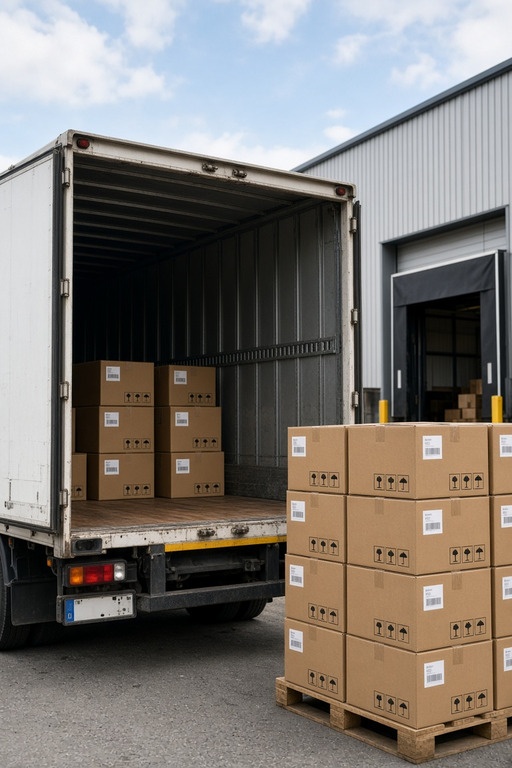
China to Poland Freight Quote Costs: What the Quote Desk Needs to Confirm First
What Makes a China-to-Poland Freight Quote Usable
When you request a freight quote from China to Poland, the number on the page is only the starting point. The real question is whether that quote covers the shipment you actually need to move and whether it will still hold when the pickup date, delivery point, or cargo weight changes. A quote that looks competitive on a rate sheet can become unusable once you add origin handling, destination delivery, or a service level that does not match the cargo readiness at the factory.
From the forwarding desk perspective, comparing China to Poland freight quote costs requires more than scanning a price list. You need to align the cargo description, the pickup and delivery scope, the carrier or service level, and the handoff points where responsibility shifts. Without that alignment, two quotes are not comparable even if they quote the same route and mode. This page walks through what the forwarder checks first, what gaps typically derail a quote, and what you should confirm before you approve or rebook.
We are not quoting current rates or promising a lowest price. The goal is practical: give you the questions and the scope items that turn an incomplete quote into a workable shipping decision for your specific China-to-Poland move.
Scope Alignment: What the Forwarding Desk Checks First
Before the desk can validate a quote, they run through a standard set of scope items. These items are not administrative formalities; each one changes the cost, the carrier options, or the handoff responsibility. Missing or vague information is the most common reason a quoted cost does not survive the booking stage.
The order below reflects how a forwarding desk reviews a China-to-Poland shipment. Use it as your own checklist when you request or compare a quote.
| Scope Item | What to Confirm | Effect on Quote |
|---|---|---|
| Cargo-ready date | Earliest date cargo is packed and available at origin | Determines booking window, vessel/flight schedule, and consolidation timing |
| Pickup point and origin handling | Factory address, dock access, loading equipment needed | Affects trucking cost, handling charges, and potential accessorials |
| Main route and service level | Sea, air, rail; direct or transshipment; carrier preference | Drives the primary freight charge and transit-time window |
| Cargo or weight basis | FCL or LCL, total weight and dimensions, any hazardous or oversized cargo | Changes chargeable weight, container type, and handling restrictions |
| Destination handoff | Port, airport, or rail terminal; who clears and who takes delivery | Determines destination charges, broker coordination, and delivery scope |
| Delivery point or appointment | Final warehouse address, delivery window, and receiver availability | Adds or removes final-mile cost and delivery-appointment risk |
| Quote date and validity | When quoted and how long the rate and space hold | Carrier rates and space availability change; stale quotes are not actionable |
If any of these fields are blank or marked “TBD” on your quote, the forwarding desk cannot give you a firm cost. They can give you an estimate, but the estimate will carry conditions. The practical next step is to supply the missing detail and ask the forwarder to revise the quote based on that specific scope.
Quote desk check: Before you ask for a revised China-to-Poland freight quote, confirm the cargo-ready date with the shipper and the delivery appointment with the receiver. These two dates set the outer bounds for every mode and carrier option. A quote that does not reflect both dates is a planning tool, not a booking document.
Charge Basis and Operational Cost Drivers for China-to-Poland
A China-to-Poland freight quote can be built on several different charge bases, and each one changes how the final cost responds to your shipment details. Understanding the charge basis helps you ask better questions when the quote arrives and helps you spot mismatches before you approve.
Container basis (FCL). When you book a full container, the freight charge is quoted per container, typically for a 20-foot or 40-foot unit. The cost does not change with the weight inside the container as long as you stay under the carrier’s weight limit. What changes the cost is the container type (standard, reefer, open-top), the port pair, and the carrier’s space position on a given sailing. If your cargo volume fills a container, the question is whether the carrier can confirm equipment and space on the sailing you need.
Volume or weight-measure basis (LCL). For less-than-container-load cargo, the charge is based on the greater of actual weight or volumetric weight (often called chargeable weight). The conversion factor varies by carrier and trade lane, but the principle is consistent: dense, heavy cargo pays by weight; light, bulky cargo pays by volume. The chargeable weight determines the freight cost and also affects the consolidation schedule, because the forwarder needs to match your cargo with other shipments to build a container.
Air and express chargeable weight. For air freight from China to Poland, the chargeable weight is also the greater of actual weight and dimensional weight. The divisor used for dimensional weight is typically set by the carrier or the IATA standard, and it can vary between express and standard air services. If your cargo is palletized or has irregular dimensions, the chargeable weight can be significantly higher than the scale weight. Confirm the divisor and the measurement method with the forwarder before you compare air options.
Pickup, handling, and delivery access. Beyond the main freight charge, the cost of getting the cargo from the factory to the port and from the destination terminal to the final delivery point can vary widely. Accessorial charges apply when the pickup or delivery location has limited dock access, requires a liftgate, or has appointment windows that fall outside standard hours. These charges are not part of the line-haul freight rate and must be quoted separately based on the actual addresses and times.
Each of these charge bases requires a specific input to be confirmed. For a China-to-Poland freight quote, the forwarder needs to know whether you are shipping FCL or LCL, the total weight and dimensions, the pickup and delivery addresses, and the cargo-ready date. If any of these inputs are missing, the charge basis cannot be applied correctly, and the quote will have to be revised once the information is provided.
Confirm the charge basis: Ask the forwarder to state the charge basis on the quote, not just the total amount. For LCL, confirm the chargeable weight and the conversion factor used. For FCL, confirm the container type and whether the rate includes chassis, port charges, and documentation. The charge basis tells you what changes when your shipment changes.
What the Quote Includes and Who Is Responsible
A freight quote can include different bundles of services, and the line items that appear on the quote are not always the same from one forwarder to another. Some quotes include origin pickup and documentation; others stop at the port of loading. Some include destination customs clearance and delivery; others hand off at the destination terminal. The commercial consequence is that the same headline freight rate can represent very different scopes of work.
For a China-to-Poland shipment, map each quote line item to the operating handoff. This shows you what is included, what is excluded, and what still needs confirmation.
| Line Item | Handoff Point | Who Can Verify |
|---|---|---|
| Pickup / origin handling | Factory to origin terminal or port | Forwarder or local trucking provider |
| Main freight (sea/air/rail) | Origin port/airport to destination port/airport | Carrier or forwarder with carrier contract |
| Destination handling | Port/airport to destination terminal or warehouse | Destination agent or forwarder |
| Customs clearance (export and import) | Documentation submission and compliance checks | Customs broker or forwarder’s brokerage desk |
| Final delivery | Destination terminal to receiver’s address | Forwarder or local delivery provider |
| Accessorials | Liftgate, after-hours, appointment, or residential delivery | Forwarder with address and timing details |
| Storage and equipment return | Demurrage, detention, or container return | Forwarder or consignee, depending on terms |
The key operational question for each line item is: who performs the work, and who pays for it if something goes outside the quote assumptions? For a China-to-Poland move, the forwarder can confirm the origin and destination agents, the carrier’s terms for storage and equipment, and the specific documentation required. The buyer’s responsibility is to provide accurate cargo and delivery details so that the quote can be scoped correctly. Do not assume that a line item is included unless it appears explicitly on the quote or the forwarder has confirmed it in writing.
Note: A freight quote is tied to the cargo, handoffs, route, service level, timing, and destination work stated in it. Carrier and handling conditions can change. Align the scope first, then request confirmation for the specific shipment.
Freight Options That Fit Your Shipment
For China-to-Poland freight, the main modal choice is usually between sea, air, and rail. Each option changes the cost, the transit time, the handoff points, and the level of control you have over the delivery schedule. The best option depends on your cargo urgency, volume, value, and the receiver’s tolerance for schedule variability.
Sea freight (FCL and LCL). Sea freight is the most common choice for containerized cargo moving from China to Poland. The cost per unit is generally lower than air, but the transit time is longer and the schedule is driven by vessel rotations. FCL gives you control over the container and a fixed cost per container, while LCL gives you flexibility for smaller shipments at a chargeable-weight cost. Sea freight works well when you have a cargo-ready date that aligns with the vessel schedule and a receiver who can plan for the longer lead time. The trade-off is that you need to confirm the carrier’s space and equipment availability early, especially during peak seasons.
Air freight. Air freight from China to Poland is faster than sea or rail, but the cost is significantly higher on a per-kilo basis. It is the right fit when the cargo is time-sensitive, has a high value-to-weight ratio, or needs to meet a tight production or sales deadline. The operational trade-off is that air freight capacity is more constrained, and the chargeable weight calculation can make a bulky shipment much more expensive than its actual weight suggests. If you choose air, confirm the dimensional weight divisor and the carrier’s cut-off times at the origin airport.
Rail freight. Rail freight from China to Poland offers a middle option between sea and air. Transit times are faster than sea and slower than air, and the cost sits between the two modes. Rail is a good fit for cargo that needs a shorter transit time than sea but cannot justify the cost of air. The operational consideration is that rail schedules are less frequent than sea or air, and the route passes through multiple countries, which can introduce customs and documentation complexities. If you choose rail, confirm the transit time, the schedule, and the handoff points at each border crossing.
Door-to-door versus port-to-port. A door-to-door service includes pickup at the origin address and delivery to the final destination address, plus all intermediate handling and documentation. A port-to-port service covers only the main leg between the origin and destination ports. The cost difference between the two reflects the scope of pickup, destination handling, and final delivery. If you have a well-established logistics setup at both ends, port-to-port may give you more control and lower cost. If you want a single point of contact and a simple invoice, door-to-door reduces the coordination burden.
Do not declare a universal cheaper option. The right option depends on your cargo, timing, and the receiver’s requirements. For each option, ask the forwarder to quote the same scope of work so that you can compare the cost basis and the handoff points directly.
Common mistake: Comparing a port-to-port sea quote with a door-to-door air quote and concluding that one mode is cheaper. The two quotes cover different scopes, and the comparison is not valid. Always align the scope before you compare the cost.
Where China-to-Poland Quotes Go Wrong and What Can Grow
Even a well-prepared quote can become unreliable if key details change or were never confirmed. The most common operational gaps that affect China-to-Poland freight quotes are practical and preventable. Each gap creates a cost exposure or a delay that the quote did not account for.
Incomplete or changed pickup address. If the pickup address on the quote does not match the actual factory location, the trucking cost and the pickup window can change. A factory in a suburban industrial zone is different from a facility with limited access hours or dock constraints. Confirm the full address, the loading conditions, and the contact person before the quote is finalized.
Cargo-ready date drift. If the cargo-ready date moves later than the date used for the quote, the forwarder may need to rebook onto a different vessel or flight. Rebooking can trigger additional charges, especially if the original space was confirmed on a specific sailing. The quote is only valid for the cargo-ready date stated; if the date changes, request a revised quote.
Chargeable-weight mismatch. For LCL and air shipments, the chargeable weight is the greater of actual weight and volumetric weight. If the dimensions on the quote are different from the actual packed dimensions, the chargeable weight and the freight cost will increase. Confirm the dimensions with the packer before the cargo is delivered to the forwarder.
Missing destination handling or delivery. A quote that stops at the destination port or airport does not include the cost of customs clearance, terminal handling, or final delivery. The destination charges can add a significant amount to the total cost, and they are often not known until the cargo arrives. Ask the forwarder to provide an estimate of destination charges or to include them in the quote if possible.
Delivery access and appointment failure. If the final delivery address requires a liftgate, has limited truck access, or requires an appointment that cannot be met, the delivery will be delayed and additional charges will apply. Confirm the delivery conditions with the receiver and provide them to the forwarder before the cargo departs.
Storage and equipment return costs. If the container is not returned to the carrier within the free time allowed, detention and demurrage charges can accumulate quickly. These charges are not part of the original freight rate and are the responsibility of the party controlling the container. Confirm the free-time allowance and the process for container return with the forwarder.
Risk alert: The most common cost increase on China-to-Poland sea freight comes from detention and demurrage charges when the container is held at the destination beyond the free time. Confirm the free-time allowance and the process for returning the empty container before the cargo arrives.
Common mistake: Assuming that the forwarder will handle all destination charges without a separate quote. Destination handling, storage, and delivery are separate from the main freight charge unless the quote explicitly includes them. Ask for a destination charge estimate or a door-to-door quote to avoid surprises.
Quote-Request Handoff: What to Provide and Who Confirms It
When you request a China-to-Poland freight quote, the forwarder needs a specific set of inputs to give you a firm quote. Group these inputs by the party who supplies or confirms them. This approach ensures that each piece of information is accurate and that the quote reflects the actual shipment scope.
Cargo and packing: Provide the total weight, the dimensions of each piece or package, the type of cargo, and any special handling requirements (hazardous, temperature-controlled, oversized). Confirm the packaging method and whether pallets or crates are used. The forwarder needs this to determine the chargeable weight, the container type, and any restrictions that apply.
Cargo-ready and pickup: Provide the date when the cargo will be packed and ready for pickup. Confirm the pickup address, the loading conditions, and the contact person. The forwarder uses this to schedule the trucking, to secure carrier space, and to confirm the pickup window. If the date or address changes, the quote must be revised.
Route and service level: State your preferred mode (sea, air, rail) and whether you need direct service or are open to transshipment. Confirm the service level, such as standard, expedited, or priority handling. The forwarder uses this to select the carrier and to match the service to your transit-time requirement.
Delivery address or appointment: Provide the final delivery address, the contact person, and the required delivery window. Confirm whether the delivery location has dock access, liftgate requirements, or other access restrictions. The forwarder uses this to quote the final-mile delivery and to identify any accessorial charges that may apply.
Special handling or restrictions: Inform the forwarder of any special cargo characteristics, such as hazardous materials, temperature control, or oversized dimensions. Provide any documentation that supports the handling requirements, such as safety data sheets or packing certificates. The forwarder needs this to confirm that the carrier can accept the cargo and to apply the correct handling charges.
For each input, explain why it changes the quote and what the forwarding desk can verify next. The forwarder can confirm the trucking rate based on the pickup address, the carrier space based on the cargo-ready date, and the delivery cost based on the destination address. If an input is missing, the forwarder will quote with assumptions, and those assumptions may not match your actual shipment.
Quote desk check: When you submit your quote request, include all the inputs listed above. A complete request gets a complete quote. A partial request gets an estimate with conditions, and the conditions often change the final cost. Provide the full scope first, then ask the forwarder to confirm the quote based on that scope.
Conditional Forwarding Recommendation
For a China-to-Poland shipment, the practical default is to start with the mode that fits your cargo volume and urgency. If you have more than half a container of cargo and the receiver can accept a longer transit time, sea freight is the typical starting point because it offers the lowest cost per unit and a predictable schedule. If your cargo is urgent or has a high value-to-weight ratio, air freight becomes the default. Rail freight is the middle option when sea is too slow and air is too expensive.
The fact that changes this default is the receiver’s delivery deadline. If the deadline is fixed and the sea schedule cannot meet it, you move to air or rail regardless of the cost difference. If the deadline is flexible, you can optimize for cost by choosing the slowest mode that still meets the required delivery window. For each mode, ask the forwarder to quote the same scope of work, including origin pickup, main freight, destination handling, and final delivery. Then compare the total cost and the transit time side by side.
Illustrative example (not a customer case): A shipper has two pallets of machinery parts, total weight 1,200 kg, dimensions 2.5 cubic meters. The cargo-ready date is ten days from now. The receiver in Poland needs delivery within 25 days. Sea freight could meet the deadline if the vessel schedule aligns, but the receiver requests a faster option. The forwarder quotes sea, air, and rail with the same origin pickup and destination delivery scope. The air quote is significantly higher than sea, while the rail quote is between the two. The shipper chooses rail because it meets the deadline at a cost that is acceptable for the shipment.
The recommendation is conditional: request the full scope quote for the mode that seems most likely to fit, then ask for alternative modes only if the cost or the transit time does not align. The forwarder can provide the mode-specific details, including the schedule, the charge basis, and the handoff points. Confirm the quote validity period and the conditions under which the rate would change. If the cargo-ready date, the weight, or the delivery address changes, request a revised quote before you approve the booking.
Key Takeaways
Scope first, then compare. A China-to-Poland freight quote is only comparable when the cargo, pickup, route, delivery, and included work are aligned. Do not compare quotes that cover different scopes.
Confirm the charge basis. Know whether the quote is based on container, volume, weight, or chargeable weight. The charge basis tells you how the cost responds to changes in your shipment.
Identify who performs each handoff. Map each quote line item to an operating handoff and confirm the party responsible. This prevents gaps in coverage and cost surprises.
Provide complete inputs. A full quote request includes cargo details, cargo-ready date, pickup and delivery addresses, and special handling needs. Incomplete requests produce quotes with assumptions that may not hold.
Watch for destination charges. Destination handling, customs clearance, storage, and delivery are often separate from the main freight charge. Confirm these costs or request a door-to-door quote.
Re-quote when a fact changes. If the cargo-ready date, weight, dimensions, or delivery address changes, the quote is no longer valid. Request a revised quote before you book.
FAQ: China-to-Poland Freight Quote Questions
Why do China-to-Poland freight quotes vary so much between forwarders?
Quotes vary because forwarders use different carriers, have different consolidation arrangements, and include different service scopes. Some quotes include pickup and delivery; others cover only the main freight leg. Align the scope and service level before you compare the headline numbers.
What is the difference between a port-to-port and a door-to-door quote?
A port-to-port quote covers the main leg from the origin port to the destination port. A door-to-door quote includes pickup at the origin address, all intermediate handling and documentation, and delivery to the final destination address. The door-to-door quote covers more work and typically costs more.
How does the cargo-ready date affect the freight quote?
The cargo-ready date determines the earliest pickup date and the sailing or flight that the forwarder can book. If the cargo-ready date moves later, the forwarder may need to rebook, which can change the rate and space availability. Quote the actual ready date to get a valid rate.
What is chargeable weight and why does it matter for LCL and air freight?
Chargeable weight is the greater of actual weight and volumetric weight. For LCL and air freight, the cost is based on chargeable weight, not actual weight. If your cargo is light but bulky, the chargeable weight will be higher than the scale weight, and the cost will increase accordingly.
Who pays for destination handling and customs clearance on a China-to-Poland shipment?
It depends on the scope of the quote. If the quote is door-to-door, the forwarder typically arranges and pays for destination handling and clearance as part of the service. If the quote is port-to-port, the consignee or the buyer usually arranges and pays for these services at the destination.
Can I change the delivery address after the cargo is booked?
Changing the delivery address after booking may be possible, but it will change the delivery cost and may cause delays. The forwarder needs to re-quote the final mile based on the new address. Confirm the delivery address before the cargo departs to avoid additional charges.
What happens if the cargo is held at the destination port beyond the free time?
If the container is not returned to the carrier within the free time allowed, detention and demurrage charges apply. These charges accumulate daily and can be significant. The party controlling the container is responsible for returning it on time and paying any excess charges.
How long is a China-to-Poland freight quote typically valid?
Quote validity varies by carrier and market conditions. Many forwarders provide a validity period of 7 to 14 days for sea freight and a shorter period for air freight. If you plan to book later, confirm the validity with the forwarder and request an updated quote if the validity has expired.
Disclaimer: This page is general quote-planning guidance, not a binding quotation or delivery commitment. Actual charges and handoffs depend on the cargo, route, timing, provider confirmation, and destination conditions. Where duties, customs, tax, insurance, or contract questions apply, confirm them with the relevant party before booking.