
China to Poland Sea vs Rail vs Air: Which Freight Mode Fits Your Shipment?
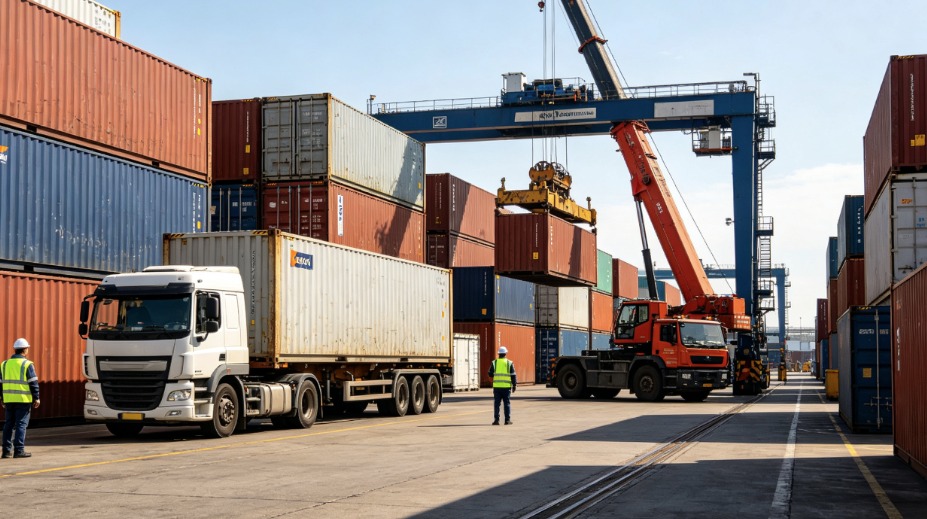
China to Poland Sea vs Rail vs Air: Which Freight Mode Fits Your Shipment?
Comparison Answer: Choose by Cargo Tolerance and Delivery Urgency
Select sea freight when your shipment is dense or bulky and the delivery window allows for a full ocean voyage with port handling at both ends. Choose rail freight when you need a midpoint between cost and speed, the cargo fits standard container loading, and the route through the Eurasian network keeps the shipment on a predictable schedule. Pick air freight when the delivery date is fixed, the cargo is light for its volume, and the premium transport cost fits the value or urgency of the goods. The fact most likely to change your answer is the cargo density: light, high-value goods often justify air, while heavy or oversized shipments generally move by sea unless the timeline rules out ocean transit.
This comparison assumes a full container load or consolidated shipment moving from a major Chinese origin to a Polish destination with standard documentation and customs clearance at both ends. The decision rests on how your cargo behaves in each mode, the service scope you require, and the handoff points you are willing to manage.
Fair Comparison Basis: Align Cargo, Scope, and Responsibilities
Before comparing the three modes, confirm that your shipment inputs match the same baseline. The choice between sea, rail, and air only becomes meaningful when you define the cargo, the delivery point, the service level, and who handles each step. Use this checklist to align your comparison.
| Factor | What to confirm |
|---|---|
| Cargo type and dimensions | Weight, volume, stackability, hazard classification, and special handling needs |
| Origin and destination | Specific Chinese pickup city and Polish delivery address or terminal |
| Service scope | Port-to-port, terminal-to-terminal, door-to-door, or a named delivery boundary |
| Timing and delivery deadline | Latest acceptable delivery date and whether the schedule is fixed or flexible |
| Quote inclusion | Which charges are included: main transport, handling, documentation, customs brokerage, and destination delivery |
| Customs and import role | Who files the import entry in Poland and who pays duties and taxes |
Field note: A quote that includes origin pickup, main transport, customs clearance, and final delivery covers a broader service scope than a terminal-to-terminal rate. Compare only quotes with identical delivery boundaries and responsibility assignments.
Option Profiles: Who Each Mode Serves Best
Each freight mode has a distinct operational profile that fits certain cargo types, delivery constraints, and buyer priorities. Read each profile to see which mode matches your shipment pattern.
Sea Freight: Bulk and Heavy Cargo with Flexible Timing
Buyer fit: Importers moving dense, heavy, or oversized goods where cost per container is the primary decision driver.
Operational flow: Container loading at origin, trucking to the port, vessel stowage, ocean transit, discharge at the destination port, customs clearance, and inland delivery.
Weak fit: High-value, time-sensitive, or fragile goods that require frequent temperature monitoring or fast inventory turns.
Select sea freight when your shipment fills a container or consolidates well and the delivery schedule accommodates the full ocean cycle. This mode works best for commodities, machinery, furniture, and other goods that tolerate longer handoff chains.
Rail Freight: Predictable Midrange Transit for Standard Container Loads
Buyer fit: Shippers who need faster delivery than sea but cannot justify air freight rates, with cargo that fits standard container dimensions.
Operational flow: Container loading, trucking to the rail terminal, train departure, border crossings, rail arrival at the destination terminal, customs clearance, and final truck delivery.
Weak fit: Heavy or bulky cargo that exceeds rail gauge or weight limits, or shipments that require precise temperature control throughout.
Choose rail freight when your cargo fits a standard container and the timeline sits between sea and air. Rail offers a consistent schedule with fewer handoffs than sea, but it depends on border crossing efficiency and terminal capacity at both ends.
Air Freight: High-Value, Time-Critical Cargo
Buyer fit: Importers of electronics, pharmaceuticals, spare parts, samples, or any cargo where delivery speed protects revenue or production schedules.
Operational flow: Origin pickup, trucking to the airport, cargo build-up, air transport, arrival at the destination airport, customs clearance, and final delivery.
Weak fit: Dense, heavy, or bulky shipments where the chargeable weight drives the cost beyond the cargo value.
Pick air freight when the delivery date is fixed and the cargo weight or volume remains within the limits that make air transport cost-effective relative to the goods’ value or the cost of delay.
Core Decision Matrix: Fit, Trade-Off, and Verification
The matrix below shows how sea, rail, and air compare on fit, weak spots, the main trade-off you face, and what you need to verify before booking.
| Option | Strong fit | Weak fit | Main trade-off | What to verify |
|---|---|---|---|---|
| Sea freight | Dense, bulky cargo; flexible delivery windows; full container loads | Time-sensitive goods; high-value inventory; urgent restocking | Lowest transport cost against the longest handoff chain | Port availability, vessel schedule, and destination deconsolidation time |
| Rail freight | Standard container cargo; midrange timeline; predictable border crossing | Cargo exceeding rail gauge; shipments needing frequent temperature control | Moderate cost and speed against border crossing uncertainty | Terminal capacity, gauge compatibility, and customs processing at each border |
| Air freight | Light, high-value, or urgent cargo; fixed delivery deadlines | Heavy, bulky shipments; cargo with low value-to-weight ratio | Fastest delivery against the highest transport charge | Airport capacity, build-up time, and destination customs clearance speed |
Field note: The “strong fit” and “weak fit” conditions depend on the specific cargo dimensions, weight, and handling requirements. Confirm these factors with your freight provider before applying the matrix to your shipment.
Cost and Quote-Scope Trade-Offs
Each freight mode has a distinct cost structure. The headline transport charge is only one part of the total shipment cost. The scope of the quote determines what you pay beyond the main carriage.
Sea freight charges are driven by container capacity, port handling, and the vessel operator’s schedule. Rail freight charges reflect terminal fees, border crossing documentation, and the train operator’s capacity. Air freight charges are based on chargeable weight, which combines the actual weight and the volumetric weight of the cargo.
The total shipment scope includes:
- Origin pickup and trucking to the terminal or port
- Export documentation and clearance
- Main transport by sea, rail, or air
- Destination customs brokerage and import clearance
- Inland delivery to the final Polish address
A quote that excludes destination handling, customs clearance, or inland delivery will appear lower but does not represent the full cost of moving the cargo to your door. Compare quotes only after you have aligned the included services.
Note: Freight rates and total shipment charges change with cargo details, route, service scope, carrier conditions, timing, destination handling, and applicable responsibilities. Compare current quotes only after their scope has been aligned.
Time, Handoffs, and Delivery Cycle
The total delivery cycle includes booking, origin pickup, export clearance, main transport, import clearance, and final delivery. The handoff points between each stage affect the overall timeline more than the main transport speed alone.
| Mode | Approximate total delivery cycle | Key handoff stages |
|---|---|---|
| Sea freight | Approximately 30 to 40 days from origin pickup to final delivery | Origin trucking, vessel loading, ocean transit, port discharge, customs clearance, inland delivery |
| Rail freight | Approximately 18 to 25 days from origin pickup to final delivery | Origin trucking, rail terminal loading, border crossings, destination terminal discharge, customs clearance, inland delivery |
| Air freight | Approximately 5 to 10 days from origin pickup to final delivery | Origin trucking, airport build-up, air transport, import customs clearance, final delivery |
Field note: The ranges shown are approximate and measure the total delivery cycle from origin pickup to final delivery. Actual transit times vary with carrier schedules, terminal congestion, customs processing, and border crossing conditions. Confirm the current schedule with your freight provider before booking.
Sea freight involves the most handoffs: origin trucking, port operations, vessel loading and discharge, and often multiple port stops. Rail freight has fewer handoffs but includes border crossings that can add variability. Air freight has the fewest handoffs but requires strict adherence to airport cut-off times and customs clearance windows.
Responsibility and Service Boundaries
Each freight mode moves cargo through a different chain of custody. The responsible party for each stage depends on the service scope you select and the delivery boundary you agree to with your provider.
| Service scope | Origin handling | Main transport | Customs clearance | Destination delivery |
|---|---|---|---|---|
| Terminal-to-terminal | Buyer arranges origin transport and export clearance | Provider or carrier moves cargo to destination terminal | Buyer or broker handles import clearance | Buyer arranges pickup from destination terminal |
| Door-to-door | Provider manages origin pickup and export clearance | Provider or carrier moves cargo to destination | Provider or broker handles import clearance | Provider arranges final delivery to the destination address |
Confirm who holds responsibility for each stage before you book. A terminal-to-terminal arrangement leaves the origin and destination handling to you, while a door-to-door arrangement shifts those responsibilities to the provider. The choice affects your operational involvement, not just the quoted charge.
Selection Rules and Quote Preparation
Apply these practical rules to choose between sea, rail, and air freight for your China-to-Poland shipment. Each rule states an operating condition that points to one mode.
- Default to sea freight when your cargo fills a container, the delivery date is flexible, and you want the lowest transport charge per container. Confirm the vessel schedule and port capacity at both ends before booking.
- Choose rail freight when the cargo fits standard container dimensions and you need delivery faster than sea but cannot justify air freight charges. Verify the terminal schedule and border crossing arrangements for the route.
- Select air freight when the delivery date is fixed and the cargo weight-to-volume ratio keeps the chargeable weight within a range that matches the cargo value or the cost of delay. Confirm airport capacity and customs clearance speed.
- Reevaluate when the cargo density changes. A shift from dense to light cargo may make air freight more competitive on cost, while a shift from light to dense cargo may push the decision toward sea or rail.
- Align the service scope before comparing quotes. A door-to-door quote includes origin and destination handling; a terminal-to-terminal quote does not. Compare only quotes with identical boundaries.
- Confirm the cargo dimensions and handling requirements before applying any selection rule. Oversized, hazardous, or temperature-sensitive cargo may restrict your mode choices regardless of cost or speed.
Illustrative example (not a customer case): A buyer moving a standard container of consumer goods from a Chinese factory to a Polish warehouse. The delivery date is flexible, and the cargo is dense but not oversized. Sea freight fits the shipment profile. If the buyer confirms a vessel schedule that aligns with the warehouse receiving window, sea freight is the selection. If the same buyer receives a restocking order with a fixed delivery date, rail freight becomes the next option. If the cargo value increases or the delivery deadline shortens, air freight enters the comparison.
Mistakes and Controls
Common mistake: Comparing quotes that include different service scopes. A terminal-to-terminal sea freight quote appears lower than a door-to-door air freight quote, but the sea quote excludes origin pickup, export clearance, import clearance, and final delivery. Align the scope before you compare the charges.
Common mistake: Choosing air freight based solely on the main transport speed without accounting for origin build-up time and destination customs clearance. The total delivery cycle includes all handoffs, not just the flight time.
Common mistake: Misclassifying the cargo category or hazard status. Incorrect classification can delay clearance, trigger additional inspections, or prevent the cargo from moving by a particular mode. Confirm the classification with your freight provider before booking.
Disclosure: This page provides general freight comparison guidance and may mention freight services available through this website. Actual cost, timing, service scope, customs requirements, carrier conditions, and destination handling depend on the shipment and can change. Confirm the current shipment plan before booking.
Key Takeaways
Sea freight fits dense, bulky cargo with flexible timing. The transport charge per container is the lowest, but the handoff chain is the longest.
Rail freight fits standard container cargo that needs midrange delivery speed. The route through the Eurasian network offers a consistent schedule with fewer handoffs than sea.
Air freight fits light, high-value, or urgent cargo. The total delivery cycle is the shortest, but the chargeable weight drives the cost.
Align the service scope before comparing quotes. Terminal-to-terminal and door-to-door scopes include different responsibilities and charges.
Confirm cargo dimensions and handling requirements before selecting a mode. Oversized, hazardous, or temperature-sensitive cargo may restrict your options.
FAQ
Which freight mode from China to Poland is the cheapest?
Sea freight generally has the lowest transport charge per container for dense, bulky cargo. Rail freight typically sits between sea and air on cost. Air freight has the highest charge, driven by chargeable weight. The actual cheapest option depends on the cargo dimensions, weight, and the service scope you require.
How do I choose between sea and rail freight?
Choose sea freight when the delivery date is flexible and the cargo fills a container. Choose rail freight when you need faster delivery than sea and the cargo fits standard container dimensions. Rail offers a midrange timeline with a different handoff structure than sea.
When does air freight make sense for China-to-Poland shipments?
Air freight makes sense when the delivery date is fixed, the cargo is light for its volume, and the value of the goods or the cost of delay justifies the transport charge. Air freight is also suitable for urgent spare parts, samples, and high-value electronics.
What is the difference between terminal-to-terminal and door-to-door service?
Terminal-to-terminal service covers the main transport from the origin terminal to the destination terminal. Door-to-door service includes origin pickup, export clearance, main transport, import clearance, and final delivery. Door-to-door shifts more responsibility to the provider.
How does cargo density affect the mode choice?
Cargo density, measured as weight per cubic meter, affects the chargeable weight for air freight and the container utilization for sea and rail. Light, bulky cargo may make air freight less cost-effective, while dense, heavy cargo generally favors sea or rail.
What should I check before comparing freight quotes?
Confirm that each quote includes the same service scope: origin handling, main transport, customs clearance, and destination delivery. Also verify the cargo dimensions, weight, and any special handling requirements. Compare only quotes with identical delivery boundaries.
What factors affect the transit time for each mode?
Transit times for sea freight depend on vessel schedules, port congestion, and discharge operations. Rail freight transit times depend on terminal capacity and border crossing efficiency. Air freight transit times depend on airport capacity and customs clearance speed. All modes include origin pickup and final delivery handoffs.
Who handles customs clearance for China-to-Poland shipments?
Customs clearance is handled either by the buyer’s broker or by the freight provider, depending on the service scope. Door-to-door arrangements typically include customs brokerage, while terminal-to-terminal arrangements leave import clearance to the buyer.
Disclaimer: Freight comparison information on this page is general planning guidance, not a binding quotation, carrier commitment, customs ruling, legal opinion, or delivery guarantee. Suitability depends on cargo, route, scope, timing, provider terms, and destination conditions. Confirm current shipment requirements before booking.