
How to plan a China-to-Australia shipment
Shipping from China to Australia is best planned from the cargo-ready date through final delivery, not from the vessel departure alone. For a routine commercial order, start by confirming the required arrival window, what the goods are, how they are packed, and where in Australia they must be delivered. Sea freight is often the starting point for containerized replenishment, but the final choice depends on the route, service scope, and whether border and delivery work fit the deadline.
Before booking, the buyer and supplier should align the commercial invoice, packing list, consignee and importer details, and any product or packaging controls. A shipping container to Australia quote is useful only when it states the origin pickup, export handling, ocean leg, destination charges, customs scope, and last-mile delivery included. The transit estimates below use Shanghai-to-Sydney as a specific planning example, not a substitute for a quote based on the actual factory location, Australian delivery address, and selected carrier service.
Which shipments need extra planning before importing from China to Australia?
Shipment suitability depends on cargo readiness, handling requirements, and delivery access as much as the international route. Full container load (FCL) shipping assigns a container to one shipment. Less than container load (LCL) shipping combines compatible cargo in shared container space and adds consolidation and deconsolidation handoffs. The quote should match the physical shipment and actual receiving location rather than a supplier city and a generic Australian destination.
Use the cargo profile to identify the information that must be settled before booking.
| Shipment condition | Operational consideration | Decision before booking |
|---|---|---|
| Containerized commercial cargo | Loading access, container selection, and unloading equipment can affect the plan. | Confirm loading location, cargo dimensions, and destination access. |
| Smaller or consolidated cargo | Shared handling requires accurate package data and suitable protective packaging. | Check warehouse receiving arrangements and consolidation requirements. |
| Time-sensitive replenishment | The warehouse receipt date matters more than vessel arrival alone. | Work backward from the required receiving date and confirm the delivery scope. |
| Goods with uncertain import conditions | Product composition, intended use, and packaging can affect border requirements. | Obtain a product-specific compliance review before cargo collection. |
The destination decision should identify the actual Australian delivery address, the party receiving the goods, and any restrictions on truck access, unloading, or warehouse appointments. A port or terminal near the destination region does not automatically provide a complete delivery service.
Operational trigger: If the sales agreement does not clearly identify who arranges Australian import clearance and pays assessed import charges, pause the booking. The buyer and seller should agree who supplies product and valuation data, instructs the broker, pays the relevant charges, and accepts delivery.
Which freight service fits your cargo and route?
For regular commercial cargo with a manageable replenishment window, start by evaluating sea freight from China to Australia. Confirm whether the shipment needs FCL or LCL handling, identify the export and destination gateways, and specify whether the quoted service begins at the supplier or at an origin terminal.
When delayed stock would disrupt a production line or committed delivery, request an air freight option against the same cargo details and delivery scope. For small parcels, samples, and documents, express shipping is worth assessing when the carrier accepts the goods and the service fits the delivery requirement. Confirm whether the offered transit estimate covers only the airport or carrier movement or includes clearance and final delivery.
Origin and destination geography also affect the service plan. If the supplier is inland, or the Australian delivery address is far from the arrival terminal, ask for a multimodal freight arrangement that identifies the separate transport legs and handoffs. Do not assume that an ocean booking includes inland pickup or final-mile trucking.
Cargo that exceeds standard container dimensions, requires specialist lifting, or cannot be handled through ordinary container equipment needs a separate feasibility review. Request a project cargo assessment before committing to packaging, loading, or an arrival plan. Restricted, battery-powered, temperature-sensitive, or otherwise specialized goods also require carrier acceptance and handling requirements to be confirmed before the service is selected.
Regardless of the mode, establish the actual origin, arrival gateway, and delivery point first. A service description should identify where the forwarder’s responsibility begins, which parties perform each handoff, and where the quoted transport scope ends.
How long does the Shanghai-to-Sydney sea route take?
The figures below apply to a specific Shanghai-to-Sydney FCL planning example. They are approximate estimates for cargo that is ready for pickup, not vessel commitments or guarantees. The origin and destination must match the actual shipment before the figures are used for inventory or delivery planning.
| Transit stage | Planning range | What the range covers |
|---|---|---|
| Main carriage | Approximately 15–20 days | Ocean transport between Shanghai and Sydney. |
| Origin and destination operations | Approximately 7–10 days combined | Pickup and export handling, destination release coordination, and final delivery outside the ocean leg. |
| Overall door-to-door planning cycle | Approximately 22–30 days | The combined planning window from cargo readiness through delivery, using the two allowances above. |
The main-carriage range is consistent with a widened planning allowance around published service information for this lane. Check Maersk’s China-to-Australia service information and obtain the selected carrier’s current schedule before booking. Actual transit can change with the service pattern, vessel departure, route deviations, port handling, and missed connections.
The combined door-to-door window adds the surrounding operations to the ocean allowance; it does not include supplier production time. Cargo that requires additional documentation, inspection, treatment, storage, or special delivery arrangements may need more time. LCL shipments also require their own consolidation and deconsolidation planning, so the FCL estimate should not be reused for an LCL booking. Ask the forwarder to confirm milestones for the actual factory location, Australian delivery address, and service scope.
What should a China-to-Australia freight quote include?
Compare quotations only after the shipment details, route, service level, and delivery boundary match. A low headline freight charge is not a meaningful comparison if one offer covers terminal-to-terminal movement and another covers pickup through delivery. Request a written breakdown that distinguishes transport charges, service fees, customs work, taxes, and charges that depend on the final delivery conditions.
| Charge or service stage | What to verify | Question for the forwarder |
|---|---|---|
| Origin pickup and export | Supplier collection, origin handling, and export-clearance arrangements. | Does the quotation start at the supplier or an origin terminal? |
| Main freight | Carrier service, route, loading format, and stated transport-document scope. | Which service and route does the offer cover? |
| Destination handling | Terminal handling, release coordination, and any consolidation-related services. | Which destination charges are itemized, and which remain unquoted? |
| Customs and import charges | Broker service, entry work, duties, taxes, and product-specific requirements. | Which party supplies the entry information and pays assessed charges? |
| Final delivery | Delivery address, unloading needs, appointment requirements, and accessorial services. | Does the offer cover the actual receiving point and its access conditions? |
FCL quotations generally use the assigned container and agreed service scope as the commercial basis. LCL quotations depend on the chargeable shipment basis; where a tariff compares weight and volume, the greater chargeable quantity under that tariff applies. Confirm the calculation method, minimum charges, package dimensions, and any measurement adjustments with the quoting provider. Do not assume that two offers use the same basis.
Review the quotation’s currency, validity, included services, exclusions, and method for handling unplanned storage or delivery requirements. Treat destination charges as quotation-specific rather than assuming they are standard inclusions or exclusions. Ask the provider to identify government duties and taxes separately from freight and brokerage charges so the landed-cost estimate is understandable.
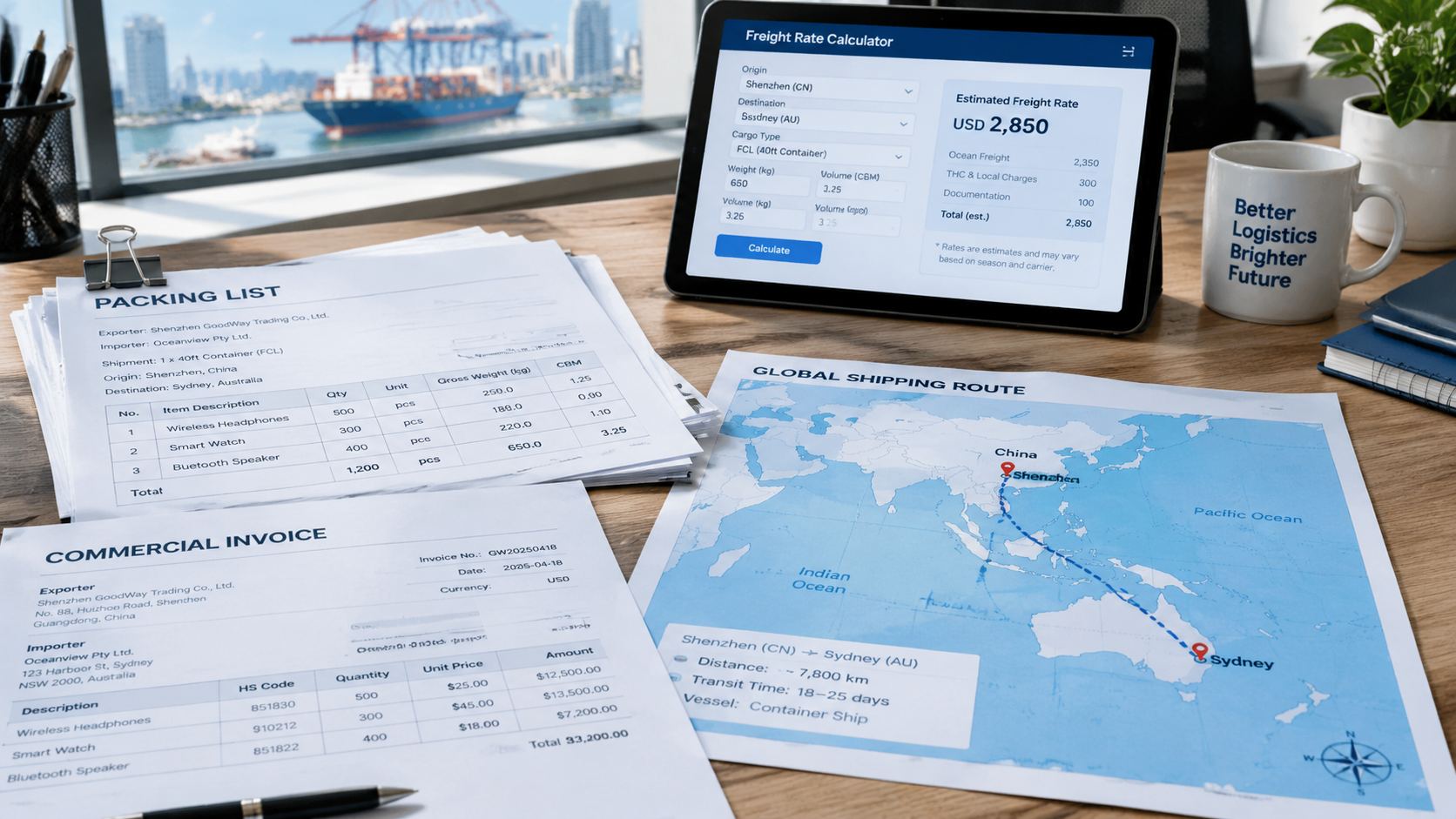
Where seller-managed delivery is intended, review the scope of DDP shipping and confirm in writing how import entry, duty and tax payment, customs coordination, and final delivery will be handled. Verify which party supplies importer information and which charges or special services remain outside the quotation. A named delivery arrangement should match the commercial agreement and actual shipment responsibilities.
A door-to-door shipping service should identify both the pickup and delivery addresses, with each handoff and included charge stated clearly. It should not be treated as evidence that every accessorial service or government charge is covered.
Note: Freight rates change with cargo details, route, carrier capacity, fuel costs, seasonal demand, service scope, and destination charges. Request a current quote for the specific shipment.
Which documents and handoffs must be confirmed?
Assign an owner to each checkpoint before cargo leaves the supplier. The shipment should progress only when the responsible party has supplied the required information and the next party has confirmed that it can proceed.
Request Quote
The buyer sends a precise goods description, package count, dimensions, weights, cargo-ready date, pickup and delivery addresses, and consignee information. The forwarder confirms the proposed service scope and identifies missing product or handling details before issuing the final quotation.
Cargo Pickup
The supplier confirms that the goods are packed, marked, and available for collection. The pickup team checks package counts, loading access, and any special handling instructions. Solid-wood packaging and cargo cleanliness should be reviewed against the applicable Australian biosecurity conditions before dispatch.
Export Customs Clearance
The exporter supplies accurate commercial and shipment data and the documents required for export. The designated export broker or filing party checks the declaration details and any applicable permits or controls. The supplier and buyer should resolve differences in goods description, quantity, or value before the cargo advances.
International Transportation
The forwarder confirms the booking, service route, cargo handoff, and document instructions. The carrier issues the master bill of lading for ocean freight, while the forwarder issues its own house bill of lading when that document is part of the service. The parties review draft transport details before issuance.
Destination Customs Clearance
The Australian importer supplies the information needed for the import entry and coordinates with its broker. Product classification, valuation, origin support, and applicable product or biosecurity conditions must be checked for the actual goods. Use the Australian Government’s BICON import-condition system to check the relevant biosecurity requirements before shipment.
Final Delivery
The forwarder or delivery operator verifies release status and confirms the receiving appointment, vehicle access, unloading arrangements, and delivery contact. The consignee ensures staff and equipment are available to receive the cargo. For container delivery, the parties should also confirm the agreed unloading and empty-container return arrangements.
Import documentation can vary with the product and the transaction. When needed, a customs brokerage service can support entry preparation and document coordination, but the importer and supplier must still provide accurate information and confirm product-specific requirements with the appropriate broker or authority.
How can importers prevent delays and avoidable charges?
Most preventable shipping problems begin with incomplete cargo data, unclear responsibility, or a handoff that has not been confirmed. Ask suppliers to check piece counts, package dimensions, goods descriptions, marks, and declared values before releasing the shipment. Send corrections to the forwarder before transport documents and customs declarations are finalized.
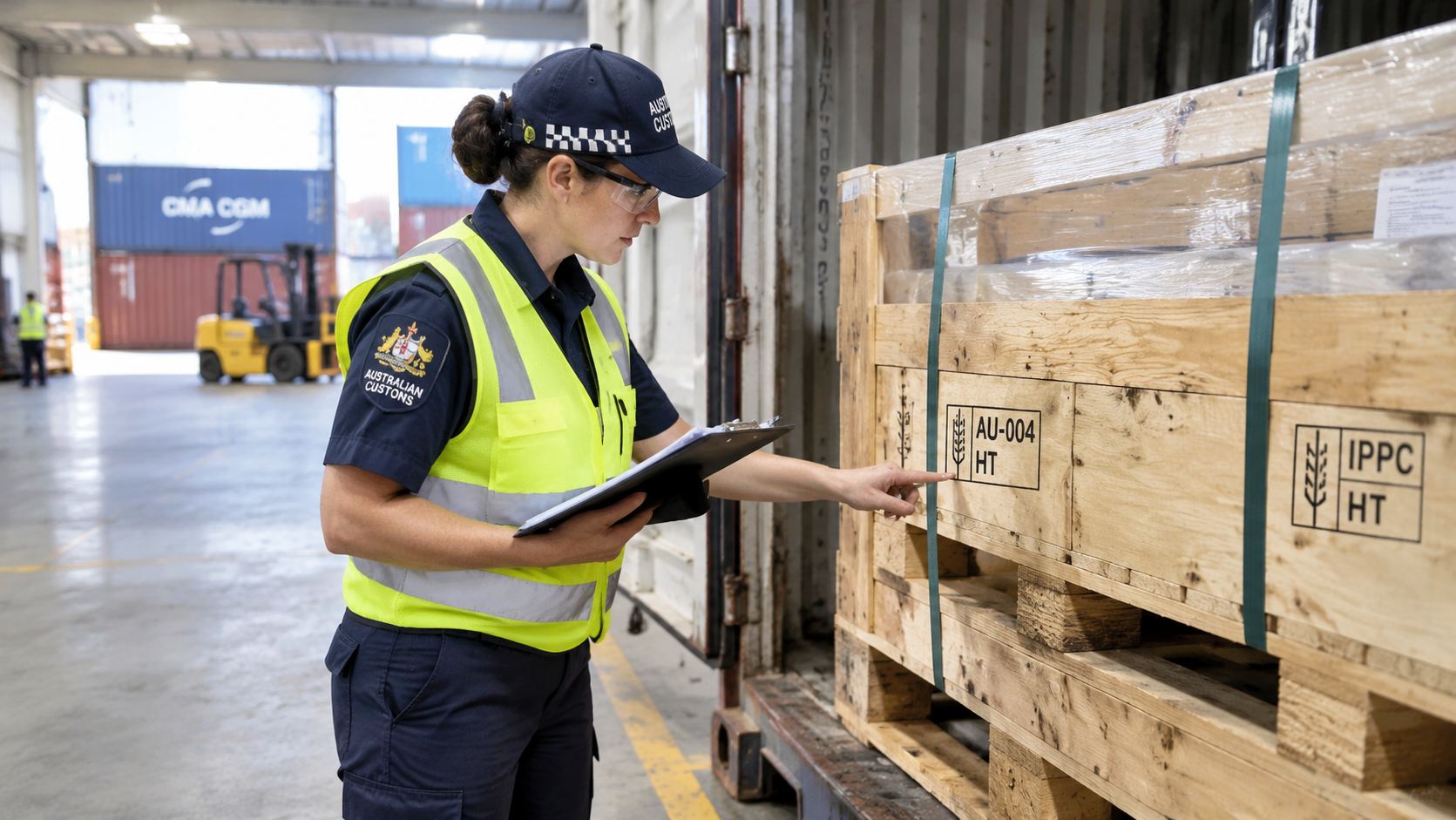
Australian biosecurity controls are a material planning consideration. Soil, plant matter, animal-derived material, and packaging can affect the import review, depending on the goods and their condition. Timber packaging may need to meet specific treatment, marking, or documentation conditions. Confirm the requirements for the actual product and packaging rather than relying on a general assurance from the supplier.
Packaging should reflect the planned handling process. Protect goods against movement, moisture, abrasion, and repeated loading operations. The packer should secure cargo appropriately, apply consistent shipping marks, and record any handling limits. Before loading, inspect the container and remove visible contamination. Retain photographs and packing records to help resolve discrepancies or support a damage review.
Shipment insurance is a separate decision from selecting the carrier. Review the declared cargo value, the journey and handling scope, the risks covered, applicable exclusions, and how claims evidence must be retained. A cargo insurance option should be assessed against the buyer’s exposure and the proposed policy terms rather than assumed to follow automatically from the freight booking.
Common mistake: Treating a supplier’s estimated carton dimensions or generic goods description as final. Actual cargo measurements and accurate item details affect equipment planning, the freight basis, document accuracy, and the import review. Obtain verified details before the forwarder finalizes the booking and documents.
If the goods or packaging may be subject to import controls and the required conditions have not been confirmed, hold cargo release for collection until the importer or broker has checked the applicable requirements. Sending uncertain goods into the transport chain can create avoidable inspection, treatment, storage, or return arrangements.
Disclosure: This page provides general route-planning information and may mention freight services available through this website. Transit times, freight costs, customs requirements, carrier schedules, and destination conditions can change. Confirm the current shipment plan before booking.
How should you prepare a shipment-specific quote request?
For routine commercial replenishment with a flexible receiving window, use sea freight as the practical starting point when the goods and route are suitable. The decision should change when the required arrival date cannot accommodate the full transport and clearance cycle, the goods need specialist handling, or the intended delivery address changes the feasibility of the plan.
Before requesting a final quotation, assemble the shipment facts that let the forwarder compare workable services and identify missing information.
- Supplier name and exact cargo pickup address, plus the cargo-ready date.
- Australian consignee, importer details, delivery address, and warehouse receiving restrictions.
- Accurate goods descriptions, materials, intended use, and any available product specifications.
- Package count, dimensions, weights, total cargo volume, and loading or unloading requirements.
- Commercial invoice and packing-list information, with applicable origin or compliance documents when available.
- Required delivery window, preferred service scope, and any agreed division of import-clearance and payment responsibilities.
Ask the forwarder to return a written recommendation with the proposed route, transport scope, estimated milestones, quote inclusions and exclusions, customs handoffs, and destination delivery assumptions. The quote should identify unresolved conditions and state what information is still needed to confirm the booking. This makes the operational trade-offs visible before the supplier releases the goods.
Illustrative example (not a customer case): A retailer replenishes boxed, non-sensitive fixtures for an Australian distribution point with a flexible receiving window and an identified importer. The standard ocean plan fits because the delivery requirement can accommodate the route’s routine handoffs. If a fixed product launch replaces that flexible window and a late arrival would disrupt the launch, the team should reassess the transport plan before cargo is released.
Key Takeaways
- Base the shipping decision on cargo readiness, the delivery requirement, and the actual origin and destination.
- Compare quotations only when their transport routes, service scopes, and charge bases align.
- Agree who provides import information, coordinates clearance, pays assessed charges, and receives the goods.
- Check product and packaging conditions before collection when Australian import controls may apply.
- Confirm transport-document details, delivery access, and the full route plan before authorizing shipment.
FAQ
Can I combine goods from multiple suppliers into one shipment?
Consolidation may be possible when the goods are compatible and the suppliers can provide accurate package details and workable cargo-ready dates. The forwarder should confirm the receiving warehouse, consolidation cutoffs, handling requirements, and document arrangements before collection. Goods with different controls or special handling needs may require separate planning even when they share an Australian destination.
Can I send a sample separately from a larger order?
Yes, a sample can be arranged as a separate shipment when its transport and import requirements are suitable. Describe the goods accurately and ensure the declared value and commercial purpose reflect the actual transaction. Tell the broker if the larger order will arrive separately, so the parties can check whether the two shipments need coordinated supporting information.
What should I do if the product’s tariff classification is uncertain?
Provide a detailed description, material composition, intended use, and available technical specifications to the Australian importer or broker. Avoid relying on a supplier’s generic category or copying a code from an unrelated product. The broker should review the available information and confirm the appropriate classification approach before the import declaration is finalized.
Who should be named as the consignee?
The consignee details should match the receiving arrangements and the agreed transaction documents. Confirm which entity will receive the goods and which party will coordinate import entry and related information with the broker. Resolve naming differences among the invoice, booking instructions, and transport documents early, rather than waiting until the shipment is approaching arrival.
Can I request a quote before the supplier finishes packing?
A preliminary quote can help with early planning when the cargo details are not final, but it should be identified as provisional. The forwarder needs verified package dimensions, weights, counts, and handling details to confirm the booking and applicable charge basis. Ask the supplier to report changes promptly so the transport plan can be checked before cargo release.
What should I confirm before delivering to a third-party warehouse?
Confirm that the warehouse accepts the planned cargo type and vehicle, has suitable unloading equipment, and can meet the proposed receiving arrangement. Obtain its appointment procedure, delivery contact, access instructions, and requirements for shipping marks or advance documentation. Tell the forwarder about restrictions before booking, especially when a missed delivery could require additional handling or storage arrangements.
Can I change the consignee after the carrier issues the transport document?
A change may require carrier or document-issuer approval and updated instructions from the parties involved. The available options depend on the document type, its current status, and the applicable carrier process. Notify the forwarder as soon as the change is known, and ask for confirmation of the required amendments and any operational or administrative consequences before proceeding.
Disclaimer: Transit times, cost explanations, customs information, and shipping suggestions on this page are general planning references, not a binding quotation, customs ruling, or delivery guarantee. Confirm the current route, service scope, charges, documents, and import requirements before booking.