Door-to-door freight shipping is a coordinated service arrangement that moves cargo from the supplier’s location to the receiver’s final delivery point. It covers the connected handoffs between pickup, export handling, transportation, customs procedures, and destination delivery, but the exact responsibilities depend on the agreed service scope and shipment details.
For importers and exporters, the main value of door-to-door international shipping is a clearer operational path with fewer separate handoffs to manage. The shipper still needs to confirm who controls each stage, which documents are required, and whether the selected service covers the actual delivery conditions at both origin and destination.

How Door-to-Door Freight Shipping Works
Door-to-door freight shipping connects multiple transport and handling stages under one shipment plan. The freight provider coordinates the movement from the pickup location, while the shipper provides accurate cargo details, documents, and delivery requirements needed for each handoff.
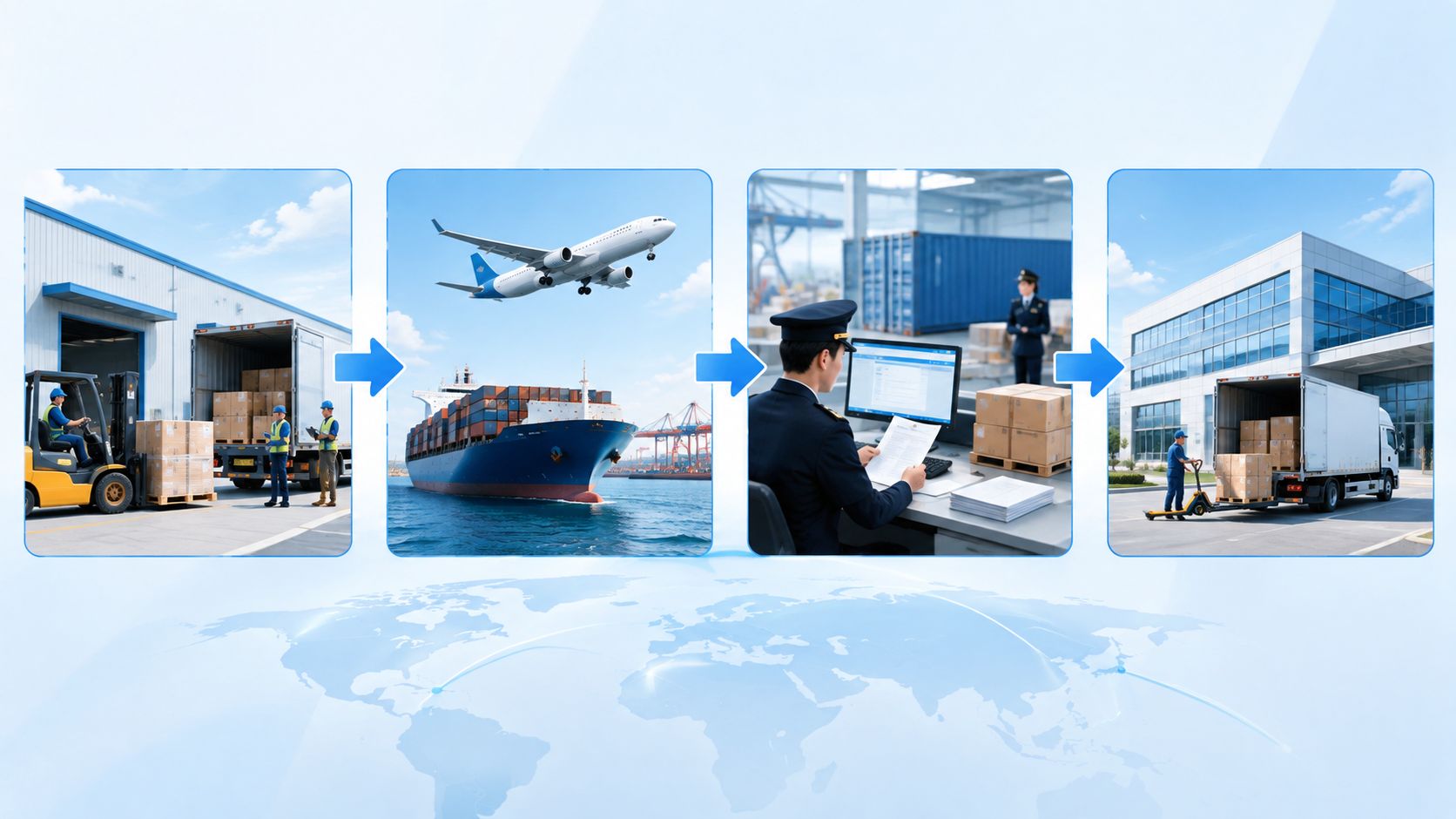
The process usually follows a sequence of operational checkpoints. The cargo is collected from the supplier, prepared for export movement, transported through the selected mode, processed through customs procedures where required, and delivered to the final receiving location. Each stage depends on accurate information being transferred between the responsible parties.
Origin Pickup
The logistics provider arranges cargo collection from the supplier or designated pickup location after confirming shipment details, packaging condition, and timing requirements.
Export and Main Transport Handling
The shipment moves through export preparation and the selected transportation method. The required handling depends on cargo type, route, urgency, and available service options.
Customs Coordination
The responsible party prepares and verifies customs information based on the shipment transaction, destination requirements, and applicable procedures.
Final Delivery
The shipment is transferred to the final delivery point after destination handling and any required release steps are completed.
Different shipments may use different transport combinations within the same door-to-door structure. For example, a shipment may rely mainly on ocean transport, air transport, rail movement, or a combination of methods depending on cost, timing, and cargo requirements.
Shippers choosing ocean-based solutions may review sea freight options when transit cost and larger cargo volumes are important factors. For urgent shipments, air freight may provide a different balance between speed and transportation cost.
When Door-to-Door International Shipping Fits
Door-to-door international shipping works best when the shipper wants coordinated movement across multiple stages instead of managing separate providers for pickup, transportation, customs coordination, and delivery. The service structure can reduce administrative complexity, but it does not remove the need to verify shipment responsibilities.
Multiple handoffs: Suitable when a shipment requires several logistics stages that need coordinated communication between parties.
Limited local logistics resources: Useful when the shipper or receiver does not want to arrange separate origin and destination services.
Operational visibility: Helpful when a single shipment plan makes responsibility tracking easier during international movement.
However, door-to-door service may not be the best choice for every shipment. Companies with established local carriers, experienced customs teams, or specific control requirements may prefer arranging individual transport stages separately.
The right choice depends on shipment complexity, internal resources, cargo characteristics, destination requirements, and the level of coordination the shipper wants to maintain.
Service Scope and Responsibility Checks
A door-to-door freight arrangement does not automatically mean every possible cost, delay, or responsibility is included. The shipper should confirm which activities are covered before booking, including pickup conditions, customs support, destination handling, and final delivery requirements.
| Stage | Key Question | Information to Confirm |
|---|---|---|
| Pickup | Who arranges collection? | Location, cargo readiness, timing |
| Transport | Which method is used? | Mode, route, transit expectations |
| Customs | Who manages filing? | Documents, importer details, requirements |
| Delivery | Can the location receive cargo? | Address, equipment, access conditions |
Companies that need coordinated movement across several transport methods may also consider multi-modal freight solutions when route planning requires more than one transportation method.
Operator check: Confirm the final delivery point before requesting a quote. A warehouse, commercial facility, residential address, or restricted-access location may require different handling arrangements.
Cost Factors and Service Trade-Offs
Door-to-door freight shipping can simplify coordination, but the total cost depends on the shipment scope, transport method, cargo requirements, destination conditions, and included services. A lower quoted amount may represent a narrower service scope, so buyers should compare what activities are included rather than only comparing the final price.
The main trade-off is between control, convenience, and operational responsibility. A fully coordinated service may reduce the number of separate arrangements a shipper manages, while a shipment organized through separate providers may give experienced teams more direct control over individual stages.
| Factor | Why It Matters | Check Before Booking |
|---|---|---|
| Cargo profile | Different cargo needs different handling | Weight, dimensions, packaging |
| Delivery location | Access conditions affect final delivery | Receiving capability and restrictions |
| Transport mode | Mode affects timing and cost structure | Speed, capacity, route suitability |
| Service coverage | Included activities affect responsibility | Pickup, customs, delivery scope |
For shipments where the seller or buyer requires additional delivery coordination, a service structure that includes customs preparation and destination arrangements may require more detailed planning. Businesses should confirm the responsible party for each stage before the cargo moves.
Some importers may evaluate DDP shipping when they need a service arrangement where delivery-related responsibilities are structured differently. The applicable responsibilities depend on the agreed transaction terms and shipment conditions.
Information and Document Preparation
Accurate shipment information allows each party to complete its assigned tasks more effectively. Before arranging door-to-door freight shipping, the shipper should prepare cargo details, pickup information, destination details, and required commercial documents according to the shipment requirements.
The responsible party for each document or filing step can vary by transaction structure, destination, and service agreement. Shippers should confirm who prepares, reviews, and submits required information before the shipment reaches a customs or delivery checkpoint.
Confirm Cargo Details
Verify product description, quantity, dimensions, weight, packaging, and any handling requirements that affect transportation planning.
Prepare Shipment Information
Provide accurate origin, destination, receiver, and contact details so each logistics party can coordinate the next handoff.
Review Customs Requirements
Confirm applicable documentation and information requirements with the responsible customs party before the shipment arrives at the clearance stage.
Companies shipping through specialized channels may need additional planning. For example, sellers using marketplace fulfillment networks may require different preparation steps compared with standard commercial deliveries. In those situations, reviewing Amazon FBA shipping requirements can help identify additional operational considerations.
Common Mistakes and Operator Checks
Most problems in door-to-door freight shipping come from unclear responsibility boundaries or incomplete shipment information. Early verification helps prevent avoidable delays, unexpected handling requirements, or incorrect service assumptions.
Common mistake: Assuming that a door-to-door service automatically covers every possible destination charge or local requirement. The prevention step is to confirm the exact service scope, responsible party, and delivery conditions before shipment booking.
Delivery delays may occur when cargo information, customs details, receiving arrangements, or required documents do not match the actual shipment conditions. Confirm critical information before each major handoff.
Businesses moving valuable or sensitive cargo may also review whether additional protection options are appropriate. Cargo risk varies by shipment type, route, handling process, and coverage terms, so companies should evaluate their own risk requirements before selecting cargo insurance.
Disclosure: This guide provides general logistics information and may refer to services relevant to the topic. Carrier terms, customs requirements, fees, service coverage, and operating conditions can change. Confirm current requirements and responsibilities before acting.
Key Takeaways
Understand the scope: Door-to-door freight shipping connects multiple shipment stages, but included responsibilities must be confirmed.
Check handoffs: Each transport and handling stage requires clear ownership and accurate information.
Compare service value: Evaluate included activities and shipment conditions instead of comparing price alone.
Prepare early: Confirm cargo details, documents, and delivery requirements before movement begins.
Door-to-Door Freight Shipping FAQ
What does door-to-door freight shipping include?
Door-to-door freight shipping generally covers coordinated movement from the pickup location to the final delivery point. The exact included activities depend on the agreed service scope, shipment route, and responsible parties.
Is door-to-door international shipping suitable for every cargo type?
It can support many cargo types, but suitability depends on shipment characteristics, handling requirements, destination conditions, and available service options. Special cargo may require additional planning.
Who handles customs during door-to-door shipping?
The responsible party depends on the shipment arrangement and agreed responsibilities. The shipper should confirm who prepares, reviews, and submits required customs information before shipment movement.
Does door-to-door shipping mean delivery is guaranteed?
No. Door-to-door service provides a coordinated shipment structure, but timing and completion depend on cargo readiness, transport conditions, customs procedures, and destination requirements.
How is door-to-door freight different from arranging separate shipping services?
Door-to-door freight combines multiple shipment stages under one coordinated arrangement, while separate services require the shipper to manage more individual handoffs. The better option depends on internal resources, shipment complexity, and desired control.
What information is needed for a door-to-door freight quote?
A quote usually requires shipment details such as cargo description, dimensions, weight, pickup location, delivery location, transport requirements, and any special handling needs. The required information may vary by shipment conditions.
Can door-to-door shipping use different transportation methods?
Yes. A door-to-door shipment may combine different transportation methods depending on route planning, cargo requirements, timing expectations, and available service options.
What should businesses confirm before booking door-to-door freight shipping?
Businesses should confirm service coverage, responsible parties, shipment information, delivery requirements, and any customs-related responsibilities before approving the shipment arrangement.
Disclaimer: This article is general informational guidance, not a binding quotation, legal opinion, customs ruling, carrier commitment, or delivery guarantee. Requirements, charges, service terms, and responsibilities can vary by route, cargo, contract, carrier, and jurisdiction. Confirm current requirements before booking or filing.