

Which door-to-door quote can actually move the cargo?
A usable door-to-door container quote is the one that matches the actual cargo, pickup point, transport plan, destination handoff, and final delivery scope. Two quotes can show different totals even when both describe the move as door-to-door because one may include origin handling, destination work, delivery access, or other services that the other leaves open. The first commercial check is therefore scope, not price.
A forwarding desk should also verify what changes the quotation after approval. Cargo-ready timing can alter the booking plan. A revised pickup point can change inland work. A different container basis can change the freight structure. A delivery location with restricted access can create a different operating requirement. The buyer should ask who owns each handoff, what the quoted line includes, which items remain subject to confirmation, and what event would trigger a re-quote before comparing the two options.
Align the quote scope before comparing totals
The forwarding desk should review a door-to-door quote in the same order that the shipment becomes operational. This sequence keeps hidden scope differences from being mistaken for a cheaper or more expensive freight rate.
| Quote field | What changes the quote | Who confirms it | Next checkpoint |
|---|---|---|---|
| Cargo-ready date | Readiness and booking timing | Shipper or supplier | Confirm booking window |
| Pickup and origin handling | Location and loading scope | Shipper and pickup provider | Confirm exact pickup scope |
| Main route and service | Transport mode and service level | Forwarder or carrier | Confirm routing and service |
| Container and cargo basis | Equipment and shipment details | Shipper and forwarder | Confirm equipment basis |
| Destination delivery | Address, access, and handling | Consignee and delivery provider | Confirm delivery conditions |
| Quote date and validity | Timing and provider conditions | Forwarder | Request current confirmation |
The quote should also distinguish included work from work that still requires approval or separate confirmation. A shipment can be described as one door-to-door move while several parties perform different stages. The commercial question is whether the quoted scope covers the actions needed to complete the move, not whether the service description sounds comprehensive.
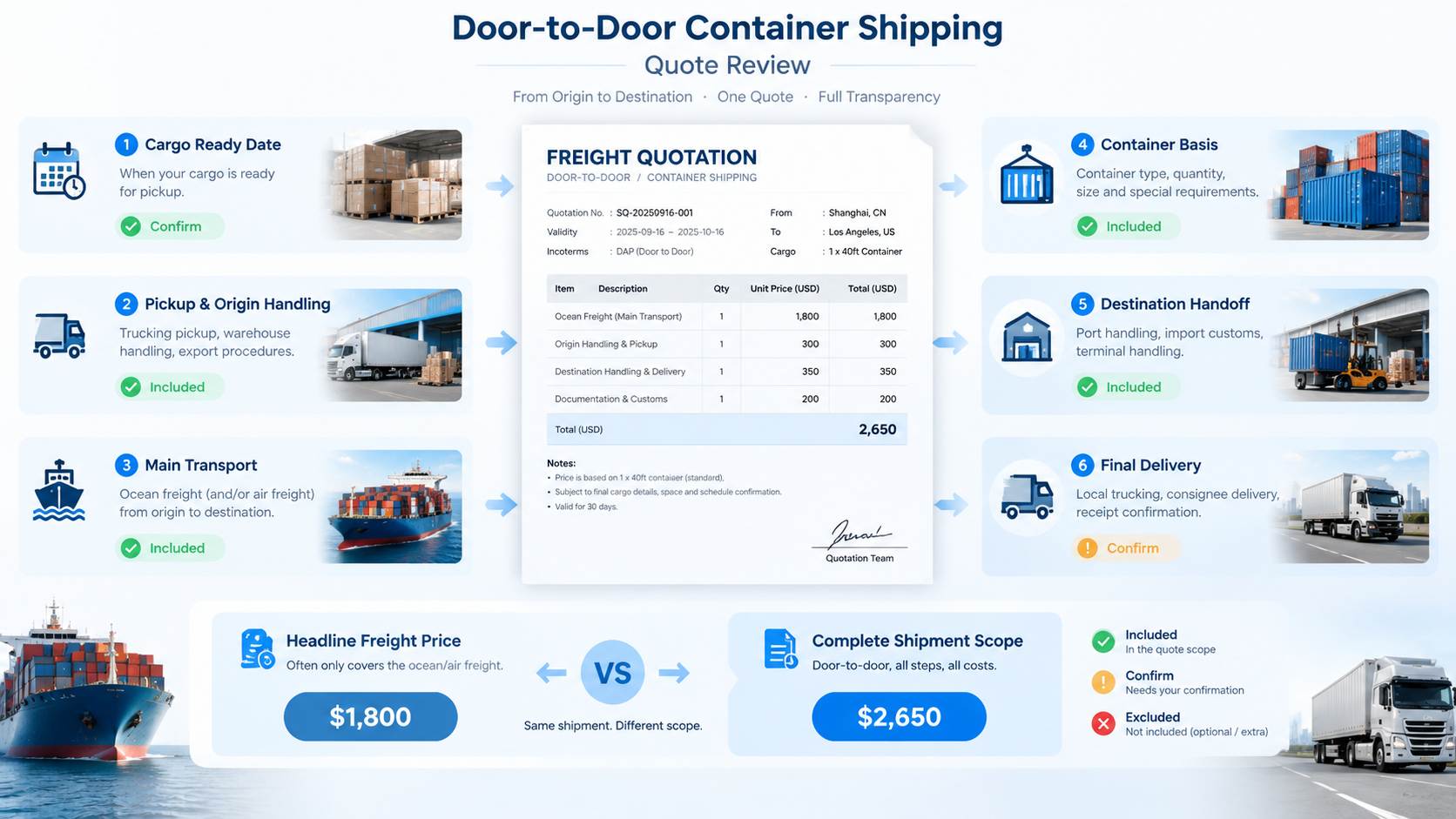
Charge basis and the cost drivers that change the quote
Container shipping quotes should be reviewed against the basis used to calculate each charge. The amount matters, but the basis explains when that amount can change. For full-container movements, the equipment type, origin and destination scope, transport service, and included handling typically matter more than a generic price comparison. The forwarding desk should confirm whether the quoted freight applies to the stated container and shipment conditions.
Pickup is another practical cost variable. A quote tied to one pickup point may not apply when the supplier changes the address, cargo-ready window, loading arrangement, or required collection service. The correct check is simple: what pickup activity is included, and what information would force the provider to re-quote it?
Destination delivery works the same way. The final delivery location may affect the required equipment movement, appointment handling, access conditions, unloading expectations, or other destination services. A buyer comparing fcl delivery options should therefore compare the same delivery point and the same handoff scope rather than comparing only the main transport line.
For container loads that change from a full-container plan to a consolidated service, the commercial basis changes again. The buyer should ask the forwarder which cargo measurements or shipment characteristics drive the charge and whether pickup, origin handling, destination handling, and final delivery are quoted on the same scope. The important point is not a universal pricing formula; it is matching the charge basis to the actual shipment data.
Field note: When a quote is missing a charge basis, ask three questions before approval: What shipment input drives this line? Which handoff does the line cover? What changed condition would require the line to be re-quoted?
What the quote includes and who acts at each handoff
A workable quote should connect each major cost line to an operational action. The buyer does not need a long list of generic charges. The buyer needs to know what the provider will do, what the customer must supply, and which stage remains open.
Pickup and origin handling: Confirm the pickup point, cargo readiness, loading scope, and any origin activity included in the quoted service.
Main transport: Confirm the planned service level, routing basis, booking arrangement, and whether the quote depends on a specific shipment schedule.
Destination handoff: Confirm what destination handling is included and which party takes control before final delivery.
Customs coordination: Confirm whether filing or broker coordination is included, what information the importer must provide, and who confirms completion.
Final delivery: Confirm the named delivery point, appointment requirements, access conditions, unloading scope, and receipt contact.
Exceptions: Identify storage, rebooking, special handling, document correction, or other conditions that remain subject to separate confirmation.
Where destination filing work is part of the scope, customs brokerage can be a distinct service checkpoint rather than an assumption hidden inside the word “door-to-door.” The quote should state whether the provider is coordinating that work, whether a separate broker is involved, and which customer inputs are still required.
Note: A freight quote is tied to the cargo, handoffs, route, service level, timing, and destination work stated in it. Carrier and handling conditions can change. Align the scope first, then request confirmation for the specific shipment.
Compare options only after the scope is equivalent
The right comparison depends on what the buyer is trying to control: shipment capacity, transit planning, handoff count, delivery control, or quote simplicity. No single service option is cheaper in every shipment because the quoted scope and operating conditions determine the comparison.
| Option | Buyer fit | Weak fit | Quote question |
|---|---|---|---|
| FCL | Container-level planning | Shipment does not support the planned equipment | What equipment basis applies? |
| LCL | Smaller consolidated shipments | Shipment needs dedicated container control | What shipment basis drives the charge? |
| Door-to-door | Coordinated pickup-to-delivery movement | Delivery scope is undefined | Which handoffs are included? |
| Port-to-port | Buyer controls inland stages | Buyer needs one coordinated delivery plan | Who arranges each inland leg? |
| Multi-modal | Movement requires multiple transport legs | Single-mode service already fits the route | Who controls each mode change? |
For a shipment that genuinely requires more than one transport mode, multi-modal freight can be evaluated by looking at the complete handoff sequence rather than a single line item. The buyer should ask which provider manages each transfer, which data must be updated at the transition, and whether the quoted delivery scope remains unchanged after the mode change.
For an ocean-led container movement, sea freight may form the main transport stage, but the comparison should still include pickup, origin work, destination handoff, and final delivery. A main-carriage price is not a complete substitute for an aligned door-to-door quote.
Where quotes go wrong and what can grow
A quote becomes difficult to manage when the original shipment assumptions change without a clear re-quote checkpoint. The issue is often operational rather than mathematical. A changed pickup address can alter the inland plan. A delayed cargo-ready date can force the booking desk to review the planned service. An incomplete delivery address can prevent the provider from confirming the final handoff.
Common mistake: Comparing a quote with a broad “door-to-door” label against another quote with a narrower scope and treating the lower headline figure as the lower shipping cost. Prevention requires matching pickup, transport, destination handling, delivery point, and included work before approval.
Other gaps appear when a quotation does not identify whether delivery access, appointment handling, unloading, storage, rebooking, or document correction is included. These items may not affect every shipment, but they can become material when the actual operating condition falls outside the assumptions used for the quote.
Risk alert: Ask for a re-quote when a material shipment input changes instead of assuming the original amount still applies. The forwarding desk should confirm the revised scope whenever the pickup point, cargo characteristics, delivery condition, service requirement, or other quoted assumption changes.
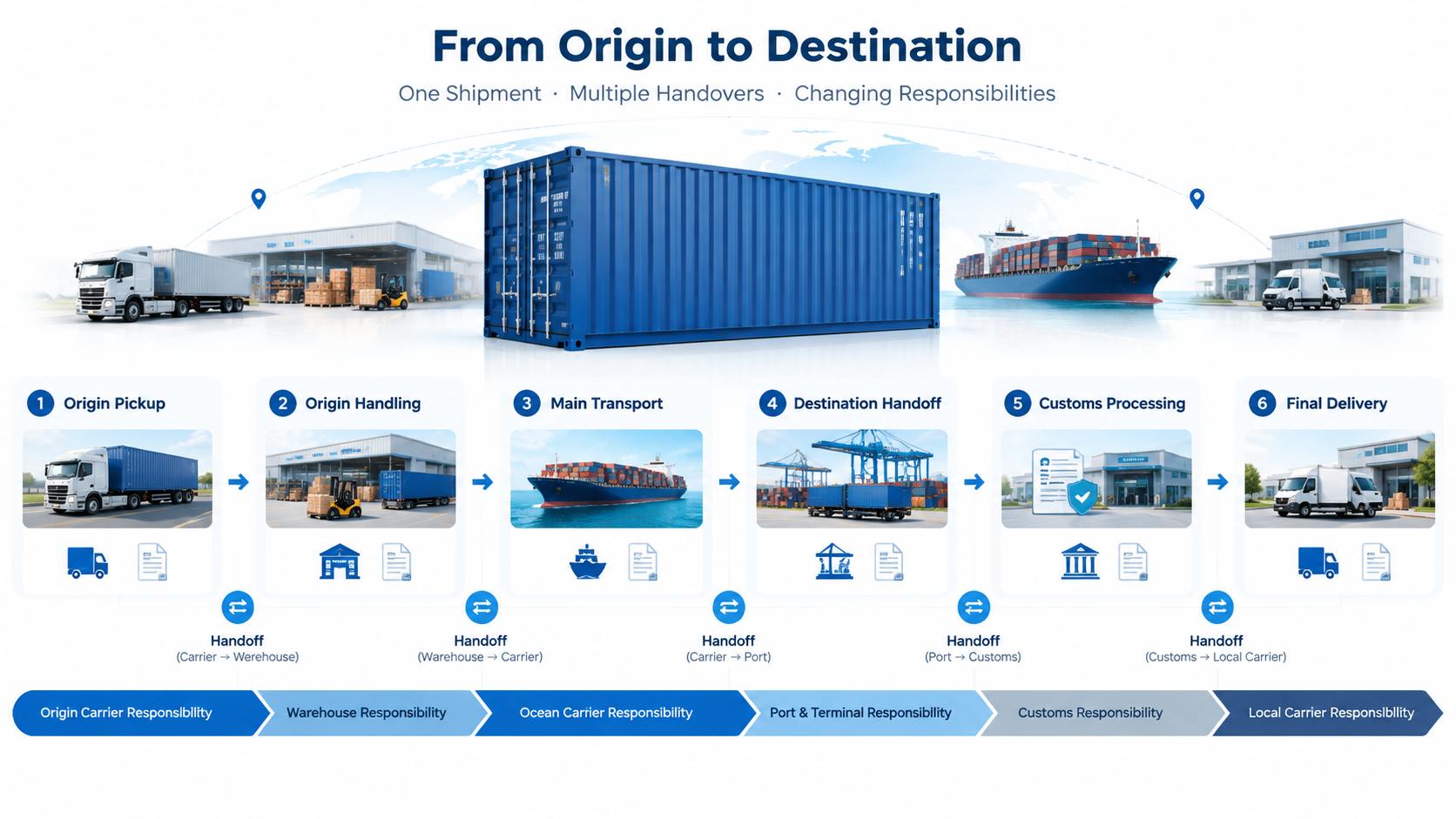
Send the forwarding desk the inputs it can actually price
A complete quote request gives each participant enough information to confirm the stage they control. The shipper usually owns the cargo facts and readiness details. The consignee owns the final delivery conditions. The forwarder confirms routing, service scope, and the commercial assumptions tied to the available shipment information.
Confirm cargo and packing
Provide the cargo description, package count, dimensions, gross weight, and equipment expectation where known. These details let the forwarding desk confirm the appropriate shipment basis and identify information that is still missing.
Confirm readiness and pickup
Provide the cargo-ready date, exact pickup location, loading conditions, and pickup contact. The quote desk can then test the inland scope and booking window against the actual starting point.
Confirm route and service level
State the requested transport mode, service level, and delivery expectation. The forwarder can then align the main transport stage and identify whether a different service path changes the handoff structure.
Confirm delivery conditions
Provide the final delivery address, receiving hours, appointment needs, access restrictions, unloading expectations, and receiving contact. The delivery provider can use those facts to confirm the final handoff scope.
Confirm commercial scope
Ask which services and charges are included, which remain subject to confirmation, and which party handles destination processing. The buyer can then compare quotes on the same commercial basis.
Confirm exceptions before approval
Raise special handling, unusual cargo conditions, insurance needs, timing changes, or other exceptions before booking. The forwarding desk can identify whether the quote needs a revised scope or separate approval.
Where cargo value or shipment exposure makes insurance scope relevant, a buyer can review cargo insurance as a separate commercial question. The important quote checkpoint is to determine whether any coverage is included, what the applicable terms are, and what additional arrangement would be required rather than assuming the freight quote itself settles the insurance question.
What to request first
The practical default is to request one scope-aligned door-to-door quote before comparing alternatives. Give the forwarding desk the actual cargo data, cargo-ready date, pickup point, delivery point, and required service level. Then ask the provider to identify included work, excluded work, change conditions, and the party responsible for each material handoff.
After that baseline is clear, compare alternatives only when they change a real business requirement. A move may warrant a different container or consolidation structure, a different transport mode, or a different delivery scope. The condition that changes the recommendation is the shipment itself: its cargo characteristics, readiness, route, delivery environment, and level of control required by the buyer.
Illustrative example (not a customer case): A buyer asks for a door-to-door container quote but provides only the cargo description and general destination. The forwarding desk should not treat the headline amount as final for comparison. The buyer first supplies the cargo-ready date, exact pickup point, equipment requirement, final delivery point, and delivery conditions. The desk then checks which origin, main transport, destination, and delivery activities are included. If the buyer later changes the pickup location or delivery scope, the quote should be reviewed against those new conditions rather than carried forward automatically.
Key Takeaways
Compare door-to-door quotes only after the pickup, main transport, destination handoff, and final delivery scope match.
Review the charge basis as well as the amount so you know which shipment input can change each line.
Assign a clear owner to every material handoff and confirm the information that owner needs before acting.
Ask for a re-quote when a material cargo, pickup, route, service, or delivery assumption changes.
Use the actual shipment facts to choose between FCL, consolidation, transport modes, and delivery scopes rather than relying on a headline price.
FAQ
Why can two door-to-door container quotes differ?
Two quotes can differ because the providers may be pricing different pickup scopes, transport services, destination handling, delivery conditions, or included work. The buyer should align the same cargo details, route, handoffs, delivery point, and service assumptions before treating one total as a meaningful comparison.
What information should I send before requesting a quote?
Send the cargo description, package and container details where available, dimensions and weight, cargo-ready date, exact pickup point, requested service, final delivery address, receiving conditions, and any known special requirements. The forwarding desk can then identify which remaining details must be confirmed before the quote is approved.
Does a door-to-door quote include every destination cost?
Not necessarily. A door-to-door service label does not by itself define every destination activity or charge. The quote should show what destination handling, delivery work, customs coordination, access conditions, and other services are included, excluded, or still subject to confirmation for the specific shipment.
What should I ask about FCL delivery?
Ask what final delivery includes and where the responsibility changes at destination. Confirm the exact delivery point, receiving conditions, appointment requirements, unloading expectations, and any activity that remains outside the quoted service. The buyer should compare the same delivery scope across providers before approving an FCL option.
When should a freight quote be re-checked?
A quote should be re-checked when a material shipment assumption changes. Examples include a different pickup location, changed cargo-ready timing, revised cargo or equipment details, a different service requirement, or a different final delivery condition. The forwarding desk should confirm the commercial impact instead of assuming the original quote still applies.
Who should confirm the delivery scope?
The consignee or receiving party should provide the actual delivery conditions, while the delivery provider or forwarder confirms what its service covers. The buyer should make sure the quote reflects the real destination, access requirements, receiving process, and unloading expectations before the shipment is booked.
Can a lower headline freight amount still produce a different shipment cost?
Yes. A lower headline line can reflect a narrower service scope or exclude work that another quote includes. The useful comparison is the complete quoted movement under equivalent shipment conditions. The buyer should check included work, excluded work, and change conditions before interpreting a lower figure.
What is the best next checkpoint after receiving a quote?
Ask the forwarding desk to confirm the cargo basis, pickup scope, main transport, destination handoff, final delivery, included work, validity condition, and circumstances that require a revised quote. That review turns an incomplete price indication into a shipment-specific commercial decision that can be approved against clear assumptions.
Disclaimer: This page is general quote-planning guidance, not a binding quotation or delivery commitment. Actual charges and handoffs depend on the cargo, route, timing, provider confirmation, and destination conditions. Where duties, customs, tax, insurance, or contract questions apply, confirm them with the relevant party before booking.