
China to Turkey Shipping Costs: Which Quote Can Move Your Cargo?
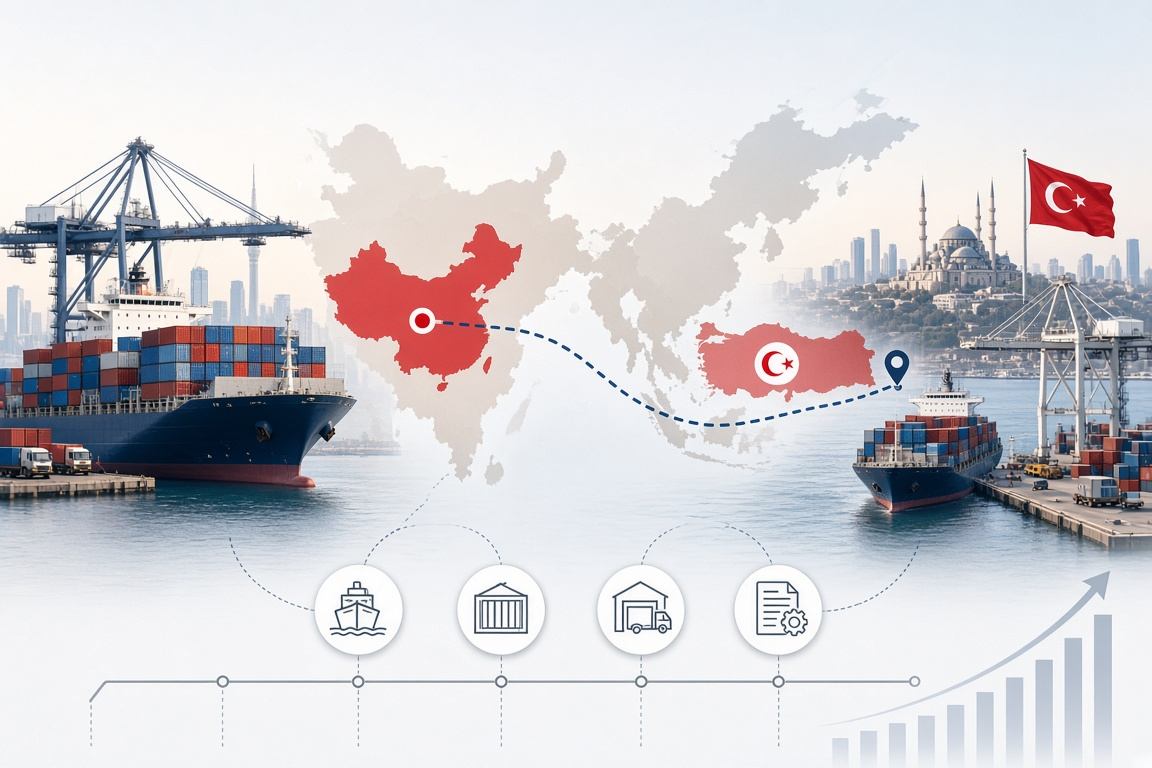
China to Turkey Shipping Costs: Which Quote Can Move Your Cargo?
What Makes a China–Turkey Freight Quote Usable
When you receive a set of freight quotes for a China-to-Turkey shipment, the first question is rarely which number is lowest. The real question is which quote actually covers the cargo you are ready to move, the pickup and delivery handoffs you need, and the service scope your consignee expects. A sea freight rate from Ningbo to Istanbul without destination handling is not comparable to a door-to-door air quote that includes final delivery to Ankara, even if both are labeled “China to Turkey shipping costs.”
Before you approve any quote, you need to know what is included, what is excluded, and what remains to be confirmed. The forwarding desk can revise a number, but only when the scope is clear. This guide walks through the operational checkpoints a quote-desk operator reviews: cargo readiness, pickup and origin handling, main transport choice, destination handoff, delivery scope, and the line items that change the total cost exposure. Use it to turn an incomplete quote into a workable shipping decision.
Scope Alignment: Check These Fields First
A forwarding desk checks scope items in a specific order. If any of these fields are missing or vague, the quote cannot be evaluated against another. Use this baseline to compare only quotes that share the same operating conditions.
| Scope field | What to confirm | Why it changes the quote |
|---|---|---|
| Cargo-ready date | Earliest date cargo is packed and available | Changes carrier availability, consolidation windows, and rebooking risk |
| Pickup point & origin handling | Full address, floor, dock access, and who loads | Affects trucking cost, waiting time, and equipment needed |
| Main route and service level | Sea, air, rail, or express; direct or transshipment | Determines transit time, carrier options, and base freight |
| Cargo or weight basis | Chargeable weight or container type and utilization | Changes how the freight is priced—weight, measure, or volume |
| Destination handoff and delivery | Port, warehouse, or final address; with or without appointment | Adds or removes destination handling, drayage, and accessorials |
| Quote date and validity | When quoted and how long the scope holds | Carrier rates and surcharges shift with fuel, season, and capacity |
Do not compare two quotes until you have verified that each field is stated in the same way. A quote that omits destination delivery or pickup scope is incomplete, not cheaper.
Charge Basis: What Actually Drives the Cost
Understanding the charge basis tells you which inputs matter most for your China-to-Turkey shipment and what you need to confirm before the quote becomes final.
Container (FCL) basis. A full-container quote is priced per container, not per kilogram. The cost changes with container size, equipment type, carrier, and port pair. What changes it: the container size, the carrier’s base rate, and any chassis or reefer service. What handoff it affects: origin port pickup, vessel booking, and destination container return. Confirm the carrier’s base rate and equipment availability for your intended sailing week.
Less-than-container (LCL) basis. LCL is priced per cubic meter or per 1,000 kg, whichever is higher. The chargeable weight depends on the cargo density and how the forwarder consolidates. What changes it: the actual volume and weight, the consolidation schedule, and the destination deconsolidation fee. Confirm the weight and cubic measure on the packing list and ask whether the quote includes the destination LCL handling charge.
Air and express chargeable weight. Air freight uses the greater of actual weight and dimensional weight (length × width × height ÷ 6,000). Express services use a similar divisor but apply different rate tiers. What changes it: the package dimensions, the density, and whether the shipment is palletized. Confirm the chargeable weight calculation on the quote and ask whether the forwarder used the correct divisor for the service type.
Rail and multimodal basis. Rail quotes are typically per container or per wagon, with origin and destination trucking priced separately. The total cost depends on the rail service provider, the transit corridor, and the transfer points. What changes it: the container size, the rail operator’s capacity, and the trucking distance at each end. Confirm whether the quote covers the full rail leg or only the line-haul portion.
Quote check: For any China–Turkey quote, ask the forwarding desk to state the charge basis explicitly. If the quote says “per kg” without specifying the weight basis, request the actual chargeable weight or container size used in the calculation. Then confirm whether that basis matches your packing list.
What the Quote Includes and Who Acts
A freight quote maps to a series of operating handoffs. Each line item corresponds to a step that someone performs. Use this breakdown to see what is included, what is excluded, and who can confirm each item for your specific shipment.
| Line item | Handoff point | Who confirms | What to verify |
|---|---|---|---|
| Pickup / origin trucking | Supplier warehouse to forwarder’s origin facility | Forwarder’s origin agent | Address, floor, loading equipment, waiting-time policy |
| Origin handling / export customs | Origin facility to vessel or aircraft | Forwarder’s customs desk | Document list, inspection risk, customs brokerage scope |
| Main freight (sea/air/rail) | Origin port/airport to destination port/airport | Carrier operations team | Service level, transit time, carrier booking confirmation |
| Destination handling / import clearance | Destination port/airport to forwarder’s facility | Forwarder’s destination agent | Terminal charges, customs broker coordination, duty deferment |
| Final delivery / drayage | Forwarder’s facility to consignee address | Destination delivery coordinator | Appointment window, site access, offload equipment, waiting time |
| Accessorials and contingencies | Any handoff with special requirements | Operations supervisor | Overtime, after-hours, storage, rebooking, equipment return |
If a line item is not shown on the quote, assume it is excluded until confirmed. The forwarder can add it, but only if you request the scope adjustment before booking.
Note: A freight quote is tied to the cargo, handoffs, route, service level, timing, and destination work stated in it. Carrier and handling conditions can change. Align the scope first, then request confirmation for the specific shipment.
Options That Fit the Shipment: Mode and Service Trade-Offs
For a China-to-Turkey move, the main cost driver is usually the mode choice and the service level within that mode. Each option changes the handoffs, the delivery control, and the cost exposure. Compare options only when the scope is equivalent.
Sea freight (FCL or LCL). Best fit for dense, non-urgent cargo or large volumes. Weak fit for high-value, time-sensitive goods or small shipments needing rapid restocking. Trade-off: lower line-haul cost but longer transit and more destination handoffs. Quote question: does the sea quote include the destination terminal handling charge and the container return?
Air freight. Best fit for high-value, urgent, or perishable cargo. Weak fit for bulky, low-margin goods where air cost exceeds the product value. Trade-off: faster transit and simpler handoffs but significantly higher chargeable-weight cost. Quote question: does the air quote use actual weight or dimensional weight, and what divisor was applied?
Rail freight. Best fit for mid-range transit time and cost between sea and air, especially for containerized cargo. Weak fit for time-critical shipments or cargo that requires consistent temperature control across multiple handoffs. Trade-off: rail is often a cost-effective alternative when sea capacity is tight, but the handoff points and transfer risks need confirmation. Quote question: does the rail quote include origin trucking, the rail line-haul, and destination drayage as separate lines or as a bundled door-to-door service?
Door-to-door service. Best fit when you want a single point of contact and predictable delivery scope. Weak fit when you already have destination handling capacity or when the consignee prefers to arrange their own drayage. Trade-off: convenience and clear responsibility against potentially higher bundled cost and less visibility into each leg. Quote question: does the door-to-door quote cover all origin and destination charges, or does it exclude import clearance or duties?
No mode is universally cheaper. The right option depends on your cargo weight, density, value, required delivery date, and the consignee’s ability to receive and clear the shipment. Request quotes for the same scope across modes, then compare the total cost and the handoff control each provides.
Where China–Turkey Freight Quotes Go Wrong
Most quote overruns come from operational gaps, not from changes in the base freight. These are the most common triggers for cost growth after the quote is issued.
Common mistake: incomplete pickup or delivery address. When the quote uses a generic city name instead of a specific address, the trucking cost can increase by 30–50% once the actual location is known. Confirm the full address, floor level, dock accessibility, and any appointment requirements before the quote is finalized.
Common mistake: chargeable-weight mismatch. For LCL and air shipments, the weight or volume on the quote may not match the actual packing list. A 10% difference in chargeable weight can move the total cost by a similar margin. Reconfirm the cargo dimensions and weight before booking.
Common mistake: missing destination handling or delivery. Many China–Turkey sea quotes stop at the destination port. If your consignee needs delivery to a warehouse, the destination drayage and handling can add significant cost. Ask the forwarder to split the destination charges so you can see what is included and what is not.
Common mistake: delivery appointment failure. If the consignee is not ready to receive the cargo at the scheduled appointment, the truck may wait, incurring a waiting-time charge, or the delivery may be rescheduled with a re-delivery fee. Confirm the appointment window and the consignee’s receiving capacity before the delivery is scheduled.
Review the quote for these gaps before you approve it. A small scope change can make a quote unusable; a clear scope statement keeps the cost predictable.
Quote-Request Handoff: What to Provide Before You Ask
Before you request a revised China–Turkey quote, gather the inputs that the forwarding desk needs to give you a workable number. Group these by who supplies or confirms each detail.
Cargo and packing details. Provide the full packing list: number of pieces, dimensions per piece, total weight, total volume, and any special handling requirements (oversize, hazardous, temperature-controlled). This changes the chargeable weight and the equipment type.
Cargo-ready and pickup details. Confirm the earliest date the cargo is packed and ready, the pickup address, the floor level, the loading equipment available, and any waiting-time policy at the supplier’s site. This changes the origin trucking cost and the carrier booking window.
Route and service preference. State the preferred mode (sea, air, rail, express), the service level (direct or transshipment), and any preferred carrier or schedule. This determines the base freight and the transit time.
Delivery address and appointment. Provide the consignee’s full delivery address, the receiving hours, any appointment requirements, the offload equipment available, and the contact person. This changes the destination drayage cost and the delivery scheduling risk.
Commercial scope and trade terms. State the agreed trade terms clearly—who arranges the main transport, who pays for the freight, who handles the import clearance, and who bears the destination charges. This determines which party is responsible for each handoff and which costs are included in the quote.
Special handling or restrictions. Note any cargo restrictions, security requirements, license or permit needs, or destination compliance rules that could affect the route or the handling. This changes the carrier selection and the documentation scope.
When you provide these inputs together, the forwarding desk can give you a quote that matches your actual shipment. If any detail changes, request a revised quote before you book.
Recommendation and Illustrative Scope
Start with a single mode and service level that matches your delivery date and cargo characteristics. Request a quote for that scope with all handoffs stated. Once you have a complete quote, compare it against an alternative mode only if the alternative meaningfully changes the delivery control or the total cost exposure.
For most China–Turkey shipments that are not urgent, sea freight with door-to-port or door-to-door scope is the practical default. Confirm the destination handling and delivery scope before you approve. For urgent or high-value cargo, air freight is the natural alternative—but confirm the chargeable-weight calculation and the destination clearance scope.
Illustrative example (not a customer case, no actual pricing):
A buyer requests quotes for a 20‑ft container of machinery parts from Shanghai to Istanbul. They receive three quotes: one FCL port-to-port, one LCL port-to-port, and one door-to-door. The FCL port quote is the lowest line‑haul number, but it excludes destination terminal handling and drayage. The door-to-door quote is higher but includes all origin and destination trucking and handling. After adding the destination handoffs to the FCL quote, the total is comparable to the door-to-door quote. The buyer chooses the door‑to‑door scope for the clear responsibility and single point of contact. The decision is based on scope alignment, not on the initial line‑haul number.
Use this approach: align the scope first, compare the total cost for that scope, and then choose the option that gives you the handoff control and delivery confidence you need.
Key Takeaways
- Align cargo-ready date, pickup and delivery addresses, chargeable weight or container size, and included handoffs before comparing any two China–Turkey freight quotes.
- Sea freight is cost-effective for dense cargo; air freight serves urgent, high-value shipments; rail offers a mid-range alternative when sea capacity is constrained.
- The charge basis—whether per container, per kilogram, per cubic meter, or dimensional weight—determines which cargo inputs drive the cost. Confirm the basis before approving a quote.
- Most quote overruns come from incomplete pickup details, mismatched chargeable weight, missing destination handling, or delivery appointment failures—not from the base freight.
- Provide the cargo packing list, cargo-ready date, full pickup and delivery addresses, and clear trade terms before you request a final quote. Each detail changes what the forwarder can confirm.
- A complete quote states all line items through to the delivery point. If a line item is missing, assume it is excluded and ask the forwarder to add it or confirm the exclusion.
FAQ
Why do two China–Turkey shipping quotes look so different for the same route?
Quotes often differ because they include different scope items. One may stop at the destination port, while another includes final delivery. One may assume a specific cargo-ready date, while another allows a wider window. Compare the line items and handoffs, not just the total number.
What is the most important detail to confirm before approving a freight quote?
The most important detail is the delivery scope—where the shipment ends and who handles the final handoff. Confirm the delivery address, the appointment requirement, and whether the quote includes destination handling and drayage. A quote without a clear delivery scope is not a usable final price.
How do I know whether to use sea or air freight for my shipment?
Use sea freight when the cargo is dense, non-urgent, or large in volume, and when the consignee can handle the destination port clearance. Use air freight when the cargo is urgent, high-value, or perishable, and when the delivery date requires faster transit. The cost difference is usually significant, so match the mode to the delivery need.
What is chargeable weight and why does it affect my shipping cost?
Chargeable weight is the greater of the actual weight and the volumetric (dimensional) weight. For air and LCL shipments, the freight is priced on this chargeable weight, not on the actual weight alone. If your cargo is light but bulky, the chargeable weight may be higher than the scale weight.
What should I do if the cargo-ready date changes after I approve the quote?
Notify the forwarder immediately. A changed cargo-ready date can affect the carrier booking, the consolidation window, the equipment availability, and the storage cost at origin. The forwarder will need to confirm whether the rate and the vessel or flight schedule are still valid.
Who is responsible for destination handling if the quote stops at the port?
If the quote stops at the destination port, the consignee is responsible for arranging the destination handling, import clearance, and drayage. Confirm this before you approve the quote, and ask the forwarder to provide a separate destination handling estimate if you need it.
Can I get a binding quote for a China–Turkey shipment?
Freight quotes are generally not binding until the booking is confirmed and the carrier rates are locked. Most quotes are subject to change based on the cargo details, the service scope, the timing, and the carrier capacity. Treat the quote as an estimate and confirm the final charges before you book.
What does “door-to-door” include in a China–Turkey freight quote?
A door-to-door quote typically includes pickup from the supplier’s address, origin handling, main transport, destination handling, import clearance (excluding duties and taxes), and final delivery to the consignee’s address. Confirm the exact scope with the forwarder, as not all door-to-door quotes include every handoff.
Disclaimer: This page is general quote-planning guidance, not a binding quotation or delivery commitment. Actual charges and handoffs depend on the cargo, route, timing, provider confirmation, and destination conditions. Where duties, customs, tax, insurance, or contract questions apply, confirm them with the relevant party before booking.