
Short Answer: LCL or FCL for Your Cargo
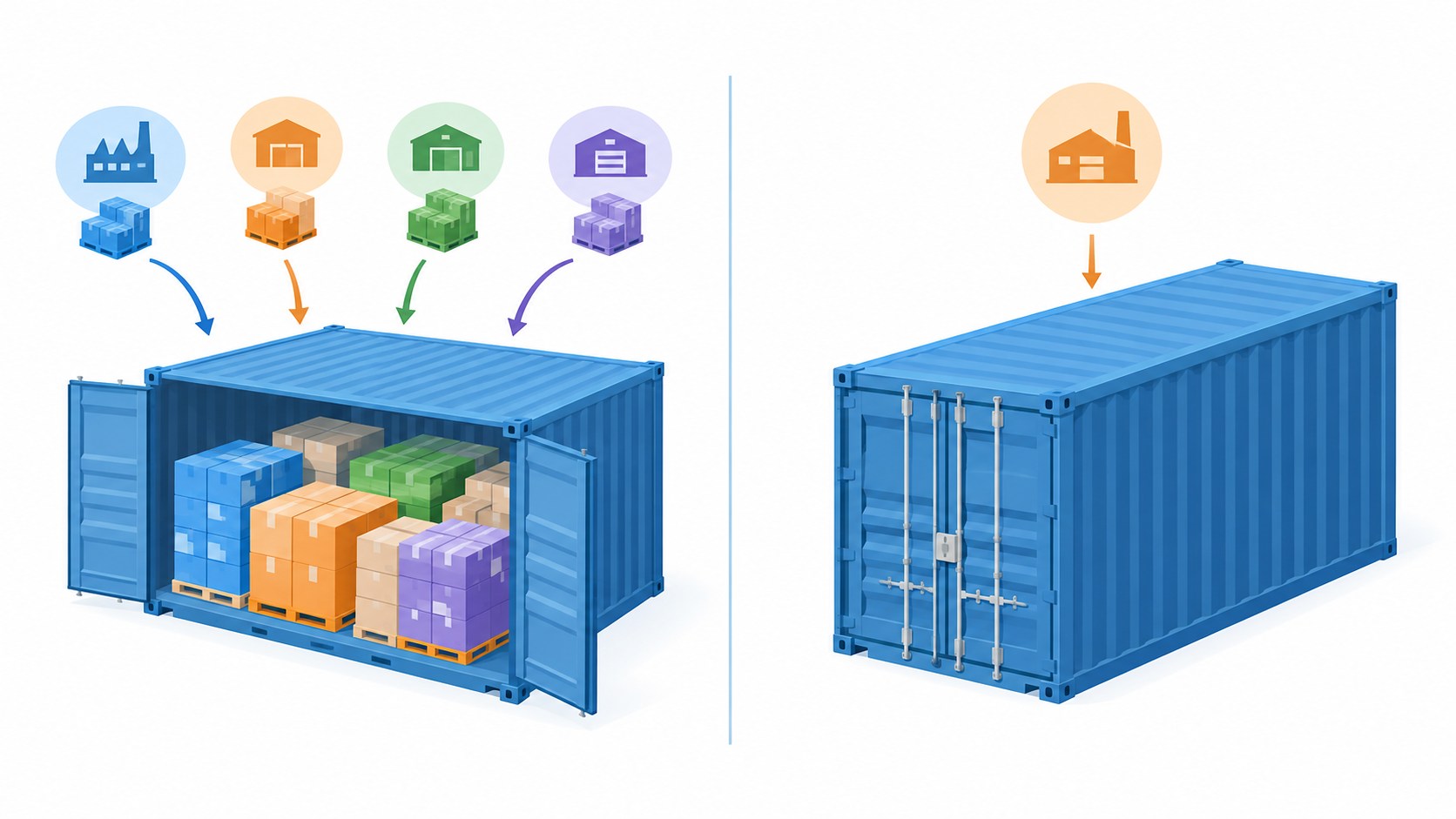
Choose LCL ocean freight when the cargo does not need a full container and the delivery date can absorb consolidation and deconsolidation. Choose FCL when the cargo fills most of a container, needs sealed and dedicated handling, or faces a schedule with no room for shared-container steps. The fact most likely to change this answer is how the cargo’s volume and weight compare with a container, so confirm both before you request quotes. LCL means less-than-container-load: your cartons or pallets share a container with other shippers’ cargo and pass through a container freight station at each end. That setup lets a smaller shipment travel by ocean without paying for empty space, but it adds handoffs, cargo touches, and dependence on the consolidator’s cut-off and devanning schedule. FCL gives you one container to control from loading to release. A shipment near a container’s practical capacity may cost less as FCL once all charges are counted, so compare both quotes on the same scope.
Set a Fair Basis for Comparing the Two Formats
An LCL quote and an FCL quote rarely cover the same work unless you align them first. Loading format changes who handles the cargo and when, while route, delivery point, and customs role can change the total shipment charge just as much. Fix the conditions below before you compare any two offers.
| Condition | Why It Matters | Confirm Before Quoting |
|---|---|---|
| Cargo profile | Volume, weight, packing, and handling needs decide which format fits | Carton or pallet count, dimensions, gross weight, special handling |
| Route | Port pair and sailing frequency shape consolidation options | Origin and destination ports, and whether transshipment applies |
| Delivery point | Port, CFS, warehouse, or door changes the handoffs quoted | Named delivery address and the boundary of the quote |
| Service level | Consolidator cut-offs and carrier schedules differ by provider | Cargo cut-off, sailing schedule, and deconsolidation timing |
| Quote inclusion | Headline ocean charges often exclude origin or destination handling | Line items for CFS handling, documentation, and surcharges |
| Customs and trade term | The agreed term decides who arranges and pays each stage | Named trade term, importer of record, and brokerage arrangement |
If any row is unresolved, treat the comparison as conditional. A missing fact should stay a question for the provider, not an assumption in your decision.
LCL and FCL Profiles: Fit, Flow, and Selection Trigger
LCL ocean freight
LCL suits shippers whose cargo is too small for a container but still belongs on the water. Typical buyers send palletized goods, cartons, samples, or replenishment stock on a recurring basis and value flexibility over speed.
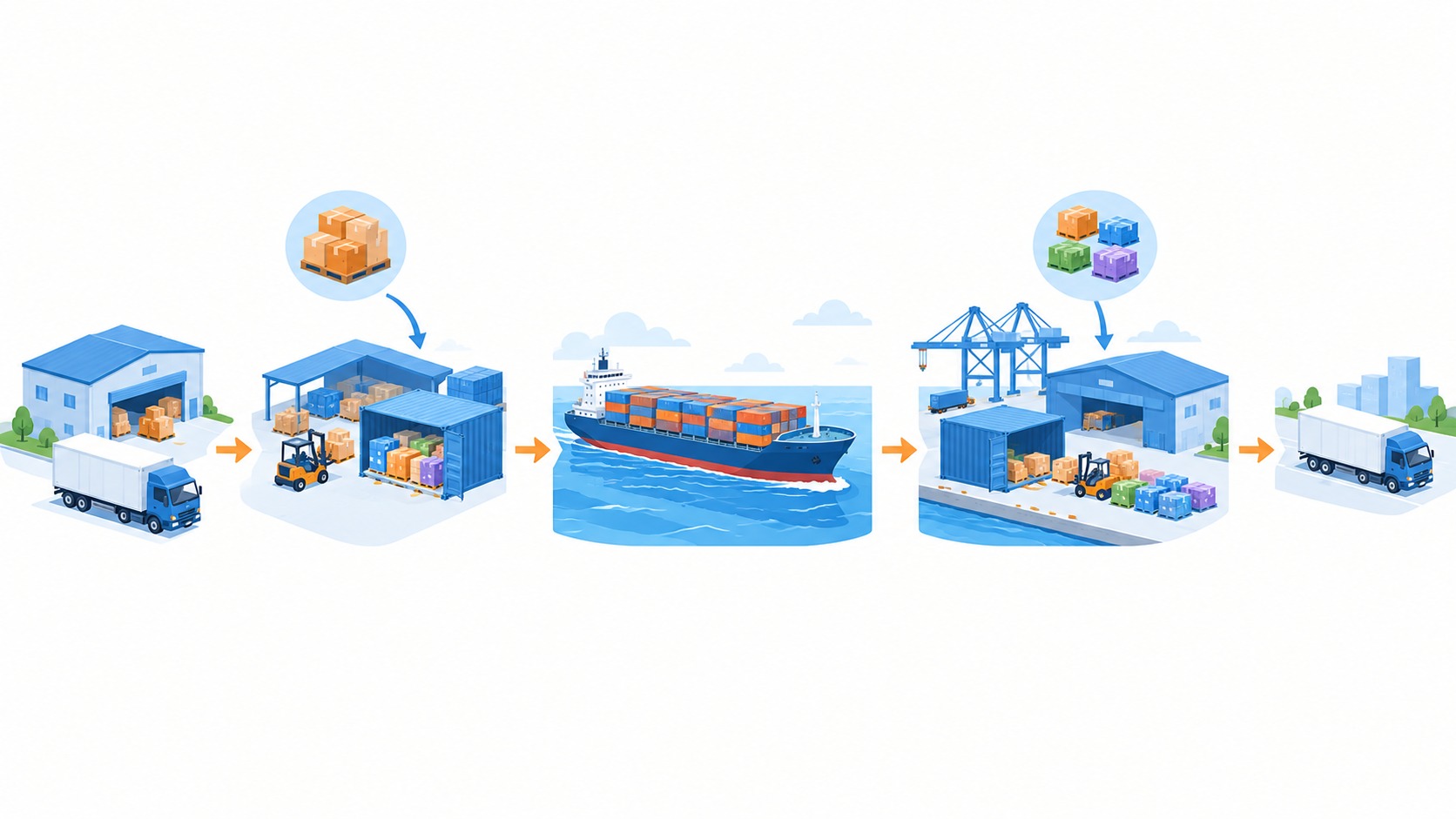
The cargo goes to the origin container freight station, where the consolidator receives, checks, and loads it with other shippers’ freight. After the ocean leg, the destination CFS unloads the container, separates each consignment, and holds it for release and pickup or delivery. Each of those steps adds a handoff that a sealed container avoids.
LCL fits poorly when the cargo is fragile without strong packing, unusually heavy for its size, or subject to a strict delivery date. The selection trigger is a shipment that fills only part of a container and can tolerate the consolidator’s schedule. Buyers who want a broader view of ocean options can review the provider’s sea freight service before requesting a comparison.
FCL ocean freight
FCL suits shippers whose cargo occupies most of a container’s space or weight capacity, or whose cargo benefits from being loaded once and sealed until delivery. The shipper or its agent stuffs the container at the origin, the carrier moves it, and the consignee receives it intact.
FCL fits poorly when the cargo would leave a large share of the container empty and the buyer is paying for space it does not use. The selection trigger is cargo that fills the container, requires exclusive handling, or cannot wait for a consolidation cycle. Oversized or heavy-lift cargo often falls outside both formats, and a specialist route such as project cargo shipping may be the better starting point.
Core Decision Matrix
| Option | Strong Fit | Weak Fit | Main Trade-Off | What to Verify |
|---|---|---|---|---|
| LCL, palletized or carton cargo | Partial-container shipments with a flexible delivery date | Cargo that fills a container or needs a fixed arrival | Lower space waste against added handoffs | Cut-off, sailing plan, CFS charges |
| LCL, mixed or delicate cargo | Well-packed goods that can tolerate shared handling | Fragile or high-value goods with thin packing | Cost efficiency against more cargo touches | Packing standard, consolidator acceptance, insurance scope |
| FCL, cargo near container capacity | Large single-consignee shipments | Small loads that leave most of the container empty | Control and simplicity against paying for unused space | Container type, loading method, destination unloading |
| FCL, sealed dedicated handling | Cargo needing a single load and a sealed transit | Occasional small orders without urgency | Predictable handling against a higher commitment | Seal and inspection procedures, delivery appointment |
Read the matrix from the cargo outward. Start with what the goods need, then check whether the delivery date leaves room for shared-container steps. If the answer is close, price both formats on the same scope, because quote structure often decides a borderline case.
Field note: Buyers often ask which format is cheaper before they know the cargo’s packed volume and weight. Measure the shipment after packing, not before, because pallets and cartons usually occupy more space than the product alone.
Cost and Quote-Scope Trade-Offs for LCL Ocean Shipments
An LCL quote typically prices the cargo on its volume or weight under the provider’s rule, then adds handling at the origin and destination stations. An FCL quote prices the container itself, then adds the charges that apply to that container at each end. The headline ocean line therefore tells you little until you see what surrounds it.
Compare total shipment scope, not the ocean line alone. An LCL quote that omits destination CFS handling can look cheaper than an FCL quote that includes delivery to the consignee. Ask each provider to list every origin, ocean, destination, documentation, and surcharge line, and mark which ones apply only under certain conditions.
The point at which FCL becomes more economical depends on cargo volume and weight, the provider’s charge rules, the route, the season, and how each quote treats handling. No fixed threshold applies across shipments. To settle the question for your cargo, request both formats from the same provider with the same route, the same delivery boundary, and the same packed dimensions.
Note: Freight rates and total shipment charges change with cargo details, route, service scope, carrier conditions, timing, destination handling, and applicable responsibilities. Compare current quotes only after their scope has been aligned.
Time, Handoffs, and the Delivery Cycle
Main ocean transport is only part of the delivery cycle. This page gives no transit range because the route, sailing schedule, and delivery scope are not fixed. For LCL delivery, the total cycle includes each step below, and any of them can add time.
Booking and cut-off
The consolidator sets a cargo cut-off tied to a specific sailing. Missing it usually moves the shipment to the next consolidation.
Origin CFS receipt
The station receives, checks, and stores the cargo until the container is built. Documentation errors surface here.
Ocean transport
The container sails on the scheduled service. Transshipment, if used, adds a transfer that the quote should disclose.
Destination deconsolidation
The destination station unloads the container and sorts each consignment. The consolidator’s devanning schedule sets the earliest release.
Customs release
Cargo becomes available for pickup only after clearance and any required inspections. Missing paperwork can hold the shipment at the station.
Inland delivery
A truck collects the cargo or delivers it to the consignee. Appointment rules at the receiving site can add waiting time.
FCL removes steps two and four from the shared process, since the shipper controls loading and the consignee controls unloading. That advantage matters most when the delivery date is fixed. Ask each provider for a timing estimate that separates main transport from the full cycle, and confirm which route and scope the estimate covers.
Responsibility and Service Boundaries
Keep five questions separate: how the cargo is loaded, how far the service extends, which named trade term governs the sale, who handles customs, and who delivers the final leg. LCL or FCL answers only the first. A buyer can ship either format port to port or to the door, and either can sit under any named trade term.
Service scope decides where the provider’s job ends. A port-to-port quote stops at the destination port or station, so the buyer arranges customs and inland delivery. A door-to-door arrangement carries the cargo to the consignee, and the door-to-door service page explains that scope in detail. Compare quotes only when their end points match.
Customs brokerage is a distinct role. The importer of record remains accountable for the entry, and a licensed broker can prepare and file it on the importer’s behalf. Buyers who need that support can look at the provider’s customs brokerage service. Duties and taxes depend on the goods and the destination, so confirm them with the broker or authority instead of inferring them from a freight quote.
A named trade term can shift who pays for handling, clearance, or delivery. When the seller is expected to deliver with duties and taxes paid, the arrangement is DDP shipping, and a quote that leaves those charges to the buyer is not DDP. Check that the term on the sales contract matches the scope on the freight quote.
Selection Rules and Quote Preparation
Default to LCL when the cargo fills only part of a container and the delivery date has slack. A fixed arrival date is the fact that changes this.
Default to FCL when the cargo fills most of a container or needs sealed, dedicated handling. Very low volume with a flexible schedule weakens this fit.
Lean away from LCL for fragile goods with thin packing or cargo that a consolidator may not accept. Stronger packing can reverse this.
Price both formats when the cargo sits near a container’s practical capacity. The quote scope decides the result.
Shift to a different service when the cargo is oversized, heavy-lift, or needs special equipment. Neither standard format may apply.
To apply these rules, gather the packed dimensions and gross weight, the number and type of packages, the origin and destination ports, the required delivery point, the target delivery date, and the named trade term. Add the commodity description and any handling or insurance requirements. With those inputs, each provider can quote the same scope.
Illustrative example (not a customer case): A buyer restocks a modest volume of palletized goods on a recurring schedule and has some flexibility on arrival. LCL fits that profile. If a later order grows to fill most of a container and the buyer needs a firm arrival date, the same buyer should request FCL and compare it on the same delivery scope.
Mistakes and Controls
Common mistake: Choosing the option with the lowest headline charge without checking what each quote includes. A quote that stops at the destination station can leave handling and delivery costs outside the comparison.
Three controls reduce this risk. Request itemized quotes with the same delivery boundary. Confirm the packed cargo facts in writing before booking, since a corrected volume or weight can change the charge. Check the sales contract for the named trade term so that freight scope and seller obligations match.
Cargo moving in a shared container passes through more hands, so ask how damage and loss are handled at each stage. Buyers who want to review coverage options can start with cargo insurance and confirm the terms with the insurer.
Risk alert: A quote that excludes destination CFS handling or delivery can leave the buyer with unbudgeted charges after the cargo arrives. Ask for these lines before you accept the quote.
Disclosure: This page provides general freight comparison guidance and may mention freight services available through this website. Actual cost, timing, service scope, customs requirements, carrier conditions, and destination handling depend on the shipment and can change. Confirm the current shipment plan before booking.
Key Takeaways
LCL fits partial-container cargo with a flexible schedule; FCL fits cargo that fills a container or needs sealed handling.
LCL trades lower space waste for extra handoffs and dependence on consolidator schedules.
Compare quotes on the same route, delivery boundary, and line-item scope, not on the ocean charge alone.
Loading format does not settle customs, the named trade term, or final delivery; confirm each separately.
Prepare packed dimensions, weight, ports, delivery point, and target date before requesting quotes.
FAQ
What does LCL mean in ocean shipping?
LCL stands for less-than-container-load. Your cargo shares a container with other shippers’ freight, and you pay for the space and weight your shipment uses instead of the whole container.
What does a container freight station do?
A container freight station receives loose cargo at the origin and builds the shared container. At the destination, it unloads the container, separates each consignment, and holds the cargo for release.
Is LCL delivery slower than FCL?
It can be, because consolidation and deconsolidation add steps that FCL avoids. The difference depends on the route, the consolidator’s schedule, and customs release, so ask each provider to separate main transport from the full delivery cycle.
Does an LCL quote include delivery to my address?
Not necessarily. Many quotes end at the destination port or station. Confirm whether customs clearance, destination handling, and inland delivery are included before you compare the quote with another offer.
Can any cargo move as LCL?
No. Consolidators can decline cargo that is oversized, unusually heavy, hazardous, or poorly packed for shared handling. Share the commodity and packing details early so the provider can confirm acceptance.
How do I compare an LCL quote with an FCL quote fairly?
Give both providers the same packed cargo facts, ports, delivery point, and named trade term. Then compare itemized totals, including origin and destination handling, instead of the ocean line alone.
Does LCL put my cargo at greater risk of damage?
Shared handling means more touches, so packing quality matters more. Ask how the provider handles damage and loss at each stage, and confirm any coverage terms with your insurer.
Disclaimer: Freight comparison information on this page is general planning guidance, not a binding quotation, carrier commitment, customs ruling, legal opinion, or delivery guarantee. Suitability depends on cargo, route, scope, timing, provider terms, and destination conditions. Confirm current shipment requirements before booking.