
What to check before choosing a freight forwarder for Canada
A freight forwarder for Canada should be selected around the shipment’s actual handoffs, not around a generic mode label. The buyer needs a workable origin pickup, an appropriate international transport method, destination customs handling, and a delivery scope that matches the receiving location. Sea freight to Canada can suit planned commercial cargo when schedule tolerance and shipment characteristics support ocean service, while air or express may make more sense when the delivery condition leaves less flexibility.
The main trade-off is usually between transport speed, shipment economics, handling complexity, and delivery control. A useful quote should therefore identify the cargo, pickup point, destination, service scope, customs arrangement, and required delivery condition before comparing options. The forwarder should also make clear which party supplies import data, who works with the Canadian customs broker, which destination charges are included in the quotation, and where responsibility changes at each handoff.
Which shipments fit a Canada freight forwarding plan?
A commercial shipment is easier to plan when the buyer can define the cargo, pickup location, delivery destination, timing requirement, and required service scope before requesting a quote. The forwarder can then match the shipment to an appropriate transport pattern instead of pricing an undefined movement.
Planned commercial cargo: A shipment with a stable cargo-ready point and known destination can be evaluated against sea, air, or express handling requirements.
Destination-specific delivery: A quote should identify whether delivery ends at a port, terminal, warehouse, commercial address, residential address, or another receiving point.
Defined customs ownership: The importer, consignee, and customs service arrangement should be identified before booking so the destination handoff does not remain unclear.
Document-ready cargo: Product descriptions, commercial documents, and classification information should be available early enough for the customs workflow to be reviewed.
Operational trigger: If the delivery address, importer information, or cargo description is still changing, resolve those inputs before treating a freight quote as comparable. A small change in destination or customs scope can alter the required handoffs and destination charges.
How should the Canada shipment route be structured?
Start with the cargo condition and required delivery outcome. A forwarder can then build the route from pickup through export handling, international carriage, destination customs, and final delivery. The best route is the one that fits the shipment’s physical characteristics and receiving constraints without leaving an unpriced or unassigned handoff.
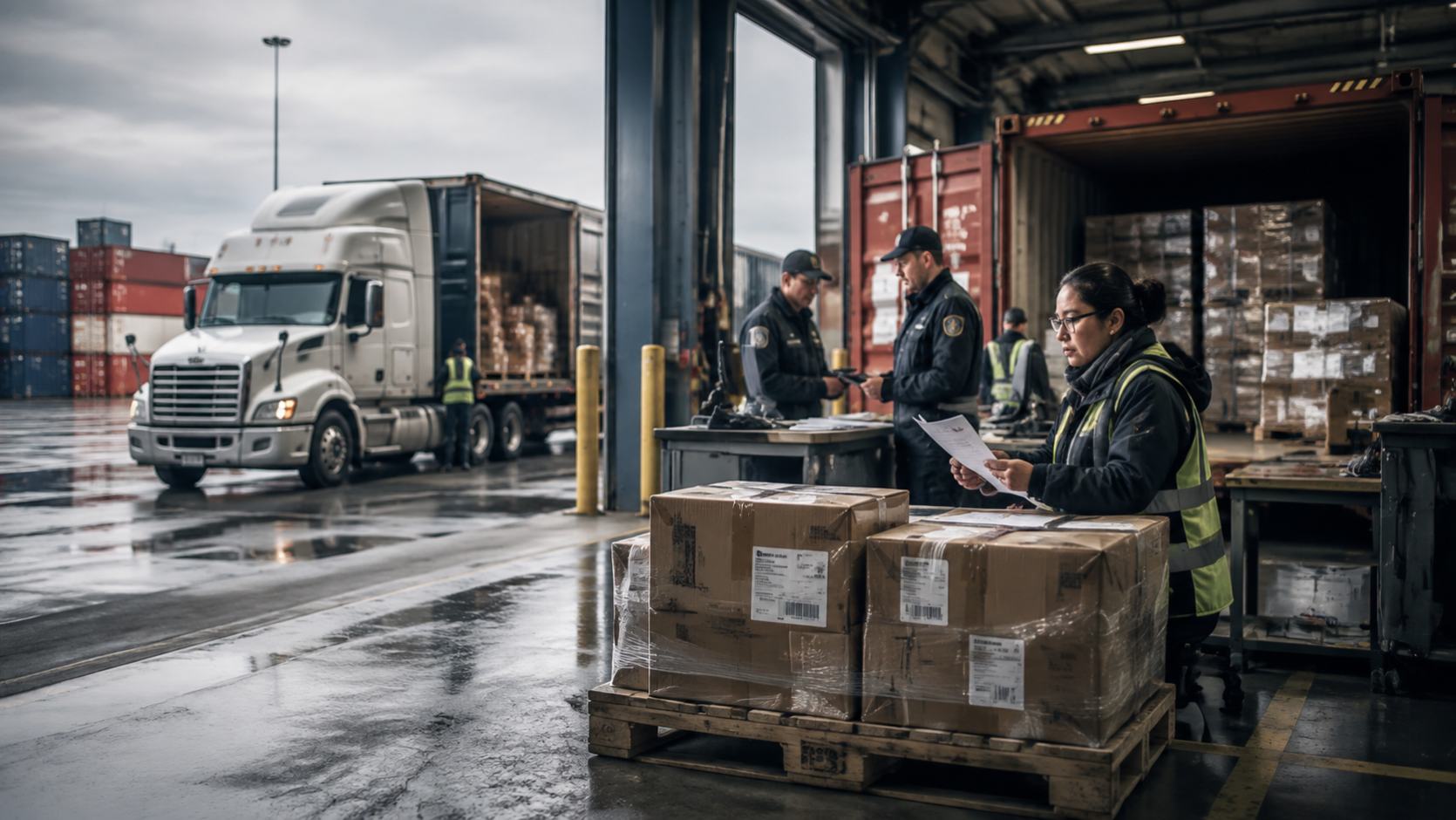
For planned commercial cargo, sea freight is the principal option to examine when the shipment can tolerate ocean transit and the cargo fits containerized or consolidated handling. FCL keeps the shipment in a dedicated container flow, while LCL uses consolidation when a full container is not the intended loading format. The quote should make clear whether the service is port-to-port or continues through inland delivery.
“`
When delivery speed matters more than ocean economics, air freight can provide a different service pattern. The decision should account for chargeable transport characteristics, airport handling, customs coordination, and the final delivery requirement rather than comparing an airport movement with a door-delivered ocean quotation.
For smaller or time-sensitive shipments, express shipping may simplify the transport chain when the shipment and destination service are suitable. The buyer should still confirm the customs workflow and the exact delivery scope because a parcel-oriented service is not automatically equivalent to a commercial freight-forwarding movement.
A mixed handoff can make sense when one transport stage solves a different operational constraint. In that situation, multimodal freight should be evaluated as one coordinated shipment plan, with each transfer point and responsibility boundary defined in the quotation.
Door delivery changes the commercial scope again. A door-to-door service should state the origin pickup point, destination address, customs responsibility, and any delivery restrictions so the buyer knows what the quoted service actually covers.
A weak-fit situation occurs when the buyer compares unlike service scopes, such as port delivery against final-address delivery, or assumes that customs and destination handling are covered without checking the quotation. The route should be rejected as unclear until those boundaries are defined.
“`How should transit time to Canada be planned?
Transit planning should use a specific origin gateway, Canadian destination gateway, service pattern, and measurement basis. A Canada-wide number is not a reliable planning figure because the international leg, gateway handling, inland movement, and final destination can vary materially by shipment.
| Timing component | What the quote should identify | Main timing drivers |
|---|---|---|
| Origin handling | Pickup point and export handoff | Cargo readiness and local handling |
| Main carriage | Named origin-to-destination gateway pair | Mode, carrier routing, and current operating schedule |
| Destination handling | Customs and gateway release scope | Documentation, classification, and customs review |
| Final delivery | Specific receiving address or delivery point | Inland distance, appointment rules, and access conditions |
For a usable planning estimate, the forwarder should state whether the quoted transit covers main carriage only or the full door-to-door cycle. Peak demand can tighten available capacity, while document corrections, customs questions, cargo readiness changes, and delivery constraints can extend the overall cycle. The current pair-specific transit range should therefore be confirmed at quotation and kept separate from any promised delivery date.
What should a Canada freight quote actually include?
A freight quote is useful only when the buyer can compare the same scope across competing offers. Start with the cargo basis and service level, then check which origin, international, destination, customs, and delivery activities are included.
For FCL, the quotation should identify the container type, loading basis, origin pickup, export handling, main freight, destination handling, customs scope, and final delivery where applicable. For LCL, the quote should state the shipment’s measurement and weight basis, consolidation scope, destination handling, and the delivery point being priced. Air and express quotations require the relevant chargeable shipment basis together with the stated service scope.
Origin-side charges may include pickup and export handling depending on the quotation. Main freight should identify the transport leg and service pattern being purchased. Destination charges should be separated or clearly incorporated into the stated scope rather than assumed. Customs work should identify what document preparation or brokerage activity is covered. Duties and taxes should be treated according to the quoted commercial arrangement, not as an automatic part of every forwarding service.
Where a named trade term affects who arranges transportation, import formalities, or duties and taxes, the quote should use that term consistently with the actual commercial responsibility. A door-delivery price also needs the delivery address and any access condition that can create additional handling.
Relevant shipment risks can also affect whether cargo insurance is appropriate. Cargo insurance should be evaluated against the cargo value, covered risks, exclusions, and the specific policy or quotation rather than treated as an automatic protection included in freight.
Note: Freight rates change with cargo details, route, carrier capacity, fuel costs, seasonal demand, service scope, and destination charges. Request a current quote for the specific shipment.
What are the key Canada customs and delivery checkpoints?
Request Quote
The buyer supplies cargo, pickup, destination, delivery scope, and customs details; the forwarder confirms the priced route and identifies any missing shipment inputs.
Cargo Pickup
The pickup party confirms cargo readiness, package condition, labels, and collection instructions; the forwarder verifies that the booked origin handling matches the actual shipment.
Export Customs Clearance
The exporter or appointed filing party supplies accurate commercial data and supporting documents; the customs filing is checked against the cargo description and transport documents.
International Transportation
The carrier performs the booked international movement while the forwarder coordinates shipment documents and handoffs; the booking and transport details are checked against the quoted service.
Destination Customs Clearance
The importer or appointed customs representative provides the required entry information; the Canadian customs broker or other designated party confirms classification, importer data, supporting documents, and any product-specific requirements.
Final Delivery
The delivery party confirms release status and receiving conditions; the forwarder coordinates the final move to the stated destination and verifies any appointment or access requirement.

Customs preparation should begin with accurate product descriptions, commercial documentation, importer or consignee information, and any classification or product-control information relevant to the cargo. The current import requirements should be confirmed for the actual product and shipment rather than inferred from the transport mode alone.
“`Which Canada freight forwarding risks need active controls?
Most avoidable problems occur at handoffs. A shipment can be physically ready while its customs data is incomplete, or a transport booking can be correct while the final delivery scope does not match the receiving site. Controls should therefore focus on the points where information, cargo, and responsibility change hands.
Unclear quote scope: Ask the forwarder to separate origin handling, main transport, destination charges, customs work, and final delivery so the commercial comparison uses the same basis.
Incomplete customs data: Align the product description, commercial documents, importer information, and classification data before the destination filing is prepared.
Delivery mismatch: Confirm whether the destination is a terminal, warehouse, commercial site, residential address, or another receiving point and state any access restriction in the quote request.
Shipment changes after booking: Report changes in cargo readiness, packaging, quantity, destination, or delivery condition promptly because they can alter the booked handling and quoted scope.
Common mistake: Buyers sometimes compare two freight quotes because the headline service appears identical while one quotation covers only the international movement and the other extends through customs and final delivery. Check the handoff points before comparing the commercial figures.
A customs or delivery issue becomes a practical escalation point when the shipment arrives but the importer data, supporting documents, or receiving instructions are not ready. Resolve the missing input with the responsible party before release or delivery coordination proceeds.
Disclosure: This page provides general route-planning information and may mention freight services available through this website. Transit times, freight costs, customs requirements, carrier schedules, and destination conditions can change. Confirm the current shipment plan before booking.
How should a freight forwarder quote be prepared for Canada?
The practical default is to start with the simplest service that satisfies the shipment’s delivery and handling requirements, then change the plan when cargo characteristics, timing pressure, customs complexity, or destination constraints require another service pattern. The quote should resolve that change from actual shipment inputs rather than from a generic mode preference.
For a planned commercial shipment with flexible delivery timing, the buyer should first test an ocean-based service scope and compare it with a faster option only when the delivery requirement justifies the different transport pattern. When speed is the controlling condition, an air or express quotation should be evaluated using its complete delivery and customs scope. When the main issue is coordination between several transport legs, a multimodal quotation can clarify the handoffs.
When duties and taxes, customs handling, or importer-side responsibilities need a specific commercial arrangement, the buyer should define that responsibility before requesting a door-delivery quote. A service such as DDP shipping should be discussed only when its stated commercial responsibilities match the actual shipment and the quotation confirms the scope.
Before the quote desk can build a precise shipment plan, provide:
- Supplier or pickup location
- Cargo type and product description
- Package count and packaging details
- Dimensions and gross weight
- CBM or other applicable shipment measurement
- Canadian delivery postcode and full delivery scope
- Cargo-ready timing requirement
- Importer, consignee, and customs requirements
- Preferred transit objective
Illustrative example (not a customer case): A commercial shipment consists of standard packaged goods moving from an overseas supplier to a Canadian receiving facility. The default service fits when the buyer can work with a planned transport cycle and a straightforward receiving process. The decision flips when the buyer introduces a materially tighter delivery condition, more complex handling, or a customs requirement that changes the necessary service scope.
Key Takeaways
- Choose the forwarding plan around shipment conditions and handoffs, not the service label alone.
- Make the customs party, importer information, and delivery responsibility clear before comparing quotes.
- Compare like-for-like service scopes so destination handling and final delivery are not hidden differences.
- Use a pair-specific transport plan and confirm the current timing with the forwarder before booking.
- Give the quote desk complete cargo and destination inputs so the proposed route can be evaluated accurately.
FAQ
What does a freight forwarder do for a shipment to Canada?
A freight forwarder coordinates the commercial movement across the shipment’s transport stages and handoffs. The exact role depends on the quoted service scope, so the buyer should verify whether the forwarding arrangement covers pickup, export handling, international transportation, destination coordination, customs support, and final delivery.
How do I compare freight forwarders for Canada?
Compare the same cargo, destination, transport scope, customs arrangement, and delivery condition across quotations. Look for clear ownership of each handoff and a precise statement of included services and destination charges. A lower headline freight figure is not directly comparable when another quotation covers a wider end-to-end scope.
Is sea freight suitable for commercial shipments to Canada?
Sea freight can be appropriate when the shipment can use ocean transport and the buyer can work with the associated handling and delivery cycle. The correct choice depends on cargo characteristics, loading format, destination, delivery requirement, and customs coordination. The quotation should define whether the ocean service ends at a gateway or continues inland.
What information does a Canadian customs broker need?
The required information depends on the product and import entry, but accurate product descriptions, commercial documents, importer or consignee information, and classification-related data are central inputs. The importer and customs representative should confirm the current documentation and product-control requirements for the specific shipment before filing.
Should customs clearance be included in the freight quote?
Customs clearance should be treated as a defined quotation scope rather than an assumption. Ask which party handles the customs work, which filing services are included, and which duties, taxes, or third-party charges remain outside the quotation. The exact commercial treatment depends on the shipment arrangement and the quoted service.
Can a freight forwarder arrange door delivery in Canada?
Door delivery can be quoted when the selected service covers the required origin, transport, customs, and inland handoffs. The buyer should provide the complete destination and receiving conditions so the quotation can identify the delivery point, access requirements, and any activities that remain the responsibility of another party.
When should I choose air or express instead of sea freight?
The change usually occurs when the shipment’s delivery condition no longer fits a planned ocean movement. Air or express may become relevant when speed, shipment size, or the required service pattern changes the operational priority. The forwarder should compare the complete service scope, including handling and customs coordination, rather than transport speed alone.
Disclaimer: Transit times, cost explanations, customs information, and shipping suggestions on this page are general planning references, not a binding quotation, customs ruling, or delivery guarantee. Confirm the current route, service scope, charges, documents, and import requirements before booking.